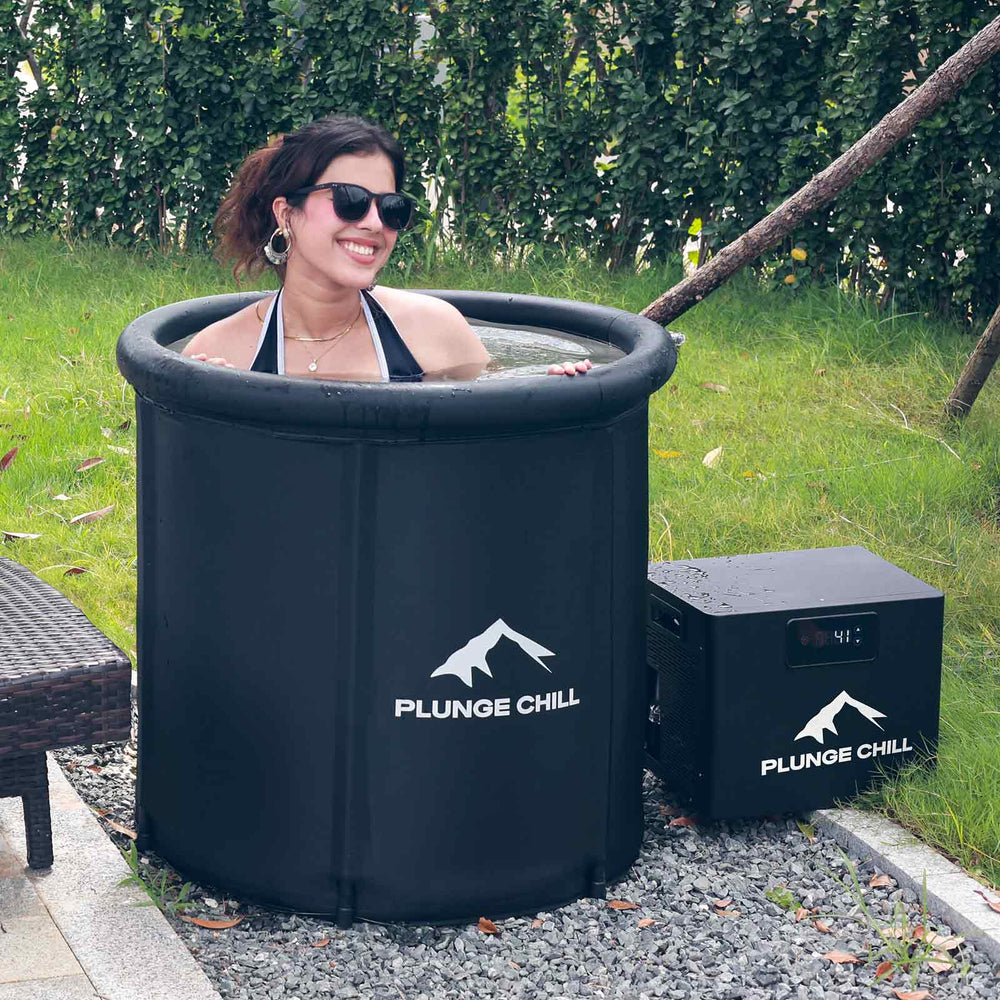
As a sports rehabilitation specialist and strength coach who reviews cold plunge products and prescribes recovery protocols, I’m asked this question weekly. The short answer is straightforward: consistent exercise is the main driver of healthspan and longevity, while cold plunging is a potentially useful but secondary tool. The longer answer is more nuanced and far more useful for your training calendar, recovery plan, and purchase decisions about a home cold tub.
What “Cold Plunge” Actually Does to Your Body
Cold-water immersion triggers an immediate cold-shock response. Heart rate, breathing, and blood pressure spike; blood vessels constrict in the limbs to protect core temperature; shivering ramps up heat production. Case Western Reserve University describes this cascade clearly and notes that full-body cold hits the core much harder than a cold shower. Stanford Lifestyle Medicine adds that whole-body immersion drives sympathetic arousal, while facial immersion can activate a calming diving reflex via the vagus nerve. This split explains why a quick cold face dunk can feel settling even when a full plunge feels electrifying.
At the cellular and metabolic level, repeated cold exposure can stimulate brown adipose tissue and increase energy expenditure, but the absolute effect is modest. The Psychiatry & Psychotherapy Podcast summarizes evidence showing that active brown fat contributes only a small slice of basal metabolic rate in adults; even when detectible, the burn typically amounts to dozens—not hundreds—of calories per day. In plain terms, cold drives stress resilience and transient energy use; it is not a magic fat-loss accelerator.
Where cold exposure shines is acute neurochemistry and arousal. Studies summarized by Stanford Lifestyle Medicine report sustained increases in norepinephrine and drops in cortisol post-exposure, and articles from Emory Healthcare and Psychology Today cite large but variable dopamine and norepinephrine surges. Many people feel alert, focused, and upbeat for hours after a short session. That mental lift can indirectly help adherence to training, nutrition, and sleep—the pillars that actually change lifespan trajectories.
What Exercise Does That Cold Can’t Replace
There is a reason major medical centers frame cold therapy as a garnish rather than the main course. Mayo Clinic emphasizes prioritizing exercise, nutrition, sleep, and stress management, with cold exposure used strategically. Ohio State University Wexner Medical Center echoes that approach and warns that routine post-lift immersion can blunt the very adaptations you train for. Strength and hypertrophy require an inflammatory and protein-synthesis response; tamping that down too often slows gains.
Endurance is a different story. Evidence summarized by OSU and Pliability suggests cold can help perceived recovery and power restoration after aerobic work or dense competition schedules, whereas immediate post-strength plunges can reduce long-term muscle growth and strength. A 12-week study synthesized by the Psychiatry & Psychotherapy Podcast reported significantly less muscle gain when cold immersion followed every lift, with mechanistic signals like mTOR and myonuclei also blunted. For healthspan and performance alike, training adaptation is the engine; cold is the brake. Use the brake only when you actually need to slow down.

Evidence Snapshot: Recovery, Mood, Immunity, and Metabolism
A PubMed Central review on cold hydrotherapy and healthy aging finds promising but inconsistent benefits across cardiometabolic, immune, and mental domains. For recovery, meta-analytic data summarized on the Psychiatry & Psychotherapy Podcast show reduced delayed-onset muscle soreness at the 24-hour mark and modest improvements in short-term power, especially with shorter immersions. Medical News Today reviews note mixed findings on inflammation: some decrease after exercise, with contradictory increases immediately and one hour after exposure. Immune findings are mixed as well; cold-water swimmers often show higher white blood cell counts and fewer respiratory infections, but swimming adds an exercise confound, as Case Western Reserve University cautions.
The mental health picture is clearer on the acute side. Stanford Lifestyle Medicine reports immediate mood improvements and post-exposure cortisol reductions, alongside sustained norepinephrine responses. Psychology Today and Emory Healthcare describe meaningful spikes in catecholamines and subjective well-being. However, the Psychiatry & Psychotherapy Podcast cautions that expectancy effects can inflate perceived benefits and that cognition—especially processing speed and executive function—can be acutely impaired during and shortly after cold exposure. Plan high-cognitive-load work and technical training away from your plunge window.
Cold vs. Workouts for Longevity: A Head-to-Head View
Domain |
Ice Baths |
Workouts |
Longevity evidence |
Early and indirect; benefits are plausible via stress resilience, mood, sleep, and cardiometabolic nudges, but large, definitive trials are lacking. Major centers frame cold as adjunctive. |
Robust and direct; habitual exercise is the cornerstone intervention for longer healthspan. Clinical guidance consistently prioritizes training over adjuncts. |
Training adaptation |
Can blunt hypertrophy and strength signaling when used immediately post-lift; better suited to tight turnarounds or endurance recovery phases. |
Drives mitochondrial, vascular, and neuromuscular adaptation—the core mechanisms linked to longevity and function. |
Recovery and soreness |
Reduces soreness and can improve short-term power after endurance or tournaments; mixed effects on inflammation; timing-sensitive. |
Active recovery and good programming deliver predictable benefits without compromising long-term adaptation. |
Mental health |
Acute boosts in alertness and mood; reduced perceived stress; small studies and expectancy effects apply; transient cognitive slowing is possible after immersion. |
Exercise reliably improves mood, sleep quality, and cognition across ages; effects are durable with consistent practice. |
Metabolism |
Activates brown fat and shivering thermogenesis; absolute calorie burn is small; glucose uptake may improve transiently. |
Improves insulin sensitivity, cardiorespiratory fitness, body composition, and metabolic health with clear dose–response benefits. |
Safety |
Cold shock, arrhythmia risk in susceptible individuals, hypothermia, potential skin and nerve injury; risk rises in open water; requires protocols. |
Generally safe when programmed sensibly; orthopedic risk relates to load and technique rather than core physiology. |
The comparison is lopsided by design. Exercise upgrades the systems that govern lifespan, whereas cold exposure can fine-tune stress tolerance, recovery, and state management. If longevity is the scoreboard, workouts win decisively. If you already train consistently, cold can be a smart complement when you apply it with precision.
Timing Matters: How to Use Cold Without Losing Gains
The “when” is as important as the “what.” Ohio State University Wexner Medical Center recommends delaying cold immersion for 24 to 48 hours after strength sessions if muscle growth or strength is the goal. Mayo Clinic similarly advises using cold baths during brief high-load periods rather than daily across a season. Pliability highlights that endurance adaptation appears less vulnerable than hypertrophy, which is why cold often feels like a win after long efforts, races, or back-to-back competitions.
Huberman Lab also warns that cold-water immersion close to training blunts adaptation and suggests total cold exposure around eleven minutes per week split across a few short sessions, with the water uncomfortably cold yet safe. Stanford Lifestyle Medicine advises keeping beginners above 50°F and under ten minutes, and never plunging alone. Medical News Today summarizes that sessions between eleven and fifteen minutes can help fatigue recovery after exercise, but beginners should start shorter and warmer, using a thermometer and timer and planning rewarming.
As a coach, I partition cold exposure away from lifting days or place it well after the session if recovery is the priority. For endurance microcycles or tournament weekends, I use short plunges to reduce soreness and improve turnaround while accepting the minimal risk to adaptation.
Practical Protocols I Use With Athletes
When strength or hypertrophy is the priority, I schedule cold immersion on rest days or at least a day after the hardest lift. If an athlete must plunge on a lift day due to travel or scheduling, I place it later in the evening, keep it short, and compensate with nutrition and sleep to protect adaptation. When endurance is front and center, I use short, controlled plunges after key sessions or during compressed schedules, mindful of acute cognitive slowing afterward. For mental state management, I prefer morning or mid-day plunges rather than close to bedtime, since the post-cold rebound in body temperature can delay sleep onset.
Temperature and time are scaled to training age and season stage. I start new users near the high end of the cold range and keep sessions brief, working toward the eleven-minutes-per-week benchmark in two or three sessions. I prioritize whole-body immersion to the shoulders for uniform cooling only if safe and appropriate, and I often reserve facial immersion for quick calm or pre-competition nerves given its parasympathetic effects.

Safety, Contraindications, and Open-Water Caution
Cold shock, rapid hyperventilation, and surges in heart rate and blood pressure can be dangerous for individuals with cardiovascular disease, hypertension, prior stroke, or arrhythmia risk. Case Western Reserve University specifically warns that beta blockers blunt the body’s ability to respond to the adrenergic surge. Emory Healthcare adds cautions for diabetes with neuropathy and for open wounds and incisions; use topical ice rather than immersion in those cases to reduce infection risk. Medical News Today and Stanford Lifestyle Medicine stress never plunging alone, entering slowly, and planning a safe rewarm with dry clothes and time to stabilize. Open-water plunges carry higher risk due to water movement, cold air, and lack of immediate exit; as a clinician and coach, I recommend a controlled tub or indoor setting over lakes and oceans for almost everyone.
Hypothermia remains the non-negotiable red line. If shivering becomes uncontrollable, cognition feels foggy, or numbness spreads, get out, dry off, and rewarm gradually. Avoid alcohol around cold exposure, and save complex cognitive tasks for later, since processing speed and executive function can be transiently impaired after immersion, as summarized by the Psychiatry & Psychotherapy Podcast.
Cold Plunge Buying and Care Tips
A well-designed tub makes practice safer, cleaner, and more consistent. The most common mistakes I see are under-sizing the tub, skipping sanitation, and guessing on water temperature. Plan your setup the way you plan your training: with specificity.
Feature |
Why It Matters |
What To Look For |
Temperature range and control |
Consistent dosing drives adaptation and safety; guessing invites risk. |
A reliable thermometer and stable water in the 50 to 59°F range for most sessions; a unit that holds temperature is ideal. |
Size and ergonomics |
Full-body submersion to the shoulders achieves uniform cooling; safe entry and exit reduce fall risk. |
A tub long and deep enough for your height, with stable steps or a seat and grippy surfaces. |
Insulation and durability |
Cold water loses temperature rapidly in warm rooms; flimsy materials tear or leak. |
Insulated walls, sturdy liners, and robust fittings rated for repeated fills. |
Drainage and sanitation |
Clean water limits skin and wound issues and preserves equipment. |
A bottom drain, easy hose attachment, and a sanitation plan; drain and sanitize regularly, then refill with fresh water as IcePass LA recommends. |
Cover and placement |
Safety and cleanliness improve with a secure lid and a controlled environment. |
A fitted cover and a location with stable footing, nearby towels, and space to rewarm and change. |
Setup details |
Small choices reduce temperature surprises and ice waste. |
Fill with water first, then add ice, because the temperature will continue to drop as ice equilibrates; monitor throughout. |
If you are deciding between a basic tub with bagged ice and a compressor-chilled unit, start simple. A consistent thermometer, sanitation routine, and smart placement matter more than hardware price in the first season. If you sustain the habit, a temperature-controlled unit earns its keep by saving on ice and time.
Contrast Therapy, Sauna, and Sleep
Alternating heat and cold creates a vascular pump that can feel restorative and may help sleep when timed earlier in the day. Mitohealth highlights observational data linking frequent sauna use with lower cardiovascular events and all-cause mortality in a Finnish cohort, while noting synergy with cold exposure. In practice, I cycle sauna bouts with brief cold exposures for two or three rounds on recovery days and finish cold to allow shivering thermogenesis before a natural rewarm. The Søeberg Principle described by Huberman Lab suggests finishing cold and rewarming gradually to maximize metabolic drive; in my experience, that cue helps athletes feel energized rather than sedated.
A Simple Progression for Beginners
Start with conservative, controllable exposures. Stanford Lifestyle Medicine suggests keeping beginners above 50°F and under ten minutes, while Huberman Lab recommends targeting about eleven total minutes per week across a few short sessions. Medical News Today advises never going alone, using a thermometer and timer, and planning rewarming. I prefer an at-home progression that begins with cool shower finishes for brief periods, then transitions into short tub immersions once breathing and posture remain controlled. The goal is consistency, not heroics.
Pros and Cons in Plain Language
Cold plunging offers an immediate mental lift, can reduce soreness after endurance work, and may support resilience and sleep when used thoughtfully. Risks center on the cold shock response, hypothermia, and blunted muscle-building signals if used right after lifting. Exercise delivers the deep adaptations tied to healthspan: improved cardiorespiratory fitness, stronger muscles and bones, and better metabolic control. Medical centers like Mayo Clinic and OSU consistently recommend treating cold exposure as a complement rather than a substitute, and Case Western Reserve University adds important cautionary notes on risks for people with cardiovascular issues. When the goal is longevity, the return on investment from workouts dwarfs the incremental nudge from daily plunges.
FAQ
Is a daily ice bath good for longevity?
There is no strong evidence that daily plunging by itself extends lifespan. A PubMed Central review suggests cold exposure may support healthy aging indirectly through mood, cardiometabolic, immune, and sleep pathways, but the evidence is early and inconsistent. Prioritize regular exercise; add cold for recovery, resilience, or mood when it serves your plan.
Can ice baths replace a cooldown or mobility work?
They should not. The best practice remains an active cooldown, mobility, nutrition, and sleep. Cold can be added on endurance-heavy days or tight turnarounds. If you are chasing muscle or strength, delay immersion by at least a day or schedule it far from the lift.
How cold and how long should I plunge?
Most protocols fall between 50 and 59°F for short sessions. Beginners stay warmer and shorter. Many practitioners accumulate about eleven minutes per week across two or three sessions, with Medical News Today citing eleven to fifteen minutes as a typical fatigue-recovery window for more experienced users. Always use a thermometer and timer.
The Bottom Line
If your aim is longevity, workouts win the day—and the decade. Cold plunges can sharpen your mind, smooth your recovery during endurance phases, and build stress tolerance when used deliberately. Train hard, recover smart, and let cold exposure be the well-placed accessory, not the outfit.
References
- https://case.edu/news/science-behind-ice-baths-and-polar-plunges-are-they-truly-beneficial
- https://lifestylemedicine.stanford.edu/jumping-into-the-ice-bath-trend-mental-health-benefits-of-cold-water-immersion/
- https://pmc.ncbi.nlm.nih.gov/articles/PMC11872954/
- https://health.osu.edu/wellness/exercise-and-nutrition/do-ice-baths-help-workout-recovery
- https://www.emoryhealthcare.org/stories/ortho/what-are-the-benefits-and-risks-of-ice-baths
- https://mcpress.mayoclinic.org/healthy-aging/the-science-behind-ice-baths-for-recovery/
- https://www.mayoclinichealthsystem.org/hometown-health/speaking-of-health/cold-plunge-after-workouts
- https://www.verywellmind.com/ice-bath-benefits-for-mental-health-8572533
- https://www.calm.com/blog/ice-bath-benefits
- https://www.hubermanlab.com/newsletter/the-science-and-use-of-cold-exposure-for-health-and-performance