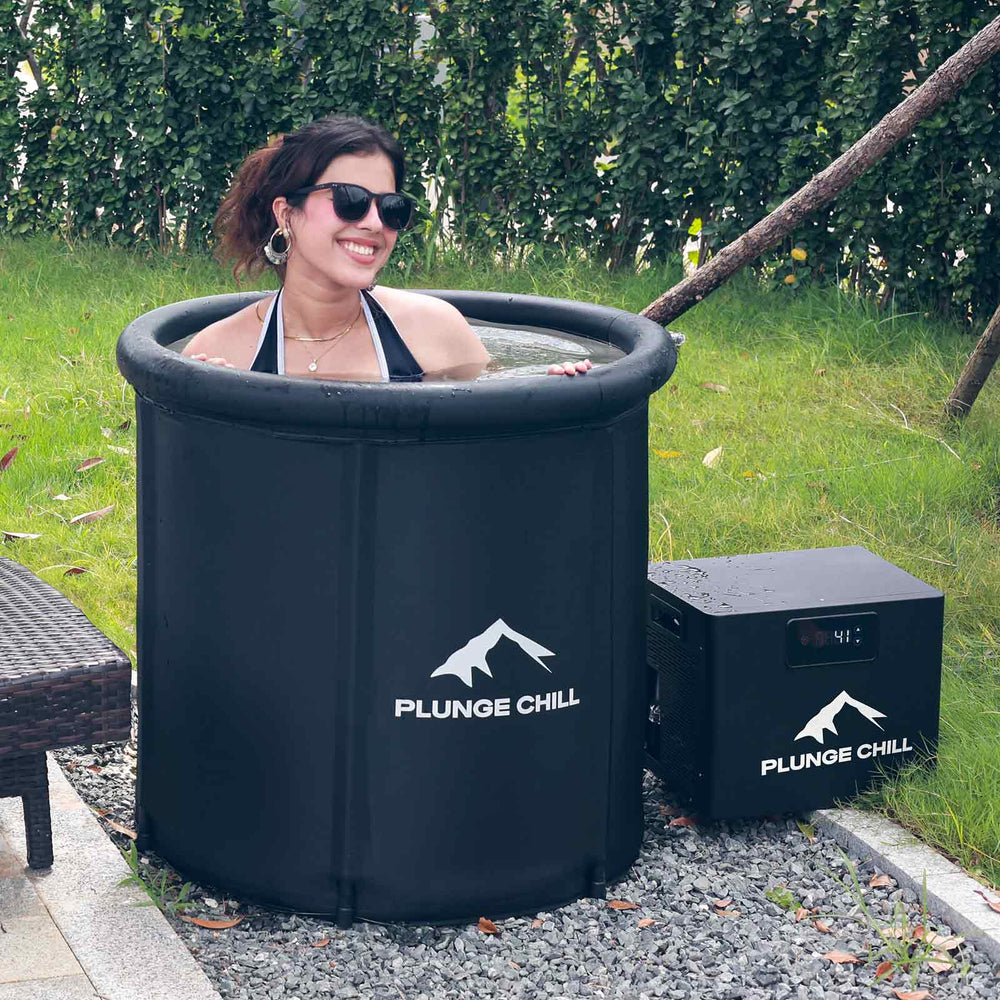
As a sports rehabilitation specialist and strength coach, I see two common patterns with cold plunges. Some athletes avoid them completely because the science seems “mixed.” Others jump in ice-cold water after every hard session and wonder why their strength gains stall mid-season.
Ice bath inversions are my way of flipping the usual cold-plunge habits so athletes actually match the intervention to the goal. Instead of asking simply “Are ice baths good or bad?”, the better question is “When, how, and for which sessions should I invert my usual pattern of cold, heat, and rest to get the outcome I care about?”
This article will walk through what the research actually says about cold-water immersion, how to use “inversions” of timing and temperature to your advantage, and how to choose cold plunge equipment that supports this more nuanced approach.
What Ice Baths Really Do: Evidence, Not Hype
In strength and conditioning, we care less about wellness trends and more about mechanisms and outcomes: what cold immersion does to tissues, the nervous system, and performance.
Core definition and physiological effects
Cold-water immersion, or ice bathing, generally means submerging most or all of the body in water around 50–59°F for about 10–20 minutes. Clinical and sports sources from Ohio State University’s health system, Ivy Rehab, and Pliability describe a similar range as the standard recovery protocol.
At those temperatures, several things happen at once:
The blood vessels in skin and superficial muscle constrict. That vasoconstriction reduces local blood flow, which can limit swelling and fluid accumulation after hard training. Hydrostatic pressure from full-body immersion further shifts fluid centrally, mimicking some benefits of active recovery without the extra workload, as described in work summarized in Frontiers in Physiology.
Tissue temperature falls. Cooler muscle slows nerve conduction and dampens pain signals, which is why athletes often step out of the tub feeling “numbed” in a good way. Pliability highlights that this reduction in nerve impulse transmission is one of the main drivers of short-term pain relief.
Metabolic and inflammatory activity temporarily drop. Reviews from Ohio State and Mayo Clinic note that ice baths lower metabolic rate and blunt parts of the inflammatory cascade. That can reduce markers of exercise-induced muscle damage and soreness in the first day or two after a hard effort.
Rewarming increases blood flow and clearance. As you exit the bath and rewarm, vessels dilate again. Blood flow rebounds, which may help flush metabolites such as lactate and deliver nutrients back into the tissues.
For athletes who need to feel reasonably fresh on back-to-back days, these mechanisms can be useful. But they come with trade-offs that are easy to ignore if you only look at how you feel the next morning.
Short‑term recovery vs long‑term adaptation
The most important clarification from the research is that cold immersion helps the way you feel tomorrow more than it helps who you become in three months.
Multiple studies and reviews converge on this point:
Work summarized by Stanford Lifestyle Medicine and several sports-therapy briefs shows small but meaningful reductions in delayed-onset muscle soreness and perceived fatigue for 24–96 hours after hard training, particularly in intermittent and endurance sports.
A large meta-analysis in Frontiers in Physiology found that cold-water immersion after exhaustive exercise can improve subjective markers such as soreness and ratings of perceived exertion, but the effects on objective performance measures like jump height are inconsistent and often small.
The nuance comes with strength and hypertrophy. A 12‑week trial reported in the Journal of Physiology compared lower-body strength training followed by either 10 minutes of 50°F water immersion or a short bout of light cycling. The cold-immersion group showed significantly smaller gains in muscle size, strength, and markers of anabolic signaling. Similar findings have appeared in the Journal of Strength and Conditioning Research and are echoed by OSU, Pliability, and Mayo Clinic: using ice baths right after resistance sessions, several times per week, can blunt long‑term strength and muscle growth.
This is the first big “inversion” point. If you are chasing peak muscle gain, you often want to invert the common habit of plunging immediately after every heavy lift. You let the normal inflammatory signal run its course, then use cold strategically when recovery speed is more important than maximal adaptation.
Beyond muscles: nervous system and mental health
Cold exposure is not just a muscle story. It is a nervous-system and brain story as well.
Stanford Lifestyle Medicine describes dense cold receptors in the skin sending strong signals to the brain, triggering a rapid sympathetic surge along with endorphin release. Short cold exposures at about 50–60°F have been shown in human studies to acutely improve mood, reduce tension and fatigue, and increase feelings of alertness and vigor.
Several experiments summarized by Stanford found that cortisol, a key stress hormone, actually dropped after cold immersion and stayed lower for up to a few hours, even when water temperatures were as low as about 50°F. With repeated practice over weeks, winter swimmers and people using whole-body cryotherapy showed progressively lower cortisol responses to cold, suggesting improved stress resilience.
Clinically, brief cold exposure is even built into behavioral therapies as a tool to rapidly modulate emotional state. Stanford notes that cold facial immersion is used as part of dialectical behavior therapy skills to help patients disrupt spiraling anxiety or anger.
Mayo Clinic Health System and Mass General Brigham add that cold plunges may help restore balance between the sympathetic and parasympathetic nervous systems, supporting better perceived recovery, focus, and mood. These mental and autonomic benefits are harder to quantify than jump height or creatine kinase, but they are not trivial. For some athletes, the mood and resilience effects are the primary reason to continue cold exposure even when the performance research looks modest.

What I Mean by “Ice Bath Inversions”
Scientific articles do not use the phrase “ice bath inversion.” This is a coaching concept I use to help athletes make smarter decisions with a powerful but blunt tool.
An ice bath inversion is any deliberate reversal of the default way most people use cold plunges, along three main axes: timing relative to training, the balance of hot versus cold modalities, and the emphasis in different phases of the training year. The goal is to match the physiology the literature describes to the reality of your competition calendar and goals.
Timing inversions: shifting cold away from key strength signals
If you lift heavy at 5:00 PM and sink into 50°F water at 5:15 PM three times per week for months, the Journal of Physiology trial and related work suggest you are repeatedly turning down the very signals that build muscle: blood flow, mild inflammation, satellite cell activation, and anabolic kinase activity.
Ohio State’s guidance reflects this, recommending that when strength and hypertrophy are the priority, athletes delay ice baths by 24–48 hours after lifting to let the normal repair and growth response occur. Pliability similarly advises that athletes focused on muscle and strength should use ice baths sparingly and avoid making them a default after every strength session.
In practice, a timing inversion looks like this.
Consider a field athlete who lifts lower body hard on Monday and Thursday, then competes on Saturday. The default pattern might be to plunge after every lift because Monday’s squat session is brutal. An inverted pattern would let the post-lift inflammatory signal run its course on most strength days, but add cold immersion after Thursday’s lift or after the Saturday match, when the priority is bouncing back for the next week rather than maximizing hypertrophy. Over a twelve-week block, that can meaningfully preserve strength gains while still giving the athlete the psychological and soreness relief that cold provides when it matters most.
For endurance and team-sport athletes with congested schedules, the calculus changes. Reviews summarized by Mayo Clinic and a range of sports-therapy sources note that cold immersion is particularly helpful in short turnaround windows such as multi-day tournaments or stage races. Here, a timing inversion might mean using cold more aggressively during a two-week competition block and then dramatically scaling it back during the off-season strength phase.
Thermal inversions: combining hot and cold intelligently
The second inversion axis is temperature strategy. Many athletes assume colder is always better, and that only cold is useful for recovery. The broader thermotherapy literature suggests otherwise.
A large review in a physiology journal compared various cooling techniques before, during, and after exercise. It found that pre-cooling and per-cooling can improve endurance performance in the heat by about 5–9 percent on average, especially when mixed methods are used. These methods include cold-water immersion, cooling vests, ice slurry ingestion, and facial cooling. Conversely, aggressive cooling before short sprint efforts can impair performance because cooler muscles produce less peak power.
On the post-exercise side, a more recent study presented at an exercise physiology conference compared hot-water immersion at about 104°F, cold immersion near 59°F, and seated rest after high-intensity running. One hour later, jump performance was better after the hot bath than after the cold bath, even though markers of muscle damage were similar. The authors concluded that hot water was preferable when restoring short-term power output, while cold remained more effective for managing inflammation and fatigue.
Older work in sports medicine also highlights contrast water therapy, where athletes alternate a few minutes in warm water around body temperature or above with a minute in cold water around 50–59°F, repeated over 20–30 minutes. Studies summarized in a post-exercise immersion review found that contrast protocols can accelerate lactate clearance and produce active-recovery-like hemodynamic effects without sustained cold.
A thermal inversion, then, means flipping your default temperature plan to fit the day’s goal. On a day when you need to be explosive again within hours, you might favor hot immersion or a brief contrast sequence that ends warm. On a day when you are more concerned with managing swelling after a tournament, you end cold or rely on straight cold immersion.
An example from practice: I work with a volleyball athlete who plays two matches on Saturday during certain blocks. On those days, we finish with a short hot immersion around 104°F and mobility work to restore power. On Sunday evening, when the goal shifts to reducing lingering soreness and calming the nervous system, we use a 10‑ to 12‑minute plunge at about 55°F. That inversion around temperature and timing leverages both modalities rather than forcing a one-size-fits-all cold protocol.
Load inversions: heavy cold in-season, light cold off-season
The third inversion axis is seasonal. Research from Mayo Clinic and others consistently emphasizes that cold therapies are an optional “garnish” rather than the main course. Sleep, sensible training loads, nutrition, and hydration move the needle much more. But within that, there are times when the garnish matters more.
During dense competition periods, such as playoffs or multi-day meets, short-term readiness and symptom relief usually outrank long-term adaptation. Meta-analytic work and practice-based reports show that cold immersion between closely spaced events can reduce soreness, improve perceived recovery, and help maintain performance across the series.
In the off-season, that priority flips. If an athlete has twelve weeks dedicated to building muscle and strength, the Journal of Physiology study and follow-up work suggest that routine post-lift cold immersion is counterproductive. An inversion strategy here is simple but powerful: use ice baths frequently during tournaments when survival and readiness matter, and treat them as occasional tools (for example, monthly or around exceptional sessions) when the main goal is adaptation.
A realistic scenario is a soccer player who competes twice weekly in-season and lifts twice weekly off-season. In-season, they might use two to three plunges per week around matches and skip cold after most lifting sessions. Off-season, they might reverse that, plunging only once every week or two, perhaps after an unusually hot endurance session or for mental-health reasons, while leaving most strength sessions unblunted.
Building an Ice Bath Inversion Protocol
Evidence-based does not mean complicated. It means you define the goal of each session and choose a cold strategy that lines up with it.
How cold, how long, how often?
Across OSU, Ivy Rehab, Healthline’s expert interviews, and Pliability’s review, there is strong convergence on practical parameters for healthy adults without major medical issues.
Water around 50–59°F is cold enough to produce the desired physiological changes without adding risk. Going much below about 50°F tends to increase discomfort and hypothermia risk without clear evidence of better recovery. Single sessions of about 10–15 minutes are typical; beginners often do better with several shorter bouts of 3–5 minutes separated by brief breaks.
Mayo Clinic Health System notes that many people begin with 30–60 seconds and slowly extend toward a 5‑ to 10‑minute range as tolerance improves. For elite athletes, sports-therapy briefs commonly describe 5–15 minutes at about 50–59°F, performed within 30 minutes after the target session when the goal is short-term recovery.
Frequency is more context-dependent. OSU and Mayo both caution that daily plunges directly after training sessions can compromise long-term strength and hypertrophy. Mitohealth and Pliability emphasize the same point and suggest either delaying cold exposure by a day or reserving post-training plunges for particularly demanding blocks.
To make this easier to visualize, here is a simple comparison based on the research summaries above.
Primary goal |
Cold strategy (50–59°F) |
Heat / contrast strategy |
Example inversion move |
Maximize strength and hypertrophy |
Limit post-lift plunges; if used, wait 24–48 hours |
Light warm bath or no thermal modality after lifting |
Skip cold after Monday and Thursday lifts, plunge Sunday |
Endure congested competitions |
Plunge within about 30 minutes after matches, 5–15 minutes |
Optional contrast at hotel or training facility |
Use cold nightly during a three-day tournament |
Improve mood and stress resilience |
Short daily exposures, 2–5 minutes at tolerable cold |
Occasional sauna or warm bath for relaxation |
Brief plunge most mornings, away from key strength work |
Restore power within the same day |
Minimal or no cold until key explosive work is complete |
Favor hot immersion around 104°F or contrast ending warm |
Use hot tub post-morning session, save cold for evening |
This table is not a rigid prescription; it is a framework grounded in current evidence. You stay within the safe temperature and duration ranges described by OSU, Ivy Rehab, Mayo, and others, then invert timing and pairing depending on what is on the calendar.
Real‑world examples
A strength-focused athlete in an off-season block might schedule Monday and Thursday heavy lifts, with Wednesday as steady-state conditioning. Using an inversion strategy, they do not plunge after either lift. Instead, they reserve a single 10‑minute plunge at about 55°F after Wednesday’s conditioning in hot weather, which helps manage heat stress and soreness without repeatedly dampening anabolic signaling.
An endurance runner preparing for a summer stage race might take the opposite approach. During a five-day race, they could use a 10‑minute plunge at 50–55°F after each stage to reduce soreness and core temperature, knowing that the priority is maintaining daily output. When they return to a strength block in the fall, they dial that cold exposure back to once every week or two, in line with the cautions from Mayo Clinic and the Journal of Physiology findings.

Pros and Cons of Ice Bath Inversions
Any recovery tool that feels good is easy to overvalue. Cold immersion is no exception.
On the positive side, high-quality sources from OSU, Stanford, Ivy Rehab, Pliability, and Mayo agree on several points. Ice baths can reduce muscle soreness in the first couple of days after hard efforts, lower perceived fatigue, and improve subjective readiness, especially for endurance and intermittent-sport athletes. Cold exposure can improve mood and emotional regulation, likely via endorphins and norepinephrine, and may recalibrate the stress response over weeks of consistent practice. In hot environments, cold immersion clearly helps reduce core temperature and can protect against heat-related performance decline.
Used in an inverted way—more during congested competitive periods, less during hypertrophy phases, and with flexible temperature strategies—cold immersion can become a precise tool rather than a blunt habit.
On the downside, the long-term adaptation data for strength and muscle growth are cautionary. The Journal of Physiology trial showing smaller gains in muscle size and strength after 12 weeks of post-lift cold immersion is not an isolated outlier. Several other studies summarized by OSU, Pliability, and a post-exercise immersion review report similar blunting of anabolic signaling and structural adaptation. For athletes whose main engine is strength and power, overusing post-lift ice baths is a mistake.
The quality of evidence for broad health benefits is also limited. Mayo Clinic points out that, outside of acute injury care and specific athletic contexts, much of the cryotherapy literature is small, methodologically weak, or inconclusive. A large trial that added brief cold blasts to daily showers reported fewer sick days, but did not measure immune markers, so it remains unclear whether the benefit was biological, behavioral, or placebo.
Finally, there are real safety considerations. Cold shock responses can cause hyperventilation and spikes in blood pressure. People with cardiovascular disease, uncontrolled hypertension, or certain arrhythmias face higher risk, as do individuals with diabetes or neuropathies who cannot sense cold well. Hypothermia, frostbite, and nerve injury are rare at home-bath temperatures when exposure is kept under 15–20 minutes, but they are not impossible.
This is why nearly every medical and sports source referenced here—Ohio State, Ivy Rehab, Mayo Clinic, Stanford, Mass General Brigham—recommends consulting a healthcare professional if you have underlying conditions, starting conservatively, and never plunging alone in open water.
Choosing Cold Plunge Equipment for Inversion‑Friendly Use
From a product-review standpoint, the best cold plunge setups make it easy to implement inversion strategies rather than locking you into a single extreme.
Precise temperature control is crucial. Since the evidence clusters around 50–59°F as the sweet spot for most recovery use, a tank that can reliably maintain and display that range is more useful than a makeshift solution that swings between lukewarm and near-freezing. This is especially important when you intentionally adjust temperature based on goal—for example, 55–59°F for mood and resilience work versus a slightly colder 50–55°F for post-stage race recovery.
Timer functions and alerts are not gimmicks; they are safety features. Most experts recommend 10–15 minutes or less per session, and both Mayo and Ivy Rehab warn against longer exposures. Built-in timers reduce the temptation to push sessions longer in the name of toughness.
Depth and ergonomics also matter. Many of the studies in the Frontiers meta-analysis and other reviews used immersion to the iliac crest, chest, or even shoulders to achieve full lower-body coverage. A tub that allows comfortable immersion to at least mid-chest gives you flexibility to adjust how much of the body is exposed on a given day. Stable steps, handholds, and non-slip surfaces are non-negotiable if you work with larger or fatigued athletes.
For athletes who want to use thermal inversions or contrast therapy, systems that can both heat and cool water, or that integrate with a nearby hot tub or sauna, allow you to move between temperatures without elaborate setups. A home tank with only a deep-freeze setting is less helpful if you plan to use hot immersion to restore same-day power, as suggested by the recent comparison of hot versus cold baths after intervals.
Cost is a legitimate constraint. Mayo Clinic Health System notes that high-end personal cold-plunge tanks with full options can run up to about $20,000. For many athletes and clinics, a robust stock tank, a reliable thermometer, and a consistent ice supply are adequate. The key is not the price tag but the ability to reproduce safe, evidence-based temperatures and timings that support the inversion patterns you want.

FAQ: Practical Questions I Hear from Athletes
Can ice bath inversions replace active recovery?
They should not. A recurring theme in reviews from OSU, Mayo Clinic, and others is that low-intensity active recovery, good sleep, and nutrition have larger and more consistent effects on recovery and adaptation than any cold or hot modality. A short spin at low intensity, a walk, or light mobility work after training improves blood flow and can help clear metabolites without blunting anabolic signaling. I treat cold immersion as an adjunct: useful on top of, not instead of, active recovery.
Is colder always better?
Below a certain point, no. Most of the recovery protocols summarized by OSU, Ivy Rehab, and Pliability sit in the 50–59°F range. A meta-analysis on cooling techniques shows that aggressive cooling can help in extreme heat, but also that overcooling muscles before sprints can reduce power. Submerging yourself in water much colder than about 50°F increases discomfort and hypothermia risk without strong evidence of additional recovery benefit. The smarter “inversion” is to tweak timing and frequency, not to chase the coldest possible water.
How soon after strength training can I safely plunge without blunting gains?
We do not have a perfect cut-off, but guidance from OSU, Pliability, and the Journal of Physiology trial suggests the main risk is from routine immersion immediately after lifting, week after week, not from an occasional plunge hours later. If building muscle and strength is your top priority, a conservative approach is to avoid cold immersion in the first day after heavy lifting when possible and to concentrate your plunges on days after endurance or competition loads. When strength is a secondary goal and quick turnaround is critical, you can accept more frequent post-session cold exposure, understanding that you may trade away some hypertrophy for performance consistency.
Inverting how you use ice baths is less about clever branding and more about respecting what the research actually tells us. Cold immersion is a potent stimulus. When you match its timing, temperature, and frequency to specific goals—rather than using it reflexively after every session—you preserve the adaptations you train so hard to earn while still gaining the real recovery, mood, and resilience benefits that cold can offer.
That is the kind of precision I aim for with my athletes and in the cold plunge products I recommend: not more extreme, just better aligned with the physiology.
References
- https://www.mcphs.edu/news/physical-therapist-explains-why-you-should-chill-out-on-ice-baths
- https://lifestylemedicine.stanford.edu/jumping-into-the-ice-bath-trend-mental-health-benefits-of-cold-water-immersion/
- https://sncs-prod-external.mayo.edu/hometown-health/speaking-of-health/cold-plunge-after-workouts
- https://pmc.ncbi.nlm.nih.gov/articles/PMC2938508/
- https://health.osu.edu/wellness/exercise-and-nutrition/do-ice-baths-help-workout-recovery
- https://mcpress.mayoclinic.org/healthy-aging/the-science-behind-ice-baths-for-recovery/
- https://www.mayoclinichealthsystem.org/hometown-health/speaking-of-health/cold-plunge-after-workouts
- https://www.frontiersin.org/journals/physiology/articles/10.3389/fphys.2023.1006512/full
- https://www.massgeneralbrigham.org/en/about/newsroom/articles/cryotherapy-for-athletes
- https://www.physiology.org/detail/news/2024/11/21/hot-water-immersion-better-than-cold-to-maintain-exercise-performance