Weekend warriors ask their bodies to do a lot in a little time. Long runs on Saturday, pickup games on Sunday, and heavy lifts squeezed between work and family leave minimal room for recovery. As a sports rehabilitation specialist and strength coach who also tests and reviews cold plunge products, I use cold water immersion strategically with active adults who want to train hard and feel good on Monday. This article translates the current evidence into practical, safe, goal‑driven guidance you can apply immediately, with clear parameters for temperature, time, and timing—plus care and buying tips if you are considering a home unit.
What a Cold Plunge Actually Does
A cold plunge is deliberate exposure to cold water, typically between about 50°F and 59°F, for a short duration. Physiologically, the cold causes blood vessels to constrict, lowers local tissue temperature, slows metabolism in the cooled tissue, and reduces nerve conduction. Those effects blunt pain perception and can limit secondary tissue damage after effort or injury. When you get out and rewarm, vessels reopen and blood flow increases, which many people experience as a feeling of “reset” and reduced soreness.
Evidence summarized by Cleveland Clinic describes safe entry points for beginners around 68°F with short exposures, and cautions to avoid water colder than about 40°F. From the practical side, a thermometer matters more than “how much ice is in the tub,” because the actual water temperature drives the dose. That small detail is often overlooked but crucial for safety and consistency; it is also easy to fix with a cheap kitchen thermometer.
Importantly, pain relief does not automatically equal faster healing. A clinical commentary from Parker University notes that cryotherapy’s most consistent benefit is short‑term analgesia, while prolonged or excessive cold can theoretically delay aspects of tissue remodeling. That nuance underpins how I program cold exposure: use it as a tool to turn around soreness or reduce heat stress, not as a cure‑all.
Does It Work? What the Evidence Says
Two lines of research matter most for weekend warriors: short‑term recovery after hard sessions and long‑term training adaptations.
A comprehensive synthesis in Frontiers in Physiology reports that cold water immersion reliably reduces immediate perceived soreness and fatigue after exercise, with lower creatine kinase at about 24 hours. However, effects on explosive performance are inconsistent and small, and inflammatory markers such as IL‑6 and CRP generally do not change meaningfully. That means you can expect to feel better quickly, but you should not expect cold exposure to switch off the normal inflammatory cascades that help you adapt to training.
On the adaptation side, sports medicine guidance from Mayo Clinic cautions that routine post‑lift ice baths can blunt strength and hypertrophy gains. Ohio State Wexner Medical Center advises strength athletes to wait 24–48 hours after a growth‑focused session before taking an ice bath. In my practice, that separation is one of the simplest scheduling changes that preserves both comfort and gains: we deploy cold between back‑to‑back events or hot‑weather training days, and we keep it away from heavy lifting when the goal is size or strength.
Harvard Health summarizes findings that cold showers can be associated with fewer sick days and possible sleep improvements in men, while noting that results and mechanisms are heterogeneous across studies and not consistently supported by immune biomarkers. That aligns with the clinical pattern I see: some people feel and function better with brief, well‑timed cold, but broad, durable health claims are premature.
Reconciling Conflicting Protocols
You will find different recommendations for time and temperature because studies test different goals and setups. Cleveland Clinic emphasizes conservative exposures of about 3–5 minutes in the 50–59°F range, with beginners starting warmer and shorter. Ohio State Wexner Medical Center references protocols up to 10–20 minutes in similar temperatures. A network meta‑analysis in Frontiers in Physiology suggests that 10–15 minutes at about 41–50°F may best reduce soreness and muscle‑damage markers within 48 hours, with 52–59°F as a more tolerable alternative that likely trades a bit of efficacy for comfort.
These are not contradictions so much as context shifts. The colder, longer exposures favor biomarker changes for athletes who tolerate them and have supervision, while the shorter, warmer exposures emphasize safety and accessibility for home users. Immersion depth, total body surface area in the water, body size, and whether you are turning around for another event in hours versus building long‑term strength all influence the right “dose.”

Protocols I Use With Weekend Warriors
When I onboard an active adult to cold exposure, I set expectations in plain language: start warmer and shorter, measure the water, breathe steadily, and get out before any numbness spreads or shivering is intense. We program cold after hot weather sessions, tournaments, long runs that leave the legs tender, or as a way to settle the nervous system before a planned bedtime on a tough training week. After heavy lifting aimed at strength or muscle gain, we delay cold for at least a day.
To make this concrete, here is how I match protocols to goals:
Goal |
When to Plunge |
Water Temp (°F) |
Session Length |
Notes |
Turnaround for next‑day practice or game |
Within 1 hour post‑session |
50–59 |
3–10 minutes |
Most users feel better quickly; stay conservative if unsupervised at home. Source: Cleveland Clinic; Frontiers in Physiology. |
Max soreness relief within 24–48 hours after unusually hard effort |
Within 1 hour post‑session |
41–50 |
10–15 minutes |
More effective for DOMS/CK in evidence syntheses; comfort and tolerance may limit use. Source: Frontiers in Physiology. |
Post‑lift strength or hypertrophy block |
Avoid for 24–48 hours |
— |
— |
Cold right after lifting can blunt adaptations. Source: Mayo Clinic; Ohio State Wexner Medical Center. |
Heat stress mitigation after hot‑weather training |
Immediately post‑session |
50–59 |
3–5 minutes |
Rapid cooling is helpful; do not exceed comfort or shiver intensely. Source: Cleveland Clinic; OSU guidance on heat. |
New to cold exposure, at‑home setup |
First 2–3 sessions |
60–68 |
1–2 minutes |
Start warmer and shorter, then step down gradually if desired. Source: Cleveland Clinic. |
A few practical habits separate good experiences from bad ones. Use a thermometer; the water may feel colder or warmer than it is. Enter slowly and exhale on the first contact to blunt the cold‑shock gasp reflex. Keep a dry towel, warm layers, and a warm beverage ready to rewarm gradually afterward. If dizziness, chest pain, or uncontrolled breathing appear, exit promptly and rewarm.

When Cold Plunge May Backfire
The biggest risk for everyday lifters is sabotaging long‑term gains. Multiple sources, including Mayo Clinic and Ohio State Wexner Medical Center, advise against routine post‑lift cold immersion when your goal is muscle or strength. The mechanism is simple: cold dampens some of the signaling that tells muscle to repair and grow. That does not mean cold is “bad”—it means timing matters.
Another performance nuance relates to explosive power within hours of immersion. Preliminary work presented by the American Physiological Society suggests that hot water immersion may preserve immediate muscular power better than cold immersion, even though cold can reduce soreness and fatigue. Suggested verification: Check for a peer‑reviewed publication following the conference report before using this result to guide competition‑day protocols.
Finally, not every sore spot needs ice. The Parker University commentary reminds us that inflammation is a normal phase of healing and that over‑reliance on icing for chronic issues can backfire. In clinic, we combine active recovery, gentle movement, compression, and nutrition with judicious cold exposure, rather than using cold as a band‑aid for every ache.

Safety and Medical Considerations
Cold exposure is a stressor. For most healthy people, brief home immersions around 50–60°F are low‑risk when performed sensibly. But several groups should seek medical clearance first. Cleveland Clinic lists heart disease, high blood pressure, diabetes, peripheral neuropathy, poor circulation, venous stasis, and cold agglutinin disease as conditions that warrant caution or avoidance. Cold immersion also spikes heart rate and blood pressure during the initial gasp response; both Cleveland Clinic and the American Heart Association emphasize that cardiovascular stress is real and that hypothermia, breathing difficulties, frostbite in frigid environments, and loss of motor control with prolonged exposures are documented risks.
Practical safety steps make a difference. Never plunge alone, especially in natural bodies of water. Avoid rivers or places with currents. Measure the water before entry. Keep sessions short and exit if sensation fades or shivering becomes pronounced. Rewarm gradually with layers and light movement rather than jumping straight into very hot conditions if you are lightheaded.
Cold Plunge, Hot Water, and Contrast: Choosing the Right Tool
Cold is not the only water‑based recovery tool. Hot water immersion increases blood flow and promotes relaxation, which can preserve short‑term power after a hard session when you must perform again within hours; cold seems superior for blunting soreness and perceived fatigue by the next day.
Alternating hot and cold, often called contrast water therapy, is a common locker‑room practice. Head‑out water immersion increases cardiac output without added energy cost and may mimic some benefits of active recovery. However, research summarized in a National Library of Medicine review indicates that very brief cold bouts—on the order of one minute—are insufficient to meaningfully lower muscle temperature after warm immersion. That specific detail explains why some “one‑minute in, one‑minute out” contrast routines feel pleasant but do not necessarily change recovery outcomes in a measurable way.
Overlooked Insights You Can Use
A small but important nuance is that cold water immersion consistently improves how you feel right away, but it does not reliably change systemic inflammatory markers like IL‑6 or CRP in the first two days. Frontiers in Physiology highlights this gap, which suggests the primary benefit for most weekend warriors is symptom management rather than a biochemical reset of inflammation. That framing helps right‑size expectations.
Another often missed point is the dose–response tension between efficacy and adherence. A network meta‑analysis in Frontiers in Physiology suggests that 10–15 minutes at about 41–50°F may yield stronger effects on soreness and muscle‑damage markers than warmer, shorter immersions. Yet those colder, longer sessions are difficult for many home users to tolerate. In practice, I often start clients at 55–59°F for 3–5 minutes to build confidence and consistency, then consider stepping down in temperature or up in time only if their goals and tolerance justify it.
A third nuance concerns extremely cold water. Some analyses hint that water below about 50°F may improve certain performance metrics at 24 hours, but those signals are driven by single studies and should not drive at‑home use without supervision. Suggested verification: Review the individual trials contributing to the <50°F subgroup in Frontiers in Physiology to confirm methods and replicability.
Buying Guide: Home Cold Plunge Tubs and What Matters
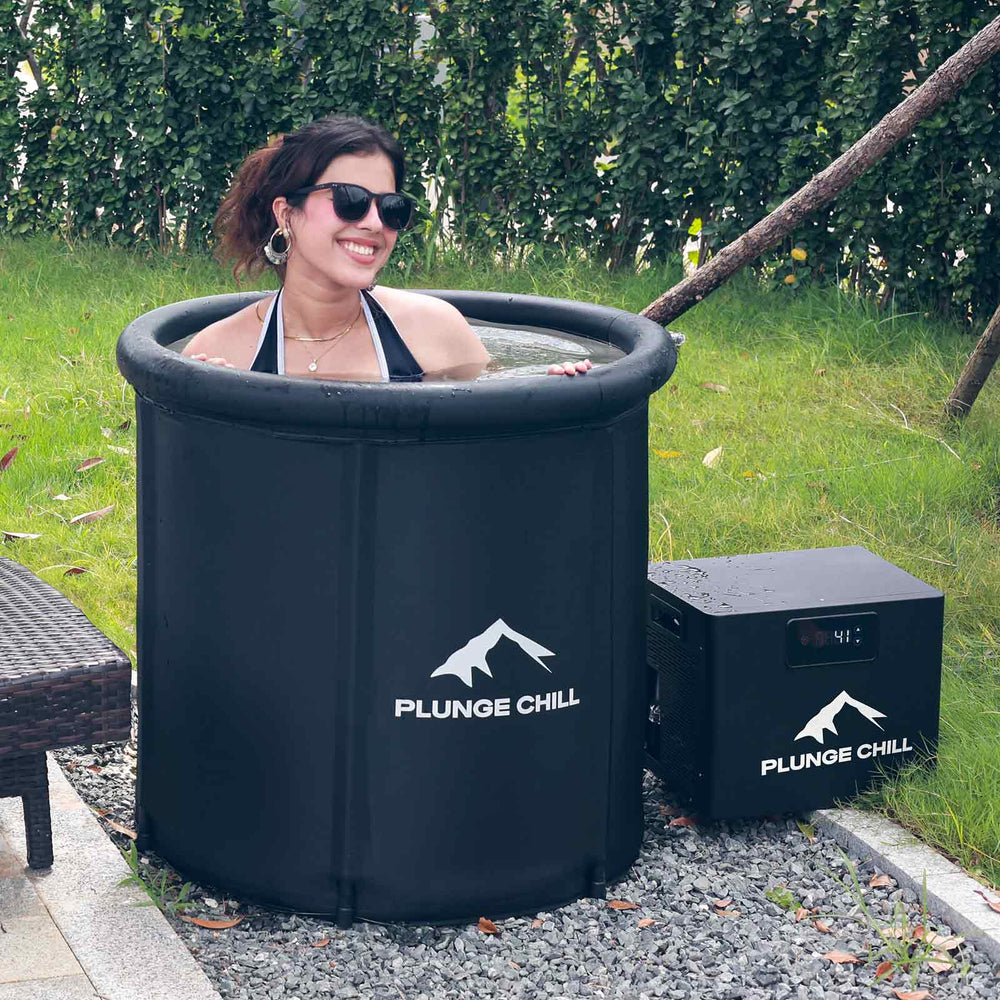
You can cold plunge with a standard bathtub, three bags of ice, and a thermometer, as Cleveland Clinic describes. Collapsible tubs and stock tanks are affordable, portable, and easy to empty. Purpose‑built plunge systems add convenience and control with chillers, filtration, and covers, but fully featured systems can cost up to $20,000, according to Mayo Clinic Health System. Whether you are equipping a garage or a patio, evaluate features through the lens of safety, sanitation, noise, space, and running costs.
Feature |
Why It Matters |
What To Look For |
Reaches and holds target temperatures safely and consistently |
A unit that can maintain about 50–59°F easily and approach the high‑40s if desired; stable temperature readout and a reliable thermostat |
|
Filtration & sanitation |
Water hygiene protects skin and health |
Integrated filter, easy‑access cartridges, and optional UV‑C or ozone systems; clear, manufacturer‑approved sanitizer guidance |
Electrical & safety |
Risk control in wet environments |
GFCI‑protected outlets, proper grounding, and outdoor‑rated components if outside; clear installation instructions |
Drainage & cleaning |
Routine maintenance without hassle |
Bottom drain or pump‑out option, smooth interior surfaces that wipe clean, and accessible plumbing |
Footprint & ergonomics |
Fits your space and body |
Dimensions that suit your height, insulated lid to contain evaporative cooling and debris, and a stable, non‑slip step or platform |
Noise & placement |
Livability in homes and apartments |
Chiller noise level acceptable for your space; ventilation clearance if installed indoors |
Warranty & service |
Long‑term peace of mind |
Written warranty terms and accessible customer support; local service if available |
Care is straightforward if you keep a schedule. Shower before use, skim debris, and run the filter as recommended. Test sanitizer levels if your system requires it. Clean or replace filters on schedule. Drain and wipe down the tub periodically, more frequently if multiple people use it. In freezing climates, winterize outdoor units or move them inside to protect pumps and lines. Rely on manufacturer instructions for approved cleaning agents and sanitizer compatibility.

Putting It Together: A Week That Works
Here is how I typically integrate cold exposure for an active adult who lifts three days a week and trains endurance or sport twice on the weekend. After the Tuesday lift, we skip cold to preserve adaptations. After a Thursday interval run in warm weather, we use a conservative 55°F for 3–5 minutes to reduce heat stress and set up sleep. Saturday’s long run finishes with 10 minutes at 50–55°F if soreness is the primary complaint; if Sunday includes a game, we shorten to 3–5 minutes to avoid lingering stiffness. After the Sunday game, we reassess. If legs are heavy and Monday calls for normal work rather than training, a 10–15 minute session at 50–55°F can help restore comfort for the workweek, but we still avoid cold right after Monday’s strength session to protect gains.
Takeaway
Cold plunges are a useful, optional tool for weekend warriors when matched to a specific purpose. The strongest and most consistent benefits are short‑term: less soreness and fatigue, faster cooling after heat, and a calmer nervous system. For long‑term progress, timing is everything. Keep cold away from growth‑focused lifts, measure the water, stay conservative at home, and use a protocol that suits your tolerance and goals. If you decide to buy a tub, prioritize safety, sanitation, and temperature stability, not just the ability to hit the coldest possible number.
FAQ
What is the best temperature for a home cold plunge? For most healthy adults at home, water around 50–59°F balances safety and benefit. Beginners can start warmer, around the low‑60s to high‑60s, then adjust downward as comfort and goals dictate. Cleveland Clinic emphasizes this conservative range for first‑time users. Water below about 40°F is generally not advised for home use.
How long should I stay in? If you are new, start with one to two minutes and step out while you still feel in control. Many users settle into three to five minutes for general recovery. Some evidence favors 10–15 minutes for reducing soreness and muscle‑damage markers, but that longer dose is harder to tolerate and not necessary for everyone. Match the time to your goal and tolerance.
Should I cold plunge after lifting if I want muscle and strength gains? If your priority is size and strength, avoid cold for 24–48 hours after those sessions. Mayo Clinic and Ohio State Wexner Medical Center both caution that routine post‑lift cold can blunt adaptations. Use cold on rest days, after endurance sessions, or to manage heat, not right after heavy lifting.
Are cold showers as good as ice baths? Cold showers are more accessible and can deliver a similar alertness boost and some comfort benefits, but they are less consistent for full‑body cooling because the water does not immerse you evenly. Some studies link cold showers to fewer sick days, although immune mechanisms are unclear. If you tolerate showers well and feel better, that is a valid starting point.
Who should avoid cold plunges or seek medical clearance first? Anyone with heart disease, high blood pressure, diabetes, peripheral neuropathy, poor circulation, venous stasis, or cold agglutinin disease should speak with a clinician before trying cold exposure. Those with a history of fainting, arrhythmias, or cold sensitivity also warrant caution. Cleveland Clinic and the American Heart Association both note that cold can acutely raise blood pressure and heart rate.
Does hot water or contrast have a role on competition days? Hot immersion can promote relaxation and blood flow, which may preserve short‑term power better than cold when you must perform again in hours, though those data are preliminary. Contrast feels good and may mimic active recovery benefits, but very short cold intervals are unlikely to cool muscle meaningfully after heat. Suggested verification: Confirm with peer‑reviewed data rather than conference summaries before changing competition routines.
Acknowledgments of sources: Cleveland Clinic for safety and dosing guidance; Mayo Clinic and Ohio State Wexner Medical Center for adaptation‑timing recommendations; Frontiers in Physiology for meta‑analyses on soreness, fatigue, and biomarkers; Harvard Health for population‑level cold‑shower findings; Parker University clinical commentary on cryotherapy’s limits.
References
- https://digitalcommons.cedarville.edu/cgi/viewcontent.cgi?filename=1&article=1539&context=research_scholarship_symposium&type=additional
- https://www.health.harvard.edu/staying-healthy/research-highlights-health-benefits-from-cold-water-immersions
- https://www.mcphs.edu/news/physical-therapist-explains-why-you-should-chill-out-on-ice-baths
- https://journal.parker.edu/article/120141-the-efficacy-of-icing-for-injuries-and-recovery-a-clinical-commentary
- https://www.rutgers.edu/news/what-are-benefits-cold-plunge-trend
- https://commons.und.edu/cgi/viewcontent.cgi?article=1076&context=pas-grad-posters
- https://sncs-prod-external.mayo.edu/hometown-health/speaking-of-health/cold-plunge-after-workouts
- https://pmc.ncbi.nlm.nih.gov/articles/PMC2938508/
- https://health.osu.edu/wellness/exercise-and-nutrition/do-ice-baths-help-workout-recovery
- https://www.tcu.edu/news/2024/cold-plunge-tcu-faculty-share-the-cold-truth-of-cold-therapy.php