


As a sports rehabilitation specialist and strength coach who also evaluates cold plunge products, I see the same pattern every week.
Athletes and dedicated yogis leave a hot studio feeling loose and light, then ask if jumping straight into a cold plunge will lock in recovery or undo the session.
The short answer is that temperature contrast—using heat then cold—can be useful for soreness, perceived recovery, and managing swelling, but outcomes depend on timing, exposure, and goals. The longer answer, grounded in clinical evidence, is what follows.
Hot yoga elevates tissue temperature, heart rate, and sweat loss while improving short‑term mobility. Cold plunging rapidly reverses those thermal effects, constricting superficial vessels and modulating pain signaling.
Alternating the two—contrast therapy—has a plausible vascular and neural rationale and modest, mixed research support for short‑term recovery. The aim of this article is to translate that science into a practical, safe, and sport‑specific protocol for hot yoga practitioners who want a cold plunge afterward.
Table of Contents ▲
- Why Cold Plunge After Hot Yoga?
- What Heat Does During Hot Yoga
- What Cold Plunges Do After Heat
- The Science of Contrast Therapy
- Evidence in Practical Language
- Benefits and Drawbacks
- Who Should Avoid or Use Caution
- Step-by-Step Recovery Protocol & Table
- Contrast Therapy Insights & Myths
- Product Buyer’s Guide: What Matters
- Care, Cleaning, and Water Management
- When Not to Plunge: Safety Guidelines
- Key Takeaway
- Frequently Asked Questions (FAQ)
- References
What Heat Does to the Body During Hot Yoga
Heat exposure from a hot studio session promotes vasodilation and raises tissue temperature. That change can decrease stiffness, increase stretch tolerance, and create conditions that feel restorative.
Clinical physiology texts and summaries from Physiopedia note that heating increases metabolic activity and tissue extensibility and may help with short‑term pain reduction.
A separate line of research on local heat therapy shows how warming tissue can support recovery after hard eccentric work. A controlled investigation summarized by PubMed Central reported that repeated local heating sessions after maximal eccentric exercise improved fatigue resistance versus a thermoneutral control.
The Heat Mechanism: Cellular studies demonstrate that heat activates protein‑synthesis pathways and enhances mitochondrial signaling, establishing a solid physiological basis for why warmth feels deeply reparative after deep stretching.
What Cold Plunges Do to the Body After Heat Exposure
Cold water immersion creates intense cutaneous vasoconstriction, decreases local metabolic activity, slows nerve conduction, and blunts pain—effects consistently described by Johns Hopkins Medicine and Mayo Clinic.
For recovery, reviews summarized by Mayo Clinic indicate reduced next‑day soreness and inflammation markers with post‑exercise cold exposure. Cold plunges are typically defined as submersion at or below 50°F for short bouts, gradually working up from 30–60 seconds to several minutes as tolerated.
Strength Trade-Off Caution: Mayo Clinic guidance cautions that daily post‑training cold exposure can blunt long‑term resistance‑training adaptations. If your routine combines hot yoga with heavy hypertrophy lifting, separate your cold immersion sessions strategically.
Contrast Therapy After Hot Yoga: Benefits, Risks, and What It Really Does
Contrast therapy alternates heat and cold to cycle vasodilation and vasoconstriction. A scoping review on PubMed Central found that trials in musculoskeletal pain show short‑term improvements in pain and function, although heterogeneity and modest quality limit certainty.
Near‑infrared spectroscopy work published on PubMed Central observed increased intramuscular oxygenation during contrast baths using approximately 100–104°F hot phases and 46–50°F cold phases, consistent with better local hemodynamics.
At the same time, a systematic review summarized by ScienceDirect questioned the simplistic “vascular pump” explanation and noted that lymphatic drainage depends primarily on muscle contraction and gravity rather than blood‑vessel cycling.
Two things can be true: contrast can change blood volume and oxygenation in the short term, yet its ability to drain swelling through a pump mechanism may be overstated. Differences in methods and temperature control are likely causes of these conflicting conclusions.

COLD PLUNGE CHILLER
Cold Plunge After Hot Yoga: What the Evidence Really Shows
Hot yoga front‑loads the heat exposure. That means you begin any contrast with tissues already vasodilated and warm.
If the goal is post‑session soreness control and down‑regulation, a brief cold phase at conservative temperatures can make sense. If the goal is to preserve mobility for a second session later the same day, finishing warm rather than cold can be reasonable to maintain tissue temperature and ease.
Several practice‑oriented sources note that finishing cold is common for post‑exercise swelling control, whereas finishing warm suits pre‑activity needs. This nuance maps well to the yoga context, where immediate post‑class goals vary.
Hydration Priority: Hot studios cause significant fluid loss. Plunging immediately while volume-depleted can trigger bradycardia, afterdrop, and sudden dizziness. Always drink 16–20 oz of electrolyte water and rest seated for 5–10 minutes first.
Evidence in Practical Language
The research base is mixed but useful when interpreted through goals:
- For perceived soreness and recovery within 24–48 hours: Contrast therapy performs about as well as cold‑water immersion and better than passive rest in several reviews summarized by Benchmark Physical Therapy and sports rehab sources. Hot and cold phases in the range of 100–109°F and 50–59°F for short intervals are common.
- For muscle strength preservation: One clinical study in PubMed found that immediate heat reduced strength loss, while cold applied at 24 hours was more helpful for strength recovery later. Cold—immediately or at 24 hours—reduced pain more than heat. Use warmth soon after activity when function matters that day, then switch to cold later to address soreness.
- For local hemodynamics: Near‑infrared spectroscopy during contrast baths showed improved intramuscular oxygenation, providing a plausible rationale for why athletes feel “flushed out” and refreshed after hot–cold cycling.
- For extreme temperature devices: A randomized trial in combat sport athletes compared alternating 113°F and 37°F with and without compression. Both approaches improved short‑term tone, stiffness, pain pressure thresholds, and maximal grip strength at 5 and 60 minutes; adding compression more strongly lowered muscle tone.
Cold Plunge After Hot Yoga: Benefits and Drawbacks
The likely benefits after hot yoga include reduced perceived soreness, dampened residual swelling in previously irritated tissues, and faster return to a normal resting state.
For those who experience an over‑revved sympathetic state post‑class, deliberate cold exposure can facilitate a parasympathetic rebound and calmer mood, as described in Mayo Clinic and several athlete‑focused reviews.
The drawbacks include potential interference with hypertrophy signaling if used immediately after strength‑focused cross‑training, the risk of dizziness if dehydrated, and skin or nerve irritation when temperatures or durations are excessive or poorly controlled.
An often‑missed nuance is that exercise itself is the most effective way to increase deep muscle blood flow, according to Physiopedia. Heat can alter perfusion, but movement remains the foundation. This is one reason I pair any post‑plunge plan with gentle mobility or a short walk later in the day rather than using temperature alone as a recovery strategy.

Cold Plunge After Hot Yoga: Who Should Avoid or Use Caution
Several reputable sources, including the Association of Accredited Naturopathic Medical Colleges, WebMD, and clinical reviews, list contraindications for hot–cold work.
People with significant cardiovascular disease, uncontrolled hypertension, peripheral vascular disease, neuropathy or reduced sensation, Raynaud’s phenomenon, open or infected wounds, poorly controlled diabetes, or pregnancy should seek medical advice before trying cold plunges or aggressive contrast.
Acute Injury Check: If you have a fresh acute injury with visible swelling or bruising, cold is prioritized initially; contrast may be considered later under clinician guidance. Always stop if there is worsening pain, persistent numbness, mottled skin, or dizziness.
How to Do a Cold Plunge After Hot Yoga Safely and Effectively
A workable, conservative template balances the heated class you just finished with modest cold exposure and re‑warming based on goals. The temperatures and timings below reflect common ranges used in sports medicine and rehab publications. Always verify water temperature with a thermometer and start milder than you think.
Exit the heated studio. Do not jump immediately into ice water. Sit down, towel dry, and drink 16 oz of electrolyte fluid to normalize heart rate and blood pressure.
Submerge into a dedicated cold plunge at 50–59°F for 1 to 2 minutes. Focus on slow, diaphragmatic nasal exhalations to manage the initial cold shock reflex.
Finish cold if your goal is acute soreness and inflammation control. Finish with a warm shower (100–104°F) if you need pliable joints for a second practice later today.
Put on dry, warm layers. Allow your body to rewarm naturally over 15–20 minutes through light walking rather than shocking the system with scalding showers.
| Goal | When to Plunge | Warm Component | Cold Component | Total Time | Finish | Notes |
|---|---|---|---|---|---|---|
| Ease soreness and swelling | Within 15–45 minutes post‑class after rehydration | Use residual body heat from class; optional brief warm shower around 100–104°F for 1–3 minutes | Cold plunge 50–59°F for 1 minute | 6–12 minutes total across several short cycles | Cold | Often repeat short cold bouts with brief rewarming breaks by air or towel; monitor for dizziness |
| Maintain flexibility for later practice | Same day when a second mobility session follows | Warm shower or sauna 100–109°F for 2–3 minutes | Brief cool rinse 59–68°F for 20–40 seconds | 6–10 minutes | Warm | Preserves tissue temperature; useful when joint stiffness is a priority |
| Downshift the nervous system before bed | At least 2–3 hours pre‑sleep | Warm shower 100–104°F for 2–4 minutes | Cold plunge 54–60°F for 30–60 seconds | 6–10 minutes | Cool or neutral | Keep cold modest to avoid post‑plunge alertness that can delay sleep onset |
If you prefer a single continuous cold plunge rather than cycles, begin with 30–60 seconds at 50–59°F and build gradually to 2–3 minutes over weeks as tolerated. End with a controlled rewarm—towel dry, light clothing, and calm breathing for several minutes.

Cold Plunge Buying Guide: What to Look For After Hot Yoga
Contrast protocols in the literature commonly use hot phases of one to four minutes and cold phases of 30 seconds to one minute, repeating for 10–20 minutes total. Some clinical protocols run longer—up to 30 minutes—but that typically occurs under supervision with precise temperature control.
For home users, shorter is safer and often equally effective for perceived recovery. As you acclimate, you can increase the total number of cycles or add slight temperature contrast, but let day‑to‑day response guide progression. If you feel chilled for more than 10–15 minutes afterward, you went too cold or too long.

PLUNGE CHILL MAX
How to Clean and Maintain a Cold Plunge Tub for Safe Use
Many guides present contrast therapy as a single finish‑cold rule, yet timing relative to the next activity matters. If you will practice again or need quick joint mobility, finishing warm maintains tissue temperature. This distinction appears in practice notes from athlete‑recovery sources and aligns with basic tissue extensibility principles.
The Lymphatic Reality: A systematic review in ScienceDirect reveals that lymphatic drainage depends predominantly on muscular contraction and gravity rather than alternating blood-vessel diameter. Gentle walking after your plunge clears post-yoga metabolic waste far more effectively than extra temperature cycling.
Finally, extreme temperatures are not required. A randomized trial in combat athletes used aggressive ranges near 113°F for hot and the high 30s°F for cold with a medical device. Comparable short‑term outcomes for stiffness and pain thresholds also occur with moderate bath and shower temperatures described by Verywell Health and WebMD. The most consistent results come from adherence and safety, not heroics.
Product Buyer’s Guide: What Matters in a Cold Plunge
After evaluating dozens of consumer units in gyms and clinics, my recommendations follow a simple hierarchy. Size and ergonomics come first; choose a tub that fits your height comfortably and allows full submersion without cramping posture.
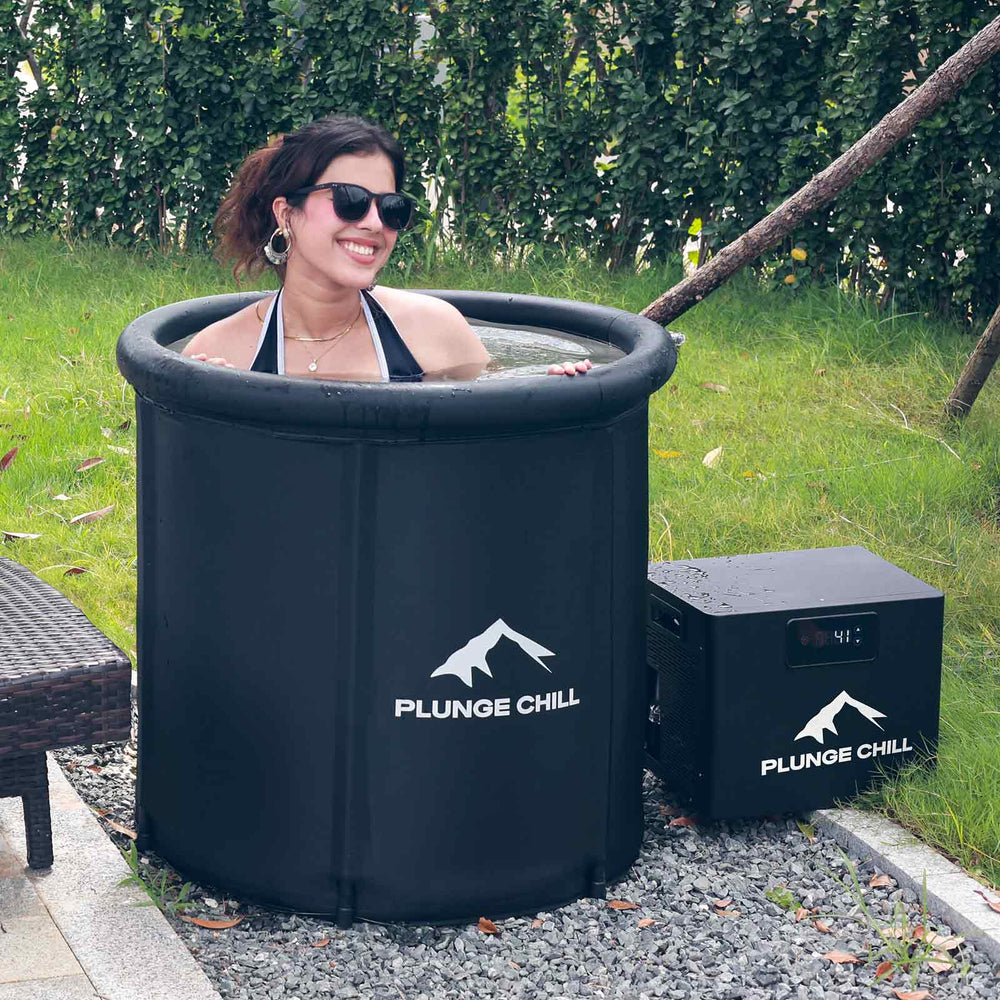
Insulation and a capable chiller keep water within your target range year‑round; for home use, integrated chillers that can maintain 45–55°F in warm rooms are practical.
Filtration and sanitation come next; closed‑loop filtration with fine‑mesh or cartridge filters plus a built‑in sanitation method such as UV or ozone reduces biofilm and improves water clarity. A drain that empties quickly and a surface that wipes clean simplify care.
Noise and electrical requirements matter in apartments or multi‑use spaces; many home units run on standard 120V outlets, while larger commercial models may require dedicated circuits.
Buyer Sizing & Safety Rule: Mayo Clinic notes that fully featured units can reach upwards of $20,000. If you are starting out, prioritize an insulated, puncture-resistant drop-stitch tub paired with an independent 1/3 HP to 1 HP chiller that offers GFCI electrical certification and intuitive digital controls.
If you want to pair a plunge with heat, assess whether your studio’s sauna or steam room offers adequate capacity and ventilation. The safest set‑ups provide clear temperature displays, timers, non‑slip flooring, and seating that allows you to exit easily if you feel lightheaded.

Care, Cleaning, and Water Management
Daily practice is simple: skim debris after each session, wipe surfaces weekly, and check filters per manufacturer guidance. Replace filters on schedule and rinse them between replacements if the unit allows.
For sanitation, follow the system designed for your tub. Many consumer plunges rely on ozone, UV, or compatible oxidizers; avoid mixing chemicals and never improvise. Empty and refill on a cadence informed by use and water clarity; in small home units, monthly changes are common under normal use.
Keep a dedicated thermometer in the tub to verify actual water temperature, not just the controller reading. Learn more on how to clean and maintain a cold plunge tub effectively.

Cold Plunge Water Filter Upgrade
When Not to Cold Plunge After Hot Yoga: Safety Guidelines
If you finish class dehydrated or lightheaded, prioritize rehydration and a cool‑down walk instead of immediate cold immersion.
If you notice new swelling from a minor strain, short cold exposure can be helpful, but avoid prolonged plunges that numb sensation around an unstable joint.
If your training week is strength‑focused and adding muscle is a priority, consider pushing cold plunges away from the post‑lift window to protect protein‑synthesis signaling, a caution echoed by Mayo Clinic and exercise physiology studies summarized by TrainingPeaks.
In all cases, anyone with cardiovascular or vascular conditions should obtain clearance from a healthcare provider before using cold plunges or contrast.
Reconciling Conflicting Advice
If you have read that contrast therapy is both “great for swelling” and “no better than rest,” you have encountered the research gap. Several reviews report short‑term improvements in soreness versus passive recovery, while others find no superiority to single‑modality cold.
The likely causes are differences in definitions, dosing, and measurement methods. Lab studies often use forearm or calf protocols at controlled temperatures, while field studies rely on showers or ad‑hoc tubs with wide temperature variability. Timeframes vary as well; benefits at 24–48 hours might not translate to long‑term performance. The pragmatic approach is to align dosing with your goal, keep sessions modest, and track your own response.
Practical Coaching Guidance
In practice, I ask athletes to decide their primary goal for that day—mobility, soreness control, or nervous system downshift—and choose a simple, conservative protocol to match.
After hot yoga, I prefer short, crisp cold exposures in the 50–59°F range with deliberate rewarming and light movement afterward. I remind clients that movement and sleep are foundational. Temperature work is an adjunct, not a replacement, for good load management, nutrition, and hydration.
When clients buy home plunges, I prioritize units that maintain temperature accurately, filter reliably, and are straightforward to clean. The best equipment is the one you will use consistently and safely.

Takeaway
Cold plunging after hot yoga can be a smart version of temperature contrast therapy when used with intention. The strongest evidence supports short‑term benefits for soreness and perceived recovery when you keep doses moderate and goals clear.
Respect the basics—hydrate, verify temperatures, and start conservative. When in doubt, finish cold for swelling control, finish warm when you need flexibility, and avoid post‑lift plunges if strength adaptations are your priority. Above all, let your response guide your routine.
Short FAQ
Is it safe to jump straight into a cold plunge after hot yoga?
It is generally safe for healthy adults when temperatures are conservative, but the combination of heat stress, sweat loss, and sudden cold can cause dizziness. Sit, rehydrate, and breathe for a minute before submerging, verify water temperature around 50–59°F, and keep the first exposure to 30–60 seconds. People with cardiovascular or vascular conditions should get medical clearance.
Will a cold plunge erase the flexibility gains from a heated class?
Cold reduces tissue temperature and can temporarily increase stiffness. If flexibility is your immediate goal for a second same‑day session, finish warm or delay the plunge. If soreness control is the goal, a brief cold exposure is reasonable.
What temperature and time work best for post‑yoga plunges?
Most recovery protocols use approximately 50–59°F for brief bouts of 30–60 seconds, building to 2–3 minutes as tolerated. If you prefer cycles, pair one to three minutes of warmth with 30–60 seconds of cold for 6–12 minutes total, concluding based on your goal.
Can cold plunges hurt my strength gains if I cross‑train?
Daily post‑lift cold exposure can blunt hypertrophy signaling. If building muscle is a priority, avoid plunging in the hour or two after heavy resistance sessions and schedule cold on rest or endurance‑focused days. This caution is highlighted by Mayo Clinic and exercise physiology studies in Journal of Physiology summaries.
Do I need an expensive home unit to benefit?
No. Many people start with an insulated tub, thermometer, ice, and a drain plan. Premium units add precise chilling, filtration, and sanitation, which improve convenience and consistency for frequent use. Choose the option you will maintain safely.
Does contrast therapy truly “pump” fluid out of tissues?
Alternating hot and cold does change local blood volume and oxygenation, as shown in near‑infrared spectroscopy studies on PubMed Central. However, a systematic review summarized by ScienceDirect argued that lymphatic drainage depends mostly on muscle contraction and gravity.
Sources Mentioned in This Review
PubMed Central, Mayo Clinic, Johns Hopkins Medicine, Physiopedia, WebMD, Verywell Health, Benchmark Physical Therapy, Carrell Clinic, Therabody Scientists, TrainingPeaks, Association of Accredited Naturopathic Medical Colleges.
References
- https://news.hss.edu/hot--cold--healing-power/
- https://pubmed.ncbi.nlm.nih.gov/26502272/
- https://www.nuhs.edu/hydrotherapy-contrast-shower/
- https://sncs-prod-external.mayo.edu/hometown-health/speaking-of-health/cold-plunge-after-workouts
- https://admisiones.unicah.edu/uploaded-files/FvYHkD/1OK025/benefits__of_hot_cold-therapy.pdf
- https://www.wau.edu/wp-content/uploads/2020/06/ContrastShower.pdf
- https://www.cedars-sinai.org/blog/how-to-use-a-heating-pad-to-heal-and-ease-pain-from-muscle-injuries.html
- https://aanmc.org/natural-remedies/contrast-hydrotherapy-benefits/
- https://www.hopkinsmedicine.org/health/treatment-tests-and-therapies/ice-packs-vs-warm-compresses-for-pain
- https://www.physio-pedia.com/Thermotherapy




Leave a comment