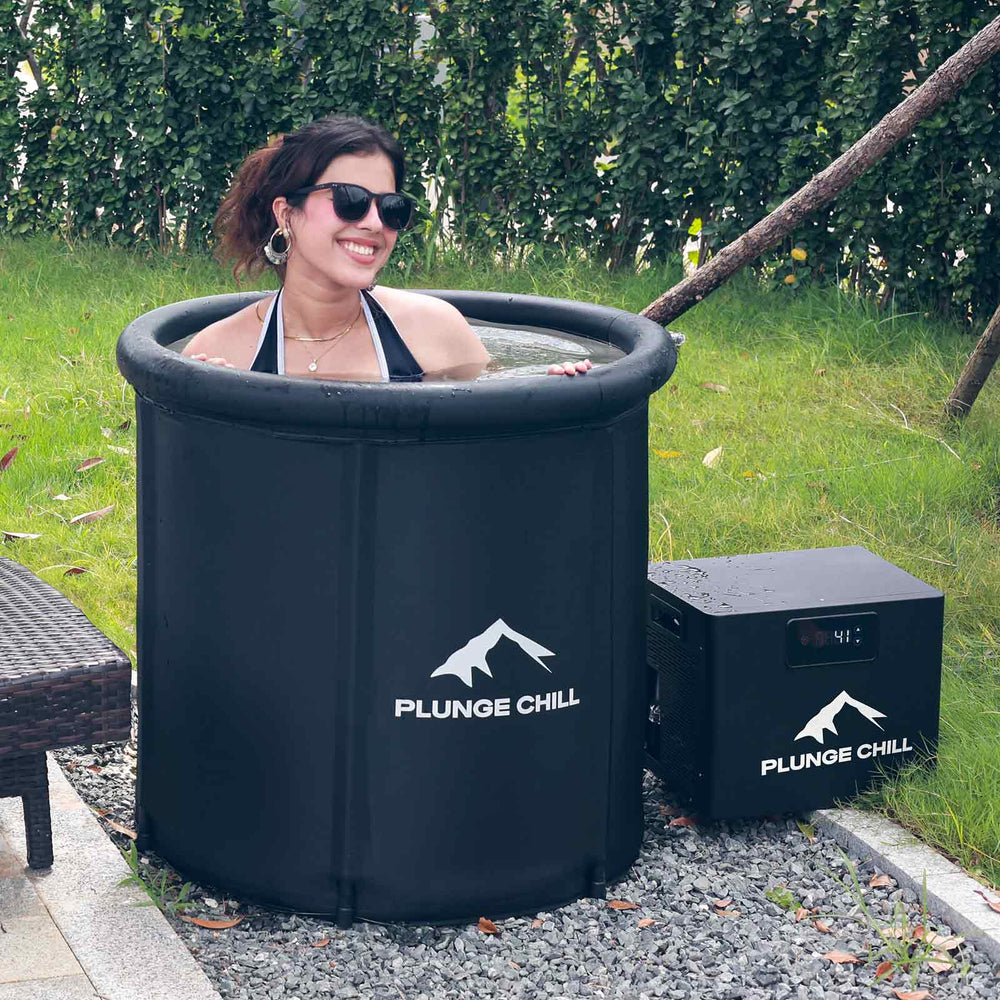
As a sports rehabilitation specialist and strength coach who reviews cold plunge products, I am routinely asked whether ice baths are safe for older adults. The short answer is that cold therapy can help some seniors manage pain and recovery, but the margin for error is small and the protocol must be adapted to age, health status, and goals. This article explains how to use cold exposure safely in later life, how to weigh benefits against risks, and how to choose senior-friendly equipment. I draw on clinical guidance from Cleveland Clinic, Mayo Clinic Health System, Tufts Medicine, Hopkins Medicine, the National Institute on Aging, and other reputable sources, while noting where experts disagree and why.

Cold Plunge Chiller + Pro Tub
Table of Contents
- What Is Cold Therapy for Seniors and Older Adults?
- How Aging Affects Cold Therapy Tolerance in Seniors
- Benefits of Ice Baths for Seniors: What Evidence and Experience Suggest
- Ice Bath Risks for Seniors: Who Should Avoid Cold Therapy
- Ice Bath Time and Temperature Guidelines for Seniors
- Safe Beginner Ice Bath Guide for Seniors
- Ice Bath Frequency and Progression for Seniors
- Safer Cold Therapy Alternatives for Seniors
- Buying and Setup Guide for Senior-Friendly Cold Plunges
- Care and Hygiene
- Special Populations and Red Flags
- Quick Reference: Time and Temperature Guide
- Three Insights Most Guides Skip, With What To Do About Them
- Takeaway
- Frequently Asked Questions (FAQ)
- References
What Is Cold Therapy for Seniors and Older Adults?
Cold therapy, or cryotherapy, includes many ways of exposing the body to low temperatures to change pain, inflammation, circulation, or arousal. Local methods focus on one body region using ice packs or cold-compression systems, while whole‑body methods include cold showers, cold-water immersion in tubs, and commercial whole‑body cryotherapy chambers. Hopkins Medicine and Brigham and Women’s Hospital describe local icing as a time‑tested way to temporarily reduce pain and swelling, usually applied in short bouts to protect skin sensation. Cleveland Clinic and Mayo Clinic Health System discuss cold plunges as brief whole‑body exposure for post‑exercise recovery and temperature management. Seniors can use these tools, but the safest entry points differ from those for younger adults.
| Cold Modality | Typical Dose (as reported) | Where It Fits for Older Adults | Notable Risks | Source Snapshot |
|---|---|---|---|---|
| Local ice pack or gel pack | About 10–20 minutes per application with a thin towel barrier | Useful for localized pain and swelling when skin sensation is intact and checked frequently | Skin injury if applied directly; avoid in areas with poor sensation or circulation | Hopkins Medicine; Brigham and Women’s |
| Cold shower | About 30–60 seconds building to a few minutes, often after warm water | Easiest entry; good for brief arousal and perceived recovery without water depth risks | Cold shock and hyperventilation if started too cold or too long | Mayo Clinic Press; Cleveland Clinic |
| Cold plunge (tub) | About 50–59°F for 1–5 minutes for beginners; advanced users sometimes enter colder water | Only with medical clearance and supervision at first; limit exposure and prioritize safe exits | Hypothermia, cardiovascular stress, frostbite with extremes, impaired motor control on exit | Cleveland Clinic; practitioner experience |
| Cold‑compression device | About 15–30 minutes per clinician guidance | Postoperative or arthritic joints when prescribed; easier dosing and coverage | Skin injury if too cold or too tight; follow device guidance | My Cold Therapy |
| Whole‑body cryotherapy chamber | About −166 to −274°F for up to 3 minutes | Rarely first‑line for seniors; expensive and not necessary for most goals | Cold shock, cardiovascular strain; access and cost barriers | ASAG First |
How Aging Affects Cold Therapy Tolerance in Seniors
Aging reduces the ability to sense and respond to cold, which raises risk when copying protocols aimed at younger people. The National Institute on Aging notes that older adults can become dangerously cold even in moderately cool environments, that some medicines and chronic conditions lower body heat, and that awareness of being too cold can be blunted. Harvard Health explains that vasoconstriction at or below about 59°F increases cardiac workload, while thinner skin and less subcutaneous fat reduce insulation. ChillTubs, reflecting a conservative industry view, warns that people over 60 have thinner skin, lower body mass, slower acclimatization, and higher cold sensitivity that can amplify hypothermia and cardiovascular stress. These age‑related factors mean that a protocol safe for a 30‑year‑old high‑performance athlete can be excessive for a 70‑year‑old with diabetes or peripheral neuropathy.

Benefits of Ice Baths for Seniors: What Evidence and Experience Suggest
Cold exposure can decrease localized inflammation and soreness after exertion through vasoconstriction and reduced nerve activity, which aligns with descriptions from Cleveland Clinic and Hopkins Medicine. Some people report improved alertness and sleep quality after brief cold showers or dips, and Cleveland Clinic notes that evidence for mental effects is mixed across small studies. ASAG First describes perceived improvements in stiffness, circulation, and tolerance to stress with careful use.
The broader research is not definitive. Mayo Clinic Press summarizes that evidence for many claims remains limited, citing studies that show mixed or context‑specific outcomes. A large workplace study reported that adding brief cold‑shower bursts was associated with fewer sick days over two months, but immune markers were not measured and mechanisms are uncertain. A reasonable verification step is to review the trial’s randomization, adherence, and whether outcomes were self‑reported versus objectively verified.
An important practical nuance emerges when pain is your primary target. Some people respond better to heat than cold, and Cleveland Clinic suggests individualizing based on response rather than expecting uniform benefit. For stiff arthritic hands on a winter morning, gentle warmth may loosen tissues better than a harsh cold plunge; for a swollen knee after an unusual hike, short local cold may help more than heat. Seniors should guard against assuming that more cold or longer cold is always better.

Cold Plunge Tub with Chiller
Ice Bath Risks for Seniors: Who Should Avoid Cold Therapy
The serious risks for older adults include hypothermia, frostbite, cardiovascular stress, dizziness or fainting, and impaired motor control that makes exiting the tub unsafe. Cleveland Clinic lists conditions that raise the risk, including heart disease, hypertension, diabetes, peripheral neuropathy, poor circulation, venous stasis, and cold agglutinin disease. In my clinic, anyone with these conditions needs clinician clearance before full‑body immersion, and in many cases we stay with local or device‑guided cooling that is easier to dose and monitor.
Cold air itself can irritate airways and provoke bronchospasm, particularly in older adults with asthma or chronic obstructive pulmonary disease. Mayo Clinic Health System describes how breathing cold, dry air can narrow airways and trigger shortness of breath, which adds risk around a plunge or outdoor rewarming. Nasal breathing and face coverings help warm and humidify air, but those with lung disease still need caution and often a different plan.
A less discussed hazard is the after‑drop. As described by Ritual Recovery, after‑drop is a continued fall in core temperature after exiting the water when chilled blood from the extremities returns to the core. Rewarming should be progressive in a warm room with dry clothes or blankets, not with immediate strenuous activity. This pattern is consistent with cold‑exposure best practices and aligns with general hypothermia prevention principles emphasized by the National Institute on Aging.
Ice Bath Time and Temperature Guidelines for Seniors: Why Recommendations Differ
Consumer‑facing guides sometimes recommend longer durations than medical sources. AlphaSauna and ASAG First cite water near 50–59°F for up to 10–15 minutes, while Cleveland Clinic recommends starting at about 1–2 minutes, a typical three minutes, and a five‑minute cap for beginners, with some advanced users going colder. For seniors, adopt the shorter, more conservative approach. The discrepancy likely stems from differences in sample populations, definitions, and risk tolerance. Manufacturer content often addresses a broad, generally healthy audience and may speak to acclimated users at milder temperatures, whereas clinical guidance emphasizes safety for people with comorbidities. Another contributor is modality confusion. Local icing for a swollen joint commonly lasts 10–20 minutes with a towel barrier; that timing does not translate to whole‑body immersion, where systemic cooling, cardiovascular responses, and exit safety become central issues.

Safe Beginner Ice Bath Guide for Seniors
Medical clearance is the first step when you have cardiovascular disease, hypertension, diabetes, peripheral neuropathy, poor circulation, pulmonary disease, or if you take medicines that affect thermoregulation. If cleared, begin with a short and warm‑leaning dose rather than chasing extreme cold. New users can start near 68°F for a half minute to two minutes, breathe steadily through the nose, and exit while still in control. Across a few sessions, work toward 59–55°F while keeping exposure brief. Cleveland Clinic suggests beginners favor 50–59°F and limit sessions to a few minutes; MyRitual cautions against starting below 50°F and recommends very short exposures early on. These parameters pair well with senior physiology by prioritizing safety margins.
Safety features matter as much as the numbers. The tub should be stable with non‑slip footing and easy handholds, and the surrounding floor should have traction. Keep a trusted person present for the first several sessions. Always measure water temperature rather than guessing. If you feel lightheaded, confused, uncontrollably cold, or if breathing becomes panicked, exit immediately and rewarm. Plan rewarming in advance with towels, dry layers, and a warm room; Cleveland Clinic notes that a sauna session about 15–30 minutes afterward can help normalize temperature if your clinician approves sauna use. Avoid alcohol around cold exposure because it impairs thermoregulation and judgment, a point consistent with the National Institute on Aging’s winter guidance.
Ice Bath Frequency and Progression for Seniors: Safe Cold Therapy Guidelines
Daily cold plunges immediately after resistance training can blunt long‑term strength and hypertrophy adaptations, according to Mayo Clinic Press and Mayo Clinic Health System. That point is missing in many general wellness writeups and becomes more relevant for older adults working to preserve lean mass. Use cold strategically rather than automatically after every lifting session. If you rely on cold for soreness control during a short high‑volume block or a multi‑day event, it can be useful in the short run. When building strength or muscle is the main goal, place cold exposure on rest days or at a different time of day, or favor local icing for a single joint rather than full immersion.
Safer Cold Therapy Alternatives for Seniors Who Should Avoid Ice Baths
Local icing remains one of the simplest options for short‑term pain control. Hopkins Medicine and Brigham and Women’s recommend applying an ice or gel pack wrapped in a thin towel for about 10–20 minutes, checking skin sensation frequently and avoiding areas with impaired feeling or poor circulation. Cold‑compression devices can offer controlled temperature and pressure for sore joints, which is helpful postoperatively or for arthritis under clinician guidance. My Cold Therapy describes digital timing, easy pad coverage, and leak‑resistant connectors as features of such systems, with typical session times around 15–30 minutes.
Cold showers are another gentle on‑ramp. Mayo Clinic Press suggests starting with 30–60 seconds and, if desired, building toward a few minutes. They carry less risk of slips and exit problems than a deep tub and are easy to terminate quickly. For injuries, Tufts Medicine and a scholarly review in a medical journal highlight that reflexively icing immediately and repeatedly after soft‑tissue injury may slow healing when used beyond the earliest phase. Rehabilitation guidance has shifted toward the PEACE and LOVE framework, which emphasizes protection, education, vascularization, and exercise. Use cold primarily for severe early swelling or pain control and avoid prolonged icing when the goal is tissue repair.

Buying and Setup Guide for Senior-Friendly Cold Plunges
As a product reviewer, I advise older buyers to value stability, precise control, and low‑friction operation over extreme cold capability. A senior‑friendly tub should be easy to step into and out of, with firm handholds and a textured or non‑slip interior. A seat or ledge that allows partial immersion can make the first phase of acclimation much safer. The chiller should hold an accurate temperature in a narrow range without large swings, and the display should be legible. Choosing a dedicated cold plunge tub with a chiller eliminates the physical hazard of hauling heavy ice bags and guarantees exact temperature stability. Filtration and disinfection matter because water quality deteriorates quickly with regular use; look for an all-in-one chiller system that provides automated filtration so that maintenance is effortless.

1HP Cold Plunge Chiller + Tub(Plus)
Cleveland Clinic describes a basic setup using cold tap water and measured ice to achieve a target temperature. Mayo Clinic Health System notes that full‑featured tanks can cost up to $20,000.00, so be realistic about budget and storage. Lids reduce debris and heat gain, which helps chillers keep temperatures stable. When setting up a plunge indoors, treat the surrounding area like a wet room with non‑slip mats and quick‑access towels. If you add space heaters during rewarming, follow Consumer Product Safety Commission guidance to manage fire and carbon‑monoxide risk, a concern echoed by the National Institute on Aging’s winter safety recommendations. Outdoor plunging introduces cold‑air breathing and weather hazards; the safest approach for seniors is a controlled indoor setup with a helper nearby until you are fully accustomed.
Care and Hygiene
Follow the manufacturer’s cleaning instructions for sanitizers, filters, and surface maintenance, and keep a simple log of water checks and changes so that care does not depend on memory. Rinse off before entry to reduce contaminants and apply emollients after sessions if skin becomes dry. If skin sensation is impaired, medical conditions affect circulation, or medications alter thermoregulation, choose device‑guided cooling or local icing and avoid whole‑body immersions. Avoid using a plunge alone until you have months of uneventful sessions with stable protocols and clear emergency plans.
Special Populations and Red Flags
People with heart disease, hypertension, diabetes, peripheral neuropathy, poor circulation, venous stasis, cold agglutinin disease, Raynaud’s phenomenon, or chronic lung disease should consult a clinician before considering a plunge. Cleveland Clinic specifically cautions these groups, and Mayo Clinic Health System notes that cold air can worsen breathing symptoms, so short and warm‑leaning exposures are especially important. Stop immediately if you feel faint, confused, or if shivering becomes intense and uncontrollable, and begin planned rewarming. The National Institute on Aging describes hypothermia warning signs and emphasizes calling emergency services when severe signs appear, including slow heartbeat and breathing or loss of consciousness. Indoors, keep the environment warm enough for seniors; the National Institute on Aging suggests home temperatures of at least 68°F in cold weather for safety.
Quick Reference: Time and Temperature Guide
| User Type | Water Temperature to Try First | Duration Cap for a Session | Notes and Source Snapshot |
|---|---|---|---|
| New senior user with medical clearance | About 68–59°F | About 30 seconds to 2 minutes | Start warm‑leaning, emphasize calm breathing and controlled exits. Cleveland Clinic; MyRitual; clinical practice |
| Medically cleared and acclimating senior | About 59–55°F | Up to 3–5 minutes | Do not chase lower temperatures; prioritize consistency and safe rewarming. Cleveland Clinic |
| Local icing instead of plunge | Not applicable | About 10–20 minutes | Use a towel barrier; check skin sensation; combine with rest, compression, elevation as appropriate. Hopkins Medicine; Brigham and Women’s |
| Cold‑compression device | Device‑controlled | About 15–30 minutes as directed | Follow clinician and manufacturer guidance; monitor skin. My Cold Therapy |
Three Insights Most Guides Skip, With What To Do About Them
Some sources aimed at general audiences suggest immersion times of up to 10–15 minutes, while clinical sources recommend only a few minutes for beginners. For older adults, follow the shorter clinical targets. The likely cause of the discrepancy is that consumer content often reflects acclimated users, milder true water temperatures, and younger populations, whereas clinical cautions appropriately aim to minimize risk in people with comorbidities such as heart disease and diabetes. Cleveland Clinic and ASAG First illustrate this divergence.
Many programs promote a daily cold plunge as a universal wellness habit, but training science shows that frequent post‑lift immersions can blunt strength and muscle gains. Mayo Clinic Press and Mayo Clinic Health System both caution that routine post‑exercise cold exposure can compromise long‑term adaptations. Older adults working to preserve muscle should periodize cold, shifting it to off days or using local icing for pain control rather than whole‑body immersion after resistance exercise.
Pulmonary reactivity to cold air is underappreciated in older adults. Mayo Clinic Health System notes that cold, dry air can provoke bronchospasm and shortness of breath, especially with asthma or COPD. Around a plunge, nasal breathing and a warmed indoor air environment help, but those with lung disease should use local cooling or brief warm‑leaning showers instead.
Takeaway
Cold therapy can be part of a senior’s recovery toolkit, but the safest path is conservative dosing, senior‑friendly equipment, and a bias for local or device‑guided cooling when comorbidities are present. Begin warm‑leaning and brief, measure water temperature, and exit before comfort turns to strain. Rewarm in a controlled environment and avoid alcohol. If your goals include building or preserving muscle, schedule cold strategically so that it does not cancel the training signal. Most of all, remember that cold is a tool, not a test of toughness. The right dose for a 25‑year‑old athlete is not the right dose for a 70‑year‑old with diabetes and neuropathy. With clinician guidance and a smart setup, you can capture the benefits while minimizing the risks.
Frequently Asked Questions (FAQ)
Is an ice bath safe for seniors at all?
It can be for select older adults who are medically cleared and who follow conservative protocols. Cleveland Clinic emphasizes short exposures, warm‑leaning starting temperatures, and careful screening for heart disease, neuropathy, and circulation issues. If there is any doubt, begin with local icing or a clinician‑directed cold‑compression device instead of whole‑body immersion.
What temperature and time should an older beginner use?
A practical starting point is to test near 68°F for a half minute to two minutes, then, across several sessions, approach 59–55°F while keeping the total time under five minutes. Cleveland Clinic suggests beginners favor about 50–59°F for only a few minutes and to avoid extremely cold water. MyRitual cautions against starting below 50°F and recommends very short exposures at first.
Will cold plunges help my arthritis, or should I use heat?
Both can help different aspects of symptoms. Cold can temporarily reduce swelling and dull pain, which some people with arthritis appreciate after activity. Heat may improve joint mobility and comfort before movement. Cleveland Clinic notes that some people respond better to heat, so test both in short, safe doses. For persistent arthritis plans, consult a clinician to personalize thermal strategies over the week.
I lift weights to fight age‑related muscle loss. Can I plunge right after?
If preserving or growing muscle is a priority, avoid routine cold plunging immediately after lifting. Mayo Clinic Press and Mayo Clinic Health System report that post‑exercise cold exposure can blunt long‑term strength and hypertrophy. Use cold on off days, separate it by many hours from lifting, or rely on local icing for pain control rather than whole‑body immersion after resistance sessions.
I have diabetes and some numbness in my feet. Is cold immersion off the table?
Peripheral neuropathy and diabetes increase risk because impaired sensation hides tissue damage, and circulation changes slow rewarming. Cleveland Clinic lists these as cautionary or contraindicating conditions for cold plunges. If your clinician approves any cold therapy, favor local or device‑guided cooling with strict skin checks and avoid full‑body immersion. Many older adults in this situation do best with alternatives to plunging.
What is the after‑drop, and how do I prevent it?
After‑drop is a continued fall in core temperature after leaving cold water as chilled peripheral blood returns to the body’s core. Ritual Recovery summarizes this mechanism and its risks. Plan controlled rewarming in a warm room with dry layers, avoid strenuous activity immediately after exiting, and have a helper nearby during early sessions. If shivering remains intense, confusion appears, or you feel increasingly unwell, escalate rewarming and seek medical attention.
References
- https://www.health.harvard.edu/staying-healthy/an-older-adults-guide-to-exercising-in-cold-weather
- https://sncs-prod-external.mayo.edu/hometown-health/speaking-of-health/is-the-extreme-cold-bad-for-your-lungs
- https://pmc.ncbi.nlm.nih.gov/articles/PMC8173427/
- https://medicine.tufts.edu/news-events/news/are-you-using-heat-and-ice-properly
- https://health.clevelandclinic.org/what-to-know-about-cold-plunges
- https://www.hopkinsmedicine.org/health/treatment-tests-and-therapies/cryotherapy-cold-therapy-for-pain-management
- https://mcpress.mayoclinic.org/healthy-aging/the-science-behind-ice-baths-for-recovery/
- https://www.mayoclinichealthsystem.org/hometown-health/speaking-of-health/cold-plunge-after-workouts
- https://www.aarp.org/health/conditions-treatments/ice-heat-pain-relief/
- https://healthlibrary.brighamandwomens.org/YourFamily/OlderAdults/Multimedia/134,95