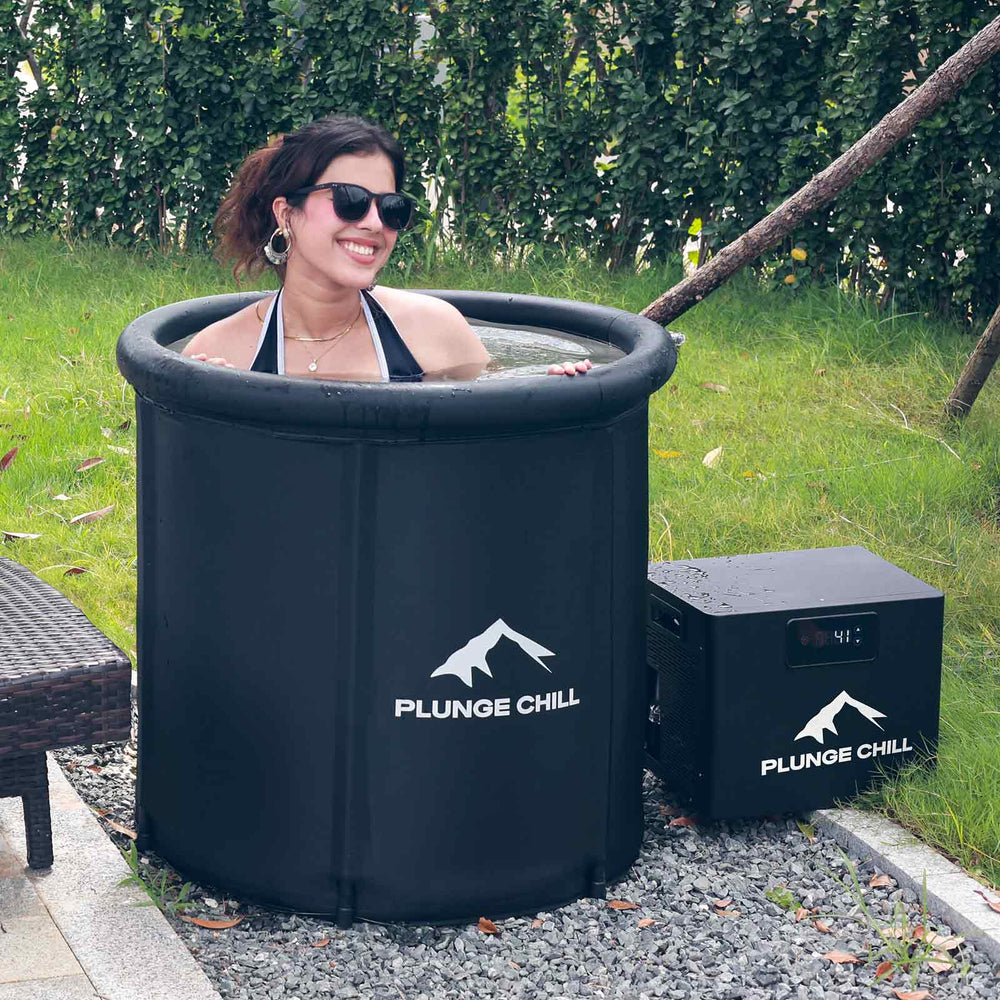
As a sports rehabilitation specialist and strength coach who travels with athletes, I rely on portable cold exposure to reduce post-session soreness, keep legs fresh after long travel days, and stabilize mood and alertness when schedules are chaotic. Traditional cold plunge tanks are excellent at home or in training facilities, but on the road they are heavy, power-hungry, and hard to stage. This guide breaks down travel-ready alternatives—what works, when to use each method, and how to do it safely—grounded in research and informed by hands-on use with teams in hotels, gyms, and race venues.
What Cold Exposure Does—and Where Evidence Stands
Cold-water immersion, or CWI, involves brief submersion in cold water to temper inflammation, reduce perceived soreness, and support recovery. Mechanistically, cooling constricts blood vessels, slows metabolic activity, and limits secondary tissue damage; subsequent rewarming improves circulation and muscle relaxation. Ohio State Health describes these pathways and notes that full-body immersion outperforms cold showers due to more uniform cooling, while still recognizing showers as a reasonable alternative when immersion is impractical. Mayo Clinic similarly highlights reductions in exercise-induced muscle damage, soreness, and next-day performance decrements but emphasizes that optimal protocols and timing remain uncertain. Stanford Lifestyle Medicine focuses on mental health outcomes, reporting lower cortisol after exposure, endorphin and norepinephrine dynamics, and a practical quick-reset option in facial immersion. In short, the evidence base is mixed but promising, especially for endurance-type fatigue and mood regulation.
A crucial nuance for lifters: both Ohio State Health and Mayo Clinic caution that immediate post-lift cold immersion can blunt long-term strength and hypertrophy. If your goal is size or maximal strength, wait 24–48 hours after heavy resistance sessions before going cold. For endurance and mixed-sport athletes, cold exposure used after key workouts may aid readiness without the same adaptation penalty.
Travel introduces constraints—limited space, variable water temperature, hygiene concerns, and time pressure—so the ideal is portable, controllable, and respectful of hotel properties. Across dozens of away trips, the most reliable setup has been a packable inflatable tub for road travel, a strict cold-shower protocol for flights, and targeted face immersion for rapid downregulation before sleep.

Safety, Dosing, and Timing in One Place
For most healthy adults, a practical target is 50–59°F for 5–10 minutes, progressing from 30–60 seconds at first exposure. Beginners can start warmer and shorter, then titrate colder and longer as tolerated. Limit total immersion to about 10 minutes per session. These ranges are consistent with guidance from Ohio State Health, Mayo Clinic, and Stanford Lifestyle Medicine. If you have cardiovascular disease, uncontrolled hypertension, neuropathies, or are pregnant, consult a clinician and avoid unsupervised exposure. Enter the water calmly, control your breathing, and rewarm safely afterward with towels, a robe, light movement, and warm beverages; avoid aggressive hot blasts immediately to limit afterdrop.
Timing matters. If your session emphasized high-load resistance training and your long-term goal is strength or muscle gain, hold off on cold exposure until the following day. If your session emphasized endurance or heat stress, a cold shower or immersion the same day is more defensible to reduce perceived soreness and thermal load. Conflicting findings across studies likely reflect differences in training type, when the cold is applied relative to training, and what outcomes are measured (acute soreness vs long-term adaptation).

The Traveler’s Constraint Set—and How to Think About Options
On the road you must balance stimulus quality with practicality. Hotels rarely allow significant water dumps, ambient temperatures vary, ice access can be limited, and floors may not be rated for high loads. Inflatable tubs can be excellent in an Airbnb or on a patio during road trips; they are less appropriate for upper-floor hotel rooms due to filled weight and drainage. When flying, I default to cold showers, face immersion, and short bucket pours, using a compact thermometer to confirm temperatures when possible.
The matrix below summarizes portable methods and trade-offs. Packability reflects what teams can haul in checked luggage or a gear tote.
Modality |
Typical Temp (°F) |
Typical Duration |
Packability |
Water Source |
Typical Cost Range |
Best Use Case |
Key Limitations |
Cold shower or contrast shower |
50–59 |
1–5 minutes per cold cycle |
No gear |
Hotel shower |
$0.00 |
Flights and hotel stays with limited space |
Less uniform cooling; hotel water may not get cold enough |
Face immersion (sink/basin) |
50–60 |
15–30 seconds, repeat a few rounds |
Pocket thermometer only |
Sink or bowl with ice |
$0.00 |
Rapid downshift of stress before sleep or meetings |
Partial-body only; requires ice access |
50–60 |
10–30 seconds |
Minimal |
Ice bucket + shower |
$0.00 |
Quick cooldown post-run without filling a tub |
Splash/mess risk; brief stimulus |
|
Packable inflatable tub |
37–60 |
2–10 minutes |
About 6–16 lb packed, depending on model |
Bathtub or hose |
899.00 |
Road trips and Airbnbs; team camps |
Fill/drain logistics, ice demand, floor load when filled |
Cooling vest |
55–65 |
30–120 minutes |
Wearable |
None |
Varies by brand |
Between training sessions or travel days |
Milder stimulus than immersion; recharge/refreeze needed |
Cryotherapy session |
Extremely cold air |
2–4 minutes |
No gear |
Clinic visit |
Service fee |
Consistent stimulus without water |
Access and cost; not everywhere |
Natural water dip |
Below 59 |
1–10 minutes |
No gear |
Lake, river, ocean |
$0.00 |
Coastal or mountain venues |
Water safety, currents, and sanitation |
Ice shower device (facility) |
39–50 |
30–120 seconds |
Facility dependent |
Plumbed system |
Facility or membership fee |
Gyms or clinics with dedicated systems |
Limited availability for travel |
Temperature and duration ranges draw on Ohio State Health, Mayo Clinic, Stanford Lifestyle Medicine, and Zenwave Wellness. Product category examples and price bands are aggregated from Michael Kummer, The Spruce, Garage Gym Reviews, Science for Sport, and Runners World.
Method Deep Dive: What Works on the Road
Cold Showers and Contrast Showers in Hotels
Showers are the backbone of travel recovery because they require no gear. Aim for water in the 50–59°F band if your tap allows; if not, a contrast approach works: alternate hot for a few minutes with cold for a minute and finish on cold. Ohio State Health notes showers are a step down from full immersion because the cooling is less uniform, but they remain effective for perceived recovery, heat load management, and mental alertness. In practice with teams, I cue athletes to target the back of the neck, upper back, thighs, and calves, keep the breath calm, and accumulate two to five minutes of cold. When hotel plumbing tops out warmer than ideal, even a few minutes of cool exposure can lift alertness; Stanford Lifestyle Medicine reports mood benefits at relatively modest cold exposures.
Face Immersion for Rapid Autonomic Reset
A sink, a bowl, some ice, and a timer are usually all you need. Brief face immersions of 15–30 seconds, repeated a few rounds with rest, activate the diving reflex and can slow heart rate while promoting a parasympathetic tilt. Stanford Lifestyle Medicine highlights facial immersion as a fast-acting option for mood regulation; Zenwave Wellness lists similar guidance. I deploy this between meetings or late evenings before sleep on packed itineraries. An overlooked angle is using face immersions on the hour during long work blocks to recenter attention; the physiological effect is plausible but under-studied in knowledge workers.
Bucket Pours When Time and Space Are Tight
Filling a bucket with cold water and ice and pouring slowly over the neck, shoulders, and torso can deliver a sharp cooling stimulus without flooding a bathroom. Zenwave Wellness includes this method as a minimal-equipment option. In hotels, I stage pours in the shower to avoid splashing and have a towel ready. The effect is brief, so I pair it with a cool-down walk and light stretching to extend the benefit.
Packable Inflatable Tubs for Road Trips and Rentals
For travel by car, a foldable or inflatable tub provides real immersion without facility access. The Spruce reports several tested options: some models pack down to about 8–16 lb, hold roughly 79–92 gallons, and drain via a hose. Michael Kummer highlights an ultra-portable option in the $149.00 range. Garage Gym Reviews and Science for Sport emphasize durability, insulation, drainage, pump compatibility, and the reality that inflatables warm faster than rigid insulated units. Expect to add ice—The Spruce notes 15–80 lb per plunge depending on ambient heat and starting water temperature—to reach the 50–59°F zone. In warm climates or sunlit patios, the water will warm quickly, so choose shade, fit an insulated cover, and plunge promptly.
One often-missed detail is the practical filled weight and floor load. The Spruce’s data for common tubs show filled weights near or above 900 lb depending on capacity. That is appropriate for a patio or ground floor, but it is risky for upper-floor hotel bathrooms with unknown load ratings. For hotel stays, use the inflatable tub only inside a larger bathtub or shower stall to contain spills and reduce floor stress, or avoid it entirely.
Cooling Vests for Mild, Prolonged Cooling
Cooling vests in the 55–65°F range worn for 30–120 minutes provide a low-grade, portable stimulus that modulates heat load without the intensity of immersion. Zenwave Wellness frames these as less potent than water but very practical during long travel days or between split sessions. I lean on vests for athletes who dislike cold baths or when ice is scarce.
Cryotherapy When You Can Book a Session
Whole-body cryotherapy uses extremely cold air for two to four minutes in a supervised chamber. It is clean, fast, and requires no water, which suits business travel and urban marathon weekends. Access and cost vary by city, and the physiological profile differs from water immersion; Stanford Lifestyle Medicine notes that cold air elicits overlapping but not identical responses. I use it when athletes specifically prefer it, or when hotel showers cannot deliver adequate cold.
Natural Water Dips—With Caution
Cold lakes, rivers, and oceans are highly effective and memorable. Follow basic open-water safety: avoid currents, do not go alone, verify water quality, enter and exit slowly, and have warm clothes ready. Mayo Clinic warns against hypothermia and ice entrapment; the cold shock response can trigger hyperventilation, so practice calm breathing and limit time.
Overlooked Nuances That Change Decisions
Many product roundups celebrate “portable” systems with active chillers. The portable label can be misleading for air travel: Science for Sport lists a credible inflatable-plus-chiller setup with a 15.5 lb tub paired to an 88 lb chiller. That is fine for a van or a facility, but not an airline trip with baggage limits. Practically, chiller-equipped “portable” systems are best for long road assignments and are excessive for a two-night hotel stay.
Another nuance involves mood regulation at not-very-cold temperatures. Stanford Lifestyle Medicine documents meaningful improvements in mood metrics even with exposures around 68°F in some protocols. That means a cool—not frigid—hotel shower can still deliver psychological benefits on busy travel days when ice is unavailable.
Finally, guidance can appear contradictory about whether cold exposure after workouts helps or harms. Both Ohio State Health and Mayo Clinic highlight the risk of blunted strength and hypertrophy when cold follows lifting sessions immediately, whereas endurance and thermally stressful efforts may benefit from same-day cooling. The likely cause of disagreement is differences in definitions and outcome measures across studies: some focus on acute soreness or next-day readiness, others on months-long strength adaptations; training modality and exposure timing are not standardized between studies.
Practical Setup and Care for Travelers
In team hotels and locker rooms, I standardize workflows to reduce mess and risk. For showers, I insert a one-minute cold finish after a standard warm rinse and cue nasal breathing. For face immersion, I add ice to a clean sink, submerge the face for 20–30 seconds, pause one minute, and repeat a few rounds while keeping shoulders relaxed. For bucket pours, I set the bucket inside the shower and pour slowly from the neck downward, then rinse the area to prevent slips. For inflatable tubs during road trips, I place the tub inside a bathtub or on an outdoor patio with a drainage plan, use a garden hose when available, and measure water temperature with a pocket thermometer. I always confirm with the property that water disposal is acceptable and avoid filling to the brim to reduce entry displacement. After use, I drain fully, rinse with mild soap, dry seams, and store out of direct sun to protect materials, consistent with care notes from Garage Gym Reviews and The Spruce.

Buying Tips for Portable Cold Exposure
If you are shopping for a travel-capable tub, prioritize durability and seam construction, insulation that slows warming, a cover that fits snugly, and a drain system that accepts a hose attachment. Favor models that pack under about 16 lb with a reinforced carry bag and include a thermometer. Expect to pay roughly 899.00 for well-reviewed inflatables; prices below $50 on third-party marketplaces exist, but longevity and seam strength are variable.
Chillers transform convenience at home or for long-term camps but are rarely practical for flights. Science for Sport lists a portable chiller at 88 lb, with total system prices in the $4,399.00 range. That is best for a vehicle-based setup, not a weekend race trip. For facility or home use, purpose-built units with integrated chillers and sanitation systems are exceptional but can cost 10,499.00 or more, as reported by Science for Sport, BarBend, and Michael Kummer. These are outside the travel scope but help calibrate expectations.
A Decision Guide by Training Goal
Use the table below to align choices with goals and timing.
Scenario |
Primary Goal |
Use Now |
Delay or Modify |
Rationale and Source |
Heavy resistance session and hypertrophy block |
Long‑term strength/size |
Gentle cool shower or face immersion later that day |
Full-body cold bath 24–48 hours later |
Cold after lifting may blunt adaptation; Ohio State Health and Mayo Clinic |
Long hot endurance session |
Reduce thermal load and soreness |
Shower, bucket pour, or immersion same day |
None unless shivering persists |
Endurance not similarly negatively affected; Ohio State Health, Mayo Clinic |
Jet-lagged business travel |
Mood and alertness |
Face immersion and short cold shower finish |
Avoid very long cold before sleep if sensitive |
Stanford Lifestyle Medicine shows mood gains; trial your response |
Back-to-back race or practice days |
Next-day readiness |
Cold shower or short immersion post-session |
Limit time below 50°F if new |
Safety and tolerance first; Ohio State Health, Stanford Lifestyle Medicine |
Care, Sanitation, and Hotel Etiquette
Whether you use a tub or just the shower, keep surfaces clean and dry. For tubs, rinse with mild soap and water after each use, dry thoroughly before packing, and store away from direct sun. Use fitted covers to reduce debris and heat gain between sessions. If draining to a bathtub, use a fine mesh over the drain to catch debris; never drain onto hotel floors or balconies. For ice, respect property rules: use modest amounts, pay for extra if requested, and avoid depleting shared machines when events are in town. In shared team environments, consider a splash of safe oxidizing sanitizer in line with manufacturer guidance, or choose single-use fill-and-dump sessions to maintain hygiene when filtration is not available.
Product Category Context for Perspective
At home or in a vehicle-supported camp, premium plunge units with integrated chillers reach 32–39°F with strong sanitation and app controls, as reviewed by BarBend, Science for Sport, The Spruce, and Runners World. They deliver unmatched consistency at a high price and weight. Midrange rigid barrels such as Ice Barrel offer durable, space-efficient immersion for around $1,000.00, per Men’s Health, with the trade-off of manual ice. For strict travel use, inflatables around 8–16 lb packed weight remain the most practical. Facility-based solutions like iCoolsport’s ice shower provide instant cold exposure without the logistics of tubs or ice, when available.
FAQ
How cold should I go when I’m new to cold exposure?
A safe, research-aligned starting point is around 50–59°F for one to three minutes, progressing to five to ten minutes as tolerated. If you only have cool water, a contrast shower or facial immersion still provides benefits. This range is consistent with Ohio State Health, Mayo Clinic, and Stanford Lifestyle Medicine.
Will a cold shower in a hotel actually help if it doesn’t feel that cold?
Yes. While full-body immersion is more comprehensive, showers can still reduce thermal load and improve alertness. Stanford Lifestyle Medicine notes mood benefits at relatively modest cold exposures, so even a cool shower at the end of your routine can be useful on travel days.
Is it safe to plunge right after lifting if I’m trying to build muscle?
If your primary goal is strength or size, delay full-body cold for 24–48 hours after heavy lifting to avoid blunting adaptations, as noted by Ohio State Health and Mayo Clinic. If immediate recovery is the priority for competition scheduling, a brief shower or face immersion is a gentler compromise.
What’s the most practical portable solution for road trips?
A packable inflatable tub paired with an accurate thermometer is the sweet spot for many athletes in Airbnbs or ground-floor accommodations. Expect to add ice to reach 50–59°F and plan for careful filling, draining, and drying. The Spruce, Garage Gym Reviews, and Michael Kummer provide representative capacities, weights, and care tips.
Should I book cryotherapy instead of setting up a tub?
Cryotherapy can be a clean, quick option if there’s a reputable clinic nearby and your budget allows. It delivers an intense short exposure without water. Physiological responses are overlapping but not identical to water immersion; try both and track how you feel.
Do cooling vests replace an ice bath?
They do not replicate full-body immersion but are valuable for prolonged, mild cooling during travel or between sessions. Zenwave Wellness suggests 30–120 minutes at 55–65°F. I use them when showers are inadequate and ice is scarce.
Takeaway
Travel does not have to derail recovery. If you fly, build a dependable routine around cold shower finishes, facial immersion, and occasional bucket pours, anchored by measured breathing and careful rewarming. If you drive, a packable inflatable tub adds true immersion when staged safely in a bathtub or on a suitable patio, with a thermometer and a clear drain plan. Time cold exposure to your goals—delay full-body cold after heavy lifting if you are chasing strength and size, and lean in sooner after hot endurance work or tournament days. The best travel method is the one you can execute consistently, safely, and cleanly within the constraints of your venue.
Citations in this article reference publisher names only and draw on Ohio State Health, Mayo Clinic, Stanford Lifestyle Medicine, UTMB News, BarBend, Science for Sport, The Spruce, Garage Gym Reviews, Runners World, Michael Kummer, and iCoolsport. Links will be added separately by the tool.
References
- https://www.mcphs.edu/news/physical-therapist-explains-why-you-should-chill-out-on-ice-baths
- https://lifestylemedicine.stanford.edu/jumping-into-the-ice-bath-trend-mental-health-benefits-of-cold-water-immersion/
- https://www.marquette.edu/innovation/documents/arora_ice_bath_recovery.pdf
- https://sncs-prod-external.mayo.edu/hometown-health/speaking-of-health/cold-plunge-after-workouts
- https://health.osu.edu/wellness/exercise-and-nutrition/do-ice-baths-help-workout-recovery
- https://www.utmb.edu/news/article/utmb-news/2025/06/18/cold-water-immersion-rising-wellness-trend
- https://www.garagegymreviews.com/best-cold-plunge-tub
- https://icoolsport.com/?srsltid=AfmBOorWcpzyFVBfbzGpZGiLey1v7SNKjO8hTFWnvMGpW-nbT4kfKTKn
- https://plunge.com/?srsltid=AfmBOornKXuKBt73f0BDvqOnKQBhvEOps7DynUAOrRMdrfFJqbY2vnlD
- https://www.shape.com/best-cold-plunge-tubs-7562286