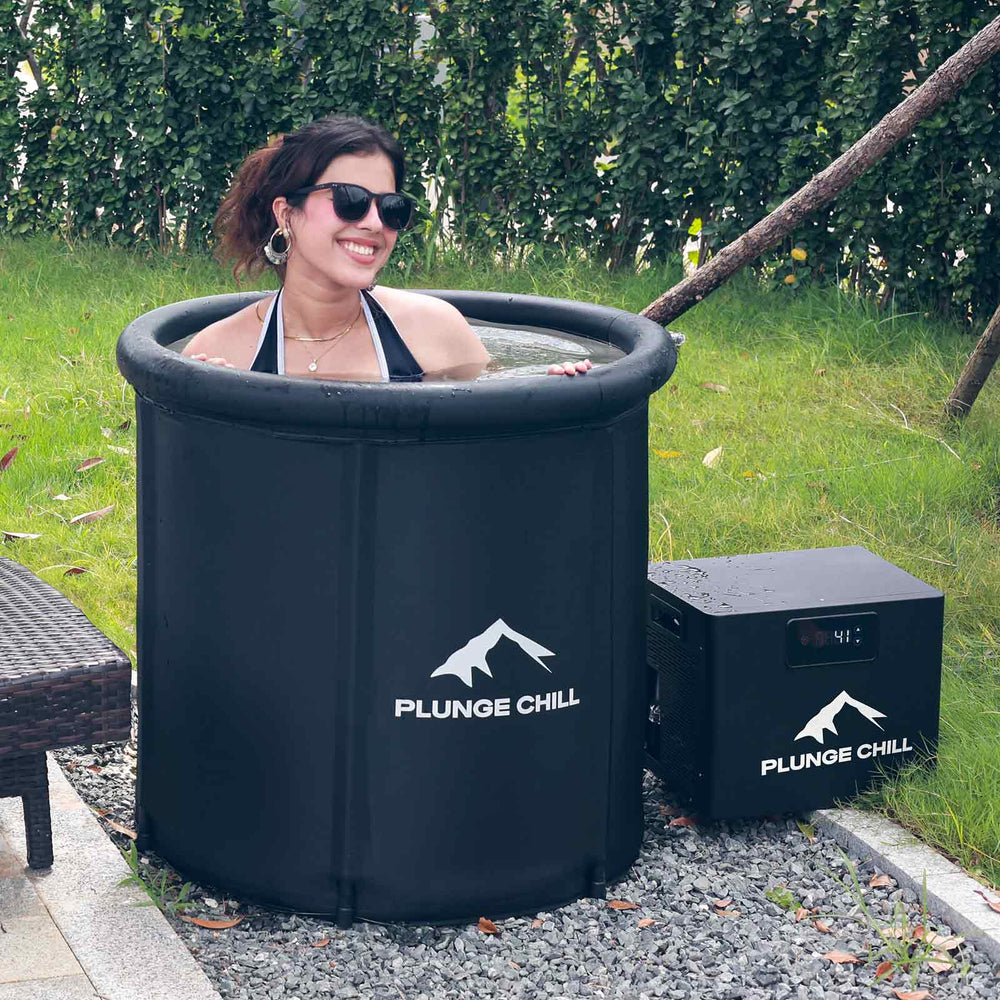
As a sports rehabilitation specialist and strength coach who tests recovery tools for distance runners, I approach cold plunging the way I approach mileage, workouts, and shoes: purpose first, then protocol. Cold‑water immersion can be helpful for specific running problems—managing soreness during heavy weeks, back‑to‑back sessions, or racing in heat—but it can also conflict with long‑term adaptation if misused. Below is a rigorous, evidence‑grounded guide to help you decide when, how, and whether to cold plunge as a runner.
What Cold Plunging Is—and Why Runners Care
Cold‑water immersion is the deliberate submersion of the body in cold water to reduce perceived soreness and speed subjective recovery between efforts. In practice, this is usually a tub or plunge unit set between about 39–59°F, with the athlete immersed to mid‑thigh, hips, chest, or neck depending on goals. Mechanistically, the cold triggers rapid vasoconstriction and lowers local metabolic activity, which can reduce swelling and dampen pain signaling. During rewarming, vessels dilate, circulation increases, and runners often report feeling “fresher.” This sequence aligns with the basic physiology summarized by Cleveland Clinic and Science for Sport.
A core concept for runners is delayed onset muscle soreness, the post‑exercise muscle pain that peaks 12–72 hours after unaccustomed or intense work. Research synthesized in peer‑reviewed reviews shows cold immersion can reduce immediate soreness and perceived exertion right after exercise, with mixed findings at 24–48 hours. In other words, you will probably feel better quickly; whether that translates to a measurable performance bump the next day depends on context.
What the Evidence Actually Says
Short‑Term Recovery and Soreness
A recent meta‑analysis of post‑exercise cold‑water immersion reported robust immediate reductions in perceived soreness and exertion, small to mixed changes in muscle damage biomarkers, and no consistent improvements in jump performance across 0–48 hours. Several reviews converge on this broad picture: the subjective experience improves promptly, biochemical markers sometimes look better at 24–48 hours, and objective performance tests are inconsistent. For runners, the actionable translation is that cold plunges can help you feel ready for another session in a congested week, but they are not a magic switch for next‑day speed or power.
An overlooked nuance from applied physiology is that not all benefits come from temperature. Hydrostatic pressure during immersion shifts fluid centrally, reduces limb edema, and modestly increases cardiac output with minimal energy cost. That means part of what feels helpful about immersion may occur even at thermoneutral temperatures. Science for Sport highlights this mechanism; it explains why some athletes feel relief after short immersions that are cool but not extreme.
Same‑Day Performance in Two‑a‑Days
Distance runners occasionally double, or race and then do a shake‑out later. A small randomized crossover study in recreational runners found that a 15‑minute immersion at about 59°F or about 82°F after a strenuous session “likely” or “possibly” improved a 5K time trial four hours later compared with passive recovery, while about 100°F was unclear. Standard hypothesis testing showed no significant between‑condition differences, but magnitude‑based inferences suggested a roughly 3% improvement after the colder or temperate immersions. Because the sample was small, male only, and the inferences rely on a debated statistical framework, this finding should be treated as promising but provisional. The practical takeaway is that if you must perform again in the same day, a short immersion at about 59°F or even temperate immersion may be worth testing in your own routine under controlled conditions. Source: PubMed Central.
An overlooked insight here is that “temperate” immersion—far warmer than a traditional ice bath—still showed signals of benefit in that study. The likely explanation is fast normalization of core temperature plus hydrostatic effects, not just aggressive cooling. This nuance rarely appears in athlete guides that frame recovery as a competition to get as cold as possible.
Training Adaptations: When Cold Backfires
If your current priority is building muscle strength, neuromuscular power, or endurance adaptations that depend on training‑induced signaling, be cautious with immediate post‑lift or post‑sprint plunges. Multiple sources, including Ohio State, the Journal of Physiology, and Science for Sport, note that cold‑water immersion right after resistance or high‑load work can blunt anabolic pathways and reduce long‑term gains in muscle size and strength. Runners who integrate heavy lifts or hill sprints for economy should avoid plunging within the first several hours after those sessions. If you value hypertrophy or maximal strength, save cold exposure for 6–8 hours later or the following day. If the urgent goal is recovery between endurance sessions in hot weather or a tournament‑style weekend, then cold exposure can be justified despite this trade‑off.
Temperature, Modality, and Conflicting Findings
Not all “cold” is equal, and immersion is not the same as a cold shower or whole‑body cryotherapy. Case Western Reserve University notes that showers cool the periphery more than the core, while immersion more effectively reduces core temperature. This distinction matters if heat stress is part of your problem. Conversely, an American Physiological Society update reported hot‑water immersion near 104°F preserved immediate power output better than cold immersion after high‑intensity running, even though biomarkers didn’t differ. If your need is to be explosive within an hour, heat may be preferable to cold; if your issue is heat load, swelling, or soreness, cold remains the logical tool.
Disagreements across sources often come from differences in populations (elite vs recreational), outcomes (perceived recovery vs performance tests), time frame (minutes vs 24–96 hours), and definitions of “cold” (about 39–59°F vs just below tap‑cold). Cleveland Clinic presents cautious beginner protocols and safety emphasis; Case Western voices skepticism about long‑term muscle health benefits; the endurance‑oriented literature frequently reports better subjective recovery and some maintenance of next‑day endurance function.
When Runners Should Use a Cold Plunge
In early base phases when you want maximum adaptation, tolerate mild soreness and focus on sleep, nutrition, and active recovery. According to McMillan Running, increase cold exposure closer to race‑specific phases when freshness and high‑quality sessions matter more than maximal adaptation. Use cold after key long runs, intervals in heat, or back‑to‑back sessions where reducing soreness can preserve training quality. Avoid it for several hours after heavy lifting or fast hill sprints when hypertrophy or neuromuscular adaptation is the target.
For marathoners and ultra runners navigating heat or dense mileage, cold immersion helps control thermal strain, perceived fatigue, and subjective soreness, allowing a more consistent weekly rhythm. Asics and Runner’s World both emphasize using cold after the hardest efforts or in stacked training weeks rather than after every easy day.
Practical Protocols: Temperature, Time, Frequency
As a coach, I program cold exposure the way I program workouts: progressive, measurable, and goal‑aligned. Start conservative and titrate up. For new users, about 50–59°F for 1–3 minutes is a sensible entry zone. Experienced athletes often sit between about 45–55°F for 3–10 minutes. The Cleveland Clinic cautions beginners to stay warmer at first and cap exposures near five minutes; Lake Nona Performance Club reports longer sessions for experienced users, which illustrates real‑world variability. Adjust depth, limb movement, and breath control before you lower the temperature. Stop early for chest pain, severe shivering, confusion, or persistent numbness. Avoid going below about 40°F.
Below is a concise comparison to help you match protocol to purpose.
Goal or Context |
Suggested Water Temp |
Time per Bout |
Frequency |
Notes and Sources |
First‑time runners seeking a safe start |
About 50–59°F |
1–3 minutes |
1–2 times per week |
Emphasize calm breathing and supervised settings. Cleveland Clinic. |
Heavy training week, back‑to‑back days |
About 45–55°F |
3–8 minutes |
2–4 times per week |
Helps perceived recovery; watch for blunted adaptations if used daily. Meta‑analyses; Ohio State. |
Same‑day double with 4–6 hours between |
About 59°F or temperate immersion near 82°F |
10–15 minutes once |
As needed |
Small study suggests possible performance benefit later that day; interpret cautiously. PubMed Central. |
Heat stress after long run/race |
About 45–55°F |
3–10 minutes |
Occasional |
Prioritize safe rewarming and hydration. Cleveland Clinic; Mayo Clinic Health System. |
Strength/hypertrophy block focus |
Delay cold ≥6–8 hours |
N/A |
N/A |
Cold right after lifting may blunt gains; schedule later. Journal of Physiology; Ohio State; Science for Sport. |
Two overlooked insights improve adherence and outcomes. First, end your session with cold and rewarm naturally through light movement and layers rather than a hot shower; this may amplify thermogenic benefits through shivering and brown‑fat activation. This idea, popularized by Huberman Lab and echoed in practitioner summaries, is plausible but not definitive.

Safety, Contraindications, and Risk Management
Cold shock can trigger rapid breathing, spikes in heart rate and blood pressure, and panic in the first seconds after entry. Case Western warns that people with heart disease, uncontrolled hypertension, prior arrhythmias, or poor circulation face higher risk; Cleveland Clinic and Mayo Clinic Health System echo the need for medical clearance in these groups, including those with peripheral neuropathy, Raynaud’s, or cold agglutinin disease. Do not plunge alone. Avoid alcohol. In outdoor settings, avoid moving water or areas where ice could trap you. Keep a thermometer in the tank and have dry clothing and a warm environment ready. Exit immediately for chest pain, severe dizziness, or inability to control breathing.
A neglected detail for runners is to avoid head submersion. Managing breathing during the first 20–40 seconds is easier if your head and neck stay dry, and it reduces dizziness risk.
Contrast Therapy: When to Combine Heat and Cold
Alternating sauna and cold exposure creates a vascular “pump,” widening vessels in the heat and constricting in the cold. Cedar & Stone Sauna, Plunge, and Aetherhaus summaries describe protocols such as 10–15 minutes of sauna at about 180–220°F followed by 2–3 minutes of cold at about 39–50°F, repeating two to four rounds. The rationale is to improve circulation and perceived recovery more than either alone. Evidence in endurance athletes shows reduced soreness and swelling in some studies, though heterogeneity of methods is high and direct performance outcomes are mixed. If you use contrast in race week, start with shorter exposures and fewer rounds to avoid excessive stress.
One point of friction is that an American Physiological Society update found hot‑water immersion preserved immediate power better than cold after high‑intensity work. If you need bounce within an hour, consider heat only. If you need to lower swelling and cool core temperature after a hot race, include a brief cold segment. Differences likely arise from aims (power versus thermal relief) and timing (minutes versus hours).

Buying a Cold Plunge: What Matters for Runners
As a product reviewer, I look for features that fit a runner’s use case rather than spa aesthetics. Here is what consistently matters in testing and athlete feedback.
- Temperature range and control. A unit that reliably holds about 45–55°F covers most runner use without flirting with unsafe extremes. Check whether the chiller can recover temperature quickly after you enter, especially in warm garages.
- Filtration and sanitation. Look for a filter that is easy to access and clean and a sanitation method that suits your skin and tolerance, such as UV/ozone assistance or low‑dose oxidizers. Simpler systems that runners actually maintain beat elaborate systems that fall out of use.
- Build, insulation, and noise. Durable shells and insulated plumbing reduce energy use and keep temperatures stable. If you live in an apartment or share a wall, chiller noise becomes a real factor.
- Footprint, drainage, and portability. Measure your space, door widths, and access to a ground‑fault circuit interrupter (GFCI) outlet. Units that are easy to drain and wipe down simplify weekly care. Inflatable or soft‑sided tubs store well in smaller apartments; rotomolded and acrylic units are more permanent.
- Power and operating cost. Many consumer chillers run on 110–120V; larger compressors may require 220V. Ask manufacturers for estimated run time to maintain 50°F in your climate. If you cannot accommodate a chiller, a simple non‑plumbed tub plus bags of ice can work for occasional use.
- Budget and warranty. Dedicated tanks with integrated chillers can reach high price points, with premium systems reported up to $20,000. Mayo Clinic Health System notes this context when describing access options. Match the warranty and service network to the investment.
A concise comparison can help anchor your choice.
Category |
Typical Use |
Pros |
Cons |
Ice‑assist tub without chiller |
Occasional post‑race or heat events |
Low upfront cost, portable |
Ongoing ice cost, variable temperature, more setup time |
Inflatable or soft‑sided with chiller |
Apartment or small space |
Compact, easier storage, faster setup |
Less durable long‑term, potential punctures, chiller noise varies |
Rotomolded or acrylic with chiller |
Daily users with dedicated space |
Durable, stable temperatures, strong filtration options |
Higher cost, heavier, requires plan for drainage and power |
Setup, Care, and Maintenance
Keep a water thermometer in the tank rather than relying on a dial. Showering before entry, covering the unit when not in use, rinsing feet, and skimming debris prolong water clarity across all sanitation methods. Clean or replace filters on the schedule specified by the manufacturer. Drain and wipe interior surfaces at a cadence you will actually follow.
During cold exposure, use slow exhales to curb the initial cold shock and keep posture relaxed rather than hunched. On exit, rewarm through light movement, layers, and a warm environment. If you feel groggy after cold late in the evening, schedule exposures earlier in the day to protect sleep.
Common Mistakes I See in Runners
Going too cold, too soon is the fastest way to sour on the practice. Chasing extreme temperatures is rarely necessary for distance training. Plunging immediately after heavy lifts or plyometrics undermines the very adaptations you are trying to build. Submerging the head increases the breathing challenge without any added benefit for leg recovery. Staying in so long that you shiver uncontrollably makes rewarming uncomfortable and risks afterdrop, the continued fall in core temperature after you exit. Finally, plunging alone amplifies risk without adding any upside.
Case Applications: Translating to Your Training
After a hot summer long run, a runner who tends to overheat can sit at about 50–55°F for four to six minutes, then layer up and walk for five minutes while sipping fluids. On a back‑to‑back weekend for marathon prep, use about 50–55°F for three to five minutes after the first day to improve how you feel for day two. During a lift‑heavy block focused on uphill power, delay cold exposure until that evening or the next morning. In race week, keep exposures brief, familiar, and early in the day; do not experiment with a brand‑new protocol two days out from your goal race.

Takeaway
Cold plunging can be a useful tool for runners when the goal is managing heat, swelling, and how you feel between hard days. It is less useful, and sometimes counterproductive, when used reflexively after every session, especially after lifting or neuromuscular work where you want full training adaptation. Align your protocol with your purpose, prioritize safety, and favor the minimal dose that preserves training quality without blunting long‑term gains.
FAQ
What temperature should runners target if they are new to cold plunging? Start near about 50–59°F. Spend one to three minutes focusing on slow exhales, then step out and rewarm naturally. This range comes from clinical and sports medicine guidance that balances stimulus with safety for beginners. Cleveland Clinic supports this corridor for new users.
How often should I cold plunge during marathon training? Use it strategically two to four times per week during the hardest blocks or in hot weather, and taper down as race day approaches to avoid interfering with muscular adaptations. Rely more on sleep, nutrition, and active recovery in base periods and introduce more cold exposure in the final month if it reliably improves how you feel in workouts. Guidance drawn from McMillan Running, Runner’s World, and endurance recovery reviews.
Is contrast therapy better than cold alone? Sometimes. Alternating heat and cold can enhance circulation and perceived recovery more than either alone for some runners, especially after long events. Evidence quality varies and protocols differ widely, so start with shorter heat segments at about 180–195°F and brief cold at about 39–50°F for two to three rounds if you tolerate both well. Cedar & Stone Sauna, Plunge, and Aetherhaus describe workable formats. If immediate power is your goal within an hour, consider heat alone based on recent findings reported by the American Physiological Society.
Will cold plunges blunt my running adaptations? They can, particularly if used immediately after strength or high‑load neuromuscular work. Multiple sources report dampened hypertrophy and strength gains when cold is used right after lifting. If your goal is long‑term performance from training, schedule cold several hours later or on separate days. Ohio State and Journal of Physiology summarize these trade‑offs.
Can cold exposure boost metabolism or mood in a way that helps training? Acute cold elevates adrenaline and norepinephrine and may increase dopamine for hours, which many runners experience as sharper focus and a steadier mood. There is also growing interest in cold‑induced brown‑fat activation that could support metabolic health. These effects are promising but still being standardized.
Is it okay to use a simple tub with ice instead of a dedicated plunge unit? Yes. For occasional use, a simple tub plus ice is an effective, low‑cost option. For frequent use, a chiller‑equipped unit that reliably holds temperature, filters water, and fits your space will be easier to maintain. Premium systems can cost up to $20,000; decide based on frequency, space, and service options. Context from Mayo Clinic Health System.
Sources Mentioned
Case Western Reserve University highlights cold shock physiology and cautions regarding long‑term muscle health benefits. Cleveland Clinic provides conservative safety ranges and duration caps for beginners. Ohio State synthesizes mixed evidence and warns about blunted strength gains after immediate cold. PubMed Central includes a small crossover trial suggesting same‑day benefits of cold and temperate immersion. Frontiers in Physiology and Science for Sport summarize meta‑analytic findings on soreness, biomarkers, and protocol heterogeneity. Runner’s World, Asics, and McMillan Running translate these ideas into runner‑specific guidance. Cedar & Stone Sauna, Plunge, Aetherhaus, and Lake Nona Performance Club describe practical contrast‑therapy options. Mayo Clinic Health System and Mankato Marathon outline access, equipment context, and safety considerations. Huberman Lab explains neurochemical responses and practical tactics for adherence and safe progression.
As with any training tool, let your event goals and adaptation priorities set the rules. Cold plunging works best for runners when it makes the rest of your plan work better.
References
- https://case.edu/news/science-behind-ice-baths-and-polar-plunges-are-they-truly-beneficial
- https://www.health.harvard.edu/staying-healthy/the-big-chill
- https://sncs-prod-external.mayo.edu/hometown-health/speaking-of-health/cold-plunge-after-workouts
- https://pmc.ncbi.nlm.nih.gov/articles/PMC2938508/
- https://health.osu.edu/wellness/exercise-and-nutrition/do-ice-baths-help-workout-recovery
- https://healthcare.utah.edu/healthfeed/2023/03/cold-plunging-and-impact-your-health
- https://health.clevelandclinic.org/what-to-know-about-cold-plunges
- https://mcpress.mayoclinic.org/healthy-aging/the-science-behind-ice-baths-for-recovery/
- https://www.mayoclinichealthsystem.org/hometown-health/speaking-of-health/cold-plunge-after-workouts
- https://www.frontiersin.org/journals/physiology/articles/10.3389/fphys.2025.1525726/full