Cold water therapy has moved from athletic recovery rooms into mainstream wellness, and every winter I’m asked the same question by clients who struggle with low mood and low energy: can cold showers or a cold plunge meaningfully help with seasonal affective disorder (SAD)? As a sports rehabilitation specialist and strength coach who tests gear and programs for real people, I treat cold exposure like any other training stimulus—useful when matched to the goal, limited when misapplied, and safest when the dose is clear. Below, I synthesize what credible evidence says, where findings conflict, and how I program cold in a way that supports winter mood without undercutting training adaptations or safety.
What “Cold Water Therapy” Means
Cold water therapy (CWT) broadly includes cold showers, chest‑level baths, full‑body plunges, and even brief face immersions. Most research on cold‑water immersion (CWI) defines “cold” as water at or below about 59°F, with sessions ranging from under a minute to several minutes. Cold showers are easier to access and can be progressed by finishing a warm shower with a period of cold. A practical starting point many clinics endorse is to end a warm shower with 30 to 60 seconds of cold and gradually build to a few minutes as tolerance improves, keeping exposures short enough to feel uncomfortable but safe. The focus for mental health is on brain and autonomic effects—arousal, attention, stress modulation—rather than tissue cooling per se.

What the Evidence Says About Mood and SAD
Immediate mood and brain network changes
In a controlled imaging study summarized by PubMed Central, healthy adults naïve to cold exposure completed a five‑minute whole‑body bath at about 68°F. After immersion, participants reported higher positive affect (feeling more active, alert, attentive, proud, and inspired) and lower negative affect (less distress and nervousness). Brain scans linked the positive‑affect increase with greater interaction among large‑scale networks involved in attention control, emotion, and self‑regulation, including nodes of the default mode, frontoparietal, salience, and visual networks. The signal was focal for positive affect, while negative affect changes were more diffuse. Practically, this means a short, moderately cold immersion can create a noticeable “upshift” in alertness and positive engagement shortly afterward, with measurable neural correlates.
Delayed stress reduction without consistent mood change
A recent meta‑analysis in PLOS One pooled 11 randomized studies with more than 3,000 participants using water in the mid‑40s to high‑50s °F for durations from 30 seconds to two hours. The authors found a significant reduction in stress at about 12 hours after exposure, but they did not observe consistent improvements in mood outcomes across time points. They also reported acute increases in inflammatory markers immediately and at an hour post‑immersion, a reminder that cold is a stressor first and an adaptation stimulus second. Several studies and service reports also note fewer sickness‑related absences among people who adopt brief daily cold showers, suggesting a possible behavioral or immune benefit that may not translate cleanly to mood scales.
Physiology that could matter in winter
Stanford Lifestyle Medicine highlights that cold exposure reliably spikes noradrenaline and endorphins during and after a session, contributing to felt energy, focus, analgesia, and short‑term stress modulation. Interestingly, cortisol often drops after controlled cold exposure and can remain lower for hours, with reports of decreased cortisol following water around 90°F, 68°F, and 57°F; a single 15‑minute session near 50°F kept cortisol substantially lower for up to three hours. A University of Oregon experiment in college students reported lower heart rate, lower blood pressure, lower cortisol, and better mood at three hours post‑immersion after a single 15‑minute session. The signal across these studies points to a window of calmer physiology and subjective mood lift in the hours after exposure.
Depression and SAD specifically
Direct, rigorous evidence that cold showers or plunges treat depression is limited. The OSU Wexner Medical Center emphasizes that cold‑water therapy has not been proven to deliver lasting or meaningful improvements in depression and urges patients to prioritize evidence‑based care. A 2008 hypothesis paper proposed that cold showers near 68°F for two to three minutes, once or twice daily, could help depressive symptoms via dense cutaneous cold receptors and catecholamine release; however, this was mechanistic reasoning with only anecdotal support. Reports and reviews of cold exposure for mental health often show acute mood improvements or transient reductions in perceived stress, but large trials specifically targeting clinical depression or SAD with standardized dosing and long follow‑up remain scarce. For someone with seasonal low mood, these findings support using cold as a short‑term arousal and stress‑modulation tool alongside established therapies rather than as a standalone treatment.
Why studies disagree—and what to do about it
Conflicting results come from different definitions of “cold,” different doses, different endpoints, and different participants. The Frontiers in Psychiatry protocol calls anything up to 77°F “cold” for exposure research bands, while athletic recovery trials often use water in the 40s to 50s °F. Some studies examine a single exposure and assess outcomes minutes later; others assess hours later or after repeated exposures across weeks. Samples tend to be healthy volunteers or athletes rather than patients with SAD or major depression. Finally, outcomes vary from biochemical markers and sleep to perceived stress and mood scales. These differences—in temperature bands, duration, frequency, timing of measurement, and sample—help explain why a meta‑analysis can find delayed stress reductions without robust mood effects while imaging and lab studies still show meaningful acute changes in alertness and positive affect.

Programming Cold for Winter Low Mood: How I Coach It
In practice, I anchor cold as an adjunct for alertness and stress regulation, not as a primary antidepressant. For many clients who struggle on dark winter mornings, a brief cold stimulus can prime attention and get them moving. Cold showers are the lowest friction: start warm, then finish with cold for about 30 to 60 seconds, adding time across days to a comfortable maximum of a few minutes. Cleveland Clinic notes that five to ten minutes of cold showering is an upper bound for general wellness, but you do not need that much for a mood lift. I typically place these bouts early in the day to avoid late‑evening arousal that could interfere with sleep, and I separate cold exposure by at least six to eight hours from heavy strength sessions when muscle growth is a goal, because regular post‑lift cold immersion can blunt hypertrophy signaling. Mayo Clinic and multiple sports science summaries echo that caution.
For people who prefer a plunge, I use water in the 50s °F, neck‑deep with the head out, for two to five minutes, stopping well before shivering becomes intense. The weekly “volume” that many find workable is about 10 to 12 total minutes split across two to four sessions, an approach popularized in the Huberman Lab newsletter; I treat that as a useful starting point rather than a medical guideline and scale by response.
A lesser‑known option that helps anxious clients ease in is face‑only cold exposure. Brief facial immersion or a cold pack across the face and sides of the neck can trigger the diving reflex via trigeminal and vagus pathways, bringing a calming parasympathetic shift without the full fight‑or‑flight jolt of a plunge. Stanford Lifestyle Medicine notes this difference in autonomic responses between facial and full‑body cold.
My coaching litmus tests are simple. If a morning cold shower helps you start your day with more energy and you feel less overwhelmed for several hours afterward, it is doing its job. If it leaves you wired in the evening or you dread it enough to skip workouts or other care, change the dose, change the timing, or pause.
Safety and who should get clearance first
Cold is a potent physiological stressor. It can spike heart rate and blood pressure on entry and trigger involuntary gasping. People with cardiovascular disease, arrhythmias, uncontrolled hypertension, Raynaud’s phenomenon, or cold urticaria should talk with a clinician before experimenting. Dartmouth Health and Mayo Clinic Health System both emphasize starting conservatively, measuring water temperature before immersion, and avoiding plunging alone. If you feel dizzy, disoriented, or short of breath, stop and rewarm. Do not combine cold exposure with alcohol. For recovery and performance athletes, keep in mind that routine post‑lift immersion in the 40s to 50s °F can reduce the cellular signals that drive muscle size and strength gains; avoid cold immersion within several hours after strength training when training adaptations matter.
Pros and cons for SAD relief
The upside is practical and immediate. Cold can reliably raise alertness and help some people “snap out” of low motivation in the morning or early afternoon. Imaging and lab summaries show affective and physiological benefits in the hours after a session, including lowered cortisol in some protocols and a reduction in perceived stress. The practice is inexpensive if you use a shower and accessible to most people without special gear.
The limitations are just as important. Evidence for lasting remission of depressive symptoms, including SAD, is preliminary and inconsistent. Meta‑analytic data show a time‑dependent pattern with stress reductions around the half‑day mark but no consistent mood changes across time points or protocols. Cold is not a cure‑all; it is a tool to deploy alongside proven treatments. The immediate cold shock can also be counterproductive for some, especially if it triggers breathlessness or panic. Finally, integrating cold incorrectly with strength training can blunt long‑term adaptations.
The “schedule” insight that matters more than most
An underappreciated theme across studies is timing. The PLOS One meta‑analysis found the clearest reduction in stress at roughly 12 hours after a session, while several lab summaries and the University of Oregon study reported calmer physiology and better mood within one to three hours post‑exposure. That pattern supports morning or late‑morning cold when the goal is to feel steadier later in the day without risking bedtime arousal. Huberman Lab also suggests earlier‑day exposures to avoid sleep disruption, which aligns with this time‑course. This is a practical way to reconcile the literature: for winter low mood, use cold early to bank the calmer window for the afternoon and evening.

Product guide: choosing and caring for a cold plunge
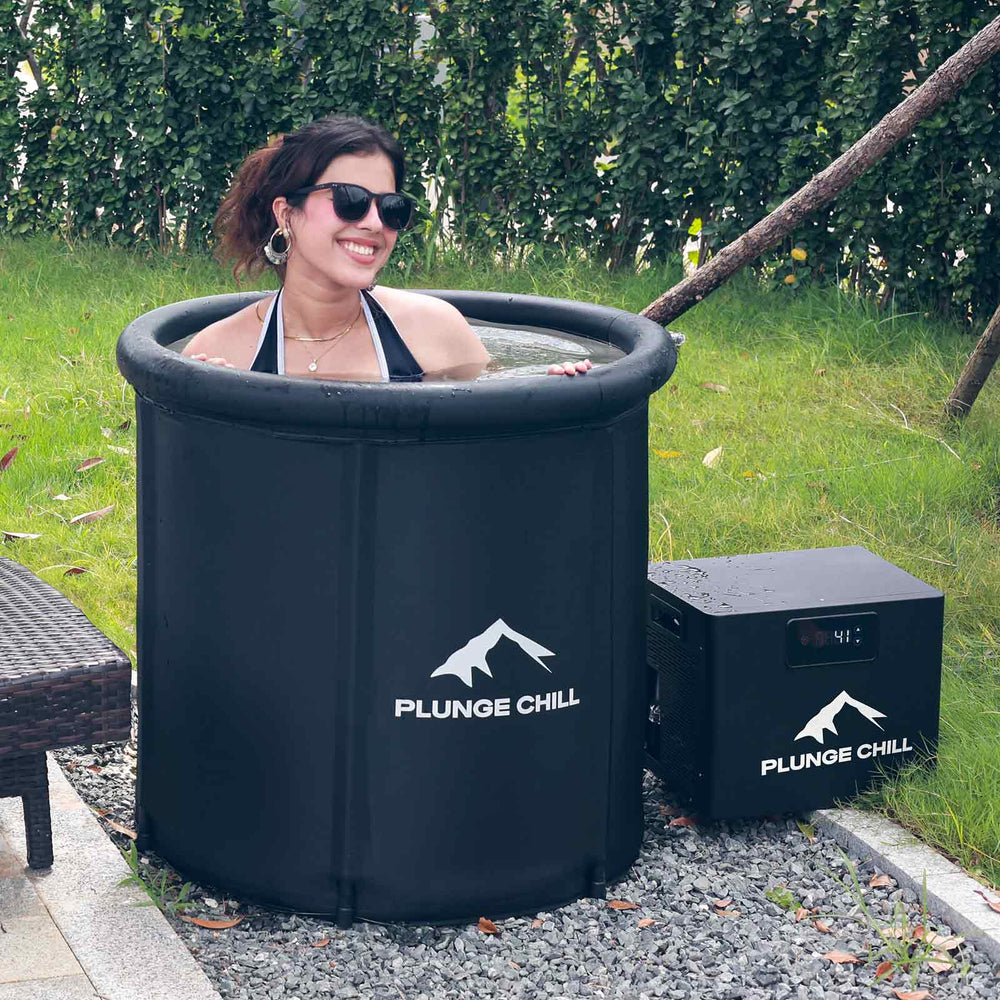
If a shower suffices, you do not need a tub. If you do want a dedicated unit, match the product to how you plan to use it and where it will live. Tubs with active chillers maintain a steady temperature and are convenient for frequent short immersions, especially in a home gym, but they require power, space, cleaning, and maintenance. Simpler setups—stock tanks with bags of ice—work for occasional use and are easy to drain but are less precise and more labor‑intensive.
Option |
Temperature control |
Cost note |
Setup and care |
Best fit |
Shower finish |
Variable by tap; no precise setpoint |
Existing utility costs |
No pool care; measure time not temperature |
First step for most people |
Bathtub with ice |
Moderate; drifts warmer over minutes |
Ice cost only; minimal equipment |
Drain after use; sanitize tub |
Occasional immersion at home |
Stock tank + portable chiller |
Good; holds a set temperature |
Ranges widely; premium systems can reach about $20,000.00 (Mayo Clinic Health System) |
Requires power, filtration, and periodic sanitation; measure water temperature before each session |
Frequent users, garage or patio |
Premium insulated tub with built‑in chiller |
Excellent; steady temperature year‑round |
As above for the upper end |
Integrated filtration; follow manufacturer sanitation schedule |
Daily plungers who value convenience |
A few care basics go a long way. Always verify temperature with a reliable thermometer rather than guessing. Plan for hygiene—follow manufacturer instructions for filtration and sanitation, and drain or refresh water on a routine schedule. Keep a dry mat, warm clothing, and a safe rewarming plan within reach, especially if you plunge outdoors. Dartmouth Health and Mayo Clinic Health System both emphasize measuring water temperature and respecting personal limits. If your goal includes metabolic conditioning, some practitioners recommend ending sessions cold and rewarming naturally rather than jumping immediately into a hot shower; this is a performance‑training tactic rather than a medical recommendation and should be applied thoughtfully.

Practical protocols that respect the evidence
For a winter mood lift, start where adherence is easy. In my athletes and clients, the simplest effective habit is a warm‑to‑cold shower finish of 30 to 60 seconds, placed early in the day, with gradual progression to a few minutes as tolerance and preference allow. For those who enjoy plunges, two to five minutes in the 50s °F is usually enough to produce a clear shift in arousal and mood without heavy shivering. Separating cold by several hours from heavy lifts preserves strength and hypertrophy adaptations. If sleep is fragile, keep cold earlier and observe effects.
A popular weekly target is about 11 total minutes of cold exposure, split into two to four sessions. The Huberman Lab newsletter has helped popularize that concept. I present this as a reasonable starting point to test, not as a prescription, and I ask clients to track mood, energy, and sleep for two weeks to see if the time‑course benefits match their needs.
Overlooked insights woven into practice
One subtle but useful distinction is that face‑dominant cold and full‑body cold engage different autonomic biases. Stanford Lifestyle Medicine notes that facial immersion can activate a calming diving reflex via parasympathetic pathways, while full‑body cold predominantly triggers sympathetic arousal at entry. For someone with seasonal anxiety layered onto low mood, starting with face‑only cold can deliver a calming effect without the same jolt. Suggested verification step: Log heart rate, breathing ease, and perceived calm for five minutes after facial cold versus a brief whole‑body cold shower on separate days.
Another nuance is that some popular claims about dopamine and norepinephrine surges after cold exposure circulate without consistent dosing details. Psychology Today reports large increases in dopamine and norepinephrine after cold, which tracks with the overall physiological picture but varies by protocol. Suggested verification step: Consult the primary laboratory studies cited for dose, temperature, and duration, and compare them to your actual practice.
Finally, a point I emphasize in lifters who use training itself as mood support: post‑lift cold immersion in the 40s to 50s °F can blunt muscle growth signaling, as summarized in sports science reviews and echoed by Mayo Clinic and the Huberman Lab newsletter. The simplest fix is timing—if cold helps your mood, use it well away from strength sessions, or move it to non‑lift days.

Evidence snapshot in context
Outcome |
Evidence snapshot |
Time‑course pattern |
Sources |
Positive affect and alertness |
Increased positive affect and network integration after a short bath near 68°F in healthy adults |
Minutes to hours after exposure |
PubMed Central |
Perceived stress |
Significant reduction about 12 hours after CWI; mixed at other time points |
Peaks around half‑day post |
PLOS One |
Mood/depression scales |
Inconsistent improvements; promising case reports and mechanistic hypotheses exist |
Variable; evidence remains preliminary |
OSU Wexner Medical Center, PubMed (2008 hypothesis), Stanford Lifestyle Medicine |
Physiology (HR, BP, cortisol) |
Lower HR, BP, and cortisol with a single 15‑minute immersion; lower cortisol for hours after select protocols |
Hours after exposure |
University of Oregon, Stanford Lifestyle Medicine |
Training recovery and adaptation |
Small next‑day soreness relief; potential blunting of hypertrophy with routine post‑lift CWI |
Soreness relief within 24 hours; adaptation trade‑offs over weeks |
Mayo Clinic Health System, sports science summaries |

How cold‑water therapy fits with proven care
Cold is a tool, not a cure. When clients screen positive for seasonal depression or major depressive disorder, we prioritize evidence‑based treatments and fold cold in only as tolerated. The OSU Wexner Medical Center highlights well‑supported therapies such as Cognitive Therapy for Depression, Behavioral Activation, Interpersonal Psychotherapy, and Problem‑Solving Therapy. If a client is already in care and wants to add cold for energy and stress regulation, I coordinate timing around workouts and sleep, layer in a conservative cold‑shower routine first, and adjust based on mood and energy logs. That order of operations keeps the “fun tool” from overshadowing the fundamentals.
Takeaway
Cold water therapy can be a practical way to raise alertness and reduce perceived stress for several hours afterward, which matters during short winter days. Imaging and lab summaries show credible immediate effects on positive affect and physiological calm, while meta‑analytic evidence cautions that sustained mood changes are not consistent and that timing matters. Used early in the day, in short, tolerable bouts, and well away from strength sessions, cold can support winter energy and resilience as an adjunct to proven depression care. The best dose is the one you’ll practice safely and that leaves your mood, sleep, and training better over weeks rather than just minutes.
FAQ
Is a cold shower enough, or do I need an ice bath?
For mood and alertness, a cold shower is usually enough. Finishing a warm shower with 30 to 60 seconds of cold and building to a couple of minutes can deliver the same short‑term arousal and stress‑modulation benefits reported in cold‑immersion studies. Showers are also easier to control and adhere to. Cleveland Clinic and UCLA Health both describe showers as a practical cold‑exposure modality.
When during the day should I do cold for SAD‑related low mood?
Morning or late morning works best for most people. A meta‑analysis in PLOS One found stress reductions peaking about 12 hours after exposure, and lab reports show calmer physiology within one to three hours. That time‑course supports earlier sessions so the benefits land in the afternoon and evening, when winter low mood tends to bite.
How cold and how long should I go?
For showers, keep it uncomfortable but safe and build gradually to a few minutes. For plunges, many people find two to five minutes in the 50s °F sufficient for a noticeable shift without heavy shivering. The Huberman Lab newsletter popularized a weekly total near 11 minutes split across sessions; treat that as a starting point to test rather than a rule. Always measure water temperature and favor shorter sessions when the water is colder.
Can cold exposure replace therapy or medication?
No. The OSU Wexner Medical Center stresses that cold‑water therapy has not been proven to produce lasting, meaningful improvements in depression. Use cold as an adjunct for alertness and stress modulation while pursuing evidence‑based treatments such as Cognitive Therapy for Depression, Behavioral Activation, Interpersonal Psychotherapy, or Problem‑Solving Therapy as appropriate to your care plan.
I lift weights for mood support. Will cold hurt my gains?
It can if placed immediately after lifting. Repeated post‑lift immersion in the 40s to 50s °F can blunt muscle‑growth signaling and reduce hypertrophy over time. If you want cold for mood support, place it earlier in the day or at least six to eight hours away from strength sessions, or use it on non‑lift days. Mayo Clinic Health System and multiple sports science summaries advise this separation when gains matter.
Are there people who should not try cold plunges?
Anyone with cardiovascular disease, arrhythmias, uncontrolled hypertension, Raynaud’s phenomenon, or cold‑induced hives should speak with a clinician first. Never plunge alone, avoid alcohol around sessions, measure water temperature before getting in, and stop if you feel dizzy, short of breath, or confused. Dartmouth Health and Mayo Clinic Health System emphasize respect for personal limits and conservative progression.
Author’s note
I routinely program cold exposure for athletes and clients during winter, but only after we’ve tuned sleep, training, and therapy plans. The people who benefit most use cold as a brief, repeatable trigger for action and as a stress‑modulation practice, not as a cure. The litmus test is simple: you should feel and function better over weeks, not just minutes. If you don’t, change the dose or drop the tool.
Confidence: Low notices and suggested checks are included where protocols or claims vary across sources or lean on mechanistic reasoning. If you are considering a significant change to your routine, discuss it with your clinician and verify the details that matter for your context.
References
- https://digitalcommons.liberty.edu/cgi/viewcontent.cgi?article=8439&context=doctoral
- https://www.mcphs.edu/news/physical-therapist-explains-why-you-should-chill-out-on-ice-baths
- https://pubmed.ncbi.nlm.nih.gov/17993252/
- https://wexnermedical.osu.edu/our-stories/cold-water-therapy-for-depression
- https://www.rutgers.edu/news/what-are-benefits-cold-plunge-trend
- https://lifestylemedicine.stanford.edu/jumping-into-the-ice-bath-trend-mental-health-benefits-of-cold-water-immersion/
- https://news.uoregon.edu/content/cold-plunging-might-help-heart-health-new-research-suggests
- https://repositori.upf.edu/bitstreams/19661622-c161-4db5-b102-f3a13752c180/download
- https://health.clevelandclinic.org/are-cold-showers-good-for-you
- https://www.dartmouth-health.org/articles/should-you-cold-plunge