Cold plunges—brief immersions in very cold water—have moved from pro locker rooms to garages, backyards, and wellness centers across the United States. As a sports rehabilitation specialist and strength coach who also reviews cold‑plunge products, I’m often asked a simple question with a complex answer: do cold plunges help, and at what cost? The short version is that cold water immersion can reduce post‑exercise soreness and perceptual fatigue in the hours after a workout, but the long‑term training impact depends on what, when, and how you use it. The right protocol for a marathoner during a tournament weekend is not the same as the right protocol for a lifter chasing strength and hypertrophy.
This guide synthesizes findings from reputable medical centers and peer‑reviewed publications, including Cleveland Clinic, Ohio State University Wexner Medical Center, Mayo Clinic Health System, Harvard Health, a recent Frontiers network meta‑analysis of randomized trials, case reports archived on PubMed Central, and applied studies in runners and team‑sport athletes. I’ll translate evidence into practical, field‑tested recommendations, highlight areas of disagreement, and call out a few underappreciated nuances that can make or break results.
What Counts as a “Cold Plunge”?
In sports medicine, cold water immersion typically means submerging most or all of the body in water between about 41°F and 59°F for a short, controlled period after activity. Cleveland Clinic emphasizes starting warmer and progressing gradually, recommending that novices begin around the upper 50s and avoid going below roughly 40°F. In practice, many athletes sit in 50–59°F water for several minutes; more advanced users sometimes work down toward 41–50°F, but colder is not inherently better.
Session duration is short. Cleveland Clinic describes starting at one to two minutes with typical sessions near three minutes and warns against exceeding about five minutes. Other sports medicine sources allow up to 10–15 minutes at the milder end of the cold range. These recommendations vary because protocols in published studies vary; the safest common ground is to keep water in the 50s for beginners, keep sessions brief, and extend only as tolerance, goals, and context warrant. Use a thermometer rather than guessing, and choose a controlled setting with a second person present as Ohio State University’s clinicians advise.

How Cold Plunges Work
Cold causes blood vessels in skin and muscle to constrict. That vasoconstriction reduces local blood flow and swelling, which can lessen the perception of soreness. On exit and rewarming, blood flow increases again, and many athletes report a pleasant contrast that feels “flushing,” soothing, or meditative. Hydrostatic pressure from being immersed also shifts fluid from the extremities into the central circulation, which may assist with clearing metabolic by‑products from a hard session. These mechanisms are consistently described in clinical articles and reviews.
Analgesia—the numbing effect of cold—deserves special mention. It’s useful for comfort, but it can also mask pain signals that would otherwise tell you to back off. Cleveland Clinic cautions against using cold to cover up injuries in place of appropriate medical evaluation. In the training room, I see athletes who feel fantastic for an hour after a plunge and then aggravate a strain because the warning system was quieted. Respect that silence, and use your plan, not your pain tolerance, to control load.
A nuance that is often overlooked is that water that is too cold may undermine some benefits of immersion. Science for Sport’s review notes that very cold water drives strong vasoconstriction, lowering heart rate and cardiac output. When peripheral blood flow drops too far, the hydrostatic “assist” on fluid return is blunted, and central metabolism rises to defend core temperature—effects that are not ideal during recovery. In practice, that argues for cool‑to‑cold rather than near‑freezing water for most recovery‑focused sessions.
What the Evidence Actually Shows
The most consistently supported short‑term effects of cold immersion are reductions in soreness and perceived exertion within the first day after exercise. A recent meta‑analysis of cold water immersion versus control found that soreness scores and perceived fatigue are lower immediately after a plunge, with creatine kinase—a biochemical marker of muscle damage—sometimes lower at about 24 hours. Several inflammatory markers, including C‑reactive protein and interleukin‑6, do not show clear differences, and the effect on objective performance measures is mixed.
A Frontiers network meta‑analysis of 55 randomized trials (1,139 participants) compared different “doses” of cold by temperature and time. For reducing soreness, 10–15 minutes in the mid‑50s ranked best. For lowering creatine kinase and restoring jump performance proxies, 10–15 minutes around the high 40s to about 50°F ranked best. Those findings align with sports medicine ranges many teams already use, but they also highlight comfort and adherence: moderate cold is more tolerable, so athletes are more likely to stay in long enough to realize hydrostatic and temperature effects.
Performance outcomes are sensitive to timing and context. A case report series archived on PubMed Central summarized small studies showing that cold water can impair immediate power output and that one randomized trial found no advantage for soreness compared with tepid water in a very cold protocol. A study in trained runners found that 12 minutes at about 60°F did not produce a statistically significant next‑day improvement versus baseline, but it appeared to reduce the typical next‑day slowdown seen with passive rest; heart rate and perceived exertion were lower. In contrast, an ACE‑sponsored study in untrained adults reported that 10 minutes at about 55°F preserved next‑day endurance, power, and strength across tests, with no added benefit from going to 20 minutes. That divergence likely reflects differences in training status, outcomes, water temperature, and the type of exercise used to provoke fatigue.
Cold exposure’s interaction with training adaptation is where the sharpest disagreements live. Ohio State University notes that cold immersion can blunt molecular signals important for long‑term strength and hypertrophy, citing work published in high‑quality physiology and strength journals. Mayo Clinic Health System echoes that frequent post‑training cold can compromise longer‑term strength and muscle growth, whereas endurance training adaptations appear less affected. Yet in the ACE study’s six‑week program for previously untrained adults, gains in fitness and body composition were similar with or without cold immersion after sessions. The likely reasons: the ACE cohort was untrained, used moderate temperatures for short sessions, and measured general fitness over weeks, not targeted hypertrophy or high‑level strength. Experienced lifters and team athletes pushing high volumes could see different effects over months.
A final nuance worth weaving into program design is temperature‑specific tradeoffs when performance must be maintained the same day. Preliminary data presented by physiology researchers suggest that hot water immersion around 104°F may better preserve immediate power output compared with cold around 59°F one hour after a fatiguing protocol, with no clear endurance difference by the next morning. Suggested verification: compare pre‑ and post‑immersion jump height and bar speed within your own team across two sessions, hot versus cold, with consistent warm‑ups.
Outcome snapshot
Outcome |
Best short‑term effect |
Time window |
Typical temperature |
Evidence note |
Soreness (DOMS) |
Noticeably lower |
Immediate to same day |
52–59°F for 10–15 minutes |
Supported across multiple reviews; effect diminishes by 24–48 hours in some analyses |
Perceived fatigue (RPE) |
Lower |
Immediate |
50s for brief sessions |
Consistent short‑term reductions; effect often fades by 24 hours |
CK (muscle damage marker) |
Sometimes lower |
~24 hours |
41–50°F for 10–15 minutes |
Mixed across studies; modest benefit in several datasets |
Lactate (post‑exercise) |
Lower |
24–48 hours |
50s for short to moderate duration |
Differences reported in some trials versus passive rest |
Jump performance (power) |
Can dip acutely |
Immediate |
Any cold |
Some protocols reduce same‑day power; see alternative use of hot water |
Next‑day performance |
Mixed |
24 hours |
50s for 10–15 minutes |
Untrained adults show preservation; trained athletes show variable results |
Sources referenced: Frontiers network meta‑analysis; PubMed Central case report; The Sport Journal; ACE Fitness; Ohio State University Wexner Medical Center; Cleveland Clinic; Mayo Clinic Health System.
When Cold Plunges Help—and When They Hurt
Cold plunges help most when the priority is short‑term recovery—feeling better to train or compete again in the same 24–48‑hour window—and the training goal is not to maximize muscle size or high‑threshold strength adaptations that rely on robust post‑exercise signaling. Team sports in tournament formats, endurance blocks with frequent quality sessions, and heat‑exposed events are common situations where the benefits outweigh the drawbacks. Cleveland Clinic points out another niche use: rapid cooling after heat stress to normalize body temperature, a staple of on‑site marathon medicine.
Cold can hurt your plan when the cost of blunted adaptation exceeds the benefit of feeling better fast. If you’re in a hypertrophy or maximal strength phase, Ohio State clinicians recommend delaying cold exposure by 24–48 hours after key lifts to let the body run its natural, necessary inflammatory and remodeling processes. Mayo Clinic Health System adds that daily cold right after training can compromise long‑term strength and muscle growth; scheduling matters.
Claims about weight loss, immunity, and sleep deserve a sober look. Cold exposure burns extra calories during rewarming and may activate brown fat, but comprehensive reviews note inconsistent effects on body weight and fat mass. Some people report better sleep and mood after cold, and heart rate variability sometimes looks improved, but Harvard Health cautions that heart benefits are unproven, HRV is difficult to measure precisely, and surges in adrenaline and norepinephrine during the cold shock phase can transiently raise heart rate and blood pressure. For immune effects and mood, anecdotes outpace strong trials. Suggested verification: track weight, sleep continuity, and illness days across an eight‑week period with and without scheduled cold exposure, keeping training and diet constant.

Protocols by Goal
The cold‑plunge playbook is simple when you anchor it to goal, temperature, duration, and timing. The table below reflects ranges used in clinical guidance and research, noting where suggestions are conservative for safety and adherence.
Goal |
Temperature |
Duration |
Timing |
Frequency |
Notes and source highlights |
Reduce soreness and feel fresher for next day |
52–59°F |
3–10 minutes (beginners 1–2 minutes) |
Within 0–2 hours post‑session |
Up to several times weekly as needed |
Mid‑50s are better tolerated and rank well for soreness in comparative analyses; Cleveland Clinic advises starting short and warm, Ohio State supports conservative dosing |
Lower CK and stiffness after brutal sessions |
41–50°F |
10–15 minutes for experienced users |
Within 0–2 hours |
As needed in congested schedules |
Colder protocols rank better for CK in network analyses; ensure supervision and strict time limits |
Preserve same‑day power (e.g., double‑header) |
Prefer hot immersion around 104°F |
10–20 minutes |
Within 60 minutes post‑session |
As needed |
Early evidence favors hot water for same‑day power; consider cold later for soreness. Confidence: Low; test locally |
Strength/hypertrophy development |
If used, stay in the 50s |
3–5 minutes |
Delay 24–48 hours after key lift |
Infrequent |
Ohio State and Mayo Clinic Health System note blunting of strength/hypertrophy signaling with immediate cold |
Heat stress cooling |
50s or cooler |
Short, repeat as needed with monitoring |
Immediate |
As required |
Part of medical management for exertional heat stress per sports medicine practice |
Overlooked insight integrated here: adherence is a limiting factor. Frontiers authors note that lower temperatures are less comfortable and can hinder long‑term use; in real settings, a consistent mid‑50s routine may outperform sporadic near‑freezing dips simply because athletes will do it.

Safety, Contraindications, and Rewarming
Cold plunges are a hormetic stressor. For healthy people in controlled environments, the risk is manageable; for others, the combination of cold shock, hyperventilation, elevated blood pressure, and shifted central blood volume can be problematic. Harvard Health advises people with arrhythmias such as atrial fibrillation, peripheral artery disease, or Raynaud’s to avoid cold plunges. Cleveland Clinic adds cardiovascular disease, hypertension, diabetes, peripheral neuropathy, poor circulation, venous stasis, and cold agglutinin disease to the high‑caution list. Across sources, the advice is the same: talk to your primary care provider or cardiologist first if you carry cardiac, vascular, or neurologic risk.
Environment matters. Mayo Clinic Health System warns against plunging into moving water or natural ice in ways that could trap you. Measure water temperature before entry, have towels and warm clothing ready, and step in gradually. Ohio State clinicians recommend having another person present and rewarming safely. Cleveland Clinic notes that a 15–30‑minute sauna can help normalize temperature after a plunge; I’ve found that pairing light movement and a warm beverage with gradual rewarming works well, especially in cold weather.
Condition or situation |
Primary concern |
Source |
Arrhythmias, cardiovascular disease, uncontrolled hypertension |
Cold shock can spike sympathetic output, heart rate, and blood pressure |
Harvard Health |
Peripheral artery disease, Raynaud’s phenomenon |
Vasoconstriction worsens local blood flow |
Harvard Health |
Diabetes with neuropathy, poor circulation, venous stasis |
Impaired thermoregulation and sensation increase risk |
Cleveland Clinic |
Cold agglutinin disease |
Cold‑induced hemolysis risk |
Cleveland Clinic |
Open‑water plunges in moving or icy water |
Entrapment, hypothermia, drowning |
Mayo Clinic Health System |
As a final safety nuance, analgesia can be deceptive. Feeling “great” is not a clearance to return to play if you have red‑flag symptoms from training. Let medical evaluation, not numbing, drive decisions.

Buying and Care Guide: Choosing and Maintaining a Cold Plunge
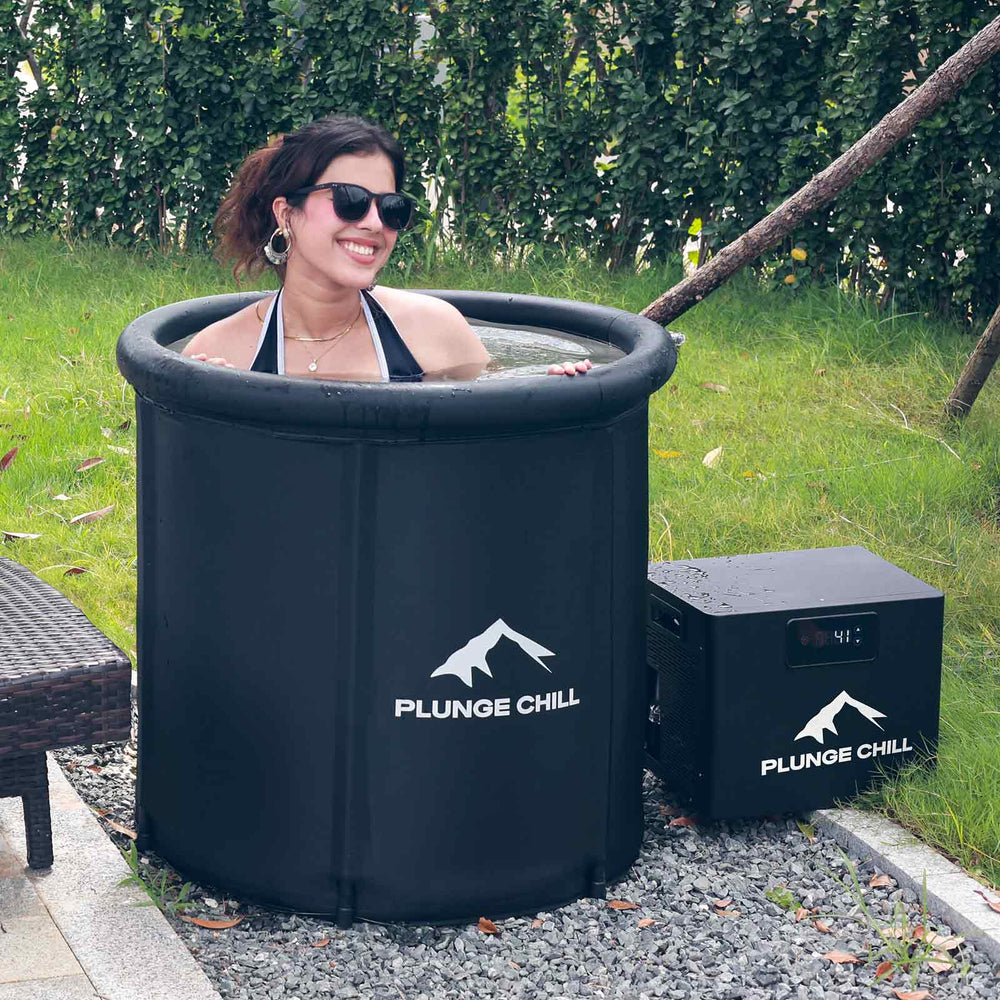
You do not need an expensive tank to gain the main benefits of cold water immersion. Cleveland Clinic points out that a home setup can be as simple as a bathtub half‑filled with cold water plus several large bags of ice, or a smaller container for localized immersion. Collapsible plunge tubs are widely available. At the other end of the spectrum, Mayo Clinic Health System notes that fully featured cold‑plunge tanks can cost up to $20,000. My advice as a product reviewer is to match features and cost to your actual routine and environment, not to hype.
In any tier, prioritize temperature control accuracy, safety, and maintenance. A reliable thermometer is essential. If you buy a tank with active chilling, look for clear sanitation guidance, accessible filtration, and a lid you will actually use; cleanliness and heat loss are what typically derail home users. In shared settings, hygiene and protocols matter more than bells and whistles.
Feature |
Why it matters |
Practical reviewer note |
Temperature accuracy and stability |
Ensures you are in the intended physiologic range |
Favor devices with simple, readable controls; verify with an independent thermometer |
Depth and body position |
Affects hydrostatic pressure and comfort |
Mid‑torso depth is adequate for most recovery goals; deeper isn’t automatically better |
Sanitation and filtration |
Reduces skin/irritation risks and extends water life |
Follow the manufacturer’s cleaning schedule; use covers consistently to reduce debris |
Drainage and placement |
Influences ease of use and how often you actually plunge |
Plan for easy draining and drying; a messy setup becomes a setup you avoid |
Total cost of ownership |
Upfront price isn’t the only cost driver |
Consider power use, filters, and any needed cleaning supplies over a year |
Access and support |
Matters when something breaks or settings drift |
Choose vendors with clear instructions and responsive support, especially for shared spaces |
If you’re on a budget or testing adherence, start with a cheap, sturdy tub and a thermometer. If you find yourself using it consistently for a month, you’ll know whether a more controlled, insulated unit is worth it in your context. Suggested verification: run a four‑week trial with a low‑cost setup and log sessions; consider an upgrade only if weekly usage is stable.
Scheduling Cold Within a Training Week
A simple way to place cold intelligently is to treat it as a recovery tool that you “spend” when you have to be ready sooner than biology prefers. For team and endurance athletes, that often means after high‑damage sessions that precede another key effort inside 24–48 hours. For strength and hypertrophy blocks, delay cold at least a day after your priority lifts and use it sparingly, if at all, right after those sessions. When the immediate goal is same‑day power, consider hot immersion instead, then layer in cold later for soreness.
Contrast therapy—alternating hot and cold—remains popular with athletic trainers. A case report review referencing field protocols notes common warm‑to‑cold ratios of 3:1 or 4:1 with hot around 99–109°F and cold in the low‑50s, usually totaling 20–30 minutes and often finishing cold. The physiological rationale includes vascular pumping, but evidence is mixed; it’s reasonable for comfort on heavy weeks if it does not replace sleep or nutrition.
A Few Practical Scenarios
After a high‑volume interval run on a hot day, I prefer a pragmatic mix: a short dip in the mid‑50s for three to five minutes to help with thermal comfort and perceived fatigue, plus easy walking and a light meal to start rewarming and refueling. A lifter in a dedicated strength phase who still wants the mood benefits of cold might use a three‑minute plunge in the upper 50s on non‑lifting days, or wait 24–48 hours after the heaviest lower‑body session. Tournament weekends justify more aggressive use because the priority is availability, not hypertrophy signaling; in those cases, 10 minutes in the 50s is a workhorse protocol most athletes will tolerate and repeat.
FAQ
Should I cold plunge before lifting or a key workout?
No. Cold immersion can transiently reduce muscle power and stiffness in ways that are not helpful before a high‑output session. Use cold after training if the goal is to feel better for the next day, or delay it by 24–48 hours if the priority is strength or hypertrophy. Sources: Ohio State University Wexner Medical Center; PubMed Central case report summaries.
How cold is cold enough?
For most recovery goals, 52–59°F is sufficiently cold and far more tolerable than the low 40s. Colder water may yield slightly larger changes in some markers but reduces comfort and adherence. Start warmer and shorter, and only progress if you have a clear reason. Sources: Frontiers network meta‑analysis; Cleveland Clinic.
Do cold showers replace ice baths?
Cold showers are a reasonable alternative when full immersion isn’t practical, but they provide less uniform cold and less hydrostatic pressure than a tub. They’re useful for habit building and mood, not as effective for full‑body post‑sport recovery. Source: Ohio State University Wexner Medical Center.
Will cold plunges help me lose weight?
Cold exposure increases calorie burn during rewarming and activates brown fat, but trials show inconsistent changes in body weight and fat mass. If weight control is the goal, prioritize training, nutrition quality, and sleep; treat cold as optional. Sources: Ohio State University Wexner Medical Center; evidence reviews summarized by nutrition research outlets.
Is it safe to use a sauna after a cold plunge?
Yes, gradual rewarming is sensible. Cleveland Clinic notes 15–30 minutes of sauna can help normalize body temperature after a plunge. Avoid risky “thermal stunts” if you have cardiovascular risk; consult your clinician first. Sources: Cleveland Clinic; Harvard Health.
Takeaway
Cold plunges are a blunt but useful tool. They reliably reduce soreness and perceived fatigue in the short term, which can help you show up for the next practice or race. They are less reliable for changing inflammatory markers, and they can interfere with long‑term strength and muscle growth if used immediately after key lifts. The right protocol depends on your goal and your schedule. For most people, the sweet spot is brief immersion in the mid‑50s in a controlled setting with a partner present, used strategically when turnaround time matters. Screen for cardiovascular and vascular risks, rewarm gradually, and do not let numbing hide injuries that need attention.
Where sources conflict—such as whether cold preserves next‑day performance—the differences are usually explained by participant training level, the temperatures and durations used, which outcomes were measured, and the timeframe studied. The smartest approach is to treat cold as a targeted recovery aid, not a daily ritual, and to test modest, tolerable protocols you can sustain.
Overlooked but practical: very cold water can negate some immersion benefits by crushing peripheral blood flow; moderate cold often produces a better net effect. Hot water may be superior when same‑day power must be maintained. And the best cold plunge is the one you actually use regularly and safely; comfort and setup drive adherence more than hype.
Confidence statements for two nuanced points: hot‑versus‑cold for same‑day power (Confidence: Low; verify with jump testing in your setting) and adherence advantages of mid‑50s water over low‑40s (Confidence: Low; verify with a four‑week usage log comparing two setpoints).
References
- https://www.health.harvard.edu/heart-health/cold-plunges-healthy-or-harmful-for-your-heart
- https://www.mcphs.edu/news/physical-therapist-explains-why-you-should-chill-out-on-ice-baths
- https://sncs-prod-external.mayo.edu/hometown-health/speaking-of-health/cold-plunge-after-workouts
- https://pmc.ncbi.nlm.nih.gov/articles/PMC2938508/
- https://health.osu.edu/wellness/exercise-and-nutrition/do-ice-baths-help-workout-recovery
- https://health.clevelandclinic.org/what-to-know-about-cold-plunges
- https://mcpress.mayoclinic.org/healthy-aging/the-science-behind-ice-baths-for-recovery/
- https://www.mayoclinichealthsystem.org/hometown-health/speaking-of-health/cold-plunge-after-workouts
- https://thesportjournal.org/article/impact-of-cold-water-immersion-on-5km-racing-performance/
- https://www.acefitness.org/continuing-education/certified/special-research-issue/7226/ace-sponsored-research-the-effect-of-cold-water-immersion-on-recovery-and-exercise-performance/?srsltid=AfmBOooEZX_Nj5TOzu7EHOSDcY1YHXwT_2V8q5oE_Bv3hrex1CzxHcP0