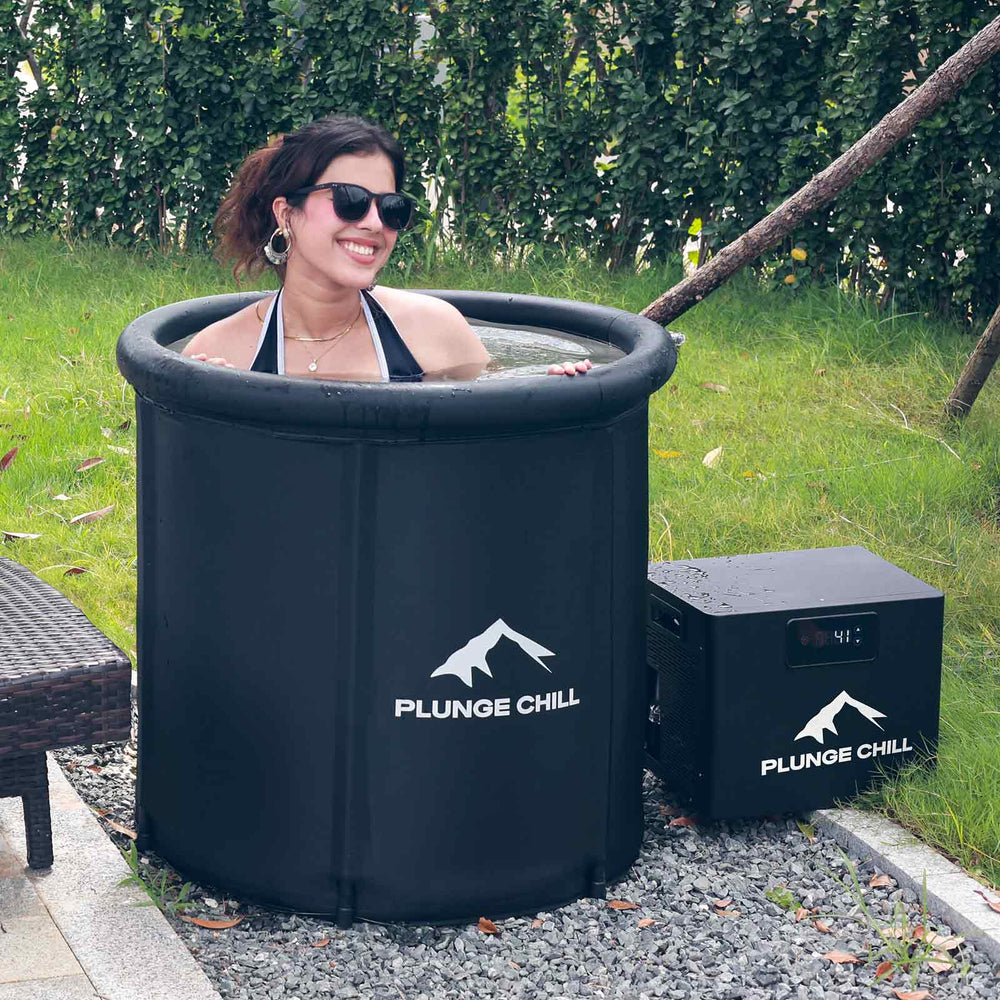
Wearing socks during a cold plunge can help reduce foot pain and protect the toes from extreme cold exposure. Many athletes use neoprene socks in ice baths to improve comfort without significantly reducing the core cooling effect, since most of the physiological response comes from torso immersion rather than the feet.
This article walks through how the body regulates temperature in cold water, what changes when you insulate the feet, and how to match your choice to your goals. The guidance here blends hands-on coaching experience with reputable sources in sports medicine and lifestyle science, including Cleveland Clinic, Mayo Clinic Press, Mayo Clinic Health System, UCLA Health, and Stanford Lifestyle Medicine, supplemented by practitioner guidance and product-oriented insights from cold exposure brands.
Why Your Feet Get So Cold in a Cold Plunge?
Thermoregulation is your body’s control system for heat. In cold water, conductive heat loss outpaces what air can pull from you, so the initial physiological moves are fast. Blood vessels in the skin and extremities constrict to limit heat loss, heart rate and breathing can jump, and the sympathetic nervous system wakes up hard. In the minutes after you exit, blood flow shifts again as the body warms, delivering oxygen and nutrients and clearing metabolic byproducts. These shifts explain why many users report both post-exercise relief and a calmer mood after they finish. Cleveland Clinic emphasizes that the immediate benefits center on soreness relief, swelling control, and cooling an overheated body, with sleep and focus improvements reported by some users. Stanford Lifestyle Medicine highlights increases in norepinephrine and endorphins that may support mood and stress resilience. UCLA Health underscores symptom relief and circulation support within a cautious, time-limited practice.
Feet are the first battleground for comfort in cold water. They get cold fast, they hurt when vasoconstriction bites, and they are vulnerable to skin and nerve issues at very low temperatures. That is precisely why many clinical and coaching guidelines endorse protecting the extremities during short, controlled exposures. General-facing resources and practitioner guides often suggest insulated gloves and socks for cold stress on hands and feet to prevent skin injury and reduce early termination due to discomfort. The key question is what that protection changes about the core physiological “dose.”
Do Socks Reduce the Benefits of a Cold Plunge?
The short answer from field practice and pragmatic guidance is that protecting the feet improves comfort and reduces risk without meaningfully blunting the core-lowering stimulus of a properly dosed cold plunge. Practitioner guidance oriented toward consumer cold immersion notes that thin neoprene socks or similar protective layers can make the experience more tolerable without undermining the key cooling effect on the torso, which is the primary driver of the systemic response during an ice bath. In cryotherapy, health system guidance explicitly protects hands and feet with socks and gloves to avoid frostbite, yet the systemic effects are still sought and achieved because the rest of the body remains exposed.
At the same time, physiology suggests a sensible nuance. Huberman Lab notes that immersion including hands and feet produces a more robust stimulus to the nervous system, which is why full-body immersion up to the neck is the most studied format. If you insulate the feet, you likely reduce local cold pain and some afferent signaling from the toes and soles. In plain language, socks make the experience less shocking. In my coaching sessions, that reduced shock often enables steadier breathing and longer, safer exposure at the same water temperature, especially in beginners. In other words, socks typically improve adherence and control rather than “ruining” the plunge.
Cold Plunge Safety: Should You Protect Your Feet?
Cleveland Clinic emphasizes that beginners should keep exposures short and within safer temperature ranges until they learn their limits. UCLA Health recommends cold showers or cold water immersion as symptom-focused tools, not cures, and highlights practical rewarming strategies. Mayo Clinic Press and Mayo Clinic Health System both remind athletes that frequent, chronic cold exposure close to lifting can blunt long-term strength and hypertrophy adaptations, while strategically timed cold can ease soreness and help in dense competition windows. None of these principles hinge on whether you wear socks. They are about the cold exposure itself, its proximity to training, and the total “dose” over time.
Where socks do matter is day-to-day safety and comfort. Protecting toes in very cold water reduces the risk of skin injury, helps novices settle the breathing reflex more quickly, and lets users accumulate the right minutes at the right temperatures. That means more consistent practice with fewer aborted sessions, which is often the deciding factor between a useful habit and a discarded one.
Barefoot vs Socks: What Actually Changes
|
Dimension |
Barefoot Plunge |
Plunge Wearing Socks |
|
Initial cold shock |
Stronger at the toes and soles; higher perceived pain early |
Noticeably reduced toe pain; easier to settle breathing |
|
Core cooling stimulus |
Driven primarily by torso immersion; fully present |
Driven primarily by torso immersion; still present |
|
Perceived discomfort in extremities |
Higher; more numbing and stinging |
Lower; less risk of cutting sessions short for beginners |
|
Frostbite and skin risk to toes in very cold water |
Higher if water is near the lower end of typical ranges |
Lower because of insulation |
|
Typical tolerated duration at common beginner temperatures |
Often shorter due to toe pain |
Often longer by a small but meaningful margin, enabling consistent practice |
|
Sympathetic arousal and “mental reset” |
Pronounced; stronger local cold stimulus |
Solid; slightly less toe-driven shock but comparable overall effect if torso is submerged |
|
After-session rewarming comfort |
Harder if feet are numb |
Smoother; easier transition to rewarming routine |
|
Best use cases |
Experienced users seeking maximum unfiltered stimulus; short, sharp dips |
Beginners building tolerance; anyone prone to toe pain; longer but still safe exposures; icy setups where frostbite is a concern |
|
Downsides |
Higher discomfort can derail practice; greater toe risk |
Slightly less “raw” feel; may be perceived as less intense by purists |
This is the practical trade-off athletes, coaches, and wellness users should weigh. If your goal is a reliable, safe immersion that doesn’t get hijacked by toe pain, socks are an asset. If your priority is a crisp, unfiltered cold shock and you already tolerate the water well, barefoot is reasonable within safe temperature and time limits.
Best Cold Plunge Temperature and Time for Beginners
The most consistent temperature range for beginners across clinical and coaching sources is about 50–59°F. Cleveland Clinic notes that if you are brand new, you can even start around 68°F and progress downward as you gain control, while more advanced protocols sometimes reach the low 40s but should still be handled with caution. For time, reputable sports medicine guidance favors brief exposures. Many users do well with two to five minutes per plunge when the water stays in the common 50–59°F range. Cleveland Clinic also recommends keeping total time generally at or under five minutes for safety, with experienced users building gradually and exiting immediately if discomfort escalates beyond normal cold sensation.
Timing relative to training matters for performance goals. Mayo Clinic Press and Mayo Clinic Health System both caution that frequent, post-lifting cold can blunt strength and muscle growth adaptations. If you are in a hypertrophy or maximal strength phase, push cold exposure away from those sessions by hours or to non-lifting days, and keep doses short. If your schedule demands rapid turnarounds or you are managing soreness in a congested competition block, a short plunge can be a pragmatic tool, and wearing socks will not change the adaptation calculus; the critical variable is whether you are using cold exposure at all, not what is on your feet.

Why Beginners Often Wear Socks in Cold Plunges
Cold shock drives a reflexive gasp and rapid breathing. Multiple sources emphasize that you should avoid pre-plunge hyperventilation and instead use calm, controlled inhales and longer exhales while in the water. In my practice, socks consistently make those first thirty seconds less chaotic, allowing athletes to stabilize their breath earlier. Early breath control is the gateway to a safer, more productive session. If you struggle to settle your breathing, test the same water temperature once with socks and once without on different days, and compare how quickly you regain control. Many users are surprised by how much the experience improves with that small change.

Rewarming: Gradual Wins
Exiting cold water is not the time for reckless heat swings. Several practitioner guides and health sources recommend a progressive rewarming routine. Towel off to stop evaporative heat loss, dress in warm, dry layers, move gently with short walks or easy mobility, and consider a warm drink. Some people like contrast therapy and sauna rewarming; others prefer gradually letting the body heat itself without an immediate hot blast. Both approaches can work. If you are new or prone to lightheadedness, prioritize gradual rewarming, then experiment with contrast once your tolerance is clear. Mayo Clinic Health System and Cleveland Clinic discuss sauna and contrast approaches in the context of safe practice and temperature control; whichever route you choose, enter warm environments thoughtfully and stop if you feel dizzy.
Safety First: Who Should Be Cautious or Avoid Cold Plunges
Cold water immersion increases cardiovascular stress and can provoke hyperventilation. Cleveland Clinic highlights specific conditions that warrant medical consultation before cold plunging, including heart disease, high blood pressure, diabetes, peripheral neuropathy, poor circulation, venous stasis, and cold agglutinin disease. UCLA Health adds cold urticaria and Raynaud’s syndrome as important considerations. Stanford Lifestyle Medicine and other sources emphasize that not everyone should pursue cold-water immersion and that protocols must be individualized. Pregnant individuals should consult their clinicians. Wearing socks does not erase these risks. If you fall into any of these categories, speak with your physician first.
Product Review Notes: Tubs, Thermometers, and the Footwear Question
From a gear reviewer’s perspective, the tub you choose affects whether you will prefer socks. A dedicated cold plunge with precise temperature control, circulation, and filtration makes it easier to hold a steady 50–59°F, which keeps your “dose” consistent from session to session. Many premium units also have textured floors; that helps with stability when you stand to exit, whether barefoot or in socks. Entry-level setups using a bathtub and ice work but tend to drift in temperature over the session, so a reliable thermometer is essential.
On footwear, thin neoprene socks strike the best balance between comfort, traction, and thermal protection in water. They reduce the worst of toe pain without turning the session into a lukewarm bath. Wool and cotton are less suitable because they saturate quickly and lose insulating value in water. If you like open-water immersions in winter or icy garage plunges, insulating your feet becomes more than a comfort play; it is a safety choice that helps protect skin and nerves in the coldest environments.
Use-Case Guidance From the Clinic and the Weight Room
In novices learning the practice, socks are my default recommendation. The quicker a user settles their breath, the sooner the sympathetic spike becomes tolerable, and the more likely they are to stick with the routine. That adherence benefit outweighs any theoretical reduction in foot-specific cold signaling. In high-frequency competition windows with swelling and soreness, socks support longer tolerable immersions at safe temperatures, which is helpful when the schedule is packed. In strength blocks prioritizing muscle gain, the primary intervention is to limit cold exposure close to lifting. Whether you are barefoot or wearing socks does not change the adaptation risk from cold itself; the fix is to change timing and dose. For experienced users chasing a sharp stressor and a brief mental reset, barefoot is fine if the water is in the safe range and you can maintain control. For open-water dips or near-freezing setups, protecting the extremities is the smart play.
What the Evidence Can and Cannot Tell Us
The clinical literature is strongest on immediate cooling, soreness relief, and safety principles rather than long-term performance or mental health claims. Cleveland Clinic presents cautious, practical recommendations on temperature and time that align with what most athletes can tolerate. Mayo Clinic Press and Mayo Clinic Health System add nuance about training adaptations and where cold fits in a performance plan. Stanford Lifestyle Medicine outlines plausible mechanisms for mood and stress effects via norepinephrine and endorphins, with early studies showing promising but not definitive results. Direct clinical trials isolating “barefoot versus socks” in cold-water immersion are not available to my knowledge. That gap is why we lean on thermoregulation fundamentals, safety-first clinical advice, and extensive field experience. Within that framework, the conclusion is clear: socks are a legitimate tool that generally preserves the core dose while improving comfort and safety at the extremities.
Practical Protocols That Respect Both Sides
If you are new to cold exposure, begin with cooler showers or a tub at approximately 68°F so you can learn to control your breath without a panic response, then progress toward 50–59°F as you gain confidence. Keep initial immersions brief and exit at the first sign of distress. If your toes are the limiting factor, add neoprene socks and reassess; most beginners find they can meet their time goal with less struggle. If you are experienced, shorten sessions when you push into colder water rather than chasing longer minutes. If you lift for strength or muscle growth, schedule cold exposure far from those sessions or move it to off-days. If you are in a tournament or back-to-back competition stretch, use short immersions to manage soreness and swelling and feel free to keep the socks on. In every case, keep a thermometer in the water, control your breathing, and rewarm gradually.
A Note on Dedicated Plunge Systems and Cost
A well-built portable cold plunge tub that maintains temperature precisely improves the consistency of your stimulus. Some systems are larger investments and can run high, but they offer stability, filtration, and ease of use that many households value—especially when multiple family members or teammates share the tub. Health system guidance notes that cold-plunge tanks can be expensive, while a basic bathtub-and-ice setup can work if you carefully monitor temperature. Regardless of budget, consider safety, footing, and water quality, and decide ahead of time whether you want to plunge barefoot or with socks, so you’re not negotiating that decision while already shivering.
Better Cold Plunge Experience
If you want consistent cold temperatures and a safer setup, a dedicated cold plunge tub with filtration and temperature control can make the experience far more comfortable than DIY ice baths.
✔ Stable temperature
✔ Better water circulation
✔ Easier maintenance

PLUNGE CHILL POD --- Overstock Clearance
Short FAQ
Will socks reduce the benefits of my cold plunge?
For most practical goals at common temperatures, no. The torso drives the core cooling and the systemic response. Socks simply reduce local foot pain and frostbite risk, which often improves breathing control and adherence.
Should I also wear gloves?
If your hands limit your session or you are in very cold environments, light gloves are reasonable for the same reason socks help feet. The same dose logic applies: protect extremities while keeping the torso immersed at the target temperature.
What if I am using cold for strength recovery after lifting?
The bigger lever is timing. Regular, immediate post-lifting cold exposure can blunt long-term strength and hypertrophy adaptations. Move the plunge away from lifting or keep it short and infrequent during heavy strength phases. Socks or barefoot will not change that core principle.
Final Thoughts
If your goal is a safe, sustainable cold-plunge practice that supports recovery and resilience, insulating your feet is a smart, evidence-aligned option. It preserves the core physiological stimulus, lowers toe pain and skin risk, and helps novices and pros alike hit their targets with better breath control. Go barefoot when you have the tolerance and a specific reason to lean into a stronger local shock. Above all, respect the temperature, limit the time, match the timing to your training, and keep your safety checklist tight. That’s how athletes recover better today and keep adapting tomorrow.
References
- https://lifestylemedicine.stanford.edu/jumping-into-the-ice-bath-trend-mental-health-benefits-of-cold-water-immersion/
- https://pmc.ncbi.nlm.nih.gov/articles/PMC11872954/
- https://health.clevelandclinic.org/what-to-know-about-cold-plunges
- https://mydoctor.kaiserpermanente.org/mas/news/health-benefits-of-cold-water-plunging-2781939
- https://mcpress.mayoclinic.org/healthy-aging/the-science-behind-ice-baths-for-recovery/
- https://www.mayoclinichealthsystem.org/hometown-health/speaking-of-health/cold-plunge-after-workouts
- https://www.uclahealth.org/news/article/6-cold-shower-benefits-consider
- https://www.hackensackmeridianhealth.org/en/healthu/2023/06/15/the-truth-about-ice-baths
- https://www.exercisinghealth.net/blog/ice-baths-for-athletes-the-benefits-and-side-effects
- https://www.bswhealth.com/blog/what-is-cryotherapy