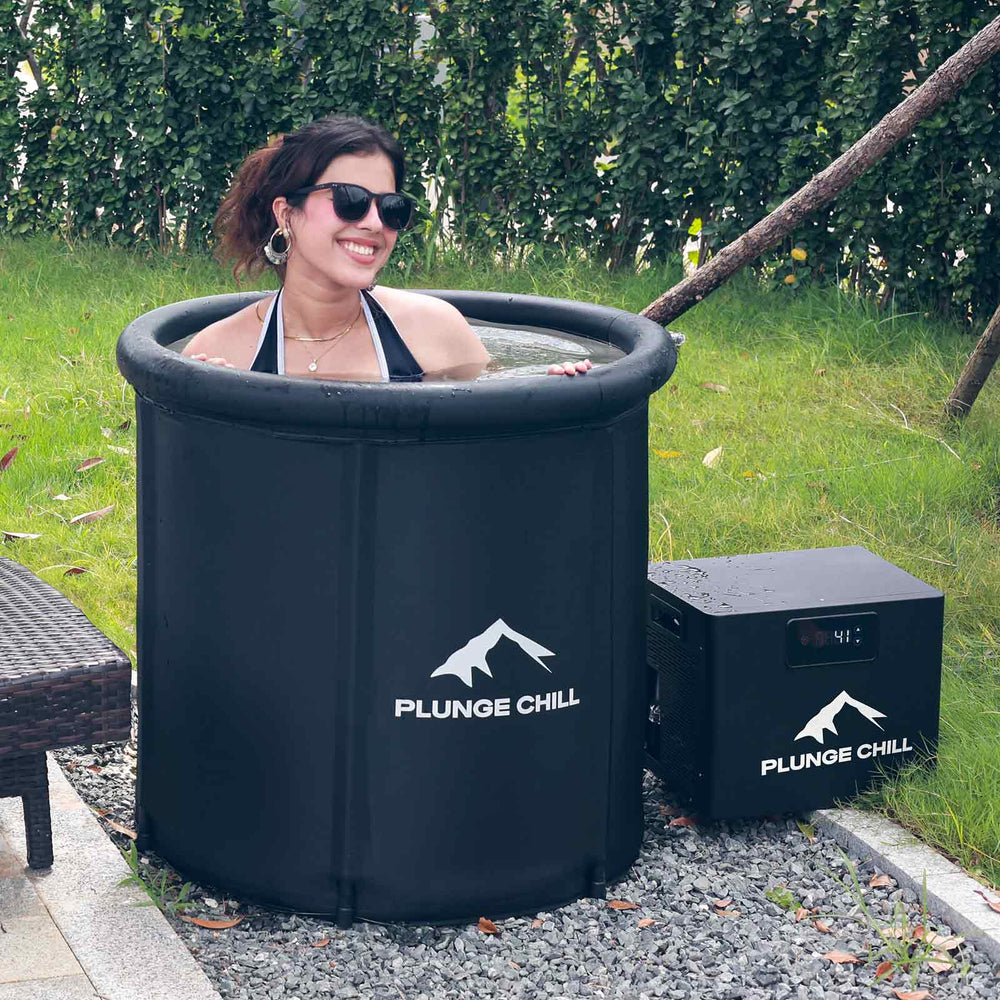
Cold exposure has moved from locker‑room lore to a serious discussion point in sports performance, rehabilitation, and metabolic health. As a sports rehabilitation specialist and strength coach who also evaluates cold plunge products, I see clear interest from athletes and everyday clients who want fat‑loss support without compromising training quality or safety. This article explains how cold triggers thermogenesis, what the human evidence shows for fat burning, where animal and cellular studies might point us next, and how to apply cold exposure practically. I will also compare common modalities, outline risks and buying considerations for cold plunge tubs, and close with takeaways and a concise FAQ.
Thermogenesis 101: How Cold Burns Calories
Thermogenesis is the body’s heat‑production response. During cold exposure, two systems increase energy expenditure. Shivering thermogenesis uses rapid, involuntary muscle contractions to generate heat, while non‑shivering thermogenesis relies on brown adipose tissue (BAT)—a mitochondria‑rich fat depot that uncouples cellular respiration through the UCP1 protein to release energy as heat. Acute cold reliably activates BAT and increases energy use. A randomized‑trial meta‑analysis in adults reported that short‑term cold exposure around 61–66°F increased daily energy expenditure by roughly 188 kcal compared with thermoneutral conditions near 75°F, with measurable increases in BAT volume, activity, and fatty‑acid uptake assessed by FDG‑PET/CT and MRI (PubMed Central). These are meaningful, immediate changes in energy burn.
However, “calories out” is only half the story. Intermittent cold‑exposure reviews show that while energy expenditure rises during cold, long‑term body weight changes are inconsistent in humans, in part because some individuals compensate by eating more, and because acclimation can reduce the shivering component over time (PubMed Central). In one controlled protocol in men with overweight and type 2 diabetes, ten days of daily cool exposure at about 59°F increased BAT activity during cold yet lowered basal metabolic rate at comfortable room temperature, suggesting a complex adaptation that may blunt resting calorie burn outside the cold stimulus (PubMed Central). From a coaching perspective, this means cold can be a useful adjunct for energy expenditure and metabolic flexibility, but nutrition remains the dominant driver of fat loss over weeks and months.

What the Evidence Really Says About Fat Loss
Human trials consistently show acute boosts in energy expenditure and BAT activation during cold. The degree to which these boosts translate into visible fat loss depends on diet, appetite regulation, activity, and the dose of cold. In general, controlled studies suggest that cold exposure can improve insulin handling and glucose uptake, particularly in BAT‑positive individuals, and several reviews emphasize insulin sensitivity improvements as one of the more robust benefits (Healthline). Observational datasets link the presence of active BAT with lower risk of type 2 diabetes in adults, but causality is not proven, and many participants in thermogenic studies are young, lean males—an important limitation for generalization (Medical News Today).
A significant nuance that is underappreciated outside of research circles is the possibility of compensatory behavior. Rodent studies frequently show increases in post‑cold energy intake that offset higher energy expenditure; in humans, some individuals also report elevated appetite after sessions. When I program cold exposure for fat‑loss clients, I ask them to track hunger and food intake for the subsequent 12–24 hours and to preload protein and fiber to steady appetite. This one change often explains why two people with identical cold protocols have very different physiques at eight weeks.
A second nuance concerns circadian timing. A recent randomized crossover experiment reported that morning cold exposure increased BAT thermogenesis more than evening exposure in men, while the effect was not clear in women, potentially due to differences in shivering thresholds and peripheral vasoconstriction (Medical News Today). Suggested verification: replicate in a larger, sex‑stratified sample using direct BAT tracers and standardized pre‑visit meals.
Finally, chronic adaptation might reduce the “extra burn” outside of sessions. In acclimation protocols, shivering wanes as BAT contribution rises, but at thermoneutrality some participants show slightly lower resting metabolic rates after sustained cold exposure blocks (PubMed Central). Suggested verification: pre‑post measurements of resting energy expenditure at thermoneutrality after a four‑week cold block with dietary control.

Molecular Levers: From Mechanisms to Practical Meaning
Translational science helps explain why some individuals respond more robustly to cold.
In skeletal muscle, cold exposure in mice around 39°F for three days induced a striking remodeling of the muscle lipidome, including increased intramuscular triglycerides and enrichment of polyunsaturated fats, with transcriptional signatures implicating HIF‑1α–induced mitophagy (BMC Biology). The serum triglycerides and cholesterol decreased while white fat showed “browning” markers. The simplest interpretation is that cold mobilizes circulating lipids into muscle as a local fuel reserve for thermogenesis, while remodeling cellular membranes for cold resilience. This may help explain why trained individuals often feel “warmer” and recover faster between cold bouts. That said, human translation remains to be demonstrated directly. Suggested verification: monitor muscle lipid content by MR spectroscopy and biopsy‑based lipidomics in adults before and after a controlled cold‑acclimation program.
In brown fat, a preclinical program identified a protein regulator, Them1, that acts like a brake on fuel flux into mitochondria. When Them1 is phosphorylated and dispersed, BAT can oxidize fats efficiently; when it condenses, heat production drops. Knocking out Them1 in mice elevated energy expenditure and led to weight loss despite higher calorie intake (Weill Cornell Medicine). This makes Them1 inhibition a speculative but intriguing drug target for thermogenesis. Suggested verification: assess selective Them1 inhibitors in human BAT organoids and primary adipocytes with off‑target cardiovascular screening.
Other pathways bypass the nervous system altogether. Work from UCSF shows that immune cytokines such as interleukin‑4 and interleukin‑13 activate fat‑resident macrophages to release catecholamines, converting white adipocytes to beige, heat‑producing cells. In mice, this immune axis increased energy expenditure and produced weight loss; convergent studies indicate similar signaling when humans adapt to mild cold near 61–63°F (UCSF; Cell). For now, this guides mechanistic thinking more than practice, but it underscores why some individuals appear to “brown” fat more readily during winter acclimation.
Collectively, these mechanistic lines agree on one theme: cold exposure does not simply “burn fat” in a linear way. It rewires fuel routing, substrate preference, and hormonal signaling across tissues, and those effects vary by sex, adiposity, acclimation, and behavior after the session.

Practical Protocols That Respect Physiology
For fat‑loss support, I prioritize consistency over heroics and coach people to accumulate modest amounts of deliberate cold each week while protecting training adaptations. One accessible framework is a total of about eleven minutes per week, divided into two to four sessions of one to five minutes in uncomfortably cold but safe water, often in the 45–60°F range for cold plunges or cool showers. This “minimum effective dose” concept popularized in practice circles aligns with the principle that colder water permits shorter bouts, while warmer water requires longer exposure to reach a similar total stimulus (Huberman Lab). I cue clients to avoid deliberate hyperventilation before or during immersion and to exit if they feel chest pain, confusion, or uncontrolled shivering.
For metabolic emphasis, allowing your body to rewarm on its own may increase the thermogenic effect. Ending on cold and resisting the urge to immediately huddle or take a hot shower encourages shivering thermogenesis, which releases succinate from muscle and further activates brown fat. As a coach, I view this as optional layering rather than a rule, especially when sessions occur before work or school, because comfort and compliance still matter (Huberman Lab). If you try this, dry off lightly, dress, and let the body heat itself over the next fifteen minutes. Individuals with cardiovascular disease, uncontrolled hypertension, Raynaud’s, neuropathy, or pregnancy should not pursue this approach and should seek clinical guidance before any cold program (WebMD; Medical News Today).
For athletes, the timing of cold immersion relative to lifting matters. Cold‑water immersion within about four hours after heavy strength or hypertrophy sessions can blunt some of the adaptive signaling and slow gains, whereas waiting six to eight hours or placing the cold on rest days reduces that risk. Cold showers are less problematic on this front, but I still separate any immersion from high‑priority lifting blocks in season (Huberman Lab; meta‑analysis summarized therein).

Comparing Cold Modalities for Fat Burning
Cold is not one thing. Each modality carries different goals, temperatures, and evidence strength.
|
Modality |
Typical temperature |
Typical duration |
Primary purpose |
Evidence on fat loss and thermogenesis |
|
Cold plunge or ice bath |
About 39–55°F water |
One to five minutes per bout, repeated to reach weekly totals |
Systemic thermogenesis, recovery, perceived alertness |
Increases energy expenditure during exposure and activates BAT; a meta‑analysis shows about 188 kcal per day higher energy expenditure at about 61–66°F versus 75°F, with higher BAT volume and activity; long‑term weight change depends on diet and acclimation (PubMed Central). |
|
Cold shower |
Often 45–60°F on skin; varies by tap supply |
A few minutes, accessible daily |
Entry‑level systemic stimulus |
Likely smaller, still useful stimulus given broad skin exposure; robust direct fat‑loss data are limited; practical for habit formation and appetite awareness (Huberman Lab; general practice observations). |
|
Whole‑body cryotherapy chamber |
Approximately −166 to −256°F air |
Two to three minutes |
Recovery, systemic stimulus with minimal water contact |
Signals for abdominal fat reduction in menopausal women after a 20‑session course and favorable hormonal shifts in select groups; protocols and dosing vary and should be medically screened (PubMed Central). |
|
Cryolipolysis (fat freezing) |
About 30–39°F applied locally by an applicator |
Thirty‑five to seventy‑five minutes per area |
Local contouring of subcutaneous fat |
Area fat reduces on average by about 15–28 percent after a session series; typical ranges of 10–25 percent are cited in clinical overviews; this is not a weight‑loss method and does not affect visceral fat (Cleveland Clinic; WebMD). |
Two disagreements in the literature deserve brief explanation. First, some overviews suggest that repeated cold exposure always raises basal metabolism; the intermittent cold‑exposure review shows this is not guaranteed and may even decrease basal expenditure at comfortable temperatures after acclimation in specific groups. The likely cause is methodological and definitional: studies vary in cold dose, feeding control, and the subtraction of shivering vs non‑shivering components, and in whether they report energy expenditure during cold or at thermoneutrality afterward (PubMed Central). Second, reported “calories burned” per session range widely in commercial materials because they extrapolate rewarming costs and sympathetic activation differently. Peer‑reviewed human data support modest acute increases; marketing claims of several hundred calories per two‑minute session are not well substantiated in controlled trials.

Pros, Cons, and Contraindications
The major advantages of deliberate cold are metabolic flexibility, possible insulin sensitivity improvement, improved tolerance to environmental stressors, and perceived recovery benefits. Many clients report better alertness after morning cold and easier adherence to a calorie‑aware diet later in the day. The primary downsides involve discomfort, potential increases in appetite post‑session, and the risk of blunting hypertrophy signaling if cold‑water immersion is placed too close to strength training. Cold stress can acutely increase blood pressure and cardiac workload; people with cardiovascular disease, arrhythmias, uncontrolled hypertension, or strong cold sensitivity syndromes should seek medical guidance, and those with Raynaud’s, cold urticaria, or neuropathy may not be candidates at all (WebMD). Pregnancy is a conservative no until cleared by a clinician. If you have thyroid disease, especially poorly controlled hypothyroidism, discuss risks and monitoring strategies with your physician (Medical News Today).
Buying and Care Tips for Cold Plunge Tubs
As a product reviewer, I focus on five elements that determine the usefulness of a cold plunge for fat‑burning support and daily training.
Cooling performance matters first. Aim for a chiller that can reliably hold water at or below 50°F in your climate with a reasonable duty cycle; many clients gravitate to 39–45°F for short bouts, but consistency matters more than hitting the coldest number on the web page. Insulation and a well‑fitted cover substantially lower energy costs and reduce temperature drift. Filtration and sanitation should be straightforward. I prefer systems with an easy‑to‑replace filter, ozone or UV options, and clear instructions for safe sanitation without over‑chlorination. If you plan frequent use, a foot‑rinse bin and quick‑change filters keep water crystal clear and odor free.
Ergonomics determine whether you will actually use the tub every day. Stable steps, non‑slip surfaces, and a tub depth that allows shoulder‑level submersion without tucking the neck awkwardly will improve safety and breathing control. Drain design is more important than it seems. A low‑point drain that empties quickly to a safe location, ideally with a garden‑hose connector, simplifies weekend deep cleans. Electrical safety should not be negotiable. A GFCI‑protected circuit, sound cable management, and clear condensation controls protect your equipment and your family. Finally, consider the fit in your space and lifestyle. A portable, inflatable‑plus‑chiller setup can work in apartments and on small patios, while a fully insulated acrylic unit suits a permanent garage or backyard install. Sound levels from the chiller matter in shared spaces; if it hums like a window AC unit, plan the location accordingly.
If you are not ready to buy, a tightly run gym or clinic cold plunge with clean water and posted temperature logs is a cost‑effective way to test your tolerance across a few weeks.
Integrating Cold with Training, Nutrition, and Recovery
Cold is not a substitute for a calorie deficit, but it can be a lever. I place metabolic‑oriented cold sessions away from heavy lifting and high‑priority hypertrophy work by at least six to eight hours. Short cool showers before morning cardio can add a gentle stimulus without interfering with strength progress later. Anecdotally and in line with circadian logic, morning cold may feel more energizing and might, in men, produce stronger BAT activation than evening exposures. Suggested verification: randomize morning versus evening cold in trained men and women with standardized diets and repeat FDG‑PET.
To manage appetite after cold, I cue a high‑protein, high‑fiber meal in the next few hours and hydration to offset any sympathetic “rebound hunger.” If fat loss is the priority, I have clients track both energy intake and morning scale weight for two to three weeks after adding cold to confirm that the average weekly deficit still exists. Sleep remains non‑negotiable. If late‑day cold makes it harder to fall asleep due to a post‑session rise in core temperature, move the session earlier.

Where Local Fat Freezing Fits
Cryolipolysis, often known by a brand name, is different from systemic cold exposure. An applicator cools a specific fat bulge to about 30–39°F for up to an hour while protecting the skin. The cold injures fat cells, triggering a tidy immune‑clearance process over weeks. Clinical overviews from major medical centers report average local fat reductions between about 15 and 28 percent in the treated area after a session series, with changes typically visible by six to twelve weeks. This can be a useful contouring option for stubborn subcutaneous pockets, but it is not weight loss and does not reduce visceral fat (Cleveland Clinic; WebMD). There are rare risks such as paradoxical adipose hyperplasia, more common in some populations and body sites. As with any elective procedure, a qualified provider and appropriate screening are essential.

Takeaways
Cold exposure reliably raises energy expenditure and recruits thermogenic tissues during the session. That is clear from human imaging and metabolic studies. Whether those calories translate into visible fat loss depends on what happens in your kitchen and training log and on how you adapt to the cold over time. For most people, a modest, consistent program of deliberate cold paired with controlled nutrition and planned strength and conditioning will produce better outcomes than chasing extreme temperatures or long immersions. Schedule cold intelligently around training, watch for post‑cold appetite, and choose equipment that is safe, maintainable, and appropriate for your space. In parallel, keep an eye on the evolving science, because mechanistic work in muscle, brown fat, and immune–fat signaling could sharpen protocols and, in time, produce pharmacologic tools that mimic some of cold’s metabolic effects.
FAQ
What temperature should I use if I am new to cold plunges and want fat‑loss support? Start where the water feels uncomfortably cold yet safe, often around 50–60°F for beginners. Accumulate about eleven minutes per week across two to four sessions of one to five minutes. As tolerance improves, you can explore the mid‑40s for shorter bouts, but consistency and appetite control matter more than chasing the coldest number.
Does cold exposure after lifting hurt muscle growth? Cold‑water immersion close to lifting can blunt the cellular signals that drive hypertrophy and strength gains. If your priority is building muscle, separate cold immersion from lifting by six to eight hours or use it on rest or cardio days. Cold showers appear less disruptive but still schedule conservatively.
Can cold exposure meaningfully lower my body fat by itself? Cold increases calorie burn during the session and can improve insulin handling, but long‑term fat loss requires a calorie deficit. Reviews show mixed weight outcomes because many people eat more after cold and because the body adapts to repeated exposure. Treat cold as a tool to support, not replace, nutrition and training fundamentals.
Is morning cold exposure better than evening for fat burning? A small crossover trial suggested stronger morning BAT activation in men, with less clear effects in women. A larger, well‑controlled study with direct tracers and standardized meals would help confirm whether timing matters for different populations.
How does cryolipolysis differ from cold plunges? Cryolipolysis is a local fat‑freezing procedure that reduces subcutaneous pocket size over weeks. It is for shape change, not systemic weight loss, and the average reduction per treated area ranges roughly from the mid‑teens to the mid‑twenties in percent across clinical overviews. Cold plunges target systemic thermogenesis and cardiometabolic effects rather than spot reduction.
Are there people who should avoid cold therapy? Yes. People with cardiovascular disease, arrhythmias, uncontrolled hypertension, Raynaud’s, cold urticaria, neuropathy, or pregnancy should avoid unsupervised cold exposure and seek medical guidance. If you have thyroid disease or diabetes, involve your clinician to tailor protocols and monitor responses.
Selected Sources
BMC Biology; PubMed Central; Science Advances; Cleveland Clinic; WebMD; Healthline; Huberman Lab; UCSF; Weill Cornell Medicine; Medical News Today; Columbia University Irving Medical Center; Sanford Burnham Prebys; University of Alabama at Birmingham.
References
- https://www.cuimc.columbia.edu/news/mechanism-turns-white-fat-energy-burning-brown-fat
- https://hms.harvard.edu/news/new-obesity-tool
- https://wp.nyu.edu/calm/?id=salt-and-ice-recipe-for-weight-loss-explained-science-risks-and-smarter-alternatives-68a2ec5ac12cc
- https://www.uab.edu/graduate/?view=article&id=528:burning-away-the-fat&catid=31
- https://pmc.ncbi.nlm.nih.gov/articles/PMC10778965/
- https://news.weill.cornell.edu/news/2021/06/protein-that-puts-the-brakes-on-fat-burning-could-be-obesity-drug-target
- https://www.ucsf.edu/news/2014/06/114951/fat-burning-triggered-cold-weather-may-suggest-new-weight-loss-strategy
- https://sbpdiscovery.org/does-cold-weather-promote-weight-loss/
- https://my.clevelandclinic.org/health/treatments/21060-fat-freezing-cryolipolysis
- https://www.science.org/doi/10.1126/sciadv.adt7369
Disclaimer
By reading this article, you acknowledge that you are responsible for your own health and safety.
The views and opinions expressed herein are based on the author's professional expertise (DPT, CSCS) and cited sources, but are not a guarantee of outcome. If you have a pre-existing health condition, are pregnant, or have any concerns about using cold water therapy, consult with your physician before starting any new regimen.
Reliance on any information provided in this article is solely at your own risk.
Always seek the advice of a qualified healthcare provider with any questions you may have regarding a medical condition, lifestyle changes, or the use of cold water immersion. Never disregard professional medical advice or delay in seeking it because of something you have read in this article.
The information provided in this blog post, "Cold Therapy for Fat Burning: The Role of Thermogenesis," is for informational and educational purposes only. It is not intended to be a substitute for professional medical advice, diagnosis, or treatment.
General Health Information & No Medical Advice