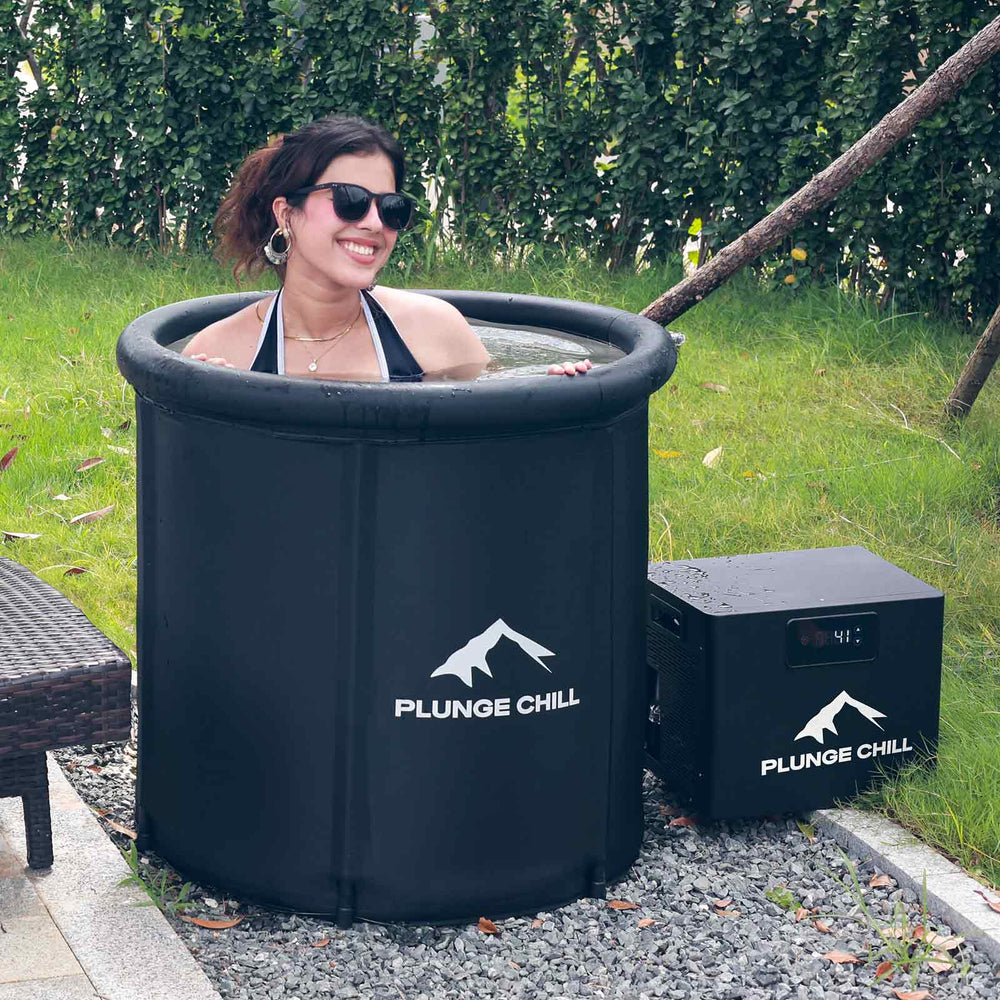
Cold-water immersion has been part of my rehabilitation and return-to-play toolkit for more than a decade. As a sports rehabilitation specialist and strength coach, I’ve seen ice baths calm hot, swollen joints after tournament weekends and help athletes hit the next workout with less soreness. I’ve also seen poorly dosed plunges backfire—too cold, too short, or mistimed relative to strength training. This guide translates the best available evidence and practical coaching experience into a clear, safe temperature approach for beginners, with product, care, and buying advice you can use immediately.
Why Temperature Matters
Cold immersion triggers a predictable cascade. The first seconds bring a cold shock response—sharper breathing, higher heart rate, and a spike in blood pressure—followed by strong vasoconstriction that shunts blood to your core. This response is well described by Case Western Reserve University and Cleveland Clinic and is the primary reason beginners should respect the water and start warmer. At muscle level, cold lowers tissue metabolism and blood flow, which can reduce swelling and the perception of soreness after hard efforts. That is the same logic behind icing acute injuries and explains why coached protocols focus on specific temperatures and durations rather than “as cold as possible.”
A second piece of physiology matters just after you exit: afterdrop. Your core temperature can continue to drift down briefly when cooler blood returns from your limbs. It is harmless when exposure is short and rewarming is controlled, but it is one of the arguments for conservative session lengths as you learn your response.

What the Research Actually Supports
Large, definitive trials on ideal dosing are scarce, but several themes repeat across reputable medical sources. Cleveland Clinic provides beginner-friendly ranges and cautions against very low temperatures for novices. Mayo Clinic Press emphasizes that cryotherapy is best treated as a complement to basics like sleep, nutrition, and smart training rather than a replacement. Ohio State University Wexner Medical Center notes cold immersion can aid endurance recovery yet may blunt muscle growth signals when used immediately after resistance training. Everyday Health’s overview of systematic reviews echoes that cold helps short-term soreness and perceived recovery within a day, while the long-term performance picture is mixed.
A notable practice gap surfaced in Runner’s World reporting on University of Central Lancashire work: many athletes go too cold for too little time, missing the target dose that research suggests. That mismatch explains a lot of “ice baths don’t work” anecdotes. Getting the temperature into the right window and holding it there matters more than bravado.

The Safe Temperature Range for Beginners
Most beginners do best between 50–59°F. That zone is cold enough to drive vasoconstriction and perceptible relief without overwhelming breathing and blood pressure control. Cleveland Clinic recommends starting warmer—around 68°F—then titrating down into the low-to-mid 50s as you adapt. Multiple performance and medical sources converge on 50–59°F as the sweet spot for recovery-focused use. For mental clarity and resilience training without aggressive cooling, 60–68°F is often sufficient.
Advanced users sometimes dip toward the mid-40s, but beginners should not go below 40°F. Cleveland Clinic specifically flags 40°F as a practical floor for safety. Extremely cold exposures near 35–40°F belong to supervised polar plunges and are not required for recovery benefits.
Temperature–Duration Matrix for New Users
Experience Level |
Primary Goal |
Water Temperature |
Single-Session Duration |
Frequency |
Notes |
Weeks 1–2 (new to cold) |
Breathing control, safe acclimation |
60–68°F |
1–3 minutes |
2–3× weekly |
Learn entry/exit, practice calm nasal breathing, monitor how you feel. |
Weeks 3–4 (still beginner) |
Soreness relief, tolerance |
54–59°F |
2–5 minutes |
2–3× weekly |
Use a waterproof thermometer; do not chase “colder” yet. |
Trained beginner to intermediate |
Recovery between hard sessions |
50–59°F |
5–10 minutes |
1–3× weekly |
This is the evidence-aligned range for most recovery needs. |
Advanced (not for beginners) |
Strong stimulus in limited time |
45–50°F |
3–8 minutes |
1–3× weekly |
Progress only after months of experience; monitor blood pressure responses. |
Rare, expert-only use |
Brief extreme exposure |
39–45°F |
1–3 minutes |
Rare |
Not needed for recovery; avoid below 40°F without expert oversight. |
Beginners do not need to approach the coldest temperatures. More is not necessarily better; the correct dose is the one that produces calm control in the water and less soreness the next day without shivering or a hard energy crash after you exit.
Reconciling Conflicting Time Advice
You will see session ceilings that vary from five minutes to 20 minutes. Cleveland Clinic’s conservative guidance emphasizes three to five minutes as a safe cap for novices, which aligns with real-world cold shock responses and the need to build confidence and control. Performance-oriented sources like Ohio State discuss 10–20 minutes in the 50–59°F range for endurance recovery. Runner’s World highlighted that many athletes deviate from research-backed 10–15 minute exposures in 48–59°F water and go much colder for just a couple of minutes—a recipe for discomfort without the intended effect. For beginners, an intelligent compromise is to hold sessions to two to five minutes at 54–59°F during the first month, then expand toward five to ten minutes within 50–59°F if your outcomes justify it. That approach respects safety while moving you gradually toward the zone where most recovery studies cluster.

Timing Relative to Workouts
Cold immersion after long endurance work can reduce perceived soreness, help bring core temperature back down, and support a quicker turnaround to the next aerobic session. For strength and hypertrophy blocks, evidence from Ohio State and Mayo Clinic Press suggests delaying cold exposure because cooling may blunt the signaling needed for muscle growth and strength adaptation. A practical rule is to keep immediate post-lift cold plunges for competition periods when feeling fresher tomorrow matters more than getting stronger next month and to delay cold 4–48 hours after heavy resistance training during growth phases. The shorter end of that delay (about four hours) is common in coaching circles, while a full day or two is a safer margin when maximal strength or size is your priority.
How to Start Safely
Set your goal for the day before you get in the water. If it is recovery after a long run, the low-to-mid 50s and a few minutes is appropriate. If it is a mental reset, the low 60s for one to three minutes will do the job without excessive stress. Measure your water with a waterproof thermometer; guessing leads people to sit in water that is far colder or warmer than they intended. Enter slowly, keep the head out at first, and pause at mid-thigh and waist to let the cold shock pass before you sink to your target depth. Keep breaths steady and controlled through the nose; you are training your respiratory response as much as your skin thermoreceptors. Stay still once you are in—it reduces convective heat loss and makes the session more tolerable.
Exiting deserves as much attention as entering. Stand up carefully to avoid lightheadedness, dry off, add warm layers, and walk around your space for a few minutes to facilitate rewarming. If you have access to a sauna, 15–30 minutes afterward is a comfortable way to normalize temperature, as noted by Cleveland Clinic. Avoid aggressive breath holds or deliberate hyperventilation practices in the water; that combination increases blackout risk, especially when you are still learning how your body reacts.

Who Should Avoid Ice Baths Without Medical Clearance
People with heart disease, uncontrolled or labile hypertension, diabetic neuropathy, peripheral vascular disease or poor circulation, venous stasis, cold agglutinin disease, and Raynaud’s phenomenon should talk to a clinician first. Those with a history of stroke, arrhythmias, or on beta blockers should be particularly cautious because the cold shock response acutely raises heart rate and blood pressure, as Case Western Reserve University explains. If you are ill, febrile, or feeling unusually fatigued, skip the plunge until fully recovered. Alcohol and sedatives do not mix with cold exposure; save the celebratory drink for later.
Pros and Cons in Practical Terms
The upside is straightforward for many athletes and exercisers. In the first 24 hours after a tough session, soreness feels lower, swelling is less obvious, and sleep or calm focus may improve. Those effects line up with vasoconstriction reducing fluid shifts into tissues and with a psychological “reset” from controlled stress, themes echoed by Cleveland Clinic, Ohio State, and Everyday Health’s summaries of the evidence.
The tradeoffs are equally real. Cold plunges can delay desirable training signals if used indiscriminately after strength workouts. Very cold or very long exposures raise the risks of lightheadedness, breathing difficulty, hypothermia, and numbness that makes exiting harder. Cold shock is not a mindset contest; it is a physiological event that you manage by choosing sensible water temperatures and session lengths.
Product Choices and Buying Tips
Ice gets you started. Bags from a grocery store poured into a bathtub or an insulated barrel are inexpensive and teach you the basics of temperature, duration, and breathing control. You will spend more time stirring and checking water, and you will likely use 40–100 lb of ice depending on season and target temperature, as reported by manufacturers like Ice Barrel. Choose a shaded spot if outdoors, and fit a lid or UV cover to slow warming and reduce debris.
Chiller systems offer precision. A dedicated chiller attached to an insulated tub holds a set point and often filters the water. The up-front cost is higher, but you stop guessing about ice and stop wasting time with ad hoc cooling. For those building a daily or team routine, chillers pay for themselves in predictability and reduced manual labor. Top-end plug-and-play plunge units include filtration, ozone or UV sanitation, and digital controls. Mayo-aligned consumer guidance notes that fully featured systems can cost up to $20,000.00; a basic chiller and tub coming in well below that can deliver the fundamentals just fine.
Cooling Options Compared
Option |
Temperature Control |
Upfront Cost |
Ongoing Cost |
Maintenance |
Best Use Case |
Bathtub or barrel with ice |
Low to moderate, fluctuates as ice melts |
Low |
Moderate (ice purchases) |
Manual cleaning, frequent ice runs |
Learning the basics, occasional use |
Insulated tub with chiller |
High, holds a set point |
Moderate to high |
Low to moderate (power, filters) |
Routine filter changes and sanitation |
Regular home or team protocols |
High, integrated controls and filtration |
High (up to $20,000.00) |
Low to moderate |
Manufacturer schedule, simplified |
Facilities or daily users prioritizing convenience |
A quick product checklist from the rehab room includes verifying that the tub fits your body height for full lower-body immersion without awkward positions, confirming that the chiller can reach and maintain the temperatures you actually plan to use, and confirming that the sanitation method matches your tolerance and space. A well-fitting lid, an integrated or add-on filter, and a reliable thermometer are non-negotiables for stress-free daily use.
Care, Hygiene, and Water Management
Keep sunlight off your water, skim debris after each session, and wipe contact surfaces with an appropriate cleaner. A covered, filtered system holds clarity longer than an open tub with no circulation. Some brand guides mention changing water approximately monthly when using filtration and sanitation.
A small, practical insight from coaching environments is that stable, clean water supports consistent dosing. When the smell, clarity, and feel of the water are consistent, athletes spend less mental bandwidth questioning hygiene and more on breathing control and time in the target range.
Two Nuances That Change Outcomes
The first nuance is dose fidelity. Runner’s World highlighted that athletes often sit in water colder than 48°F for only two to five minutes, which looks tough but does not reflect the 48–59°F for 10–15 minutes protocols commonly studied for recovery between sessions. The likely cause is protocol drift and a lack of measurement; the fix is a thermometer and a timer.
The second nuance is heat versus cold in the first day after a novel, soreness-inducing workout. A University of New Mexico review of Petrofsky et al. showed both immediate heat and cold reduced strength loss and pain versus no intervention, with immediate cold slightly better for pain while immediate heat produced the most favorable myoglobin profile. That pattern argues for selecting the modality based on your priority—pain relief versus metabolic recovery signals—rather than assuming cold always wins.
A third nuance sometimes claimed in consumer content is that about 11 total minutes per week of cold exposure spread across several sessions can be sufficient for benefits such as mood or resilience. This number appears in brand materials summarizing multiple practices.
Common Mistakes I See and How to Avoid Them
Mistakes cluster around three themes. The first is choosing a temperature you cannot control; guessing leads to water that is either too warm to matter or too cold to stay in long enough to help. The second is stacking cold immediately after heavy lifting during a growth phase; that choice trades away adaptation for short-term comfort. The third is breathing against the cold shock rather than with it; entering slowly and using calm nasal breathing changes the experience entirely.
Quick Reference Temperatures
Here is a compact decision aid you can screenshot and keep near your tub. Beginners start with 60–68°F for one to three minutes to practice calm breathing, then progress into 54–59°F for two to five minutes. Once comfortable, plan most recovery sessions at 50–59°F for five to ten minutes. Avoid temperatures below 40°F as a beginner and use a thermometer every time. When your goal is hypertrophy, delay cold 4–48 hours after the lift.
FAQ
What is the safest starting temperature if I have never cold plunged?
A comfortable starting point is about 68°F. That is cold for a bath yet gentle enough to practice breathing control. Over two weeks, reduce toward 54–59°F while keeping sessions short. Cleveland Clinic’s beginner guidance aligns with this progression.
How long should a beginner stay in the water?
Two to five minutes is a smart early ceiling, then extend toward five to ten minutes only if you feel stable in 50–59°F water and your next-day recovery improves. There is no prize for enduring more than you need.
Will an ice bath hurt my strength or muscle gains?
If you routinely plunge right after lifting, you may blunt the signals that drive hypertrophy and strength. Ohio State University Wexner Medical Center and Mayo Clinic Press both note this risk. Delay cold for at least several hours and, during growth phases, consider waiting a full day or two.
Is a cold shower good enough?
Cold showers in the 50s°F are a workable acclimation tool and can provide a mental reset. Submersion delivers more uniform cooling and hydrostatic pressure, which is why immersion is favored for recovery. If a shower is what you can do reliably, it is better than no protocol at all.
Who should check with a clinician before trying this?
People with heart disease, high blood pressure, stroke history, diabetes with neuropathy, poor circulation or venous stasis, Raynaud’s phenomenon, cold agglutinin disease, or anyone on medications that blunt heart rate responses should get clearance. Case Western Reserve University and Cleveland Clinic both emphasize these risks.
How should I warm up afterward?
Exit carefully, dry thoroughly, add warm layers, and walk for a few minutes. A warm drink helps. If you have access, a short sauna session after the plunge is a comfortable, controlled way to normalize body temperature.
Takeaway
The safest—and most effective—beginner zone is straightforward. Use a thermometer, start around 68°F, and build toward regular sessions in 50–59°F for two to five minutes at first, eventually five to ten minutes as appropriate. Keep exposures brief, avoid plunging immediately after heavy lifting if you are chasing size and strength, and give special respect to preexisting cardiovascular or vascular conditions. Use an approach you can repeat: measured water, steady breathing, calm entry, and controlled rewarming. When you control those basics, you will get the real benefits that most viral cold challenges miss, and you will do it without unnecessary risk. Cleveland Clinic, Case Western Reserve University, Mayo Clinic Press, Ohio State University Wexner Medical Center, and University of Central Lancashire–linked recommendations together point to this measured, middle path.
References
- https://case.edu/news/science-behind-ice-baths-and-polar-plunges-are-they-truly-beneficial
- https://sncs-prod-external.mayo.edu/hometown-health/speaking-of-health/cold-plunge-after-workouts
- https://pmc.ncbi.nlm.nih.gov/articles/PMC2938508/
- https://health.osu.edu/wellness/exercise-and-nutrition/do-ice-baths-help-workout-recovery
- https://www.unm.edu/~lkravitz/Article%20folder/MuscleSorenessHotCold.html
- https://health.clevelandclinic.org/what-to-know-about-cold-plunges
- https://mcpress.mayoclinic.org/healthy-aging/the-science-behind-ice-baths-for-recovery/
- https://www.hackensackmeridianhealth.org/en/healthu/2023/06/15/the-truth-about-ice-baths
- https://www.exercisinghealth.net/blog/ice-baths-for-athletes-the-benefits-and-side-effects
- https://freezetub.com/blog/ideal-ice-bath-temperature-for-athletes?srsltid=AfmBOoofKsmD8NTR2kU1lkfnjO97wmVmf7eBgvRvQc5vMpzx71f-tEGR