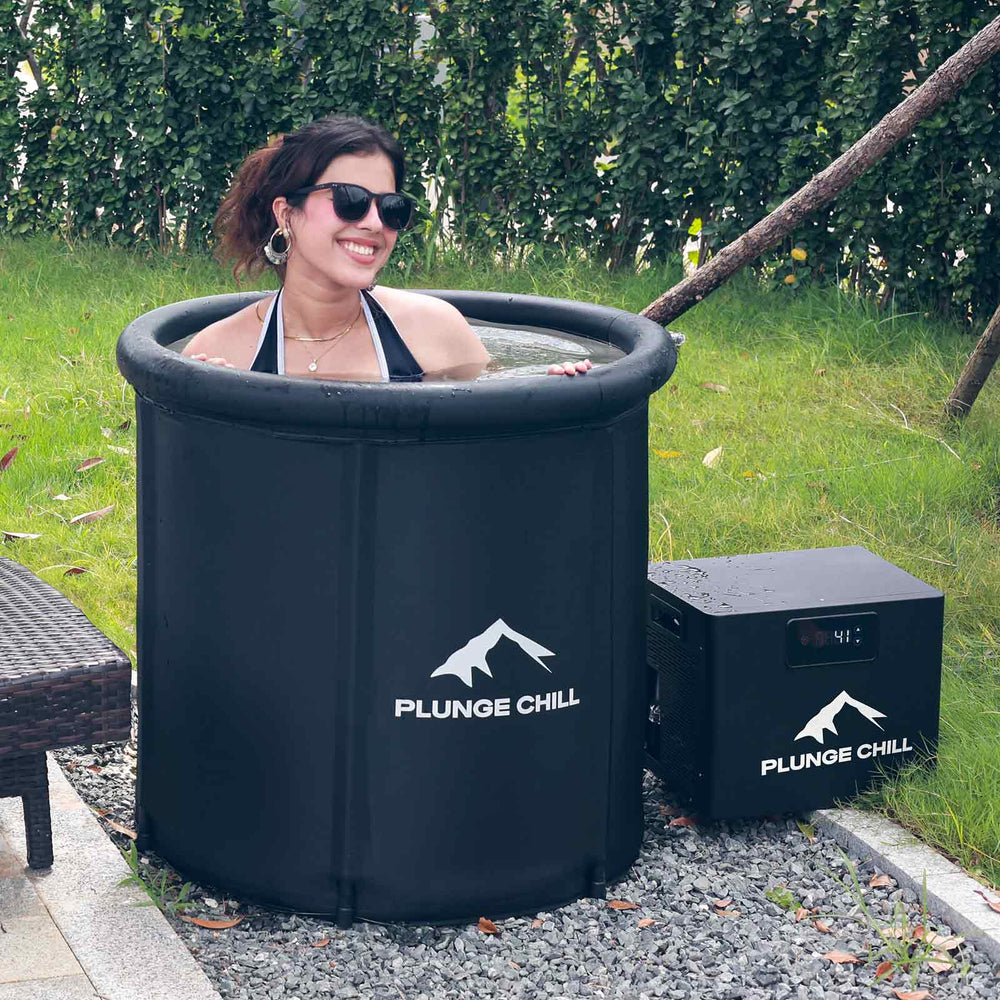
As a sports rehabilitation specialist and strength coach who reviews cold plunge products, I spend most of my time thinking about physiology, recovery, and durability. In the last few years, however, I’ve watched a parallel movement grow at the intersection of cold exposure and creativity. Artists are painting in icy lakes, freezing pigment into crystalline textures, and transforming the interiors of their cold plunges into resilient, hygienic, visually striking canvases. This article surveys evidence-based, field-tested techniques for making art in, with, and around ice baths. It also brings together safety guidance, material science considerations, and practical buying and care tips so you can experiment with unique visual outcomes without compromising your health or the integrity of your plunge.
What “Ice Bath Painting” Means
In practice, ice bath painting takes several forms. One is immersive painting in cold natural water while creating a work on a small canvas; another is allowing subfreezing air to collaborate with pigment so ice crystals generate lacy textures; still another is turning the inside of a cold plunge into a permanent art surface by applying a robust, water-impermeable epoxy system. There are also playful, low-stakes approaches—like painting directly on bathtub walls with washable watercolors—that can be a safe, family-friendly entry point to cold-water creativity.
Artists like Luisa Püschel have painted while immersed in cold rivers and alpine lakes, letting the water’s temperature and movement influence composition and palette. Watercolorist Kathleen Conover developed an outdoor freezing process over roughly three decades in which pigment and water form intricate crystal structures before the composition is refined in the studio. On the product side, DIY cold plunge builders increasingly coat the interior of chest freezers with a two-part epoxy that both waterproofs and protects surfaces while enabling durable, cleanable, custom color finishes.
Definitions You Will See Again
Cold plunging refers to intentional immersion in cold natural water for activation, clarity, and resilience. In the creative context described by Chief Ice Officer, it is seen as a path to vitality and self-healing rather than a competitive feat. Hardening is the gradual use of cold showers or natural water to toughen the body and support immune function. Ice Crystal Paintings are watercolors frozen outdoors so natural ice crystallization forms textures on the paper, a signature technique documented by Kathleen Conover. A two-part epoxy coating is a resin system that cures into a hard, waterproof film; Pond Shield from Pond Armor is a coating used as secondary waterproofing in chest-freezer cold plunge builds and is not a gap filler.

Physiology, Risk, and Ethical Guardrails
Cold exposure is a stressor. Creative work inside or alongside cold water should never push safety boundaries. Chief Ice Officer emphasizes individual variability, the importance of listening to your body, and stopping before harm, particularly for anyone with kidney problems who should be cautious around ice water. Immersed artist sessions in the field covered by that publisher typically lasted around 40 minutes, with a longest reported session of 1 hour 20 minutes since 2019. Those figures are descriptive of one artist’s practice, not prescriptions.
Environmental ethics matter when you create in natural settings. UNILAD Adventure’s documentation of painting on floating ice highlights the obvious hazards of hypothermia and sudden immersion but also the less obvious risks to wildlife and water quality. Practical, responsible measures include using non-toxic, biodegradable waterborne pigments, staying near shore with safety cover and rescue plans, and removing all materials on departure. The art should leave no trace.
Technique 1: Immersed Acrylic Painting in Natural Cold Water
Luisa Püschel’s work, profiled by Chief Ice Officer, is a direct, embodied approach to cold-water artmaking. She paints on small canvases over a tray while immersed in a river or lake, mixing acrylics with water collected from the site. The water is both medium and muse, shaping the rhythm of strokes and the final color balance. Geography is part of the story, too; her work references the Czech Central Mountains and Bohemian Uplands, with pieces also made in the Ore Mountains, the Adriatic Sea, and Austrian alpine lakes. It is a place-based practice with nearly 40 works created since 2019.
Process control is minimal by design. Sessions respond to the weather, currents, and the artist’s own sensations. The recommendation emerging from her experience is not a step-by-step formula but a philosophy: reconnect with nature, personalize frequency and approach, and treat the cold as a supportive, warm friend rather than an adversary. For athletes and creators, the key is to avoid rigid protocols and instead calibrate based on daily readiness, mood, and conditions.

Technique 2: Freezing Watercolor to Grow Ice Crystals
Kathleen Conover’s Ice Crystal Paintings offer a different collaboration with cold. Pigments are mixed indoors, then the artist heads into reliably subfreezing air with wet watercolor paper. Pouring pigment onto the water-saturated sheet allows Mother Nature to freeze the mix, creating the distinctive lacy crystalline structures. After freezing, details are developed and the composition refined.
This method delivers vibrant color with a sense of motion generated by the crystal growth patterns themselves, often evoking the look of a winter pond from above with layered leaves, air bubbles, and even dragonfly-like forms. It relies on outdoor temperatures well below freezing, and it rewards speed and decisiveness. Premixing pigments, wetting the paper before color, and embracing the inherent unpredictability are practical choices that support repeatable success. In athletic terms, it resembles a well-designed interval session: tightly constrained, weather-dependent, and exhilarating when conditions align.

Technique 3: Transforming a Cold Plunge Interior with Epoxy Art
For builders who want a cold plunge that looks as good as it functions, a two-part epoxy coating is the gold standard for sealing and finishing a chest-freezer interior. The system most often cited in cold plunge builds is Pond Shield from Pond Armor. It is a coating for secondary waterproofing and surface protection and should not be used as a gap filler. Success depends on surface prep, correct environmental conditions, disciplined sequencing, and enough resin on hand to complete a continuous build.
A robust application for cold plunge use typically means four coats. The field guidance captured by Chest Freezer Cold Plunge is that fewer than three coats often chip, while five or more can add weight and increase the risk of interlayer peel. Environmental conditions matter: apply at 50°F or warmer, with an ideal window around 75–85°F and humidity below 50 percent. Keep the workspace dry not only during application but also through the seven-day cure. The time plan is pragmatic. Expect roughly four to eight hours for prep, a further four to six hours to apply three to four coats in wet-on-tacky progression, and then a full week before the surface is put into service. Moving the unit after 48 hours is possible if it is untacky, but it is discouraged.
Coverage and color are part of the artistry. A 15 cu ft chest freezer commonly needs one to two 1.5‑quart kits; larger units require two to three kits. Because running short mid-application compromises outcome, having an extra kit is wiser than guessing too low. For 15 cu ft units often listed around 400 liters, think in terms of about 106 gallons if you prefer to visualize volume. Coating should reach the entire interior and all top plastic trim and extend about 1 inch down the exterior metal walls. Sealing any trim or exterior gaps with a two-part epoxy putty such as JB WaterWeld prevents edge lift and helps create a radius (“fillet”) at seams and 90‑degree transitions, including around compressor folds where cracking stress concentrates. For metal, sequencing starts with a self-etching primer to enhance resin-to-metal adhesion, followed by the epoxy putty fillet, then the coating system.
Application quality depends on tools and technique. High-quality brushes and six-inch microfiber rollers are both viable; brushes typically use less product, while thicker coats and fully dried intervals consume more. A wet-on-tacky progression uses less resin and can improve intercoat bonding. Color choice can be practical as well as aesthetic; lighter interiors make it easier to spot debris and read water clarity. If you want custom shades, add pigments formulated for two-part epoxies. Decorative vinyl flakes can be used, but they require a clear topcoat for chemical and ozone resistance—an important detail for plunges sanitized with ozone.
Safety considerations during epoxy builds are non-negotiable. Check the date codes to ensure the resin is within the 24‑month shelf life. Follow the manufacturer’s instructions closely; failure to do so is the number one reason these projects fail. Wear a respirator with organic vapor cartridges and ventilate the workspace; actively dehumidify enclosed areas to keep the air dry and stable throughout the cure.
Technique 4: Playful, Washable Watercolor in the Bath
For families and anyone who wants a low-stakes entry to cold-water art, the TinkerLab method—painting with washable watercolors directly on tub walls and tiles—demonstrates that a successful session can be as simple as a paint set and a brush. Designs are painted and rinsed away repeatedly, encouraging improvisation. Most colors rinse off easily, though black can leave a faint gray shadow on white porcelain; a quick pass with a porcelain cleaner like Bar Keepers Friend removes residue. The takeaway is straightforward: choose washable supplies, supervise children, spot-test darker pigments, and rinse the tub promptly after the session.
Technique 5: Performance Painting on Floating Ice
Painting on floating ice, as shown by UNILAD Adventure, is a visually arresting performance that brings severe environmental dynamics into the creative act. It is also an endeavor with real risks, including hypothermia, sudden immersion, and drifting hazards. If you are determined to work in this mode, cold-water personal protective equipment such as a dry suit and a personal flotation device, tethers with throw lines, a shore team of spotters, a rescue plan, and continuous weather and ice monitoring are essential layers of protection. The environmental responsibilities are equally important: prefer non-toxic, biodegradable waterborne pigments, avoid sensitive habitats, and remove all materials at the end. The best practice is to work in controlled, near-shore locations with hard stop times that limit exposure.

Choosing the Right Medium for Your Ice-Linked Vision
The medium and method you select shapes both the creative experience and the final artifact. The following comparison will help you match aims, constraints, and care requirements.
Technique/Medium |
What it is |
Where it happens |
Notable effect |
Practical constraints |
Primary source |
Immersed acrylic painting |
Acrylics mixed with collected site water, painted while immersed on small canvases |
Natural rivers, lakes, alpine water |
Site-specific palette and flow, with sessions averaging about 40 minutes and a longest reported session of 1 hour 20 minutes |
Personalize frequency and approach, be cautious with kidney issues, listen to the body |
Chief Ice Officer |
Ice crystal watercolors |
Pigment poured onto wet paper and frozen outdoors |
Subfreezing winter environment |
Lacy, crystallized textures and vibrant color that suggest motion |
Requires reliably subfreezing conditions and rapid outdoor work |
Kathleen Conover |
Epoxy interior artistry |
Two-part epoxy coating to waterproof and finish cold plunge interiors; optional pigments and flakes |
Inside chest-freezer-style cold plunges |
Durable, cleanable, color-customizable surface |
Four coats recommended, seven-day cure, apply at 50°F or warmer with humidity below 50 percent; respirator and ventilation required |
Chest Freezer Cold Plunge; Pond Armor |
Washable tub watercolor |
Washable watercolors applied directly on tub and tiles |
Home bathtub |
Quick setup and easy cleanup with iterative design play |
Black can leave faint gray on white porcelain; remove with a porcelain cleaner |
TinkerLab |
Floating ice performance painting |
Painting on free-drifting ice slabs in open water |
Near-shore open water |
Dramatic, site-specific performance with high public interest |
Requires cold-water PPE, PFD, tethers, spotters, rescue plan, and leave-no-trace practices |
UNILAD Adventure |

Visual Language: How to Paint Ice Persuasively
Even when you are painting on a warm studio table, the visual logic of ice follows certain cues. A simple rule of thumb from Acrylic Arts Academy’s community is to begin with the background that will be seen through the transparent structure and then focus on lights and shadows that most often concentrate along the edges. In transparent subjects like glass or clear ice, crisp edge contrasts and specular highlights communicate form more than interior texture. Keep interior transitions simpler and let background values influence perceived color passing through the freeze.

A Deeper Dive on Epoxy for Cold Plunge Art
Because I review cold plunge products and work with teams who build them, the epoxy path is where I see the most confusion and the most opportunity. The following summary distills what matters for a lasting finish.
Parameter |
Field guidance for Pond Shield in cold plunge builds |
Coats for durability |
Four coats recommended; fewer than three often chip; five or more can add weight and risk interlayer peel |
Environmental window |
Apply at 50°F or warmer; ideal 75–85°F; humidity below 50 percent; keep workspace dry through seven-day cure |
Cure and movement |
Full cure in seven days; moving after 48 hours only if the surface is untacky, but this is discouraged |
Quantity planning |
For 15 cu ft units, plan on one to two 1.5‑quart kits; larger units often require two to three kits; having an extra kit prevents shortages |
Edge and seam strategy |
Coat entire interior and top plastic trim, extend about 1 inch down exterior metal; seal trim and exterior gaps with two-part epoxy putty; fillet corners and 90‑degree transitions |
Primer and fillets |
Use a self-etching primer on metal first, then form epoxy putty fillets; epoxy bonds well to epoxy putty |
Surface prep |
Rough-sand bare metal with coarse grit, scuff or remove enamel, scuff plastic trim, remove rust fully; vacuum or tack, then wipe with isopropyl alcohol or acetone; avoid touching cleaned surfaces |
Application tools and economy |
High-quality brushes and six-inch microfiber rollers both work; brushes generally use less product; wet-on-tacky progression reduces consumption |
Color and topcoats |
Any color or clear; lighter colors improve dirt and water visibility; use pigments made for two-part epoxy; decorative vinyl flakes require a clear topcoat for chemical and ozone resistance |
Quality and safety |
Confirm the resin is within its 24‑month shelf life; follow instructions precisely; wear a respirator with organic vapor cartridges and ventilate; dehumidify enclosed work areas |
These parameters are not just theory. In my own product testing, lighter interiors consistently make daily hygiene checks faster, and wet-on-tacky sequencing—applied within the tack window—reduces both consumption and sanding between coats. The difference between success and failure typically shows up in prep and environmental control rather than in the act of rolling resin.
Mediums Beyond the Water
Some artists prefer to create cold-themed work next to the water rather than in it. One option favored by solvent-averse painters is water-mixable oils. As explained by Will Kemp Art School, these are real oil paints that can be diluted and cleaned with water, drying first by water evaporation and then by oxidation like conventional oils. Thin layers diluted with water can dry within minutes, while paint used straight from the tube or mixed with drying oils may dry across several days. They follow the same structural logic as traditional oils—flexible over less flexible—and can be mixed with small amounts of conventional oils while remaining water-cleanable. Although not a medium for submerged use, they provide a solvent-free way to develop the cold aesthetic in a studio setting.

Care and Maintenance
A coated cold plunge should be treated as both an instrument and a canvas. After the seven-day cure, avoid practices that scrape or gouge the film; if you broadcast vinyl flakes for a terrazzo effect and sanitize with ozone, ensure the clear topcoat you select is rated for chemical and ozone exposure. Periodically inspect the top trim and the one-inch band down the exterior metal walls where the coating is intentionally carried over; small chips at edges can propagate if left unaddressed. Inside home bathrooms, treat tub painting sessions as ephemeral. Rinse color as soon as play ends, and if black pigment leaves a shadow on white porcelain, remove it promptly with a porcelain cleaner.
Buying Tips That Prevent Regret
Start with the calendar, not the color. Plan your epoxy build for a window when you can maintain temperatures at or above 50°F, preferably in the 75–85°F range, with humidity consistently below 50 percent throughout the application and the seven-day cure. Product age matters as much as product name; buy resin within the 24‑month shelf life and check date stamps at the store. On quantity, it is better to have an extra 1.5‑quart kit than to stretch the last half-quart and compromise film build. Invest in high-quality brushes or microfiber rollers rather than bargain tools that shed fibers or create inconsistent film thickness. If you want a custom color, choose pigments specifically formulated for two-part epoxies, and if you plan to use decorative vinyl flakes, budget for a compatible clear topcoat that withstands ozone.
For immersive painting in lakes or rivers, organize logistics the way you would a cold training session: dependable weather window, a defined maximum session time, and a warm-up and rewarming plan. Use acrylic paints as shown in the Chief Ice Officer profile, mixing with collected site water to keep the palette grounded in place. For family bathtub art, the shopping list can be pleasantly short: a washable watercolor set and a brush are enough, and it is wise to keep a porcelain cleaner on hand to address any lingering dark pigment marks.

Pros and Cons in Plain Terms
Immersed acrylic painting offers the strongest felt connection to place and cold but demands careful self-monitoring and respect for individual limits. Ice-crystal watercolor freezing harnesses winter air to deliver textures no brush can draw, though it requires climate cooperation and quick, decisive action outdoors. Epoxy interior artistry gives you a durable, cleanable, daily-use surface in a cold plunge that can double as a gallery wall, but it requires thorough prep, climate control, and disciplined adherence to instructions. Washable bathtub watercolor is playful, immediate, and forgiving, yet it is by design ephemeral and better for experimentation than for finished works on paper or canvas. Floating ice performance painting is compelling to watch and photograph, but it belongs to artists and teams willing to treat safety and environmental stewardship as central to the process.
Frequently Asked Questions
Q: Is painting while immersed in cold water safe for everyone? A: No creative goal is worth risking your health. As Chief Ice Officer notes, people with kidney problems should be particularly careful with ice water, outcomes vary by person, and the priority is to listen to your body and stop before harm. The time spans reported by one artist—sessions around 40 minutes with a longest of 1 hour 20 minutes—describe her experience, not a recommendation. Keep sessions conservative and personalize your approach.
Q: I want to decorate the inside of my chest-freezer plunge. What coating system should I consider? A: Cold plunge builders commonly use Pond Shield from Pond Armor, a two-part epoxy coating used as secondary waterproofing and surface protection. It is not a gap filler and must be applied over properly prepared surfaces in roughly four coats for durability. Plan for application at 50°F or warmer, ideally 75–85°F, with humidity below 50 percent, and allow a full seven-day cure. Use a respirator with organic vapor cartridges and ventilate well.
Q: How many epoxy kits will I need for a typical cold plunge build? A: For a 15 cu ft chest freezer, one to two 1.5‑quart kits are commonly used, while larger units may need two to three kits. Having an extra kit is a safer strategy than running short mid-application, and a wet-on-tacky coat progression helps avoid waste.
Q: Can I add color and decorative flakes to the epoxy? A: Yes. You can tint with pigments designed for two-part epoxy and broadcast vinyl flakes for a terrazzo-like finish. To preserve durability when using ozone or other chemical sanitizers, add a compatible clear topcoat, as flakes need that layer for chemical and ozone resistance. Lighter interior colors also make it easier to see debris and water clarity.
Q: What is the simplest way to try painting in a cold-water context at home? A: Painting with washable watercolors on tub walls or tiles is a fast, fun entry point. Most colors rinse off easily; black may leave a faint gray on white porcelain that is quickly removed with a porcelain cleaner like Bar Keepers Friend. Supervision, spot testing, and prompt rinsing are the core best practices noted by TinkerLab.
Q: I paint ice scenes in the studio. Any guidance on capturing convincing transparency? A: A useful rule from the Acrylic Arts Academy community is to lay in the background first, then build the ice by placing lights and shadows that cluster along edges. Transparent forms like glass or clear ice rely on crisp edge contrasts and specular highlights to read as solid, while interior transitions can remain simpler. Let the background values influence what the viewer perceives inside the ice.
Takeaway
Cold engages the body; ice reveals structure; together they can open an unusually direct path to creative flow. Whether you grow crystalline textures on watercolor paper, paint small canvases while sitting in a river, or engineer a pristine, color-custom cold plunge interior with a professional epoxy system, the most consistent predictor of success is respect for process. For immersed work, personalize exposure and keep safety first. For frozen watercolor, chase the right weather and accept unpredictability as a collaborator. For epoxy artistry, treat prep, environment, and cure times as non-negotiable. The result is not just a striking image or a beautiful tub but a resilient practice that integrates physiology, materials, and place.
In my own testing and coaching, the projects that endure share two traits: they are set up thoughtfully before the first brushstroke, and they finish cleanly with conditions that let materials do their best work. Lighter interior colors that simplify hygiene checks, pigments designed for the resins they will enter, and dehumidified workspaces are not afterthoughts; they are the difference between a cold plunge that looks great on day one and a surface that still turns heads—and stays easy to clean—months later.
References
- https://www.selfinjury.bctr.cornell.edu/perch/resources/distraction-techniques-pm-2.pdf
- https://pmc.ncbi.nlm.nih.gov/articles/PMC10214379/
- https://docs.nrel.gov/docs/fy20osti/77218.pdf
- https://theartofeducation.edu/podcasts/important-tips-for-painting-with-children-ep-059/
- https://www.escoffier.edu/blog/baking-pastry/sugar-sculpting-explained/
- https://www.getty.edu/publications/resources/virtuallibrary/0892363223.pdf
- https://knowledge.uchicago.edu/record/11412/files/davis_et_al_SI_allblacktext.pdf
- https://www.uky.edu/Ag/Entomology/PSEP/cat17applic.html
- https://hammer.purdue.edu/articles/thesis/BASO4_NANOCOMPOSITE_COLOR_COOLING_PAINT_AND_BIO-INSPIRED_COOLING_METHOD/12568007/1/files/23458379.pdf
- https://diposit.ub.edu/dspace/bitstream/2445/34493/1/LLIBRE.pdf