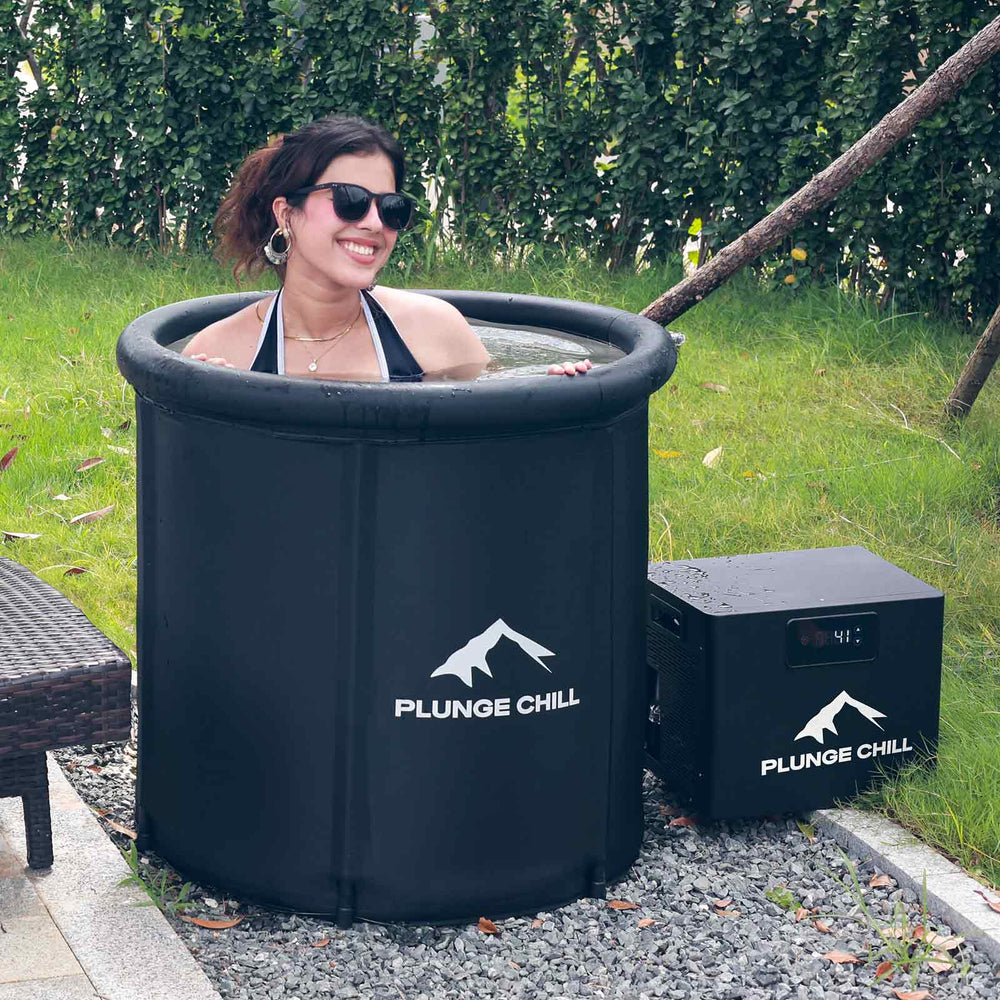
Cold plunges are having a moment. Commercial tubs that hold water at 50–60°F, viral river dips, ice-barrel challenges: what used to be an obscure recovery trick for elite athletes is now a mainstream wellness ritual. Yet the idea of using cold water for health is far older than social media. Modern reviews of cold water therapy for healthy aging point out that hydrotherapy traditions existed in ancient Egypt and China long before randomized trials or recovery science were invented.
As a sports rehabilitation specialist and strength coach who also evaluates cold plunge products, I find the most useful way to “revive” these older traditions is not by romanticizing undocumented rituals, but by borrowing Daoist principles: balance, cyclic practice, respect for natural limits, and the idea that you work with, not against, the body’s own healing responses. In this article, I will connect those principles to the best current evidence on cold water immersion and show how to design a safe, effective cold plunge practice that actually supports performance, recovery, and long-term health.
The research I reference comes from systematic reviews, major health systems such as Mayo Clinic, Harvard Health, Baptist Health, and university labs at institutions like Stanford, the University of Oregon, and the University of South Australia. Where people talk about “ancient Daoist techniques,” the modern data are almost entirely about generic cold water immersion, not specifically religious practice, so I will be explicit when I am shifting from hard data to Daoist-inspired framing.
From Ancient Water Traditions to Modern Evidence
A recent review in a major medical journal on cold water therapy and healthy aging notes that hydrotherapy has roots in ancient Egypt, China, and later European and US naturopathic practice. Those traditions used baths, river immersions, and temperature contrasts as low-cost tools to influence circulation, mood, and general vitality. The review argues that modern cold water therapy is essentially a refinement of these long-standing water practices, now studied with clinical endpoints like cardiometabolic risk factors, sleep, and immune function.
Modern cold water immersion studies, however, are very specific about what “cold” means. A 2025 systematic review and meta-analysis in PLOS One pooled 11 randomized controlled trials and more than 3,100 adults. In those studies, participants typically immersed to at least chest level in water between about 45 and 59°F for at least 30 seconds, sometimes up to 15 minutes, and in one especially long protocol, up to 2 hours. The investigations included traditional ice baths, cold plunges, and one trial of cold showers.
The same PLOS One review and a Harvard Health summary highlight two important realities. First, cold water immersion clearly produces measurable physiological effects: acute changes in inflammation, stress markers, sleep quality, and perceived quality of life. Second, the evidence is still limited and highly heterogeneous. Protocols vary widely in temperature, duration, and frequency; populations are often small and skewed toward men; and mood and immunity outcomes are mixed.
Despite that uncertainty, consumer interest has exploded. The PLOS One paper notes that online ice-bath sales on a large e-commerce platform climbed from fewer than 1,000 units in November 2022 to more than 90,000 twelve months later. That is not evidence of effectiveness, but it is evidence that many people are experimenting, often without structured guidance.
This is where a Daoist perspective is useful. Instead of treating cold water as a miracle hack or a punishment, we can approach it as a tool to modulate bodily “yin and yang”: sympathetic and parasympathetic activity, inflammation and repair, strain and recovery. But we still have to respect what the data actually show.

What Cold Water Immersion Does in the Body
When you plunge into cold water, several well-documented processes unfold.
The first is vascular. Multiple sports and wellness sources, including Baptist Health and Lake Nona Performance Club, describe how cold triggers vasoconstriction, narrowing blood vessels in the skin and extremities. This shift reduces blood flow to the surface and to inflamed tissues. When you rewarm after the plunge, vessels dilate and a fresh pulse of blood moves through muscles and connective tissue. This cold–warm cycle helps clear metabolic waste such as lactic acid and brings in oxygen and nutrients, which is why so many athletes report less soreness the next day.
However, the systemic inflammation picture is more complex than “cold equals anti-inflammatory.” In the PLOS One meta-analysis, cold water immersion actually increased inflammatory markers immediately and one hour after exposure. Only later did stress levels drop meaningfully, with a substantial reduction in self-reported stress appearing around 12 hours after the plunge. Harvard Health’s summary of this review emphasizes that there was no consistent, immediate reduction in stress, mood, or immune markers; the benefits were delayed and modest.
So, locally in muscle, cold and subsequent rewarming help with soreness and function, but systemically, the cold is a stressor. A Healthline review of the same PLOS One paper quotes the authors’ interpretation: that this acute spike in inflammation likely acts like the micro-damage from exercise itself, provoking adaptation rather than causing harm in healthy people. That is important when we think about people with chronic inflammatory or cardiovascular disease, because for them, an extra inflammatory spike might not be benign.
Next comes the neurochemical response. UF Health cites peer-reviewed work showing that deliberate cold plunging can cause roughly a five-fold jump in noradrenaline and a two-and-a-half-fold increase in dopamine. Noradrenaline is linked with alertness and focus; dopamine with motivation and mood. Stanford’s Lifestyle Medicine program describes studies where even relatively mild cold sea swims or brief cold showers significantly reduced tension, anger, and fatigue, and increased feelings of vigor and self-esteem.
A separate neuroimaging study of head-out cold water immersion at about 68°F found that a single five-minute immersion increased positive affect and reduced distress. Functional MRI showed strengthened connections among key brain networks involved in emotion and attention, suggesting that cold exposure is not just a psychological placebo; it literally reshapes network activity in the short term.
Cardiovascular effects are similarly layered. In a University of Oregon study of a single 15-minute cold plunge in college students, heart rate, blood pressure, and cortisol all fell after the session, and participants reported improved mood three hours later. At the same time, Mayo Clinic and other major centers note that cold immersion initially spikes heart rate and blood pressure during the cold shock phase, which can be dangerous for people with heart disease or uncontrolled high blood pressure.
Finally, there are immune and sick-day outcomes. The PLOS One review found no clear short-term changes in immune markers immediately after cold immersion. But narrative data from a large Dutch trial, echoed by Mayo Clinic and UCLA Health, show that office workers who ended their morning showers with 30–90 seconds of cold water for 90 days took about 29 percent fewer sick days than controls, even though objective immune markers were not measured. This suggests a functional health benefit, but not necessarily a direct “immune-boosting” effect.
Taken together, cold water immersion is best understood as a time-dependent stressor. Inflammation and sympathetic activity rise acutely; stress and possibly sick days may fall hours to months later; soreness and perceived recovery often improve the next day; and mood and alertness may improve both immediately and over time with consistent practice. This aligns well with a Daoist view of stress as something you adapt to in cycles, not something you eliminate.

Daoist-Inspired Principles for Smarter Cold Plunges
Daoist texts emphasize balance, gradual transformation, and the dangers of forcing change. Modern science largely supports that attitude toward cold exposure.
Balance, Not Extremes: Temperature and Time
A common misconception is that colder is always better. In reality, the evidence and clinical guidance point toward a reasonable middle ground. Many studies and expert guidelines, including work from Ohio State University, Lake Nona Performance Club, and Mayo Clinic, use water between about 50 and 59°F for 10–20 minutes. That range is cold enough to provoke physiological responses, but not so extreme as to reliably cause cold shock or hypothermia in supervised conditions.
For general wellness, a spa industry review from Glen Ivy suggests starting even milder, in the 55–65°F range, particularly for beginners and for many women. This warmer range still elicits clear cold responses but with less risk and discomfort. The same article notes that some women appear to tolerate and benefit from slightly warmer cold plunges compared with men, likely because of differences in body composition and hormonal milieu.
Neuroscience-based guidelines summarized by Andrew Huberman and cited by UF Health propose aiming for about eleven total minutes per week of “uncomfortably cold” water exposure, split across two to four sessions of roughly one to five minutes each. That recommendation is based on recent human data showing broad cardiovascular and metabolic adaptations at that weekly “dose,” using water around 60°F for longer exposures or closer to 50°F for shorter ones.
A simple example helps. Suppose you use a home plunge at about 57°F and stay in for three and a half minutes on Monday, Wednesday, and Saturday. That is roughly ten and a half minutes per week, essentially on target for the eleven-minute guideline. Compare that with doing a single ten-minute plunge at 43°F, as one UF Health physical therapist describes in his personal practice. Both will be challenging, but the warmer, more frequent option is much more tolerable for most people while still providing a solid adaptive stimulus.
From a Daoist standpoint, both approaches can “move the needle,” but the gentler, more frequent practice better fits the idea of transforming through consistent, sustainable stress rather than chasing extreme experiences. Clinically, it is also easier to supervise and safer for people who are not already adapted to severe cold.
Harmonizing with the Training Cycle: Recovery Without Sacrificing Gains
This is the most important and most often misunderstood point for lifters and field sport athletes. Short-term, cold water immersion after intense exercise clearly helps many athletes feel and perform better the next day. The Ohio State sports medicine group summarizes evidence that ten to twenty minutes in 50–59°F water reduces delayed-onset muscle soreness and can restore function after hard endurance sessions.
However, both that article and the PLOS One review point to a growing body of research showing that routine post-workout ice baths can blunt long-term adaptation. A 2015 study in the Journal of Physiology and a 2014 trial in the Journal of Strength & Conditioning Research found that regular cold water immersion after strength training reduced gains in muscle size and strength. The mechanism likely involves dampening the local inflammatory signaling and protein synthesis pathways that drive hypertrophy and adaptation.
Mayo Clinic writers and Huberman’s review echo this caution, emphasizing that cold exposure is useful during intense competition blocks when rapid turnaround is crucial, but it can be counterproductive if used after every strength session across an entire season.
Practically, that leads to a simple, Daoist-style guideline: align cold plunges with your overall training priorities. If you are in a hypertrophy block or building maximal strength, treat inflammation and muscle soreness as necessary parts of the adaptive cycle. That means avoiding full plunges within several hours after lifting and perhaps waiting twenty-four to forty-eight hours post-session, as Ohio State suggests, before using an ice bath, if you use one at all. Huberman’s group recommends leaving at least six to eight hours between a heavy training session and a full-body plunge if your goal is maximum adaptation.
On the other hand, if you are in a congested race schedule, playing tournaments, or going through a short block where immediate readiness matters more than long-term muscle gain, then it is reasonable to prioritize daily or near-daily cold plunges after games or key workouts, accepting the trade-off in adaptation. This is very much in line with a Daoist idea of responding to context rather than forcing one protocol to fit all seasons.
As an example, I often program something like this for a collegiate team in-season. On game days and the day before, athletes can use ten to fifteen minutes at about 55°F after practice or competition to keep soreness manageable. In the off-season, the same athletes may move plunges to mornings on non-lifting days or use short cold showers instead, keeping strong cold exposures well away from heavy strength work to protect long-term gains.
Let Inflammation Do Its Job: Rethinking Ice for Injuries
The classic RICE protocol—rest, ice, compression, elevation—came out of the late 1970s. The physician who coined it later publicly retracted the ice component as a default, noting that prolonged icing can delay healing. A clinical commentary from Parker University synthesizing over forty sources reinforces this shift. It concludes that the primary proven benefit of local icing is short-term pain relief, not faster recovery.
Inflammation is not just a nuisance; it is an essential phase of tissue repair. Neutrophils and macrophages migrate into the injured area, clear debris, and orchestrate regeneration. Swelling consists largely of these cells and waste products entering via dilated, leaky blood vessels. The commentary emphasizes that this fluid can leave only through the passive lymphatic system, which depends on muscle contraction to move it. Ice and prolonged rest may actually trap this debris by reducing local blood flow and movement.
Several trials reviewed in that commentary found little or no improvement in functional outcomes with icing and, in some cases, delayed recovery or increased soreness at forty-eight to seventy-two hours compared with more active approaches. Combined with the broader cold water data showing an acute spike in systemic inflammation after immersion, this supports a nuanced, Daoist-style stance: you do not reflexively attack every sign of heat, swelling, and pain with more cold.
In practice, that means using ice or very short cold immersion primarily for analgesia in the early hours after an acute injury, while emphasizing safe, early motion, compression, and elevation to support lymphatic clearance. For a mild ankle sprain, for example, I might use ten minutes of local cold a few times on day one for comfort, but I pair it with gentle ankle circles, weight-bearing as tolerated, and calf pumping, and I taper the cold rapidly over the next day or two. Prolonged full-leg ice baths for days on end would run counter to both the evidence and a Daoist view of respecting the body’s natural repair phases.
Cultivating Mental Resilience and Sleep
If there is one area where cold exposure genuinely shines, it is stress training for the nervous system.
Stanford’s Lifestyle Medicine article describes several studies where even a single twenty-minute sea swim in approximately 57°F water or five minutes in about 68°F water significantly improved mood and vigor while reducing feelings of depression and confusion. Longer immersion at milder temperatures, such as one hour in 90, 68, or 57°F water, lowered cortisol levels and kept them below baseline for hours afterward. Repeated exposures, such as winter swimming or whole-body cryotherapy three times per week, progressively dampened cortisol responses over weeks, while maintaining noradrenaline surges. This pattern suggests greater physiological resilience: the body still mounts an alert response but recovers more efficiently.
The head-out immersion fMRI study reinforces this. After a single five-minute session in about 68°F water, participants reported higher positive affect and lower negative affect. Brain scans revealed strengthened connections among networks that govern attention, emotion regulation, and salience detection. These changes were not just the flip side of decreased distress; positive and negative affect shifted somewhat independently, supporting the idea that you can specifically build positive emotional tone through these controlled stress episodes.
UF Health and Huberman’s review add depth by quantifying noradrenaline and dopamine surges, and by noting that brief cold exposures can keep dopamine elevated for extended periods, long after you have warmed up. This helps explain why many people report a sustained lift in motivation and focus after a plunge.
The PLOS One meta-analysis and Harvard Health summary provide a reality check. They found that stress markers were significantly lower twelve hours after cold water immersion, but not immediately. Mood improvements were inconsistent across trials, and the data on sleep were limited and mostly male. One pattern did emerge: in some studies, men who used ice baths reported better sleep quality, and shower-based cold exposure improved self-reported quality of life scores. But sample sizes were small, and women were underrepresented.
Putting this together, cold exposure is better viewed as a stress management training tool than as a guaranteed antidepressant or sleep cure. In the Daoist frame, you are practicing remaining calm and controlled in the face of intense sensation, building what modern neuroscience would call top-down regulation. In strength-coaching language, each plunge is a mental “set” where you practice breathing, attention, and staying present as sympathetic arousal rises, rather than escaping discomfort at the first sign of strain.
In my rehab work, this is often how I use cold exposure with athletes who already have solid training, sleep, and nutrition in place. We treat cold plunges or cold showers as voluntary, graded stressors that help them rehearse composure under pressure, with the side benefit of occasional soreness relief and perhaps better sleep on specific days.

Designing a Daoist-Inspired Cold Plunge Plan
You do not need a monastery or a mountain spring to apply these ideas. You need clarity about your goal, a safe way to control water temperature, and a weekly plan that respects both the research and your current health status.
Clarify Your Primary Goal
Before you buy a plunge tub or start ending every shower on cold, decide what you are actually trying to change.
If your priority is short-term recovery for dense competition schedules or long endurance events, then moderate-to-cool plunges shortly after key sessions can make sense. Evidence from sports medicine and Mayo Clinic shows that ten to twenty minutes around 50–59°F can reduce soreness and help restore performance by the next day. You accept that you might slightly blunt long-term adaptation, but in-season that trade-off can be worth it.
If your focus is maximal strength or muscle growth, especially in the off-season, you want inflammation and local soreness to do their job. In this case, long full-body plunges right after lifting are rarely worth the risk to long-term gains. You may still use cold showers or face immersions for mental training or stress relief, but you keep strong full-body immersions at least six to eight hours away from heavy lifts, or on non-lifting days, as Huberman and Ohio State recommend.
If your goal is general health, stress resilience, or healthy aging, you can lean more on the patterns emerging from the PLOS One review, the healthy aging cold water therapy paper, and the Dutch cold shower trial. Those sources suggest that moderate, regular cold exposures—often via showers or short plunges—may reduce perceived stress, improve quality of life, and possibly cut sick days, without any need to push temperatures to extremes.
Choosing Your Setup: Product and Modality Considerations
As a product reviewer, I see four main categories of cold exposure tools. They differ in how precisely you can control temperature, how uniform the cold stimulus is, and how easy it is to integrate into training.
Modality |
Temperature control and stimulus |
Best suited for |
Key limitations |
Purpose-built plunge tub |
Usually holds water steadily around 39–59°F with digital control |
Regular users who want repeatable protocols |
Cost, electricity use, maintenance |
Home bathtub with ice |
Rough control; often ends up near 45–60°F but drifts quickly |
Occasional post-race or post-game recovery |
Inconsistent temps, more setup time, more guessing |
Gym or spa cold plunge |
Often set between about 50 and 59°F, supervised |
Athletes and members wanting structured sessions |
Access and scheduling constraints |
Cold shower |
Variable but commonly below about 60°F for two to three minutes |
Beginners, apartment dwellers, frequent short sessions |
Less uniform stimulus than full-body immersion |
From a rehab standpoint, the ability to know and repeat a specific temperature matters more than chasing the coldest possible water. Many protocols and guidelines are built around narrow ranges—55–65°F for beginners, 50–59°F for stronger plunges. A modern plunge tub with a reasonably accurate thermostat makes it easy to stick to those windows. A bathtub and bag of ice can work perfectly well, but you will need a thermometer and some experimentation to avoid accidentally drifting into dangerously cold or lukewarm territory.
Cold showers are the lowest-barrier entry point. Several clinical sources, including Mayo Clinic and UCLA Health, highlight the Dutch study where daily showers ending with 30–90 seconds of cold water cut sick days by about 29 percent. For a person who normally loses about seven workdays per year to illness, that would translate to roughly two fewer days off, while requiring only half a minute to a minute of cold at the end of a normal shower.
Programming the Week: Example Structures
The research does not dictate a single “perfect” schedule, but it offers guardrails. The eleven-minutes-per-week guideline from Huberman’s synthesis works well as a starting point for most healthy adults, provided water is cold enough to feel challenging but safe enough to stay in for at least a minute.
For a recreational athlete whose main goals are resilience and manageable soreness, I often recommend something like three plunges per week at about 55–60°F for three to four minutes each, scheduled on mornings after training or on lighter training days. That yields around ten to twelve minutes of cold exposure weekly and keeps immersions away from the immediate post-lift window, preserving strength gains while still training the nervous system.
For an endurance athlete mid-season, we might keep the same total weekly exposure but place one session soon after a particularly long run or ride to tame soreness, and put the other sessions earlier in the day on cross-training or rest days.
For an older adult focused on healthy aging and cardiometabolic health, drawing on the healthy aging cold water review, I usually start even more conservatively. That might mean ending three or four showers per week with thirty to sixty seconds of cold water, gradually building toward two-minute bouts, and only considering full-body plunges after several weeks of uneventful adaptation and a conversation with their physician.
Across all these examples, the Daoist lens is the same: you adjust intensity, duration, and timing to your current season and constitution rather than forcing the same rigid protocol year-round.
Safety Checks Before You Go “All In”
Nearly every medical and sports source on cold exposure stresses the same point: it is not appropriate for everyone. The initial cold shock can cause abrupt changes in heart rate, blood pressure, and breathing. Mayo Clinic and Baptist Health warn that people with coronary artery disease, uncontrolled high blood pressure, serious arrhythmias, advanced diabetes, or conditions like Raynaud’s phenomenon or certain neuropathies should seek medical clearance before attempting full-body plunges.
Cryotherapy and cold plunge articles from Baylor Scott & White, Healthline, and Mayo Clinic list risks that include cold shock, hyperventilation, dizziness, hypothermia, hypoxia, and skin injury such as frostbite or cold burns, especially when water is near or below about 47°F or when air temperatures are frigid. Outdoors, there are additional hazards such as currents, ice coverage, and impaired judgment as core temperature drops.
For most healthy athletes, the safest path is to start with short cold showers, build exposure slowly, and keep plunges in a moderate temperature range while monitoring how you feel during and after sessions. Enter the water gradually, not by diving; stay mentally present; and exit immediately if you develop chest pain, severe shortness of breath, confusion, or numbness that does not resolve quickly with rewarming. Remember that rewarming itself needs to be controlled: loose warm clothing, movement, and warm beverages are preferable to jumping straight into extremely hot water, which can cause sudden drops in blood pressure and fainting.
Above all, cold exposure should sit on top of, not instead of, foundational pillars like progressive training, adequate sleep, and sound nutrition. Mayo Clinic authors describe cold plunges as a garnish rather than the main course of a health plan, and that framing is consistent both with the evidence and with a Daoist respect for basics.

Frequently Asked Questions
Is water around 65°F really cold enough to be useful?
For many beginners and for some women, the answer appears to be yes. The Glen Ivy wellness article argues that 65°F can be an optimal sweet spot for predictable wellness benefits, especially when you focus on consistency. In combination with Huberman’s eleven-minutes-per-week guideline and UF Health’s observation that effective cold exposure can begin around 60°F as long as you stay in long enough, it is clear you do not need near-freezing water to see physiological and psychological effects. In practice, 55–65°F is a very reasonable range for Daoist-style, sustainable practice, particularly early on.
How does a cold plunge compare with a cold shower?
Cold water immersion offers a more uniform and intense stimulus because it submerges most of the body surface area at once. Ohio State’s review points out that full-body submersion provides greater thermal load and hydrostatic pressure than a shower, which can enhance recovery effects. That said, the Dutch cold shower trial and the PLOS One review show that even thirty to ninety seconds of cold water at the end of a normal shower can improve self-reported quality of life and reduce sick days. I treat cold showers as the everyday tool and full plunges as a higher-intensity option when you want a stronger adaptation or when you are managing post-competition soreness under supervision.
If I use cold plunges to sleep better, when should I do them?
Some studies summarized by Harvard Health and Healthline report that men who took ice baths slept better, and the PLOS One analysis found reduced stress twelve hours after immersion. Stanford’s Lifestyle Medicine work shows that cortisol tends to fall after cold exposure and stays lower for several hours. On the other hand, Huberman notes that cold exposure can ultimately raise core body temperature and increase alertness, which may interfere with sleep if done too close to bedtime for some people. In my experience, early evening plunges, several hours before sleep, are a reasonable compromise if your physician agrees and you find that they help rather than hinder your rest. As always, individual testing within a safe temperature and duration range is key.
As someone who spends most days rebuilding athletes and stress-testing cold plunge hardware, my bottom-line advice is simple: treat cold water as a potent training tool, not a dare. The ancient Chinese and Daoist traditions that first explored medicinal water work did so slowly, seasonally, and with respect for the body’s rhythms. Modern science largely validates that approach. Choose moderate temperatures, align your plunges with your training and health status, and let consistency, not extremity, do the heavy lifting.

References
- https://cupola.gettysburg.edu/cgi/viewcontent.cgi?article=2078&context=student_scholarship
- https://www.health.harvard.edu/staying-healthy/research-highlights-health-benefits-from-cold-water-immersions
- https://digitalcommons.liberty.edu/cgi/viewcontent.cgi?article=8439&context=doctoral
- https://www.mcphs.edu/news/physical-therapist-explains-why-you-should-chill-out-on-ice-baths
- https://journal.parker.edu/article/120141-the-efficacy-of-icing-for-injuries-and-recovery-a-clinical-commentary
- https://lifestylemedicine.stanford.edu/jumping-into-the-ice-bath-trend-mental-health-benefits-of-cold-water-immersion/
- https://scholarworks.uark.edu/cgi/viewcontent.cgi?referer=&httpsredir=1&article=3030&context=etd
- https://news.uoregon.edu/content/cold-plunging-might-help-heart-health-new-research-suggests
- https://sncs-prod-external.mayo.edu/hometown-health/speaking-of-health/cold-plunge-after-workouts
- https://pmc.ncbi.nlm.nih.gov/articles/PMC11872954/