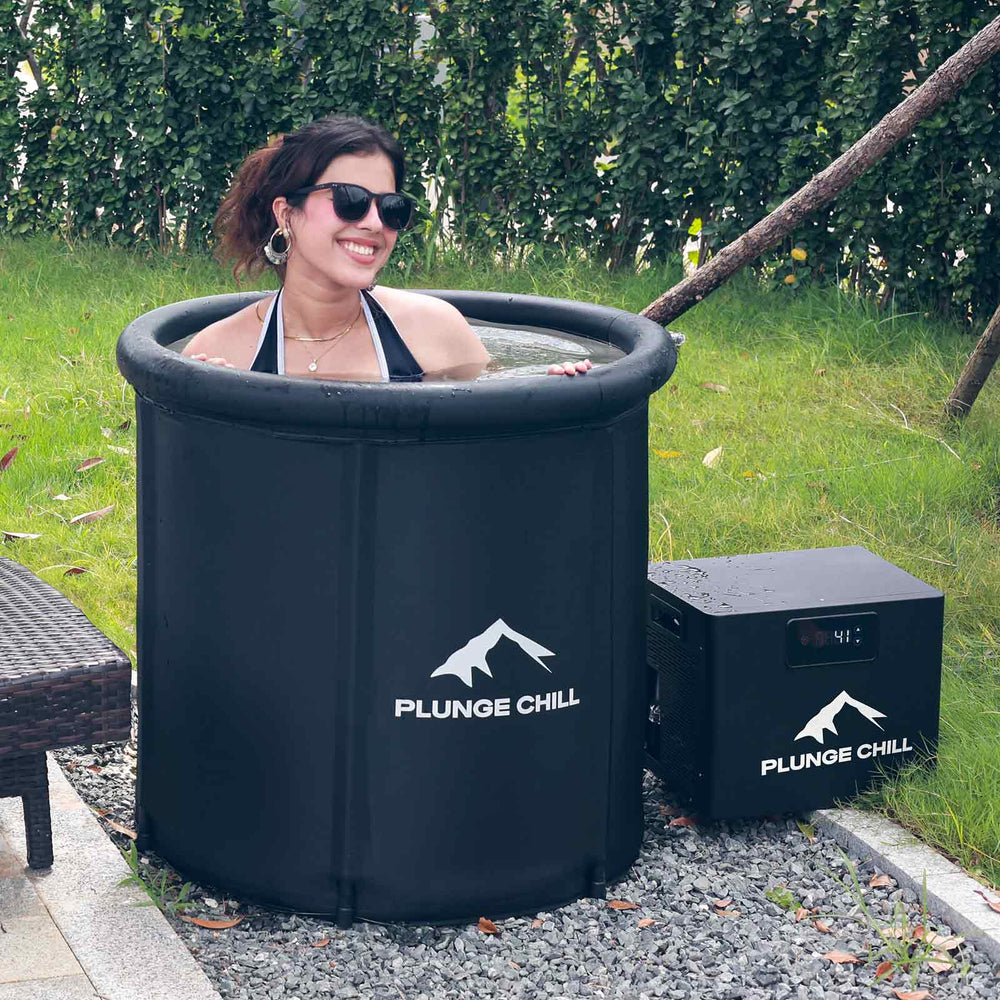
As a sports rehabilitation specialist and strength coach who evaluates cold plunge products in lab settings and on the training floor, I see two truths collide daily. Cold therapy is outstanding for short‑term pain control and for reining in excessive swelling after a fresh injury or savage training block. At the same time, if you overshoot the dose or apply it at the wrong moment, you can mute the very inflammatory signals your tissue needs to rebuild. This article explains how to use cold therapy with clinical precision, when to pivot to heat, how to integrate compression and movement, and what to look for if you are buying a cold plunge or a cold‑therapy device.
What Cold Therapy Actually Does
Cold therapy, or cryotherapy, lowers tissue temperature, constricts blood vessels, and slows nerve conduction. Those three changes reduce pain, curb bleeding and edema, and decrease local metabolic demand so threatened cells consume less oxygen. That is why a wrapped ice pack can numb a sprained ankle and why an ice bath often dulls the deep throb after a brutal training day. Johns Hopkins Medicine and Cleveland Clinic both describe cold as the “I” in the classic acute care framework that targets short‑term pain and swelling.
When you stop cooling, reactive hyperemia—a rebound increase in blood flow—helps shuttle metabolites and brings fresh nutrients. The net effect is a tactical pause on damage during the acute phase, followed by circulation that supports clearance and repair. Used judiciously, this can buy comfort and time while you protect the area and restore movement.

Cold or Heat? The Timing That Matters
If you just sprained an ankle, took a direct contusion, or finished an unusually intense session that left a joint puffy and hot, cooling in the first day or two can reduce pain and rein in excessive swelling. Cleveland Clinic and Bay State Physical Therapy recommend short, wrapped applications in the first 24–48 hours, with many clinicians extending up to 72 hours depending on severity. Stanford Medicine’s team physician guidance echoes a practical rule of thumb: use heat to loosen tissues before activity and use cold after injury or very hard efforts to bring swelling down.
After the early inflammatory surge subsides, heat becomes the better tool for stiffness and guarded movement. Harvard Health notes that moist heat can raise pain thresholds and relax muscles in chronic or subacute contexts, and pre‑activity heat can make stiff tendons, rotator cuffs, and scarred tissue more compliant.
There is, however, a real debate inside sports medicine about routine icing of acute injuries. A Parker University clinical commentary synthesizing experimental and clinical data concludes that icing is excellent for short‑term analgesia but has little evidence for improving tissue healing, and prolonged or frequent icing may delay recovery by throttling the very inflammatory cell activity needed to trigger proliferation and remodeling. Tufts University clinicians similarly highlight the evolution from RICE through POLICE to PEACE & LOVE, which removes routine ice and early anti‑inflammatories in favor of protection, education, optimal loading, vascularization, and exercise. These views clash with pragmatic sideline protocols that still lean on ice. The disagreement likely reflects different endpoints and timeframes. If your goal is immediate pain reduction and limiting uncontrolled edema in the first one or two days, cold works. If your goal is faster long‑term regeneration, systematic ice after every small flare probably adds little and, in some cases, may slow the cascade you need. Reconciling this is straightforward in practice: reserve cold for analgesia and to check excessive swelling early, then shift quickly to movement and progressive loading once you can tolerate it.

How to Dose Cold Safely and Effectively
For localized injuries, short bouts work best. Cleveland Clinic, Johns Hopkins Medicine, and multiple hospital guidelines converge around using a wrapped cold pack for about 10–20 minutes per session, several times per day, with enough time between applications to allow full rewarming. Bay State Physical Therapy emphasizes listening to the classic “cold stages” to gauge your endpoint: the area first feels uncomfortable, then stinging, then a deep ache or burn, and finally numbness. When numbness arrives, you are done for that bout.
For full‑body or large‑area recovery, cold‑water immersion is typically run at 50–59°F for about 10–20 minutes. Ohio State’s sports medicine group cites this range for athletes, while Mayo Clinic recommends starting cautiously at 30–60 seconds and progressing to a cumulative 5–10 minutes as tolerated. Those different windows reflect training status and environment. A heavily muscled field athlete accustomed to immersion tolerates longer exposures; a recreational lifter in an outdoor setup on a cold morning needs a conservative ramp‑up. If you are strength‑focused, delaying immersion 24–48 hours after a heavy lift can protect hypertrophy signaling, which is a reasonable trade‑off backed by controlled studies showing blunted strength and muscle mass adaptations with immediate post‑lift cold.
Safety is non‑negotiable. Always place a cloth barrier between skin and ice, never fall asleep with a cold pack, and avoid icing over areas with impaired or absent sensation. Watch for tingly, pale, blotchy, or excessively red skin and stop if those appear. People with cardiovascular disease, diabetes, neuropathies, Raynaud’s, or vascular compromise should get clinician input before cold exposure. These cautions are repeatedly emphasized by Cleveland Clinic, Johns Hopkins Medicine, UnityPoint Health, and Mayo Clinic.
Local Cooling vs Immersion vs Devices
Modality |
Best use case |
Typical temperature |
Typical duration |
Operational notes |
Evidence snapshot |
Wrapped ice or gel pack |
Targeted acute swelling, localized pain |
Not temperature‑set; pack feels very cold to touch |
About 10–20 minutes per bout |
Always use a thin cloth barrier; allow full rewarming between bouts |
Strong short‑term analgesia; mixed or limited evidence for faster tissue healing (Parker University; Harvard Health) |
Ice massage (ice cup) |
Small tendon or focal muscle pain |
N/A (direct ice surface) |
About 5–7 minutes, moving continuously |
Keep ice moving over a small area with a moisture barrier |
Effective for quick analgesia (Cleveland Clinic) |
Cold‑water immersion (ice bath or plunge) |
Whole‑body soreness, repeated efforts, endurance blocks |
About 50–59°F |
About 10–20 minutes for acclimated users; novices start at 30–60 seconds |
Favor controlled settings, a buddy nearby, and safe rewarming afterward |
Mixed for performance; improves soreness and next‑day readiness in endurance contexts; can blunt strength/hypertrophy if done post‑lift (Ohio State; Mayo Clinic) |
Cold plus compression devices |
Post‑op knees, significant joint effusion |
Device‑set cooling; moderate settings often best for comfort |
Intermittent or continuous per protocol |
Ensure proper pad fit and skin checks; use a barrier layer |
After ACL reconstruction and total knee arthroplasty, several trials show reduced pain medication use and early ROM gains; other trials neutral—benefit varies with timing and settings (peer‑reviewed narrative review) |
Hyperbaric gaseous cryotherapy (CO₂ spray) |
Rapid analgesia for focal areas in clinic settings |
Skin can drop near 39.2°F within 20–45 seconds |
Tens of seconds; rewarming in about 5 minutes |
Specialized equipment and trained operator; not a home tool |
Achieves faster, deeper skin cooling than packs; protocols vary and need more high‑quality trials (peer‑reviewed review on neurocryostimulation) |
An overlooked nuance that affects comfort and outcomes is temperature tailoring. In one orthopedic trial, moderate cooling around 51°F reduced worst‑pain ratings and analgesic doses compared with no cooling, while more aggressive cooling around 41°F reduced blood loss but paradoxically increased pain. This suggests “how cold” should match your main goal—analgesia versus hemostasis—rather than assuming that colder is always better.
Compression, Elevation, and Early Movement
Cold therapy is rarely the whole plan. Wrapping an injured area with a snug, not tight, elastic bandage and elevating above heart level can further limit fluid accumulation, especially in the first day or two. Compression works synergistically with cold by nudging leaked fluid back into vessels, a principle noted by Stanford Medicine’s sports physician guidance. In practice, I pair short, wrapped icing with focused compression and position breaks in the first 24–48 hours when swelling is the main barrier to function.
A narrative review of cold plus compression across ankle sprains and knee surgeries found modest or inconsistent gains in simple sprains, but clearer early benefits in postoperative knees, including lower opiate use and early range‑of‑motion improvements in several trials. In the clinic, we still prioritize compression as the indispensable piece for ankles, with cold layered on for comfort, and we escalate to continuous cold‑compression devices for post‑op knees when pain and drainage dominate the early course.
At the same time, updated frameworks such as PEACE & LOVE emphasize educating patients and restoring pain‑free movement as soon as possible. That is not anti‑cold; it is pro‑loading. Gentle ankle pumps, alphabet tracing in the air, and soft tissue glide through the calf—kept within a comfortable window—help your lymphatic system clear metabolites, which no amount of icing can actively pump on its own. The Parker University commentary underscores that muscle contractions, not cold, drive lymph drainage.
Strength, Hypertrophy, and the Ice Bath Trade‑off
If your primary goal is a bigger squat or more muscle mass, the timing of cold is as important as the dose. Several controlled studies reported that routine cold‑water immersion immediately after resistance training blunts intracellular signals that normally ramp protein synthesis. Ohio State’s sports medicine group and Mayo Clinic both caution that daily post‑lift immersion can dampen long‑term strength and hypertrophy gains. The practical solution is simple. After you lift, skip the ice bath for a day or two. Use heat to warm up before the next session if you are stiff, and if soreness or a schedule crunch compels you to use cold, keep it brief and save immersion for competition phases or dense practice weeks when feeling fresher tomorrow beats marginal long‑term gains.

Safety and Contraindications
Cold therapy is a tool, not a test of toughness. Wrap cold sources to protect your skin and limit single sessions to about 20 minutes locally or to the immersion ranges above. Do not apply cold over open wounds, broken skin, or insensate areas, and do not sleep with chemical packs, which can stay dangerously cold. People with cardiovascular disease, peripheral vascular disease, diabetes, neuropathies, or Raynaud’s should talk to a clinician before using cold exposure. If the skin becomes markedly pale or mottled, if you lose feeling, or if pain spikes sharply, stop and rewarm gently. These safety anchors are consistent across guidance from Cleveland Clinic, Johns Hopkins Medicine, Tufts Medicine, and Mayo Clinic.

Practical Protocols by Goal
Goal |
Suggested approach |
Temperature guidance |
Time guidance |
Transition markers |
Acute ankle sprain with visible swelling |
Protect, compress, and elevate; add short wrapped ice bouts for analgesia and edema control |
Local cooling only; pack feels very cold but is wrapped |
About 10–20 minutes per bout with full rewarming between |
Reduce frequency as swelling and resting pain decrease; begin gentle ROM within comfort |
Post‑op knee (e.g., ACL, total knee arthroplasty) |
Continuous or intermittent cold‑compression per surgeon or PT protocol plus early supervised movement |
Device‑set moderate cooling favored for comfort |
Protocol‑specific; commonly frequent short sessions over first several days |
Progress as pain medication use declines and ROM improves |
Endurance training block with heavy back‑to‑back sessions |
Cold‑water immersion for perceived soreness and next‑day readiness |
About 50–59°F |
About 10–15 minutes for acclimated athletes; shorter if new |
Pull back as soreness normalizes; maintain sleep and nutrition |
Hypertrophy or max strength phase |
Avoid immediate post‑lift immersion; consider brief cold only for pain spikes on off days |
If used, stay in the higher end of the cold range to prioritize comfort over extreme cooling |
Keep exposures short and infrequent |
Resume normal training feel within 24–48 hours without dampened performance |
Two further insights that matter in practice often go unstated. First, proactive icing can reduce pain before and after activities that predictably flare chronic pain, a strategy Harvard Health describes for some longer‑standing conditions. This is about neuromodulation more than inflammation and can be reasonable for certain tendinopathies when kept brief and paired with a proper loading program. Second, skin temperature thresholds relate to physiologic responses in a way that helps you reason about dosing. Analgesia appears around skin temperatures near 57.9°F, and reduced local blood flow near 56.8°F, while some CO₂‑based clinical sprays can drive skin much lower within seconds and rewarm quickly. Those numbers, drawn from mechanistic research on neurocryostimulation, explain why a rapid cold spray can deliver swift numbing while an ice pack may take 15–30 minutes to achieve comparable skin temperatures and then rewarms slowly.

Cold Plunge and Cold‑Therapy Buying and Care Tips
As a reviewer who has evaluated everything from $20 gel packs to five‑figure chillers, I look for control, coverage, and consistency. If you are buying a cold plunge, verify you can reliably set and hold temperatures in the 50–59°F range because that is the zone most athletes actually use. Mayo Clinic notes that tanks can cost up to $20,000. That price buys convenience and stability. A sturdy step or hand‑hold matters more than any marketing claim when you are getting in and out with sore knees or after a long ride. Plan your session so a second person is within earshot, especially early in your cold‑exposure habit, and keep towels and warm layers ready for a controlled rewarm.
For home cold‑therapy machines that circulate chilled water through a wrap, adjustable temperature and pad fit are the differentiators that keep people compliant. Follow manufacturer instructions precisely, use a barrier cloth under the pad, and check skin every few minutes. In the clinic, we often run these devices for short intermittent cycles in the first few postoperative days. For gel packs, prioritize flexible packs that conform to contours, and store them flat in the freezer. A simple timer removes guesswork and prevents accidental over‑icing. If you use frozen peas or corn as a conforming pack, label them and keep them out of the food rotation.
One speculative benefit sometimes touted for daily cold plunges is an increase in brown fat and potential improvements in insulin regulation due to thermogenesis. There is plausible physiology and some early evidence on cold exposure and brown adipose activity, and Ohio State’s summary notes this possibility, but the magnitude in trained adults is uncertain. One verification step would be to track metabolic markers with clinician oversight across a structured cold‑exposure block while keeping diet and training constant.
A Practical Week‑One Flow After a Typical Ankle Sprain
In the first 24–48 hours, your two tasks are to manage pain and prevent runaway swelling while you protect the tissue. Elevate when you can, wrap the ankle snugly, and use short wrapped ice bouts for discomfort. Keep walking stress off the joint if it spikes pain. As soon as resting pain settles, begin gentle ankle pumps, circles, and calf squeezes that do not provoke sharp pain. Those small contractions help clear fluid and re‑educate joint position sense. As you reach the 48–72‑hour window and heat signs fade, short sessions of moist heat ahead of controlled range‑of‑motion and band‑resisted work can make the tissue more compliant. Progress by feel, not bravado. If swelling balloons, step back to more elevation and compression and revisit your loading plan. If pain and function do not move in the right direction within several days, Cleveland Clinic and others advise seeking a medical evaluation.

Reconciling Conflicting Guidance: Why Sources Disagree
You will notice that traditional hospital protocols describe RICE or PRICE with clear icing intervals, while contemporary commentaries argue for minimal icing. These positions can both be reasonable depending on what you measure. RICE‑style guidance targets pain, swelling control, and ease of medical handling in the first days. The PEACE & LOVE‑style position weights long‑term tissue remodeling and motor recovery more heavily. Variability in study design, small sample sizes, and differences in outcome windows further widen the gap. When coaching athletes and patients, I map the recommendation to the phase and priority: analgesia and edema control in hours to days one and two, then rapid restoration of pain‑free movement and tailored loading in the days that follow. That plan respects both the short‑term realities and the long‑term biology.

FAQ
How cold should my cold plunge be if I want recovery without wrecking my strength gains?
For most athletes, 50–59°F is the practical recovery zone. If you lift for size or max strength, avoid plunging immediately after resistance sessions to protect hypertrophy signaling. Waiting 24–48 hours balances recovery and adaptation, as summarized by Ohio State and echoed by Mayo Clinic.
Is ice still worth it if some experts say it delays healing?
Yes for short‑term pain relief and limiting excessive early swelling; no as a reflexive, frequent routine beyond the first days. The Parker University clinical commentary and Tufts guidance argue against habitual icing because inflammation is essential for tissue repair. Use ice as a tool for analgesia and edema control early, then move on.
When should I switch from cold to heat?
Switch when redness and warmth subside and stiffness becomes the main limiter. Heat before movement sessions loosens tissues and can make range‑of‑motion and light strengthening more productive, a point made by Stanford Medicine and Harvard Health.
Do cold‑compression machines work better than a bag of ice?
For fresh postoperative knees, several trials show that continuous cold with compression reduces pain medication needs and improves early range of motion compared with minimal care. For routine ankle sprains, compression quality may matter more than adding complex cryotherapy. Device benefit depends on timing, settings, and the problem you are treating.
Can cold plunges improve metabolism by increasing brown fat?
Possibly, but the effect size in trained adults is uncertain. If this is your goal, work with a clinician to set a protocol and monitor objective metabolic markers while controlling other variables.
Is it safe to ice or plunge if I have diabetes or circulation problems?
Not without medical guidance. Diabetes, neuropathy, Raynaud’s, and vascular disease increase risk from cold exposure. Multiple medical centers recommend clinician clearance before using cold therapy in these situations.
Takeaway
Cold therapy is most powerful when used surgically rather than reflexively. Lean on it in the first day or two after an acute injury to reduce pain and rein in swelling, pair it with smart compression and elevation, and start gentle, pain‑free movement early to drive lymphatic clearance and neuromuscular recovery. As heat signs fade, warm up stiff tissues before mobility and light loading. If your priority is strength and muscle, keep immersion away from your heaviest lifting sessions. For endurance blocks or dense competitive schedules, controlled cold‑water immersion in the 50–59°F range can reduce soreness and improve next‑day readiness. Above all, match the modality to the phase, the temperature to the goal, and the purchase to your use case, and keep safety, supervision, and rewarming habits as consistent as your training.
Cited guidance and data are drawn from Cleveland Clinic, Johns Hopkins Medicine, Harvard Health, Stanford Medicine, Tufts Medicine, Mayo Clinic, Parker University’s clinical commentary, the RECOVER program at the University of Queensland, and peer‑reviewed reviews of cold plus compression after orthopedic procedures.
References
- https://www.health.harvard.edu/pain/cold-versus-heat-for-pain-relief-how-to-use-them-safely-and-effectively
- https://journal.parker.edu/article/120141-the-efficacy-of-icing-for-injuries-and-recovery-a-clinical-commentary
- https://www.hss.edu/health-library/move-better/ice-or-heat
- https://sncs-prod-external.mayo.edu/hometown-health/speaking-of-health/cold-plunge-after-workouts
- https://pmc.ncbi.nlm.nih.gov/articles/PMC3781860/
- https://health.osu.edu/wellness/exercise-and-nutrition/do-ice-baths-help-workout-recovery
- https://medicine.tufts.edu/news-events/news/are-you-using-heat-and-ice-properly
- https://med.stanford.edu/news/insights/2020/05/ice-pack-or-heating-pad-what-works-best-for-athletic-injuries.html
- https://health.clevelandclinic.org/does-it-matter-what-type-of-ice-pack-you-use-for-an-injury
- https://www.boystownhospital.org/knowledge-center/injury-use-ice-heat