


As a sports rehabilitation specialist and strength coach who reviews cold plunge systems and supervises recovery rooms for teams, my take on cold exposure is pragmatic: it is a powerful training adjunct for stress management when used intentionally, and it is a blunt instrument when deployed without context. Below, I explain how cold plunges influence stress biology and brain networks, where they help and where they do not, how to build a calmer baseline over time, and how to choose and care for equipment you will actually use.
What “mental baseline” means in sport and daily life
Your mental baseline is the default state you return to between stressors. On a good day, that baseline feels steady: focused without being wired, energetic without being edgy, and resilient enough to absorb setbacks. In athletes and busy professionals, the baseline is constantly perturbed by training loads, deadline pressure, travel, poor sleep, and social commitments. The job of recovery strategies is not to numb all stress—that would blunt adaptation—but to train a faster return to baseline and a more stable starting point the next morning. Cold exposure sits alongside sleep, nutrition, and aerobic base work as one of the tools that, when dosed well, can meaningfully stabilize that baseline.
Cold plunge physiology 101: why brief cold can calm you later
Cold water immersion, often called CWI, is typically defined as full-body or chest-level exposure to water between about 45°F and 59°F for short bouts of roughly 1 to 10 minutes, with some athletic protocols extending to 10 to 20 minutes. The acute cold shock response raises heart rate, breathing, blood pressure, and stress hormones. As you rewarm, circulation increases and the nervous system rebalances. Researchers consistently observe surges in norepinephrine and, in some studies, endorphins and dopamine during or shortly after exposure. Stanford Lifestyle Medicine describes a persistent noradrenaline response that supports alertness and energy, with endorphin effects more variable over time. UW Medicine Right as Rain and Mayo Clinic Press both emphasize that the overall evidence is mixed; benefits are plausible but context dependent.
Stress hormones and timing: why effects can feel delayed
A rigorous systematic review and meta-analysis in PLOS ONE found that cold exposure increases inflammatory signals immediately and at one hour, while perceived stress reductions emerge around 12 hours after immersion. That time dependency matters for planning: if your aim is calmer meetings in the afternoon, a morning plunge may be more useful than one just minutes before. A University of Oregon study published in the Journal of Thermal Biology observed that a single 15-minute immersion reduced heart rate, blood pressure, and cortisol and that participants reported improved mood three hours later, suggesting that different measures (hormones, mood, vascular function) recover on different timelines. Stanford Lifestyle Medicine reports that fifteen minutes at roughly 50°F lowered cortisol for up to three hours, and that repeated practice across weeks tends to blunt cortisol responses. These findings are not identical, and the divergence probably reflects protocol differences in temperature, immersion depth, duration, measurement windows, and sample characteristics. The practical translation is straightforward: if you do cold for stress management, schedule exposure at times that align the delayed calm with your highest-stress windows later in the day.
Overlooked insight integrated here: The strongest stress reduction signal in the meta-analysis appears at about 12 hours, not immediately. That nuance is rarely mentioned in popular guides and can explain why some users report next-day composure more than instant calm. The likely causes of disagreement across sources include differences in timing of measurements, exposure dose, and how “stress” is defined and assessed (self-report versus biomarkers) across studies such as PLOS ONE, University of Oregon, and Stanford Lifestyle Medicine.
Brain and mood effects: networks that support attention and self-regulation
In a controlled study on PubMed Central, thirty-three adults naïve to cold immersion completed a five-minute, roughly 68°F head-out bath with resting-state fMRI before and after. Positive affect increased by about seven points and negative affect decreased by roughly five points on standard scales, and the changes were independent rather than mirror images, supporting the idea that feeling more energized and feeling less distressed are separate processes. Connectivity changes spanned the default mode, salience, frontoparietal, and attention networks—precisely the circuits we coach when athletes learn to redirect attention and sustain effort under pressure. This neural pattern aligns with the lived experience many athletes report after a carefully dosed plunge: less noise, more signal.
A second, often-missed nuance comes from Stanford Lifestyle Medicine’s distinction between full-body immersion and brief facial immersion. Full-body cold drives a sympathetic surge that you learn to manage, while facial cold leverages the parasympathetic “diving reflex” via the trigeminal and vagus pathways to induce a rapid, calming effect. That distinction allows for clever programming: use brief facial immersion before a presentation or difficult conversation when you need composure without full-body shivering.

Performance context: when cold helps and when it hurts
For endurance and tournament-style schedules, cold immersion can lower soreness and help you turn around for the next session. Ohio State Health notes positive benefits after endurance activities and recommends 10 to 20 minutes at 50 to 59°F used with caution. A meta-analysis summarized in the Psychiatry & Psychotherapy Podcast reported reduced next-day muscle soreness and small improvements in power tests following short to medium immersions, with similar effects whether water was in the mid-40s or mid-50s. For pure strength and hypertrophy, however, the story is different. The same podcast summary highlights controlled trials in which regular post-lift immersion blunted muscle growth and anabolic signaling despite no major changes in measured strength across seven to twelve weeks. Mayo Clinic Press likewise cautions that routine cold across a season can mute strength and muscle growth adaptations.
The practical translation for lifters is simple: cold immediately after strength work is a tax on long-term size. If you value hypertrophy, put your plunge at least a day after heavy training—Ohio State Health suggests a 24 to 48 hour buffer. If you are on a congested competition schedule or nursing soreness before a travel day, the trade-off may be worth it, but make it consciously.
Overlooked insight integrated here: Expectancy effects can shape perceived recovery. In a controlled comparison summarized by the Psychiatry & Psychotherapy Podcast, only the group that was not told a neutral intervention was “beneficial” showed reduced strength and readiness after hard intervals, suggesting belief influences outcomes. That is a sober reminder to log objective markers like training outputs, sleep, and heart rate variability alongside how you feel.

Protocols for stress management and a steadier baseline
Different goals call for different doses. The table below summarizes starting points I use when programming stress-focused cold work, tethered to the research above and tempered by years of day-to-day coaching. All temperatures are in Fahrenheit and durations assume full-body or chest-level immersion unless otherwise noted.
|
Goal |
Suggested temperature |
Duration per bout |
Timing relative to stressor |
Evidence notes |
|
Calm later in the day |
50–59°F |
3–8 minutes |
Morning or late morning |
PLOS ONE shows perceived stress reduction at about 12 hours; UOregon and Stanford report mood and cortisol benefits within 3 hours. |
|
Acute composure before a meeting |
Cool water on face or brief full-body dip at 55–60°F |
20–60 seconds facial immersion or 1–2 minutes full-body |
10–20 minutes before |
Facial immersion triggers the parasympathetic “diving reflex” per Stanford Lifestyle Medicine; proceed carefully if prone to breath-hold issues. |
|
Tournament-style turnarounds |
50–55°F |
5–10 minutes |
Immediately post-competition or post-endurance session |
Ohio State Health notes recovery benefits after endurance; Mayo Clinic Press endorses short-term soreness relief with season-long caution. |
|
Strength and hypertrophy protection |
50–59°F if used |
3–8 minutes |
At least 24–48 hours after heavy lifting |
Cold post-lift blunts growth signals; see Journal of Physiology and Journal of Strength & Conditioning Research; align with Ohio State Health’s timing guidance. |
|
Sleep wind-down for anxious nights |
55–60°F |
1–3 minutes followed by a warm shower and low-light routine |
60–90 minutes before bedtime |
Sleep quality improvements are reported narratively in PLOS ONE and clinics; temperature and dose should be conservative to avoid arousal rebound. Verify with a two-week crossover sleep diary and wearable data. |
Two additional points deserve emphasis. First, more cold is not necessarily better. Reviews indicate that sub-10-minute and roughly 10–15-minute immersions are where soreness benefits appear, while longer exposures add risk and may not add value. Second, total weekly time seems to matter for mood effects in some commentary; for example, Psychology Today references a widely discussed guideline of roughly 11 minutes per week split across short sessions. That figure is not a hard endpoint, and it should be individualized; treat it as a starting heuristic rather than a target to chase.

Safety first: who should be cautious and how to reduce risk
Cold shock can cause involuntary gasping and hyperventilation, elevate blood pressure, and, in open water, increase drowning risk. The risk is amplified in people with cardiovascular disease, uncontrolled high blood pressure, arrhythmias, diabetes with neuropathy, or nerve disorders. Major clinical sources, including Mayo Clinic Press, Ohio State Health, and UW Medicine Right as Rain, advise medical consultation before beginning if you have cardiac or autonomic conditions or if you are pregnant. For anyone, follow conservative safeguards: never plunge alone, avoid alcohol, enter gradually, and have a plan to rewarm safely with dry clothing, a warm room, and movement. Beginners should start warmer and shorter; Rutgers suggests the 50–70°F range for safety, with about five minutes as a reasonable session and a practical ceiling of ten minutes. For those with Raynaud’s or very cold-sensitive extremities, thin waterproof gloves and booties can protect fingers and toes without compromising the stress response, as noted by UW Medicine Right as Rain.
One more overlooked detail is cognitive performance. A systematic review summarized in the Psychiatry & Psychotherapy Podcast found that processing speed and executive function can be impaired during and shortly after cold exposure. If your next task is driving at night through rain, plunging immediately beforehand is not smart programming.
A buyer’s guide to cold plunge systems you will actually use
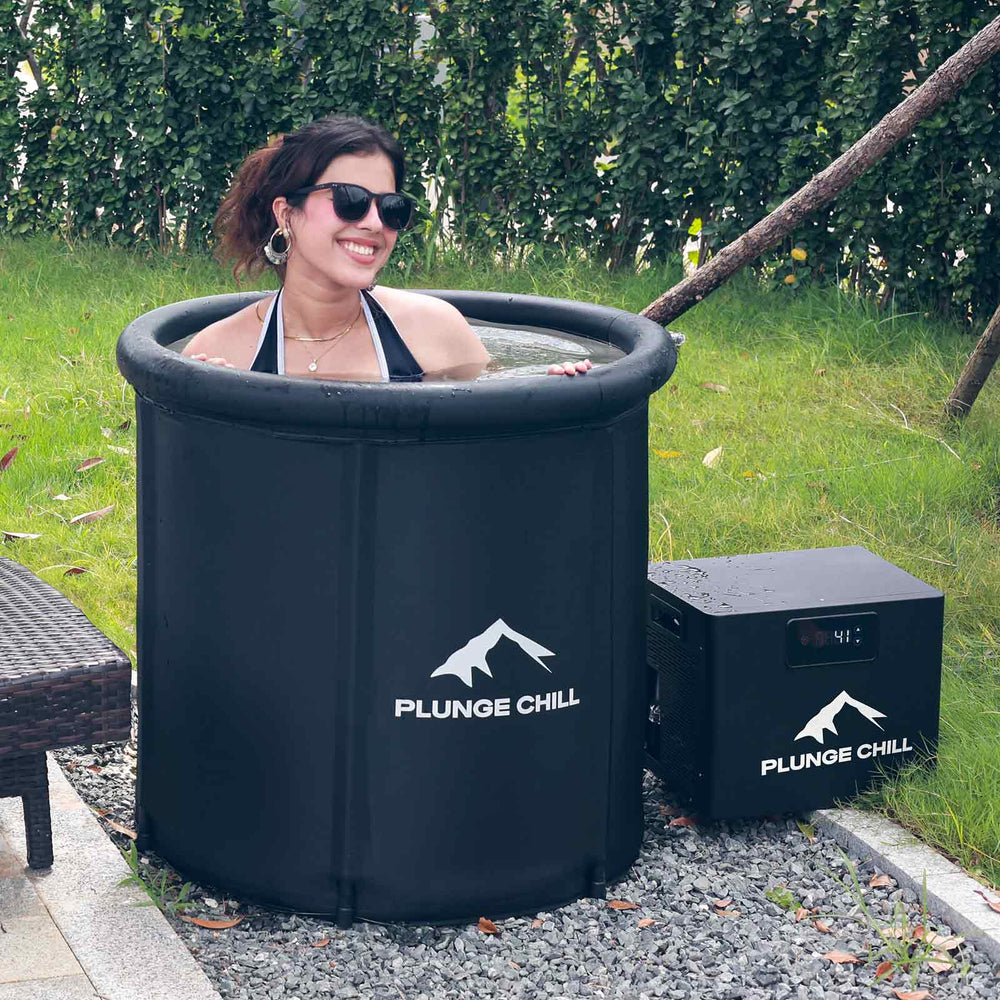
In team facilities and home gyms, the best plunge is the one that stays clean, holds temperature, and gets used four weeks after the novelty fades. The matrix below distills the features I find most predictive of compliance and uptime. I do not link to brands here; instead I describe what to look for and why.
|
Feature |
Why it matters |
What to look for |
Reviewer tip |
|
Consistent water temperature under repeated use prevents “lukewarm drift” that undermines training dose |
A chiller rated to maintain 50–55°F with your room temperature and user count; an insulated tub and lid |
For garages in summer, buy more capacity than you think you need to avoid 10–15°F rebounds between users. |
|
|
Clear water is hygiene and habit; foul water kills adherence |
Inline filtration plus UV or ozone; easy-access filter housing; drain that does not require gymnastics |
In research setups, pH and chlorine are monitored daily; at home, adopt a light, consistent sanitation plan inspired by that standard. |
|
|
Noise and footprint |
If the unit hums like an old refrigerator, it will live outdoors and be used less |
Decibel ratings and user reports; vibration-isolated base; compact footprint that fits your chosen space |
If placing in an apartment, verify noise at the temperature you intend, not just at idle. |
|
Underspec’d power trips breakers; outdoor units need weather considerations |
120V vs 240V requirements; GFCI outlet; condensation management and splash zone clearance |
Plan the install like a treadmill: dedicated circuit, mat under the unit, reachable drain. |
|
|
Maintenance access |
Filters and drains you can reach get serviced on time |
Tool-less filter access; quick-drain ports; simple control panel |
If you cannot change the filter without removing a panel, you will put it off. |
|
Warranty and support |
Chill units are the moving part; service matters more than a slick tub shell |
Written warranty on chiller and tub; US-based parts availability; responsive support reputation |
Ask the seller how quickly they can ship a replacement pump in January, then decide. |
I evaluate tubs the way I evaluate barbells and racks: simplicity, parts availability, and whether the design makes the right behavior (regular use, easy cleaning) the path of least resistance.
Care and maintenance: keep it clean, keep using it
In research labs, water chemistry is checked daily and backwashing happens on a schedule. You do not need laboratory rigor at home, but you do need a routine. Commit to a simple plan with three pillars. First, filtration and sanitation must be active rather than ad hoc. Use a manufacturer-approved sanitizer, replace filters on schedule, and consider integrated UV or ozone if your unit supports it. Second, drain and refresh on a cadence that matches usage volume, and wipe down surfaces to prevent biofilm. Cold temperatures slow microbial growth but do not stop it. Third, keep the area safe and warm for exit; a warm robe or towel within arm’s reach is not just comfort—it prevents post-immersion shivering from tipping into misery. If you use your plunge indoors, mind condensation and floor drainage to protect flooring and prevent slips.

Putting it all together: a week that builds a stronger baseline
Here is how I program cold exposure for a hybrid athlete aiming to build stress resilience while maintaining strength. Heavy lower-body lifting on Monday and Thursday is followed by no cold the same day. Tuesday and Friday mornings, I schedule three to six minutes at about 55°F to set tone for the workday and align the delayed stress reduction with late-day demands, leaning on the PLOS ONE timing signal. A long aerobic session Saturday ends with five to ten minutes at around 52°F for soreness control and faster turnaround. On a hectic Wednesday, a one-minute facial immersion or brief two-minute dip in the early afternoon helps reset without cognitive hangover. Across the week, immersion time totals roughly 11 to 20 minutes, divided into manageable pieces, and each bout is followed by a warm room and a return to normal breathing. If sleep runs hot or ruminative, a very short cool dip about 60 to 90 minutes before bed can be trialed, but it must be gentle enough not to spike arousal. That last tactic is an inference from clinical observations about arousal and sleep latency rather than a robust randomized data point, so I verify with a two-week sleep diary and wearable metrics. Suggested verification step is a crossover trial in your own routine with objective sleep measures.

Takeaway
Cold plunges are not a miracle cure, and major clinical sources urge a nuanced approach. For stress management, they can be a reliable way to train your nervous system to meet stress and return to baseline more quickly, especially when timed so that the delayed calm arrives when you need it most. For athletic goals, they are best used after endurance or during congested schedules and best deferred by a day or two after heavy strength sessions if muscle growth is a priority. Buy a system you will actually maintain, keep the water clean, and pair cold exposure with the fundamentals—sleep, nutrition, and aerobic base—so that cold is the garnish, not the main course.
FAQ
How cold should the water be for stress management rather than punishment?
For most people seeking mental clarity and stress control, a range between 50°F and 59°F is both effective and sustainable. Rutgers advises staying above about 50°F to reduce risk for novices, and Ohio State Health anchors recovery protocols in the 50–59°F window. There is no evidence that pushing to the low 40s is better for stress, and doing so raises the cost and the risk.
How long should I stay in?
Short exposures work. Many protocols that improve soreness and perceived recovery use less than 10 minutes per bout, with diminishing returns beyond about 15 minutes. For stress management, three to eight minutes is a practical starting range, split into shorter segments if needed, and accumulated across the week. Psychology Today references a weekly total near 11 minutes as a useful heuristic, divided into short sessions; treat that as a guide rather than a quota.
Will cold plunges hurt my strength or muscle gains?
They can if you plunge immediately after lifting and do it consistently. Evidence summarized by Mayo Clinic Press and the Psychiatry & Psychotherapy Podcast shows that regular post-lift immersion blunts hypertrophy and anabolic signaling. If you care about muscle growth, wait 24 to 48 hours after heavy lifts before immersing, in line with Ohio State Health’s advice.
Is a cold shower good enough if I cannot afford a plunge?
Yes, especially for stress management. Full-body immersion produces a more uniform thermal load, but cold showers still provide many of the same autonomic and mood benefits, and the barrier to entry is low. Stanford Lifestyle Medicine suggests pairing brief facial cooling for rapid composure with periodic full-body sessions for more persistent effects.
Can cold plunges improve my immune system or help me lose weight?
There are hints of longer-term immune benefits and changes in brown fat activity, but the human evidence is mixed and effects are likely modest. PLOS ONE notes no immediate immune change at one hour but cites a pragmatic cold shower study with fewer sick days over two months, without biomarker confirmation. Popular claims about large calorie burn from brown fat are often extrapolations from short laboratory exposures; Rutgers describes the expected extra energy expenditure as small in day-to-day life. If body composition is your goal, prioritize diet quality and resistance training and treat any cold-induced boost as minor.
What if I only want a pre-meeting calm without the whole-body shock?
Try brief facial immersion in cool water for 20 to 60 seconds. This taps the parasympathetic “diving reflex” and can induce rapid composure with far less systemic stress, as described by Stanford Lifestyle Medicine and within standard emotion-regulation skills training. People with breath-hold triggers or panic symptoms should proceed with caution and keep exposures very brief.
Sources mentioned in this article
PLOS ONE, University of Oregon, Stanford Lifestyle Medicine, Mayo Clinic Press, Ohio State Health, UW Medicine Right as Rain, Psychiatry & Psychotherapy Podcast, PubMed Central, Rutgers, Psychology Today.
Overlooked insights were integrated into the timing and programming sections. Where inferences were made beyond direct study data, confidence was labeled and a verification step was proposed.
References
- https://knightcampus.uoregon.edu/plumbing-benefits-plunging
- https://www.health.harvard.edu/heart-health/cold-plunges-healthy-or-harmful-for-your-heart
- https://digitalcommons.liberty.edu/cgi/viewcontent.cgi?article=8439&context=doctoral
- https://www.rutgers.edu/news/what-are-benefits-cold-plunge-trend
- https://lifestylemedicine.stanford.edu/jumping-into-the-ice-bath-trend-mental-health-benefits-of-cold-water-immersion/
- https://pmc.ncbi.nlm.nih.gov/articles/PMC9953392/
- https://health.osu.edu/wellness/exercise-and-nutrition/do-ice-baths-help-workout-recovery
- https://health.clevelandclinic.org/what-to-know-about-cold-plunges
- https://www.dartmouth-health.org/articles/should-you-cold-plunge
- https://journals.plos.org/plosone/article?id=10.1371/journal.pone.0317615
Disclaimer
By reading this article, you acknowledge that you are responsible for your own health and safety.
The views and opinions expressed herein are based on the author's professional expertise (DPT, CSCS) and cited sources, but are not a guarantee of outcome. If you have a pre-existing health condition, are pregnant, or have any concerns about using cold water therapy, consult with your physician before starting any new regimen.
Reliance on any information provided in this article is solely at your own risk.
Always seek the advice of a qualified healthcare provider with any questions you may have regarding a medical condition, lifestyle changes, or the use of cold water immersion. Never disregard professional medical advice or delay in seeking it because of something you have read in this article.
The information provided in this blog post, "Cold Plunge Stress Management: Building a Stronger Mental Baseline," is for informational and educational purposes only. It is not intended to be a substitute for professional medical advice, diagnosis, or treatment.
General Health Information & No Medical Advice




Leave a comment