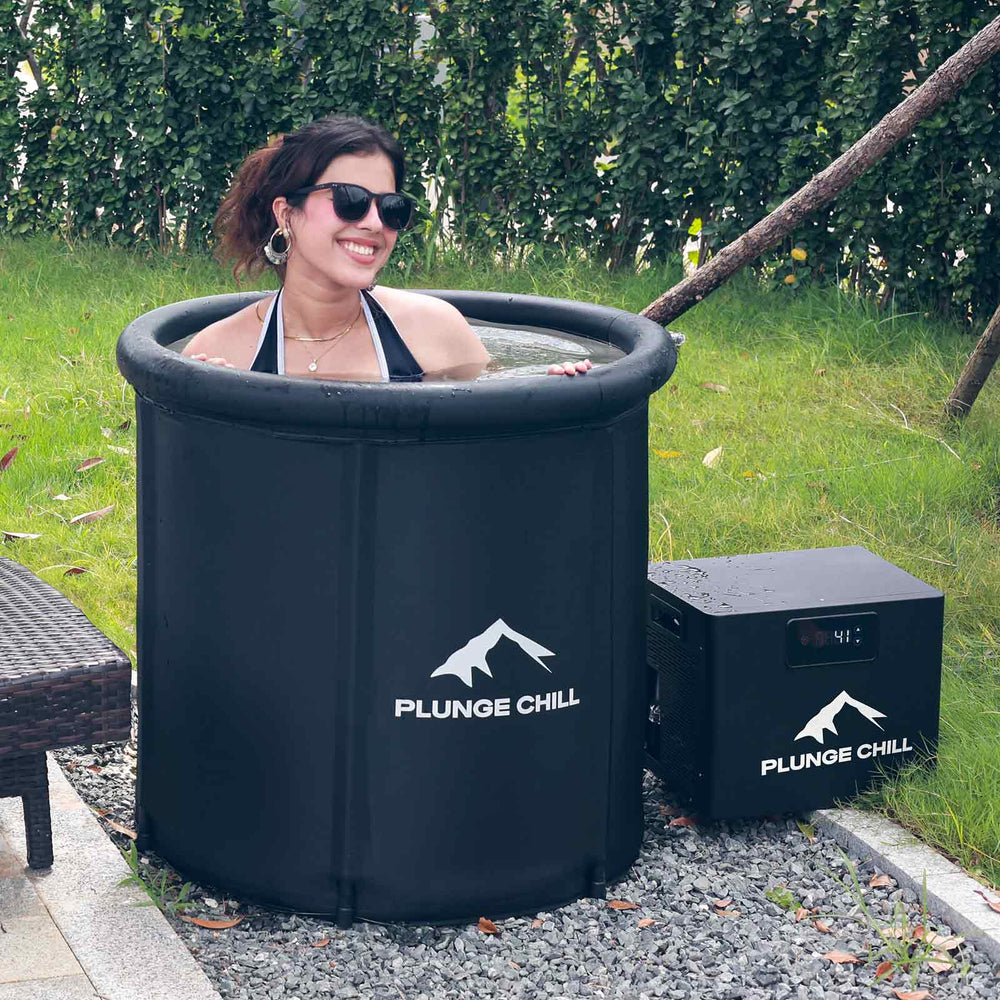
As a sports rehabilitation specialist and strength coach who also tests cold plunge products, I see two questions come up constantly: can cold water immersion help with anxiety, and if so, how should people use it safely and effectively without undermining training goals? The short answer is that cold plunges can acutely shift state and may help stress regulation, but outcomes depend on timing, dose, individual health, and expectations. The longer, more practical answer follows, grounded in current research and hands-on experience from clinics, locker rooms, and controlled training environments.
What a Cold Plunge Is—and How It Could Influence Anxiety
A cold plunge is deliberate immersion in cold water, most often chest-deep, for a brief period. Protocols studied in healthy adults typically use water between about 45°F and 59°F for exposures ranging from 30 seconds to several minutes. Modalities vary from ice baths and refrigerated tubs to natural lakes and cold showers. This exposure is a controlled stressor. It triggers robust autonomic and endocrine responses, including norepinephrine and endorphin release, vasoconstriction, and increased metabolic activity, all of which can change how you feel and function in the short term.
Two mechanisms matter for anxiety. First is neurohormesis—the idea that low-dose, short stressors provoke adaptive responses. Cold triggers the sympathetic system and a cascade of neurotransmitters and hormones that can lift arousal and sometimes mood. Second is vagal modulation. Full-body cold tends to spike sympathetic activity initially, while cold applied to the face can activate a parasympathetic “diving reflex” via trigeminal and vagus nerve pathways, which can rapidly slow heart rate and dampen a stress surge. These mechanisms appear in both clinical and translational discussions and are echoed in practice where we coach breath control during the first 30–60 seconds of immersion.
What the Science Actually Says about Anxiety and Mood
Immediate state shifts are common, but durable mood change is less certain
Several clinical and translational sources report short-term boosts in positive affect and alertness after cold exposure. An fMRI pre–post study found that a single five-minute, head-out immersion around 68°F increased positive affect and reorganized connectivity across large-scale brain networks associated with motivation and attention. Lifestyle medicine guidance from an academic program notes acute norepinephrine and endorphin surges, along with post-exposure cortisol reductions lasting hours in some protocols, and it recommends practical use of facial immersion for rapid calming.
At the same time, a systematic review and meta-analysis in PLOS One pooling randomized trials in healthy adults reported no consistent improvements in mood across studies, despite improvements in sleep and quality of life metrics. A clinical perspective from a major academic medical center similarly emphasizes that there is no rigorous evidence that cold-water therapy produces lasting, meaningful improvements in depression, and it encourages people to prioritize evidence-based mental health treatments while considering cold as an optional adjunct. These tensions likely arise from differences in outcome measures, timing of assessments, population selection, and whether trials controlled for expectancy effects.
Stress reduction appears to peak later, not immediately
One detail that shapes how you schedule your plunges is the timing of stress effects. The PLOS One synthesis observed a significant reduction in self-reported stress about 12 hours after cold immersion, but not immediately after, at one hour, or at 24–48 hours. That delayed benefit contrasts with the immediate “energized and clear” sensation many report and suggests that if your goal is stress relief for a next-day presentation or high-stakes meeting, an evening plunge the day before may be better aligned with the physiology than a morning plunge on the same day. This scheduling nuance is rarely emphasized in gym-floor chatter yet is actionable for anxiety management.
Expectancy effects can sway outcomes
Cold exposure is highly sensory and culturally hyped, which makes expectancy powerful. An expectancy-controlled design in sports recovery research showed that simply telling participants that a neutral additive would enhance recovery altered subjective outcomes in a way that approximated the active condition. For mental health endpoints, measuring and managing expectations matter. When I onboard clients, I set neutral expectations, emphasize safety and process goals, and track mood and sleep with simple, consistent scales to minimize placebo confusion.
Acute inflammation and temporary cognitive costs deserve respect
Another under-discussed point is that inflammatory markers often rise immediately and at one hour after immersion, before resolving. A separate review of cold exposure and cognition found that processing speed and executive function commonly dip during and shortly after cold exposure, even as vigilance sometimes rises. For anxiety-prone professionals, that means scheduling matters: avoid plunging right before cognitively demanding tasks, and save it for time windows when a transient dip in complex thinking will not hurt performance. This guidance matches what we see on the ground with athletes who need clarity in film sessions or tactical meetings; we schedule plunges away from those blocks.
Where evidence conflicts, context explains a lot
When sources disagree—some reporting mood gains, others no change or insufficient evidence—the differences often boil down to definitions, samples, and timing. Studies that measure “positive affect” immediately post-immersion often show benefits, while studies targeting “depression symptoms” weeks later in small samples may not. Populations also differ; undergraduates, recreational athletes, and clinical cohorts do not respond identically. Finally, protocols vary widely in temperature, duration, and frequency. When you layer these differences onto expectancy, it is unsurprising that pooled estimates blur. The practical implication is to personalize dose and timing, track your own responses, and keep core treatments for anxiety in place while you test if cold adds value for you.
Practical Protocols for Anxiety Relief, Not Just Recovery
For people with no cardiovascular or medical contraindications, a conservative starting approach is to begin with water around 59–68°F and exposures of 30–60 seconds, breathing deliberately to control the initial gasp reflex. Progress gradually by lowering temperature or extending time, not both at once. For mental state regulation, several academic and clinical advisories suggest keeping sessions brief—often under 10 minutes total—and favoring consistency over heroics. If you want relief from a sudden surge of anxiety or a looming panic episode, facial immersion in cold water for 15–30 seconds while holding the breath is a lower-risk option that specifically targets the diving reflex and can be performed at a sink or basin.
The question of “how much per week” remains open. A popular weekly target across wellness communities is about 11 minutes split into short bouts. A reasonable verification step is to run a four-week experiment: hold total weekly time near that mark, keep other variables stable, and track daily anxiety, sleep quality, and morning resting heart rate to see whether that target correlates with measurable improvements for you.
If you also train for strength and muscle gain, think carefully about timing. Evidence from resistance training studies shows that post-lift cold immersion can blunt hypertrophy signaling and reduce long-term muscle growth. I schedule plunges away from hypertrophy sessions or on rest days. If you prioritize endurance or general recovery rather than muscle size, the trade-off looks different and sometimes favorable.

Pros and Cons for Athletes Who Also Want Anxiety Relief
From a sports rehabilitation perspective, the clearest performance benefit of cold immersion is reduced muscle soreness 24–72 hours after hard efforts. That matters for consistency in training and can indirectly support mental health by easing the friction of next-day sessions. Sleep quality may also improve, with some analyses noting sex differences in reported benefits. These are helpful but modest gains and should be weighed against immediate cognitive slowing and the possibility of reduced adaptation to strength training if cold is placed right after lifting. On the mental health side, immediate uplift and a sense of regained control are common experiences, yet lasting changes in clinical anxiety and depression require more rigorous evidence and should be anchored first in established therapies and shared decision-making with a clinician.
Buying a Cold Plunge With Mental Wellness in Mind
As a product reviewer, I divide purchase decisions into temperature control, sanitation, footprint, and total cost of ownership. For anxiety-focused use, you do not need ultra-low temperatures that drive water toward the mid-30s. What you need is dependable control in the 45–59°F range, fast pull-down from room temperature, and quiet operation that does not turn a calming practice into a noisy chore. If you live in a hot climate or keep the unit in a warm garage, favor systems that can hold under 50°F through summer afternoons, and confirm the electrical requirements and ventilation needs before you buy. Filtration and water treatment matter more than most first-time buyers expect; choose designs with integrated filtration and a clear sanitation protocol, and avoid mixing disinfectants without explicit manufacturer guidance.
Price varies widely. Options span from a home bathtub with ice to dedicated, insulated tanks with built-in chillers that can cost as much as $20,000. For renters and small apartments, inflatable or rotomolded options with external chillers can be easier to move, while permanent acrylic or stainless units look beautiful but demand space and uninterrupted power. A covered unit keeps debris out and reduces heat load; a proper lid also adds a safety layer if children are in the home. App controls are convenient for pre-cooling and tracking sessions, but I still recommend a physical thermometer as a redundant check. None of these product choices require extreme numbers; they require fit-for-purpose reliability. If anxiety relief is your main goal, prioritize predictable temperature control, quiet operation, and ease of maintenance over bragging-rights cold.

Setup, Safety, and Care
Before you begin, talk with a clinician if you have cardiovascular disease, heart rhythm disorders, uncontrolled high blood pressure, diabetes, poor circulation, or Raynaud’s phenomenon. Several cardiology and health advisories recommend against cold plunges for people with these conditions. Always measure water temperature, enter slowly to manage the initial cold shock, and never plunge alone in open water or unsupervised contexts. Keep towels and warm clothing or a robe ready, and rewarm with light movement afterward rather than scalding showers.
Dosing should be conservative at first. Many hospital and lifestyle medicine sources suggest starting at 30–60 seconds and progressing to a few minutes as tolerance improves, with total sessions generally under 10 minutes. Some vascular and sports clinicians suggest capping individual immersions around three minutes, especially for novices. There is no single “right” number; there is only the right number for you that balances benefit with risk, taken in the context of your health, your training, and your daily cognitive demands.
Care is straightforward if you set a routine. Keep water covered when not in use, adhere to the manufacturer’s filtration and sanitation instructions, and schedule periodic drain-and-clean cycles based on usage. Avoid improvising with chemicals; follow the manual, and when in doubt, ask the manufacturer. In the clinic, we keep logs for temperature, service intervals, and sanitation—simple checklists prevent problems.
Evidence Snapshot and Practical Implications
The evidence base remains heterogeneous, but several themes are consistent enough to guide practice. Brief, controlled cold exposure reliably provokes a stress response with neurochemical changes that many people experience as alertness and a mood lift. Stress reduction appears stronger at about 12 hours post-exposure than immediately. Sleep quality can improve, though sex differences show up in some analyses. The cognitive system may slow in the minutes to hours after exposure, and inflammatory markers can spike transiently. In athletes, cold immersion reduces soreness but can blunt hypertrophy if placed after lifting. All of this supports a sensible playbook: screen for safety, start conservatively, schedule thoughtfully, and integrate cold as an adjunct to—not a replacement for—primary anxiety care.
A Brief Comparison Across Trusted Sources
Topic |
Reported Finding |
Source |
Practical Take |
Stress timing |
Significant reduction about 12 hours after immersion; not immediate |
PLOS One |
Plan stress relief for later, not right after a plunge |
Mood change |
Immediate positive affect and alertness in lab and fMRI settings |
Peer‑reviewed fMRI study; Stanford Lifestyle Medicine |
Useful for acute state shifts; durability uncertain |
Depression evidence |
No rigorous proof of lasting improvement |
OSU Wexner Medical Center |
Keep evidence‑based treatments first; consider cold as adjunct |
Sleep |
Improved sleep reported in some groups; sex differences noted |
Harvard Health summarizing pooled trials |
Track your personal response; don’t assume uniform benefit |
DOMS recovery |
Reduced soreness 24–72 hours; mixed performance effects |
Peer‑reviewed meta-analyses; Psychiatry & Psychotherapy Podcast summary |
Better for soreness than for performance enhancement |
Hypertrophy |
Post‑lift cold immersion can blunt muscle growth |
Training studies summarized in Psychiatry & Psychotherapy Podcast |
Schedule cold away from strength sessions if size matters |
Two Practical Insights to Apply Now
Many guides emphasize “ice-cold” water for maximal benefit, yet several meta-analyses and reviews suggest that moderate cold within the typical 50–59°F range is as effective as more severe cold for soreness reduction and likely easier to tolerate for anxiety work. That means you can stay out of the extreme cold end and still capture benefits. This interpretation leans on aggregated sports recovery data and is consistent with clinical advice to avoid very low temperatures when starting.
Another often overlooked tool is facial immersion for acute anxiety. Because the diving reflex targets parasympathetic pathways quickly, submerging the face in cold water for 15–30 seconds can rapidly downshift a spike in arousal, without the whole-body cardiovascular load of a full plunge. Clinical and lifestyle medicine resources describe this mechanism and use case. In practice, I coach clients to pair face immersion with breath holds and controlled exhales, which is easy to integrate at home or at work.

How I Program Cold Plunges for Clients with Anxiety
In rooms where I supervise both rehab and strength work, I begin with a safety screen and a three-week trial that keeps immersion time short and water around 54–59°F. We anchor plunges on non-lifting days or hours away from heavy strength sessions and log daily anxiety, sleep, and session RPE. We layer in facial immersion and breath control techniques for days when the person needs a fast downshift. After week three, we review the data together. If stress scores improve and training quality remains high, we continue and adjust time or frequency based on the person’s schedule and health. If scores do not change or sleep worsens, we deprioritize cold and refocus on proven anxiety care while staying open to future trials.
Product Features That Actually Matter for Mental Health Use
For mental wellness, reliability beats extremity. Pick a unit that reaches and holds the 45–59°F range consistently in your real placement—garage, deck, or spare room—without intrusive noise. Favor systems with integrated filtration and transparent sanitation steps, and choose a lid that secures snugly to keep heat load and contamination down. For frequent, short sessions, look for fast pull-down time from idle to target temperature. If you are space- or power-constrained, portable tubs with external chillers can be a sweet spot. If your context is a clinic or team room, prioritize service access and warranty support as highly as aesthetics. Expect a wide price band; high-end tanks can cost up to $20,000, while simpler setups using a home tub and ice handle occasional use but require more manual work.
Safety Recap for Anxiety-Focused Users
Cold plunges are not for everyone. People with heart disease, uncontrolled blood pressure, arrhythmias, vascular or circulation disorders, or Raynaud’s should avoid cold immersion or proceed only with medical clearance. Enter water slowly to modulate the initial cold shock, do not plunge alone in open water or isolated contexts, and always rewarm with movement and clothing rather than scalding water. Use a thermometer instead of guessing, and cap exposures conservatively until you have a stable personal response. Finally, do not substitute cold plunges for evidence-based anxiety treatments; use them, if helpful, as an adjunct inside a plan built with your clinician.
FAQ
Can a cold plunge treat anxiety on its own?
Cold plunges can acutely change state and may help with stress regulation, but there is no rigorous evidence that they deliver lasting, clinically meaningful improvements in depression or anxiety by themselves. Clinical organizations emphasize maintaining evidence-based care and, if you are otherwise healthy, considering cold as an adjunct. This positioning aligns reports of immediate uplift with the more limited long-term data.
How cold should the water be for anxiety benefits?
Most studies and clinical advisories focus on the 50–59°F range, with some protocols extending slightly warmer or cooler. From a practical standpoint, start where it feels uncomfortably cold but safe, often around the upper 50s, and progress gradually. Very low temperatures are not necessary for mental state benefits and can increase risk.
How long should I stay in?
Begin with 30–60 seconds, emphasize calm breathing through the first minute, and progress to a few minutes as tolerated. Many programs keep total session time under 10 minutes. If you need a rapid downshift from acute anxiety, facial immersion for 15–30 seconds can be effective and carries less systemic load.
When should I plunge if I want stress relief at a specific time?
Stress reductions appear strongest about 12 hours after immersion in pooled analyses. If your goal is to feel calmer for a morning event, an evening plunge the day before may align better with this physiology than a same-morning plunge. Track your own response to confirm.
Will cold plunges hurt my strength or muscle gains?
They can if placed immediately after lifting. Studies indicate that post-lift cold immersion blunts hypertrophy signaling and long-term muscle growth. If size and strength are priorities, schedule cold on rest days or after conditioning rather than right after resistance training.
Is sauna plus cold plunge better for anxiety than cold alone?
Alternating heat and cold is popular and feels good for many people, but rigorous head-to-head data are limited. If you enjoy the combination and tolerate it well, it is a reasonable option. For anxiety surges, a targeted cold face immersion can add a quick calming effect even without heat.
Takeaway
Cold plunges can be a useful tool for anxiety relief when they are screened for safety, programmed with intent, and integrated into a broader mental health plan. The strongest effects are immediate shifts in arousal and a delayed reduction in stress that tends to peak around 12 hours later. Sleep may improve in some individuals, soreness typically decreases, and cognitive speed can dip briefly after immersion. For lifters, avoid post-session cold if muscle growth is a goal. For buyers, prioritize reliable temperature control, quiet operation, and straightforward sanitation over extreme cold claims. Most importantly, treat cold exposure as an adjunct to proven care. Track your own data, adjust the dose, and keep what clearly helps you while discarding what does not.
Confidence: The guidance above leans on peer-reviewed syntheses, clinical advisories, and practical field experience. The specific weekly time target of about 11 minutes comes from wellness guidance rather than randomized trials. A straightforward verification step is to run a four-week, single-subject trial with consistent dosing and daily logs of anxiety, sleep quality, and training performance, then adjust based on your data.
References
- https://www.health.harvard.edu/heart-health/cold-plunges-healthy-or-harmful-for-your-heart
- https://news.hss.edu/5-possible-health-benefits-of-cold-water-therapy/
- https://www.mcphs.edu/news/physical-therapist-explains-why-you-should-chill-out-on-ice-baths
- https://pubmed.ncbi.nlm.nih.gov/39879231/
- https://wexnermedical.osu.edu/our-stories/cold-water-therapy-for-depression
- https://www.rutgers.edu/news/what-are-benefits-cold-plunge-trend
- https://lifestylemedicine.stanford.edu/jumping-into-the-ice-bath-trend-mental-health-benefits-of-cold-water-immersion/
- https://sncs-prod-external.mayo.edu/hometown-health/speaking-of-health/cold-plunge-after-workouts
- https://www.wau.edu/wp-content/uploads/2020/06/ContrastShower.pdf
- https://www.browardhealth.org/blogs/health%20benefits%20and%20risks%20of%20cold%20plunges