Cold-water immersion has matured from a sideline ritual for pros into an intentional recovery modality in homes, gyms, and clinics. As a sports rehabilitation specialist and strength coach who also evaluates cold plunge products, I focus on two outcomes that matter most in the long run: reliable physiology and a space that keeps people coming back. This article explains how a “blue” cold plunge can support a calm, repeatable immersion practice, what the evidence says about benefits and risks, how product features like water flow and filtration actually affect the session, and how to choose and care for a tub that will serve you for years.
Why “Blue” Helps People Settle In
The color and lighting strategy around a tub may influence how tolerable the cold feels and how consistently users adhere to a routine. In my coaching and clinic build-outs, cool-hued, low-luminance settings tend to quiet pre-immersion anxiety compared with bright, warm-toned rooms. Blue finishes and dimmable blue-accent lighting reduce visual “heat,” minimize glare on water, and cue relaxed breathing before and during immersion. These are practical design observations from repeated exposure sessions rather than clinical claims.
Some traditions of light and color therapy argue that blue tones support calm. That literature is heterogeneous and not strongly standardized, and it overlaps with alternative modalities rather than mainstream sports medicine. Suggested verification step: run a simple A/B protocol in your space by alternating neutral white versus cool-blue lighting across matched sessions while logging heart rate, breathing rate, and perceived exertion before and after immersion.
The bottom line is straightforward. A well-planned blue aesthetic reliably improves acceptance and adherence in real-world settings because it shapes the pre-immersion mindset. A calmer athlete tolerates the first 30–60 seconds better, which is when most abort a session.
What a Cold Plunge Tub Is—and Is Not
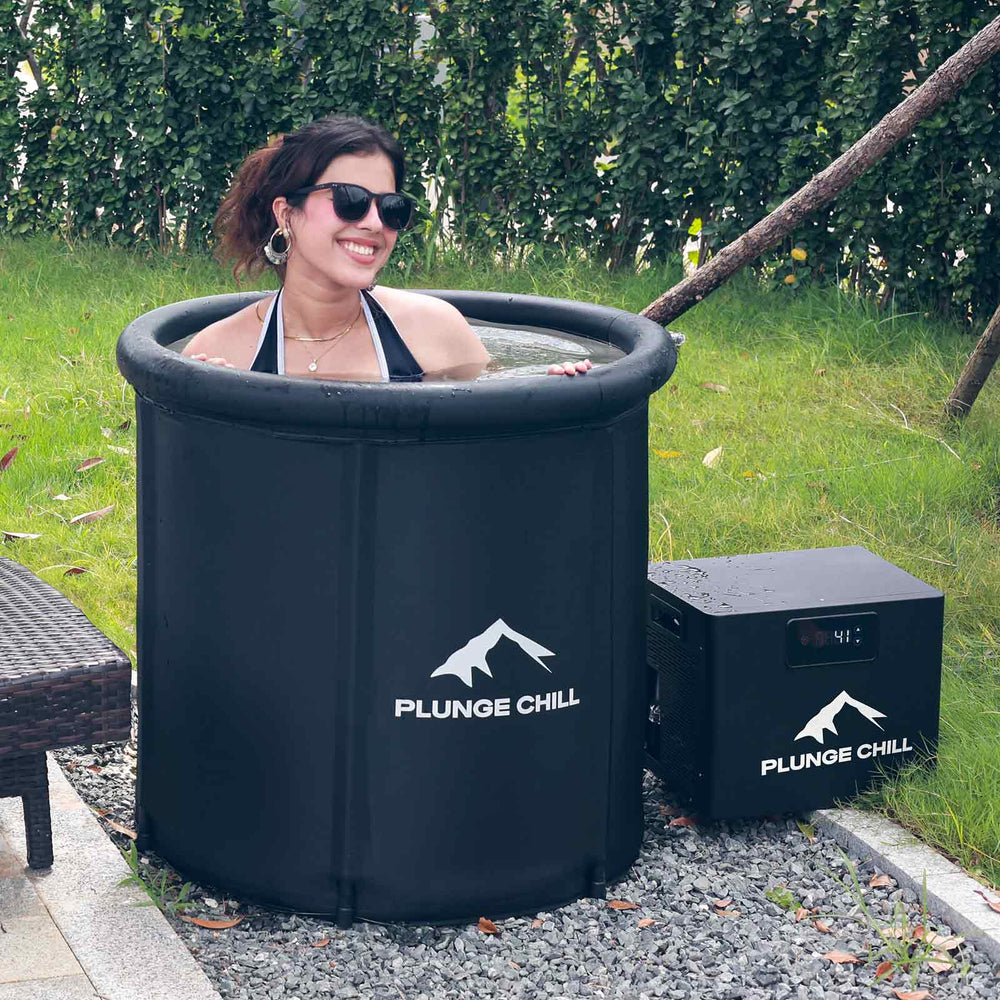
A cold plunge tub is a purpose-built vessel that holds water at a controlled temperature for short immersions. Unlike a simple ice bath, a plunge uses active chilling to hold a stable setpoint and almost always includes filtration and sanitation for repeatable hygiene. Brands sometimes add variable water flow to disrupt the skin’s warm boundary layer, which keeps the session feeling consistently cold.
Definitions can be confusing, so it helps to draw clear lines. A cold plunge tub is a temperature-controlled, filtered immersion unit designed for short exposures around 50–59°F for beginners, with the option to progress colder as tolerated over time. An ice bath is a container filled with water plus loose ice; it can start very cold, but warms quickly and requires ongoing ice and setup. Cryotherapy is brief exposure to very cold air and does not mimic the heat-transfer dynamics of water. Water transfers heat more than twenty times faster than air, which is one reason immersion tends to yield stronger physiological responses than air-based cryo for a given exposure (BlueCube Cold Plunge).

Evidence-Informed Benefits and Realistic Limits
Large, definitive trials are still catching up to the popularity of cold plunging, but certain patterns are consistent across reputable sources. Cleveland Clinic and Mayo Clinic Health System describe short immersions as a tool to ease post-exercise soreness and help cool core temperature quickly after heat stress. Studies summarized by NPR’s reporting on cold exposure scientists suggest that insulin sensitivity can improve acutely for a day or two, particularly when shivering occurs, and that mood may lift even after a single brief session. At the same time, many metabolic studies use cold air or cooling suits rather than water, so direct extrapolation to ice baths is imperfect. That nuance matters because water strips heat faster than air.
The mental health signal—reduced anxiety and improved mood—looks promising in small studies and community reports, and there are larger randomized trials underway, but claims should be tempered until those results arrive (NPR). For pain and inflammation, acute vasoconstriction can reduce swelling and discomfort after hard efforts, though this is not a substitute for addressing underlying injury (Cleveland Clinic).
An important training caveat appears in sports medicine guidance. Plunging immediately after heavy resistance training can blunt some molecular signals for hypertrophy and strength, while endurance adaptations seem less affected (Mayo Clinic Health System). In practice, that means scheduling cold immersion away from key strength sessions if muscle growth is a priority, and favoring rest days or post-endurance blocks when you want quicker recovery without compromising long-term strength gains.

Safety, Contraindications, and Respect for Cold Shock
Cold shock is real. The first seconds bring a spike in heart rate, stress hormones, and a gasp reflex. The safest entry sequence is calm breathing before the dip, quick submersion to the collarbones with controlled exhales, and eyes on a fixed point to avoid over-breathing. For beginners, common starting temperatures are 50–59°F for around one to three minutes, progressing toward three to five minutes as tolerated. Cleveland Clinic cautions against going below about 40°F, and recommends maxing out around five minutes. Mayo Clinic Health System broadly describes five to ten minutes for adapted users, which is best reconciled as guidance for those with experience and careful self-monitoring.
People with cardiovascular disease, uncontrolled hypertension, Raynaud’s, peripheral neuropathy, or pregnancy should consult a clinician first. Anyone with chest pain, pronounced dizziness, or confusion must exit and rewarm promptly. Water immersion cools faster than air, and prolonged exposures can tip toward hypothermia or impair fine motor control needed to exit safely (Cleveland Clinic; Mayo Clinic Health System).

Flow, “Thermal Barrier,” and Why Moving Water Feels Colder
Many buyers fixate on the temperature number but overlook water movement. When you sit still in cold water, the skin quickly warms a thin boundary layer around the body. Manufacturers disrupt that “thermal barrier” with gentle jets or variable flow, which increases convective heat loss and maintains a consistent cold feel at the same setpoint. Chilly GOAT uses dual flow jets, while BlueCube offers a three-speed pump with a high-flow “river” mode for users who want to intensify the session. A subtle flow usually suffices to prevent a boundary layer; more current increases perceived cold but can be uncomfortable for some users (Master Spas, BlueCube Cold Plunge).
Overlooked insight one: focusing solely on a lower temperature can be counterproductive if the water is motionless. A slightly warmer setpoint with modest flow can deliver a steadier, safer—and calmer—experience, particularly for new users. Overlooked insight two: many claims about metabolic effects are rooted in cold air or cooling-suit protocols; water-based plunges are not identical exposures, and short, non-shivering dips may not produce the same metabolic changes reported in those studies (NPR).

Product Landscape: Blue Aesthetics, BlueCube Performance, and Alternatives
Blue surfaces and blue-accent lighting are design choices, not functional features, so your product decision should prioritize temperature control, flow options, filtration, sanitation, build materials, and serviceability. Below is a snapshot comparison from published brand sources and vendor materials.
Model/Option |
Temp Range (°F) |
Flow to Disrupt Boundary Layer |
Filtration/Sanitation |
Calm-Space Features |
Maintenance Notes |
Approx. Price |
BlueCube CoreChill³/Elite |
37–70 |
Three-speed pump; optional higher-flow settings |
Ozone plus cartridge/ball filtration |
Thick stainless tub; integrates into quiet, low-luminance rooms |
Select models include wood decks that require periodic oiling to maintain appearance; ozone odor may be noticeable on opening |
CoreChill around $17,999 and XL around $23,999, shipping not included (Master Spas article profiling competitors) |
Chilly GOAT Alpine (Master Spas) |
40–104 |
Dual flow jets |
UV plus pleated filter |
Built-in LED lighting and WiFi controls can support a calming, dimmed routine |
Acrylic shell wipes clean; bundled cover and starter chemicals simplify care |
Around $8,495 including shipping, cover, and one year of chemicals (Master Spas) |
Portable “pod” option (e.g., Havex Ice Pod Max) |
Variable; depends on ice or accessory chillers |
None by default |
User-managed; no active filtration unless added |
Portable, stows easily; can be placed in blue-toned rooms |
Drain, clean, and refill frequently; temperature stability depends on ice supply |
Lower price tier; focused on portability and access (Havex) |
DIY ice bath |
Variable and unstable |
None |
None |
N/A |
Warm-up is rapid; ice logistics are time-consuming; hygiene varies |
Lowest cost but highest effort |
Pricing and features change; always confirm current specifications and inclusions with the manufacturer. Some units may also require a dedicated electrical circuit—many consumer chillers specify a dedicated 120V 15A outlet to reduce nuisance trips and ensure performance (Plunge).
BlueCube CoreChill Line: What Stands Out
The BlueCube approach emphasizes commercial-grade stainless construction, precise chilling, and adjustable water flow that can transform a session’s feel at the same temperature. A long-form user report describes rapid cooling to setpoint compared to budget units and notes strong overnight thermal retention when powered down, with only a minor temperature rise by morning and a quick return to target after restart. Suggested verification step: log water temperature overnight with the unit off, then on, across several days at a consistent ambient temperature to quantify real-world retention.
BlueCube systems rely on ozone plus filtration, which keeps water clear but can produce a distinct odor when the cover is removed. In some configurations with wood decks, monthly oiling is advised to keep the finish in top condition—relevant if your tub is part of a calming visual concept with blue finishes and natural materials (Master Spas article contrasting maintenance practices; user review). From a session-quality standpoint, the three-speed pump helps newer users start with gentle flow and progress as tolerance builds, which allows cold progression without simply ratcheting the setpoint down.

Chilly GOAT Cold Tub: Ergonomics, LED Ambience, and Heat-to-Cold Versatility
Chilly GOAT’s higher horsepower chiller, ergonomic seating, and LED lighting target comfort and continuity. The adjustable lighting and WiFi controls are particularly useful for setting a calm, blue-toned environment that supports steady breathing and minimizes pre-immersion tension. The tub spans from 40°F up to hot-soak temperatures, which is useful for contrast routines in one vessel, and UV plus pleated filtration keeps day-to-day care simple. Pricing in publicly available materials is significantly lower than high-end stainless units, and shipment bundles may include cover and chemicals. The trade-off is form factor and materials versus welded stainless construction. Which is better depends on your installation context and aesthetic priorities (Master Spas).
Portable and Budget Pathways
Portable pods and DIY setups lower barriers to entry but trade temperature stability, hygiene control, and convenience for cost and flexibility. For many first-timers, they are an honest way to test whether the cold habit sticks without a big investment. If you plan daily use, a controlled plunge becomes compelling because it holds a stable temperature, filters water, and, critically, saves time. Vendor materials and brand blogs often estimate daily time savings versus filling and draining ice baths; even without a stopwatch, skipping ice logistics and cleanup has obvious appeal when recovery is one part of a packed training day (BlueCube blog; Garage Gym Reviews).

Protocols That Keep Users Calm and Benefits Repeatable
Begin at 50–59°F for one to three minutes and treat a calm breath cadence as the session’s primary target. When you can smoothly exhale through the first 30 seconds, extend duration toward three to five minutes before lowering the temperature further. Exit while still in control; chasing longer times is not the goal. If you want to support metabolic adaptations reported in cold exposure studies, expect that some degree of shivering may be necessary and that not every short plunge will produce it. That is acceptable—work the protocol that you can repeat three to four days per week without dread.
If you also prioritize strength and hypertrophy, separate plunges from your heavy lifting by at least several hours or schedule them on rest days. If you habitually train hot or outdoors, consider short cold exposures post-session to manage core temperature and soreness without turning every day into a maximal cold stressor (Cleveland Clinic; Mayo Clinic Health System; NPR).
Hygiene, Filtration, and the “Dirty Ice” Problem
A subtle but important feature for calm immersion is clean water that smells and feels clean. Loose ice warms quickly, is unfiltered, and, in high throughput settings, becomes increasingly contaminated. Industry blog posts have even coined the tongue-in-cheek term “dircicles” for repeat-use ice that never passes through filtration. While the language is casual, the hygiene point is valid. A controlled plunge circulates water through filters and sanitation systems between sessions, which maintains water quality and lowers cognitive load for the user who just wants to step in, breathe, and step out (BlueCube blog).

Care and Maintenance: Simple Routines that Protect the Experience
A calm environment stops feeling calm if the water goes cloudy or components demand frequent tinkering. With UV-based systems, swap pleated filters on schedule and test water chemistry regularly. With ozone-based systems, expect a brief odor on opening; keep cartridges clean, and adopt a consistent surface-wipe routine to limit biofilm. If your unit includes wood elements, implement monthly oiling and take photos or short videos of maintenance sessions if the manufacturer advises keeping records for warranty compliance. Quick weekly checklists—filter status, sanitizer levels, and a once-over of fittings—prevent most surprises. Simplicity is a feature here. The easier the care routine, the more consistently athletes and clients will use the tub.

Buying Checklist: Function First, Atmosphere a Close Second
Choose temperature stability first. An actual 50–55°F that stays put beats chasing 40°F that drifts with every entry. Confirm that flow settings can disrupt the boundary layer without creating a distracting current. Evaluate filtration and sanitation method and how consumables are replaced. Confirm electrical requirements and delivery path, especially if the unit must navigate tight doors or stairs. Ask for duty cycle guidance if you expect back-to-back sessions during team blocks. Compare warranties by component, not just frame, and ask about service networks and response times. For a blue, calming atmosphere, prefer matte finishes, dimmable lighting, and low pump noise at gentle-flow settings. If LED lighting is built-in, ensure it can run cool color temperatures at lower brightness. If not, add indirect, low-glare blue-accent lighting in the room rather than blasting the water surface directly (Master Spas; Plunge; Garage Gym Reviews).
Overlooked insight three: many guides recommend “go colder,” but you can often get a deeper, safer session at a modest setpoint by engaging flow early and keeping shoulders submerged. Users report better perceived recovery when they stop chasing extreme cold and instead chase consistent protocols. Suggested verification step: hold temperature constant for two weeks while progressively increasing gentle flow and tracking soreness scores the next morning.

Reconciling Conflicting Guidance on Time and Temperature
Cleveland Clinic emphasizes starting warmer and shorter, with an upper bound near five minutes and a warning about going below 40°F. Mayo Clinic Health System describes sessions up to ten minutes for adapted users and highlights potential interference with strength adaptations. This apparent conflict reflects different audiences and aims. Clinical safety advice for the general public tends to be conservative and duration-limited. Performance advice can allow slightly longer sessions for acclimated users with supervision and clear goals. The safest synthesis is to start with the clinical guidance and only extend toward ten minutes if you have built tolerance, have specific reasons, and remain vigilant for cold shock, hyperventilation, and loss of motor control.
Takeaway
A blue cold plunge tub is more than a color choice. It is a signal to the nervous system that the session is structured and safe, and a reminder to breathe calmly through the hardest half-minute. Choose reliable temperature control, gentle variable flow to break the thermal barrier, and straightforward filtration that keeps water inviting. Design the space to be visually cool and low-glare, minimize noise and clutter, and keep the care routine simple enough that you never talk yourself out of using it. Integrate cold thoughtfully into training so you get the recovery you want without sacrificing long-term strength. And always prioritize respect for cold shock and individual medical context over the lure of extreme temperatures.
FAQ
What is the safest way to start with a cold plunge? Begin around 50–59°F for one to three minutes, with slow nasal inhales and long exhales through the first 30 seconds. Keep shoulders submerged if comfortable, exit before you start to panic, and add time before lowering temperature. This prioritizes control of the cold shock response described by Cleveland Clinic.
Should I plunge right after lifting weights? If you are chasing muscle and strength gains, avoid plunging immediately after heavy lifting because it may blunt some hypertrophy signaling. Use cold later in the day, on rest days, or after endurance work if recovery is the priority (Mayo Clinic Health System).
Do I need water flow if my tub gets very cold? Gentle flow improves session quality by breaking the skin’s warm boundary layer so the water feels consistently cold without always lowering the setpoint. Users often tolerate a calm, slightly warmer setpoint with modest flow better than a still, colder bath (Master Spas; BlueCube Cold Plunge).
Is there a real hygiene difference between a plunge and an ice bath? Yes. Plunges circulate water through filtration and sanitation systems between sessions. Loose ice is unfiltered and warms quickly; in high-use settings it can become contaminated, which some brand blogs nickname “dircicles” to stress the point. A plunge’s hygiene benefits accumulate over weeks and months of regular use (BlueCube blog).
What does the research actually support—recovery, mood, or metabolism? Short immersions likely help soreness and heat stress recovery and often boost mood, even after a single session. Metabolic effects like improved insulin sensitivity are plausible but are better supported in cold air or cooling-suit studies than in short water plunges; shivering appears important in those protocols. Larger trials are in progress for mental health outcomes (Cleveland Clinic; Mayo Clinic Health System; NPR).
Do blue lights and blue finishes truly change outcomes? They reliably change the experience by reducing visual heat and glare, which helps people remain calm and consistent. Claims that blue light itself improves clinical outcomes are not well established in sports rehab contexts. Suggested verification step: track heart rate variability, breath rate, and perceived exertion in matched sessions under neutral versus blue lighting.
Buying and Care Notes, Summarized
In practice, the calming atmosphere starts with the right function. Stabilize temperature first, add modest flow, and maintain water so it always looks and smells clean. Prefer matte blue surfaces or blue-accent lighting that you can dim, not harsh direct beams. Keep the first five feet around the tub clear, dry, and free of visual clutter. Place towels and warm clothing within arm’s reach for a smooth exit. If a model includes wood, oil it on schedule and keep simple photo records if the brand recommends documentation for warranty purposes. For daily users with limited time, a controlled plunge replaces fifteen or twenty minutes of ice handling and cleanup with a three-minute session that actually happens. That is how a blue cold plunge becomes a long-term tool, not a short-term novelty.
References
- https://www.academia.edu/115444455/A_REVIEW_ON_THERAPEUTIC_ASPECTS_OF_HYDROTHERAPY
- https://scholarsjunction.msstate.edu/cgi/viewcontent.cgi?article=2752&context=td
- https://commons.und.edu/cgi/viewcontent.cgi?article=1411&context=pt-grad
- https://scholarsbank.uoregon.edu/bitstreams/86732f76-dfe8-4c08-b863-af2e3db8d4ab/download
- https://www.nap.edu/read/11182/page/283
- https://prodigy.ucmerced.edu/fulldisplay/4vRxs3/7OK141/the__healing__power_of__water__masaru_emoto.pdf
- https://health.clevelandclinic.org/what-to-know-about-cold-plunges
- https://www.mayoclinichealthsystem.org/hometown-health/speaking-of-health/cold-plunge-after-workouts
- https://www.npr.org/sections/health-shots/2023/10/08/1204411415/cold-plunge-health-benefits-how-to
- https://everythingbilliards.net/chill-tubs-cold-plunge-tubs/