As a sports rehabilitation specialist and strength coach who reviews cold plunge products and oversees return‑to‑run protocols, I’ve watched cold‑water immersion evolve from locker‑room folklore into a mainstream tool that many collegiate programs and age‑group marathoners now deploy. The question isn’t whether ice baths can help; it’s when, how, and for whom they deliver a measurable benefit without undercutting long‑term gains. This guide synthesizes current evidence and field practice so you can implement cold plunging with precision throughout a marathon cycle.
What Cold Plunging Actually Does for Runners
Cold‑water immersion—often called a cold plunge or ice bath—is brief exposure to cold water after strenuous activity. The physiologic response is dominated by rapid vasoconstriction that limits local blood flow, secondarily lowering tissue temperature and metabolic activity. That cascade reduces swelling, moderates inflammatory signaling, slows nerve conduction, and creates a short‑term hypoalgesic effect that many runners experience as less soreness the next day. These mechanisms are described consistently by Cleveland Clinic, Ivy Rehab, and Coldture.
There’s also a mechanical piece that many runners overlook. Submerging the legs applies hydrostatic pressure that shifts fluid from interstitial spaces back to the circulation, nudging edema down and cardiac preload up. Sports medicine literature discussed on PubMed Central has documented substantial increases in central blood volume and cardiac output during head‑out immersion. That compression effect is absent in cold‑air cryotherapy chambers and likely explains why some athletes respond better to water than to air‑based modalities.
A third element is neuropsychological. Cold exposure acutely spikes arousal neurotransmitters and can feel mentally clarifying. Mayo Clinic Health System and Scripps note mood and focus benefits, while On’s performance article emphasizes that expectancy and mindset influence perceived outcomes. In the clinic, I see this present as better readiness on back‑to‑back training days when the goal is to “feel legs under you” more than to trigger adaptation.
Evidence in Context: What It Can and Can’t Do
Evidence is mixed by design goal. If you want to feel and perform better tomorrow after a very hard long run or a race, cold plunges can reduce exercise‑induced muscle damage markers and next‑day soreness according to Mayo Clinic Health System and Cleveland Clinic. For endurance athletes in multi‑day events or congested training weeks, that short‑term benefit often matters most.
If your aim is maximizing long‑term strength, hypertrophy, or some elements of endurance adaptation, routine post‑workout cold plunges can dampen training signals. The Ohio State University Wexner Medical Center highlights studies showing reduced long‑term strength and muscle mass gains when cold is used immediately after training. PubMed Central reports short‑term decrements in subsequent power after immersion in some protocols.
The best way to reconcile this is to periodize cold exposure just like training. Use it strategically when you need a quick turnaround and sparingly when you need the training stress to “take.”
Protocols That Don’t Overthink It
Guidance varies by source because participant populations, water temperatures, and outcomes differ. Here is a compact view of credible recommendations that I reference with athletes. The ranges below reflect what these publishers state; if a value appears permissive compared with another source, it is because the study context or goal differed.
Source |
Temperature (°F) |
Duration |
Notes |
Cleveland Clinic |
Beginners 50–59; advanced 39–50; avoid below ~40 |
Start 1–2 minutes; cap around 5 |
Head‑out immersion; optional sauna after; medical screening advised |
The Ohio State University Wexner Medical Center |
50–59 |
10–20 minutes |
Consider waiting 24–48 hours post‑strength sessions; have supervision |
Coldture |
39–59 |
Keep total ≤10 minutes |
Avoid head submersion; rewarm naturally for roughly 2 hours; not alone |
Ivy Rehab |
50–59 |
10–15 minutes |
Ease in gradually and rewarm gently afterward |
Ice Barrel (via AJSM context) |
“Colder reduces muscle blood flow” |
10–15 minutes post marathon |
Cold wins over heat immediately post marathon for readiness |
On (performance article) |
50–60 |
Up to 20 minutes |
Emphasizes tolerance building and controlled breathing |
You can see why runners get confused. A practical way to align these is to choose a conservative middle path that respects safety and adaptation tradeoffs. In field practice, I start novices at about 55–59°F for two to three minutes and build toward five to ten minutes as needed. For athletes who tolerate cold well and prioritize rapid turnaround (multi‑day events, race simulations), I’ll allow dips into the high‑40s with time kept short. If a plan calls for heavy strength work that drives muscle growth, we push cold plunges at least a day away from that session.
When to Cold Plunge Across a Marathon Cycle
Early base and general prep benefit from tolerating some soreness to drive adaptation. I rarely prescribe immediate post‑run plunges here unless soreness is compromising the next key session. McMillan Running and The Ohio State University converge on this principle: save frequent cold exposure for later.
Specific prep and peak introduce race‑specific intensity and long runs with tight turnarounds. This is where cold plunges earn their keep. After the hardest sessions, a short cold immersion can help restore perceived readiness for the next day’s quality work without erasing weeks of adaptation.
Race week and race day reward caution and control. Post‑race cold exposure reduces swelling and discomfort and, according to Ice Barrel’s summary of clinical reasoning, positions the body for quicker readiness if you plan a short turnaround race or celebratory run. Here I prefer 50–55°F for ten minutes or less, followed by a gradual rewarm.
One overlooked nuance is pre‑cooling in heat. For marathoners training in hot conditions, a brief cold immersion before long or tempo sessions can lower starting core temperature and delay overheating, which can extend performance in the heat. This is especially relevant for heat‑acclimated build phases. Brass Monkey’s review highlights benefits for endurance and high‑intensity interval work in warmth but not for heavy strength or pure power, where cold may blunt force production. If you experiment with pre‑cooling, finish the cold exposure ten to twenty minutes before the warm‑up so tissues re‑gain compliance.

Safety, Contraindications, and Rewarming
Cold shock, hyperventilation, elevated heart rate and blood pressure, and hypothermia are the immediate risks. Cleveland Clinic and Scripps advise clinical clearance if you have heart disease, hypertension, diabetes, peripheral neuropathy, venous stasis, poor circulation, or cold agglutinin disease. Do not plunge alone, avoid alcohol, and keep the head above water.
Rewarming recommendations differ. Coldture suggests letting the body rewarm naturally for about two hours to prolong beneficial signaling, while Cleveland Clinic notes that fifteen to thirty minutes of sauna can normalize temperature more quickly. The discrepancy likely stems from different goals and cohorts: athletes chasing parasympathetic rebound and sleep vs. clinic patients prioritizing symptom relief. I handle this by rewarming gradually with dry layers and a warm drink first, then choosing sauna or passive rewarming based on how the athlete feels and when the next training demand arrives.
A Simple, Tested Protocol for Runners
Start with a brief cool‑down jog or walk to control your breathing and bring heart rate under threshold. Prepare your tub so that water temperature is measured, not guessed; beginners should target roughly 55–59°F, and advanced athletes can use the high‑40s with discretion. Enter slowly to waist or hip depth and keep the head out of the water. Focus on slow, controlled breathing; a simple cadence of deep inhales held briefly and long exhales smooths the cold‑shock response.
Stay in two to five minutes at first. As you gain experience, you can extend toward the ten‑minute mark when the goal is next‑day readiness for another endurance session. If you are in a strength block aimed at building muscle, avoid immediate plunging after lifting; waiting twenty‑four to forty‑eight hours protects adaptation signals reported by The Ohio State University.
Exit carefully to avoid slipping, towel off, and rewarm without rushing to super‑hot conditions unless you are using sauna intentionally as part of your recovery routine. Hydrate, refuel, and track how you sleep that night; consistent sleep improvement is one of the best signs the dose is right.
Product Buying Guide: What Matters and Who Each Option Fits
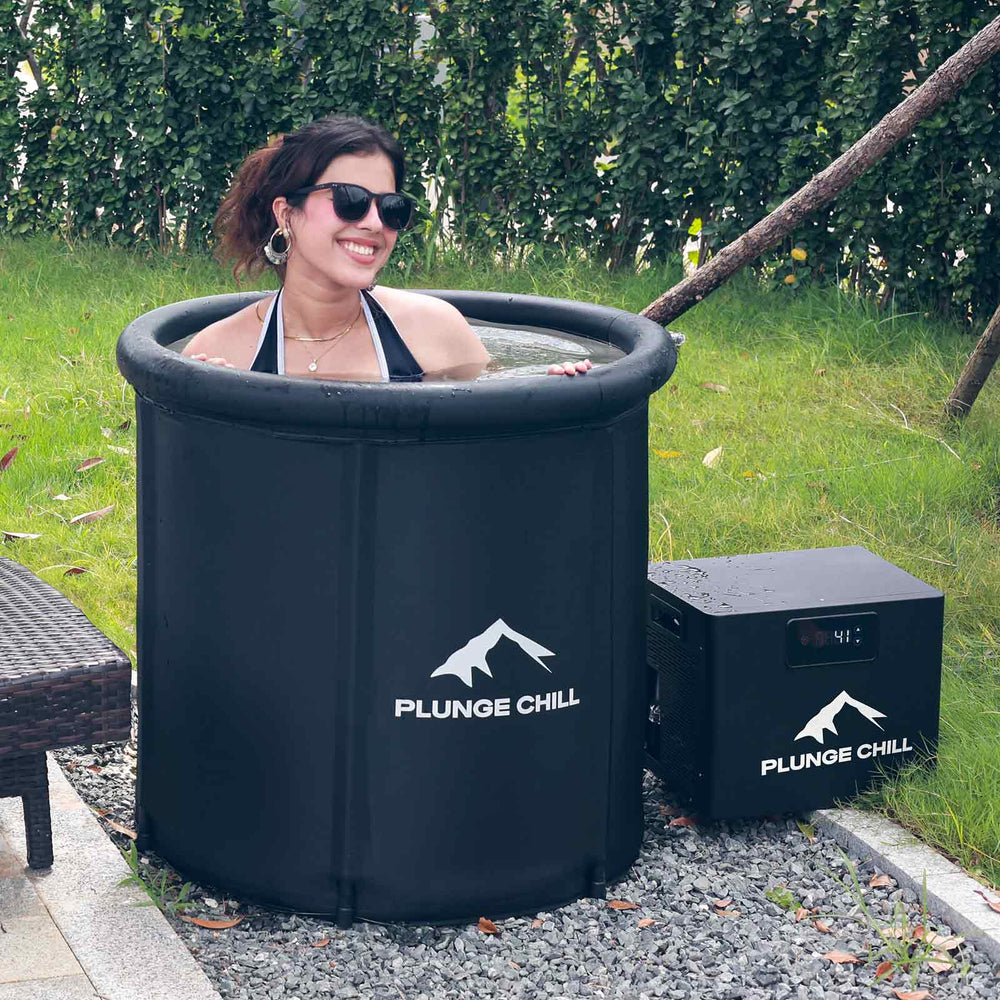
Modern cold‑plunge systems range from bathtubs with ice to pro‑grade chillers with precise control and built‑in sanitation. Campus programs are already partnering with manufacturers to bring pro‑level hardware to athletes. Benedictine University Mesa’s initiative with Plunge Chill underscores why teams like these systems: precise temperature control, consistent cold, proper filtration, safety features, and energy efficiency that hold up to daily use.
For home setups, Mayo Clinic Health System points out that fully featured cold‑plunge tanks can run up to about $20,000 when loaded with options. That range reflects engineering for rapid chilling, continuous filtration, ozone or UV‑C sanitation in some models, insulated lids, and weather‑resistant housings for patios or garages. At the other end, an inflatable pod or standard tub with ice can be perfectly serviceable if you’re disciplined with thermometers, ice supply, and sanitation.
Here is a concise comparison to help marathoners choose based on goals and constraints.
Option |
Best For |
Temperature Control |
Filtration/Sanitation |
Portability |
Notable Points |
Plunge Chill (pro‑grade) |
Teams, clubs, home users who want repeatable dosing |
Precise, consistent cold |
Proper filtration; built‑in safety features |
Fixed installation or heavy movable |
Energy‑efficient and durable per university program reports |
RENU Therapy tubs |
Taller runners; deep immersion |
Ready cold water from purpose‑built unit |
System‑specific; manufacturer directed |
Fixed installation |
Nearly three feet deep; useful for full lower‑body coverage |
LUMI Recovery Cold Water Pod |
Entry‑level runners |
Manual with ice; user‑controlled |
User managed |
Highly portable |
Beginner‑friendly; the brand also offers a premium Recovery PRO model |
Home plunge with chiller |
Consistent training use at home |
Many units cool to about 37°F |
Model‑dependent |
Semi‑fixed |
Coldture notes modern home systems can reach very cold set points |
Bathtub plus ice |
Trying the method before investing |
Manual; requires thermometer |
User managed |
Universally available |
Cleveland Clinic recommends cold water plus ice, keeping water no colder than about 53°F without ice for beginners |
From a coaching perspective, the more you rely on the tool, the more precise control and automatic filtration matter. If you plan to plunge once or twice a week during peak training, an inflatable pod or tub‑and‑ice approach can work well. If you are a multi‑athlete household or you prize consistency and convenience, a chiller with verified temperature stability and a filter you can maintain easily saves time and ensures dosing matches your log.
Care and Maintenance That Keep Water Safe
Clean water is a performance variable. University and clinic guidance stresses supervised access and strict sanitation checks; that same standard benefits home runners. In practice, owners rinse or replace filters regularly and schedule periodic water changes, with surface wipe‑downs to control biofilm, then follow the manufacturer’s disinfection protocol. This frequency varies widely by use and system design.
If you plunge outdoors, protect plumbing from freezing, keep the lid on when not in use to limit debris, and check that electrical outlets and GFCI protection meet code. Energy‑efficient chillers and insulated covers reduce running costs when you plunge daily during peak weeks; check the unit’s stated efficiency profile and warranty before purchase.
Overlooked Insights That Change How You Use Cold
Hydrostatic compression is a hidden advantage of water over cold‑air chambers. Immersion’s pressure assists fluid shifts and increases central blood volume and cardiac output during the bath, complementing the vasoconstriction mechanism. This is supported in sports medicine summaries on PubMed Central and helps explain why legs can feel “de‑puffed” more than after an air‑based cryo session.
Rewarming strategy can tilt outcomes toward sleep or speed. Coldture suggests letting the body rewarm naturally for roughly two hours to prolong parasympathetic rebound, while Cleveland Clinic notes that fifteen to thirty minutes of sauna can be paired after immersion. The conflict likely arises from different target outcomes and environments. If your next demand is sleep quality, slower passive rewarming may help; if you’re chilled to the bone and need to stabilize quickly, a short warm‑up is reasonable. Always avoid rapid extremes if you feel light‑headed.
Pre‑cooling helps in heat but not for lifting. Brass Monkey’s review highlights that a brief cold immersion before endurance work in warm conditions can delay overheating and extend performance, whereas cold before heavy strength or power work may blunt force. This nuance rarely appears in generic runner guides but matters in hot‑weather marathon builds.
Metabolic claims deserve caution. The Ohio State University notes cold exposure can activate brown fat and increase calorie burn. That is plausible, but the clinical significance for runners is uncertain and likely modest relative to training and nutrition.

Post‑Marathon: Cold or Hot?
Immediately after a marathon or exceptionally hard long run, cold generally outranks heat for controlling vasodilation and limiting edema. Ice Barrel summarizes evidence and expert commentary favoring cold immersion right away for readiness. After the initial cold phase, a parasympathetic rebound and subsequent vasodilation occur, which can improve circulation as you rewarm. If you prefer warm soaks for comfort later that evening, that is fine; just avoid using heat to mask an actual injury that needs medical evaluation.
Reconciling Conflicting Temperatures and Times
You will see beginners told to cap at five minutes by Cleveland Clinic, endurance practitioners allowing ten to twenty minutes as cited by The Ohio State University and On, and performance brands and therapists often landing at ten to fifteen minutes around 50–59°F as Ivy Rehab and Ice Barrel recommend. These differences probably come from divergent aims and cohorts: clinical risk management for new users, endurance athletes tolerating longer exposures, and field‑tested heuristics. For most marathoners, a well‑tolerated middle ground is best: start warmer and shorter, progress gradually, and reserve longer sessions for truly hard days when next‑day performance matters.
Product Review Notes from the Field
Teams that adopted pro‑grade systems such as Plunge Chill report that consistent temperature and clean water are as important as the cold itself for adherence across a season. Benedictine University Mesa highlights filtration and safety as non‑negotiables. Home systems that can maintain very cold set points near 37°F, as Coldture notes, are overkill for most novices but useful for short exposures in heat‑acclimation blocks or tournament turnarounds. Deep tubs like RENU’s nearly three‑foot depth solve a common complaint among taller runners who can’t get hips submerged in shallow bins. Entry‑level pods from LUMI make the barrier to testing the method low; the trade‑off is manual ice management and user‑managed sanitation.
Frequently Asked Questions
Q: Do ice baths really improve marathon performance, or do they just make me feel better? A: They reliably improve how you feel and often restore next‑day output after hard sessions by reducing soreness and swelling, as noted by Mayo Clinic Health System and Cleveland Clinic. The direct effect on long‑term performance is mixed and depends on timing. If used right after most workouts, cold can blunt adaptation; if used strategically after the hardest efforts or races, it supports training consistency.
Q: What temperature should I use, and for how long? A: Beginners often do best around 55–59°F for two to five minutes, building toward about ten minutes when appropriate. Advanced users sometimes work in the high‑40s for shorter durations. Multiple reputable sources present different ranges; choosing a conservative middle ground and progressing based on tolerance is safest.
Q: Is it safe to plunge every day during marathon training? A: Frequency depends on your goal. Daily plunges after every session may compromise long‑term gains, particularly for strength. Several sources, including The Ohio State University, recommend saving cold for the hardest runs, back‑to‑back races, or heat‑stress days. If you choose a daily practice for mood or sleep, consider moving it away from the post‑workout window.
Q: Should I plunge before running in the heat? A: Brief pre‑cooling can help on hot training days by lowering starting core temperature and delaying overheating, which is useful for long or tempo sessions in warmth. It is not advisable before heavy strength or pure sprint sessions because cold can temporarily blunt force.
Q: Do I need a professional tub, or will a bathtub with ice do? A: A bathtub with measured water and ice is sufficient to test whether cold exposure helps you. As your use increases, precise temperature control, consistent filtration, and convenience become the limiting factors. Pro‑grade and home chiller units solve those problems and may be worth it for multi‑athlete households or peak‑season use.
Q: How should I rewarm after a plunge? A: Dry off, add warm layers, and sip a warm drink. Some clinicians allow a short sauna session; others prefer passive rewarming for a longer parasympathetic effect. Choose the method that aligns with your goal and how you feel, and avoid abrupt extremes if you are dizzy or chilled.
Takeaway
Cold‑water immersion is a reliable tool for reducing soreness and restoring next‑day readiness when it matters most in a marathon build. The same properties that help you feel better tomorrow can blunt adaptation if you deploy them immediately after every workout. Periodize your plunges: go light early, get strategic in the specific phase, and use them decisively after your hardest sessions and race efforts. Keep the protocol simple, prioritize safety and sanitation, and select equipment that matches how often you will actually use it. When implemented with this intent, ice baths complement the non‑negotiables of marathon recovery—sleep, nutrition, and intelligent training—without stealing their spotlight.
References
- https://ben.edu/game-ready-ice-cold-how-plunge-chill-is-helping-redhawks-recover-smarter/
- https://news.hss.edu/do-ice-baths-work-why-most-people-can-skip-the-cold-post-workout-soak-according-to-athletic-trainers/
- https://www.mcphs.edu/news/physical-therapist-explains-why-you-should-chill-out-on-ice-baths
- https://ideaexchange.uakron.edu/cgi/viewcontent.cgi?article=3606&context=honors_research_projects
- https://www.marquette.edu/innovation/documents/arora_ice_bath_recovery.pdf
- https://sncs-prod-external.mayo.edu/hometown-health/speaking-of-health/cold-plunge-after-workouts
- https://pmc.ncbi.nlm.nih.gov/articles/PMC2938508/
- https://health.osu.edu/wellness/exercise-and-nutrition/do-ice-baths-help-workout-recovery
- https://health.clevelandclinic.org/what-to-know-about-cold-plunges
- https://www.scripps.org/news_items/7724-are-ice-baths-good-for-you