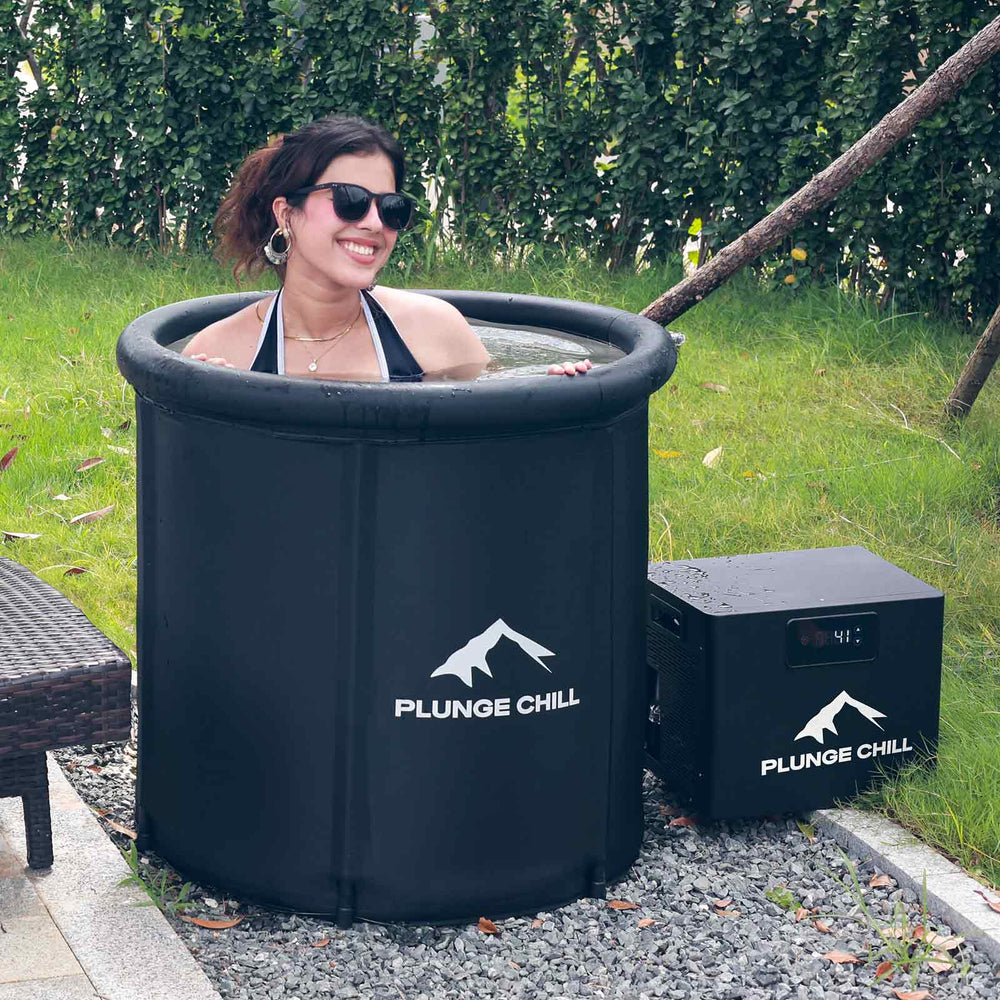
Cold plunging has broken out of pro locker rooms and wellness retreats and into everyday homes and garage gyms. As a sports rehabilitation specialist and strength coach who also tests cold exposure products, I’ve helped athletes and busy professionals build results-focused routines without purchasing a premium pod-and-chiller system. The good news is that meaningful cold exposure is possible on a modest budget. The even better news is that the most realistic benefits for mood, stress, and perceived recovery do not require exotic gear. This guide explains what cold plunging actually does according to reputable sources, outlines budget-friendly options that undercut premium pods like Ice Pod, and shares practical buying, care, and programming advice to keep you safe, consistent, and cost-conscious.
What Cold Plunging Actually Does
Cold-water immersion, often shortened to CWI, refers to deliberate exposure to cold water, typically at chest depth and in the range that feels uncomfortably cold but safe. Stanford Lifestyle Medicine describes common modes that include ice baths, cold showers, and open‑water swimming, while also noting that cryotherapy uses cold air rather than water. The immediate physiology is consistent across methods: skin cold receptors send a strong neural signal that increases heart rate and breathing, constricts peripheral blood vessels, and triggers shivering later to generate heat. Case Western Reserve University emphasizes this cold shock response, adding that it produces a brief spike in blood pressure and can provoke panic in unprepared users.
Beyond the first minute, the picture becomes more nuanced. Stanford Lifestyle Medicine summarizes several controlled experiments showing acute improvements in mood, energy, and alertness, along with decreases in cortisol that may persist for hours after immersion. A University of Oregon team observed reductions in heart rate, blood pressure, and cortisol after a single 15‑minute immersion in college students, and measured subtle changes in vascular shear stress, a force tied to vascular health during exercise. At the same time, Harvard Health and Case Western Reserve University both caution that robust health claims remain unproven, particularly for immunity and long‑term performance, and that results vary by the person, the cold dose, and the outcomes measured.
When sources disagree, the reasons usually trace to differences in protocol and population. Studies use different temperatures, ranging roughly from the low 40s to around 59°F, and different durations, from seconds to minutes. Some measure mood and stress, others examine heart rate variability or vascular mechanics; still others enroll athletes rather than general adults. Nontrivial details—like whether participants move in the water or keep still—change heat loss and may change physiological outcomes, which helps explain why one lab finds short‑term psychological gains while another sees unclear performance carryover. In short, the short‑term effects are real enough for many people to feel a difference, but the long‑term health benefits require cautious interpretation and, for now, remain a moving target.

Safety First: Who Should Not Plunge and How to Start Safely
Cold plunging is not for everyone. Harvard Health and Case Western Reserve University both highlight higher risks for people with cardiovascular disease, especially those with heart rhythm disorders such as atrial fibrillation, anyone with significant circulation problems like peripheral artery disease, and those with Raynaud’s syndrome. Case Western Reserve University adds that people taking beta blockers may adapt differently to cold and should exercise additional caution. Acute risks include arrhythmia, uncontrolled hyperventilation, panic, and drowning in both tubs and open water. These risks are highest in the first seconds as the body reacts to the cold shock.
When you do decide to start, safer progression beats bravado. Stanford Lifestyle Medicine recommends beginning well above the most extreme temperatures and building tolerance gradually. A practical on‑ramp is to use cold showers in the 50–60°F range, which mirrors typical US tap water, especially in cooler months. Limit early sessions to brief minutes and curtail movement until breathing settles. Several sources suggest keeping full‑body immersions to 10 minutes or less, and many beginners are well served by even shorter bouts. Never plunge alone. If you swim in open water, understand local temperatures, currents, and exit points, and use a spotter. Case Western Reserve University recommends pre‑cooling the back or neck and mentally rehearsing the first breath to reduce the initial shock.

The Affordable Pathways to Cold Exposure
There are many ways to achieve a compelling cold stimulus without a premium, actively chilled pod. The options below are ordered from the most accessible to the more “setup‑heavy,” with each grounded in the physiology and protocols described by Stanford Lifestyle Medicine, Harvard Health, Case Western Reserve University, and the University of Oregon.
Cold showers that cost nothing but your resolve
If you want the lowest barrier to entry, cold showers are the place to begin. Stanford Lifestyle Medicine explicitly includes cold showers as a valid form of cold exposure and reports reductions in cortisol that can last for hours after sessions as short as minutes. In practice, the shower delivers strong peripheral cooling with less risk of losing your breath underwater. I have used shower protocols with athletes on travel or during busy stretches when a dedicated tub isn’t realistic. Start with alternating warm and cold, finishing with cold, and build toward longer cold finishes. Because most US tap water runs close to 50–60°F, showers often provide a challenging stimulus without any additional ice.
An overlooked insight is that the psychological “afterglow” from a shower varies with consistency more than absolute cold. Some participants in Stanford’s summaries benefited on mood and cortisol with repeated exposure over weeks, while inconsistent, once‑in‑a‑while plunges showed little immune effect in Case Western Reserve University’s discussion. If you only have time or budget for one mode, making it regular is more important than chasing an extreme temperature.
Facial immersion when you want a fast, calm reset
For mood and arousal regulation, facial immersion in cold water has a distinct mechanism. Stanford Lifestyle Medicine explains that full‑body immersion activates the sympathetic system, while facial immersion triggers the parasympathetic “diving reflex” via vagus and trigeminal pathways. In plain terms, submerging your face in a bowl or sink of cold water can lower heart rate and produce a calming effect without the stress of a full plunge. As a coach, I use this with athletes before film sessions or when winding down in the evening. It is also the least expensive way to test your personal response to cold. A simple kitchen bowl, plenty of ice, and a towel may be enough to find out whether cold works for you without buying anything.
A practical nuance is that this method targets the nervous system differently than a full‑body plunge. It will not deliver the same whole‑body shiver response or calorie burn, but it can provide a quick change in state. For someone on a tight budget, this can be a smarter first purchase than a larger tub. I have also seen it work well alongside a shower, where a brief facial dunk at the end brings breathing under control and lowers heart rate for a smoother transition into the day or into sleep.
No‑chiller tubs using basic bins, bathtubs, or stock tanks
If you prefer full‑body immersion and have a bathtub or a utility bin, you can create a highly effective cold bath at home without a chiller. Fill with cold tap water and add ice to taste. This is the simplest form of an “ice bath,” which Stanford Lifestyle Medicine includes under the cold immersion umbrella. Many US households will be able to reach the 50–60°F range right from the faucet in cooler months, which is a reasonable target for beginners. In warmer climates or summer, supplemental ice is often required to reach the same range.
The tradeoff is maintenance. Without filtration and sanitation, water should be changed frequently. In my own testing and in clinic setups, the easiest approach has been to drain after a session, rinse residue, and let the tub dry with the lid off to limit biofilm. If you plan to keep water for several days, plan for a simple sanitizer and test strips, and expect more frequent surface cleaning. This route saves money up front and, if you have patience with setup and teardown, can yield a powerful physiological dose.
Portable insulated tubs without active cooling
Several companies make collapsible or insulated tubs designed to hold cold water for longer than a basic bin. While I will not name brands here, think of a soft, portable bathtub that packs away after use. Insulation does not chill water; it slows warming, which can be helpful if your tap water already lands in the target range. Because San Francisco in November is not Phoenix in July, performance varies greatly by region and season. In my field experience, these portable tubs are the sweet spot for renters and small spaces. They are lighter than a stock tank, easy to store, and—importantly—still far less expensive than a premium pod with an integrated chiller.
One often overlooked factor is noise. Even without an active chiller, some users add a small circulation pump or air bubbler to keep water mixed and to distribute added ice. If you live in an apartment and plan early morning sessions, consider where vibration and pump noise will travel. If you add any powered device, use a GFCI outlet and place cords well away from the water.
Overlooked insight with uncertainty: A few athletes have asked whether gentle circulation increases vascular shear stress and therefore “mimics” some exercise‑like benefits described by the University of Oregon team. The study measured small changes after immersion, but it did not test water flow, so applying that mechanism to pump‑circulated tubs is speculative. Suggested verification step: track only simple, safe markers like resting heart rate and perceived recovery over several weeks rather than assuming a vascular benefit from adding a pump.
Open‑water dips with a spotter
Community plunges and winter swims are social, memorable, and, when done safely, invigorating. Harvard Health notes that outdoor water below 70°F will feel brisk, that Boston Harbor polar plunges often occur around 42°F, and that the Great Lakes reach the 60s to upper 70s in summer. Open water delivers cold efficiently due to convection and movement. It also comes with non‑negotiable safety requirements: never swim alone, know your exit, and understand how fast cold water can sap dexterity and decision‑making. Case Western Reserve University points out that once‑a‑year plunges are unlikely to change your immune system. If open water is your only option, treat it as a periodic challenge rather than your sole plan for mood or stress regulation.
Gym day passes and community cold tubs
Before buying anything, consider using a gym’s cold tub or a community facility for several sessions. This route lets you test how your body responds without committing space at home. It also reveals your preferences for temperature, immersion depth, and breathing practice. Harvard Health reminds readers that, despite the popularity of cold tubs in gyms and hotels, cold‑water therapy is not an all‑purpose cure. If your goal is stress reduction or sleep support, a gym cold tub once or twice a week combined with daily cold showers can be a smart, low‑cost compromise.
Comparison Table: Cheap Ways to Get Cold
Option |
Up‑Front Cost |
Ongoing Cost |
Temperature Control |
Filtration/Sanitation |
Setup Difficulty |
Space Needs |
Notes |
Cold showers |
None |
None |
Low, tap‑dependent |
Not applicable |
Easiest |
None |
Good for daily consistency and acclimation. |
Facial immersion |
Very low |
Low (ice) |
Moderate for face only |
Replace water each use |
Easy |
Minimal |
Targets calm via diving reflex; quick state change. |
Basic tub or bin with ice |
Low |
Moderate (ice) |
Moderate with added ice |
Drain or sanitize frequently |
Easy to moderate |
Small to moderate |
Most flexible entry to full‑body CWI. |
Portable insulated tub |
Low to moderate |
Low to moderate |
Moderate if tap water is cold |
Sanitize or drain per schedule |
Moderate |
Small to moderate |
Good for renters; stores away when not in use. |
None |
None |
High variability |
Not applicable |
Moderate to high |
None |
Social and powerful; safety planning is essential. |
|
Gym or facility cold tub |
Low |
Low to moderate (passes) |
Consistent per facility |
Managed by facility |
Easy |
None |
Test your response before buying gear. |
Assumptions in this table vary by season, home tap temperature, and region. Qualitative cost bands compare to a premium insulated pod with integrated chiller and do not include optional add‑ons such as pumps or covers. Temperature control reflects how easily you can reach and hold target water temperatures without an active chiller.
Care, Sanitation, and Maintenance on a Budget
A budget setup trades automation for attention. If you drain after each session, a quick rinse and air‑dry with the lid off prevents most film and odors. If you keep water for days, plan to disinfect, filter, and test. Simple sanitizer approaches can work, but avoid mixing chemicals without instructions and keep everything away from children and pets. A basic cover reduces debris and heat gain, and a small skimmer keeps the surface clean. A dedicated thermometer is worth the few dollars so you train what you intend; many people overestimate how cold their water actually is.
Location matters for care. In a garage, you will likely see tap water drift toward the 50–60°F range in cooler months, which makes ice unnecessary and extends water life. In a warm apartment, water warms quickly, which generally means more ice and more frequent changes. Always plug any powered device into a GFCI outlet placed outside splash zones. During winter, protect hoses and fittings from freezing, and confirm the floor can support the load of a filled tub; water weighs about 8.3 lb per gallon, so even a modest tub becomes heavy quickly.
Buying Tips When You Want Cheaper Than Ice Pod
Price is not the only decision point when buying down from a premium pod. Start by defining whether your primary goal is a daily mood and stress routine or an occasional deeper plunge. Daily routines favor cold showers and facial immersion, then a simple tub for one or two sessions per week. Occasional plunges lean toward a portable insulated tub that you fill and break down on your schedule.
If country of origin matters, verify claims rather than assuming. Ask the seller whether the product is fully made in the United States or assembled domestically with imported components, and request warranty details in writing. The Facebook community request you saw reflects a broader trend: buyers want affordable options that are also USA‑made. In my experience, clarity on warranty coverage, replacement parts availability, and shipping timelines often matters more than the flag on the box.
Consider sanitation and drainage before you purchase. A bottom drain simplifies cleanup in tight spaces. Smooth, nonporous liners are easier to sanitize than textured surfaces. Handles and a lid that actually fits reduce spills and debris. If you add any electrical accessory, verify third‑party safety testing and plan a drip loop for cords. Finally, account for the total cost of ownership rather than only the sticker price. Ice, test strips, sanitizers, and your time are part of the real cost. A simple option that you will actually use is better than a complex setup that gathers dust.
Overlooked insight with uncertainty: Some users on beta blockers report a blunted heart‑rate response to cold, which Case Western Reserve University notes can alter adaptation. If your medication changes the acute response, you may prefer more frequent, milder cold such as showers or facial immersion instead of buying a larger tub immediately. Suggested verification step: discuss cold exposure with your prescribing physician and run a brief supervised trial before purchasing equipment.
How I Program Cold Exposure for Clients on a Budget
For stress and mood regulation, I start with a daily or near‑daily cold shower finish during regular hygiene, paired with a brief facial immersion when a quick state change is needed. Consistency matters, and Stanford Lifestyle Medicine highlights that cortisol can remain lower for up to several hours after immersion when the practice is repeated. For clients who enjoy the practice and want more, I add one or two short full‑body immersions weekly in a basic tub or portable insulated tub in the 50–60°F range, building exposure slowly while keeping total time conservative. Case Western Reserve University and Stanford both caution against pushing extremes early; safer, shorter sessions accumulate benefits without spiking risk.
For athletes in a strength phase, I avoid cold plunges immediately after heavy lifting. Harvard Health emphasizes that post‑exercise cold therapy may blunt gains in muscle strength and power, and Case Western Reserve University notes that reduced blood flow could slow protein synthesis. In my programming, cold exposure happens on rest days or several hours after training, and I monitor sleep and performance metrics for changes. A small scheduling change often preserves the mood and stress benefits while protecting adaptation.
There is a final nuance around sleep that is underappreciated. Harvard’s research summary notes that men reported better sleep after ice baths while women did not show the same effect in the reviewed data. The implication is not to chase a one‑size‑fits‑all bedtime plunge. Instead, track your own response for a few weeks and place cold earlier in the day if evening sessions leave you too alert at night.
Takeaway
You do not need an expensive, actively chilled pod to capture the most reliable benefits of cold exposure. Cold showers, facial immersion, and simple tubs deliver meaningful stimuli, especially when practiced consistently and programmed intelligently. The physiological story is compelling for short‑term mood and stress changes and remains unsettled for broader health promises. Sources from Stanford Lifestyle Medicine, Harvard Health, Case Western Reserve University, and the University of Oregon agree on safety guardrails and disagree on long‑term outcomes for reasons that mostly reflect protocol and population differences. If you set up a budget‑friendly system you will actually use, mind sanitation, and respect the cold shock, you can build a sustainable routine that is far cheaper than a premium pod and far more valuable than an unused piece of equipment.
FAQ
Can a cold shower replace a plunge for most benefits?
For many people seeking mood and stress relief, yes. Stanford Lifestyle Medicine includes cold showers within legitimate cold‑exposure practices and reports acute reductions in cortisol and improved affect across multiple protocols. Showers are also safer for beginners because you maintain airway control. If your goals include the whole‑body shiver response or you simply prefer immersion, a basic tub can be layered on later, but do not underestimate what a cold shower done consistently can deliver.
Is it safe to cold plunge if I have a heart condition?
Cold plunging can be hazardous for people with cardiovascular disease, especially those with arrhythmias, and for individuals with poor circulation or Raynaud’s syndrome. Harvard Health and Case Western Reserve University both urge caution or avoidance for these groups. If you are considering any cold exposure with a cardiac history, talk to your cardiologist first, start with milder options such as brief cool showers if cleared, and never train alone.
When should I schedule cold exposure around workouts?
If strength or power gains are a priority, avoid plunging right after lifting sessions. Harvard Health notes that post‑exercise cold therapy may blunt increases in muscle strength and power, and Case Western Reserve University suggests reduced blood flow could slow protein synthesis that supports adaptation. Place cold exposure on rest days or later in the day, well separated from training, and evaluate how you feel and perform before locking in your schedule.
Do I need a chiller to get water cold enough?
In many US homes, especially during cooler months, tap water often reaches the 50–60°F range that Stanford Lifestyle Medicine lists for common cold‑exposure protocols. That means you can often skip a chiller for your first months and add ice only in warmer seasons or climates. Portable insulated tubs slow heat gain and can stretch time between refills. A simple thermometer is essential so you work with facts rather than guesses.
Will a once‑a‑year polar plunge help my immune system?
Probably not in a meaningful or lasting way. Case Western Reserve University notes that infrequent plunges show little immune effect. Most reported benefits come from repeated, consistent practice. If you enjoy the community event, go for the experience and plan a regular at‑home routine if your goal is mood or stress regulation.
Which affordable option should I pick first?
Start with the easiest habit you can maintain. Cold showers require no equipment, teach breathing control, and quickly reveal how your body responds. Add facial immersion when you want a calm, quick reset. If you love the practice, a portable insulated tub or a bathtub‑plus‑ice setup is the next logical step for full‑body immersion. Test a gym cold tub before buying anything bulky, and choose the option that fits your space, schedule, and tolerance for basic sanitation tasks.
References
- https://case.edu/news/science-behind-ice-baths-and-polar-plunges-are-they-truly-beneficial
- https://www.health.harvard.edu/heart-health/cold-plunges-healthy-or-harmful-for-your-heart
- https://www.rutgers.edu/news/what-are-benefits-cold-plunge-trend
- https://lifestylemedicine.stanford.edu/jumping-into-the-ice-bath-trend-mental-health-benefits-of-cold-water-immersion/
- https://news.uoregon.edu/content/cold-plunging-might-help-heart-health-new-research-suggests
- https://newsroom.uw.edu/video-library/diving-into-the-health-benefits-of-a-cold-plunge
- https://sncs-prod-external.mayo.edu/hometown-health/speaking-of-health/cold-plunge-after-workouts
- https://blogs.bcm.edu/2024/02/08/health-benefits-concerns-when-taking-the-polar-plunge/
- https://healthcare.utah.edu/the-scope/mens-health/all/2024/04/171-cold-hard-facts-about-cold-plunging
- https://desertplunge.com/?srsltid=AfmBOoqgGNR7IZ_ZLSjROIEoX__xGs8NY-AbxCC_fxsNlbEsy1hy_HJa