Cold plunges are having a moment. Many of the tactical athletes, strength clients, and endurance competitors I work with arrive in the gym already quoting the Spartans when they talk about toughness and recovery. The question they usually ask is simple: did Spartan warriors actually use cold water the way modern athletes use cold plunges, and if so, what can we learn from them without sabotaging our training adaptations?
Using the best historical evidence we have on the Spartan agoge and broader Greek cold-water culture, and combining it with current sports science on cold water immersion, we can separate myth from reality and translate what matters into practical protocols for today’s athletes and cold plunge users.
Sparta, Cold, And The Warrior Ideal
To understand Spartan cold exposure, we have to start with what made Spartans different. The agoge was the state-run education and training system required for full Spartan citizen status. Boys of the Spartiate class entered at about age seven and remained under its influence until around age thirty. According to classical sources summarized in modern scholarship, the agoge was deliberately harsh, sometimes fatal, and focused more on molding compliant, self-sacrificing soldiers than on teaching technical combat skills.
Training was organized into age groups: younger boys, adolescents, and young men. Within those groups, boys lived in packs, usually sleeping together under the supervision of an older youth and an official known as the paidonomos, essentially a “boy-herder.” This structure ensured that from childhood onward, Spartans were immersed in a culture where the needs of the collective outweighed individual comfort.
The physical environment of training was itself a tool. Boys went barefoot, received only a single cloak each year from around age twelve, and slept on beds made of reeds they had to cut by hand from the river. They were routinely underfed and encouraged to steal food to survive, but they were severely beaten if caught. Ritual beatings and painful public ordeals were part of religious festivals and initiation rites. Completing the agoge was a prerequisite for becoming a full citizen and joining the communal messes that anchored Spartan military life.
From a modern performance and rehabilitation standpoint, this system used three levers that matter for cold training: long-term environmental hardship, controlled deprivation, and repeated emotional stress under supervision. While the Spartans did not understand neurophysiology or inflammation the way we do, they built a culture around tolerating discomfort that has direct parallels to structured cold exposure protocols today.
A concrete example is the practice of issuing only one cloak per year and requiring boys to sleep on reeds from the Eurotas River. That combination meant months of cool, damp nights with minimal insulation and no boots. Today, we might use short, measured plunges in 50–59°F water to achieve some of the same cold-stress adaptation with far less risk than chronic exposure and sleep deprivation.

The Agoge: Hardening The Body Through Environmental Stress
The agoge’s primary purpose, as several historians argue, was to prepare boys’ bodies for war and to instill a collective Spartan identity. Physical training included running, wrestling, hunting, choral dancing, and games that were extremely rough by modern standards. One documented contest placed two teams of boys on a small island and required each side to drive the other into the surrounding water using pushing, kicking, biting, and gouging. Success meant remaining on dry land; failure meant being forced into the water in the middle of a violent scrum.
Children went barefoot to toughen their feet and improve agility. From early adolescence they received only one cloak per year, forcing them to live with year-round exposure to cold and heat. They slept outdoors or in minimally sheltered barracks on reed beds pulled from the river. Food was intentionally scarce. Boys were expected to steal food for themselves and for their older leaders; those who were caught were whipped. Public rituals required them to endure whippings while trying to steal cheeses from a temple altar, with onlookers judging their courage and self-control.
From a sports rehabilitation and strength coaching lens, the agoge put continuous low-level stress on the musculoskeletal and nervous systems. Barefoot living, minimal clothing, and exposure to cold air and cold water forced constant thermoregulation and likely improved balance, proprioception, and joint robustness. However, the cost in terms of overuse injuries, growth disturbance, and long-term health would not meet any modern ethical or medical standard.
Think about one typical day for a fourteen-year-old in that system. He might wake after a cold, damp night on a reed bed, perform morning drills barefoot on uneven ground, wrestle and run, then participate in a violent game that ends with many participants being pushed into cold river water while fatigued and bruised. There is no evidence of dedicated recovery sessions, medical screens, or structured rewarming. The Spartan solution to soreness and injury was usually more discipline, not less. When modern coaches borrow inspiration from this culture, they need to import the resilience, not the neglect.

Cold Water In The Wider Greek World And Spartan Culture
Direct descriptions of Spartans using cold water as a dedicated recovery tool are rare. Most of what we know about cold water bathing in antiquity comes from broader Greek and Roman contexts. Ancient Greek physicians, especially Hippocrates, documented the use of cold water for medicinal purposes and pain relief. His work on air, water, and places includes statements that water can “cure everything,” and later writers credit him as an early champion of what we now call cryotherapy.
Greek and Roman bath complexes used sequences of warm, hot, and cold rooms. The cold plunge pool, or frigidarium, capped this sequence and was believed to improve circulation, reduce inflammation, and restore vitality. Classical sources also describe athletes in ancient Greece and Rome using cold water immersion to relieve pain and muscle fatigue after intense exercise, especially around the Olympic Games.
Modern historians of cold water therapy and ice baths point out that cold-water immersion appears in written records as far back as an ancient Egyptian surgical papyrus and is repeated through Greek, Roman, and later European medical traditions. A long line of physicians, from Galen through early modern figures like James Currie and John Floyer, studied or prescribed cold baths for fever, rheumatism, and other chronic ailments. Later hydropathy movements in Europe and North America turned cold-water treatment into a fashionable medical and wellness practice, often in spa-like settings.
Modern applied writing on cold exposure training for tactical athletes explicitly cites “Spartan cold stream bathing” alongside Japanese samurai rituals as part of the historical lineage for deliberate cold training. Coupled with what we know about the agoge’s emphasis on environmental hardship, it is reasonable to see Spartan culture as one branch of a broader Greek tradition that used cold water and cold air exposure to harden bodies and shape social identity, even though we lack details like exact water temperatures, immersion durations, or formal protocols.
As a coach, I treat this history as directional rather than prescriptive. Spartans almost certainly bathed in cold rivers and streams, many of their games pushed boys into cold water, and they lived in conditions that kept them cold and underdressed. Greek physicians around them understood that cold water relieved pain and fatigue. What we do not have is a Spartan coach’s logbook specifying “ten minutes in the river at sunrise” or anything similar. That gap is where modern physiology comes in.
What Cold Water Does To The Body: Modern Physiology
Cryotherapy research over the last several decades gives us a clear picture of how cold water immersion affects the human body. Several lines of evidence from sports science, cardiology, and pain research converge on the same core mechanisms.
Cold water immersion pulls heat out of the body and lowers skin and muscle temperatures. Controlled laboratory work has shown that whole-body immersion at cold but safe temperatures can reduce muscle temperature by several degrees and cut vascular conductance in the limbs by roughly a quarter, meaning less blood flowing through the cooled tissues. Lower tissue temperature slows metabolism in the short term, reduces oxygen demand, and alters inflammatory signaling.
Nerves slow down too. Studies of ice application and cold water immersion show that reducing skin temperature into the low 50s°F range can significantly slow sensory nerve conduction. That slowing is a big part of why cold feels numbing. It produces an analgesic effect that athletes and clinicians have exploited for decades. This same mechanism underpins the widespread use of ice in acute injury protocols, even though recent reviews have begun to question whether routine, aggressive icing in the very early phase of soft-tissue injury is always beneficial.
Cardiovascular research using cold pressor tests, where a hand is immersed in very cold water for short periods, has mapped the body’s reflexive responses in detail. Cold shock triggers sympathetic activation, with rapid increases in heart rate and blood pressure. At the same time, when immersion involves the face or large parts of the body, a diving-type reflex can activate the parasympathetic system. When these two arms of the nervous system fire together, they can produce what researchers describe as autonomic conflict, which in extreme cases can provoke arrhythmias in susceptible individuals. This is one reason why medically supervised screening and conservative protocols are critical for people with cardiovascular disease who want to experiment with cold plunges.
For athletes, systematic reviews and meta-analyses published in peer-reviewed outlets and summarized by groups like the American College of Sports Medicine, Sports Medicine, and PubMed Central suggest that cold water immersion can meaningfully reduce delayed-onset muscle soreness for up to about seventy-two hours after intense exercise. Typical protocols involve immersing the body in water around 50–59°F for about ten to fifteen minutes, or using a similar “dose” of cold exposure like eleven minutes at around 50°F. Some work has compared immediate immersion with delayed immersion and found that immediate post-exercise cold tends to have stronger acute recovery effects.
The picture is more nuanced for performance. Cold water immersion consistently lowers perceived soreness and can help maintain functional capacity across back-to-back sessions, especially for endurance and high-intensity interval work. However, when used very frequently right after strength training, several controlled studies over weeks have found that cold immersion can blunt strength and muscle hypertrophy gains compared with active recovery. The likely reason is that blunting inflammation and reducing muscle temperature during the early remodeling window dampens some of the cellular signals that drive adaptation.
On the psychological side, deliberate cold exposure increases catecholamines such as norepinephrine, which help regulate inflammation and pain and are linked to attention and mood. Practitioners working with tactical athletes, including special operations forces and professional contact-sport athletes, highlight how regular cold exposure functions as a low-tech mental training modality: it teaches individuals to regulate breathing and self-talk while under discomfort that mimics some aspects of combat or competition stress. Other authors have proposed that adapted cold showers may have a role as a low-cost supportive measure for mood disorders, though that remains an area of emerging research rather than established clinical practice.
When I put modern athletes into cold plunges at the end of a hard tournament day, these mechanisms are what I am exploiting. The goal is to borrow the analgesia and rapid reduction in soreness that Spartan warriors likely discovered through experience in cold rivers, but to do so with precise temperatures, defined durations, supervision, and an eye on the type of adaptation we want from the preceding training block.
Cold Water As Training Stress Versus Recovery Tool
Spartans used cold primarily as an all-day, every-day environmental stressor. In modern programming, cold water can act either as an additional training stress or as a recovery modality, depending on how and when we use it.
As a training stress, cold exposure primarily targets the nervous system and psychological tolerance. Modern protocols that combine short cold plunges with breathwork mirror the mental demands of Spartan ordeals. For example, tactical athletes today often use morning immersions of about five to ten minutes in water around 50–59°F, paired with controlled breathing. Practitioners emphasize that this improves stress resilience, heart rate variability, and the ability to stay composed under sympathetic arousal. Modern commentary traces this practice back to Spartan cold stream bathing and Japanese samurai rituals, not because the protocols match, but because the underlying philosophy of deliberate hardship is similar.
As a recovery tool, cold water immersion and contrast water therapy have clearer quantitative backing. Reviews of water immersion recovery in athletes show that cold water alone can reduce soreness and modestly improve performance retention, while alternating hot and cold water often produces slightly better results across strength, endurance, and work capacity measures. Summaries from performance-focused organizations report that cold water immersion around 50–59°F for roughly fourteen to fifteen minutes cuts soreness by about twenty to thirty percent within twenty-four hours after demanding work. Contrast water therapy, using short cycles of cold and hot immersion over about twelve to fifteen minutes, tends to produce even better maintenance of sprint and power performance over the next one to two days.
The effect depends heavily on context. After long endurance or high-intensity interval sessions, cold immersion or contrast therapy can help athletes hit target splits or output again the next day. After hypertrophy-focused strength work, the same protocols can slightly impair long-term strength and size gains if used chronically. That trade-off is exactly what a Spartan did not worry about; they trained for durable warfighting, not a bigger squat. A modern powerlifter or physique athlete has to weigh the gains in short-term comfort against the possibility of reducing training adaptations over months.
A simple way I explain this to athletes is to treat cold water like a tool for shifting the training stress-recovery balance on a given day. If your priority is to survive a multi-day tournament, field exercise, or back-to-back competition schedule, borrowing from Spartan-style hardness and using cold for acute recovery makes sense. If your priority is to maximize muscle growth or strength over a long off-season, you should use cold more sparingly and time it away from your heaviest lifting sessions.

Designing A Spartan-Inspired Cold Plunge Protocol Today
Because we do not have a Spartan coach’s notebook, any “Spartan protocol” today is necessarily inspired rather than literal. The right way to use this history is to let it inform our intent, then anchor our actual practice in modern data and safety standards.
Temperatures, Durations, And Timing
Across multiple high-quality reviews and position statements, there is a remarkable convergence in recommended cold-water doses for recovery. Meta-analyses of cold water immersion suggest that immersions of about ten to fifteen minutes in water between roughly 50 and 59°F are effective for reducing post-exercise soreness and supporting functional recovery. Sports medicine guides and hydrotherapy providers echo that range, often recommending shorter immersions of about five to ten minutes at similar temperatures for general athletic use, and even shorter bouts of around two to five minutes when athletes are just beginning or when the goal is primarily mental training.
Some practical guides for tactical and military training programs extend that range by offering two five-minute immersions at about 50°F separated by a brief air break as an alternative to a single ten to fifteen minute bout. Research compiled by performance-focused groups like Mountain Tactical Strength & Conditioning indicates that contrast water therapy often uses one minute in cold water around 50°F followed by one to two minutes in hot water near typical spa temperatures, repeated four or five times, for a total of roughly twelve to fifteen minutes.
The timing relative to training is just as important as the dose. Overviews from the American College of Sports Medicine and cold exposure guides for tactical athletes converge on three principles. First, when rapid recovery between events is the priority, cold water immersion or contrast therapy works best when used soon after the session, usually within the first couple of hours. Second, when strength and muscle growth are the primary goals, it is safer to push cold exposure away from the immediate post-lifting window, often by four to six hours or to separate it to non-lifting days. Third, using cold immersion early in the day can support alertness and mood via catecholamine release, while very late-evening plunges may interfere with sleep for some people.
A concrete example illustrates how this plays out. Imagine a modern “Spartan” week for a rugby player with heavy field work Tuesday and Thursday, gym lifts on Monday and Wednesday, and a match on Saturday. On the Tuesday and Thursday field days, cold water immersion of about ten to fifteen minutes at 50–59°F within an hour of training could reduce soreness and help maintain sprint speed for the next day’s practice. On the Monday and Wednesday lifting days, the same athlete would either skip the plunge entirely or move a shorter two to five minute immersion at similar temperatures to the next morning, when the goal is mental sharpness rather than direct muscle recovery.
Equipment Choices: From Mountain Streams To Modern Plunge Tubs
Spartan boys used rivers, streams, and whatever the local environment offered. Modern athletes have a wider equipment spectrum, from improvised barrels to dedicated plunge systems and integrated hydrotherapy pools.
At the simplest end, many people start with home bathtubs filled with cold tap water and bags of ice, or with stock tanks and barrels. Articles aimed at the general public describe creative setups like converted chest freezers or wheelie bins, but they also highlight serious hygiene and safety concerns. Static tubs without filtration or chemical treatment can become breeding grounds for bacteria. Some improvised options, such as chest freezers filled with water, are not designed to hold both water and a human and can pose electrical and structural risks.
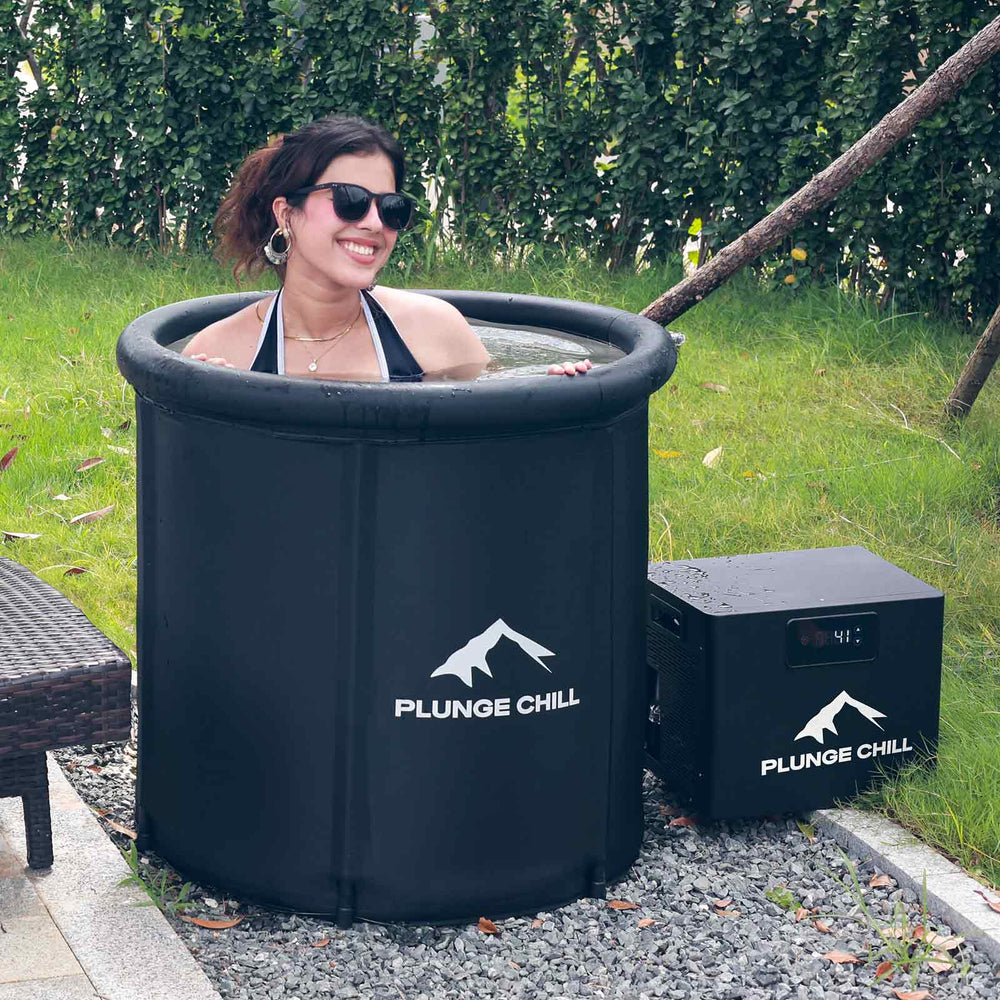
Structured equipment guides aimed at facilities and tactical settings emphasize the advantages of purpose-built cold plunge systems. These units maintain water around 50°F using dedicated chillers, have integrated filtration and disinfection systems, and are designed with non-slip surfaces and safe entry and exit. Some hydrotherapy manufacturers describe compact polar plunge pools used by professional teams such as the Detroit Lions and Ottawa Senators, sized to fit one or several athletes and equipped with jets for added hydrostatic and massage effects. At a much higher cost, there are also systems designed for military installations and professional training centers that offer precise temperature control, integrated filtration, and robust warranties.
When selecting equipment for Spartan-inspired cold training, I prioritize four factors. First is temperature accuracy. A thermometer in the water is non-negotiable; perceived cold is not a reliable guide. Second is hygiene, which means either frequent water changes or proper filtration and water treatment. Third is safety of entry and exit, especially when athletes are fatigued, light-headed, or stepping out into cold air. Fourth is context: in a small apartment, a compact, upright barrel or tub that can be drained easily is more realistic than a large permanent pool.
A simple calculation can help you size your system. If you know your tub holds about one hundred gallons and you are adding ice repeatedly to drop tap water temperature from around 68°F to 50°F, you are asking your ice to remove enough heat to pull the water down by eighteen degrees. Each pound of ice absorbs a fixed amount of heat when it melts, so larger volumes require proportionately more ice. Dedicated chillers move that cooling load off your freezer and onto a compressor designed for the job, which is part of why commercial systems cost more but offer more consistent temperatures.

Pros, Cons, And Who Should Avoid Spartan-Style Cold Exposure
Spartan culture treated health, comfort, and even survival as subordinate to military performance and social conformity. Modern athletes and coaches must be more discriminating. Cold water immersion has genuine benefits but also clear limitations and risks.
On the benefit side, there is strong evidence that moderate cold water immersion protocols reduce post-exercise soreness and improve perceived recovery, particularly for whole-body endurance and high-intensity work. Cold can acutely relieve pain through nerve conduction slowing and reduce swelling via vasoconstriction and hydrostatic effects. There is also promising evidence for mental benefits, including improved mood, reduced anxiety, and enhanced alertness and focus, tied to catecholamine and endorphin responses. Regular cold exposure, when approached intelligently, appears to build psychological resilience and may improve markers of autonomic balance like heart rate variability.
Against those benefits, several modern critiques echo what a cautious physician looking at Sparta might have said. Overusing cold, particularly immediately after resistance training, can blunt the very inflammatory and cellular processes that drive strength and hypertrophy. Historical reviews of cryotherapy note that enthusiasm for ice and cold baths has often outpaced the evidence, with some authors now recommending reducing or eliminating routine icing in the very first phase after soft-tissue injury. Case reports and physiological studies also underscore that cold exposure is not benign for everyone. People with significant cardiovascular disease, uncontrolled hypertension, Raynaud’s disease, prior cold injuries, cryoglobulinemia, autonomic or sensory neuropathies, and some endocrine disorders are at higher risk from cold immersion.
Safety guidance from sports medicine and tactical training sources converges on several practical rules. Cold water immersion carries risks of cold shock, hypothermia, and loss of consciousness. No one should plunge alone. Screen for medical contraindications. Enter water gradually, especially on first attempts, and keep sessions well under fifteen minutes at typical recovery temperatures. Have warm clothing and a safe, dry area within reach for rewarming. Avoid alcohol or sedating substances around cold exposure. In cold natural waters, additional hazards such as currents, entanglement, and unseen debris make controlled containers or pools a safer option in most cases.
When I translate all of this into coaching advice, I never recommend trying to “live like a Spartan.” Instead, I take their willingness to train in harsh conditions as an inspiration, then layer modern evidence and safety on top. The goal is to use cold exposure to enhance performance, resilience, and health over decades, not to prove how much discomfort an athlete can tolerate in a single session.
Brief FAQ
Does cold water training actually make you tougher, or is it just recovery?
Cold water immersion clearly supports recovery from certain types of training, especially endurance and repeated high-intensity efforts, when used in doses and timings backed by meta-analyses and practice-based summaries. Toughness is harder to quantify, but tactical coaches and sports scientists note that deliberate cold exposure acts as a form of hormesis: a controlled stress that teaches the nervous system and psyche to stay organized under discomfort. Historical references to Spartan cold stream bathing and modern data on catecholamine release, mood, and heart rate variability support the idea that regular, structured cold exposure can cultivate resilience if it is integrated carefully into a broader training and recovery plan.
How often should an athlete use a cold plunge if they care about strength and muscle?
The key is to match cold exposure to your training phase and goals. If you are in a strength or hypertrophy block, use cold plunges sparingly and time them away from heavy sessions, often by four to six hours or on non-lifting days. This respects evidence that frequent, immediate post-lift immersion can modestly reduce long-term strength and size gains. If you are in a competition phase with dense scheduling, you can prioritize cold immersion or contrast water therapy immediately after events to protect short-term performance, accepting a small potential cost in long-term adaptation. That trade-off is exactly what a Spartan would have made instinctively; modern athletes should make it consciously.
Is it better to copy ancient practices or modern protocols?
For cold exposure, modern protocols are the safer choice. Ancient practices, including Spartan routines, were built in very different medical, ethical, and cultural contexts. Cold rivers, minimal clothing, and chronic food scarcity shaped those warriors, but they also likely produced preventable injuries and shortened lifespans. Modern cold water immersion protocols synthesize centuries of empirical use with decades of mechanistic research. When you sit in a tub at a measured 50–59°F for a defined duration under supervision, you are honoring the spirit of Spartan training—embracing discomfort in service of performance—while applying what Hippocrates, Galen, twentieth-century physiologists, and contemporary sports scientists have collectively learned about how cold affects the human body.
In my experience, that combination of historical respect and scientific rigor is what serves today’s athletes best. Cold water training can absolutely be a powerful part of a modern “Spartan” regimen, provided it is used intelligently, aligned with your goals, and supported by the fundamentals of smart programming, sound nutrition, and adequate sleep.
References
- https://www.academia.edu/6286370/History_J_Ducat_Spartan_Education_Youth_and_Society_in_the_Classical_Period_Trans_E_Stafford_P_J_Shaw_A_Powell_Swansea_Classical_Press_of_Wales_2006_Pp_xvii_362_50_9781905125074
- https://digitalcommons.uri.edu/cgi/viewcontent.cgi?article=1108&context=srhonorsprog
- https://en.wikipedia.org/wiki/Agoge
- https://pmc.ncbi.nlm.nih.gov/articles/PMC9012715/
- https://prodigy.ucmerced.edu/book-search/bmnkCC/0OK018/what_was__the__role__of-education_in__spartan_society.pdf
- https://admisiones.unicah.edu/scholarship/ReX3Nc/1OK031/education_of_ancient-sparta.pdf
- https://online.ucpress.edu/ca/article-pdf/31/2/193/81048/ca_2012_31_2_193.pdf
- https://thechallenge.org/ancient-roots-of-cold-exposure-and-ice-baths
- https://acsm.org/cold-water-immersion-friend-froze/
- https://bathmedicalmuseum.org/cold-water-bathing-in-bath-a-public-health-perspective/