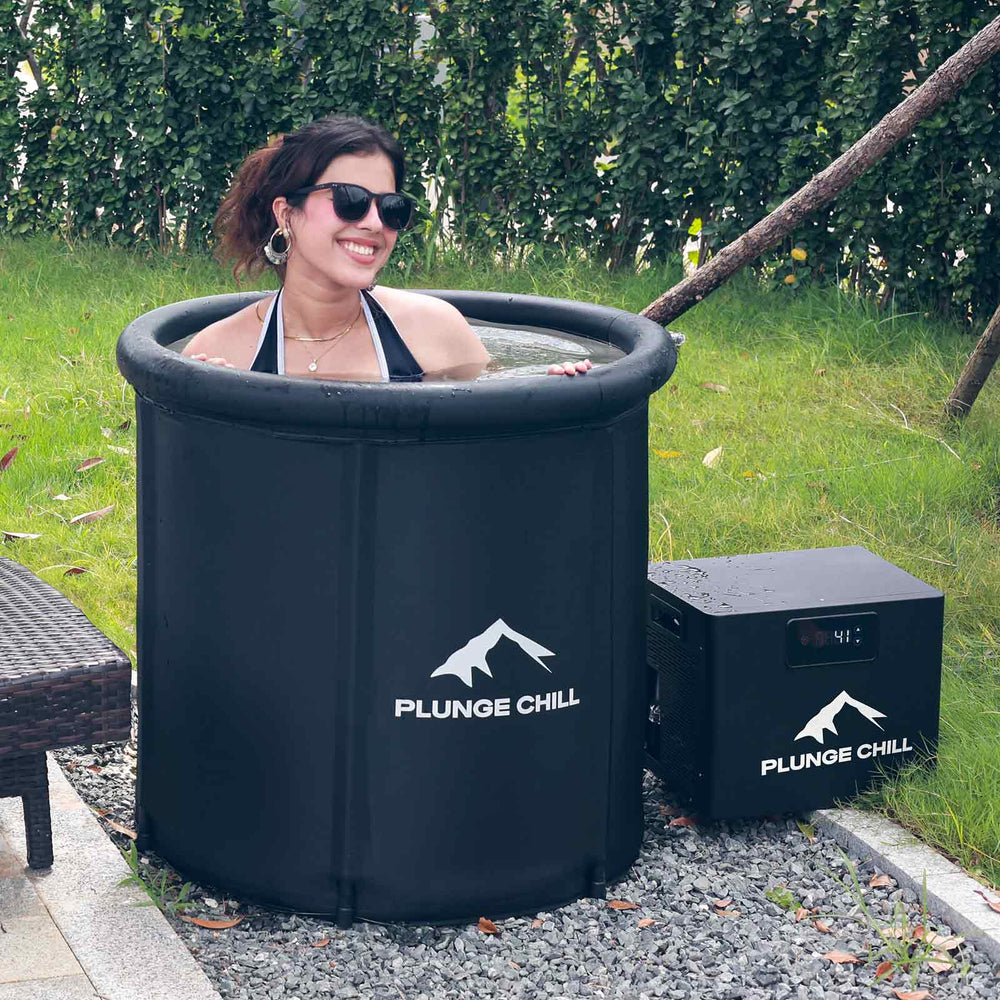
As a sports rehabilitation specialist and strength coach who also tests cold plunge products, I use morning cold exposure as a simple, controllable stressor to sharpen alertness, preserve training quality, and manage recovery week to week. The evidence is not absolute—much of it is preliminary or context‑dependent—but there is enough converging guidance from clinical sources and human performance labs to construct a safe, practical morning routine that aligns with daily goals.
What A Morning Cold Plunge Is—and Why Timing Matters
Cold water immersion is deliberate, brief submersion in cold water to provoke protective cardiovascular, neuroendocrine, and perceptual responses. Morning plunging leverages natural circadian physiology: core body temperature is lower after waking and cortisol naturally peaks early, which many athletes exploit to consolidate daytime alertness and set a consistent rhythm. Coaching resources emphasize that timing materially shapes outcomes. Morning sessions are typically used for energy and focus, while later‑day sessions are chosen for cooling, perceived recovery, and wind‑down (Arsenal Health; Plunsana). Clinical sources consistently stress safety boundaries and individualized dosing rather than a single ideal protocol (Cleveland Clinic; Mayo Clinic Health System; Harvard Health).
Neurochemically, cold exposure can acutely raise catecholamines that support focus and perceived energy. Hospital sources report large increases in noradrenaline and dopamine after cold exposure, linked to sharper mood and motivation, while noting that mechanisms and durability remain under investigation (UF Health Jacksonville). A recent university study also found post‑immersion reductions in heart rate, blood pressure, cortisol, and negative mood in young adults, suggesting plausible cardiovascular and psychological benefits from brief cold immersion (University of Oregon; Journal of Thermal Biology).
Evidence Snapshot: Benefits, Limits, and Disagreements
Across medical guidance, a consistent theme emerges: treat cold exposure as an adjunct, keep sessions short, and individualize. Cleveland Clinic describes cold immersion as a brief dip for recovery with suggested beginner temperatures around 50–59°F and starting durations of 1–2 minutes, noting that many stick near 3 minutes and that beginners should not exceed about 5 minutes. Harvard Health echoes a conservative approach, encouraging 10–30 seconds at first, then building to 1–2 minutes and up to about 5 minutes when comfortable. Mayo Clinic Health System recognizes reduced soreness and improved next‑day performance but cautions that daily, post‑resistance plunges can blunt long‑term gains in muscle and strength; that source presents a wider possible range, stating that some people progress toward 5–10 minutes per session. These differences likely reflect population and risk tolerance: general‑audience hospital education tends to be more conservative, whereas sport‑oriented discussions sometimes consider broader ranges for trained, screened individuals.
Large‑scale, definitive trials are scarce. An evidence review notes promising cardiometabolic, inflammatory, and mood‑related mechanisms but emphasizes that optimal temperature and duration are still uncertain and that most studies are small, short, and often in healthy young adults (PMC review via National Library of Medicine). Public health coverage underscores the disparity between the popularity of cold plunges and the strength of the evidence; benefits are plausible but unevenly documented, while risks such as cold shock, hypothermia, and cardiac strain are better characterized (NPR; American Heart Association). Mental health claims are particularly mixed. Clinical voices caution that there is no rigorous evidence for durable depression treatment via cold exposure and encourage evidence‑based psychotherapies as first‑line care, with cold exposure optional only as an adjunct (Wexner Medical Center at Ohio State).
The practical takeaway is straightforward: cold exposure can be a useful tool if you apply it with the same rigor as your training—clear goals, basic screening, conservative dosing, and attention to trade‑offs.

Designing a Safe, Effective Morning Protocol
Temperature, Duration, and Weekly Dose
For most healthy adults starting a morning routine, aim for uncomfortably cold yet controllable water between about 50 and 59°F, verify with a thermometer, and begin with exposures as short as 1–2 minutes. Cleveland Clinic places typical sessions around 3 minutes and advises not exceeding roughly 5 minutes for many beginners. Harvard Health favors a very conservative entry—seconds at first—before building toward the 1–5 minute zone. Mayo Clinic Health System allows that some trained individuals work toward 5–10 minutes but emphasizes progressive exposure. In practice, most morning routines that target alertness rather than deep cooling remain brief. A non‑clinical framework popularized in a university lab setting suggests accumulating about 11 minutes per week across two to four sessions, scaling time down as water gets colder; this is not a medical guideline, but it can help organize training blocks while you track how you feel (Huberman Lab newsletter; UF Health Jacksonville).
When in doubt, keep morning exposures short and crisp. If you want the sensation of a stronger stimulus without lowering the temperature further, gentle limb movement in the water breaks the insulating thermal layer at the skin and increases the perceived intensity at a given temperature (Huberman Lab newsletter).
Breath and Entry
The main risks occur at entry. Cold shock causes a rapid spike in breathing and heart rate; an involuntary gasp underwater can be dangerous. Enter deliberately, keep your face clear until breathing steadies, and do not hyperventilate before or during immersion. Focus on slow inhales and controlled exhales while you settle. Avoid plunging in moving water or under ice, keep a towel and warm clothing ready, and never go outdoors alone (American Heart Association; Mayo Clinic Health System). People with cardiovascular disease, hypertension, circulatory issues, Raynaud’s, diabetes, peripheral neuropathy, cold agglutinin disease, or concern about blood pressure spikes should get medical clearance first (Cleveland Clinic; American Heart Association).
Workout Pairing and Adaptation
Cold is not neutral for training adaptations. Consistent post‑lift immersion can blunt hypertrophy and strength signaling. If you prioritize long‑term gains from resistance training, keep your morning cold plunge away from strength sessions by many hours or do it on off‑days. A practical rule is to avoid cold immersion for at least several hours after resistance work; some performance labs suggest separating by 6–8 hours or performing cold before training when your session focuses on skill or steady aerobic work rather than maximal strength (Mayo Clinic Health System; Huberman Lab newsletter). If morning is the only feasible time, pair cold with mobility, breath work, or light cardio rather than heavy lifting.
Sleep Considerations
Morning cold exposure consolidates daytime alertness and tends not to disrupt nighttime sleep when the rest of the routine is dialed in. Evening plunges can be calming for some and neutral for others, although plunging too close to bedtime risks over‑arousal in sensitive individuals. One small athlete study cited by coaching sources found that evening immersion did not impair sleep and may have improved early deep sleep; however, this finding is preliminary, with small samples and context‑specific protocols. Suggested verification: track sleep onset, efficiency, and deep sleep for two weeks with and without evening cold and keep the rest of your routine constant (Plunsana; Cleveland Clinic).
Morning vs Evening—Match Time to Goal
Goal |
Morning plunge |
Evening plunge |
Mental clarity and non‑caffeinated alertness |
Strong fit. Aligns with natural morning cortisol peak, elevates catecholamines, and sets a daytime rhythm. |
Mixed. Can still be energizing and might feel too activating near bedtime for some people. |
Recovery after hard training |
Possible if separated from resistance work by many hours; otherwise prioritize later timing. |
Good fit. Reduces perceived soreness and core temperature; avoid within about an hour of sleep if you’re sensitive. |
Circadian consistency |
Helpful for building a stable routine and anchoring wakefulness. |
Useful for cooling and relaxation if timed earlier in the evening and kept brief. |
Strength and hypertrophy goals |
Keep cold far from lifting sessions to avoid blunting gains. |
If used, separate from resistance training by many hours or reserve for endurance cycles. |
This table synthesizes guidance from hospital sources on recovery and adaptation with coach‑facing materials on timing trade‑offs (Mayo Clinic Health System; Cleveland Clinic; Arsenal Health; Plunsana).
Pros and Cons of Morning Cold Plunging
A well‑planned morning plunge offers a reliable jolt of alertness without caffeine, a perceived reduction in soreness after demanding days, and a small, controlled mental challenge that many athletes find confidence‑building. Acute reductions in heart rate and blood pressure after immersion, along with lower cortisol later, have been observed in young adults, which plausibly contributes to feeling calmer and more focused as the day unfolds (University of Oregon; Journal of Thermal Biology). Clinical and public health sources also describe short‑term improvements in perceived recovery and mood with short, cold exposures, though they emphasize that studies are small and heterogeneous (Cleveland Clinic; Harvard Health; NPR).
The trade‑offs are not trivial. Cold shock can be hazardous in open water, water extracts heat much faster than air, and underlying heart or circulation issues require clinician input first (American Heart Association). Overuse can undercut key training adaptations, especially in strength cycles, if you stack immersion after lifting too often. Evidence for durable mental health outcomes remains uncertain; clinical groups encourage evidence‑based therapies as first line for depression and anxiety, with cold exposure as an optional adjunct that should never delay appropriate care (Wexner Medical Center at Ohio State).
Equipment, Buying, and Care Tips
At the entry level, a home bathtub or a sturdy container with measured cold water is adequate. Use a basic thermometer so you know what stimulus you are applying, and aim for a temperature that feels genuinely cold yet controllable. For dedicated use, specialized plunge tanks with integrated cooling and filtration offer stability and convenience; full‑featured home units can cost as much as $20,000, and there are also community plunge centers and DIY options at a wide range of price points (Mayo Clinic Health System).
From a reviewer’s perspective, the features that matter in morning use are temperature accuracy and consistency, enough capacity to comfortably submerge to the chest without crowding, quick access for daily sessions, and straightforward sanitation. A drain that empties fully and a filter you can access without tools make weekly care far easier. If you choose a powered chiller, confirm that your electrical setup matches the manufacturer’s requirements and position the unit where noise will not disrupt your morning routine. Keep towels and warm clothing within reach for safe rewarming, and avoid placing a tub where water spills could create a slip hazard or damage floors (Mayo Clinic Health System; Cleveland Clinic). If you plunge outdoors, never do so alone and steer clear of currents and ice roofs over rivers or lakes (American Heart Association).
A practical maintenance approach is to rinse yourself quickly before entering to reduce the debris load, wipe and dry contact surfaces after the session, and follow the manufacturer’s water‑care instructions rather than improvising chemical routines. When in doubt, err toward draining, cleaning, and refilling more often rather than less. This is partly professional habit and partly risk management; morning routines are meant to remove friction, not add it.
A Coach’s Morning Routine You Can Adapt
In the teams I support, a typical morning cold protocol for healthy, screened athletes on a non‑lifting day begins with hydration and a brief mobility sequence to wake up joints and breathing. The tub is measured to a target near the upper end of the cold range for beginners, usually around the low to mid‑50s. Entry is deliberate with two or three controlled breaths before submersion to the chest. For early exposures, one to two minutes is plenty. On later weeks, we extend toward the three‑minute mark if it remains safe and tolerable. Afterward, athletes dry off, change into warm layers, and walk for a few minutes while sipping a warm drink. We record temperature, duration, perceived exertion of the cold, and any notes about sleep and soreness to see if morning cold is supporting the goals of the current training block. When the same athletes move into a heavy resistance block, we remove cold immersion from days with lifting and use it earlier in the day on skills or aerobic days, maintaining large time gaps to protect adaptations (Mayo Clinic Health System).

Three Practical Nuances Integrated Into Your Routine
Facial immersion can quickly tilt the nervous system toward calm even when full‑body cold feels too stimulating. The diving reflex activated by cold on the face increases parasympathetic tone and reduces heart rate; a short face dunk or cold splash sequence after your warm shower can be a useful first step or a daily alternative when you cannot plunge. This distinction between facial and full‑body responses is well described in clinical education from a university lifestyle medicine program (Stanford Lifestyle Medicine).
Allowing your body to reheat itself rather than rushing to very hot water can extend thermogenesis and may enhance the metabolic training effect of the cold. This approach—ending with cold and letting shivering occur—is advocated in performance‑science circles rather than medical guidelines. Suggested verification: compare how you feel and perform on mornings after self‑rewarming versus immediate hot showers for two weeks while keeping temperature and duration constant (Huberman Lab newsletter).
Some athlete reports suggest that a brief cold session in the early morning strengthens circadian anchors and improves that night’s sleep, particularly on high‑stress days. Clinical sources note that sleep benefits remain largely anecdotal. Suggested verification: track your sleep with a wearable for two to three weeks, using a consistent morning cold window on weekdays and no cold on weekends, and compare sleep continuity metrics while holding caffeine timing steady (Cleveland Clinic).

Safety, Contraindications, and Context
Sudden immersion below about 60°F can be dangerous in open water because of cold shock and rapid loss of heat; water removes body heat much faster than air, reducing coordination, strength, and decision‑making, which raises accident risk (American Heart Association). Indoors, home tubs set near 50–60°F and used briefly are relatively safer, but supervision, careful entry, and progressive exposure still matter (Mayo Clinic Health System; Cleveland Clinic). People with heart rhythm abnormalities, high blood pressure, or circulation issues should consult clinicians first, and no one should use cold to mask the pain of potential injuries such as fractures or ligament tears (Cleveland Clinic; Harvard Health).

How Morning Cold Compares With Evening Cold
Morning cold is the better tool for non‑caffeinated activation, sharpening perceived focus for desk work or light skill sessions and establishing a predictable start to the day. Evening cold is better for calming soreness and helping you feel physically cooler after late training or hot weather. If you are sensitive to arousal at night, keep evening sessions short and earlier in the evening, and avoid cold within about an hour of bedtime. If your top priority is strength and hypertrophy, bias cold to mornings on off‑days or non‑lifting days to avoid blunting adaptations (Mayo Clinic Health System; Arsenal Health).
Quick Buyer’s Bench Notes From Product Testing
Temperature control that actually matches the displayed number is the first differentiator I look for during testing; small drifts of a few degrees make a big difference in perceived intensity at short durations. Tank geometry also matters more than most people expect: enough depth to submerge the chest without curling the spine, sufficient length to relax the neck and shoulders, and a rim you can grip securely improve safety and consistency when you are a bit shocked by the cold. I favor systems with simple filter access and a drain that empties completely to reduce cleaning friction. For indoor apartments, sound level and splash management become deciding factors. On the budget side, simple setups with ice and measured tap water can work well if you verify temperature with a thermometer, train progressively, and respect the same entry and rewarming habits used with premium units (Cleveland Clinic; Mayo Clinic Health System).

Short FAQ
Should I plunge before or after my morning workout?
If your morning plan includes resistance training, avoid cold immersion right after lifting to protect strength and hypertrophy adaptations; schedule cold on a different morning, many hours away from the lift, or use it before a non‑strength session focused on skill or easy aerobic work (Mayo Clinic Health System).
What temperature and duration make sense when I’m new?
For beginners, aim for roughly 50–59°F, verify with a thermometer, and keep the first exposures near one to two minutes. If you tolerate that well, progress toward about three minutes over several sessions. Staying near the shorter end is entirely acceptable for a morning routine (Cleveland Clinic; Harvard Health).
Is a cold shower good enough on busy mornings?
Yes. Cold showers are a controllable entry point and can deliver a smaller but still meaningful stimulus. Many people finish a normal warm shower with a brief cold phase and build up gradually in both time and intensity (Harvard Health; UCLA Health).
How many weekly minutes should I target?
A popular lab‑based framework organizes about 11 total minutes per week across two to four sessions, scaling time down as the water gets colder. This is a practical planning tool rather than a clinical prescription, so prioritize how you feel and adjust based on your training block and recovery needs (Huberman Lab newsletter; UF Health Jacksonville).
What if I have a heart or circulation condition?
Consult your clinician before you begin. Cold shock can spike blood pressure and heart rate; people with cardiac disease, hypertension, or circulatory issues require individualized guidance and may be advised to avoid cold immersion altogether (American Heart Association; Cleveland Clinic).
Can cold plunging improve depression or anxiety?
Some small studies and many anecdotes describe mood benefits, but clinical groups emphasize that there is no strong evidence for lasting depression treatment from cold alone. Use evidence‑based therapies as first‑line care and consider cold exposure only as an adjunct if your clinician agrees (Wexner Medical Center at Ohio State; NPR).
Takeaway
A morning cold plunge routine can sharpen alertness, help manage soreness between demanding days, and build resilience—provided it is dosed conservatively and integrated intelligently with training. For most healthy people, verify temperature near the low to mid‑50s, keep sessions short at one to three minutes, and accumulate time across the week in line with how you feel. Protect your strength gains by separating cold from lifting, mind the basic safety rules, and remember that comfort with the stimulus grows over weeks rather than days. Clinical sources are clear on risks and careful on claims; if you pair that caution with consistent morning habits, cold immersion becomes a simple tool that helps you start strong and stay on track.
References
- https://lms-dev.api.berkeley.edu/cold-tub-therapy
- https://knightcampus.uoregon.edu/plumbing-benefits-plunging
- https://cupola.gettysburg.edu/cgi/viewcontent.cgi?article=2078&context=student_scholarship
- https://www.health.harvard.edu/staying-healthy/the-big-chill
- https://digitalcommons.liberty.edu/cgi/viewcontent.cgi?article=8439&context=doctoral
- https://wexnermedical.osu.edu/our-stories/cold-water-therapy-for-depression
- https://www.rutgers.edu/news/what-are-benefits-cold-plunge-trend
- https://lifestylemedicine.stanford.edu/jumping-into-the-ice-bath-trend-mental-health-benefits-of-cold-water-immersion/
- https://sncs-prod-external.mayo.edu/hometown-health/speaking-of-health/cold-plunge-after-workouts
- https://pmc.ncbi.nlm.nih.gov/articles/PMC11872954/