Cold plunges are everywhere in strength culture right now, from garage gyms to pro training rooms. As a sports rehabilitation specialist, strength coach, and product reviewer, I use ice baths selectively with lifters who need to feel better fast without losing sight of the long game: building muscle and strength. The evidence is nuanced. Ice reduces soreness and can restore next‑day readiness, yet frequent or poorly timed cold exposure can dampen the very molecular signals that drive hypertrophy and strength. This guide turns that nuance into a practical, evidence‑based playbook for bodybuilders.
What Cold Immersion Does to a Lifter’s Body
An ice bath rapidly cools skin and superficial muscle, triggering a cold shock response marked by a fast rise in breathing, heart rate, and blood pressure, along with peripheral vasoconstriction and shivering. Case Western Reserve University explains that blood is shunted toward vital organs while skeletal muscles contract to generate heat. This early phase peaks within the first half‑minute to a minute, which is why deliberate breathing on entry matters.
Mechanistically, cold constricts vessels, reduces local blood flow, and slows cellular metabolism. When you exit and rewarm, vessels dilate and circulation rebounds. In practice, athletes often feel less sore and more capable for the next session. However, the same constriction and dampened inflammatory signaling that reduce soreness can blunt adaptive processes if used too often or immediately after lifting. Both the Cleveland Clinic and Ohio State University note that ice baths can aid endurance recovery but may impede long‑term strength and hypertrophy if overused post‑resistance training.
A crucial physiological distinction is between acute recovery and chronic adaptation. Meta‑analyses show immediate reductions in perceived soreness and modest biochemical changes such as lower creatine kinase at about 24 hours, but they do not show consistent reductions in classic inflammatory markers and they do not translate reliably into better long‑term performance. That pattern underlies why bodybuilders should be strategic, not reflexive, about cold exposure.

The Evidence: What Helps and What Hurts
Short‑term recovery outcomes
A recent meta‑analysis comparing post‑exercise cold water immersion with passive control suggests a clear short‑term story: soreness and subjective fatigue drop immediately, and creatine kinase tends to be lower at about 24 hours. The same analysis shows no consistent change in C‑reactive protein or interleukin‑6 across studies, and several outcomes exhibit substantial between‑study heterogeneity. In other words, cold immersion reliably makes you feel better right away and may reduce certain muscle‑damage markers at the one‑day mark, but it does not consistently mute systemic inflammation or guarantee better performance beyond that window. Clinical and sports‑medicine summaries from the Cleveland Clinic, Scripps, and Mayo Clinic Health System echo the pragmatic takeaway: cold helps you turn around more quickly when you need to perform again soon.
Hypertrophy and strength interference
For lifters focused on muscle gain, the repeated message across sources is caution. Ohio State University highlights trials showing reduced long‑term gains in muscle size and strength with routine post‑lift immersion. A synthesis reported by The Output (Peloton) cites meta‑analytic evidence of small but real reductions in hypertrophy and strength when cold is paired chronically with resistance training. A commentary published through Parker University goes further in the context of injury care, arguing that suppressing inflammation can delay healing; while that paper addresses injury more than training, its physiological logic—over‑cooling can interfere with immune‑cell trafficking and remodeling—aligns with strength‑adaptation concerns. Case Western Reserve University adds that reduced blood flow can slow protein synthesis, underscoring why frequent post‑lift plunges are counterproductive for hypertrophy blocks.
Endurance versus resistance differences
Multiple summaries from The Conversation and Mayo Clinic Health System note that cold exposure appears less detrimental for aerobic adaptations compared with resistance adaptations. Practically, that means lifters can use cold more freely after cardio work or in mixed‑modality phases where short‑term freshness matters more than maximizing anabolic signaling.
Why results conflict and what to do about it
The literature disagrees on how much cold helps and when it hurts. The safest interpretation is that definitions, samples, windows, and methods vary. Temperature spans from the low 50s to the high 30s °F; durations range from 3 to 20 minutes; protocols differ by depth; some studies assess only symptoms, others include biochemical markers; and populations vary from collegiate athletes to recreational swimmers. The likely result is that immediate perceptions improve broadly, while objective performance and muscle protein signaling depend on timing, training mode, and dose. Clinical sources like Harvard Health also highlight safety factors that can bias results, from cold shock to hypothermia risk, particularly when novices plunge unacclimated.
Overlooked but Useful Nuances for Lifters
Cooling dose is not one‑size‑fits‑all. Analyses compiled by coaches and researchers for combat sports point out that body size and fatness alter cooling rates. Lower mass and lower body fat cool faster; larger or higher‑fat athletes cool more slowly and may require slightly longer or colder immersion to achieve the same tissue temperature change. This matters for bodybuilders whose mass often exceeds that of study participants; dosing should be individualized rather than copied.
Cold showers are not equivalent to immersion for deep cooling. Head‑out water immersion yields hydrostatic pressure that shifts fluid centrally and augments cardiac output without added energy cost; showers primarily cool the surface. Peer‑reviewed assessments show that showers can help perceived recovery but generally do not lower muscle temperature as effectively as immersion, which is relevant when you truly need the cooling effect.
Joint and tendon behavior can change after immersion. Reports in high‑intensity sports suggest cold can reduce ankle and joint stiffness for up to two days. That may be helpful for soreness, yet it can slow elastic and reactive movements. Bodybuilders planning heavy plyometrics, sprint work, or high‑velocity Olympic‑style lifts should avoid a deep cold plunge in the prior day or two. The probable cause is temperature‑dependent changes in tendon viscoelastic properties and neuromuscular readiness.

When to Use Ice Baths in a Bodybuilding Program
A smart integration treats cold immersion as a targeted tool, not a daily ritual. During meet week or a photo‑shoot cut where next‑day readiness outweighs long‑term anabolic signaling, a brief plunge can reduce soreness and help you hit positions cleanly. During high‑volume microcycles with back‑to‑back sessions, the same logic holds—select a conservative dose to restore function without overcooling. During hypertrophy‑focused blocks, delay cold exposure by 24 to 48 hours after heavy resistance sessions to let the inflammatory cascade do its job, as recommended by Ohio State University. After cardio‑only days, use is more flexible because aerobic pathways are less sensitive to the same interference.
There is also a case for pre‑cooling in hot environments. Some sport‑science work notes that cold water immersion before exercise can help maintain a lower core temperature and improve performance in heat. If you are lifting in a hot gym with limited ventilation, a short pre‑session cool can support output. That strategy is contextual and should not replace hydration, pacing, and heat acclimation.
Protocols That Work Without Blunting Gains
Most reputable sources converge on similar ranges. For healthy adults, water between 50 and 59°F is a practical starting point. Beginners can begin with about one to three minutes and extend gradually to five to ten minutes as tolerance improves. Harvard Health advises limiting single immersions to a maximum of fifteen minutes. The Cleveland Clinic suggests starting conservatively with very short entries and building capacity over time, with advanced users sometimes using water near 39 to 50°F. Keep in mind that colder is not inherently better; dose is about effect, not bravado.
Aiming for chest‑level immersion is typical in research and practice, though meta‑analytic moderators show little difference between umbilicus‑ and shoulder‑depth dosing for most outcomes. Frequency depends on phase. EverestLabs describes one to three sessions per week as a common pattern, while clinical sources acknowledge that daily plunging is possible but warn that daily post‑training immersions may compromise performance adaptations over time. A periodized approach—more frequent use during high‑stress competition stretches, minimal use during hypertrophy blocks—fits the physiology and the data.
The table below summarizes practical patterns for lifters.
Goal or Phase |
If You Use an Ice Bath |
Typical Dose |
Rationale |
Notes and Sources |
Back‑to‑back training days or competition |
Use immediately post‑session |
50–59°F for 5–10 minutes |
Reduces soreness and perceived fatigue; lowers CK at ~24 hours |
Meta‑analysis on CWI; Cleveland Clinic; Mayo Clinic Health System |
Hypertrophy block |
Delay cold after lifting |
Separate 24–48 hours |
Preserves inflammatory signaling and protein synthesis |
Ohio State University; Peloton synthesis |
Aerobic or conditioning days |
Use more freely post‑session |
50–59°F for 5–10 minutes |
Minimal impact on aerobic adaptations; restores next‑day readiness |
The Conversation; Mayo Clinic Health System |
Short pre‑workout cool |
50–59°F for 2–5 minutes |
Supports thermal strain management in hot conditions |
European Journal of Sport Science as reported by Peloton |
|
High‑velocity or plyometric days |
Avoid within prior 24–48 hours |
NA |
Avoids reduced joint stiffness and slowed elastic/reactive qualities |
Combat‑sport guidance and applied reports |
A Step‑by‑Step Session That Respects Adaptation
Preparation begins with screening. If you have cardiovascular disease, high blood pressure, diabetes, peripheral neuropathy, poor circulation, Raynaud’s syndrome, cold urticaria, or cold agglutinin disease, talk with a clinician first. Harvard Health and Cleveland Clinic both stress never plunging alone. Set up a thermometer, a timer, dry towels, and warm clothes, and confirm the water temperature before you enter.
Acclimate patiently. Enter slowly and expect a gasp reflex in the first half‑minute, as The Conversation summarizes. Keep your face out of the water and emphasize long, slow exhalations to control hyperventilation. Submerge to the chest if tolerated. Gentle, minimal movement in the water can maintain circulation without warming the bath rapidly; EverestLabs notes that light movement can be helpful while vigorous motion reduces cooling effectiveness.
Respect the clock. For most lifters, five to ten minutes at 50–59°F balances benefit with safety. Exiting should be deliberate to avoid slipping as numbness sets in. Rewarm gradually. Wrap in warm layers and allow fifteen to thirty minutes for normalization. Cleveland Clinic and EverestLabs recommend avoiding an immediate hot shower or sauna right after an ice bath; give your system time to stabilize. Hydrate, and, if you just trained, consider a small protein‑carb snack to support recovery.
Safety, Contraindications, and Risk Management
Cold shock is real and can include hyperventilation, spikes in heart rate and blood pressure, and in rare cases arrhythmias that can be dangerous. Case Western Reserve University and Harvard Health both emphasize that sudden immersion at or below about 60°F can provoke this reflex, particularly in unacclimated people or those on medications such as beta blockers that alter the heart’s response. Prolonged exposures raise hypothermia risk even when water is well above freezing, and frostbite can occur in very cold outdoor conditions. The Mayo Clinic Health System advises simple environmental precautions—avoid open water with currents, and keep towels and warm clothes within arm’s reach.
A coach’s rule of thumb is to stop early whenever shivering becomes uncontrollable, dizziness develops, or numbness spreads. Those signs aren’t badges of honor; they are warning lights. Finally, remember that analgesia is not recovery. If you suspect an acute muscle tear or significant joint injury, let inflammation do its short‑term work and seek clinical guidance rather than numbing pain with cold.
Buying a Cold Plunge: What Bodybuilders Should Look For
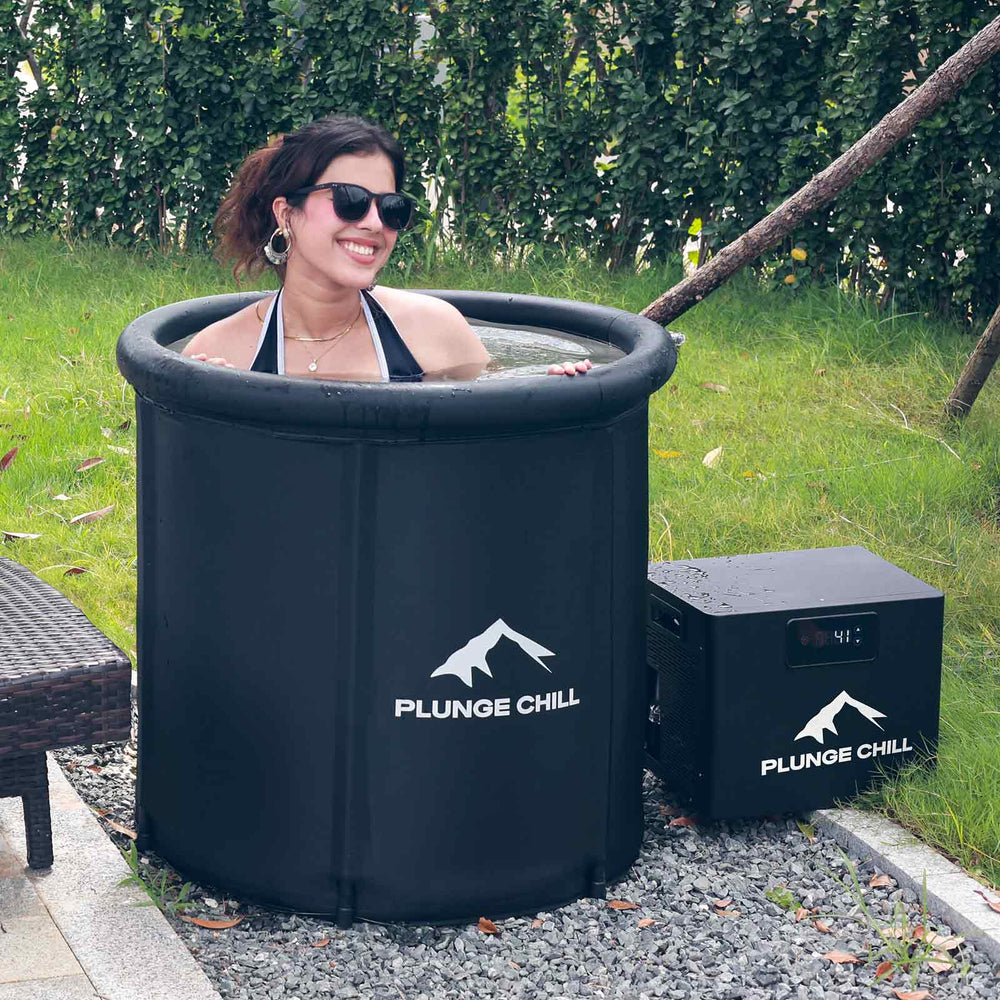
Purpose drives product selection. If you plunge once or twice a week, a sturdy bathtub setup with a reliable thermometer and bags of ice is adequate. GoodRx and EverestLabs suggest that a standard home tub typically needs about 15 to 20 lb of ice to hold 50–59°F, depending on tap water temperature. If you plunge most days, a temperature‑controlled unit saves time and delivers precision without constant ice runs. Off‑the‑shelf systems can reach as low as about 39°F and maintain between 39 and 60°F. The Mayo Clinic Health System notes that fully featured tanks can cost up to $20,000, so think realistically about your usage.
EverestLabs describes portable, ergonomic units with adjustable automatic temperature control that minimize ice use and keep dosing consistent. Plunge‑style systems prioritize temperature range and quick cooldown. For lifters, consistency is key because dose drives effects. The table below lays out practical differences.
Option |
Upfront Cost |
Ongoing Cost |
Temperature Precision |
Setup and Time |
Who It Fits |
DIY tub plus ice |
Low |
Moderate, tied to ice purchases |
Variable; depends on measurement and ambient conditions |
Fill tub, add 15–20 lb ice, verify temperature |
Occasional users, first‑time testers |
Chiller‑integrated plunge |
High to very high |
Low to moderate electricity |
High; set‑and‑hold between roughly 39–60°F |
Minimal daily setup; immediate sessions |
Frequent users, teams, recovery‑focused phases |
Cleaning and care deserve a note. Rinsing off sweat and lotions before entry will extend water life and keep filters cleaner in chiller systems. Rotating covers on when not in use reduces debris and heat load. These are common‑sense hygiene suggestions extrapolated from pool and spa care, not specific study findings.

Troubleshooting and Special Scenarios
Some lifters ask whether spacing a post‑lift plunge by several hours reduces interference. Conceptually, allowing time for the early inflammatory signaling to initiate before cooling may preserve adaptations while still offering sleep or soreness benefits from a later plunge.g., morning heart rate and subjective recovery), and consult emerging time‑course studies that track muscle protein synthesis and satellite cell activity across the day.
Another question is whether contrast therapy adds value. Reviews suggest contrast baths can reduce perceived fatigue and lactate in small studies, but parameter definitions vary widely, and high‑quality trials are limited. If you enjoy contrast, keep the cold segments short, finish cool rather than scalding hot, and assess whether it meaningfully changes how you train the next day. For most lifters, sleep, nutrition, and appropriate loading do more than any recovery modality, a perspective shared by Mayo Clinic Press.
FAQ
Q: Do ice baths kill my gains if I use them after lifting? A: They do not erase gains, but routine post‑lift plunges can blunt hypertrophy and strength over time. Ohio State University and meta‑analytic summaries cited by The Output report small but meaningful reductions when cold is paired chronically with resistance training. Save ice for when next‑day readiness matters or separate it by a day after hypertrophy sessions.
Q: How cold and how long should I go? A: For most lifters, 50 to 59°F for five to ten minutes is an effective and safe window. Beginners can start with one to three minutes. Harvard Health recommends capping exposures at fifteen minutes. The Cleveland Clinic suggests starting conservatively and progressing based on tolerance.
Q: Are cold showers good enough? A: They help with perceived recovery and are a convenient adjunct, but they do not cool muscles as deeply as immersion. Water immersion adds hydrostatic pressure that shifts fluid centrally and can augment cardiac output during recovery. Use showers when a tub or plunge is unavailable and keep expectations realistic.
Q: Should I plunge after leg day if my goal is size? A: Not if hypertrophy is the priority. Delay cold exposure 24 to 48 hours after heavy lifting to preserve inflammatory signaling and protein synthesis. Use ice on cardio days, in meet weeks, or if soreness is limiting quality movement on the platform.
Q: How much ice do I need for a home tub? A: A typical bathtub usually requires about 15 to 20 lb of ice to hold the target range when combined with cold tap water, according to GoodRx and EverestLabs. Actual needs vary with tub volume and tap temperature, so confirm with a thermometer.
Q: Do ice baths boost immunity or mood? A: Evidence for general health outcomes is sparse and mixed. The Conversation’s review found small stress and sleep improvements across limited studies, while Harvard Health and Case Western Reserve University caution that broad immune claims are unproven and often confounded by exercise or cold‑swimming habits. Use cold for recovery first and treat wellness claims as tentative.
Takeaway
For bodybuilders, an ice bath is a scalpel, not a sledgehammer. Use it to reduce soreness and protect next‑day performance during demanding stretches, pre‑cool in heat when appropriate, and give yourself permission to skip it when the training goal is pure hypertrophy. The dosage that works is modest—roughly 50 to 59°F for five to ten minutes—and the safest approach is never to plunge alone, monitor how you feel in the first minute, and rewarm gradually. Periodize your recovery just as you do your programming. If you choose to invest in a plunge, buy for consistency and convenience, not just the coldest possible number on the display.
References
Case Western Reserve University Newsroom, interview with Julian Stelzer on cold shock and systemic responses. Cleveland Clinic, guidance on temperatures, durations, and medical cautions. Ohio State University Health, discussion of mixed evidence, hypertrophy interference, and timing. Mayo Clinic Health System, practical benefits, safety, and endurance versus resistance considerations. Harvard Health, safety risks, time limits, and evidence gaps. PLOS‑indexed meta‑analysis on cold water immersion effects on soreness, CK, and performance windows. The Conversation, summary of evidence for recovery and wellness outcomes. EverestLabs, practical protocols and product features for temperature‑controlled units. GoodRx, home setup details including typical ice requirements. Parker University Journal clinical commentary on icing and healing physiology. Science for Sport, dosing by body composition and performance caveats in high‑intensity sports. Plunge product education, temperature ranges and practical setup tips. Scripps Health, clinician overview of benefits and cautions. Mayo Clinic Press, framing cryotherapy as a garnish to fundamentals like training, diet, sleep, and stress.
- https://case.edu/news/science-behind-ice-baths-and-polar-plunges-are-they-truly-beneficial
- https://digitalcommons.cedarville.edu/cgi/viewcontent.cgi?filename=1&article=1539&context=research_scholarship_symposium&type=additional
- https://www.health.harvard.edu/staying-healthy/can-ice-baths-improve-your-health
- https://www.mcphs.edu/news/physical-therapist-explains-why-you-should-chill-out-on-ice-baths
- https://journal.parker.edu/article/120141-the-efficacy-of-icing-for-injuries-and-recovery-a-clinical-commentary
- https://ideaexchange.uakron.edu/cgi/viewcontent.cgi?article=3606&context=honors_research_projects
- https://www.marquette.edu/innovation/documents/arora_ice_bath_recovery.pdf
- https://sncs-prod-external.mayo.edu/hometown-health/speaking-of-health/cold-plunge-after-workouts
- https://pmc.ncbi.nlm.nih.gov/articles/PMC2938508/
- https://health.osu.edu/wellness/exercise-and-nutrition/do-ice-baths-help-workout-recovery