


Michelle Funk, a 2-year-old little girl, fell into a cold creek near Salt Lake City, Utah, in the winter of 1986. It was 66 minutes that she was underwater. She had no heartbeat and wasn't breathing when help arrived. It was clear that she was dead.
This would have been a tragedy in any other case. But an amazing thing happened. The extreme cold that should have killed her actually kept her alive. Her brain and intestines were spared damage because it slowed her body down so much. Michelle's heart began beating again after being carefully warmed up for hours. After getting better, she went on to live a normal life.
This amazing story shows how strong our wills are to stay alive. In the same way that Michelle was saved, you feel the cold shock response the first time you take an ice bath.
If you gasp for air, feel like you can't control your breath, and your heart beats fast, that doesn't mean you're weak. That's just a primal way for your body to protect itself. How can you steer this behavior in a way that makes the most of a cold plunge?

What Exactly Is the Cold Shock Response?
The cold shock response is your body's automatic and powerful survival alarm. When you plunge into cold water, you don't have to think about it—your nervous system instantly takes over to protect you from what it perceives as a life-threatening situation. This ancient reflex unfolds in a few key ways:

You Gasp for Air
The first thing that happens is a big, uncontrollable gasp. This is your brain's instant reaction to the cold hitting your skin. It forces your lungs to take in as much air as possible, just in case you need to swim or fight to survive.
Your Heart Races
Next, your heart starts pounding and your breathing becomes fast and shallow. This is your body's "fight-or-flight" mode kicking in. It floods your system with energy hormones, like adrenaline, to prepare you for immediate action.
Blood Rushes to Your Core
At the same time, your body pulls blood away from your arms and legs and sends it to your chest to protect your vital organs, like your heart and lungs. This makes your heart work much harder to pump blood, which is why your blood pressure and heart rate spike.
Why Face Cold Shock on Purpose?
When you get a cold shock, your body sends out a "fire warning". It was made for a real situation, like falling into a lake that is frozen over. But your brain and nerves can't tell the difference between a real threat and a safe, controlled jump in the tub. It's the same alarm sound.
The goal of a cold plunge is to train yourself to respond to that alarm calmly. Simply by staying in the tub and focusing on your breath, you are telling your brain, "Thanks for the alarm, but there is no fire. We're safe." The part of your nervous system that calms you down is activated when you take slow, deep breaths out. By doing this in a controlled way, you make your body stronger and teach it how to stay calm under stress, which will help you deal with stress in every area of your life.
Why Do I Gasp When I Get Into Cold Water?
Why does your body react so strongly? It's a quick chain reaction involving your nerves and hormones.

Skin Sensors Send an Alert
Your skin has millions of tiny sensors that detect cold. When they all feel the ice water at once, they send a massive "DANGER!" signal to your brain.
The Brain Activates "Emergency Mode"
Your brain gets the signal and immediately turns on your Sympathetic Nervous System (SNS). This is your body's "fight-or-flight" or emergency mode.
Breathing Goes on Autopilot
The emergency signal temporarily takes over the part of your brain that controls your breathing. This is what causes that automatic gasp for air.
Hormones Give You a Rush
Your body releases stress hormones to prepare you for action.
- Adrenaline and Norepinephrine: These give you a burst of energy and make you feel alert. A cold plunge can make your norepinephrine levels jump by over 500%.
- Cortisol: This is the main stress hormone. It gets your body's energy ready to use.
- Dopamine: Interestingly, your brain also releases dopamine, a chemical that makes you feel motivated and happy. Levels can rise by 250%. This is like a reward for facing the stress.
This shows that the initial uncomfortable feeling is the key to the benefits that come later. The challenge is what leads to the reward.
Here is a simple chart to show how it works:
| What Happens | Your Body's Reaction |
| Your skin hits the ice water. | Tiny sensors on your skin send a "threat" signal to your brain. |
| Your brain gets the signal. | It activates your "fight-or-flight" system. |
| "Fight-or-flight" turns on. | Your body releases adrenaline and other stress hormones. Your heart rate and breathing speed up. |
| Your breathing changes. | You take a deep gasp for air and then breathe quickly. |
| Your body calms down. | Your brain releases dopamine, which makes you feel good and focused as a reward for handling the stress. |

Is the Cold Shock Response Dangerous?
For most healthy people, the cold shock response is safe if you manage it correctly. But it's important to understand the real risks before you start.
Yes, the First Minute Can Be Deadly
The biggest danger isn't getting too cold (hypothermia), which takes at least 30 minutes to become a problem. The real danger is in the first minute after you get in the water. The automatic gasp for air can make you breathe in water if your head is submerged, which can lead to drowning. This is one of the most common causes of death in cold water accidents.
Yes, It Puts Major Strain on Your Heart
Even in healthy people, the cold shock can stress your heart. Think of it like pressing the gas and the brake in your car at the same time:
- The cold on your face tells your heart to slow down to save oxygen (the brake).
- The cold on your body tells your heart to speed up as part of the "fight-or-flight" response (the gas).
This clash of signals is called "autonomic conflict," and it can cause a dangerous irregular heartbeat. This is why controlling your breathing and staying calm is so important.
Yes, Especially for Those with Health Issues
The risks are much higher for people with underlying health conditions. In 2022, a 39-year-old woman named Kellie Poole died during a cold water therapy session in the UK. A coroner found that the cold water triggered a serious heart problem that she didn't even know she had. Her tragic story is a powerful reminder that cold plunges can be very risky if you have an undiagnosed health issue.
Who Should Not Take a Cold Plunge?
Who should avoid cold plunges? Remember that your safety always comes first. If you have any of these conditions, you must talk to your doctor before trying a cold plunge.
Talk to your doctor or avoid cold plunges if you have:
- Heart Problems: A history of heart attack, heart disease, irregular heartbeat, or high blood pressure. The American Heart Association warns people with heart conditions to be careful.
- Circulation Issues: Conditions like Raynaud's phenomenon, where your fingers and toes get cold and numb easily.
- Nerve or Seizure Disorders: Epilepsy or nerve pain (neuropathy).
- Diabetes: The cold can affect your circulation and blood sugar.
- Breathing Problems: Severe asthma or other lung conditions.
- Other Conditions: If you are pregnant, have open wounds, or are sick with a fever.
- Certain Medications: If you take drugs that lower your heart rate or blood pressure (like beta blockers), they can make it harder for your body to handle the cold.
Take the 3 Steps to Control Your Breathing
The best way to control the cold shock response is to control your breath.
Step 1: Prepare Before You Get In
Before you even touch the water, take a minute to calm your body and mind. A simple and powerful method is called Box Breathing, which is used by Navy SEALs to handle high-stress situations. Sit comfortably and breathe in through your nose for four seconds. Hold your breath for four seconds, then breathe out through your mouth for another four seconds. Hold again for four seconds. Repeating this cycle three to five times will help you enter the water in a much calmer state.
Step 2: Control Your Breath as You Get In
As you enter the water, your body will want to gasp. Your job is to do the exact opposite. As you lower yourself in, begin a long, slow, and steady exhale. Imagine you are gently blowing out a candle that's far away. This action is the most important part of the process, as it directly calms your nervous system. For the first 30-60 seconds, focus only on breathing out slowly until you feel your body relax and your breathing come under your control.
Step 3: Find Your Rhythm During the Plunge
Once the initial shock is over and your breathing feels steady, switch to a more relaxed rhythm. Close your mouth and begin to breathe slowly and steadily through your nose. This is a more calming and efficient way to breathe. You can try a simple pattern, like breathing in for six seconds and then out for six seconds, to keep your body in a peaceful state.
By using these techniques, you are actively managing your body's response. This skill of staying calm under pressure is something you can use in all other areas of your life.

Your First Plunge: A Safe and Successful Guide
Now that you have the knowledge, it's time to take your first plunge.
Step 1: Prepare Your Space and Your Mind
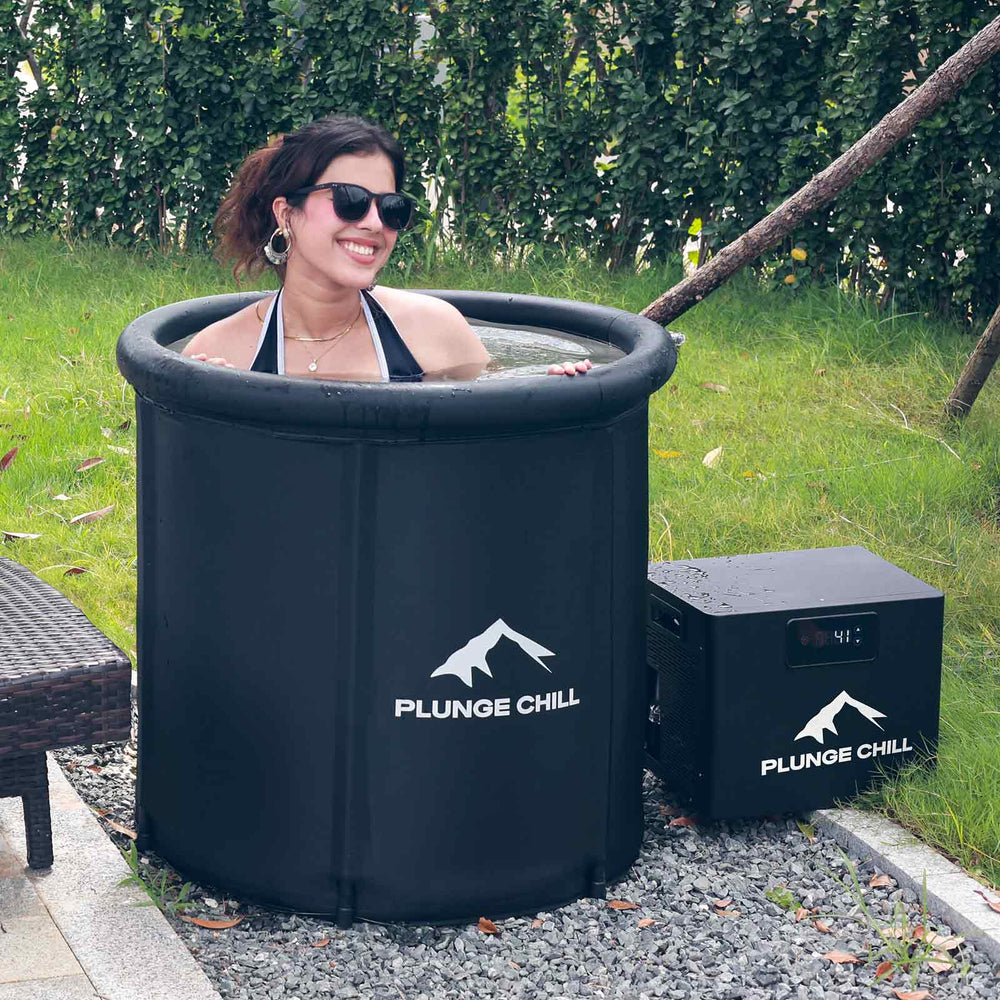
First, get your area ready. For beginners, set the water temperature between 50-60°F. This range is cold enough to be effective but not too extreme. To precisely control the temperature, you can use a Plunge Chill chiller for a consistent and safe experience.
Make sure you are in a safe place, and never plunge alone for the first time. Have a towel and warm, dry clothes right next to the tub so they are ready when you get out.
And before you get in, take two or three minutes to calm your mind with "Box Breathing." This simple technique will help you enter the water in a more relaxed state.
Step 2: Take the Plunge and Control Your Breath
When it's time to get in, move slowly but deliberately—don't jump in. Submerge your body up to your neck to get the full benefits. As you lower yourself into the water, immediately begin a long, slow exhale. This is the most important part of the process. Your body will want to gasp, but you must fight that urge.
For the first 30 to 60 seconds, your only job is to focus on breathing out slowly. For your first time, aim to stay in for just 30 seconds to 2 minutes. The goal is control, not endurance, so decide on your time before you get in and stick to it.
Step 3: Get Out and Warm Up Gently
When your time is up, get out of the water calmly. You might feel a little shaky, so move carefully to avoid slipping. Once you're out, immediately dry off and put on your warm clothes.
It is very important that you do not jump straight into a hot shower or sauna, as the extreme temperature change can be a shock to your system. Instead, let your body warm up naturally. A warm drink can also help you feel comfortable again.
Conclusion
You don't need to be afraid of the cold shock response. This is the way to get better. If you know how the brain works and use your breath, you can turn a panic attack into a controlled action.
Your body learns to deal with worry better every time you focus on your breath and heart rate. The cold teaches you how to keep your cool when things get tough and how to use problems as chances to grow.
Are you ready to stop battling the cold and get better at it? Look through the Plunge Chill range to find the right tool to start your trip. Today is the day to take that first strong step.




Leave a comment