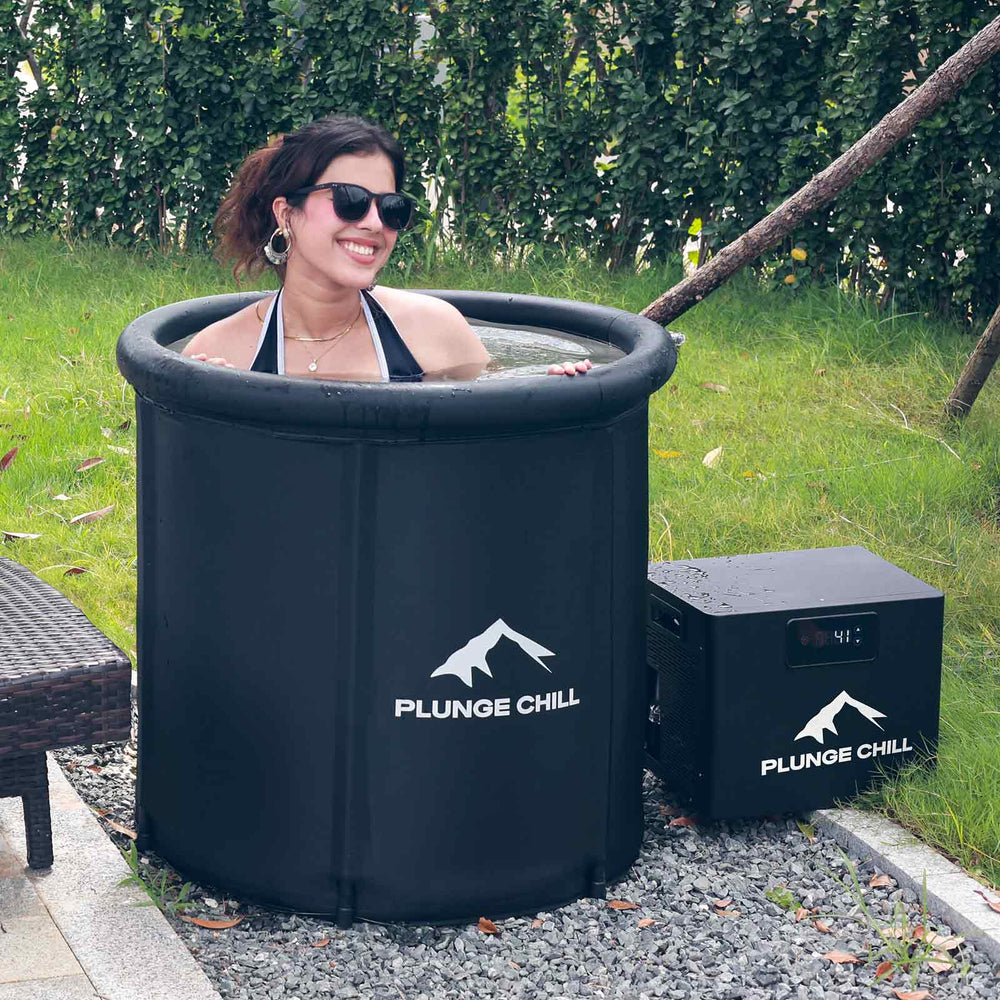
Quick Answer
Cold plunge tubs keep water cold by circulating water through a chiller and filtration system. The pump moves the water, the filter helps remove debris, and the chiller removes heat before sending the cooled water back into the tub.
The tub's insulation and construction also help slow heat gain from the surrounding environment, making it easier for the chiller to maintain your selected temperature.
Unlike a traditional ice bath, a chiller-powered cold plunge does not require fresh bags of ice for every session. Once set up, the system continuously circulates, filters, and cools the water as needed.
What Is a Cold Plunge Tub?
A cold plunge tub is a tub designed for regular cold-water immersion. Technically, you can use a stock tank, bathtub, or another large container for an ice bath. If you're only trying cold plunging once or twice, that may be all you need. The difference becomes more important when you want to make cold water part of your regular routine. A purpose-built cold plunge is designed around repeated use and, depending on the setup, can work with a chiller, circulation system, and filtration system to help keep the water at a more consistent temperature while reducing the work involved in preparing each session.
The tub is designed as part of a complete system rather than simply serving as a container for cold water. Its construction, insulation, fittings, and shape all need to work with the cooling and circulation equipment.
The tub also needs to handle something a normal bathtub usually doesn't: cold water sitting in it for extended periods while water moves in and out through a cooling system. That's why the tub itself matters. The wall construction, insulation, fittings, durability, and overall shape all play a role in how well the complete system works.
In short: a cold plunge tub is more than a container. The tub and its cooling, circulation, and filtration components work together as one system.
The Four Main Components of a Cold Plunge System
A cold plunge may look simple from the outside, but several parts work together to cool and maintain the water. Each component has a different job, and the overall performance depends on how well those parts work together.
The Cold Plunge Tub
The tub does more than simply hold the water. Its walls create a barrier between the cold water inside and the warmer environment outside, while good insulation and construction can help slow heat transfer and make it easier for the chiller to maintain the temperature you selected. The design also affects comfort and everyday use, so a tub should provide enough room for comfortable immersion while using materials and fittings that can handle regular use.
Insulation and wall construction affect how quickly outside heat reaches the water. A well-designed tub can therefore make it easier for the chiller to maintain a stable temperature.
The Chiller
The chiller is responsible for lowering the water temperature. It pulls heat out of the circulating water and releases that heat into the surrounding air. Once the water reaches the temperature you've set, the system can continue monitoring the temperature and cool again when needed. This is the part of a chiller-powered cold plunge that eliminates the need to prepare a fresh supply of ice for every session.
Warm water enters the chiller, heat is removed, and cooler water is returned to the tub. The process repeats whenever the water needs additional cooling.
The Circulation Pump
The pump keeps water moving through the system. It pulls water from the tub and sends it through the different parts of the cold plunge system before returning it to the tub. Continuous circulation also helps reduce temperature differences between different areas of the water, and without circulation, the filter and chiller cannot process the water effectively because water needs to move through the system for cooling and filtration to take place.
The Filtration System
The filtration system helps catch particles as the water circulates. Depending on the setup, it can help remove things like hair, dust, and other debris from the water, while some systems may also use a separate sanitation method to help manage water quality. Filtration doesn't eliminate the need for regular maintenance, but it can help keep the water cleaner between cleanings and water changes.
The filter helps manage debris while the water circulates, but clean water still depends on regular filter care, cleaning, water treatment, and other maintenance steps appropriate for the system.

PLUNGE CHILL MAX
Step-by-Step: How a Cold Plunge Tub Works
So, what actually happens after you turn the system on? The process is essentially a continuous loop: water leaves the tub, passes through the system, gets cooled and filtered, and then returns to the tub.
Step 1: Water leaves the tub.
The circulation pump pulls water out of the cold plunge tub and sends it through the system.
Step 2: The water passes through the filter.
As the water moves through the filtration system, particles and debris can be caught before the water continues through the system.
Step 3: The chiller removes heat from the water.
The water enters the chiller, where heat is transferred out of the water. As that heat is removed, the water temperature drops.
Step 4: Cooler water returns to the tub.
The cooled water flows back into the tub and mixes with the rest of the water.
Step 5: The cycle repeats.
Water leaves the tub → gets filtered → gets cooled → returns to the tub.
Once the water reaches your target temperature, the system can continue monitoring it and cool again when the water begins to warm. That continuous cycle is what makes it possible to maintain cold water without standing next to the tub and adding ice throughout the day.
The basic cycle: circulation moves the water, filtration helps clean it, the chiller removes heat, and the cooled water returns to the tub.
Why Does the Tub Material Matter?
When people shop for a cold plunge, it's easy to focus on the chiller first: How cold can it get? How powerful is it? How quickly does it cool? Those are important questions, but the tub itself is also part of the system. Different tub materials and designs offer different advantages when it comes to portability, structure, insulation, and long-term use.
Inflatable and hard-shell tubs can both work well. What matters is the complete construction, including wall materials, insulation, fittings, durability, available space, and compatibility with the cooling system.
Inflatable Cold Plunge Tubs
Inflatable cold plunge tubs are popular because they can offer more flexibility than a large permanent tub. A well-built inflatable model can use multi-layer materials and insulated walls while remaining relatively lightweight and easier to move or store. That can be useful if you rent, have limited space, or don't want to dedicate a permanent part of your home or backyard to a cold plunge. A model like the Plunge Chill Max, for example, is designed around that balance: enough room for a full-body plunge while remaining easier to set up and move than a large hard-shell unit.

An inflatable tub can be a practical choice when portability, storage, setup time, or limited space matters as much as having a dedicated cold-water setup.
For many people, an inflatable tub offers a practical option for building a chiller-powered cold plunge setup without committing to a heavy permanent installation.
Hard-Shell Cold Plunge Tubs
Hard-shell tubs are often a better fit for people building a more permanent recovery space. Materials such as PVC or hard plastic provide a rigid structure and a more substantial feel, and they're commonly used in dedicated home gyms, patios, and backyard setups where the tub is expected to stay in one place. They can also provide strong insulation and temperature retention, although actual performance depends on the overall construction rather than the material name alone.
A rigid construction can make sense when the cold plunge is becoming a fixed part of a garage, patio, backyard, or home gym rather than something you plan to move regularly.

PLUNGE CHILL PRO
So Which Material Should You Choose?
It comes down to how you plan to use the tub. Want something easier to move, store, or set up? An inflatable tub may make more sense. Building a permanent recovery space and prefer a rigid structure? A hard-shell tub could be the better fit. Either way, don't judge a cold plunge by the material alone. Look at the wall construction, insulation, fittings, durability, available space, and how well the tub works with your chiller setup.
A good tub should make the rest of the system easier to run.
How Tub Insulation Helps Keep Water Cold
Here's an easy way to picture it. Say you cool your plunge water down to 40°F. If the tub is sitting outside on a warm afternoon, heat from the surrounding environment is constantly working its way toward the colder water. The better the tub is insulated, the slower that heat transfer happens. With poor insulation, the chiller has to run more often to remove incoming heat; with better insulation, the system has less heat to deal with in the first place.
Insulation doesn't create cold water by itself. Instead, it slows the rate at which surrounding heat reaches the water, giving the chiller less heat to remove.
That's why insulation can affect more than just how long water stays cold. It can also influence temperature stability, cooling time, and how often the chiller needs to cycle. A powerful chiller doesn't automatically make a great cold plunge system; the best results come when the tub and chiller are designed to work well together.

In practical terms: better insulation can reduce heat gain and make it easier for the cooling system to maintain your target temperature.
How the Chiller Cools the Water
The basic idea behind a cold plunge chiller is straightforward. Warm water enters the chiller, the cooling system pulls heat out of that water, and the cooler water returns to the tub. Inside the chiller, a refrigerant cycle and heat exchanger handle the actual heat transfer. Components such as the compressor, condenser, and evaporator work together to move heat away from the water and release it into the surrounding air.
You don't need to understand every component inside the chiller to understand the basic process: warmer water goes in, heat is removed, and colder water comes back out.
You don't need to understand every part of that process to use a cold plunge. What matters in everyday use is simple: warmer water goes into the chiller, and colder water comes back out. If you want to learn more about compressors, refrigerants, heat exchangers, and chiller performance, our guide on How Cold Plunge Chillers Work goes into more detail.
Think of the chiller as the heat-removal stage: the pump moves the water, while the chiller removes the heat that would otherwise keep the water warm.
How Much Electricity Does a Cold Plunge Tub Setup Use?
Electricity use depends on the complete setup. A cold plunge sitting outdoors during hot weather may need more cooling than one kept indoors in a cool room. Water volume, target temperature, insulation, chiller capacity, and the surrounding temperature can all affect how much work the system has to do. The chiller also doesn't necessarily need to cool at the same rate all the time. Once the water reaches your target temperature, the system's job becomes maintaining that temperature rather than cooling the entire volume of water from the beginning again.
The chiller's power rating is only one part of the picture. How much heat enters the tub, how well the tub is insulated, and how often the chiller needs to run all influence total energy use.
The chiller's energy demand is influenced by how much heat enters the system and how effectively the tub slows that heat transfer.
Outdoor heat
Warmer surroundings
Tub insulation
Slows heat transfer
Water volume
More water to cool
Chiller workload
More heat to remove
Insulation is especially important because it can reduce how much heat reaches the water in the first place. A well-insulated tub may help the system spend less time recovering from heat gain, while a poorly insulated setup can require more frequent cooling. The actual electricity use will vary with the tub, chiller, temperature setting, environment, and usage pattern, so a single number does not apply to every cold plunge.
How a Cold Plunge Tub Stays Clean
Filtration is part of keeping a cold plunge clean, but it isn't the only part. With regular use, sweat, skin oils, hair, and other debris can build up in the water over time. As water circulates, the filter helps catch particles and keep debris from continuously remaining in the tub. Regular maintenance still matters and, depending on your setup, may include replacing or rinsing the filter, wiping down the tub, checking the water, and following the recommended sanitation and water-care routine.
Filtration helps remove particles, but it works alongside regular cleaning, filter care, water treatment, and water changes. The exact routine depends on the system and how often it is used.
The goal is to keep the water clean without turning maintenance into a major project. That's also worth considering when choosing a cold plunge tub. An easy-to-clean design and accessible filtration system can make it much easier to maintain your setup over time.
Ice Bath vs. Cold Plunge Tub: What's the Difference?
An ice bath and a cold plunge tub can both give you cold-water immersion, but the way they maintain the water temperature is different. A traditional ice bath usually relies on adding ice whenever you want the water to become or remain cold. A chiller-powered cold plunge uses a cooling system to remove heat from the water and can maintain a selected temperature over time.

That difference becomes more noticeable when cold plunging turns into a regular routine. With an ice bath, you need enough ice, a way to store it, and time to prepare the water for each session. A cold plunge tub with a chiller requires an initial setup, but once the system is connected and running, the water can be cooled and maintained without repeatedly buying and adding bags of ice.

PLUNGE CHILL PLUS
Neither option has to be complicated. If you only take an occasional ice bath, a simple container and ice may be enough. If you want cold water ready more consistently, a purpose-built tub with circulation, filtration, insulation, and a chiller can reduce the preparation involved in each session.
In simple terms: an ice bath creates cold water by adding ice, while a chiller-powered cold plunge creates and maintains cold water by continuously removing heat.
FAQ
How long do inflatable cold plunge tubs last?
How long an inflatable cold plunge lasts depends on its materials, construction, how often it is used, and how well it is maintained. A well-made multi-layer tub that is protected from unnecessary wear and cared for properly can last much longer than a basic inflatable container.
Can you use a cold plunge tub without a chiller?
Yes. You can use a cold plunge tub without a chiller by adding ice to the water. A chiller becomes useful when you want a more consistent temperature and don't want to repeatedly buy, store, and add ice for each session.
How long does a cold plunge tub stay cold?
It depends on the tub, insulation, water volume, ambient temperature, target temperature, and whether active cooling is being used. A well-insulated tub can slow heat gain, while a chiller can actively bring the water back toward the selected temperature.
How often should you clean a cold plunge tub?
There is no single schedule that fits every setup. Cleaning frequency depends on how often the tub is used, how many people use it, the filtration and sanitation system, and the manufacturer's recommendations. Regular filter care, surface cleaning, and water maintenance should be part of the routine.
What size cold plunge tub should I get?
Choose a size based on your body size, how much room you want to move, the available installation space, and how easily you can connect and access the chiller. If you plan to use the tub for full-body immersion, make sure the interior dimensions provide enough room for a comfortable position.
Is a cold plunge tub worth it?
For someone who plans to use cold-water immersion regularly, a purpose-built tub can make the routine more convenient because the water can be ready more consistently and the cooling system can reduce the need for repeated ice preparation. Whether that convenience is worth the cost depends on how often you plan to use it and the type of setup you want.