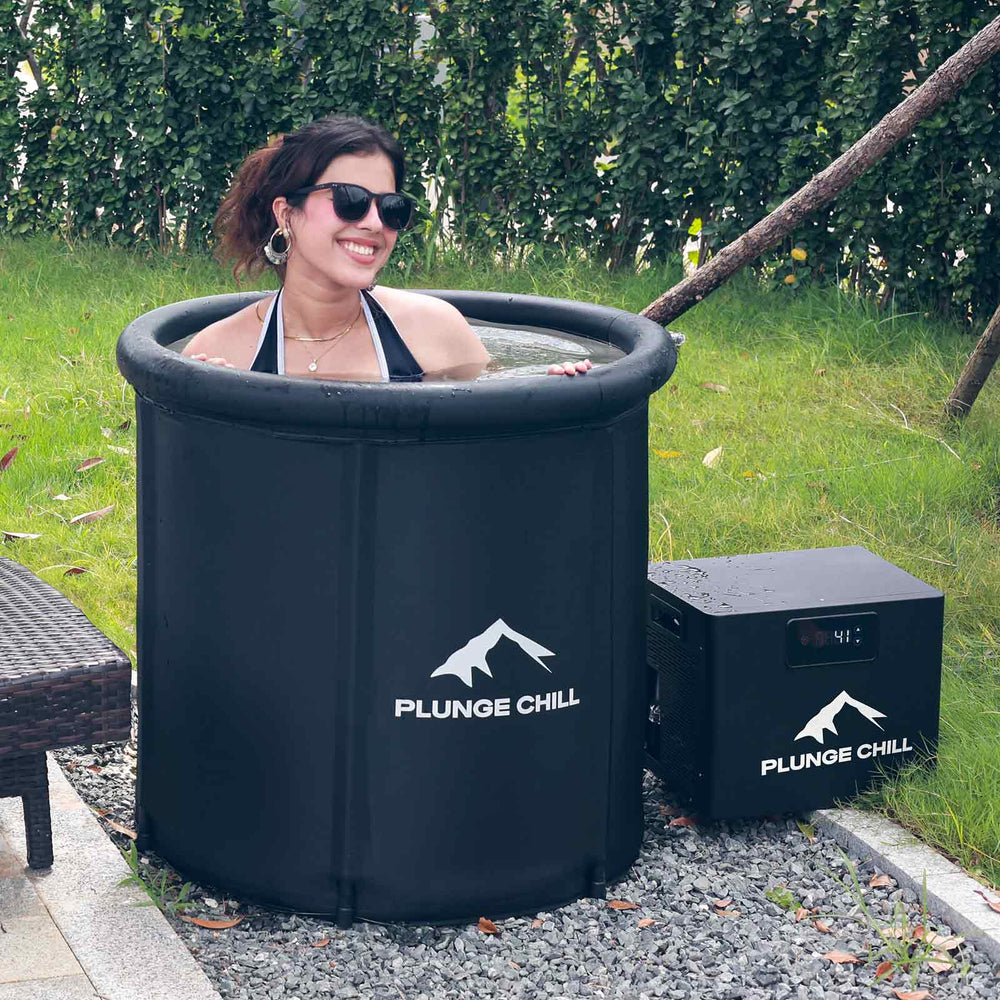
Have you seen everyone online talking about the benefits of cold plunging, only to search for a tub and get scared off by the price tag? They often cost thousands of dollars. Does that mean you can't enjoy the benefits of a cold plunge on a small budget? Wrong. You can still DIY (Do It Yourself) a cold plunge.
If you are searching for a cold plunge DIY guide, here it is, in full form, plus more smart advice.

COLD PLUNGE CHILLER
Table of Contents
- DIY Cold Plunge: Pros and Cons of Building Your Own Setup
- DIY Cold Plunge vs Pre-Built Systems
- DIY Cold Plunge Setup: The 3 Key System Components
- DIY Cold Plunge Step-by-Step Setup Guide
- How to Keep Your DIY Plunge Clean and Safe
- Tips on How to Start Cold Plunging Safely
- Is a DIY Cold Plunge Right for You?
- Conclusion
- Q&A
DIY Cold Plunge: Pros and Cons of Building Your Own Setup
Building a DIY Cold Plunge on a Low Budget
DIY cold plunges let you experience the benefits of ice baths without costing much. If you search online, you see many brands sell ready-made cold plunge sets for thousands of dollars. For a dedicated user, that's good. But for those who have just begun to try cold plunging or who just want to experience it once in a while? No. That'll be too expensive.
But if you DIY, you control every dollar in your wallet, and you spend only on the very essentials tailored for your needs. Not everyone needs a flashy tub or a chiller with maximum power.
Customize Your DIY Cold Plunge Setup
If you build your cold plunge setup on your own, you have all the control over the size, depth, filtration, and even aesthetics. Whether it's a sleek garage setup or a backyard oasis, your cold plunge reflects your space and style.
How to Start Your DIY Cold Plunge Journey
Just a beginner and not sure if cold plunging is really for you? DIY offers a low-risk entry point. You test the waters before committing to an expensive purchase. If it doesn't stick, you haven't lost much.
But DIY Has Drawbacks, Too:
- Time-intensive setup and maintenance
- No warranty or customer support
- Potential safety risks if improperly built
- Requires technical skills and troubleshooting
DIY Cold Plunge vs Pre-Built Systems
| Feature | DIY | Pre-Built |
|---|---|---|
| Cost | $200 - $1,500 | $3,000 - $15,000 |
| Setup Time | Hours to days | Plug-and-play |
| Customization | Unlimited | Limited |
| Warranty | None | 1-5 years |

DIY Cold Plunge Setup: The 3 Key System Components
To save money, or build something extra on, you need just the most essential parts for the most essential functions: contain the water, cool the water, and clean the water.

Cold Plunge Chiller + Pro Tub
Component 1: Water Container – Cold Plunge Tub or Barrel
You only need to prepare a container that can hold water. First, the container must be sturdy, ensuring it does not leak, and it must be able to hold your entire body weight for full immersion. Full immersion gives the best ice bath results.
Here are the tub or barrel options you can choose from:
- Home Bathtub
- Stock Tank
- Barrel/Rain Barrel
- Chest Freezer
| Container Type | Pros | Cons | Ice Required |
|---|---|---|---|
| Home Bathtub | Easy to use, low cost | Poor insulation, limited space | Yes |
| Stock Tank | Affordable, spacious | Quick temperature rise | Yes |
| Barrel/Rain Barrel | Compact, low cost | Shallow, poor insulation | Yes |
| Chest Freezer | Good temperature control, durable | Expensive, requires modifications | No |
Component 2: DIY Cold Plunge Cooling System (Ice vs Chiller)
- Ice: Fill your tub, then add 20-40 lbs of ice per session to drop temps from 70°F to 50°F. Use a thermometer to monitor. Best for occasional use and lower upfront costs, but needs constant replenishment and offers inconsistent cooling.
- Chiller: Connect a chiller unit to your tub using standard pool hoses. Position the chiller nearby, attach the inlet hose to draw water and the outlet to return chilled water. Set your target temp (typically 45-55°F), and the chiller handles the rest. Best for consistent and long-term cooling, but comes with a higher initial investment and ongoing maintenance costs.
Component 3: Pump & Filtration System for Clean Water
- Basic Filtration Setup: Connect an external pond or pool pump (500+ GPH) to a cartridge filter. Run the pump 3-4 hours daily to circulate water and trap debris. Mount the filter above water level to enable gravity-assisted drainage.
- Sanitation: Add 1-2 teaspoons of chlorine or bromine weekly to prevent algae and bacteria. Test water with pool strips monthly. Drain and refill every 2-3 weeks for optimal freshness.
- Pro Tip: Run your pump while the chiller operates—circulation improves cooling efficiency and prevents temperature stratification.

DIY Cold Plunge Step-by-Step Setup Guide
Now with all the components ready, let's build it step by step.
Step 1: Choose Your Container
Select a sturdy tub or barrel that holds water and fits your entire body for full immersion. Decide between an inexpensive stock tank, a heavy-duty plastic barrel, or a sealed chest freezer.
Step 2: Set Up the Foundation
Place your chosen container on level, strong ground that can support the total weight of the water and your body. Ensure the area has drainage in case any water spills or leaks.
Step 3: Install Your Cooling System
- Ice Setup: Simply fill and add ice—skip to Step 5.
- Chiller Installation:
- Position chiller on a stable surface near the tub (keep dry).
- Attach inlet hose to pump outlet using hose clamps.
- Connect outlet hose back to tub.
- Fill tub completely before starting chiller.
- Plug chiller into GFCI-protected outlet.
- Set temperature to 50°F for first test run.
- Allow 4-8 hours to reach target temp initially.
Step 4: Add Filtration and Sanitation
Pump and Filter Connection:
- Mount cartridge filter on wall or stand above water level.
- Connect pump (submerged in tub) to filter inlet.
- Run filter outlet hose back into tub.
- Prime pump by filling filter housing with water.
- Run pump 3-4 hours daily on a timer.
- Add 2 teaspoons chlorine granules after filling.
- Test weekly with pool strips (aim for 2-4 ppm chlorine).
- Shock treat monthly with double chlorine dose.
Step 5: Fill and Test
Fill the container with water using a regular garden hose. Run the circulation and chilling system for several hours. Check the temperature and ensure all connections are watertight before using.

Cold Plunge Chiller + Tub (MAX)
How to Keep Your DIY Plunge Clean and Safe
Maintain Clean Water
To keep the water clear and healthy, focus on circulation and chemical balance:
- Install a pump and filter system. The pump circulates the water, preventing stagnation, while the filter removes dirt, oils, and bacteria.
- Clean the filter and pump every few weeks to keep them working properly.
- Change the water every 1–2 weeks to prevent harmful bacteria and algae from building up.
- Cover the plunge when you are not using it. This stops debris from falling in and helps maintain a stable temperature.
- If you plunge often, check the pH levels regularly. Keep the pH between 7.2 and 7.8; this range effectively stops bacterial growth.
- Add a small amount of non-toxic sanitizer to further protect the water from contamination.
Prioritize Safety & Hygiene
Your personal hygiene and water monitoring directly affect safety:
- Shower First (Crucial): Always shower off before entering the plunge. Remove all oils or lotions; body oils are the main cause of dirty water.
- Protect Yourself: Avoid entering the plunge if you have open wounds, as this prevents potential infections.
- Monitor Temperature: Check the water temperature regularly. Maintain a range between 50°F and 59°F (10°C - 15°C) to prevent the risk of hypothermia or shock.
By adopting these simple practices, you ensure a clean and safe environment for your cold plunge routine.

Tips on How to Start Cold Plunging Safely
You're ready to use your do-it-yourself cold plunge now that it's up and running. No matter how well-built your setup is, jumping right into 45°F water is dangerous because your body needs time to get used to it.
Start at 60°F to 65°F for Two Weeks
First, set your water to one of these temperatures. It changes the way your body works without overworking your nervous system. Your body learns how to safely control the flow of blood and the reaction to breathing.
Keep the First Sessions to One to Two Minutes
Short, regular exposures (three to four times a week) build tolerance faster than long plunges that only happen once in a while. Leave before you start to shiver very badly; your do-it-yourself setup will be ready when you are.
Slowly Lower the Heat
Drop by 3°F to 5°F every one to two weeks. Just change how the chiller is set up or cut down on the amount of ice. It takes most people 6 to 8 weeks to hit their ideal range, which is 45°F to 55°F.
Pay Attention to How You Breathe
Gasping is caused by cold shock. Slowly breathe in through your nose and out through your mouth. As soon as your breathing stops racing for 30 seconds, you're responding correctly. Our beginner guide covers everything from mindset to recovery protocols and gives you specific steps on how to get ready for the first 4 weeks.
Do Not Plunge Alone at First
During your first month, have someone close by. After that, slowly warm up—don't take a hot shower right away.
Is a DIY Cold Plunge Right for You?
| Category | Choose DIY If... | Buy Pre-Built If... |
|---|---|---|
| Budget | You have $200 - $1,500 to spend | You have $3,000 - $15,000+ to spend |
| Usage Goal | Testing cold therapy before full commitment | Cold plunging is already part of your routine |
| Living Situation | You own your home with garage/yard space | You rent or have limited indoor-only space |
| Daily Schedule | You have 10-15 min weekly for maintenance | You want zero maintenance responsibility |
| Priority | Saving money matters most | Convenience and aesthetics matter most |
| Backup Options | You can skip sessions if equipment breaks | You need 100% uptime—no tolerance for downtime |
Quick Decision:
- DIY = High effort, low cost, full control
- Pre-Built = Low effort, high cost, guaranteed performance
Most people who stick with DIY use their plunge 4+ times weekly and enjoy hands-on projects. If that's not you, buy pre-built and avoid the headaches. Want to commit from day one? If you're ready to build a lasting daily habit without setup hassles, investing in a pre-built unit is the most effortless, reliable, and professional choice.
Conclusion
If you want to save money or just want to try cold therapy, doing it yourself is the best way to start. It can give you professional results at a fraction of the cost. Build well, start off safely, and keep up with maintenance. But if you want to make a habit that lasts and is easy to keep, think about buying special equipment. Ready to upgrade? Buy a Plunge Chill cold plunge tub and chiller. Our solutions work better and cost less, making them easy to use every day.
Q&A
Q1: How much does a DIY cold plunge cost compared to Plunge Chill units?
Depending on the parts, DIY setups can cost between $200 and $1,500. A basic stock tank with ice costs between $200 and $400. Adding a chiller raises the price. Plunge Chill's professional units cost more at first, but they come with warranties, better filters, and the ability to plug them in and use them right away, so you don't have to try things out yourself. Plunge Chill chillers are a cheap way for DIYers to upgrade that saves time and works better than ice.
Q2: Is it possible to use a regular freezer as a cold plunge?
Yes, but a lot of changes need to be made. If you're using it as a tub with an external chiller, seal all the seams with marine-grade silicone, put in a drainage valve, and unplug or bypass the internal compressor. There are risks to electrical safety with this method. Plunge Chill's specially designed units get rid of all of these worries for sure safety and performance.
Q3: How often do I need to change the water in my DIY cold plunge?
Change the water every two to three weeks, and make sure to filter it and add chlorine once a week. If you don't filter the water, drain it and fill it up again every week. Plunge Chill systems have advanced filters that keep the water fresh for a long time, which means you don't have to clean them as often and they are less of a hassle.
Q4: Is 10 minutes in a cold plunge too long for people who are new to it?
Yes. People who are new to this should start with 1–2 minutes at 60°F and work their way up over the course of 6–8 weeks. Even people who have used it before don't usually go over 5 minutes to get the full benefits. Plunge Chill units keep temperatures very stable, which makes it easier to follow safe procedures and keep track of your progress.