Cold plunges deserve their reputation as a powerful recovery and resilience tool. In my work in sports rehabilitation and strength and conditioning, I have seen cold-water immersion help athletes get through congested tournament schedules, manage soreness, and build impressive mental discipline. At the same time, I have also seen the other side: lifters who stall their strength gains, youth athletes who show up shivering and exhausted after “challenge” plunges, and content-driven practices that would make any sports medicine physician wince.
The explosion of TikTok ice bath challenges has amplified both sides of this story. Short, dramatic clips reward extremes: water that looks like a frozen lake, timers that run far longer than any evidence-based protocol, and participants who treat medical screening as optional. The science says something very different. Research summaries from Mayo Clinic Press, Ivy Rehab, GoodRx, Health.com, Harvard Health, SSM Health, Youth Sport Nutrition, and others all converge on a clear message: cold-water immersion can be useful, but only when you respect the right temperature, duration, frequency, and medical context.
This article walks through the most common mistakes I see when people copy social media ice bath trends, explains what the research actually supports, and shows how to design a safer, more effective routine—whether you are using a high-end plunge system or a simple home tub.
How Cold, How Long, How Often: Where Challenges Go Wrong
Mistake 1: Chasing Extreme Temperatures Instead of Effective Ones
Many viral challenges glorify “as cold as possible,” with tubs packed solid with ice or jumps into near-freezing lakes. The problem is that the physiology of recovery does not require that level of extremity, and the risks climb sharply as temperature drops.
Multiple rehabilitation and sports medicine sources, including Ivy Rehab, Sports Medicine of the Rockies, GoodRx, Healthline, and Health.com, consistently describe effective cold-water immersion for recovery in the range of roughly 50–59°F. In that zone, vasoconstriction reduces blood flow to the immersed tissues, which can limit swelling and inflammation, and the rewarming phase helps bring nutrient-rich blood back through the area. Reviews of athletes using this range, generally for a few minutes up to about 10–15 minutes, show modest reductions in muscle soreness and short-term performance restoration, especially within the first 24 hours after hard exercise.
By contrast, Mayo Clinic Press and Harvard Health both emphasize that immersion in water colder than about the low 60s°F substantially increases cold shock and hypothermia risk. Sudden submersion around 60°F or below can trigger an involuntary gasp, rapid breathing, and spikes in heart rate and blood pressure. In an open-water environment, that is a recipe for drowning or a cardiac event, particularly if someone has an underlying heart or circulation problem.
A simple example highlights how unnecessary the extremes are. Typical household cold tap water often comes out near 60°F, which is already at the low end of the evidence-supported range. If you fill a bathtub and add a moderate amount of ice, you can very quickly drop into the 50–55°F window used in many studies. Turning that same tub into a slush-filled cooler for the sake of a video does not meaningfully increase recovery benefits, but it does push you closer to cold shock, frostbite, and hypothermia.
The evidence-supported target is clear: for most healthy people using cold plunges for recovery, water around 50–59°F is cold enough to achieve physiological effects without courting the unnecessary risks that make for dramatic clips.
Mistake 2: Staying in Far Too Long for the Sake of a Screenshot
The second major error in challenge culture is turning “time in the tub” into a badge of honor. Many clips celebrate 15, 20, or even 30-minute plunges, as if endurance alone equaled benefit. The research does not support that approach.
Guidance from GoodRx, Ivy Rehab, Health.com, Healthline, SSM Health, and Mayo Clinic Health System is surprisingly consistent. Most practical protocols for healthy adults fall in the range of about 5–10 minutes, sometimes up to 15 minutes at most, and often much shorter for beginners. Mayo Clinic Health System notes that people typically start with 30 seconds to 1 minute and build up gradually to 5–10 minutes, while Harvard Health describes new users tolerating only 10–30 seconds initially and in some cases extending up to about 5 minutes as they adapt. Youth Sport Nutrition, working specifically with younger athletes, goes further and suggests limiting total cold exposure to roughly 11 minutes per week, divided into two to four sessions lasting 1–5 minutes each.
On the risk side, Mayo Clinic Press, Harvard Health, GoodRx, Health.com, and SSM Health all warn that prolonged immersion in cold water increases the likelihood of hypothermia. As core temperature drops, people move from shivering to confusion, loss of coordination, and in extreme cases, life-threatening organ dysfunction. Health.com additionally highlights cold-related skin and fat injuries, such as cold panniculitis and frostbite, which become more likely when cold exposure is both intense and prolonged.
Think about a common challenge format: 20 minutes sitting motionless in a tub hovering around 40°F. That combination has virtually no evidence-based advantage over a well-structured 5–10-minute plunge around 50–59°F, yet it clearly raises the risk of hypothermia and tissue damage. In practical terms, once you have hit a few minutes of high-quality, properly dosed cold exposure, more time does not equal more benefit; it simply equals more stress.
From a coaching standpoint, I treat duration like load in the weight room. You do not max out your deadlift just to prove you can every session, and you do not double or triple safe cold exposure times just for the camera.
Mistake 3: Copying Open-Water Stunts Without Respecting Context
Many of the most eye-catching ice bath clips happen outside: jumping through a hole in a frozen lake, plunging into a snowy river, or sprinting into ice-covered surf. The visual impact is undeniable. The physiological and safety tradeoffs are just as undeniable.
Mayo Clinic Press, in an article featuring sports medicine specialist Andrew Jagim, draws a sharp line between home-based plunges at roughly 50–60°F in a tub and open-water plunges into 30–40°F water in a sub-zero environment. In the latter case, cold shock, uncontrolled gasping, hyperventilation, and abrupt spikes in heart rate and blood pressure are much more intense. The combination of frigid water and freezing air dramatically accelerates heat loss, raising hypothermia and frostbite risk, especially when someone exits wet and exposed to wind.
Mayo Clinic Health System adds a real-world safety detail: avoid plunges in icy waters with currents, such as rivers, because it is easy to be swept downstream or trapped under ice. That is precisely the sort of nuance that rarely appears in challenge videos but matters enormously when you are planning your own exposure.
For most athletes and recreational users, the open-water spectacle offers no meaningful recovery advantage over a well-controlled home or facility plunge. In fact, the more variables you add—unknown water depth, hidden obstacles, current, wind chill—the further you get from a structured, repeatable protocol and the closer you get to an uncontrolled stress test.
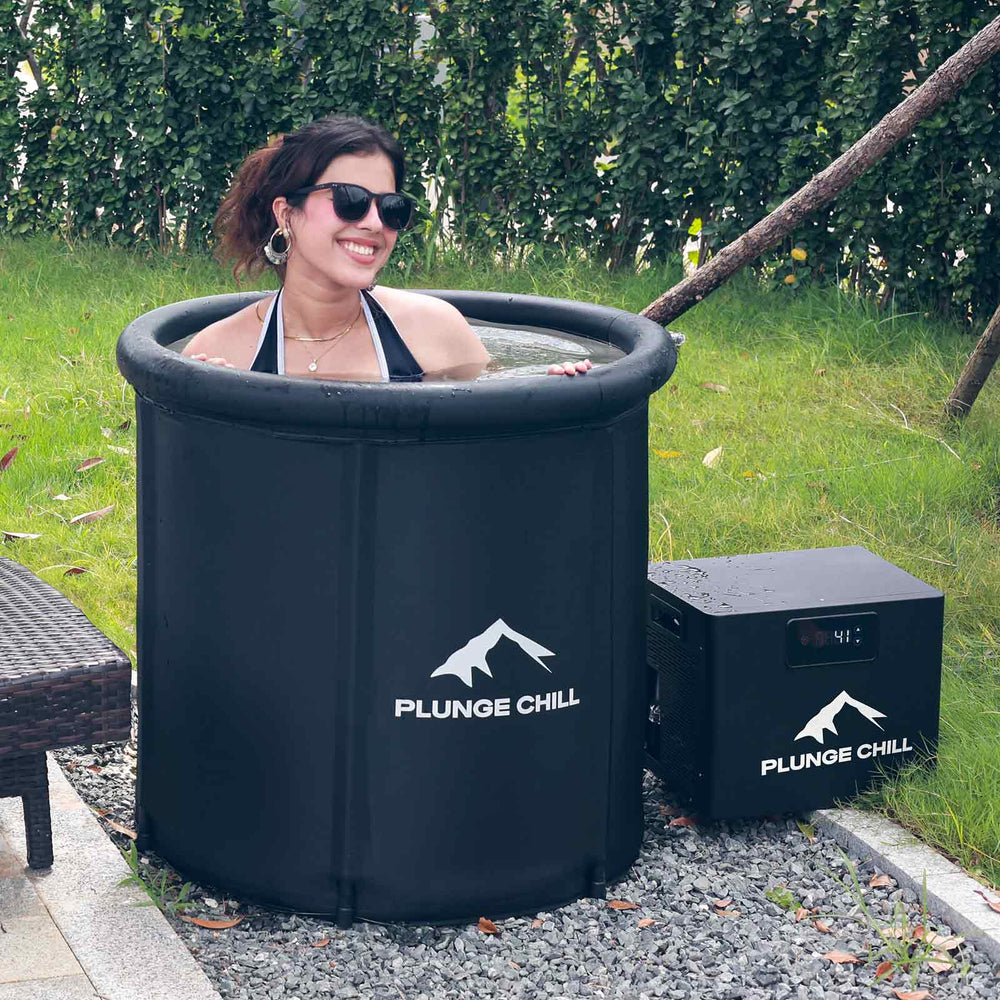
This is one place where purpose-built plunge systems genuinely help. At Benedictine University Mesa, for example, the athletics program partnered with Plunge Chill to provide cold therapy units with precise temperature control, consistent cooling, built-in filtration and sanitation, and safety-focused design. That allows their Redhawks athletes to experience cold exposure at professional standards without guessing about lake temperatures, water quality, or exit routes. You do not need a high-end system to benefit from cold immersion, but it is telling that institutions responsible for athlete welfare prioritize controlled, monitored setups rather than open-water stunts.

Will Ice Bath Challenges Help or Hurt Your Training?
Mistake 4: Using Daily Plunges After Every Strength Session
TikTok challenges often frame “every day in the ice” as a badge of discipline. For strength and power athletes especially, that approach is not just unnecessary; it may be counterproductive.
Mayo Clinic Press and Mayo Clinic Health System both highlight an important nuance in Andrew Jagim’s recommendations. Ice is useful immediately after an acute injury to reduce pain and swelling, and short-term cold-water immersion can be helpful during compressed competition periods, such as a three-day tournament or a dense two-week training camp, when the goal is to feel ready for the next event. However, when cold therapy is used day after day across an entire season or training cycle, research suggests it may blunt the very adaptations you are training for, particularly strength and muscle growth.
That concern is echoed in broader sports science literature summarized by GoodRx, Health.com, Healthline, Youth Sport Nutrition, and the Journal of Emergencies, Trauma, and Shock. A 2021 review discussed in Health.com found that cold-water immersion reduced muscle pain and improved short-term recovery up to about 24 hours after exercise, but several studies also reported that regular use after resistance training can impair gains in muscle mass and strength. Youth Sport Nutrition cites work showing that cold exposure during the first few hours after strength training may dampen the inflammatory and anabolic signaling needed for hypertrophy. A systematic review with meta-analysis highlighted in that same youth-focused piece concluded that post-exercise cold-water immersion can attenuate long-term hypertrophy responses to resistance training.
From a practical standpoint, here is what that means. If you are in the middle of a heavy strength block, continually asking your muscles to adapt and grow, a daily post-lift plunge may help you feel less sore today but cost you progress over the coming months. You are trading signal for comfort. For endurance-focused athletes, Mayo Clinic Health System notes that cold-water immersion does not appear to impair adaptations in the same way, which is why some endurance teams use it more liberally during high-volume blocks.
A realistic application I use with athletes looks very different from “plunge after every session.” For example, a basketball player might save cold plunges for tournament weekends and particularly brutal practice clusters, using them as an acute tool to get through a stretch of games, while relying on sleep, nutrition, active recovery, and lighter modalities on normal training days. That strategy respects both the short-term pain relief and the long-term adaptation data.
Mistake 5: Treating Cold Plunges as a Magic Recovery Shortcut
Another theme in challenge culture is the idea that an ice bath can compensate for poor sleep, inadequate fueling, or an overloaded training program. The science does not support that narrative.
Mayo Clinic Press examines a broad range of cryotherapy claims—faster recovery, fewer colds, better mood—and concludes that while there are pockets of promising data, overall evidence is too weak or inconsistent to justify many bold claims. A 15-day trial of the Wim Hof method reported no improvements in blood pressure, heart rate, heart function, or mood. Reviews highlighted by Health.com and GoodRx show that cold-water immersion can reduce delayed-onset muscle soreness and some markers of muscle damage and fatigue, but the improvements in objective performance are modest and sometimes offset by small decrements in power or strength.
At the same time, GoodRx and Health.com both emphasize that more traditional recovery strategies are strongly supported by evidence. Sleep in the 7–9 hour range drives hormone release, tissue repair, and motor learning. Post-workout nutrition combining carbohydrates and protein supports glycogen restoration and muscle repair. Active recovery, light mobility work, and foam rolling have documented benefits for perceived soreness and functional recovery. Sports Medicine of the Rockies frames these as the foundation of any recovery plan, with modalities like ice baths, compression, massage, and heat as secondary tools that should be tailored to the individual.
Mayo Clinic Press uses a useful analogy: core habits like exercise, diet, sleep, and stress management are the main course; cold plunges are the garnish. In practice, if you are routinely cutting sleep to get your plunge in, or skipping recovery meals because you assume five minutes in 50°F water will fix everything, you are inverting that hierarchy.
A quick mental comparison drives the point home. Improving your sleep from 6 hours to 8 hours per night for a month gives your body over 60 additional hours of dedicated recovery time. No current ice bath protocol comes close to that magnitude of benefit. A cold plunge can complement those fundamentals, but it cannot replace them.
Mistake 6: Overpromising Immune and Mental Health Benefits
TikTok content frequently leans on claims that cold plunges will “supercharge” your immune system or “cure” anxiety and depression. There is some interesting research here, but the story is more cautious and nuanced.
Mayo Clinic Press describes one large study in more than 3,000 office workers where adding a 30–90 second blast of cold water at the end of a daily shower for 60 days was associated with about 29 percent fewer sick days and higher self-reported energy. However, the researchers did not measure immune markers, so it is not clear whether the effect came from physiological changes, altered illness behavior, or other factors. SSM Health notes small studies suggesting that people who regularly take ice baths experience fewer bacterial infections, and proposes that cold exposure may act as a controlled stressor that activates the nervous system and supports stress adaptation.
On the mental side, Mayo Clinic Press and Health.com both cite small studies where brief cold immersion improved alertness, attentiveness, and mood or reduced tension and anger. Youth Sport Nutrition and Optimyze describe how cold exposure can trigger endorphin release, lower perceived stress, and build mental toughness by forcing focused breathing under discomfort.
The key caveat is that most of this work involves small samples, short time frames, and sometimes artificial laboratory tasks. Larger, long-term trials are still needed. None of these studies justify using ice baths as a stand-alone treatment for clinical anxiety, depression, or immune disorders, and none suggest that adding an extra 10 minutes in freezing water multiplies the health effects.
In practice, I frame immune and mental benefits as potential bonuses. If a well-structured, safe cold exposure habit leaves you feeling calmer, more alert, and more resilient to minor infections, that is excellent. But if you find yourself using daily extreme plunges to self-medicate serious mental health concerns, it is time to shift focus toward professional care and foundational lifestyle changes, not tougher challenges.

Who Should Not Follow TikTok Ice Bath Challenges as Written?
Mistake 7: Ignoring Medical Red Flags and Individual Risk
One of the most concerning aspects of challenge culture is the assumption that if something looks cool on video, it is safe for everyone. Medical guidance from multiple reputable organizations says otherwise.
Harvard Health, SSM Health, GoodRx, Health.com, Healthline, and Mayo Clinic all point to groups who need medical clearance—or outright avoidance—before trying cold-water immersion. These include people with high blood pressure, coronary artery disease, heart rhythm abnormalities, or other cardiovascular problems; those with peripheral artery disease or significant circulation issues; individuals with conditions such as Raynaud’s disease, where blood vessels overreact to cold; people with cold urticaria or other cold-induced skin reactions; anyone with open wounds or healing surgical sites; and, in guidance summarized by GoodRx and Healthline, people who are pregnant or have diabetes that affects temperature regulation or circulation.
The reasoning is straightforward. Cold shock and vasoconstriction increase blood pressure and heart workload. In someone whose cardiovascular system is already compromised, that extra load can tip them toward a cardiac event or stroke. Reduced blood flow and altered nerve responses in diabetes and peripheral artery disease increase the risk of tissue injury and impair healing. Cold-induced hives or Raynaud’s attacks can be distressing and, in some settings, dangerous.
A simple hypothetical makes this concrete. Imagine a person taking medication for high blood pressure and cholesterol who sees a challenge to sit in a 40°F tub for 10 minutes and decides to “tough it out” alone. The initial plunge produces an involuntary gasp and a sharp rise in blood pressure. In a controlled clinic setting, with monitoring and a clinician present, that response could be managed. In a home bathroom with no supervision, that same response could produce chest pain, arrhythmia, or fainting into the water.
For these populations, every major source stresses consultation with a primary care provider, cardiologist, or sports medicine specialist before attempting any cold plunge, regardless of what a challenge suggests.
Mistake 8: Letting Youth Athletes Copy Challenges Unsupervised
Youth athletes are especially vulnerable to the influence of social media challenges and to the downstream effects of poorly dosed recovery modalities. The Youth Sport Nutrition article on cold-water exposure underscores that cold therapy for younger athletes must be handled with extra caution, ideally under supervision and with strict controls on temperature and duration.
The youth-focused guidance highlights several points. First, the typical target temperature remains around 50–59°F, which is cold enough to reduce soreness and inflammation without pushing toward dangerous extremes. Second, total weekly exposure is capped at about 11 minutes, split into a few brief sessions. Third, cold therapy within the first few hours after resistance training may blunt the very muscle growth and strength adaptations that young athletes are working so hard to build, echoing data from adult strength training studies. Finally, the article stresses never doing ice baths alone, monitoring for dizziness, numbness, or excessive shivering, and exiting immediately if any concerning symptoms appear.
Translate that into a common real-world scenario. A high-school soccer player sees a challenge where someone sits in an ice-filled stock tank for 15 minutes after a heavy leg workout. If that youth athlete tries to copy it solo in their backyard, they are stacking several risks. The water may be far colder than necessary. The duration likely exceeds safe and useful limits. The timing relative to strength work could hinder long-term adaptation. And the lack of supervision leaves them vulnerable if they become lightheaded, panicky, or hypothermic.
In the weight room and training room, I advise parents and coaches to treat cold-water immersion for youth as an advanced tool, not an entry-level challenge. It should be introduced with education, supervision, and conservative dosing, not by imitating trend-driven extremes.
Mistake 9: Skipping Basic Safety Setup and Aftercare
A final class of errors involves the way people enter, exit, and recover from ice baths. Challenge videos often show sudden jumps into cold water, no visible monitoring, and abrupt transitions back to everyday activity. Evidence-based guidance looks very different.
Across Mayo Clinic Press, Mayo Clinic Health System, Harvard Health, SSM Health, Youth Sport Nutrition, Ivy Rehab, GoodRx, and Health.com, several common recommendations emerge. First, start gradually. Beginners are often advised to begin with 30–60 seconds or even shorter exposures, and to build up slowly to a few minutes as they learn how their body responds. This gradual approach reduces the shock to the respiratory and cardiovascular systems and helps people practice controlled breathing.
Second, measure and monitor. Knowing the actual water temperature, rather than guessing based on how much ice “looks impressive,” makes it possible to stay within the 50–59°F range used in most recovery protocols. Watching the clock, rather than staying “as long as possible,” helps to prevent the hypothermia risk that multiple sources warn about.
Third, never plunge alone. Harvard Health explicitly advises having someone nearby during ice baths. Youth Sport Nutrition repeats that guidance, particularly for youth or inexperienced users. Mayo Clinic Press and others emphasize that cold shock can cause hyperventilation and disorientation; having a second person present is a straightforward way to reduce drowning risk if someone panics or loses coordination.
Fourth, exit when the body gives clear warning signs. Uncontrollable shivering, numbness spreading beyond the immersed areas, dizziness, confusion, or skin color changes are all signals that exposure has gone too far. SSM Health, GoodRx, Health.com, and Youth Sport Nutrition all highlight these signs as reasons to get out immediately and begin gradual rewarming.
Finally, treat aftercare as part of the protocol. SSM Health, Youth Sport Nutrition, Optimyze, and others recommend drying off quickly, changing into warm clothing, and allowing core temperature to rise gradually, often with light movement or a warm drink. Several sources caution against jumping straight into very hot showers or saunas immediately after an ice bath, as the rapid shift in blood vessel dilation and blood pressure can be stressful for the cardiovascular system. Hydration is also emphasized, since cold exposure can be surprisingly dehydrating.
For people who want a lower-risk starting point, Mayo Clinic Press, SSM Health, Harvard Health, and others suggest an accessible option: end a warm shower with 30–60 seconds of cold water. In one large office-worker study, even this brief daily exposure was associated with fewer sick days and higher energy, with far less risk than a long plunge into near-freezing water.
DIY Bathtubs vs Purpose-Built Plunge Systems
From a product and safety standpoint, there is a big difference between a hurriedly filled tub used for a challenge and a plunge system designed for regular athletic recovery. Both can be part of an effective program, but they carry different risk profiles.
Aspect |
Typical DIY Challenge Tub |
Purpose-Built Plunge System (for example, Plunge Chill) |
Temperature control |
Often guessed based on bags of ice; frequently pushed toward extremes for dramatic effect |
Uses sensors and controls to maintain a precise temperature setpoint, usually within an evidence-based range |
Water quality |
Tap water with melting ice, infrequently changed, little to no filtration |
Built-in filtration and sanitation systems to maintain cleaner water over repeated sessions |
Safety features |
Limited; no circulation alarms, no integrated steps or handholds, often no supervision |
Designed with safety in mind, including easier entry and exit, consistent depth, and facility oversight |
Use case |
One-off challenges, content creation, unstructured timing and frequency |
Integrated into structured recovery programs after practices, games, and tournaments |
Energy and durability |
Inefficient frequent ice use, temperature varies widely, tubs not built for repeated chilling |
Energy-efficient cooling and durable construction intended for high-frequency athletic and wellness use |
At Benedictine University Mesa, the decision to partner with Plunge Chill was explicitly about aligning student-athlete recovery with professional standards. Their Redhawks athletes use plunge units as part of a comprehensive recovery system that includes training load management, nutrition, sleep, and mental health planning. That context matters. The same hardware used recklessly—set too cold, used for excessive durations, or applied after every session without regard for training goals—can still undermine performance or health.
If you are using a basic home tub, you can mimic some of the advantages of a system like this by measuring water temperature with a thermometer, keeping temperatures in the 50–59°F range, limiting immersion to a few minutes, monitoring how you feel, and combining plunges with established recovery habits rather than relying on cold exposure alone.

A Simple, Evidence-Informed Challenge Template
Given the problems with many TikTok ice bath challenges, a reasonable question is what an evidence-informed “challenge” could look like for a healthy adult cleared for cold exposure. While specific prescriptions should always be individualized, a general framework that aligns with the sources summarized above would look more like a consistency challenge than an extremity contest.
Instead of “who can stay the longest in near-freezing water,” you might frame your personal challenge as “who can complete four weeks of properly dosed cold exposure without missing the basics.” That might mean three brief sessions each week in water around 50–59°F, starting with 30–60 seconds and progressing up toward two to five minutes as tolerated, done on your hardest training or competition days and never immediately after every strength session. It would include measured temperatures, a visible timer, supervision from a training partner or family member, and a written plan for sleep, nutrition, and active recovery.
In my experience, athletes who treat cold exposure this way—as one well-controlled tool within a broader sports medicine plan—are the ones who actually sustain the practice, feel better during heavy blocks, and avoid the overuse pitfalls and injuries that often follow social media challenges.
Brief FAQ
Are ice baths necessary for good recovery?
They are not necessary for most people. Reviews summarized by GoodRx, Health.com, Mayo Clinic Press, and Sports Medicine of the Rockies show that cold-water immersion can modestly reduce soreness and help restore short-term performance, especially after very hard sessions or congested competition schedules. However, sleep, nutrition, hydration, and structured active recovery have stronger and more consistent evidence for long-term performance and health. Ice baths are best viewed as an optional add-on rather than a requirement.
What is a reasonable starting protocol if I am healthy and cleared by my doctor?
For a healthy, cleared adult, a conservative starting point derived from Mayo Clinic Health System, Harvard Health, Ivy Rehab, and SSM Health would be to begin with water in the 50–59°F range, start at about 30–60 seconds of immersion up to the waist or chest, and build gradually to a maximum of roughly 5–10 minutes if tolerated. Limit plunges to a few times per week, avoid using them immediately after every strength session, have someone nearby, and exit immediately if you feel dizzy, extremely short of breath, or unable to control shivering.
Is there any benefit to just cooling the legs or using cold showers instead of full-body plunges?
Yes. Many of the physiological effects of cold exposure—vasoconstriction, reduced local inflammation, temporary pain relief—are local to the immersed area. Cooling the legs or another targeted region can still help with soreness. Cold showers are an accessible entry point; the large office-worker study referenced by Mayo Clinic Press used brief cold showers rather than full immersions and still saw fewer sick days and higher energy. While full-body plunges may create a stronger systemic stimulus, they are not required for everyone.
As a rehabilitation specialist and strength coach who also spends a lot of time evaluating cold plunge products, my message is straightforward. Respect the temperature, respect the clock, respect your medical context, and respect your long-term training goals. If you do that, cold immersion can be a valuable part of your recovery toolkit. If you instead chase extremes for views, you are playing a very real game with your health and performance, and the algorithm will not be the one paying the price.

References
- https://ben.edu/game-ready-ice-cold-how-plunge-chill-is-helping-redhawks-recover-smarter/
- https://digitalcommons.cedarville.edu/cgi/viewcontent.cgi?filename=1&article=1539&context=research_scholarship_symposium&type=additional
- https://www.health.harvard.edu/staying-healthy/can-ice-baths-improve-your-health
- https://news.hss.edu/do-ice-baths-work-why-most-people-can-skip-the-cold-post-workout-soak-according-to-athletic-trainers/
- https://digitalcommons.liberty.edu/cgi/viewcontent.cgi?article=8439&context=doctoral
- https://www.mcphs.edu/news/physical-therapist-explains-why-you-should-chill-out-on-ice-baths
- https://ideaexchange.uakron.edu/cgi/viewcontent.cgi?article=3606&context=honors_research_projects
- https://www.marquette.edu/innovation/documents/arora_ice_bath_recovery.pdf
- https://sncs-prod-external.mayo.edu/hometown-health/speaking-of-health/cold-plunge-after-workouts
- https://pmc.ncbi.nlm.nih.gov/articles/PMC2938508/