Why Smart Cold Plunges Are the Next Big Step in Home Recovery
As a sports rehabilitation specialist and strength coach, I have watched recovery move from “nice-to-have” to non‑negotiable for serious athletes and high‑stress professionals. Foam rollers gave way to massage guns. Basic sleep advice gave way to circadian lighting and smart mattresses. Now, cold plunges are following the same path: from simple tubs of ice to connected, data‑aware systems that live inside a broader smart‑home wellness ecosystem.
The market signals are clear. Analyses of wellness‑focused housing from insurance and technology outlets describe wellness real estate as a sector worth well into the hundreds of billions of dollars, with estimates ranging from about 134 billion dollars in earlier reports to close to 400 billion dollars in more recent ones, and projections almost doubling that by the late 2020s. Smart homes are no longer just about convenience; they are being designed explicitly as health and recovery hubs, with integrated air, water, light, security, and health monitoring.
At the same time, surveys cited by organizations such as AARP and Qorvo show that older adults own multiple connected devices and overwhelmingly want to age in place. Health and wellness tech reports from Healthline Media and others note that more than ninety percent of consumers believe technology can improve quality of life. Smart systems that once sat on the periphery of health are moving toward the center of care.
Cold plunges sit at the intersection of these trends. They are already a staple in elite training centers and physical therapy clinics. The next wave is bringing them into the smart home, tightly integrated with lighting, temperature, wearables, and even tele‑exercise platforms. The goal is not just colder water; it is safer, more precise, and easier‑to‑adhere‑to recovery.
In this article, I will lean on the broader evidence around smart home wellness, tele‑exercise, and home healthcare, then apply it carefully to the emerging category of smart cold plunges. Where data exist, I will say so. Where they do not, I will flag that we are extrapolating from related technologies rather than pretending that large clinical trials already exist for “smart” cold water immersion.
From Ice Barrels to Intelligent Recovery Pods
For decades, athletes’ “cold tub” was literally that: a metal or plastic tub, bags of ice, a garden hose, and a stopwatch. Water temperature fluctuated, hygiene was an afterthought, and the only “data” were how numb your legs felt. Effective or not, the experience was inconsistent and hard to control at home.
Compare that to today’s home wellness trend. Smart home and wellness reports describe houses where sensors track indoor air quality, humidity, and temperature in real time, and automation platforms coordinate blinds, lights, thermostats, sound, and security. People spend about ninety percent of their time indoors, and indoor air can hold two to five times the pollutants found outside, according to environmental agencies cited by The Zebra and smart‑home integrators. Not surprisingly, air purification and ventilation now link directly to health goals, not just comfort.
Lighting has followed the same path. Organizations such as CEDIA and design publications describe circadian lighting as “light as medicine,” with tunable fixtures that shift from cool, bright tones in the morning to warm, dim light in the evening to support sleep and mood. Research summarized by smart‑home wellness providers and the Sleep Foundation highlights that over one third of adults routinely sleep less than seven hours per night, which is associated with a range of health risks; smart lighting, thermostats, and sleep tracking aim to correct that.
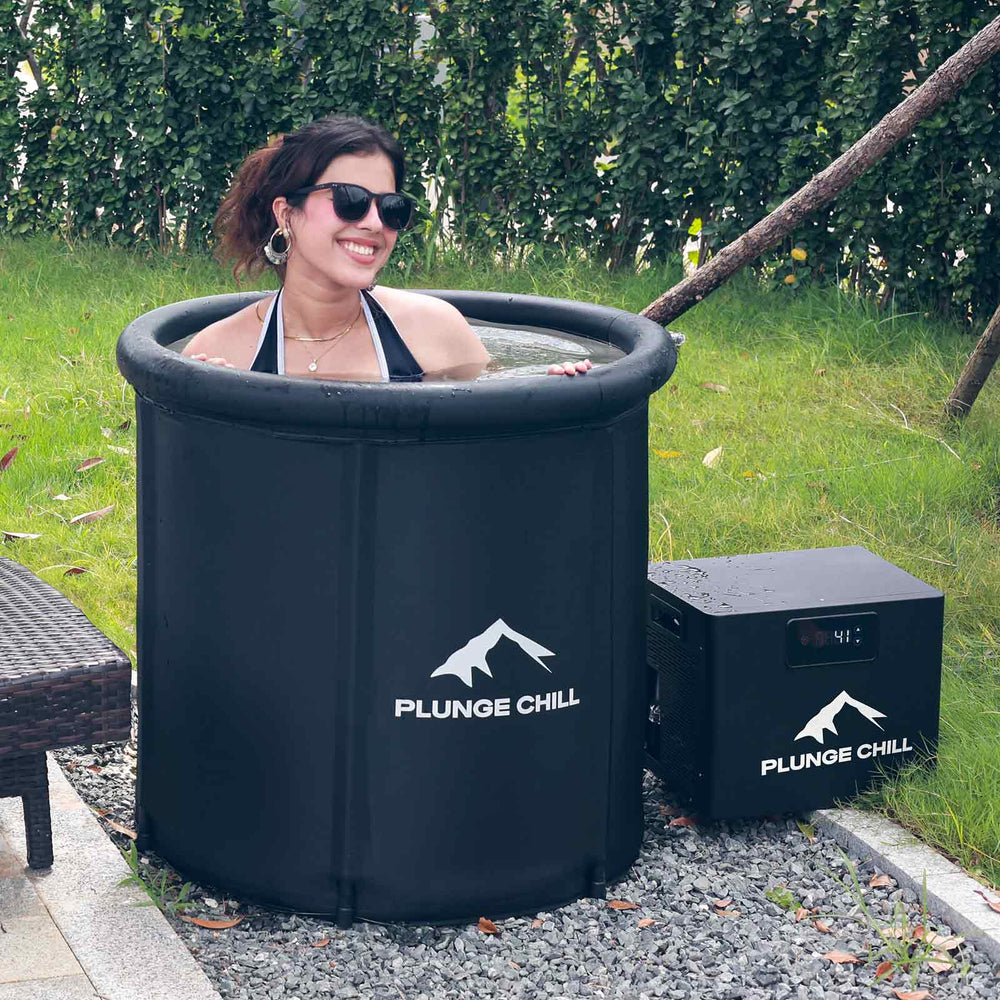
Cold plunges are entering a similar evolution. Instead of a static tub in the garage, we are starting to see cold‑water immersion treated like another environmental variable in the home, alongside light and air. In practical terms, that means moving from ad‑hoc ice baths toward systems that can hold a precise temperature, cycle, and duration, integrate with wearables and health apps, and plug into the same routines that already orchestrate your lights, music, and HVAC.
To see why this matters, it helps to look at what smart technology already does for wellness throughout the home.

Why “Smart” Matters in a Cold Plunge
Precision and Dose Control: The Thermostat Principle
Smart thermostats in wellness‑oriented homes do far more than save on the gas or electric bill. Reports from sources such as ArchiExpo’s interiors coverage and AARP note that these devices learn preferences, detect occupancy, and maintain comfortable temperatures automatically. In some systems, air quality monitors can even trigger ventilation or purification when particulate matter or volatile organic compounds cross certain thresholds.
Translating that principle to a cold plunge, the key variable is not the thermostat on your wall but the “dose” of cold exposure: how cold, for how long, and how frequently. The sports science debate over the optimal protocol is still evolving, and the broader smart‑home literature does not yet provide specific dosing guidance for cold immersion. However, it does demonstrate the benefits of consistent, sensor‑controlled environments.
From an applied rehabilitation perspective, consistency is everything. If your plunge session is supposed to be ten minutes at a specific intensity of cold, but one day you are in water that feels like melted ice and another day like a lukewarm pool, your training response will vary wildly. Borrowing the thermostat model, a smarter cold plunge can aim to hold a set temperature, log actual water conditions, and record how long you were in the tub, creating a more standardized intervention.
Imagine an athlete whose target routine is three plunges per week, each at a stable, challenging temperature for a defined interval. If smart scheduling and automated pre‑cooling transform “when I remember and have time” into “every Monday, Wednesday, and Friday at 7:30 PM,” adherence improves. If that yields even one more consistent session per week, the difference over a year is roughly fifty additional cold exposures, which is a meaningful change in training load and recovery practice, purely from better automation.
Automation, Decision Fatigue, and Recovery Routines
Psychology‑focused analyses of smart homes, including reports from eInteractive and psico‑smart, emphasize that automation does more than save button presses. Offloading routine tasks reduces decision fatigue and mental load, which in turn lowers stress and frees attention for more important choices.
In one survey summarized by psico‑smart, about two thirds of homeowners using smart devices reported feeling less stressed and more relaxed. Another data point from the same source indicates that roughly three quarters of users felt more in control of their health when using continuous sensors. Although these figures come from broad smart‑home setups rather than cold plunges specifically, they illustrate how automation can support a sense of agency and calm.
Cold plunges are a classic example of something that is easy to skip when you are tired or busy, precisely because they require effort before you even get into the water. You may need to fill the tub, add ice, check the temperature, set a timer, and clean up afterward. Each friction point is another chance to decide not to bother.
Smart home case studies, including morning‑routine examples from integrators like Digital Installers and wellness‑trend pieces in the Daily Iowan, show how a single scene can coordinate multiple actions: lights gradually brightening, music turning on, blinds opening, and temperature adjusting with one command. Applied to recovery, a “post‑training” scene could, in theory, start the cold plunge chiller, dim harsh lights in the recovery area, play calming music, and set a comfortable room temperature while you finish your last set.
The specific combination matters less than the principle: turn recovery from a string of chores into a default, low‑friction part of your day. As a strength coach, I am far more confident that an athlete will stick with a protocol that is integrated into the environment than one that depends entirely on willpower.
Safety, Monitoring, and Home Healthcare Integration
As smart homes become health hubs, safety‑oriented technology has expanded dramatically. Articles from General Security, CE Pro, and Qorvo describe networks of sensors that monitor motion, doors, windows, stoves, water leaks, smoke, and carbon monoxide, often tied into professionally monitored systems. The Centers for Disease Control and Prevention figure, cited in security and wellness reports, that more than three million older adults visit emergency rooms each year due to falls, underscores why motion sensing and fall detection matter.
Home healthcare trend analyses suggest that within a few years, a substantial share of healthcare services may be delivered in the home, supported by cheaper consumer‑grade monitoring, machine‑learning‑driven fall detection, and cloud‑based data management. Telehealth usage expanded to dozens of times its pre‑pandemic baseline during COVID‑era restrictions, according to multiple industry reviews, and the infrastructure built then is now being redirected toward ongoing home monitoring and chronic disease management.
Against that backdrop, a cold plunge is not just a recovery tool; it is a body‑temperature stressor sitting on your property. In a well‑integrated system, we can reasonably expect future cold plunge designs to communicate with wearables, home assistants, and safety sensors. For example, heart rate or perceived exertion collected from watches or chest straps, as described in tele‑exercise overviews, could flag unusually high responses and shorten a session. Motion or presence sensors already used for falls might detect a lack of movement near the tub when the system believes someone is still in the water, triggering alerts.
These features are emerging, not yet standardized, and the scientific literature on their impact in cold immersion is still sparse. But the home‑healthcare and tele‑exercise fields demonstrate that continuous monitoring and smart alerts can improve safety and support aging in place. It is a short conceptual step to imagine a cold plunge that behaves less like a backyard trough and more like a supervised, sensor‑aware piece of medical‑grade equipment.
Building a Smart Recovery Environment Around the Plunge
Coordinating Light, Temperature, and Recovery Timing
Circadian rhythm and environmental control are where smart homes already offer the most mature wellness capabilities. Organizations such as CEDIA and design features in ArchiExpo, Parade of Homes, and smart‑home wellness blogs all emphasize circadian‑supportive lighting: bright, cooler light during the morning and daytime, then warm, dim light as evening approaches. Whole‑home implementations synchronizing multiple rooms are considered more effective than one‑room fixes because they maintain consistent light cues as people move around.
The same sources highlight that smart blinds and shades can open and close with the sun, while blackout shades and sunrise‑simulation lights work together to create naturalistic wake and sleep patterns even in rooms with limited daylight. Neuro‑ and endocrine‑driven arguments for better sleep are supported by sleep and wellness articles that link poor sleep with irritability, reduced activity, weight issues, and increased health risks.
For cold plunges, timing relative to sleep and training is often more consequential than people realize. While rigorous, cold‑plunge‑specific chronobiology research is limited in the notes we have, the broader evidence on circadian health suggests two practical implications for a smart recovery setup.
First, placing your primary cold exposure earlier in the day and pairing it with bright, alerting light and comfortable ambient temperatures may align better with wakefulness and post‑exercise recovery. Morning scenes that combine cool water immersion, energizing light, and movement can anchor a strong start to the day.
Second, late‑evening cold exposure may interact with sleep patterns in ways that vary by individual. A smart system that tracks your sleep through wearables and your environment through home sensors could, in time, correlate your plunging habits with sleep duration and quality. While that correlation would not prove causation by itself, it is more informative than guessing. Tele‑exercise research shows that integrating wearables, environmental data, and app‑based coaching can personalize exercise plans; that same data stack can be repurposed to refine when and how you use cold exposure.
Air, Water, and Hygiene: The Invisible Parts of Recovery
Much of the smart‑home wellness literature revolves around air and water, and for good reason. The World Health Organization figure, cited by smart‑home integrators, that millions of premature deaths each year are linked to indoor air pollution, is paired with indoor exposure time estimates around ninety percent of the day. Smart sensors and purifiers now measure fine particulates, carbon dioxide, carbon monoxide, volatile organic compounds, humidity, and even air pressure. When thresholds are exceeded, systems can automatically increase ventilation or filtration.
In sophisticated builds, multi‑sensor platforms such as those described by Airthings, along with advanced purifiers and HVAC filters, can remove particles down to very small sizes and neutralize a broad range of contaminants. Wellness‑focused platforms from property and insurance analysts emphasize that indoor air can contain thousands of species of fungi and bacteria, reinforcing why continuous monitoring matters.
Water quality receives similar attention. Articles discussing smart water management highlight leak detection, real‑time consumption monitoring, and filtration to remove contaminants that may cause acute gastrointestinal issues or contribute to chronic disease risks over longer exposures.
For a cold plunge, this is not abstract. You are sitting in that water. A smart system that circulates, filters, and disinfects the tub automatically, and that alerts you when maintenance is due, reduces infection risk and makes it psychologically easier to commit to regular use. Integrating leak detection around the plunge protects your home from costly water damage, which insurance‑oriented sources note can also tie into premium discounts when paired with monitored systems.
As with other aspects of smart wellness, the evidence base in the notes focuses on indoor air and general water quality, not on cold plunges specifically. However, from a rehabilitation standpoint, an unmonitored tub is a hygiene liability, while a filtered, disinfected, sensor‑equipped system is closer to the controlled environments we expect in clinics and training centers.
Turning Your Cold Plunge into a Data‑Informed Lab
An extensive scientific overview of tele‑exercise and Internet‑of‑Things fitness technologies highlights how wearables, smart scales, and environmental sensors can log heart rate, oxygen saturation, sleep, posture, and activity in real time. Artificial intelligence applied to these data can adjust exercise prescriptions, flag movement errors, and estimate injury risk, although the authors also stress challenges such as data quality, user adherence, and privacy.
In the smart home literature, similar themes emerge: aggregated data from multiple devices provide holistic insights into sleep, stress, and behavior; social and gamified features improve adherence; and predictive analytics may, in the future, detect health problems earlier.
A cold plunge, when integrated into this ecosystem, becomes another input and another lever. Instead of “I plunge a few times a week,” your system might know precisely when you went in, for how long, at what water temperature, what your heart rate did during and after, and how your sleep and training metrics looked the next day. Even a simple correlation, such as noticing that heavy strength sessions followed by moderate evening cold exposure coincide with better perceived recovery scores, is more informative than relying on memory and intuition alone.
From a coaching perspective, this is where smart cold plunges could eventually justify their complexity. If athletes share their home recovery data with practitioners, as many do with strength and conditioning, sleep, or glucose metrics, coaches can calibrate training blocks based on how well the athlete actually recovers. The tele‑exercise review calls for integrating these systems with clinical practice and emphasizes international cooperation to make them accessible; smart recovery modalities will need to follow the same path to avoid becoming tools only for the tech‑savvy or affluent.

Pros and Cons of Smart Cold Plunge Systems
Smart technology is not a free lunch. The broader wellness tech literature is explicit about both benefits and risks, and those themes carry directly into smart cold plunges.
On the benefits side, automation and integration clearly support consistency, safety, and personalization. Psico‑smart reports that roughly three quarters of users of smart sensors feel more in control of their health, and two thirds feel less stressed. Safety‑oriented sources show how fall detection, smoke and carbon monoxide monitoring, and water‑leak detection can catch problems early and, in some cases, trigger rapid responses. Smart‑home wellness pieces emphasize that unified scenes reduce friction by tying multiple tasks to a single action, leading to more consistent routines.
For a cold plunge, those same advantages translate into better adherence, a more clinic‑like level of environmental control, and potentially fewer accidents or near misses. As a practitioner, I would rather my athletes use a plunge that keeps the water clean, logs their exposure, and can at least alert someone if something is obviously wrong, than a rusty stock tank filled from a hose in a dark corner of the yard.
On the risk side, privacy and complexity are not trivial. Several sources, including psico‑smart and Daily Iowan coverage, note that around seventy percent of consumers worry about how their health data are used. Smart‑home healthcare discussions emphasize that devices often rely on cloud services, raising legitimate questions about who has access to highly personal behavioral data. Additional concerns, highlighted in tele‑exercise and digital health overviews, include algorithmic bias, interoperability gaps, user acceptance, and digital inequalities.
Cold‑plunge integrations add another health‑related data stream. If your plunge speaks to your home assistant, your phone, and perhaps a coaching platform, you need to know where that data go and who can see them. From a practical viewpoint, complicated systems also break more often and require more maintenance. As Bayhealth and other health organizations remind users, technology should serve you, not the other way around, and building in digital boundaries and time to unplug remains important even when devices are health‑oriented.
Finally, equity matters. Tele‑exercise and smart‑home wellness authors warn that requiring expensive devices, reliable broadband, and strong digital literacy can widen health gaps. If recovery strategies depend on a fully connected home, they may be inaccessible to precisely the populations that could benefit most from thoughtful, low‑cost recovery interventions. Smart cold plunges should be viewed as a tool for those who can afford and manage them, not as a baseline requirement for effective rehabilitation.
How to Design Smart Tech Around Your Cold Plunge
Decide What Problem You Are Actually Solving
Before buying anything with an app, it helps to ask a simple question: what is failing in your current recovery routine? Smart‑home wellness guides, especially those aimed at older adults and people with chronic conditions, repeatedly recommend starting with one or two high‑impact devices that target a specific pain point rather than filling the house with gadgets.
If your main issue is inconsistency, then scheduling and automation around your cold plunge are probably more valuable than advanced analytics. In that case, a system that can pre‑chill the water before your usual training times and integrate with a simple reminder in your existing smartwatch may be enough.
If your concern is safety, particularly for older adults or individuals with cardiovascular or mobility issues, then integration with motion sensors, door sensors, or simple check‑in mechanisms takes priority. The home‑healthcare trend literature highlights fall detection and “signs of life” monitoring using ordinary devices such as televisions and refrigerators; similar strategies could be adapted around a plunge area.
If you are already nailing consistency and safety but want deeper insight, then data‑heavy integration with wearables and training logs may be worth the complexity. Tele‑exercise systems illustrate how heart rate, activity, and environmental data can inform remote coaching, though they also show that user adherence and data quality can be limiting.
Map Smart‑Home Capabilities to Cold Plunge Needs
A practical way to think about smart cold plunges is to treat them as one component in a broader set of smart‑home wellness tools. The table below summarizes how existing smart‑home features discussed in the research can map onto cold‑plunge use, focusing on concepts rather than specific brands.
Smart‑home capability |
Current wellness use in homes (based on sources) |
Potential application to cold plunges |
Circadian lighting and smart blinds |
Support sleep and mood by aligning light with time of day; simulate sunrise; dim in evening. |
Pair plunge sessions with alerting morning light or calming evening scenes; avoid harsh lighting that increases stress during immersion. |
Smart thermostats and environmental sensors |
Maintain comfortable, efficient temperatures; control humidity; trigger air purification. |
Hold room temperature within a comfortable range during plunges; prevent overly cold or hot ambient conditions that compound water stress. |
Air quality monitoring and purification |
Track pollutants and humidity; automatically increase ventilation or filtration when thresholds are crossed. |
Maintain clean air and appropriate humidity in the plunge room, which may be damp, reducing mold and respiratory irritants. |
Water monitoring and leak detection |
Detect leaks and abnormal water use; manage filtration systems. |
Monitor tub water level and potential leaks; automatically stop filling or circulation if a problem is detected, protecting the home. |
Motion, presence, and fall detection sensors |
Support aging in place; identify lack of movement or unusual patterns; trigger alerts. |
Detect absence of movement near the plunge when the system expects a person to be present; flag potential falls or prolonged immobility. |
Wearables and tele‑exercise platforms |
Track heart rate, sleep, activity; enable remote coaching; personalize exercise plans. |
Log physiological responses before and after plunges; correlate with training loads and sleep; share summaries with coaches or clinicians if desired. |
This mapping is intentionally cautious. Most of the evidence comes from general smart‑home wellness and tele‑exercise studies, not from controlled trials on cold plunges. However, the same mechanisms that improve sleep environments, indoor air quality, and home safety can plausibly make cold‑water recovery safer, more comfortable, and more consistent when implemented thoughtfully.
Protect Your Data and Keep Systems Manageable
Multiple articles across this research set converge on three governance principles: be selective, be transparent, and be secure.
Being selective means choosing features that you will actually use and that clearly support your health goals. Smart‑home guides for older adults and for people with disabilities emphasize starting with one or two devices, involving family or caregivers in setup when appropriate, and periodically reassessing whether a device is still useful.
Being transparent means reading privacy policies and understanding data flows. Wellness‑tech analyses urge users to check where data are stored, how long they are retained, and whether they are shared with third parties. For cold plunge integrations, that includes device manufacturers, automation platforms, and any coaching or tele‑exercise services you connect.
Being secure means using strong authentication, enabling software updates, and turning off unnecessary microphones, cameras, or geo‑tracking. Tele‑exercise reviews highlight data security and regulatory compliance as central challenges, and organizations such as Bayhealth remind users that basic digital hygiene—like limiting permissions and updating firmware—applies as much to wellness devices as to laptops.
In practice, a pragmatic strategy for many athletes and health‑conscious homeowners is to keep the cold plunge on the same privacy footing as a smart scale or fitness tracker. Treat the data as sensitive, connect only to systems you trust, and be cautious about sharing raw data broadly.

Looking Ahead: Cold Plunges in the Home Healthcare Ecosystem
The most forward‑looking smart‑home discussions see the house itself as a healthcare node. CE‑ and wellness‑industry reports suggest that within a relatively short time frame, a large fraction of healthcare interactions may shift into the home, facilitated by cheaper monitoring devices, secure cloud infrastructures, and AI‑enhanced interpretation of data.
Qorvo’s survey of older adults shows that nearly nine out of ten prefer to remain in their own homes as they age, and AARP’s technology trends highlight that consumers over fifty already own multiple connected devices. Smart‑home health projects such as the Mindful Diabetes and Smart Door Solutions collaboration around touchless entry systems demonstrate how accessibility‑oriented devices can reduce physical strain and foster independence.
In that context, a smart cold plunge is unlikely to stand alone. It will be one of many tools—alongside smart beds, lighting, air systems, and possibly smart textiles—that feed into a broader picture of your healthspan, not just your lifespan. Recovery modalities that used to be limited to elite facilities may become part of routine home care for people managing pain, stiffness, or high training loads, provided they are implemented safely and equitably.
From a rehabilitation and strength‑coaching standpoint, the opportunity is to integrate cold exposure intelligently with other data streams rather than treating it as a trendy add‑on. The challenge will be ensuring that such systems reduce friction and improve outcomes without overwhelming users with complexity or compromising privacy.

Short FAQ
Do I need a fully connected smart home to benefit from a cold plunge?
No. A basic, well‑maintained cold plunge can still be effective as part of a recovery plan. The evidence from smart‑home wellness suggests that automation and integration mainly help with consistency, safety, and personalization. If you already have or plan to add smart lighting, thermostats, and sensors for other reasons, it is logical to integrate the plunge into that environment, but it is not mandatory for the plunge to be useful.
Which smart features should I prioritize if I am an athlete or serious exerciser?
For most athletes, the highest‑value features are precise, stable temperature control, easy scheduling, and basic integration with wearables or training logs. This aligns with broader tele‑exercise findings that real‑time data and routine automation improve adherence and allow better program adjustments. Advanced analytics and complex automations can be helpful, but only after the fundamentals of dose, timing, and safety are in place.
How should older adults or people with health conditions think about smart cold plunges?
Caution and medical guidance come first, since cold exposure can stress the cardiovascular system. That said, aging‑in‑place and home‑healthcare research shows that smart monitoring and fall detection can make home environments safer overall. If a clinician agrees that cold exposure is appropriate, then pairing a plunge with motion sensors, easy‑to‑use controls, and simple alert mechanisms could, in principle, make it safer than older, improvised setups. Any such system should be configured in close collaboration with healthcare providers, family members, or caregivers.
Closing
In sports rehabilitation, the tools change, but the principles stay the same: apply the right dose, at the right time, to the right person, and make it easy enough that real people will actually do the work. Smart technology in cold plunges will not replace good programming, coaching, or clinical judgment. Used wisely, though, it can turn a difficult but valuable recovery tool into a predictable, integrated, and safer part of daily life—one more way your home works with your body, rather than against it.
References
- https://pmc.ncbi.nlm.nih.gov/articles/PMC10298072/
- https://mindfuldiabetes.org/smart-home-healthcare/
- https://www.paradeofhomes.org/blog/connected-living-how-technology-is-redefining-healthy-living-at-home
- https://www.aarp.org/personal-technology/smart-home-daily-life-easier/
- https://www.bayhealth.org/community-wellness/blog/2022/may/smart-devices-can-make-you-health-savvy
- https://cedia.org/en-us/homeowners/knowledge/circadian-lighting-wellness-in-the-smart-home/
- https://wethrivetogether.org/2023/06/28/smart-home-devices-revolutionizing-health-and-wellness/
- https://www.iotforall.com/the-health-benefits-of-smart-home-technology
- https://blogs.psico-smart.com/blog-home-automation-and-health-integrating-smart-devices-for-enhanced-wellness-monitoring-183664
- https://emag.archiexpo.com/smart-home-technology-is-shaping-wellness-centered-interiors/