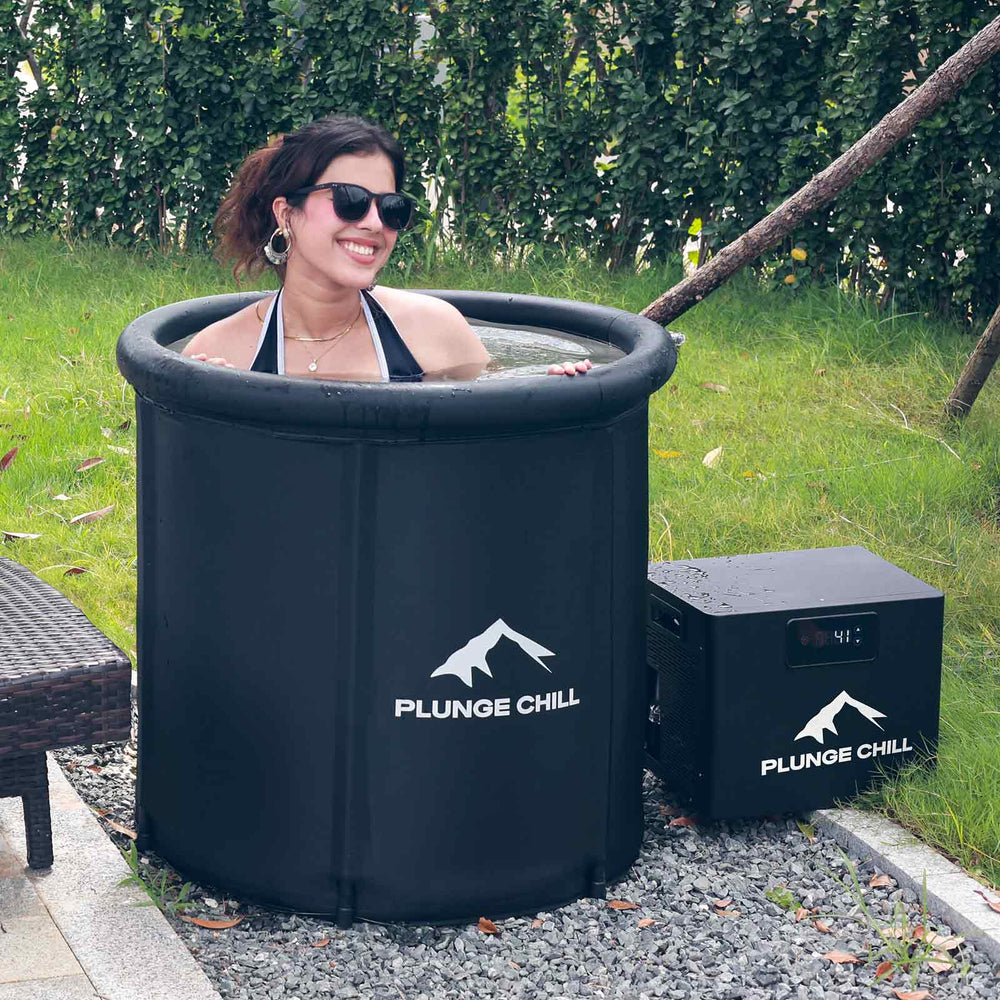
As a sports rehabilitation specialist and strength coach, I love what cold plunges do for recovery. As someone who has helped athletes squeeze a plunge into spare bedrooms, garages, and basements, I also know what they can do to drywall, windows, and lungs when condensation is ignored. An indoor plunge behaves like a compact spa and a daily bath rolled into one. If you do not manage the moisture, you will eventually see it on your windows, smell it in your gear, or feel it in your breathing.
What follows is a practical, evidence‑based guide to managing condensation when you run a cold plunge indoors. I will keep this grounded in building‑science and indoor‑air research, while translating it into the realities of home gyms and recovery spaces.
Why Indoor Cold Plunges Cause Condensation
At its core, condensation is simple physics. Several building‑science sources define it the same way: moisture forms on a surface when warm, humid air hits something colder than the air’s dew point, and water vapor turns into liquid droplets. The University of Minnesota Extension notes that condensation on windows, bathroom mildew, and mold in closets are classic symptoms of excess indoor moisture. Similar explanations appear from the EPA and home‑performance experts who point to cold windows, exterior walls, and uninsulated pipes as frequent condensation sites.
An indoor cold plunge setup brings together exactly the ingredients condensation needs. You typically have a relatively warm room in the 60s or low 70s°F, you introduce a sizable open water surface, and you add a user who gets in and out dripping wet. Everyday household activities such as bathing, showering, cooking, and even breathing already add moisture to the air, as highlighted by University of Minnesota Extension and EPA materials. A plunge session is effectively another high‑moisture event, closer to a bath or shower than to a quick hand wash.
Insurance and housing guidance from Endsleigh and Envirovent quantify how intense these everyday sources can be. One breakdown estimates that a typical day in a home can generate roughly 21 pints of moisture: a few pints from occupants just existing and breathing, several more from cooking and kettles, more from bathing, and a large share from washing and drying clothes indoors. Envirovent reports that a household of four can produce around 112 pints of moisture in a week from normal living. Those numbers do not even include a dedicated cold plunge routine layered on top.
When you drop a plunge into that environment, the room now has more wet surfaces, more splashing, more towels hanging to dry, and often less attention to ventilation than a bathroom would receive. If the plunge sits near a cold exterior wall or window, or in an under‑insulated corner, the warm, moisture‑laden air after a session will find that cold surface and condense on it. You see it as foggy glass, beads of water on paint, or damp corners behind equipment. The University of Minnesota Extension and EPA both flag this kind of visible condensation as an early warning sign that indoor humidity is too high and that moisture control is failing.
In other words, the cold plunge itself is not the problem. The combination of its moisture load with a small, poorly ventilated, and often cold‑surface‑rich room is what turns a positive recovery tool into a building‑science headache.

Why Indoor Cold Plunges Cause Condensation and Humidity Issues
To manage condensation, you need to think in terms of relative humidity rather than only in terms of how “damp” the room feels. Several of the sources you have in front of you define relative humidity as the amount of moisture in the air relative to the maximum the air can hold at that temperature. When air is already close to saturated, a minor cool‑down at a surface is enough to push it over the edge and cause condensation.
Multiple reputable organizations converge on a similar humidity band for healthy, durable buildings. University of Minnesota Extension recommends keeping indoor humidity roughly between 25 percent in winter and 50 percent in summer. The EPA and American Standard guidance generally frame 30 to 50 percent as a comfort and durability target for homes, and note that problems tend to intensify above about 60 percent. Environmental health guidance from Rensselaer Polytechnic Institute similarly recommends keeping indoor relative humidity below roughly 60 percent, ideally in the 30 to 50 percent range, to reduce mold risk.
On the health side, a research group at MIT examined Covid‑19 outcomes across many countries and found that indoor relative humidity between about 40 and 60 percent was associated with lower infection and death rates, with outcomes worsening below 40 percent and above 60 percent. While that study was about infectious disease and not cold plunges, it reinforces a pattern: both very dry and very humid indoor air are problematic, and a mid‑range band is desirable.
Some building‑regulation research, cited alongside work on condensation avoidance, is even stricter at the surface level. One paper summarized in the Fernandes condensation overview notes guidance that relative humidity in a room should not exceed about 70 percent for more than two hours or 90 percent for more than one hour during the heating season if you want to avoid visible mold on external walls. That is a performance criterion for walls rather than air in the middle of the room, but it underscores how quickly high humidity can create damage where temperatures are lowest.
For an indoor cold plunge, this evidence points to a pragmatic target. You want the room where the plunge lives to spend most of its time in the 30 to 50 percent relative humidity range, with short peaks into the 50s immediately after use that are quickly driven back down by ventilation and dehumidification. Once you see sustained readings in the 60s, especially if paired with window condensation, musty odors, or visible mold, you are past the point of “just a bit damp” and into a zone where both building materials and lungs are at risk.
In practice, that means you cannot just drop a plunge into an interior room and hope that your main air conditioner will “handle it.” You need to treat humidity as a tracked training variable, not a vague impression.
Ideal Room Humidity for Indoor Cold Plunge Rooms
Best Surfaces and Placement to Prevent Indoor Cold Plunge Condensation
From a moisture perspective, not all rooms are equal. The EPA, University of Minnesota Extension, and several building‑science sources divide moisture problems into two broad patterns: visible surface condensation and hidden or interstitial condensation inside walls and cavities. Both matter when you plan an indoor plunge.
Bathrooms and properly constructed laundry rooms are usually safest because they already combine hard, non‑porous finishes with drains and exhaust fans that vent outdoors. Materials such as tile, sealed concrete, and properly painted or sealed drywall tolerate occasional wetting and can be dried quickly. EPA guidance specifically warns against installing wall‑to‑wall carpet directly on concrete because moisture can accumulate and feed mold in the carpet; in a plunge room, that advice is even more important. A cold plunge sitting on bare carpet, or on a slab with only carpet between it and concrete, is asking for hidden dampness.
By contrast, small bedrooms, closets, and bonus rooms often have exterior corners with thin insulation, single‑pane or poorly insulated windows, and plenty of porous materials. Home‑improvement sources and sustainability experts point out that inadequate insulation and air leaks around windows create cold interior surfaces that readily collect condensation. The same applies to uninsulated pipes running near the plunge or to metal framing around windows or doors.
If you are evaluating a room for an indoor plunge, walk it as if you were looking for leaks. Notice where exterior walls, windows, and concrete floors are exposed. Check for existing condensation on windows on cold mornings, a sign that the room is already at its moisture limit. Consider how close the tub will sit to an outside wall or window and how easy it will be to maintain airflow behind and around the unit. Treat any dark, stagnant corner as a high‑risk zone for mold once you introduce more moisture.
Ventilation Tips to Reduce Indoor Cold Plunge Moisture and Condensation
Most of the humidity‑control guidance from HVAC professionals, universities, and the EPA comes back to the same principle: start by removing or exhausting moisture at its source. Kitchen and bathroom exhaust fans are repeatedly highlighted as primary tools. Carolina‑based HVAC guidance emphasizes running exhaust fans during and after showers and while cooking, and similar recommendations appear in EPA and American Standard materials.
For a cold plunge, you want an equivalent setup. If the unit is near an existing bathroom or laundry‑room exhaust fan that vents outdoors, you are ahead of the game. You can treat plunge sessions similarly to showers: run the fan during use and for at least 15 to 20 minutes afterward, and keep the door mostly closed while the fan is clearing moisture. If the plunge is in a room without an exhaust fan, you will rely heavily on a combination of opening windows when outdoor conditions permit and using a dehumidifier. Some guidance, such as from Guardian and Envirovent, describes whole‑house ventilation systems and positive‑input ventilation units that continuously supply fresh air and exhaust stale, damp air. Those can be powerful tools in homes with chronic condensation, but they usually require professional installation and a higher budget.
Central air conditioning and modern HVAC units can help, but only if they are appropriately sized and maintained. Carolina Cool and Kyzar Air Conditioning both note that air conditioners act as dehumidifiers as they cool. However, units that are oversized or short‑cycle often fail to remove much moisture. Several HVAC sources recommend regular maintenance and filter changes so that airflow and dehumidification remain effective. Where homes feel “sticky” despite the thermostat setting, American Standard and others suggest that the system may not be providing adequate dehumidification and that upgrades or dedicated dehumidifiers might be needed.
When you add a plunge, imagine you are adding another bathroom in terms of moisture load. If your existing system already struggles to keep humidity in check, you will need to improve ventilation or add mechanical dehumidification before expecting it to handle plunge sessions gracefully.
Drainage and Water Control to Prevent Mold and Condensation in Indoor Cold Plunge Rooms
All the humidity in the air is only part of the risk. Mold‑prevention guidance from Rensselaer Polytechnic Institute, the EPA, and home‑recovery resources stress a simple timeline: wet porous materials should be dried completely or removed within about 24 to 48 hours of getting wet to prevent mold colonization. That is as true for a towel‑soaked carpet near a plunge as it is for a flooded basement.
This means your plunge room needs a clear plan for dripping bodies, splashes, and spills. Floors should either drain or be easy to squeegee and dry. Towels should be moved to a better‑ventilated laundry area rather than piled in the corner. If you notice recurring wet spots on drywall, baseboards, or under the plunge, treat that as a water damage incident rather than a minor annoyance. Track down the source, correct it, and dry or replace affected materials promptly. Cold Plunge Water Quality & Maintenance Guide

Daily Humidity Control Tips After Indoor Cold Plunge Use
How to Monitor Indoor Cold Plunge Humidity for Better Moisture Control
Several HVAC and building‑science sources encourage homeowners to stop guessing about humidity and measure it. Devices called hygrometers, described in indoor‑air guidance from RS Andrews and others, provide a simple digital readout of relative humidity. They are inexpensive and easy to place in problem rooms such as basements, bathrooms, kitchens, and bedrooms.
For a cold plunge area, I recommend placing at least one hygrometer at about chest height away from direct drafts, and another near likely cold surfaces such as windows or exterior corners. Over a week or two of normal living plus plunge sessions, note the baseline humidity, the peak values right after use, and how quickly those peaks fall after you run a fan or dehumidifier.
If your baseline is already above 50 percent before you even take a plunge, you are working from a disadvantage. If readings spike well into the 60s or higher after each session and stay elevated for hours, you have clear evidence that your moisture management is inadequate. Combine these numbers with visual checks for window condensation, as recommended by the EPA and the University of Minnesota Extension, and you will have a solid, objective sense of whether your setup is safe or trending toward mold and structural problems.
How to Monitor Indoor Cold Plunge Humidity for Better Moisture Control
University of Minnesota Extension distills moisture control down to a simple hierarchy: first identify and remove or reduce the source, then use ventilation or dehumidification when you cannot. That same philosophy applies to cold plunges.
Start with the water itself. When the plunge is not in use, keep it covered with a well‑fitting lid to reduce evaporation. This aligns directly with the guidance to reduce sources of water evaporation such as baths, cooking pots, and humidifiers. During use, minimize splashing and, as much as possible, dry off while still over the tub rather than walking across the room dripping.
Next, look at everything else in the room that adds moisture. Daily‑life statistics from Endsleigh and Envirovent make it clear that long hot showers, indoor clothes drying, and unvented appliances like dryers or humidifiers are major contributors. If your plunge is in a room that also hosts a drying rack, a portable humidifier, or lots of houseplants, consider relocating some of those sources. The EPA and other guidance also suggest turning down or turning off humidifiers when condensation appears on windows, a sign that humidity is already too high.
Finally, focus on surfaces. Multiple sources, including the NHS‑referenced mold guidance summarized by Envirovent and Endsleigh, emphasize wiping up condensation on windows and walls and drying them thoroughly. In experiments described by Homes & Gardens, simply wiping condensation from windows proved only a temporary fix, but it still reduced surface water available to feed mold. In a plunge room, treat wiping down windowsills, frames, and other visibly wet surfaces after sessions as part of your cooldown routine, along with drying floors and mats.
If mold does appear, NHS guidance summarized by several sources suggests that for small areas of typical condensation mold on non‑porous surfaces, soapy water or appropriate mold‑removal products can be effective, provided you wear gloves or basic protection and dry the area afterward. Suspected toxic mold or extensive growth, especially inside wall cavities, is a different matter and warrants professional attention.
Reduce Indoor Cold Plunge Moisture at the Source
Once you have reduced the moisture you introduce, you still need to remove what remains. The main tools are ventilation with outside air, dehumidifiers, and your existing HVAC system. Each has strengths and limitations described in the research and guidance you have.
A Guardian article on condensation and several ventilation‑focused sources describe a simple but effective practice known in Germany as “impact ventilation,” where windows are opened widely for a short period, usually a few minutes, to create a through‑draft that flushes out moist indoor air. This strategy cools the air briefly but leaves walls and furnishings relatively warm, so the space reheats quickly. For plunge users, a practical version is to open windows on opposite sides of the space and run the exhaust fan immediately after a session, especially in shoulder seasons when outdoor air is not extremely humid.
Where outdoor conditions are too humid or too cold, mechanical dehumidification becomes essential. Several sources, including Kyzar Air Conditioning, Lowes, American Standard, Envirovent, the Guardian article, and an Energy and Buildings case study summarized in the Fernandes collection, highlight dehumidifiers as one of the most direct ways to cut humidity. In that UK trial, running a dehumidifier in a house with severe condensation removed on average about 680 milliliters of water each night, roughly one and a half pints, and resolved the window condensation problem at an energy cost of about 1 kilowatt‑hour per night. That is a clear example of how modest electrical input can yield substantial moisture removal.
American Standard’s whole‑home dehumidifier offering illustrates the other end of the spectrum. Their equipment can remove up to 15 gallons of water per day from indoor air and integrates with smart thermostats to maintain humidity at set points. Envirovent, on the other hand, points out that portable dehumidifiers, while easy to buy and deploy, can raise room temperatures and add to energy bills if run continuously.
Because there is no single best tool for every situation, it can help to think in terms of roles. The following table synthesizes the strengths and limitations described in these sources, framed for a cold plunge room.
|
Strategy |
What it does |
Advantages drawn from sources |
Limitations drawn from sources |
Best used when |
|
Short‑burst ventilation |
Replaces humid indoor air with outdoor air |
Very low cost; strongly recommended by EPA, Guardian, Carolina Cool |
Depends on outdoor humidity and temperature; can waste heat |
Mild or dry outdoor weather; occasional use |
|
Bathroom‑style exhaust fan |
Vents moist air directly outdoors |
Specifically recommended for kitchens and baths by EPA and UMN |
Needs proper ducting; can be under‑sized or noisy |
Plunge near existing bathroom or laundry |
|
Portable room dehumidifier |
Condenses and collects water from room air |
Proven to resolve condensation in case studies; flexible placement |
Ongoing energy draw; may warm room; limited to one space |
Single plunge room or small home gym |
|
Whole‑house dehumidifier/HVAC |
Dehumidifies entire home via ductwork |
Provides consistent 30–50 percent RH; recommended in sticky houses |
Higher upfront cost; requires professional installation |
Humid climates or multiple moisture sources |
|
Positive or mechanical ventilation systems |
Continuously supply and exhaust air, sometimes with heat recovery |
Improve overall air quality; Guardian and others highlight as strong long‑term fix |
Complex, often expensive retrofit; best designed into buildings |
Chronic condensation, tight homes, big projects |
Whichever tools you use, the goal is the same: after a plunge session, humidity should rise modestly and then fall back toward your target band within a reasonable window, rather than lingering high for hours.
How Insulation and Windows Affect Indoor Cold Plunge Condensation and Humidity
Even if average room humidity is well managed, condensation will still form where surfaces are much colder than the air. Sustainability and window‑focused sources explain that poorly insulated windows, single‑pane glass, aluminum frames, and air leaks are especially prone to condensation. This Old House distinguishes between interior condensation, exterior dew on high‑efficiency glass, and condensation between panes from failed seals, and notes that persistent moisture on frames and sills is a warning sign.
EPA and Lowes guidance both recommend upgrading to double‑ or triple‑pane windows, adding storm windows, and improving insulation and air sealing to raise interior surface temperatures. They also note that leaving drapes and blinds slightly open in winter allows warm room air to wash over the glass, reducing condensation by warming the interior pane. Seating furniture or equipment directly against exterior walls can trap cold air and increase condensation risk, so leaving some clearance around the plunge and anything stored nearby is helpful.
Some of the more technical building‑science work summarized in the Fernandes paper and related references emphasize thermal bridges and interstitial condensation. When warm, moist air enters wall cavities through gaps and meets cold sheathing, condensation can occur inside the wall where you cannot see it. Over time this can damage structural elements and insulation. Sealing openings that allow warm, moist room air into walls and ceilings near the plunge is therefore not just an energy‑efficiency step; it is a moisture‑safety measure.
In practical terms, if your plunge is near an exterior wall or window, upgrade that area’s insulation and window performance before you invest in aesthetic finishes. Keep blinds and curtains from fully trapping air against the glass, maintain a stable indoor temperature rather than letting the room swing widely, and use your hygrometer and eyes to check whether small design changes are reducing condensation on those surfaces.

Health Risks of High Humidity and Mold from Indoor Cold Plunge Use
Condensation management is not only about avoiding peeling paint. Multiple public‑health assessments have linked dampness and mold to respiratory issues, allergies, and asthma. A widely cited economic analysis summarized in the Fernandes collection estimated that about 21 percent of current asthma cases in the United States, roughly 4.6 million people, may be attributable to dampness and mold exposure in homes, with annual costs in the billions of dollars. Rensselaer Polytechnic Institute’s mold prevention guidance emphasizes that indoor mold problems are fundamentally moisture problems and that controlling moisture is the primary prevention strategy.
From a performance perspective, chronic low‑grade respiratory irritation is not trivial. Athletes already demand a lot from their lungs. Training and recovery spaces that add mold spores and dust mites to the load are counterproductive. Several sources note that dust mites thrive at humidity levels above about 60 percent and that mold growth accelerates when surfaces stay damp. This is part of why EPA and American Standard materials consider indoor humidity above 60 percent “high” and why many extension services aim for 30 to 50 percent as a long‑term target.
The MIT research on indoor humidity and Covid outcomes adds another dimension. While it does not prove cause and effect for all respiratory diseases, it shows a robust statistical relationship: infection and death rates rose when indoor humidity fell below about 40 percent or climbed above about 60 percent. That U‑shaped risk curve is a useful reminder that over‑drying your plunge room to avoid condensation is not a free win either. Aiming for a middle band, with occasional short excursions during and after use, protects both building materials and airways.
In my own practice, I encourage athletes to think of humidity control as part of their recovery environment, not an afterthought. A cold plunge that helps inflammation but quietly feeds mold in the walls is a poor trade‑off.
Indoor Cold Plunge Room Design Examples for Condensation-Proof Setups
Consider an athlete who wants to install a plunge in a small spare bedroom with carpet, a single‑pane window, and no exhaust fan. Baseline humidity in the home sits around 50 percent according to a hygrometer. After a week of using the plunge once each evening and letting wet towels dry on a chair by the window, the athlete notices heavy condensation on the glass each morning, a musty smell in the room, and hygrometer readings in the mid‑60s overnight. In terms of the evidence above, this room is failing on several fronts: porous carpet is being repeatedly wetted, there is a cold, poorly insulated window acting as a condensation magnet, and there is no way to exhaust moisture effectively. The minimal viable fix would be to move the plunge to a room with hard flooring and an exhaust fan, add a portable dehumidifier sized for the space, keep the lid on when not in use, relocate towel drying, and upgrade the window if possible.
Now contrast that with a basement‑level home gym that already has sealed concrete floors, a nearby bathroom with an exhaust fan vented outdoors, and double‑pane windows. Basements can be naturally damp, so the owner already runs a dehumidifier that keeps humidity close to 45 percent according to a hygrometer. After adding a plunge and using it daily, humidity spikes to the mid‑50s immediately after sessions but drops back into the 40s within an hour of running the fan and dehumidifier. Windows stay largely clear, and no musty odors develop. In this scenario, the space’s combination of appropriate finishes, existing moisture control, and disciplined routines makes the plunge a low‑risk addition.
Both examples are realistic. The underlying physics and health evidence are the same; the difference lies in how well the room’s design and the owner’s habits align with those principles.

Short FAQ
Can I put a cold plunge in a bedroom or office?
You can, but most bedrooms and offices are not designed to handle routine wet‑room conditions. They often have carpet, limited ventilation, and cold exterior corners, all of which are risk factors described by the EPA and university extension services. If you choose a bedroom or office, plan to upgrade flooring to a non‑porous, drainable surface, add or repurpose a proper exhaust fan that vents outside, run a dehumidifier, and monitor humidity and window condensation closely. Without those steps, you are more likely to develop mold and structural damage.
Do I always need a dehumidifier if I run an indoor plunge?
Not always, but many homes benefit from one. If your plunge is in a room that already has a strong exhaust fan, good cross‑ventilation, and humidity that stays in the 30 to 50 percent range even after sessions, you may manage with ventilation alone, especially in drier climates. However, in humid regions, tight modern homes, basements, or any space where humidity lingers above 60 percent, the combined guidance from EPA, HVAC professionals, and building‑science case studies strongly supports adding a dehumidifier. Think of it as a controllable safeguard rather than a luxury.
Is a cold garage safer from condensation than a warm room?
Not by default. Garages often have lots of cold surfaces, exposed concrete, and minimal insulation. Sustainability and EPA resources explain that condensation forms readily when moist air meets those cold surfaces. If a garage stays cold and you introduce warm, humid air after a plunge or when the house is opened to it, you can see significant condensation on walls, doors, and stored items. A garage can work well if you treat it as a wet area: improve insulation where needed, seal cracks that allow water ingress, provide drainage and hard finishes, use targeted ventilation or a dehumidifier, and monitor humidity just as you would indoors.
Closing
Cold plunges earn their place in a serious training and rehabilitation program, but indoors they also become part of your building’s moisture system. The same physics and health evidence that govern bathrooms, basements, and laundry rooms apply here: control relative humidity, keep cold surfaces warm enough, remove water within a day or two, and exhaust or dehumidify moisture at the source. When you design your plunge setup with those principles in mind and verify it with a simple hygrometer and your own eyes, you protect both your recovery and the structure that surrounds it.
References
- https://www.academia.edu/55241921/On_Strategies_to_Prevent_Condensation_in_Buildings?f_ri=449428
- https://www.epa.gov/mold/what-are-main-ways-control-moisture-your-home
- https://news.mit.edu/2022/covid-humidity-spread-1116
- https://ehs.rpi.edu/workplace-safety-indoor-air-quality-iaq-and-mold/mold-prevention-managing-water-damage-and-moisture
- https://extension.umn.edu/moisture-and-mold-indoors/controlling-moisture-problems-your-home
- https://healthybuildings.hsph.harvard.edu/research_link/11677/
- https://www.realsimple.com/how-to-reduce-humidity-in-your-home-11781067
- https://www.thespruce.com/how-to-lower-humidity-in-house-8645807
- https://www.eichlernetwork.com/content/ways-reduce-condensation-windows
- https://www.homesandgardens.com/solved/I-tried-ways-to-stop-condensation-on-my-windows