Why Inuit Cold Resilience Captivates Athletes
As a sports rehabilitation specialist and strength coach, I hear the same question every winter: why can Inuit hunters and sealers move across polar seas and icy water with a calm that makes my pro athletes shiver just watching the footage? Wellness marketing takes that image and jumps straight to a bold claim: Inuit have “miraculous genetic adaptations” that make them uniquely suited to polar cold, so perhaps we should copy their ice-bathing practices to gain superhuman resilience.
There is some reality behind the fascination. Research on Inuit communities in northern Canada and Alaska describes people who self-identify as “people of the snow” and whose daily lives are, in their words, “weather permitting.” Time on the land and ice is not a weekend hobby; it is central to mental wellness, food security, and cultural identity. Studies in Nunatsiavut show that safe access to ice, snow, and country food supports dignity, self-esteem, and mental health, while unsafe or unpredictable conditions are linked to despair, stress, and even suicidal thoughts.
Traditional Inuit medicine also uses snow, ice, and deliberate cold immersion as part of a holistic healing system. Ethnographic accounts describe cold plunges in frigid water used for physical trauma and mental distress, and snow or ice poultices applied to injuries to reduce pain and inflammation. Snow houses, ice landscapes, and even snow and ice sculptures function not just as shelter or art but as spaces for ritual, storytelling, and spiritual healing.
For an athlete or coach, it is tempting to interpret all of this as proof of special genetic wiring. The evidence, however, is more nuanced. Most of what we know scientifically about cold-water immersion comes from studies in non-Inuit populations. Work on Inuit health centers more on climate vulnerability, traditional knowledge, and legal rights than on specific gene variants. To train intelligently, we have to separate myth from physiology and then translate the real lessons into safe, sport-ready protocols.

Are Inuit Really Genetically “Built” For The Ice?
The short answer, based on the research at hand, is that current evidence focuses far more on cultural, environmental, and behavioral adaptation than on “miraculous” Inuit genetics.
Reviews of cold-water immersion in humans, drawing on more than a hundred studies, treat cold as a universal physiological stressor, similar to intense exercise or low-oxygen exposure. These reviews describe how thermoregulation, blood flow, and metabolism shift under cold water, but they do not present robust, Inuit-specific genetic data that would justify a claim of unique innate invulnerability.
By contrast, work on Inuit health and climate change emphasizes how knowledge and social structures shape cold resilience. In the Canadian Arctic, more than fifty thousand Inuit live in small, remote, coastal communities across roughly a third of the country’s landmass. Their vulnerability to climate-related injury, infection, and food insecurity is strongly influenced by poverty, overcrowded housing, limited access to health care, and historical trauma. At the same time, resilience is supported by survival skills, traditional hunting practices, food-sharing networks, and strong cultural identities.
In other words, Inuit safety on the ice is not simply a function of physiology. It depends on knowing where and when ice is safe, reading subtle weather cues, understanding animal behavior, and moving as a community rather than as solo thrill seekers. These capacities are learned, transmitted, and practiced. They can decline with socioeconomic disruption, and they can be reinforced by culturally grounded programs.
Traditional Inuit medicine shows a similar pattern. Cold plunges and snow-based treatments are not random stunts but embedded in a holistic system that balances physical, mental, and spiritual health. Cold is used alongside storytelling, ritual, and community, not as a stand-alone biohack. The landscape itself is a therapeutic partner, not a prop.
For athletes, the key takeaway is that there is no credible scientific basis to assume you can replicate some hidden “Inuit gene” by simply staying longer in a tub at 39°F. What you can emulate is the discipline of gradual adaptation, the respect for environmental conditions, and the integration of cold exposure into a larger web of recovery, meaning, and social support.
Cultural And Environmental Adaptation Versus Genetics
Researchers who work directly with Inuit communities repeatedly highlight how climate change is disrupting mental wellness. When sea ice becomes unstable or thaws earlier, travel to cabins and hunting grounds becomes dangerous or impossible. People describe feeling at the mercy of the weather, cut off from spaces that normally provide calm, purpose, and social connection. Access to the land is tied to happiness, knowledge sharing, cooperation, and a sense of competence.
These studies reinforce an important point for anyone romanticizing polar toughness. The same ice that might look like an arena for heroism in an advertisement is, in reality, a life-support system that can either stabilize or destabilize an entire community’s health. As the ice becomes less predictable, the load on mental health, food security, and safety increases.
In that context, talking about “miraculous genetic adaptations” risks obscuring what Inuit leaders are actually asking for: respect for traditional knowledge, meaningful participation in climate and resource decisions, and legal frameworks that protect their rights to land, marine resources, and self-determined health strategies.
For you as an athlete or rehab professional, this matters in a practical way. It is a reminder that cold immersion does not exist in isolation. The benefits and risks depend on context: social, logistical, and medical. Hardcore polar dips borrowed from someone else’s culture are not superior to calmer, controlled plunges just because they look more extreme.
What Cold Water Really Does To The Human Body
Regardless of ancestry, the human body responds to cold water in fairly predictable phases, which explains both the appeal and the danger of polar plunges.
The first phase is the cold shock response. Research summarized by cardiology and physiology experts shows that when you go from room temperature into water much below about 60°F, heart rate, breathing, and blood pressure spike sharply. Blood vessels in the skin and limbs constrict, shunting blood toward the chest and vital organs. For a healthy, well-conditioned athlete, this may feel like a sudden jolt followed by intense shivering. For someone with coronary artery disease, arrhythmias, or severe hypertension, the same spike can precipitate chest pain or abnormal heart rhythms.
Water strips heat from the body about twenty-five times faster than cold air. Studies in winter swimmers and controlled lab immersions show that shivering thermogenesis, the involuntary, asynchronous contraction of skeletal muscle, can raise heat production up to about five times resting metabolic rate. Non-shivering thermogenesis, mediated by brown adipose tissue, is also activated but contributes relatively modest energy expenditure in adults unless white fat has remodeled over time. Subcutaneous fat thickness provides insulation, especially over the torso, which is one reason leaner individuals may cool faster than those with more body fat, independent of ethnicity.
Importantly, people vary widely in their cold responses. In one study of over two hundred conscripts undergoing a simple one-minute hand immersion at about 68°F, most rewarmed quickly, but roughly ten percent had slow or even decreasing skin temperature afterward, reflecting inherent differences in vasomotor control and thermoregulation. That variation appears across populations; it is not unique to any particular cultural group.
On the mental side, multiple studies cited by Stanford Lifestyle Medicine and other academic groups have shown acute mood shifts after cold exposure. Undergraduates who did a twenty-minute sea dip at about 56°F reported reductions in tension, anger, depression, and fatigue along with increased vigor and self-esteem compared with controls. Even five minutes in cooler water around 68°F made novice participants feel more active, alert, and inspired. These effects are plausibly linked to surges in noradrenaline and other neurotransmitters; one synthesis of cold exposure research describes metabolic rate increases of roughly threefold and noradrenaline spikes of several hundred percent at around 57°F.
At the same time, cardiology and psychiatry experts at institutions such as Baylor College of Medicine and Harvard-affiliated hospitals stress that evidence for long-term mental health treatment is still limited. A review in a major journal found that while short-term stress and sleep might improve with water at or below about 59°F for a few minutes, robust benefits for mood disorders or immune function remain unproven. Cold plunges should be viewed as potential adjuncts to established treatments, not replacements.
From a performance and recovery perspective, sports medicine studies are similarly mixed. Reviews from sports clinics and academic centers note that cold plunges can reduce delayed-onset muscle soreness and subjective fatigue in the day or two after intense exercise. Mechanisms likely include vasoconstriction, reduced metabolic activity, and changes in inflammation markers. However, for long-term strength and hypertrophy, frequent post-lift immersion in very cold water may blunt some of the cellular signaling that drives muscle growth. Endurance adaptations appear less affected, but the data are still developing.
The bottom line is that cold water is a powerful tool precisely because it is a powerful stressor. Used thoughtfully, it can create beneficial adaptations in thermoregulation, stress resilience, and perceived recovery. Used recklessly, especially in very cold open water, it can rapidly tip into hypothermia, arrhythmias, and drowning.
Why Near-Freezing Ocean Is Not Just A Colder Ice Bath
A common misconception in athletic circles is that if 50°F feels good, 35°F must be better. The physiology and the clinical guidance do not support that assumption.
Practice-oriented summaries from academic centers and sports medicine physicians typically recommend water around 50 to 59°F for most users. Cleveland Clinic sports medicine guidance suggests beginners stay in this range, starting with one to two minutes and building up toward three to five minutes per session, with a strong recommendation not to go below about 40°F. Mayo Clinic Health System clinicians provide similar advice, often starting people at thirty to sixty seconds and progressing to a few minutes as tolerated.
By contrast, polar bear plunges in natural bodies of water often occur around 42°F or even close to the freezing point. A case series and safety advisories from cardiology and heart-health organizations describe these events as high-risk, especially in people with heart disease, poor circulation, or those taking medications such as beta blockers. The cold shock response is more intense, breathing is harder to control, muscle power declines quickly, and cognitive function drops as core temperature falls.
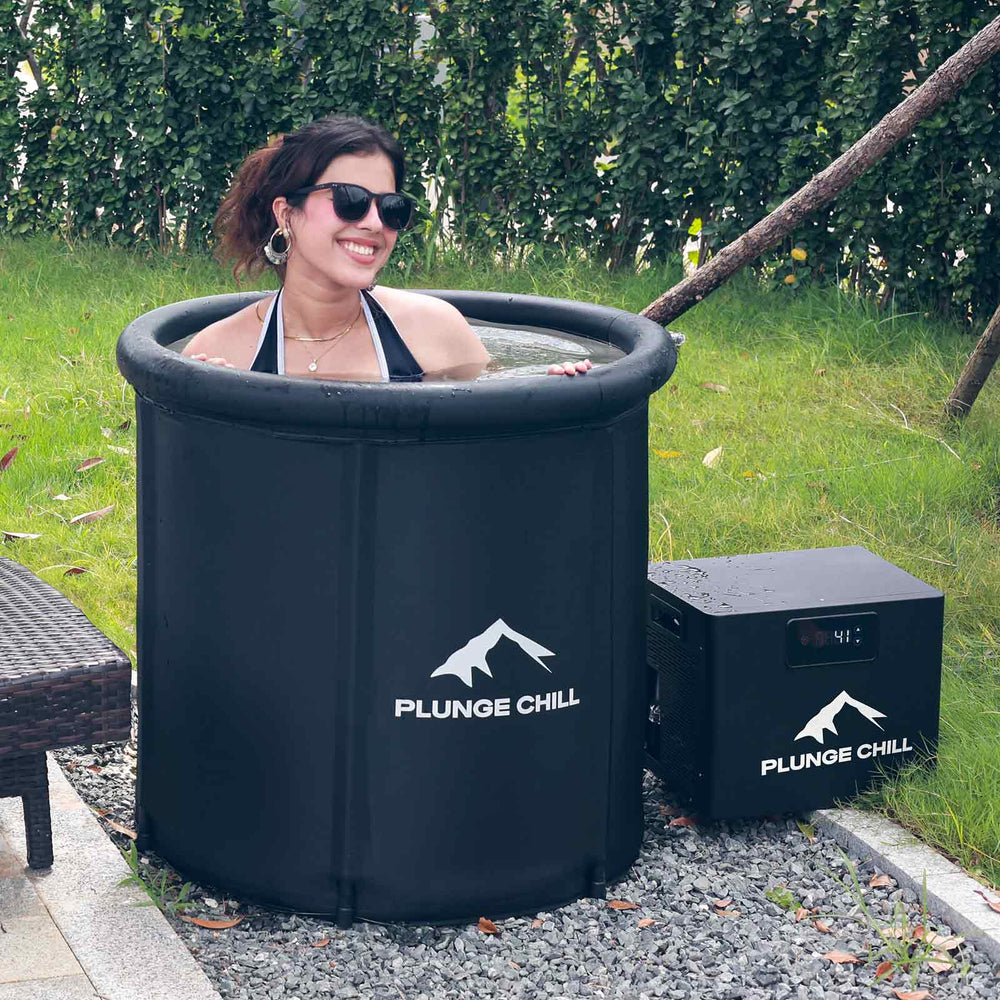
To make this tangible, imagine two scenarios. In the first, you use a purpose-built plunge tub set at 54°F, sit neck-deep for three minutes after a hard training session, then step out, towel off, and warm up with light movement. In the second, you jump into open water at 39°F on a windy day, stay in until you are numb, and struggle back to shore. Both exposures involve discomfort, but the risk profile is entirely different. In the first, you are within the range most sports medicine groups consider reasonable for a healthy person under supervision. In the second, you are in the zone where hypothermia, disorientation, and cardiac events become far more likely, and where even a small misstep can be fatal.
For this reason, even though Inuit communities routinely navigate near-freezing environments, copying that exposure level is neither necessary nor wise for most athletes. The goal in sports rehabilitation is to gain the adaptive upside with a generous safety margin, not to reenact the harshest conditions of another people’s environment.

Practical Guidance: Building A Cold Plunge Protocol In The Spirit Of Inuit Practice
If you want to integrate lessons from Inuit cold resilience into a training or rehab program, the most respectful and effective path is to borrow principles, not extremes. Those principles include gradual adaptation, attention to context, and using cold as one tool within a broader lifestyle and recovery system.
Evidence syntheses drawn from both academic reviews and practice-based protocols converge on a surprisingly consistent exposure “dose.” One research-informed guideline, highlighted by cold exposure educators, suggests that roughly eleven minutes per week of deliberate cold exposure is enough to trigger many of the key physiological benefits. Coldture and similar coaching resources describe distributing that time across several short sessions at around 50 to 57°F.
Translating that into a simple plan, an athlete might schedule three or four sessions per week, each lasting about three minutes in a controlled tub at roughly mid‑50s Fahrenheit. Across a week, that totals nine to twelve minutes of exposure, right in the recommended zone. This structure also meshes with studies showing that benefits in mood and perceived recovery often plateau after several minutes; longer stays at the same temperature do not necessarily produce proportionally greater gains but do increase hypothermia risk.
Here is how mainstream guidance from several reputable sources compares, framed in a way that a coach or clinician can actually use.
Source or context |
Typical water temperature (°F) |
Typical session duration (minutes) |
Key notes for practice |
Cleveland Clinic sports medicine |
About 50–59 for beginners; advanced users sometimes 39–50 |
About 1–3 for novices; generally not more than about 5 |
Emphasizes starting warmer and shorter, “start low and go slow,” and avoiding water below roughly 40 |
Mayo Clinic Health System |
Around 50 or slightly colder |
Often 0.5–10, built up gradually |
Notes benefits for muscle damage and soreness but warns about interference with some strength gains |
Coldture performance guidance |
About 50–60, with many benefits observed around 50–57 |
Short dips of about 0.5–3, progressing toward a maximum near 10; about 11 total minutes per week |
Recommends one to two sessions per week for novices, then increasing frequency as tolerance improves |
Polar plunge protocol educators |
Often around 59 for comfort; some advanced users go closer to mid‑40s or below 41 |
Emphasis on multiple short exposures rather than long soaks |
Highlights dopamine and adrenaline increases and stresses the importance of safety screening and supervision |
In my own work with strength and field sport athletes, I rarely see a reason to deviate far from this range for general recovery and stress management. A typical progression for a healthy, screened individual might look like a few weeks of cooler showers, then very short immersions at about 57°F, and only later, if desired, experiments with temperatures closer to 50°F. There is no performance rationale to chase near-freezing water for longer durations in a rehab or off‑season setting.
Equally important is what happens around the plunge. Inuit traditions treat cold as part of a package that includes time on the land, shared meals, storytelling, and ritual. While you may not be hunting seals or building snow houses, you can still frame cold exposure within a broader recovery ritual. That might involve a brief breathing practice before stepping in, a clear intention for why you are plunging that day, and a calm warm‑up afterward using light movement rather than an immediate hot shower. Stanford clinicians note that repeated cold exposure over weeks appears to lower cortisol responses and build stress resilience; that fits well with using a structured cold routine as a mental toughness drill rather than a sporadic dare.
An example: imagine a four‑week mid‑season program for a soccer player recovering from a hamstring strain. After gaining clearance from the team physician, the player finishes two or three strength or field sessions each week with a three‑minute plunge at 54°F, followed by ten minutes of gentle mobility work and a protein-rich snack. Across the four weeks, that adds up to roughly thirty to forty minutes of cold exposure in total, well within the range seen in the literature on healthy volunteers and far below the doses used in extreme winter swimming. The player reports lower soreness and better sleep, and the staff monitors training output to ensure that strength and power continue to improve.
That pattern reflects the spirit of Inuit adaptation more than any game‑day social media stunt. It is purposeful, measured, and integrated.
Pros And Cons Of Chasing “Inuit-Level” Cold Adaptation
From a performance and health standpoint, there are genuine upsides to regular, well‑managed cold exposure, many of which align with traditional Inuit uses of snow and ice. Cold constricts blood vessels, then, on rewarming, promotes vasodilation, improving circulation and helping flush metabolic byproducts from muscle. Reviews on cold water therapy for healthy aging suggest potential improvements in cardiometabolic risk factors, modest increases in energy expenditure, activation of brown adipose tissue, and immune modulation. Winter swimmers and cold shower users in some cohorts report fewer respiratory infections, better sleep, and higher perceived resilience.
On the mental side, studies compiled by Stanford Lifestyle Medicine, NPR’s health reporting, and others describe meaningful reductions in anxiety and depression symptoms in small groups after several weeks of open‑water swimming or repeated cold immersion. Cortisol responses appear to drop over time, and for some people, the combination of cold, focused breathing, and group support provides a durable sense of calm and agency. These experiences resonate with Inuit accounts of the land and ice as therapeutic spaces that support identity and belonging.
However, the cons are equally real. Cardiology experts emphasize that sudden immersion in water colder than about 60°F can be dangerous, especially for those with underlying heart disease, high blood pressure, arrhythmias, peripheral artery disease, or Raynaud’s phenomenon. The initial cold shock can provoke involuntary gasping and hyperventilation, creating drowning risk if the head is submerged. Blood pressure spikes, heart rate surges, and the abrupt shift of blood from limbs to chest increase cardiac workload. Case reports of elevated cardiac injury markers in cold-water competitors underline that this is not just theoretical.
For musculoskeletal adaptation, regular post‑lifting ice baths may blunt some long‑term strength and hypertrophy gains, likely by dampening the inflammatory signals that trigger remodeling. A balanced strategy often involves using colder, longer immersions on off days or after competition, while relying on milder modalities or timing adjustments when the priority is muscle growth.
There is also a psychological and cultural downside to framing Inuit cold resilience as a genetic miracle to be replicated. It can distract from the very real climate injustices these communities face, including loss of safe ice routes, forced relocation due to erosion and permafrost thaw, and rising rates of eco‑anxiety and ecological grief. Borrowing from Inuit practices in a way that centers only on athletic performance, without acknowledging the context, risks reducing a complex knowledge system to a training gimmick.
In practice, the rational strategy for athletes is to embrace moderate, structured cold exposure as one tool among many, to respect medical contraindications, and to pair any admiration for Inuit toughness with support for their ongoing struggle to protect land, rights, and knowledge.

Who Should Not Chase Extreme Cold Exposure
Multiple medical organizations converge on a clear message: before you step into significant cold, especially anything approaching polar conditions, you should understand your risk profile.
Cardiology and sports medicine groups, including those linked with Baylor College of Medicine, Cleveland Clinic, Harvard-affiliated institutions, and the American Heart Association, caution that people with coronary artery disease, uncontrolled high blood pressure, known heart rhythm problems, prior stroke, or severe circulation disorders should generally avoid sudden cold-water immersion unless specifically cleared and supervised. Individuals with diabetes, peripheral neuropathy, venous stasis, or cold agglutinin disease are also flagged as higher risk. Sudden exposure can stress already compromised vessels and nerves, mask injuries, or trigger dangerous drops in skin temperature that go unnoticed because of numbness.
Older adults are an especially vulnerable group. The narrative review of voluntary cold exposure notes that hypothermia remains a leading cause of cold-related mortality in older populations, and that aging is associated with impaired vasoconstriction and altered cooling responses. In practical terms, an older recreational athlete may feel subjectively similar to a thirty‑year‑old in an ice bath but cool faster at the core and struggle more to rewarm, making extended immersion unwise.
Pregnancy, recent surgery, open wounds, and certain autoimmune conditions are additional scenarios where cold plunges are not recommended in the practice-oriented literature and manufacturer guidance for cold tubs. Many safety advisories also recommend that children not use deep, cold plunge setups, given the combination of hypothermia and drowning risk.
Even for healthy individuals, the environment matters. Organizations focused on cold water safety stress never plunging alone, never combining cold exposure with alcohol or sedative drugs, and avoiding rivers or open seas with currents, where cold shock and limited motor control can become lethal in seconds. Preparatory steps such as exposing the face or back of the neck to cold, rehearsing breathing, and mental priming reduce panic in the crucial first ten to sixty seconds. After the plunge, rapid rewarming with dry layers, movement, and warm drinks helps guard against continued core temperature drop.
As a coach or clinician, the standard should be simple: medical screening first, then gradually escalating cold exposure, tailored to the person’s goals and health status. No marketing claim or online challenge is worth sidestepping that process.

Closing
Inuit communities have built remarkable capacities to live, work, and heal in some of the most unforgiving cold on Earth, but the best evidence points to knowledge, culture, and deliberate practice as the foundation of that resilience, not a magical genetic shield. For athletes and rehab patients, the smart move is to respect the power of cold, use it in controlled doses around 50 to 59°F for minutes rather than heroics in near‑freezing seas, and integrate it into a broader program of training, recovery, and mental health care. Learn from the discipline and context of Inuit cold practice, not just the spectacle, and you will get far more from your time in the ice.
References
- https://case.edu/news/science-behind-ice-baths-and-polar-plunges-are-they-truly-beneficial
- https://www.health.harvard.edu/heart-health/cold-plunges-healthy-or-harmful-for-your-heart
- https://lifestylemedicine.stanford.edu/jumping-into-the-ice-bath-trend-mental-health-benefits-of-cold-water-immersion/
- https://pmc.ncbi.nlm.nih.gov/articles/PMC11872954/
- https://blogs.bcm.edu/2024/02/08/health-benefits-concerns-when-taking-the-polar-plunge/
- https://gjia.georgetown.edu/2021/02/23/indigenous-peoples-and-climate-justice-in-the-arctic/
- https://health.clevelandclinic.org/what-to-know-about-cold-plunges
- https://www.ciel.org/Publications/Inuit_CaseStudy_Sep07.pdf
- https://earth.org/effects-of-arctic-warming-on-indigenous-communities/
- https://www.thearcticinstitute.org/health-wellbeing-among-arctic-indigenous-peoples-leveraging-legal-determinants-health/