Icy polar swimming sits at the extreme end of the cold-exposure spectrum. As a sports rehabilitation specialist and strength coach who also reviews cold plunge products, I see it as a hybrid between endurance sport, environmental survival, and stress physiology. It can be profoundly rewarding, but the margin for error is thin.
This guide will walk you through the survival skills that matter when water temperatures drop toward freezing, grounding every recommendation in available evidence and real-world practice from cold-water swimmers, triathletes, and safety organizations. Along the way, I will also explain where controlled cold plunge tools and products fit into a serious polar preparation plan.
What Makes Polar Swimming So Extreme?
Most people’s reference point for “cold” is a brisk shower or a quick lake dip in fall. The physiology of icy polar swimming is very different.
A medical overview from Case Western Reserve University notes that typical cold showers run around 50–60°F, with tap water often near 55°F, while polar plunges in icy water are closer to 35–40°F. That 15–20°F difference is not trivial. At these lower temperatures, cold showers mainly cool the skin and superficial tissues, whereas full cold plunges rapidly cool the entire body, including the core.
Cold-water safety organizations such as the National Drowning Prevention Alliance emphasize that any water below 70°F is hazardous, with cold shock beginning around 50–60°F and water stripping heat from the body several times faster than cold air. Triathlon coaching sources go even further, describing water as removing heat up to many times faster than air and calling cold-water immersion one of the leading causes of death in sport when poorly managed.
In other words, “polar” conditions are not just chilly; they are hostile. They combine a strong physiological stress (cold shock, rapid heat loss) with environmental hazards (current, waves, ice, remoteness). Survival skills are about managing this entire system, not about raw toughness.
A concrete comparison helps. If you stand on a windy shoreline in 32°F air, you are uncomfortable but you can still move, speak, and think. Drop into 38°F water and your breathing can spike, your muscles can stiffen, and your useful self-rescue time shrinks to minutes unless you are trained, equipped, and calm.

The Cold Shock Response: Your First Survival Skill Is Breathing
The first thirty to ninety seconds after immersion are the most dangerous. Case Western’s summary of cold-water physiology and multiple open-water coaching articles describe a stereotyped “cold shock response”: sudden gasp, rapid breathing, spiking heart rate and blood pressure, and intense discomfort.
The National Drowning Prevention Alliance describes this as a three-phase progression. First comes an involuntary gasp and rapid breathing if the head is submerged. Next, loss of muscular control and exhaustion reduce your ability to swim. Finally, as core temperature drops below about 95°F, hypothermia and loss of consciousness can occur.
For polar swimmers, the survival skill is not to eliminate this response but to blunt it and keep it under control.
From a training standpoint, several sources converge on similar methods. Triathlon coaches and U.S. Masters Swimming writers recommend deliberate pre-exposure to cold via cooler showers and short cold-water immersions. Research summarized in Triathlete suggests that as few as four brief immersions of about two and a half minutes in roughly 53°F water can significantly reduce the intensity of cold shock, with effects lasting many months. A cold-water equipment brand and the Outdoor Swimming Society echo this: repeated cold exposures gradually desensitize skin receptors and make the cold less shocking.
A real-world example illustrates how this looks in practice. An open-water coach writing in Outdoor Swimmer Magazine describes entering a small loch at around 39°F. The first two minutes of every session are spent doing nothing but controlling breathing while the body and face confront the cold. Only after this period does he work on stroke mechanics. That is survival skill in action: air control before arm speed.
If you intend to swim in polar conditions, treat breath control in the first minutes as a primary technical discipline, on par with learning freestyle itself.

Hypothermia, Afterdrop, and Why Your Exit Plan Matters More Than Your Entry
Survival in icy water is not only about what happens in the water; it is about what happens after you get out.
Cold-water safety organizations and open-water coaches repeatedly warn about “afterdrop,” the continued fall in core temperature after leaving the water. As the extremities begin to rewarm, cold blood returns to the core, and you can feel worse ten to twenty minutes after your swim than you did during it.
Articles from DeBoer Swim, U.S. Masters Swimming, and several safety-focused guides recommend pre-planning a post-swim warm-up routine. The consistent pattern is simple but non‑negotiable: strip off wet gear immediately, get into dry insulated clothing as fast as possible, protect the head and hands, and sip warm fluids while rewarming gradually over roughly half an hour.
A case narrative from U.S. Masters Swimming describes a swimmer in about 53°F bay water who exited without a clear rewarming plan and soon developed dizziness, nausea, uncontrollable shivering, and conflicting sensations of being hot and cold. Only deliberate, progressive warming with dry clothing and hot drinks resolved the episode. An ice‑mile aspirant on an ultra‑swimming forum goes further, describing how an overlong “numbing” session left them shivering intensely even while walking afterward and needing almost two hours to feel normal again.
The takeaway for polar survival is straightforward. You should know exactly what you will do for the first thirty minutes after you exit. That includes where you will stand or sit, what you will wear in what order, and what you will drink. Cold-water coaches routinely stage a “shore kit” with towels, insulated robes or parkas, a wool hat, gloves, and a thermos of hot drink. Some swimmers even pre‑warm clothes around a hot water bottle, as suggested by the Outdoor Swimming Society.
For polar swimming, treat your rewarming routine as part of the session, not as an afterthought. The swim is not over until you are clothed, coherent, and no longer shivering uncontrollably.

Progressive Cold Adaptation: How to Build Survival Capacity Safely
Survival skills depend on adaptation, not bravado. The research and coaching literature converge on a few principles.
The Outdoor Swimming Society and dedicated cold-water training guides describe two layers of adaptation. There is a short‑term layer that unfolds over two to four weeks, where frequent sessions reduce cold shock and make breathing control easier. Then there is a longer‑term layer over three to six months or more, where the body improves insulation, changes how it distributes fat, and enhances metabolic heat production. An acclimatization guide points out that swimmers who train through cold seasons often keep some of these adaptations for months, especially if they maintain at least weekly cold-water exposure.
For most athletes, this process begins in moderate conditions. One outdoor swimming organization recommends starting regular outdoor swims when water is near about 61°F or warmer and continuing as temperatures drop through fall, rather than waiting until water is already close to freezing. A cold-water swim brand suggests aiming for at least one cold-water session each week, gradually extending either time or intensity as comfort improves.
Triathlon and U.S. Masters Swimming coaches emphasize temperature specificity. The body adapts to a relatively narrow band of temperatures; swimmers acclimatized to one level can respond as if unadapted when exposed to water only a few degrees colder. That means polar swimmers need to get close to their target temperatures in training, but they must do it with tightly controlled durations and exit cues.
A practical scenario helps here. Suppose your goal event is a ten-minute swim in 39°F water. Over the prior months, you might maintain weekly or twice‑weekly outdoor swims as the water cools through the 50s and 40s°F, never staying in long enough to reach cold incapacitation. Short exposures in a 45–50°F range could initially last only a couple of minutes before you exit, rewarm, and log your sensations. Over weeks and months, these exposures build up your tolerance to the cold shock and your awareness of early danger signs such as confused thinking or loss of coordination.
An important nuance from the outdoor swimming and adaptation literature is that lifestyle matters. Extreme swimmers and researchers like those described by the Outdoor Swimming Society note that people who keep their general environment cooler, wear lighter clothing, and avoid long hot baths tend to adapt more effectively. In contrast, living in very warm indoor conditions and using hot pools frequently can blunt acclimatization.
That does not mean you must live in discomfort year‑round, but it does mean that your wider lifestyle should be compatible with your polar ambitions.
Gear, Group Protocols, and In‑Water Survival Techniques
When the water is near freezing, survival is a team sport supported by good equipment.
The DeBoer Swim blog, dive and swim safety organizations, and triathlon coaches all highlight insulation. Neoprene wetsuits, caps, gloves, and boots dramatically slow heat loss from the core and extremities. A coaching article notes that covering the head is critical because a large fraction of heat can be lost there, while another source recommends neoprene vests under wetsuits to raise core temperature a few degrees. Boots and gloves not only preserve warmth but protect hands and feet from sharp ice edges or underwater hazards.
Safety groups such as the National Drowning Prevention Alliance and U.S. Masters Swimming repeatedly stress that you should never swim in cold open water alone. Instead, bring a buddy on shore or in a kayak, wear a brightly colored cap and a tow float for visibility, and carry communications tools such as a cell phone in a waterproof pouch on shore. In ice environments, NDPA further recommends carrying a rope, ice picks, and a whistle and notes that even four inches of clear ice is only a general guideline for walking, not a guarantee.
These organizations also teach in‑water survival postures. If you are unexpectedly immersed and cannot exit, the Heat Escape Lessening Posture (H.E.L.P.) involves drawing your knees to your chest while wearing a life jacket to reduce heat loss. If others are with you, the huddle position—groups pressing close together—conserves warmth and increases your collective visibility. While these techniques were designed for accidental immersion and rescue, the underlying logic applies to polar swimmers as well: if something goes wrong and you can no longer swim effectively, floating and preserving heat while signaling for help is safer than futile thrashing.
Finally, you must have a clear rule for abandoning the session. DeBoer Swim, U.S. Masters Swimming, and triathlon sources all advise exiting immediately if you experience numbness that affects coordination, uncontrolled shivering, slurred speech, dizziness, nausea, or mental fog. Polar swimmers who ignore these cues because they “feel fine” in the water are exactly the people who find themselves disoriented on shore or unable to climb out.
In extreme conditions, courage is not pushing through those signs; courage is calling the swim early.

Cold Water and Performance: When Survival and Strength Goals Collide
As a strength coach, I am frequently asked whether cold immersion helps or hurts performance. The answer is nuanced, especially for athletes who also pursue polar swimming.
On the performance side, a study published via Western Kentucky University examined how a single twenty‑minute bout of cold-water immersion affected running mechanics. Fifteen healthy adults immersed in cold water for twenty minutes, then repeated running trials they had done beforehand on a roughly 49‑foot runway. After immersion, their self‑selected running speed decreased, and their peak ankle power dropped significantly. Ankle angles at heel strike also changed, implying altered foot–ground contact. The practical message from the authors is clear: cold-water immersion can temporarily impair performance and possibly change injury risk, so it should not be done immediately before running or similar efforts.
At a broader level, Case Western’s review and a doctoral dissertation from Kent State University both highlight that the evidence base for cold-water immersion benefits is mixed and sensitive to timing. Cooling immediately after resistance training may reduce inflammation and soreness but can also dampen the signaling needed for long‑term strength and hypertrophy. The Mayo Clinic’s overview reinforces this, noting that frequent post‑lift plunges may blunt muscle and strength gains, whereas endurance training does not seem to be affected in the same way.
Taken together, the implication for polar swimmers who also train seriously for performance is to periodize cold. Cold plunges or icy swims right after heavy lifting sessions are best used sparingly, if at all, especially in phases where you are trying to gain muscle or maximal strength. Conversely, cold swims after long, lower‑intensity endurance sessions can be strategically useful, as long as you can rewarm safely and do not need maximal power output soon afterward.
An example schedule might involve dedicating specific days to survival-oriented polar work, perhaps following lighter technique or mobility sessions, while keeping heavy gym days free of deep cold exposure until several hours later or on another day. This respects both the survival demands of polar water and the adaptation requirements of high‑level strength training.
Using Cold Plunge Products to Train Polar Survival Skills
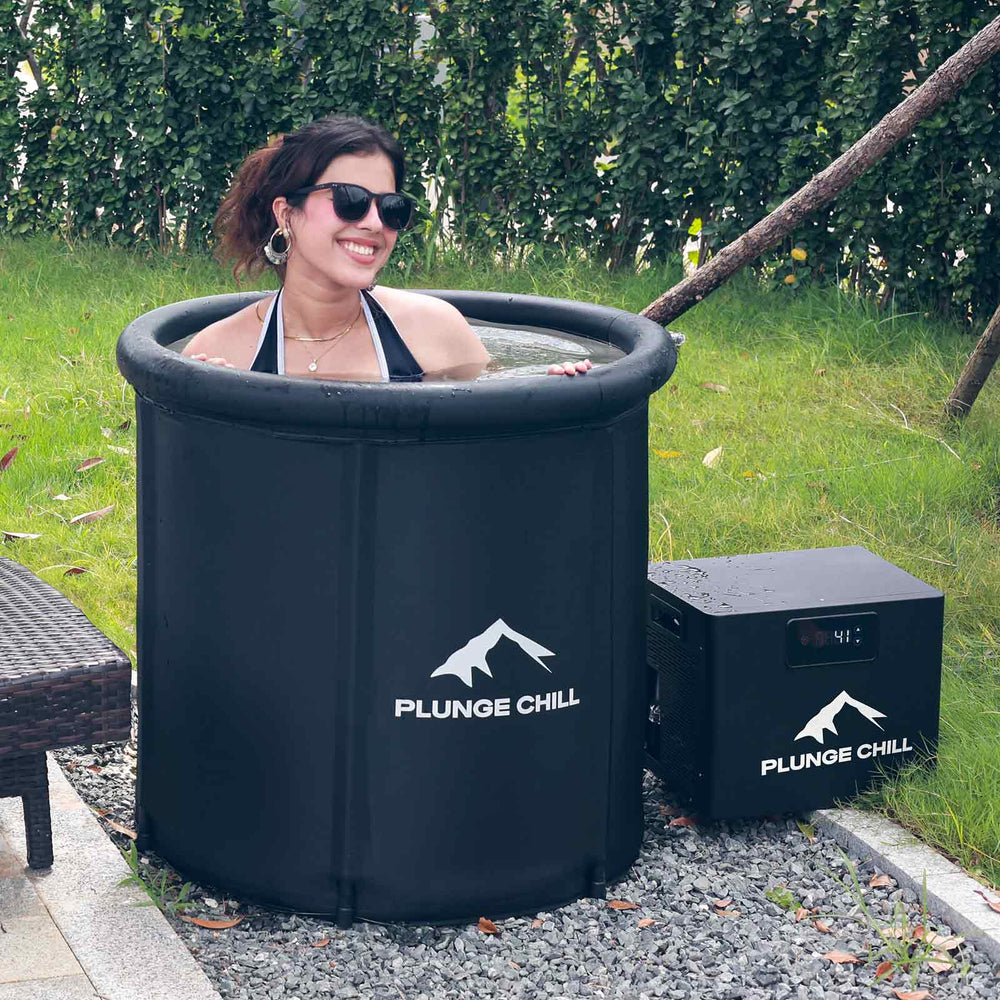
Not every polar swimmer lives near safe winter water or wants to take unnecessary risks while building tolerance. This is where cold plunge products and controlled systems can add real value if used intelligently.
A Mayo Clinic article on cold plunging describes how athletes and enthusiasts use bathtubs, natural lakes, or dedicated cold‑plunge tanks, with high‑end home or commercial units costing as much as about $20,000. These tanks typically allow precise control of water temperature around 50°F or lower, and most protocols begin with thirty to sixty seconds and build up to about five to ten minutes per session.
A cold‑water swim system described by EVA Optic, the EVAstream Move, takes a different approach. It uses adjustable water flow to create an in‑place swimming current in a home pool, so you can swim against resistance in cold water while remaining in a safe, predictable environment. Because resistance is adjustable and joint loading is low, the system is positioned as ideal for rehabilitation and technical work.
From a survival and performance standpoint, here is how these options compare, based on the evidence summarized earlier.
Environment |
Typical temperature range (°F) |
Core cooling depth |
Best training uses |
Key limitations or risks |
Cold shower |
About 50–60 |
Mostly skin and superficial tissues |
Early breath control and psychological acclimation |
Limited core cooling; does not mimic full polar stress |
Home or commercial plunge tank |
Around 50 or below |
Core and entire body cooled |
Controlled practice of cold shock, time limits, rewarming |
No currents or waves; equipment can be expensive |
EVAstream‑style current system |
User‑set (often cold pool range) |
Core cooled while actively swimming |
Technique, breathing, joint‑friendly strength in the cold |
Not a substitute for open‑water hazards like currents or ice |
Natural icy open water |
Around 35–40 in polar scenarios |
Core cooled rapidly, full environment |
Full survival skill set: entry, navigation, exit, rewarm |
Unpredictable conditions, access, and rescue logistics |
Cold plunge tanks and current systems are excellent for rehearsing breath control, safe exposure durations, and rewarming routines. They let you build the mental discipline that polar swimming demands, without navigating tides, ice edges, or boat traffic. For athletes rehabbing after injury, the ability to combine cold exposure with low‑impact aquatic exercise, as described for products like EVAstream Move, can be particularly helpful.
However, no indoor system can fully replicate the survival challenges of real polar water. They cannot teach you how your body feels when you wade through slush, climb out onto an icy bank, or manage sighting and navigation in gray, wind‑blown seas. For anyone attempting true polar swims, the role of products is to complement, not replace, carefully structured open‑water training under expert supervision.
A Scenario Walkthrough: Preparing for a Ten‑Minute Swim at 39°F
To see how the pieces fit together, imagine an athlete targeting a ten‑minute continuous swim in roughly 39°F water in late winter.
Months before, they begin outdoor swims while the water is still around 61°F, continuing as temperatures fall through the 50s and 40s. They maintain at least weekly cold-water sessions, sometimes two or three per week, following the adaptation timelines described in cold‑water training guides. As the water reaches the low 50s, they also add cold showers and occasional short cold-plunge tank sessions at about 50°F to practice breath control in a controlled setting.
In parallel, they periodize their strength training. Heavy lifting days are kept separate from deep cold exposure, guided by the evidence that post‑lift plunges can blunt muscle gains and, as shown in the Western Kentucky running study, acutely impair performance. Instead, they schedule most icy sessions after lower‑intensity technique swims or easy aerobic work.
On the survival side, they drill a detailed warm-up and rewarming plan. Inspired by open‑water coaching and safety organizations, they assemble a shore kit with two towels, a warm base layer, an insulated parka, wool hat, gloves, and a thermos of hot drink. They practice changing quickly out of wet gear into dry clothing and sitting in a sheltered spot for at least half an hour after each cold swim to monitor for afterdrop.
As the goal date approaches and the water nears 39°F, they treat exposure like interval training. They might start with entries lasting one or two minutes, focusing solely on breath control in the first ninety seconds, then exit, rewarm fully, and log their sensations. Over several sessions, they gradually extend water time to five, then eight, then ten minutes, always stopping before shivering or mental fog become pronounced. Swims are done with a trusted buddy on shore, wearing a neoprene cap, gloves, and boots, along with a tow float for visibility.
On the target day, they arrive early, perform dry‑land movements to raise core temperature, and do a very short pre‑swim in the same water to blunt cold shock. At the start of the main swim, they expect the sudden urge to gasp and the pain in hands and feet but recognize these as familiar sensations. For the first few minutes, the focus is on slow, deliberate breathing and relaxed, long strokes rather than speed. When the ten minutes are up, they exit promptly, walk straight to their pre‑staged kit, change quickly, and begin sipping a hot drink while walking gently to keep blood moving. Only after thirty to sixty minutes of stable warmth would they consider the session properly complete.
This scenario is demanding but realistic, and every step is grounded in strategies described by experienced coaches, swimmers, and safety experts rather than in folklore.
Who Should Avoid Extreme Cold, and When?
Even with the best preparation, icy polar swimming is not appropriate for everyone.
Medical summaries from Case Western and the Mayo Clinic highlight that people with heart disease, uncontrolled high blood pressure, prior stroke, serious circulation problems, or those taking certain heart medications such as beta blockers may not tolerate the intense surge in adrenaline and blood pressure during sudden cold immersion. Individuals with severe asthma, Raynaud’s phenomenon, or neuropathy also face added risks, and pregnant swimmers should seek individualized medical advice before any cold-water practice.
Cold-water safety articles and coaching pieces agree on one overarching principle: if you have any significant cardiovascular or respiratory history, you should speak with your primary care clinician or a sports medicine specialist before contemplating icy or polar swims. No survival skill can offset a vulnerable heart in water near freezing.
For healthy athletes, another reason to say no is mismatched priorities. If you are in a strength or hypertrophy block where every bit of muscle gain matters, frequent deep cold plunges may work against you. The science and clinical observation both suggest that cold exposure is a tool, not a universal good. It needs to serve your bigger training and life goals, not the other way around.
Brief FAQ
Is icy polar swimming a good way to lose fat?
Cold exposure can temporarily raise metabolic rate and recruit shivering, which uses energy similarly to exercise, as described in the Case Western review. However, the overall evidence that polar swimming alone produces meaningful long‑term fat loss is weak. The discomfort and recovery demands are high, and the primary focus should be safety and survival, not calorie burning.
How long can a trained person safely stay in icy water?
There is no single safe time. Safety organizations and coaching sources emphasize exiting well before you feel “numb and fine,” because that often precedes rapid decline. For water around freezing, many experienced cold swimmers keep durations in the order of minutes, not hours, and build them gradually with close monitoring. Your own shivering, coordination, and mental clarity are more important than any time target.
Can I rely on cryotherapy chambers instead of cold water?
Whole‑body cryotherapy can reach extreme cold, around minus 200°F, but exposures are very brief and dry. Case Western notes that, like polar plunges, cryotherapy cools the core, but it does not involve breathing in cold water, navigating currents, or managing exits. It may be useful for certain recovery or tolerance goals, but it does not teach the unique survival skills required in icy polar water.
Mastering extreme survival skills for polar swimming is less about heroics and more about systems: understanding cold shock, building adaptation over months, respecting post‑swim afterdrop, integrating strength and recovery intelligently, and using tools like cold plunge tanks and current pools to rehearse skills before you ever confront real ice. Approach it with the same meticulous planning you would use for a serious rehabilitation plan, and the cold becomes not just survivable, but a rigorous training partner rather than an adversary.
References
- https://www.academia.edu/35481189/EFFECT_OF_COLD_WATER_%C4%B0MMERSION_ON_PERFORMANCE
- https://case.edu/news/science-behind-ice-baths-and-polar-plunges-are-they-truly-beneficial
- https://digitalcommons.cedarville.edu/cgi/viewcontent.cgi?filename=1&article=1539&context=research_scholarship_symposium&type=additional
- https://www.mcphs.edu/news/physical-therapist-explains-why-you-should-chill-out-on-ice-baths
- https://ideaexchange.uakron.edu/cgi/viewcontent.cgi?article=3606&context=honors_research_projects
- https://sncs-prod-external.mayo.edu/hometown-health/speaking-of-health/cold-plunge-after-workouts
- https://scholarworks.merrimack.edu/health_facpubs/11/
- https://etd.ohiolink.edu/acprod/odb_etd/r/etd/search/10?p10_accession_num=kent1752255518243953&clear=10&session=12287964751819
- https://digitalcommons.wku.edu/ijes/vol12/iss1/7/
- https://ndpa.org/important-ice-and-cold-water-safety-tips/