Two Ways To Enter The Ice
As a sports rehabilitation specialist and strength coach, I see two very different cold-water worlds show up in my clinic and in product demos. On one side are athletes and enthusiasts inspired by Russian and Eastern European winter swimmers who cut a hole in river or lake ice and treat immersion as a seasonal ritual. On the other side are clients stepping into meticulously controlled stainless steel or inflatable ice baths set between roughly 39 and 59°F, often in a gym or garage, guided by an app and a recovery plan.
Both groups are exposing themselves to the same fundamental stressor: water that is far below the body’s thermoneutral comfort zone. Research reviews in northern countries describe “cold water swimming” as outdoor swimming in cold to ice-cold water, with the most dangerous reactions occurring when water is roughly 50–59°F, and “ice swimming” when solid ice must be broken and water is close to freezing. In Russia and Eastern Europe, winter swimming is deeply woven into cultural and religious practices such as Epiphany dips, and field studies from these regions have examined lipid profiles, immune markers, hormones, and thermoregulation in habitual winter swimmers.
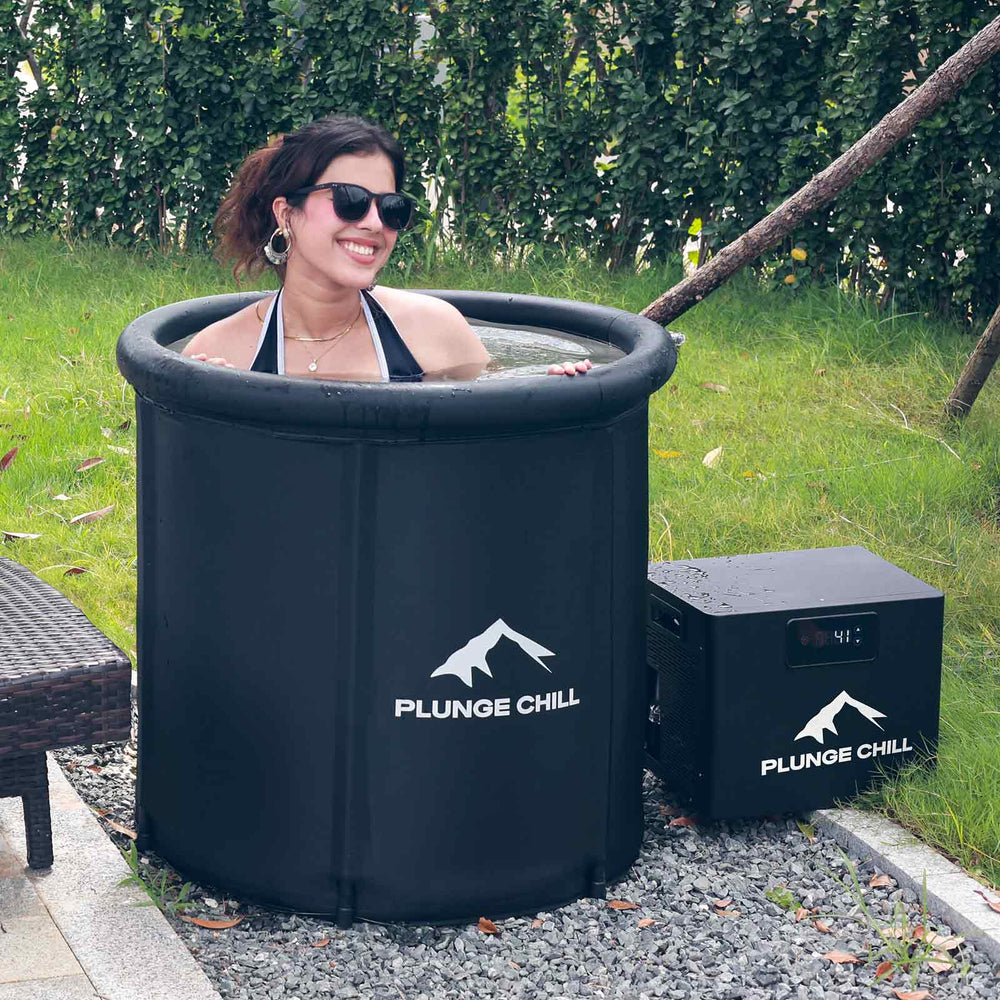
Modern cold plunges emerged from sports medicine rather than religious or community rituals. The Cleveland Clinic and Mayo Clinic both describe “cold plunges” or ice baths as brief immersions, often after exercise, in tubs or portable tanks filled with cold tap water and ice. Beginners usually start around 50–59°F for one to three minutes, while more experienced users sometimes go as low as about 40°F with sessions typically capped at five minutes. Commercial plunge systems add continuous filtration and temperature control; many cost well into the thousands of dollars, with some premium units reaching around $20,000.
Despite very different cultural stories, the core question my athletes ask is the same: does a Russian-style winter swim do something unique, or can a modern ice bath deliver similar physiological and psychological benefits with more control and less risk?
What Counts As “Cold” In The Research
Cold-water immersion is defined differently across studies. A recent PLOS One meta-analysis on cold-water immersion and wellbeing classified it as partial or full chest-level immersion in water at or below about 59°F. Many winter swimming and ice swimming events push far beyond that, with ice races held in water under about 41°F and true “ice miles” swum in water at or below 41°F without wetsuits.
Clinical and sports-recovery protocols usually sit in the milder range. The Cleveland Clinic reports that beginners often use 50–59°F, and some tap water sits naturally near 53°F in winter. Stanford’s lifestyle medicine program describes common cold-immersion practices between roughly 50 and 60°F for general health and mood, with extreme cryotherapy chambers using air around –166°F for one to three minutes to mimic some of the same physiological responses.
From a safety standpoint, recreational swimmers and clinicians converge on the idea that water colder than about 50°F sharply increases the risk of numbness, pain, cold shock, and hypothermia, particularly for inexperienced or older people. A narrative review of cold water swimming points out that most dangerous reactions to cold peak in the 50–59°F range, and hypothermia signs such as confusion and poor coordination often appear after about 15–30 minutes in near-freezing water. Ice swimming competitions therefore tightly regulate exposure times and require medical supervision.
For everyday recovery and wellness, that research and clinical practice history is why I generally recommend a narrower band: roughly 45–59°F, short durations, and a strong respect for individual variability.
What The Cold Does To The Body
Whether someone is plunging through an Epiphany ice hole on the Volga or lowering into a carbon-fiber tub at a training facility, their body goes through the same basic stages of response.
A systematic review of cold-water immersion trials, along with broader physiological reviews of cold exposure, show that immersion triggers an acute “cold shock” response. Heart rate, blood pressure, and breathing rate spike; blood vessels constrict, shunting blood away from the skin and limbs to protect core organs; and stress hormones such as norepinephrine and cortisol rise sharply. The PLOS One review describes rapid increases in heart rate, blood pressure, and oxygen uptake, comparable to a sudden bout of exercise.
As skin and superficial tissues cool, shivering kicks in. Thermophysiology studies note that shivering can increase heat production up to roughly five times above resting levels. Non-shivering thermogenesis in brown fat also contributes: cold exposure stimulates brown adipose tissue to burn fuel and produce heat, a process confirmed in experimental work cited by Atria’s cold therapy review and in cell and imaging studies of winter swimmers published in Cell Reports Medicine.
In the minutes to hours after leaving the water, the system swings back. Stanford’s winter-swimming research and related cold-immersion studies show a characteristic pattern: cortisol may actually be lower than baseline for one to three hours, sympathetic activation gradually gives way to parasympathetic rebound, and core temperature sometimes continues to drop slightly before rising again.
Acute Shock Versus Trained Response
Traditional Russian-style winter swimmers are not simply “tougher”; they are physiologically different. Field studies summarized in narrative reviews of winter swimming describe higher baseline levels of antioxidant enzymes such as superoxide dismutase and catalase in regular winter swimmers compared with controls. That suggests a long-term adaptation to the oxidative stress provoked by repeated cold exposure.
A review of voluntary cold exposure highlights how thermoregulation differs across individuals. When hands of over two hundred young adults were immersed in cool water, about ten percent showed notably slow or incomplete rewarming afterward, even though they were otherwise healthy. This illustrates why I am cautious about one-size-fits-all advice. Some people adapt well; others display physiologic patterns that could increase hypothermia risk, particularly as they age. The same review notes that hypothermia remains a leading cause of death among older people and that thermoregulatory responses generally degrade with age.
Repeated winter swimming and cold plunging can blunt the stress response to cold. Stanford Lifestyle Medicine reports that after twelve weeks of winter swimming in near-freezing water for about twenty seconds three times per week, plus very cold air cryotherapy in another group, participants showed progressively smaller cortisol spikes as early as week four. That entire twelve-week protocol included only about twelve minutes of actual ice water contact per person, yet the endocrine system had clearly adapted, a powerful example of hormetic training.
Immune, Endocrine, And Metabolic Adaptations
Claims about cold water “boosting immunity” are often overstated, but there is some signal beneath the hype. Narrative reviews of winter swimming cite fewer upper respiratory infections among habitual winter swimmers. The PLOS One meta-analysis did not find significant short-term changes in immune markers immediately or an hour after single immersions; however, one of the trials it summarized reported about a 29 percent reduction in sickness-related work absences in people who ended their normal showers with a brief burst of cold water, compared with those who did not.
On the hormonal side, narrative and mechanistic reviews describe cold exposure increasing stress-related hormones acutely, while some longitudinal work suggests possible increases in sex hormones such as testosterone and estrogen, which could in theory support libido, mood, and muscle building. These endocrine findings are intriguing but not yet robust enough to treat as a prescription.
Metabolically, the most convincing evidence relates to brown fat and glucose handling. A Cell Reports Medicine study compared young men who were regular winter swimmers, most of whom alternated icy dips with sauna, with non-swimming controls. During controlled cooling, winter swimmers showed greater cold-induced thermogenesis and higher supraclavicular skin temperatures overlying brown fat, along with better glucose disposal after an oral glucose load. In practice, that means their bodies were more efficient at turning cold into heat and at clearing sugar from the bloodstream.
From a coaching perspective, this matters: over months and years, regular cold exposure appears to remodel metabolic pathways. But activating brown fat and slightly raising energy expenditure during cold exposure does not automatically translate into dramatic fat loss, a point emphasized in critical reviews of cold water and cryotherapy. Most analyses conclude that brown fat activation alone does not burn enough extra calories to drive major weight changes without concurrent nutrition and training changes.
Brain, Mood, And Stress Systems
Mentally, Russian winter swimmers and modern ice-bath users often describe similar experiences: an initial moment of shock and panic, a minute or two of intense focus, then a post-immersion high.
Stanford’s cold immersion work and related experimental studies help explain why. A twenty-minute cold sea swim around 56–57°F in college students reduced tension, anger, depression, fatigue, and confusion, while increasing vigor and self-esteem. A separate study using a five-minute bath around 68°F increased feelings of being active, alert, attentive, and inspired. Neurochemically, cold water triggers skin cold receptors that send powerful signals to the brain, driving a surge in norepinephrine and other catecholamines and sometimes increasing endorphins. That cocktail can generate euphoria, sharpen attention, and reduce pain.
However, when researchers look at mood outcomes across controlled trials, the picture is more nuanced. The PLOS One meta-analysis found no consistent improvements in depression, anxiety, or general affect at most time points after cold immersion, with the exception of a notable reduction in stress scores about twelve hours afterward. A psychiatry-focused review of cold-water neurohormesis points out that cold exposure clearly activates mood-related neuromodulators such as dopamine, serotonin, and beta-endorphins, and can reshape functional connectivity in frontal and insular brain regions. Yet it also stresses that optimal “doses” and long-term mental health effects are still not well defined and that excessive exposure can impair cognition by lowering brain temperature too far.
In my practice, I see cold immersion primarily as a short, potent way to shift state: from ruminative to present, from overwhelmed to focused. For clinical depression, trauma, or complex anxiety, it is at best an adjunct; it does not replace therapy, medication, or structured lifestyle programs.
Performance And Recovery: Lake Hole Or Steel Tub?
Athletes adopted ice baths long before remote workers or entrepreneurs started posting cold-plunge selfies. The big performance question is whether traditional winter swimming and modern cold-plunge protocols meaningfully improve recovery and output, and whether they carry trade-offs.
A crossover trial in competitive adolescent swimmers compared three recovery strategies during a training week: twelve minutes in 57°F water up to the shoulders, twelve minutes in neutral 80°F water, and twelve minutes of simply sitting poolside. All swimmers improved their one-hundred-meter performance over the training block, but there was no performance difference among the three conditions. Cold water did not enhance or impair sprint times, flexibility, power, or shoulder function. Interestingly, when asked which recovery they preferred, every athlete chose either cold or neutral water over passive rest, underscoring the psychological value of a deliberate recovery ritual even when objective performance does not change.
Meta-analytic work on cold-water immersion after exercise paints a similar picture. A synthesis of trials on post-exercise cold water immersion found that cold baths can reduce delayed-onset muscle soreness immediately and sometimes at twenty-four hours compared with passive rest, but those differences often disappear by forty-eight hours. Countermovement jump height, a proxy for explosive power, shows no consistent improvement after cold immersion. Blood markers tell a slightly stronger story: creatine kinase, a marker of muscle damage, tends to be modestly lower about twenty-four hours after cold immersion compared with passive recovery, and blood lactate may be lower at twenty-four and forty-eight hours, although immediate post-bath lactate often looks similar.
For team sports in hot conditions, brief cold exposure during half-time can be helpful. A randomized crossover study in soccer players training in roughly 102°F conditions compared three-minute whole-body immersion in 57°F water, three-minute lower-limb immersion at the same temperature, and passive rest. Both cold conditions reduced core and skin temperatures, lowered heart rate, and improved thermal comfort compared with sitting. Subsequent agility, sprint, and intermittent endurance performance was maintained or slightly improved, with little difference between full-body and leg-only immersion. That finding is important for practical halftime strategies when time, privacy, and equipment are limited.
Partial-body cryotherapy chambers, which expose athletes to air at around –166°F for one to three minutes, offer another comparison point. Studies that have used similar durations of cryotherapy and cold-water immersion during a fifteen-minute recovery period in heat show that both approaches reduce skin temperature and thermal sensation and help preserve performance. Cryotherapy tends to produce a larger immediate drop in skin temperature and a greater reduction in core temperature, but water immersion yields a more sustained skin cooling effect, likely because water conducts heat more efficiently than air. Despite these thermoregulatory differences, neither modality shows decisive superiority for performance in the short protocols tested so far.
When Cold Helps And When It Hinders Gains
The performance story is not all upside. Several lines of evidence suggest that frequent, immediate cold-water immersion after strength training can blunt long-term hypertrophy and strength gains. Reviews summarized by Atria and Mayo Clinic note that cold immersion right after resistance sessions can interfere with molecular signaling pathways that drive muscle growth and adaptation, while having less negative impact on endurance adaptations.
The practical implication is straightforward. If you are a powerlifter, bodybuilder, or field-sport athlete in a heavy strength block, using a five-minute plunge at 45–50°F immediately after every lifting session is probably counterproductive. In that scenario, it is better to place cold exposures earlier in the day, on separate days, or several hours after lifting. On the other hand, if you are mid-competition, facing back-to-back matches, and your priority is to show up fresher tomorrow rather than to maximize long-term hypertrophy, then a short cold plunge between bouts is reasonable.
Russian-style winter swimming usually occurs independent of structured training and tends to involve very brief exposures, sometimes under thirty seconds in near-freezing water, particularly around religious holidays. A winter-swimming protocol cited by Stanford Lifestyle Medicine used only twenty seconds in 32–36°F water three times per week, yet still reshaped cortisol responses over twelve weeks. That kind of dosing is unlikely to meaningfully interfere with training adaptations, and it reinforces an important point: the body does not require long immersions to adapt to cold.
Culture, Psychology, And Environment
The most striking difference between Russian winter swimming traditions and modern ice baths is not temperature; it is context.
Community Ritual In Winter Swimming Cultures
Narrative reviews of winter swimming emphasize that this practice has a long history in northern countries such as Russia, Finland, and the Baltic states. In many Eastern European and Russian communities, Epiphany involves crowds gathering to watch or participate in brief immersions through holes cut in river or lake ice. The act is as much about faith, identity, and courage as it is about physiology.
Researchers studying winter swimmers have drawn heavily from these cultures, documenting adaptations in lipid metabolism, hematologic markers, immune function, endocrine profiles, and thermoregulation. Importantly, winter swimmers in these studies are typically experienced, generally healthy, and often participate within organized groups where safety norms and gradual acclimatization are embedded in the culture. The concept of “hardening” is central: cold water is seen as a way to train resilience against stressors of all kinds.
Observational work on modern cold-water swimming communities in milder climates echoes this. Blogs and field reports describe open-water venues with lifeguards, marked circuits, and year-round swimming, where participants highlight the mental health benefits, sense of adventure, and social connection as strongly as any fitness gains. A lake in Surrey described by one provider offers year-round cold-water swimming and sauna, underscoring how the communal aspect and post-swim warming rituals are part of the experience, not an afterthought.
The Modern Ice Bath: Controlled, Individualized, Gamified
Modern cold-plunge culture is more individual and more technological. Clinical pieces by the Cleveland Clinic and Mayo Clinic describe how users can convert a bathtub with ice or use commercially chilled plunge tanks in homes and recovery centers. Apps and online challenges promote fixed weekly “doses” of cold exposure. Neuroscience-informed educators have popularized targets such as a total of about eleven minutes of uncomfortable but safe cold immersion per week, split into several one- to five-minute sessions.
This environment allows precise control: water can be kept at a steady 50°F, sessions timed accurately, and exposures tracked across weeks and months. For rehab and high-performance sport, that control is valuable. It lets us study dose–response relationships, monitor heart rate and perceived exertion, and fit cold exposure around training blocks rather than relying on river conditions.
At the same time, the modern ice bath can lose some of the protective social structures built into traditional winter swimming. Many commercial tubs live in private garages or bathrooms, and a motivated but inexperienced person can quietly push far past a safe limit without anyone noticing. That is one reason why medical and research reviews repeatedly stress not to use cold-water immersion alone, especially in natural water, and to treat symptoms such as confusion, loss of coordination, or uncontrollable shivering as hard stop signals.
Practical Decision Guide: Which Cold Path Fits You?
If you strip away culture and aesthetics, Russian-style winter swimming and modern ice baths are variations on the same stressor. The right choice depends on your health status, environment, and primary goals: recovery, resilience, performance, or some mix of the three.
The table below summarizes key contrasts grounded in the available evidence and clinical practice patterns. It is not a checklist but a way to think clearly about fit.
Dimension |
Winter-swimming style (Russia and similar traditions) |
Modern controlled ice bath |
Typical setting |
Natural outdoor water in winter, often with ice cover and group rituals |
Indoor or sheltered tub or tank with controlled water and set protocols |
Water characteristics |
Often near freezing in mid-winter, sometimes slightly warmer; temperature fluctuates with weather |
Usually 39–59°F, chosen and maintained deliberately based on user tolerance and goals |
Exposure pattern |
Very brief immersions, especially in rituals; research examples include about twenty seconds in 32–36°F several times per week |
Short but longer exposures, commonly one to five minutes per session, accumulating roughly ten or more minutes per week in some protocols |
Primary drivers |
Cultural tradition, community identity, “hardening” and spiritual meaning, with side benefits for mood and health |
Sports recovery, mental performance, stress management, metabolic curiosity, often framed as a personal optimization tool |
Evidence base |
Narrative and observational studies showing adaptations in immune, endocrine, and antioxidant systems, but fewer randomized trials and many confounders (sauna, lifestyle) |
Multiple randomized trials and meta-analyses on post-exercise recovery, stress, and sleep in healthy adults, though still limited in size and scope |
Best suited for |
Healthy, well-acclimatized individuals with access to safe, supervised natural water and strong community norms; not appropriate for unacclimatized, high-risk individuals |
Athletes and motivated users who want controlled, repeatable exposure, especially for short-term recovery and stress resilience, and people who need tighter medical supervision of temperature and time |
Key risks |
Cold shock, drowning, and hypothermia in extremely cold, dynamic environments; risk magnified for older people, those with cardiovascular disease, or those swimming alone |
Cardiovascular strain, arrhythmias, hypothermia, and potential interference with strength adaptations if used too often immediately after resistance training |
For most of my rehab and performance clients, the controlled ice bath wins on risk–benefit grounds. It lets us start around 59°F for a couple of minutes, monitor heart and breathing responses, and progress gradually. As they adapt, we can decide whether to lower temperature, add sessions, or both, with a clear sense of their training calendar.
That does not mean Russian-style winter swimming has no place. For people who are medically cleared, well supervised, and culturally embedded in winter-swim communities, brief plunges near freezing can be powerful tools for resilience and connection. The key is that those communities take acclimatization and safety seriously, often far more seriously than social media suggests.
Frequently Asked Questions
Is a modern ice bath physiologically equivalent to a Russian winter swim?
At a basic level, both trigger rapid vasoconstriction, sympathetic nervous system activation, shivering or brown-fat thermogenesis, and later parasympathetic rebound. Studies of winter swimmers and of controlled cold plunges consistently show elevated catecholamines, altered cortisol, and adaptive changes in thermoregulation and metabolism.
The main differences are dose and context. A twenty-second immersion in 32–36°F water generates an extremely intense but brief stimulus, while a three-minute plunge at 50°F is milder but longer. Research from Stanford and others suggests that both patterns can improve stress resilience and endocrine responses over time. The choice should be driven by safety and feasibility rather than any belief that only one “counts.”
If my goal is muscle recovery after lifting, which approach is better?
For pure recovery from soreness, the cold does not care whether it comes from a Russian river or a garage tub. Meta-analyses show that short cold-water immersions after exercise can reduce soreness and perceived fatigue, and lower creatine kinase about a day later, regardless of cultural framing.
However, if you lift for hypertrophy or strength, frequent cold plunges immediately after training can dampen the very signals your muscles need to grow. In that situation, I advise strength-focused athletes to rely on sleep, nutrition, and active recovery first and to place cold exposure away from key lifting sessions or at least several hours afterward. For endurance athletes or team-sport players in a congested schedule, a short post-session plunge can be justified to prioritize short-term performance.
Is extreme winter swimming necessary, or is moderate cold enough?
The available evidence does not say you must chase extremes. Winter swimmers in one study improved cortisol resilience with only twenty seconds in near-freezing water three times per week. Cold shower studies that added thirty seconds of 50°F water to the end of warm showers reduced sickness-related work absences by almost one third in working adults. Controlled trials using baths at 50–59°F for several minutes have documented improvements in sleep quality and perceived stress.
In other words, moderate, consistent exposure appears to be more important than heroic single efforts. From a rehabilitation and coaching standpoint, I would rather see an athlete accumulate a sustainable eleven or twelve minutes per week of well-tolerated cold than attempt a single, dangerous ice-hole challenge.
Closing Perspective
Cold water is a powerful tool, whether it comes carved from a Russian river or circulating quietly in a stainless steel tub. Used wisely, it can sharpen stress resilience, nudge metabolism, and offer modest recovery benefits; used carelessly, it can trigger arrhythmias, hypothermia, or false confidence that undermines long-term training. My bias as a clinician and coach is simple: respect the physiology, respect the culture, and choose the cold practice that fits your health profile, your environment, and your performance goals rather than the one that looks best on camera.
References
- https://www.mcphs.edu/news/physical-therapist-explains-why-you-should-chill-out-on-ice-baths
- https://docs.lib.purdue.edu/cgi/viewcontent.cgi?article=1149&context=jhpee
- https://lifestylemedicine.stanford.edu/jumping-into-the-ice-bath-trend-mental-health-benefits-of-cold-water-immersion/
- https://sncs-prod-external.mayo.edu/hometown-health/speaking-of-health/cold-plunge-after-workouts
- https://pmc.ncbi.nlm.nih.gov/articles/PMC11322250/
- https://health.clevelandclinic.org/what-to-know-about-cold-plunges
- https://journals.plos.org/plosone/article?id=10.1371/journal.pone.0317615
- https://file.scirp.org/Html/3-8801240_48970.htm
- https://www.atria.org/education/science-of-cold-water-therapy/
- https://www.mayoclinichealthsystem.org/hometown-health/speaking-of-health/cold-plunge-after-workouts