As a sports rehabilitation specialist and strength coach who also reviews cold plunge products, I use cold exposure with clients who want to protect joints, keep training consistently, sleep better, and feel sharper over time. Longevity is ultimately about healthspan rather than simply adding years, so the question is not whether ice baths are trendy, but where they genuinely fit in a long-term plan. The evidence around cold-water immersion is strongest for short-term outcomes like improved perceived recovery and cooling after heat stress, and it is weaker for big promises around immunity, fat loss, and disease prevention. That said, a careful, consistent protocol can support stress resilience, sleep, cardiometabolic efficiency, and mood—domains that matter for healthy aging—if you respect the trade-offs and risks documented by medical centers and peer-reviewed reviews.
What Cold Plunging Does to the Body
Cold-water immersion provokes a cold shock response: a rapid spike in breathing, heart rate, and blood pressure, followed by intense vasoconstriction in the limbs and shivering if exposure continues. Case Western Reserve University describes this as a fast, whole-body stressor that reroutes blood to vital organs, constricts surface vessels, and primes thermogenesis. These immediate responses are not “healing” by themselves; they are a controlled form of hormesis, a brief stress intended to stimulate adaptation.
On the metabolic side, shivering and non-shivering thermogenesis can temporarily raise energy expenditure, and shivering increases muscle glucose uptake with short-lived improvements in insulin sensitivity according to Case Western Reserve University. That does not make cold exposure a fat-loss tool by itself; Rutgers University notes that typical cold plunges may expend on the order of only a few dozen calories, a modest cost easily offset by a small snack. In the brain, cold exposure is associated with catecholamine and endorphin release that can elevate mood and alertness for some individuals, with Stanford Lifestyle Medicine highlighting changes in norepinephrine and stress hormones that may acutely shift arousal and, in some contexts, support stress regulation.
Longevity and Healthy Aging: What the Science Suggests
A 2024 narrative review in an academic journal (National Institutes of Health/PubMed Central) synthesizes interventional and observational evidence and positions cold-water therapy as a lifestyle strategy that may support healthy aging by improving cardiometabolic risk markers, energy expenditure, mood, sleep, and recovery. The review emphasizes that much of the evidence comes from small cohorts, with scattered and sometimes conflicting findings, and it calls for larger randomized trials before making definitive claims about disease prevention or lifespan. Mayo Clinic Press similarly urges skepticism, treating cryotherapy as a garnish to foundational drivers like sleep, nutrition, and training.
Here is the practical reading of the current literature for longevity enthusiasts. Cold exposure can quickly regulate core temperature after exertion or heat exposure, reduce perceived soreness enough to maintain exercise consistency, and provide a brief, controlled stressor that may help with stress tolerance and sleep in some people. These are healthspan-supportive effects, even if they are not direct anti-aging interventions. Bold claims about immunity or dramatic metabolic activation are not supported by robust trials; Harvard Health and Case Western Reserve University both note that evidence for immune enhancement remains inconclusive, and the largest real-world cold shower dataset evaluated fewer sick days without clarifying mechanism.
Metabolic and Cardiometabolic Effects
From a cardiometabolic perspective, transient thermogenesis and brown adipose tissue activation are of interest because they can increase short-term energy expenditure and may improve insulin sensitivity. Rutgers University reinforces that the absolute energy burn during a plunge is small, so any metabolic benefits are more likely to accrue indirectly by enabling better training adherence, higher quality sleep, and perhaps by improving glycemic control through repeated small stimuli, as Case Western Reserve University notes. The longevity lens here is pragmatic: if cold exposure helps you recover enough to keep moving daily and sleep well, that is meaningful even if the cold itself is not a potent calorie burner.
Brain and Neuroprotection Hypotheses
The neuroprotective angle gets attention in longevity circles, especially hypotheses around cold-shock proteins like RBM3 that, in animal studies, support synaptic maintenance. Stanford Lifestyle Medicine highlights the mechanistic plausibility but stresses that human evidence remains limited. This is intriguing but unsettled science.
Inflammation, Immunity, and Recovery
Cold reliably reduces acute inflammation, which is why it feels good after hard efforts and why many athletes use it to manage soreness. Clinical summaries from Ivy Rehab, OrthoCarolina, and Cleveland Clinic converge on this short-term relief. However, long-term muscle growth and strength adaptations can be blunted when ice baths are used immediately after resistance training, according to Mayo Clinic Press, Ohio State University, and older experimental work indexed in PubMed Central. In practical terms, if your longevity program includes strength training to preserve muscle and bone—a non-negotiable—consider delaying immersion for 24 to 48 hours after heavy lifting blocks. Claims that cold exposure provides robust immune enhancements remain uncertain. Case Western Reserve University and Harvard Health point out that observational improvements in cold-water swimmers may reflect a mix of training effects, habitual exposure, and lifestyle confounders rather than cold per se.
Where the Evidence Conflicts and Why
Guidance varies across respected institutions. Cleveland Clinic often recommends briefer exposures for general users, such as one to five minutes at about 50 to 59°F, while Ivy Rehab and OrthoCarolina cite protocols up to 10 to 15 minutes at similar temperatures for soreness relief, and Rutgers University suggests 50 to 70°F for five to ten minutes for public-health messaging. Stanford Lifestyle Medicine emphasizes conservative dosing, beginning near 68°F, then progressing toward 50°F, with a preference not to go colder than 50°F for mental health applications. Mayo Clinic Health System notes that daily plunges can be safe for healthy people but cautions that daily post-training plunges may impair long-term performance adaptations.
These discrepancies likely arise from different goals, populations, and risk tolerances. Medical centers writing for the general public prioritize safety and minimal effective doses. Performance and physical therapy contexts often target short-term soreness relief and may accept longer exposures. Studies use heterogeneous protocols, water temperatures, and frequencies, making direct comparisons difficult. The table below summarizes commonly cited ranges and rationales.
Source |
Temperature (°F) |
Duration |
Frequency |
Notes |
Cleveland Clinic |
50–59 |
1–5 min |
2–3 times per week for most; avoid <40°F |
Suggests sauna after to normalize temperature; keep sessions short. |
Ivy Rehab |
50–59 |
10–15 min |
Context dependent |
Emphasizes short-term soreness relief; mixed evidence long term. |
OrthoCarolina |
52–60 |
11–15 min |
Adjust to tolerance |
Cites meta-analysis showing soreness reduction vs passive recovery. |
Stanford Lifestyle Medicine |
~68 initially; avoid <50 |
≤10 min |
Consistent use for mood/stress |
Highlights mental health use; facial immersion for parasympathetic activation. |
Rutgers University |
50–70 |
5–10 min |
Start short; build up |
Notes minimal calorie burn; mixed mood evidence. |
Mayo Clinic Health System |
~50 or colder |
30–60 s progressing to 5–10 min |
Daily is possible; periodize |
Warns daily post-lift plunges may blunt adaptation. |
GoodRx |
50–59 |
5–10 min |
Build gradually |
Offers practical how-to and risk guidance. |
Practical Protocols for Longevity-Minded Users
In my clinic, I treat cold exposure as a simple, potent tool to support a few specific goals: improve sleep and stress regulation after busy days, cool down after heat-stress training, and smooth the bumps in weekly training load by reducing soreness that would otherwise break consistency. For beginners, I prefer cool-to-cold exposures around 68°F for a couple of minutes, progressing over two to four weeks toward 50 to 59°F as tolerated. Cleveland Clinic’s quick sessions of one to five minutes at 50 to 59°F pair well with longevity goals because they give you a strong stimulus with a low risk profile. If your primary aim is mental reset rather than muscle recovery, Stanford Lifestyle Medicine’s guidance to avoid going colder than 50°F and to cap sessions at about ten minutes is a sensible ceiling. For endurance or heat training, Cleveland Clinic and Mayo Clinic Health System underscore what practitioners see every summer: rapid cooling restores core temperature and reduces heat strain reliably. For strength and hypertrophy blocks, Mayo Clinic Press, Ohio State University, and older experimental data suggest delaying cold immersion for a day or two to protect the signaling that ultimately preserves muscle mass over decades.
Overlooked insight number one concerns the magnitude of metabolic effects. Many programs oversell cold exposure as a calorie-burning hack. Rutgers University estimates that a typical session may expend the equivalent of about one cookie. That does not mean cold exposure is useless for body composition; it means the benefit is indirect, via better sleep and training consistency, not the cold itself. Overlooked insight number two is that some of the perceived benefits in open-water groups likely come from social connectedness rather than the cold. Rutgers University points out that polar plunge communities derive camaraderie benefits that influence mood, which is relevant for longevity because social ties predict healthier aging. Overlooked insight number three is timing trade-offs for lifters. Daily plunges immediately after lifting can make you feel great now but may quietly erode the adaptive signals you rely on to maintain muscle in your 50s and 60s; Mayo Clinic Press, Ohio State University, and older trials align on this risk, while physical therapy sources focusing on soreness may be comfortable with longer or more frequent exposures because performance adaptation is not their endpoint.
Safety, Contraindications, and Risk Management
Cold shock can trigger uncontrolled breathing and panic, which is why the first seconds in the water carry the highest drowning risk. Harvard Health and Case Western Reserve University emphasize that people with cardiovascular disease, uncontrolled hypertension, prior stroke, or poor circulation should get clearance before attempting cold plunges, and Cleveland Clinic notes that beta blockers can blunt normal heart-rate adaptation, raising the risk of arrhythmia during cold shock. GoodRx also flags risks like hypothermia, frostnip, and skin irritation, with additional caution for those with peripheral neuropathy and diabetes given impaired temperature regulation.
Start conservatively with measured water temperature, a timer, and a spotter nearby, then rewarm gradually with dry clothing and gentle movement rather than abrupt heat. Avoid open water with current or ice cover, as Mayo Clinic Health System warns, and never plunge alone. Treat cold exposure like strength training for your stress systems: you need progressive dosing, rest days, and attention to technique, particularly slow nasal exhales to regain breathing control during the first minute.
Pros and Cons for Longevity Enthusiasts
The balance sheet for healthy aging is straightforward. On the plus side, many people experience immediate mood elevation and focus, consistent with reports from Stanford Lifestyle Medicine and Case Western Reserve University, and soreness reductions that help them maintain training frequency per Ivy Rehab, OrthoCarolina, and Cleveland Clinic. Rapid cooling after hot conditions is dependable and can protect against heat illness during endurance training and summer yard work, which Cleveland Clinic highlights. Metabolic and cardiometabolic benefits are promising but preliminary; the effect sizes are likely small per Rutgers University and Case Western Reserve University, and cumulative benefits across sleep and training consistency are the more plausible pathway to healthspan gains. On the minus side, cold shock, cardiovascular strain, hypothermia, and rare drowning risk are non-trivial; these are manageable with conservative protocols and environment choices. The major trade-off for longevity-minded lifters is potential blunting of strength and hypertrophy if plunging is used immediately after every resistance session, a consistent concern across Mayo Clinic Press, Ohio State University, and controlled experiments.
Potential Upside |
Evidence Snapshot |
Typical Beneficiaries |
Sources Mentioned |
Acute mood lift, alertness, and stress regulation |
Immediate and short-term; variable between individuals |
Healthy adults seeking stress management |
Stanford Lifestyle Medicine; Case Western Reserve University; Harvard Health |
Reduced soreness and swelling after training |
Best for short-term relief; helps maintain training consistency |
Endurance or mixed-sport athletes; general exercisers |
Ivy Rehab; OrthoCarolina; Cleveland Clinic |
Rapid cooling after heat exposure |
Strong and reliable when used appropriately |
Endurance athletes; outdoor workers |
Cleveland Clinic; Mayo Clinic Health System |
Small increases in energy expenditure and insulin sensitivity |
Preliminary and modest; indirect benefits via behavior |
General population |
Case Western Reserve University; Rutgers University; NIH/PubMed Central |
Possible improvements in sleep for some users |
Anecdotal or mixed findings |
Individuals with stress-related sleep disruption |
Cleveland Clinic; Stanford Lifestyle Medicine |
Key Risk or Limitation |
Practical Concern |
Who Should Be Cautious |
Sources Mentioned |
Cold shock and hyperventilation |
Early seconds carry drowning risk |
Everyone; highest risk if unacclimated |
Case Western Reserve University; Harvard Health |
Cardiovascular strain and arrhythmia |
Sudden BP and HR spikes |
Heart disease, hypertension, beta-blocker users |
Cleveland Clinic; Case Western Reserve University |
Hypothermia and frostnip |
Excessive time or near-freezing water |
Novices; open-water plungers |
GoodRx; Harvard Health |
Blunted hypertrophy and strength adaptation |
Post-lift immersion can dampen signaling |
Lifters aiming to preserve or build muscle |
Mayo Clinic Press; Ohio State University; PubMed Central |
Immune claims remain uncertain |
Limited trials; mixed observational data |
Anyone expecting “immunity boosts” |
Case Western Reserve University; Harvard Health; Mayo Clinic Press |

Product Selection and Care: What Matters in Real Use
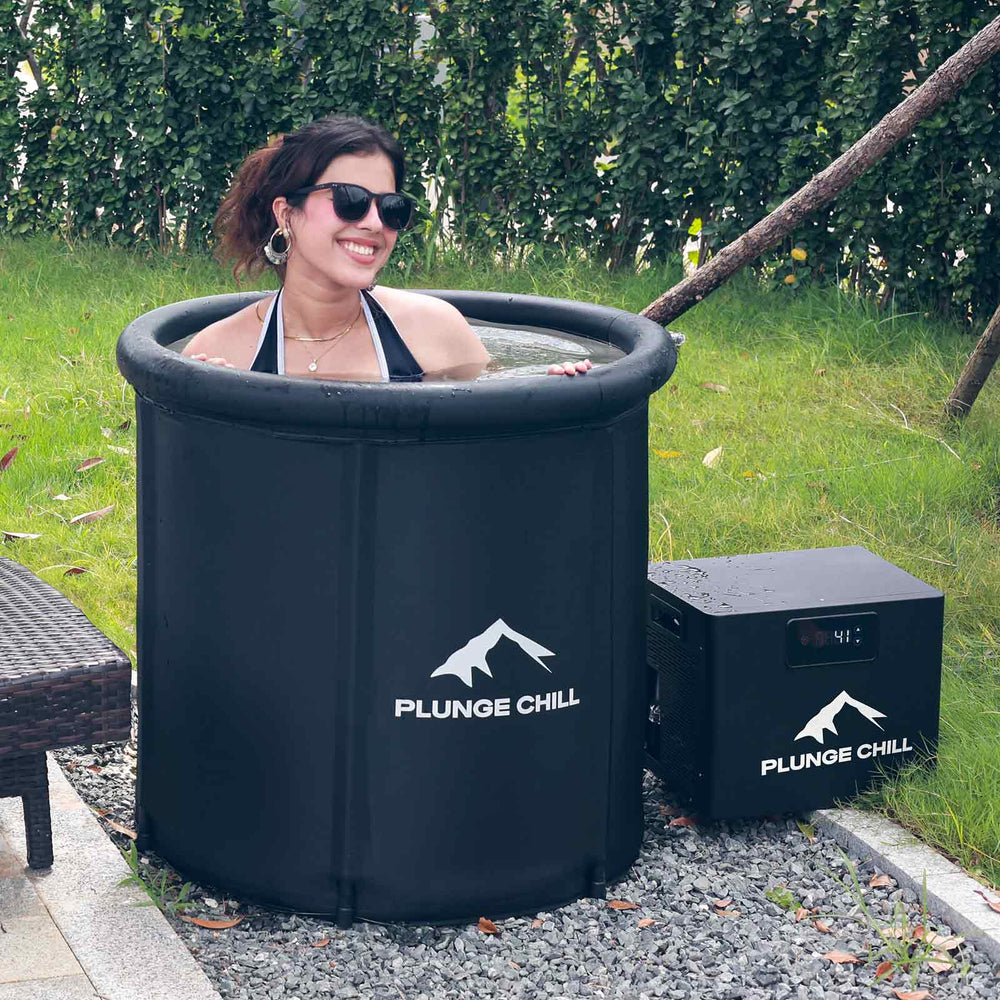
For clients who plunge more than a few times per week, the product matters because consistency and water hygiene drive results more than any marginal difference in chiller horsepower. Temperature control can be as simple as ice and a tub for occasional users, but a dedicated chiller is the most reliable way to maintain 50 to 59°F without constant ice runs. Sanitation and filtration are more than conveniences; clean water reduces skin irritation and makes daily use realistic. Many consumer units combine particulate filtration with ozone or UV; in my programs, I pair filtration with a scheduled drain-and-clean routine so water stays clear and skin feels normal after regular use. Materials and ergonomics affect both comfort and dose reproducibility. Upright designs make natural, shoulder-high submersion easy without slouching; one manufacturer highlights an upright barrel around 42 inches high by 31 inches wide and uses BPA-free, medical-grade materials, which I have found comfortable for clients of varied sizes, noting Ice Barrel’s claims about ergonomics and materials. Drainage and a fitted cover keep maintenance manageable and reduce debris, and a bottom drain is noticeably easier on the back when changing water. If you go with a chiller, account for noise and power, particularly in apartments or small garages, and confirm the warranty and service network because downtime breaks habit formation.
This product guidance is based on professional experience configuring recovery rooms and home gyms and not on head-to-head clinical trials.
My Coaching Playbook for a Longevity Client Starting Cold Plunge
I start with the goal, not the gadget. If the aim is better sleep and stress control, I schedule brief evening or late-afternoon immersions on non-lifting days, beginning near 68°F for two to three minutes and progressing toward 50 to 59°F if comfort allows. Stanford Lifestyle Medicine’s recommendations align with this conservative ramp. If the aim is endurance recovery or heat mitigation, I use short post-session immersions at 50 to 59°F to normalize core temperature and preserve next-day readiness, consistent with Cleveland Clinic. For strength preservation and hypertrophy blocks, I avoid immediate post-lift plunges and either shift them to rest days or keep them at least 24 to 48 hours away from heavy strength sessions per Mayo Clinic Press and Ohio State University. Regardless of the modality, I ask clients to measure water temperature with a thermometer, keep exposure within the target time using a timer, practice calm nasal breathing during the first minute to control hyperventilation, and rewarm gradually with dry layers and light movement. If cold exposure elevates anxiety, causes numbness or chest discomfort, or worsens sleep, I adjust the dose upward in temperature and downward in time, or I pause entirely and reassess.

A Note on Whole-Body Cryotherapy Versus Water
Air-based cryotherapy chambers can plunge surface temperature very rapidly and are sometimes marketed as interchangeable with ice baths. Case Western Reserve University notes that air-based exposures can reach extremely low air temperatures for short periods, but they change core temperature differently than water. Given the longevity focus and the desire for reliable dose control, water immersion remains the more practical and well-characterized option for home use.

Takeaway
Cold-water immersion is not a magic anti-aging tool, but it can be a valuable accessory to a longevity program. For most healthy adults, brief, well-controlled exposures around 50 to 59°F can acutely improve mood, reduce soreness, and normalize core temperature after heat stress. Those benefits help you train, sleep, and feel better, which is where healthspan moves. Respect the clear risks for people with cardiovascular disease and related conditions, periodize timing to protect strength adaptations, and keep expectations grounded around immune and fat-loss claims. If you enjoy cold exposure and it slots smoothly into your week, it can be a durable habit with high return on time—just remember that sleep, nutrition, progressive strength training, and regular aerobic work remain the foundation.
FAQ
Will ice baths extend my lifespan?
There is no direct evidence that cold plunging lengthens lifespan. The best-supported benefits are short-term improvements in mood, perceived recovery, and core-temperature regulation that can help you sustain the training and sleep habits linked to longer healthspan. Academic reviews and medical centers emphasize that larger randomized trials are needed before making stronger claims.
What temperature and duration are safe for most healthy beginners at home?
A conservative starting point is water near 68°F for a couple of minutes, then progress to 50 to 59°F as tolerated while capping the session at about one to five minutes initially, a range supported by Cleveland Clinic and Stanford Lifestyle Medicine. Avoid going below 40°F unless you are highly acclimated and medically cleared, and always use a thermometer and a timer.
Should I plunge right after lifting if I want to preserve or build muscle?
If your priority is muscle preservation or hypertrophy, delay cold immersion by 24 to 48 hours after heavy lifting. Mayo Clinic Press, Ohio State University, and experimental studies indicate that immediate post-lift plunges can reduce the cellular signals that drive muscle growth over time.
Are cold showers good enough if I do not have a plunge tank?
Cold showers at roughly 50 to 60°F are a practical entry point and can be effective for mood and perceived recovery, though they cool the body less uniformly than full-body immersion according to clinical and academic summaries. Short facial immersion in cold water can also activate the parasympathetic system via the diving reflex, as noted by Stanford Lifestyle Medicine.
Who should avoid ice baths or seek medical clearance?
People with cardiovascular disease, uncontrolled hypertension, prior stroke, poor circulation, significant neuropathy, or those on medications that alter heart-rate response should speak with a clinician before trying cold immersion. Harvard Health, Cleveland Clinic, and Case Western Reserve University all highlight these groups as higher risk.
Why do some sources recommend ten to fifteen minutes while others prefer one to five minutes?
Different recommendations reflect different goals and populations. Physical therapy and sports settings often accept longer exposures to address soreness, while hospital systems writing for the general public emphasize shorter, safer sessions to minimize risk and improve adherence. Protocol variability and study heterogeneity also contribute to the disagreement.
References
- https://case.edu/news/science-behind-ice-baths-and-polar-plunges-are-they-truly-beneficial
- https://www.health.harvard.edu/staying-healthy/can-ice-baths-improve-your-health
- https://news.hss.edu/do-ice-baths-work-why-most-people-can-skip-the-cold-post-workout-soak-according-to-athletic-trainers/
- https://www.mcphs.edu/news/physical-therapist-explains-why-you-should-chill-out-on-ice-baths
- https://www.rutgers.edu/news/what-are-benefits-cold-plunge-trend
- https://lifestylemedicine.stanford.edu/jumping-into-the-ice-bath-trend-mental-health-benefits-of-cold-water-immersion/
- https://sncs-prod-external.mayo.edu/hometown-health/speaking-of-health/cold-plunge-after-workouts
- https://pmc.ncbi.nlm.nih.gov/articles/PMC11872954/
- https://health.osu.edu/wellness/exercise-and-nutrition/do-ice-baths-help-workout-recovery
- https://news.northeastern.edu/2024/01/02/health-benefits-of-ice-baths/