As a sports rehabilitation specialist and strength coach who also evaluates cold plunge products, I’ve seen the same pattern countless times. Athletes and everyday users love the promise of cold water immersion, but the first contact with truly cold water can feel overwhelming. The good news is that the “too cold” sensation is trainable, and with smart progression, better gear choices, and clean, controlled setups, most people can convert initial shock into a reliable recovery habit. Below you’ll find a rigorous, evidence-based guide to dialing in your temperature, time, and technique so the ice bath works for you rather than against you.
Why Ice Baths Feel “Too Cold”: The Physiological Basics
Cold water triggers a rapid set of responses that are useful for survival but uncomfortable in the moment. The initial gasp reflex and fast breathing are part of cold shock. Research cited by open-water coaching sources notes that the cold shock response peaks roughly in the 50–60°F range, which happens to be the same zone many recovery protocols use for beginners. That means you may be starting precisely where your reflexes are most dramatic. The first mitigation is not bravado but technique: slow entry, face-wetting before full immersion to soften the gasp response, and calm, steady breathing that restores control.
After exiting, many people experience afterdrop, a continued fall in core temperature as cold blood from the skin returns to circulation. This is normal and usually brief, but it argues for gradual rewarming and clothing layers rather than an immediate blast of heat. Safety guidance from outdoor swim and endurance sources emphasizes recognizing shivering as a sign you may need to shorten exposure next time, adjust temperature upward, or improve gear.
Set Your Starting Point: Temperature, Time, and Safety
If the water feels unmanageably cold, you are likely trying to do too much, too soon. Healthcare-oriented guidance from Cleveland Clinic recommends that new users begin warmer, even around 68°F, and progress over sessions. Multiple sport and clinical sources converge on about 50–59°F as a common working range for recovery, while more advanced users sometimes work between the high 30s and 50°F. Duration guidance varies by goal and temperature. Conservative clinical and sports medicine recommendations advise starting with very short exposures measured in minutes and building tolerance, while performance and recovery guides for well-conditioned athletes sometimes extend to 10–15 minutes in the upper 50s.
Here is how I reconcile the differences for clients. Warmer water supports longer sessions; colder water demands shorter exposures. A new user sitting at 59°F might tolerate several minutes with careful breathing, while 45–50°F usually calls for very brief dips until acclimation builds. If hypertrophy or strength gains are priority, avoid cold-water immersion immediately after lifting because several controlled studies and expert reviews suggest it can blunt muscle growth signaling; consider moving cold exposure to a rest day, to earlier in the day, or at least six to eight hours away from the lift, as summarized by Everyday Health, Ohio State University Health System, and Huberman Lab.

Progressive Acclimation That Works
Among swimmers and coaches, gradual cold water adaptation is the norm. Cold open-water training resources suggest that measurable reductions in cold shock occur with consistent exposure across a few weeks. Over longer horizons of three to six months, people often report far better comfort and control, and those adaptations persist longer if you stay consistent. Practical sports guidance recommends at least one cold session per week to maintain tolerance; long breaks cause tolerance to fade quickly.
Consistency is therefore the biggest determinant of whether “too cold” becomes “comfortably challenging.” Short, regular exposures beat occasional long plunges. If your schedule is tight, spread modest bouts across the week to accumulate the total cold dose. Huberman Lab provides a simple rubric here: aim for about eleven minutes per week of total cold exposure, divided across two to four sessions, at a temperature that feels very cold yet safe to remain in.
A Practical Acclimation Plan You Can Actually Follow
Progress should be individualized and based on how you feel before, during, and after. A sensible plan moves from warmer, shorter exposures toward colder, briefer bouts only as your comfort and control improve. Confirm temperature with a reliable thermometer, keep a warm robe and socks ready, and focus on nose-inhales with longer exhales to downshift the nervous system.
A compact progression framework is below. It is not a prescription; it shows reasonable ranges from reputable sources for healthy adults who have been medically cleared and are not pregnant.
Stage |
Water Temp |
Time per Bout |
Total Weekly Goal |
Frequency |
Primary Focus |
Early Exit Signs |
Initial familiarization |
65–68°F |
1–3 min |
4–8 min |
2–4 sessions |
Slow entry, facial wetting, breathing control |
Panicky breathing that won’t settle in 30–60 seconds |
Early adaptation |
55–59°F |
3–5 min if new; up to 8–10 min if well tolerated |
8–15 min |
2–4 sessions |
Calm stillness; hands out if needed; minimal movement |
Uncontrollable shiver, dizziness, tingling or numbness |
Performance maintenance |
45–55°F |
2–5 min |
8–15 min |
2–4 sessions |
Precise timing; training-aligned scheduling |
Cold “pins and needles,” loss of coordination |
Advanced tolerance |
39–50°F |
1–3 min |
8–15 min |
2–4 sessions |
Fine-tuned dosing; deliberate rewarming |
Slowed speech, confusion, or shaky gait post-exit |
The ranges reflect aggregate guidance from clinical and sports performance sources. If you are new to cold or have any medical concerns, remain at the warmer end until sessions feel routine. If you shift to colder water, shorten time. Adjust only one variable per week and keep notes on how you feel immediately after, several hours later, and the next morning.

Entry and Breathing Methods That Lower the Shock
Technique changes the entire experience. Ease in to mid-shin, then knees, then hips, and only after breathing steadies should you submerge to the waist or chest. Dipping the face briefly before immersion can blunt the initial gasp reflex. Keep your hands out at first if the cold feels severe; fingers and hands are rich in nerve endings and can dominate perceived discomfort. Once steady, you can return hands to the water if desired. Minimizing movement reduces convective heat loss, though as the Huberman Lab newsletter notes, purposeful limb movement can break the warm boundary layer on the skin and make a given temperature feel colder without lowering the set point; use that trick selectively if you need to increase the challenge without adding ice.

Gear That Blunts the Sting Without Erasing the Benefits
Insulating accessories do not defeat the purpose; they make cold exposure trainable. Neoprene caps, gloves, and booties limit heat loss at high-discomfort regions, and a thin top or swim shirt can help new users tolerate the first sessions. Covering the head reduces perceived cold substantially. Some open-water training materials suggest that a large fraction of body heat can leave via the head in cold settings, but the exact percentage varies with clothing and water movement. Suggested verification step: compare forehead thermal imaging or tympanic temperature during matched immersions with and without a neoprene cap to quantify the difference for your setup.
One overlooked gear point involves the ears. Repeated exposure to cold water can contribute to external auditory exostoses, commonly called surfer’s ear. Cold-water safety organizations recommend ear plugs or a neoprene cap that covers the ears, particularly for frequent users. Even simple silicone plugs help protect the canal during short plunges.

Sequencing With Training to Protect Adaptations
Recovery is not the same as adaptation. The evidence base is mixed by training status, mode, and study design, but several meta-analyses and applied reviews suggest that cold-water immersion soon after strength training can blunt hypertrophy and strength gains in some populations. Everyday Health and Ohio State University Health System both summarize this trade-off for lifters. A performance practitioner review on Sportsmith notes that negative findings often come from non-athlete samples or single-limb immersions. In well-trained athletes in season, post-session cold exposure did not reduce lean mass in at least one monitored team setting, and perceived recovery improved. The most practical synthesis is simple: if muscle size or strength is your priority today, move the plunge to a different window, either before the lift, much later in the day, or on a recovery day. If you are in-season and freshness for competition is paramount, post-session cold done judiciously can be justified.

Rewarming Without the “Hot Shock”
There are two schools of thought about immediate heat after a plunge. Many recovery and open-water coaches favor gradual rewarming with towel, layers, warm fluids, and light movement to reduce afterdrop risk and improve comfort. Clinical guidance from Cleveland Clinic allows for sauna use after a brief dive as a way to stabilize temperature. These positions are not mutually exclusive. The conflicting recommendations likely arise from different settings, populations, and risk tolerances. Use a short neutral transition in room air for a few minutes, then choose gentle movement and layers if you want to minimize temperature oscillations, or a brief sauna interval if you’re healthy, not lightheaded, and used to contrast work. Whatever you choose, avoid rushing from freezing water into scalding showers if you feel woozy.
When the Plunge Is Too Cold Today: Practical Workarounds
There will be days when the water is colder than planned or your nervous system simply says no. You can still get productive exposure. Keep hands out for the first minute, or sit higher in the tub and prioritize chest immersion later in the bout. Work with partial limb dips, especially for sore ankles, calves, forearms, or elbows when full-body immersion feels like overkill. Slip on neoprene booties or gloves to cut the sting and prevent focus from collapsing. Add ice gradually, and if you’re short on ice, pre-chill the bath with frozen water bottles. Reduce motion and trust stillness. If anxiety is high, return to the warmer familiarization zone for a week and rebuild.
Two subtle options can make exposure feel more manageable without abandoning the session. First, get the breathing under control before you set your timer; those initial thirty to sixty seconds determine the entire bout. Second, limit head immersion; submerge to mid-chest and keep the neck out until your acclimation is better.
Product Selection: Make the Cold Adjustable and Clean
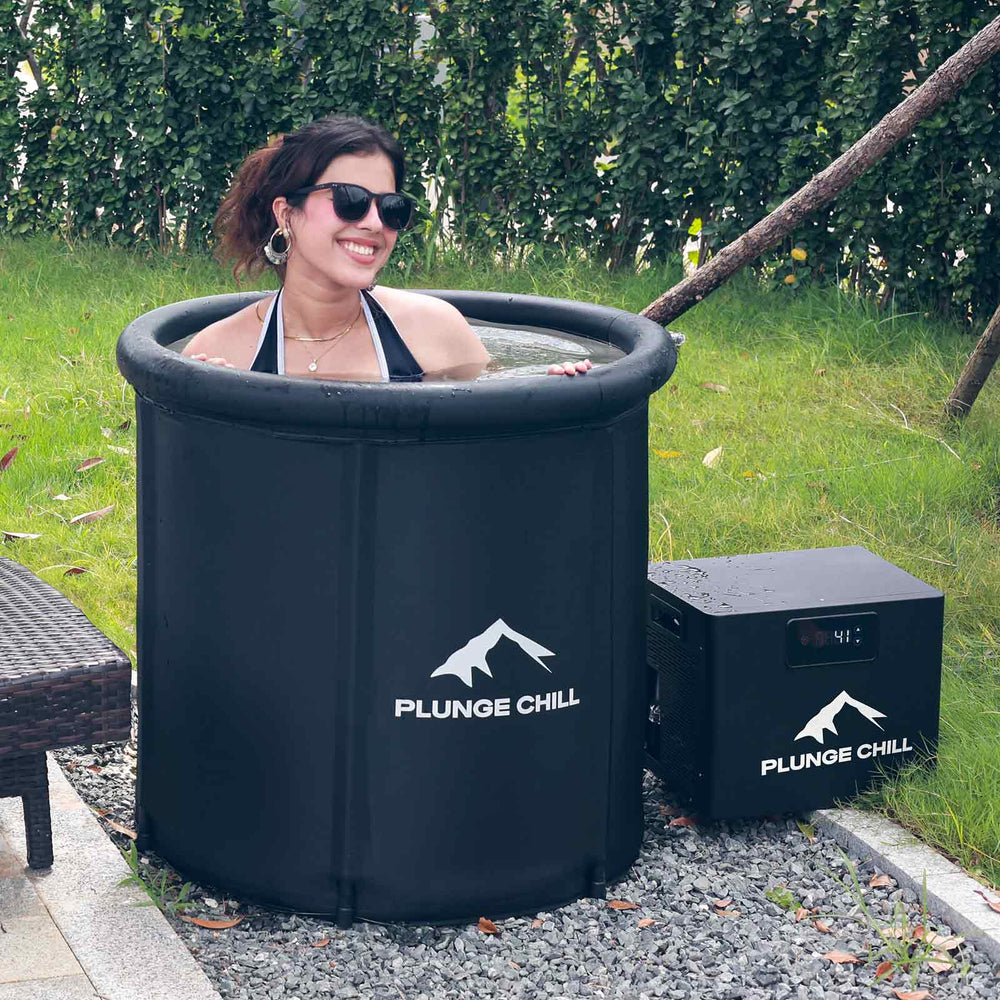
I’ve tested tubs from simple bins to premium chiller-integrated systems. What matters most is control. You need a trustworthy way to set and verify temperature and a system for keeping water clean. For beginners, a bathtub or sturdy stock tank plus ice is fine; add a floating thermometer and a non-slip mat. A chiller becomes worthwhile if you plunge most days of the week or need precise temperatures for a group. Well-built units use robust insulation, accurate thermostats, and lids that retain cold, reduce debris, and limit light exposure that fuels algae.
Maintenance is non-negotiable. Guidance from aquatic sanitation experts is clear: skim debris before and after use, keep the tub covered, and change water based on use. Simple filtration with cartridges or small pool-grade filters helps extend water life, and if you keep water for more than a few days, sanitize with chlorine or bromine at safe levels and test pH around 7 for comfort and sanitizer effectiveness. Pre-entry hygiene is the cheapest upgrade; a quick rinse and removing lotions or makeup dramatically lowers the contamination load. Wipe the vessel with a non-abrasive cleaner when draining, rinse thoroughly, and store dry with the lid on if you take a break. For outdoor setups, choose placed, level ground with enough clearance to drain and clean, and consider sun and leaf cover to reduce cleaning frequency.
Mayo Clinic Health System points out that high-end tanks can cost into the tens of thousands of dollars. The extra cost buys convenience and consistency, not magic. If your budget is modest, a simple container and disciplined sanitation get you most of the way there.
Product Fit Cheat Sheet
Use Case |
Best Fit |
Key Features To Value |
Reviewer Notes |
Occasional home recovery |
Tub or heavy bin plus ice |
Thermometer, non-slip mat, lid or cover |
Budget-friendly; more ice and cleaning labor |
Daily individual use |
Insulated tub with small chiller |
Accurate thermostat, insulation, cover |
Lower operating costs over time; predictable |
Team or clinic |
Commercial chiller system |
Fast cooldown, filtration, sturdy plumbing |
Higher upfront cost; saves staff time |
Outdoor four-season |
Weather-resistant barrel or tub |
Durable shell, UV-resistant lid, drain access |
Plan for debris, shade, and secure footing |
Safety, Contraindications, and Stop Rules
Cold plunges are not for everyone. Cleveland Clinic lists conditions that warrant caution or medical clearance, including heart disease, high blood pressure, diabetes, poor circulation, peripheral neuropathy, venous stasis, and cold agglutinin disease. Respiratory issues, pregnancy, open wounds, and severe cold sensitivity also argue for consultation first. If you are cleared and healthy, avoid alcohol before plunging, have a buddy nearby for your first sessions, and step out immediately if pain spikes, breathing becomes uncontrollable, or dizziness develops. Expect discomfort; avoid sensational extremes.
A practical stop rule from field experience is straightforward. If your breathing does not settle within the first minute of a bout, end the session and restart warmer next time. If shivering remains pronounced for many minutes after exit or if coordination feels off, shorten duration or raise temperature in the next session. For late-day plunges that disrupt sleep, move exposures to morning or early afternoon; circadian biology and reports from practitioners suggest earlier sessions are less likely to interfere with sleep onset.
Cold vs. Contrast vs. Showers: Picking the Right Tool
Cold-water immersion provides the most uniform thermal stimulus and hydrostatic compression. Cold showers are accessible and excellent for building tolerance; many people can finish showers cold for thirty to sixty seconds and progress toward longer cold-only showers. Whole-body cryotherapy offers provider-controlled environments, but it is costly and less flexible for timing around training. Contrast work alternates heat and cold. Some athletes find the alternation restores the feeling of freshness; others prefer to end cold and let the body reheat itself, a practice promoted by Huberman Lab to enhance thermogenic effects. Choose based on your goals and how you feel later that day and the morning after.
Integrating Overlooked Insights Into Practice
There are at least three areas where guidance commonly diverges or remains under-discussed. First, the “start point” temperature for beginners varies widely across sources; clinical guidance favors warmer entries such as about 68°F, while many popular guides steer people straight to the mid-50s. The discrepancy likely reflects different risk tolerances and end-users; clinical audiences prioritize safety for first-timers, while athlete-focused guides assume higher baseline conditioning and supervision.
Second, immediate heat after a plunge is debated. Open-water and safety-forward sources emphasize gradual rewarming to manage afterdrop, while clinical advice suggests a sauna can be acceptable for healthy users after very short dips. The difference is likely in context: outdoor winds and long swims versus controlled indoor tubs after brief bouts. Suggested verification step: track perceived lightheadedness and rewarming comfort for one week with a layers-and-walk approach, then one week with brief sauna, at the same plunge temperature and time.
Third, cold tolerance decays quickly when you stop, which is often omitted in casual guides. Cold-water coaches and swimmers note that even a few weeks away can erode breathing control and comfort. The fix is simple: maintain a once-weekly minimum exposure, even if short, to keep the adaptation “online.”
Takeaway
If the ice bath feels too cold, the solution is rarely to gut it out. It is to adjust the inputs and respect the physiology. Start warmer, go shorter, and build consistency. Enter slowly, tame the breath before the clock matters, and use simple gear like a cap, gloves, and booties to make the first minutes productive instead of punishing. Align cold exposure with your training goals so recovery support does not steal from long-term adaptation, and choose a product setup you can keep clean and at a known temperature. With these adjustments, cold becomes a crisp, controllable training stimulus rather than an exercise in suffering.
FAQ
What temperature should I start with if every plunge feels unbearable?
Begin warmer than you think you need, around the mid to high 60s Fahrenheit, and progress over sessions toward the 50–59°F range that many recovery protocols use. The goal for the first week is to normalize breathing and exit feeling in control, not to hit a particular number on day one. Once your breath settles reliably, shorten the temperature gap in small, weekly steps.
How long will it take to adapt so it stops feeling “too cold”?
Early changes in the cold shock response can occur within two to four weeks of consistent exposure, while deeper comfort and metabolic adaptations typically build over three to six months. These gains fade if you stop, so a weekly maintenance session helps preserve tolerance. Keep a short training log so you can see progress that you might otherwise miss.
Is a sauna after an ice bath helpful or harmful?
Both approaches exist for good reasons. Gradual rewarming with clothing layers and light movement is a conservative default that manages afterdrop in a predictable way. Healthy users accustomed to contrast work may find a brief sauna after a short plunge comfortable and stabilizing. The conflicting recommendations likely reflect different environments and user profiles. If you feel lightheaded after cold, skip immediate heat and rewarm gradually.
Will cold exposure hurt my strength or muscle gains?
It can if you do it at the wrong time. Multiple reviews suggest that cold-water immersion immediately after lifting can dampen hypertrophy signaling. If size or strength is your top priority for the day, move the plunge to a separate window, such as a morning session hours before lifting, later that day well after training, or a rest day. In season, when performance and freshness matter most, short post-session plunges can be reasonable.
How do I keep the water clean in a home setup?
Skim debris, cover the tub when not in use, and insist on a quick rinse before entry. For water you keep beyond a few days, use an appropriate sanitizer such as chlorine or bromine at safe levels, check pH near 7 for comfort and sanitizer effectiveness, and consider a small filter to extend water life. Drain and wipe with a non-abrasive cleaner periodically and store dry with the lid on for longer breaks.
Do gloves, socks, or a cap reduce the benefits?
They reduce discomfort without eliminating the systemic cold stimulus. The central goal is a controlled challenge that you can repeat consistently. If gloves or a cap help you breathe calmly and complete your time, that is a win. As tolerance improves, you can remove layers or progress to cooler water while maintaining control.
Buying and Care Notes for Cold Plunge Equipment
If you are just starting, a bathtub and ice, a reliable thermometer, and a non-slip mat are enough. As your practice becomes regular, an insulated tub with a chiller and cover pays for itself by saving ice, time, and guesswork. Look for precise temperature control, easy-to-clean surfaces, and a drain that does not turn maintenance into a project. For multi-user environments or teams, filtration and rapid cooldown become essential. Remember that premium systems can cost several thousand dollars and even up to five figures; those dollars purchase convenience and consistency, not a fundamentally different physiological effect. Regardless of the system, sanitation and temperature verification are non-negotiable.
Pros and Cons in Context
Cold exposure is not a cure-all, but it can reduce soreness and perceived fatigue within a day of hard work, support faster turnarounds between sessions, and contribute to mental clarity and stress resilience for many users. On the other hand, it carries risks when done recklessly, including hypothermia, cardiovascular stress, and nerve irritation, and it can interfere with strength and muscle gains if you place it too close to lifting. The balance shifts with season, goals, training age, and health status. The smartest approach personalizes temperature and timing, uses gear to make the dose tolerable, and treats maintenance and cleanliness as part of training.
Evidence Snapshot and Source Notes
Clinical and sports medicine summaries from Cleveland Clinic present conservative starting guidance for temperature and time that favors safety first. Ohio State University Health System and Health.com reviews note recovery benefits and the potential trade-off with hypertrophy when cold follows strength work. Ice Barrel and Sock Club provide practical home setup and rewarming tactics, including avoiding immediate hot shock for some users. Deboer Swim and cold-water safety organizations detail gradual acclimatization and the realities of cold shock behavior around 50–60°F, emphasize consistency, and highlight ear protection to prevent surfer’s ear. Sportsmith offers a seasoned perspective on periodizing cold across a season and reconciling study designs that may not reflect elite sport realities. Huberman Lab summarizes a weekly dosing framework and useful methods such as ending cold and allowing natural reheat to train thermogenesis. Polar Recovery provides concrete hygiene practices, from pH management and sanitation to covers and filters. Together, these sources converge on a simple plan: start warmer and shorter, progress patiently, clean your system, and schedule cold to match today’s goal.
References
- https://health.osu.edu/wellness/exercise-and-nutrition/do-ice-baths-help-workout-recovery
- https://health.clevelandclinic.org/what-to-know-about-cold-plunges
- https://www.coldwatersafety.org/acclimation-to-cold-water
- https://mcpress.mayoclinic.org/healthy-aging/the-science-behind-ice-baths-for-recovery/
- https://www.mayoclinichealthsystem.org/hometown-health/speaking-of-health/cold-plunge-after-workouts
- https://www.health.com/ice-baths-8404207
- https://www.hubermanlab.com/newsletter/the-science-and-use-of-cold-exposure-for-health-and-performance
- https://www.masterclass.com/articles/ice-bath-at-home-explained
- https://www.outdoorswimmingsociety.com/how-to-acclimatise-to-cold-water/
- https://plunge.com/pages/ice-baths-everything-you-need-to-know?srsltid=AfmBOorlDIfKzsE43HO9cojIagj8Qbz3jFgJ4v3RhJHHcLGt6jnE6AK9