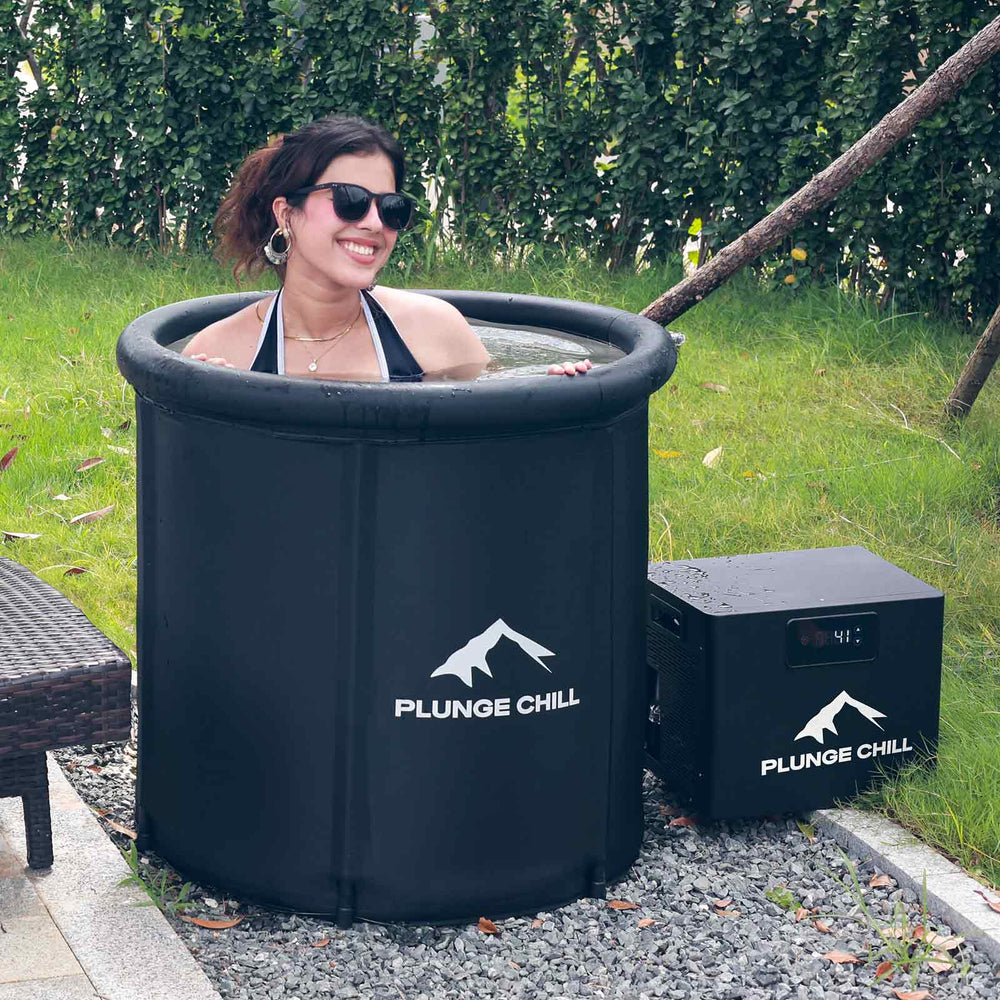
Cold plunges have gone from a locker-room novelty to a staple in pro training rooms, home gyms, and wellness studios. As a sports rehabilitation specialist and strength coach, I now see a different question almost every week: “Coach, should I be dunking my head too?”
On social media, head submersion is often framed as the “next level” of toughness and recovery. In the research literature, the picture is more nuanced. We have increasingly solid data on cold water immersion for recovery, mood, and physiology, but almost none of it is designed around “head in versus head out.” That means we must read the science carefully and make smart, safety-first inferences.
This article walks through what we do know, what we do not, and how I advise athletes and driven recreational lifters to decide whether head submersion belongs in their own cold plunge routine.
What Actually Happens During Cold Water Immersion
Cold water immersion, sometimes called CWI or cold plunging, usually refers to sitting or standing in cold water after hard exercise. Most sports science sources define “cold” in this context as water at or below about 59°F. An ACE physical therapy review describes immersion of the body, often whole body except the head, immediately post-exercise to reduce delayed onset muscle soreness and speed recovery.
Several mechanisms are consistently described across clinical and sports performance sources. Cold constricts blood vessels in the skin and superficial tissues, which can limit swelling and reduce local blood flow around stressed muscles and joints. Cooling slows nerve conduction, dampening pain signals and giving the characteristic numbing, analgesic effect. Hydrostatic pressure from being under water pushes fluid from the limbs back toward the torso, which can help move metabolic byproducts out of tired muscles. Together, these mechanisms support why athletes commonly report less soreness, lower perceived fatigue, and better readiness for the next session after a plunge.
A meta-analysis of cold water immersion after exercise reinforces that picture. Compared with passive rest, immersion in cold water reduces immediate post-exercise soreness and perceived exertion and modestly attenuates peaks in creatine kinase and blood lactate about 24 hours after exercise. However, the same analysis finds limited and inconsistent benefits for objective performance measures such as countermovement jump height. In other words, cold water immersion clearly changes how you feel and how some biochemical markers behave, but it does not guarantee a measurable performance boost at the next test.
Time and temperature matter, but not in a linear “colder is better” way. The ACE review notes that many protocols cluster around 11 to 15 minutes in water near 52°F. A Mayo Clinic Health System article describes typical plunges of a few minutes in water around 50°F or colder, with beginners starting at 30 to 60 seconds and gradually building toward 5 to 10 minutes. Other clinical pieces suggest that colder water allows shorter sessions, whereas slightly warmer water around 60°F may require longer exposures to drive similar physiological responses.
To ground that in a real training example, consider a basketball player in a back-to-back tournament weekend. If she uses a tub at about 52°F for 12 minutes after the first day’s games, the meta-analysis suggests she is likely to feel less sore and less subjectively fatigued by the next morning, and her creatine kinase and lactate responses will likely be somewhat blunted. What the same data cannot promise is a big improvement in vertical jump or sprint speed over and above a solid active recovery plan.
Throughout all of this, notice that none of the mainstream research protocols require the head to be under water. Most describe immersion to the chest, shoulders, or neck, with the head comfortably out of the tub.

The Head Is Different: Cold Receptors, Shock, and Safety
Physiologically, your head is not just another body segment in a cold plunge. It is a high-priority zone packed with sensors, especially for cold.
A neurohormesis-focused review in a psychiatry journal explains that human skin has more cold receptors than warm ones and that the face in particular may have about five times as many cold spots as warm spots per square centimeter. These receptors connect to cold-sensitive ion channels such as TRPM8, which become active in the range of roughly 50°F to the upper 70s and drive cold-induced thermogenesis, analgesia, and thermoregulatory responses. In practice, this means that dropping your face, scalp, and neck into cold water produces a disproportionately intense sensory and autonomic jolt compared with cooling the same surface area on a limb.
Clinical pieces on ice baths and cold plunges from Mayo Clinic Press and other medical publishers highlight what happens when that jolt is sudden and full body. Abrupt immersion in very cold water triggers a cold shock response characterized by an involuntary gasp, rapid hyperventilation, and sharp spikes in heart rate and blood pressure. If the head is submerged during that first gasp, water instead of air can be drawn into the airway, which is why these sources explicitly flag drowning risk when unacclimatized people jump into frigid open water.
The cardiovascular story is just as important. Cold shock magnifies stress on the heart. Medical summaries from Mayo-affiliated authors, Healthline, and regional health systems note that cold immersion can provoke dangerous rhythms or events in people with underlying cardiac disease or autonomic dysfunction. They recommend medical clearance before starting cold exposure for anyone with a history of arrhythmias, coronary disease, or significant blood pressure problems.
When you combine high receptor density on the face and scalp, the intensity of the cold shock response, and the mechanical reality that your mouth and nose are underwater, it is reasonable to view head submersion as a different risk tier than neck-down immersion in a controlled tub.
Consider a practical scenario. One athlete steps down gradually into a 52°F plunge tank to just below the shoulders, keeps her head out, and focuses on steady breathing. Another jumps into a 40°F river on a winter morning, fully submerges, and surfaces gasping. The physiology described by Mayo Clinic Press predicts exactly what we see clinically: the second athlete experiences a more violent cold shock response, much higher transient cardiovascular stress, and a real drowning hazard if she cannot quickly reorient and get her airway above water.
That gap in risk profile sits at the heart of the head submersion debate.

Brain and Mood Benefits Without Dunking Your Head
One of the strongest arguments cold plunge advocates make for putting the head under is brain health and mood. The good news is that we now have direct neuroimaging evidence that you can get meaningful mood and brain-network effects without submerging the head at all.
A recent functional MRI study accessed through PubMed Central recruited 33 healthy adults who were naive to cold-water swimming. Participants completed mood questionnaires and a resting-state brain scan, then underwent a five-minute head-out whole-body immersion in water at about 68°F, immersed to the clavicles. After quickly drying and dressing, they returned to the scanner for another resting-state scan and repeated mood assessments.
Despite the moderate temperature and the fact that the head never went under water, participants reported feeling more active, alert, attentive, proud, and inspired and less distressed and nervous after the immersion. On fMRI, the researchers observed increased functional interaction among key large-scale brain networks, including regions in the medial prefrontal cortex, anterior cingulate, frontoparietal control, and visual systems. These network changes tracked with increases in positive affect, supporting the idea that short, head-out cold immersion can acutely enhance mood and reorganize brain connectivity in a potentially beneficial way.
This aligns with a broader body of evidence summarized in that same paper and in a neurohormesis review. Regular cold-water swimming and deliberate cold exposure appear to reduce fatigue, lessen depressive symptoms, and improve general well-being in some people. On the biochemical side, whole-body cold exposure can trigger release of neurotransmitters such as serotonin, dopamine, norepinephrine, cortisol, and beta-endorphins. A clinical summary from University of Florida Health Jacksonville notes that acute cold-water immersion can drive about a fivefold increase in noradrenaline and more than a doubling of dopamine, which matches the subjective reports of alertness and improved mood reported by many practitioners.
Again, none of these studies require dunking the head. The fMRI work specifically used head-out immersion. The large pragmatic trial in office workers that Mayo Clinic Press discusses, where over three thousand participants added 30 to 90 seconds of cold water at the end of their morning showers and subsequently took 29 percent fewer sick days over 60 days, focused on showers rather than full plunges. Case reports of cold open-water swimming for depression often involve swimmers whose head may intermittently be in and out of the water, but the evidence does not isolate “head in” as the critical component.
In practical terms, if your primary goal for cold exposure is mood, alertness, or a sense of mental resilience, the existing literature supports that head-out immersion at modestly cold temperatures for just a few minutes is already enough to move the needle.

Does Head Submersion Improve Recovery or Performance?
For athletes, the key decision is rarely “Do I want to be tougher?” It is “Does this help me perform better and adapt to training?” When we look at the evidence base through that lens, the case for head submersion becomes even weaker.
First, depth of immersion beyond a certain point does not appear to dramatically change standard recovery outcomes. The meta-analysis of cold water immersion after exercise specifically examined whether immersion to the navel versus immersion to the shoulders altered effects on soreness, neuromuscular performance, and biochemical markers. Subgroup analyses showed that body region immersed did not explain the variability in longer-term soreness and performance outcomes. At least within the range from waist to shoulder depth, going deeper did not convert cold water from a modest short-term recovery tool into a powerful performance enhancer.
Second, applied sports medicine guidance increasingly focuses on timing and frequency rather than pushing more extreme cold exposure. A Mayo Clinic Press article on ice baths, quoting sports medicine specialist Andrew Jagim, notes that cold water immersion can be valuable in tight competitive windows, such as a condensed tournament or an intense two-week practice block. In those settings, the priority is short-term pain and soreness control and the ability to show up again the next day, even at the potential expense of slightly blunted long-term adaptation.
However, both that article and a related Mayo Clinic Health System piece caution against using cold plunges after every strength-training session throughout an entire season. Repeated exposure immediately after lifting appears to dampen key molecular signals involved in muscle growth and strength gains. That is consistent with the meta-analytic finding that cold water immersion does more for how you feel than for objective, long-term performance.
Importantly, none of these expert recommendations or quantitative analyses mention head submersion as a factor that changes the calculus. The ACE review, Mayo resources, and a 2023 sports science overview from a regional health system all describe effective protocols with the head out of the water. They highlight water temperature, duration, and how often in the training cycle you plunge, not whether you also get your hair wet.
Imagine two sprinters who both finish an evening track session and head to the cold tub. Both sit in water at 54°F for eight minutes to the shoulders. One spends the entire time with his head above water, relaxed and breathing steadily. The other dunks his head for the last two minutes because he saw it on social media. Based on the combination of meta-analytic data and clinical guidance, there is no evidence-based reason to expect the second sprinter to experience less soreness, lower creatine kinase, or better sprint performance the next day simply because of the extra head exposure. On the other hand, he has taken on higher acute risk with his airway and cardiovascular system.
Comparing Head-Out and Head-In Approaches
It can be helpful to see the practical tradeoffs side by side.
Aspect |
Neck-Down Immersion (Head Out) |
Immersion with Head Dunk |
Evidence for soreness and fatigue relief |
Supported by multiple trials and reviews at 50–59°F for several minutes after exercise |
No direct comparative data; deeper immersion beyond shoulders has not shown clear additional benefit |
Evidence for mood and brain effects |
Supported by fMRI work using five-minute head-out immersion around 68°F and by shower and plunge studies |
No specific trials isolating head submersion as superior for mood or brain outcomes |
Cardiovascular and drowning risk |
Cold shock still present but airway is clear if you control entry and breathing |
Higher risk during involuntary gasp or hyperventilation when mouth and nose are underwater, especially in very cold open water |
Practical comfort and adherence |
Easier to tolerate and repeat; easier to breathe and talk; more realistic for daily use |
More intense and aversive; greater chance of panic, disorientation, or sinus discomfort, which can reduce adherence |
Product implications |
Standard chest-deep tubs or converted bathtubs typically sufficient |
Requires deeper tanks or specific technique in open water; demands more stringent supervision and safety measures |
From a strength and conditioning standpoint, this table sums up why I recommend neck-down immersion as the default and reserve head submersion, if used at all, for very specific and well-screened situations.

Who Should Avoid Dunking the Head?
Even neck-down cold water immersion is not universally appropriate. Warm-water aquatic therapy guidelines already flag heart failure, coronary artery disease, significant respiratory disease, uncontrolled epilepsy, and serious balance or neurologic disorders as cases requiring careful risk–benefit analysis before any immersion. Cold plunges layer additional cardiovascular and thermoregulatory stress on top of those baseline concerns.
Medical articles from Mayo Clinic Press, Mayo Clinic Health System, Healthline, and regional health systems converge on several groups who should be extremely cautious with cold exposure, and especially with head submersion.
People with known cardiovascular disease, arrhythmias, or significant uncontrolled blood pressure are at higher risk because cold shock spikes heart rate and blood pressure and can trigger dangerous rhythms. Individuals with autonomic dysfunction can respond unpredictably to sudden cold, potentially leading to fainting or other instability. Novices with no cold exposure experience are more likely to panic, hyperventilate, and lose control of breathing in the first seconds of immersion. In open water, that panic can have fatal consequences if the head is underwater and conditions are rough, dark, or icy.
For these populations, the message from clinical sources is clear. Any cold plunge should start only after medical consultation, and there is no compelling reason to add head submersion on top of neck-down immersion. In practice, I advise these athletes to stick with milder, time-limited showers or carefully supervised, neck-deep tubs if their physician agrees that cold exposure is appropriate at all.
How I Coach Athletes Through the Head Submersion Decision
When I help an athlete or a motivated recreational lifter decide whether to dunk their head, we walk through three main questions: What is your primary goal? Where are you in your training cycle? And what is your health risk profile?
If your main goal is post-exercise recovery while preserving long-term strength and hypertrophy, the current evidence steers us toward limited, strategic, neck-down immersion. For example, a powerlifter in an off-season strength block might reserve cold plunges for rare occasions when soreness is so high that it threatens the next key session, and even then use water around 50 to 59°F for several minutes with the head out, rather than as a nightly ritual. This approach lines up with both the sports medicine caution from Mayo authors about daily post-lifting plunges and the meta-analysis showing short-term, not long-term, benefits.
If your main goal is psychological resilience and mood, we can lean more on short, regular exposures at moderate temperatures. The fMRI study using five minutes of head-out immersion at about 68°F and the office-worker shower trial suggest that even modest cold stress can increase alertness and reduce perceived distress. A protocol summarized by University of Florida Health, drawing on Huberman Lab discussions, suggests aiming for roughly 11 minutes per week of deliberate cold exposure, typically split into two to four sessions. In practice, that might mean three or four neck-deep plunges of about three minutes each at a temperature you can tolerate, without any need to go head under.
If your health risk profile includes cardiovascular or neurologic red flags, our starting point is always your physician’s recommendation. When clearance is given, I start with very brief, neck-down exposures in controlled environments, often as simple as finishing a warm shower with 30 to 60 seconds of colder water, exactly as many clinical articles suggest for beginners. Only after building some tolerance and confidence would we consider full-body plunges, and even then, the head stays out.
For the few athletes where head immersion is directly relevant to the sport, such as winter swimmers or certain military or rescue roles, I still treat it as a separate skill progression. First we establish comfort and control with neck-deep cold water, then perhaps add brief face splashes or very short, supervised head dips while standing in a safe, shallow plunge tank with easy access to air. The goal is never to chase maximal discomfort, but to layer in a new stimulus on top of a foundation of safe, controlled exposure.
Cold Plunge Product Choices Through a Head-Submersion Lens
Because this is also a product space, I am often asked whether a given tub is “good enough” if you do not intend to dunk your head, or whether only deep professional tanks justify the investment.
From a recovery and mood perspective, most of the research and clinical protocols we have been discussing can be executed in a bathtub, stock tank, or consumer cold-plunge unit that reaches your chest or shoulders when seated. Commercial cold-plunge systems with built-in chilling and filtration can easily run into the tens of thousands of dollars, and Mayo Clinic Health System explicitly notes that fully featured tanks can cost up to about $20,000. That kind of system can be useful in a team or clinic setting where many people will use the plunge daily and precise temperature control matters, but it does not confer a special head-submersion advantage in terms of recovery outcomes.
If you plan to keep your head out of the water, the product features that matter most are reliable temperature control in the 50 to 60°F range, comfortable and safe entry and exit, enough depth to cover the thighs and torso, and a surface that allows you to relax and breathe without slipping. For most home athletes, that is achievable without chasing extreme depth.
If you insist on having the option to dunk your head, the product conversation becomes more about safety than additional benefit. You want a tub that allows you to plant your feet firmly, orient your body easily, and resurface instantly without hitting your head or losing your footing. In my view, that is a niche requirement suited to very specific users, not a must-have feature for the typical cold plunge buyer focused on recovery and resilience.
FAQ: Head Submersion and Cold Plunges
Does dunking my head make the cold plunge more “effective”?
For standard goals such as reducing post-exercise soreness, moderating short-term fatigue, or getting an alertness and mood lift, the best available evidence comes from neck-down or head-out protocols. Studies comparing different immersion depths from the waist to the shoulders do not show a dramatic advantage of deeper immersion, and the fMRI work showing beneficial brain-network changes used head-out immersion. There are no high-quality trials demonstrating that head submersion adds measurable performance or recovery benefits.
Is there any situation where head submersion might be justified?
Head submersion may be worth practicing for people whose sport or occupation requires calm function in very cold water with the head under, such as winter swimmers or some rescue and military scenarios. Even then, it should be approached gradually, with medical clearance where appropriate and supervised, controlled environments. For the average athlete or fitness enthusiast, the added risk is hard to justify relative to the limited, speculative upside.
What is a sensible starting point if I want to use cold plunges safely?
For most healthy individuals cleared by a healthcare professional, a conservative starting point is to finish a normal warm shower with 30 to 60 seconds of colder water, as suggested in clinical articles from Mayo and other sources, or to try brief, neck-deep immersion in cool, not ice-cold, water in a bathtub at home with someone nearby. Over weeks, you can work toward a few sessions per week totaling roughly 11 minutes of exposure, using water in the 50 to 59°F range and keeping your head out of the water. That pattern aligns with both research protocols and practical recommendations from academic and clinical centers.
In my rehab and strength practice, the athletes who get the most from cold plunges are not the ones who stay in the longest or dunk the deepest; they are the ones who match a sensible, neck-down protocol to a clear goal and integrate it alongside the real pillars of performance: training, nutrition, sleep, and stress management. If you treat cold exposure as a targeted tool rather than a stunt, you almost never need to put your head under to reap the benefits.
References
- https://ui.adsabs.harvard.edu/abs/2022Senso..22.9962M/abstract
- https://pmc.ncbi.nlm.nih.gov/articles/PMC5089456/
- https://ace-pt.org/cold-water-immersion-therapy/
- https://www.rochesterregional.org/hub/cold-water-immersion-therapy
- https://mcpress.mayoclinic.org/healthy-aging/the-science-behind-ice-baths-for-recovery/
- https://www.mayoclinichealthsystem.org/hometown-health/speaking-of-health/cold-plunge-after-workouts
- https://ufhealthjax.org/stories/2024/the-benefits-of-cold-water-immersion-therapy
- https://psychiatryonline.org/doi/full/10.1176/appi.neuropsych.20240053
- https://www.researchgate.net/publication/347729023_The_use_of_total_immersion_in_the_rehabilitation_process
- https://www.physio-pedia.com/Aquatherapy