Glacial bathing on the high steppe sounds romantic: icy blue meltwater, wide sky, a body toughened by wind and distance. As a sports rehabilitation specialist and strength coach who also reviews cold-plunge products, I hear this image invoked often as the “pure” version of cold exposure. Athletes want to know whether throwing themselves into water that feels like a Mongolian glacial stream is a fast track to recovery, resilience, and mental toughness.
Here is the first reality check. We do not yet have clinical research on Mongolian nomadic glacial bathing specifically. What we do have is a rapidly growing body of data on cold-water immersion, winter swimming in near‑freezing water, and controlled ice baths in the 50–59°F range. In this article, I will use that evidence to answer a practical version of the question:
If you tried to mimic glacial bathing as practiced in harsh nomadic environments, what would it do to your body and mind, how should you do it safely, and when does a controlled modern cold plunge actually beat “authentic” wild water?
Throughout, I will lean on findings from Stanford Lifestyle Medicine, Mayo Clinic Press, Harvard Health, and multiple randomized trials and systematic reviews, and I will translate those into the language of training plans, recovery blocks, and real-world risk.
What Glacial-Style Bathing Actually Does To Your Body
When you step into very cold water, whether it is a commercial plunge at 55°F or a glacial river much closer to freezing, the basic physiology is the same. The differences are in degree, not in kind — and those degrees matter.
Core physiology of extreme cold-water immersion
Researchers and clinicians across multiple centers describe a consistent acute response to cold-water immersion. Studies summarized by Mayo Clinic Press, Ohio State University’s sports medicine group, and several sports-therapy reviews outline the same sequence.
The moment cold water hits the skin, dense cold receptors fire rapidly. This input shoots to the brain and triggers a surge in sympathetic nervous system activity. Blood vessels in the skin and extremities constrict, shunting blood toward the core to protect vital organs. Heart rate and blood pressure rise sharply, and breathing becomes faster and more shallow — this is the cold shock response that safety agencies in Australia and hospital-based teams repeatedly warn about.
As tissue temperature falls, metabolic processes slow. Work from Ohio State University and other exercise-physiology groups shows that this reduced metabolic rate lowers local inflammation and slows breakdown in damaged muscle fibers. That is one reason ice baths are widely used after intense endurance sessions to ease soreness and protect performance over the next day.
Once you exit the water and rewarm, the process reverses. Blood vessels dilate, circulation increases through the muscles you just cooled, and many athletes report that tight tissue feels looser and less painful. GoodRx and sports-therapy clinics highlight this “flush and refill” effect as a plausible mechanism for reduced swelling and subjective relief.
From a nomadic, glacial-bathing perspective, the same cascade applies. The difference is temperature and therefore dose. Most controlled recovery protocols cluster around 50–59°F for 5–15 minutes. In winter-swimming studies cited by Stanford Lifestyle Medicine, people immersed in near‑freezing water around 32–36°F, but for only about 20 seconds, three times per week. The colder you go, the faster the risk rises, and the narrower your safe window becomes.
A simple example illustrates this. If an athlete sits in a tub at 55°F after training, many sports-medicine sources suggest 5–10 minutes as a reasonable upper bound for recovery. That is potentially 50–100 “cold‑minutes” per week if repeated several days. At near‑freezing temperatures, winter-swimming data suggest roughly 20 seconds per bout, three times per week, which is only about one “cold‑minute” weekly. Glacial water demands respect: you “spend” your cold budget much faster.
Recovery benefits and performance trade-offs
The big question for any athlete or working nomad is not “Can I tolerate it?” but “Does it actually help me perform and recover?”
Across multiple randomized trials and reviews, the pattern is consistent. Short-term, cold-water immersion can reduce soreness and perceived fatigue; long-term, overuse may blunt some training adaptations, especially for strength and hypertrophy.
A 2021 review summarized by Health and a systematic review discussed by Mayo Clinic Press both found that cold-water immersion in the hour after exercise reduced muscle pain and improved perceived recovery for up to about 24 hours. Creatine kinase and lactate, markers of muscle damage and fatigue, also tended to be lower after cold therapy in a 2023 review of athletes. This is exactly what many nomadic herders or endurance athletes are looking for during multiday efforts: less soreness and a sense of readiness to go again the next morning.
However, multiple sources, including Ohio State University, SportsMed Rockies, GoodRx, and the Mayo Clinic team, emphasize an important downside. When cold immersion is used routinely right after resistance training, there is evidence that long-term gains in muscle size and strength are reduced. A 2015 study in the Journal of Physiology and work summarized by GoodRx suggest that blunting the inflammatory signal immediately after lifting may interfere with the adaptation you are trying to drive.
Case reports and controlled trials reviewed in a sports-medicine case series show that post‑exercise ice-water immersion is not the magic “active recovery” many assumed. In some experiments, very cold immersion actually reduced subsequent power and maximal effort for a period compared with warmer water or active recovery. That might be acceptable in a survival setting, where preserving joints and reducing pain is the priority, but it matters if your main goal is maximal strength.
From a programming standpoint, glacial-style bathing — very cold, very intense — should be treated as an advanced tool. In my practice, I reserve the coldest immersions or outdoor natural plunges for:
Early recovery after competitions or taxing endurance blocks, when short-term freshness matters more than hypertrophy.
Hard weeks when psychological resilience and “resetting” the nervous system are primary goals.
Occasional seasonal challenges, not nightly post-lift rituals.

Mental And Stress-Resilience Benefits In Harsh Environments
Life in a nomadic environment is inherently unstable: weather, terrain, and workload change quickly. Any practice that trains you to stay composed under stress is valuable. Here, the mental and neuroendocrine effects of cold are at least as interesting as the muscular ones.
Mood, alertness, and stress hormones
Stanford Lifestyle Medicine, Mayo Clinic Press, and several small clinical trials converge on a few key points about cold-water immersion and mental health.
Short cold exposures in the 50–60°F range reliably increase alertness and subjective energy. In controlled studies, a 5‑minute bath at about 68°F made adults feel more active, alert, and inspired. More severe protocols — such as 20 minutes of sea immersion around 56°F — reduced negative emotions like tension, anger, and fatigue and boosted positive feelings like vigor and self-esteem in undergraduates.
At the biochemical level, cold exposure triggers spikes in noradrenaline and endorphins. Stanford Lifestyle Medicine explains that dense cold receptors in the skin send a strong barrage of signals to the brain, leading to increased noradrenaline, which sharpens focus and may support mood in people with low baseline levels, and endorphins, which blunt pain and create a subtle “high.” Studies summarized in Networld Sports and Rupa Health also report substantial increases in catecholamines like dopamine after short, whole-body immersion, with mood improvements that last for hours.
Cortisol, the primary stress hormone, behaves differently. Multiple studies reviewed by Stanford Lifestyle Medicine show that it does not necessarily spike during brief immersions; instead, cortisol often drops below baseline in the hours after cold exposure and can remain lower for up to three hours following a 15‑minute immersion around 50°F. A systematic review and meta-analysis in PLOS One, summarized by Harvard Health, found that cold-water immersion led to reduced stress levels, particularly around 12 hours after immersion, even though immediate mood changes were inconsistent.
From the perspective of nomadic resilience, this profile makes sense. Cold immersion acts like a controlled “shock” that trains the stress-response system. In a 12‑week protocol of winter swimming or whole-body cryotherapy cited by Stanford Lifestyle Medicine, people who practiced three times per week in near‑freezing air or water showed progressively lower cortisol responses to the same cold exposure after four weeks. They became better at handling both the cold and everyday stressors.
Put simply, regularly confronting an icy river or a cold tub in a structured way can teach your nervous system to mount a strong but efficient response, then shut it down quickly. That skill transfers to sport, work, and harsh environmental conditions.
Resilience lessons from nomadic conditions
Winter-swimming protocols that use water near 32–36°F for only about 20 seconds, three times per week, by design blend respect for danger with repeated exposure. The aim is not to “tough it out” for as long as possible but to accumulate many small, controlled doses over time.
For athletes and active people inspired by nomadic glacial bathing, that is the crucial takeaway. The body seems to adapt best when cold is:
Intense enough to command full attention and trigger a physiological response.
Short enough to avoid hypothermia risk and allow complete functional recovery before the next exposure.
Repeated consistently over weeks rather than crammed into a single heroic afternoon.
In practice, that might mean brief, neck‑deep plunges at 50–55°F in a tub several mornings per week, plus occasional shorter exposures in colder outdoor water if safety allows, rather than rare, prolonged fights with near‑freezing water.

Safety Realities Of Glacial Bathing
Wild glacial water has a mystique, but it also layers additional risks on top of the usual cold-exposure hazards. Medical groups, aquatic safety organizations, and sports-medicine clinics emphasize that cold-water immersion is not benign.
Why natural glacial water is higher risk than a tub
Cold-water safety briefs from Australian aquatic bodies, GoodRx, CrocPad, Mayo Clinic Press, and others highlight several overlapping risk categories.
The first is the cold shock response. Sudden immersion in water colder than about 60°F can trigger involuntary gasping, hyperventilation, and a rapid spike in heart rate and blood pressure. This greatly increases drowning risk in open water and places extra strain on the heart, particularly in people with cardiovascular disease, high blood pressure, or arrhythmias.
The second is hypothermia. Even in controlled clinic settings, experts almost universally recommend limiting immersion to around 5–10 minutes in 50–59°F water for most people. In much colder natural water and windy conditions, the safe window can shrink to seconds. Signs such as uncontrollable shivering, confusion, weak pulse, or difficulty speaking are red flags that require immediate exit and rewarming. Hypothermia is even more dangerous in remote settings where help is far away.
The third is local cold injury and nerve damage. GoodRx and other medical sources describe cold panniculitis (a painful rash and lumps in fatty tissue), ice burns, frostbite, and neuropathy with prolonged or direct ice exposure. In natural glacial settings, feet and hands are especially vulnerable on cold rocks, in wet boots, or against ice.
Finally, natural water adds specific environmental hazards: currents, variable depth, slippery rocks, and unknown water quality. Safety organizations strongly discourage entering unfamiliar, fast-moving cold rivers or swimming alone in open water. They also emphasize that cold exposure should never be combined with hyperventilation techniques in or near the water because this can lead to loss of consciousness.
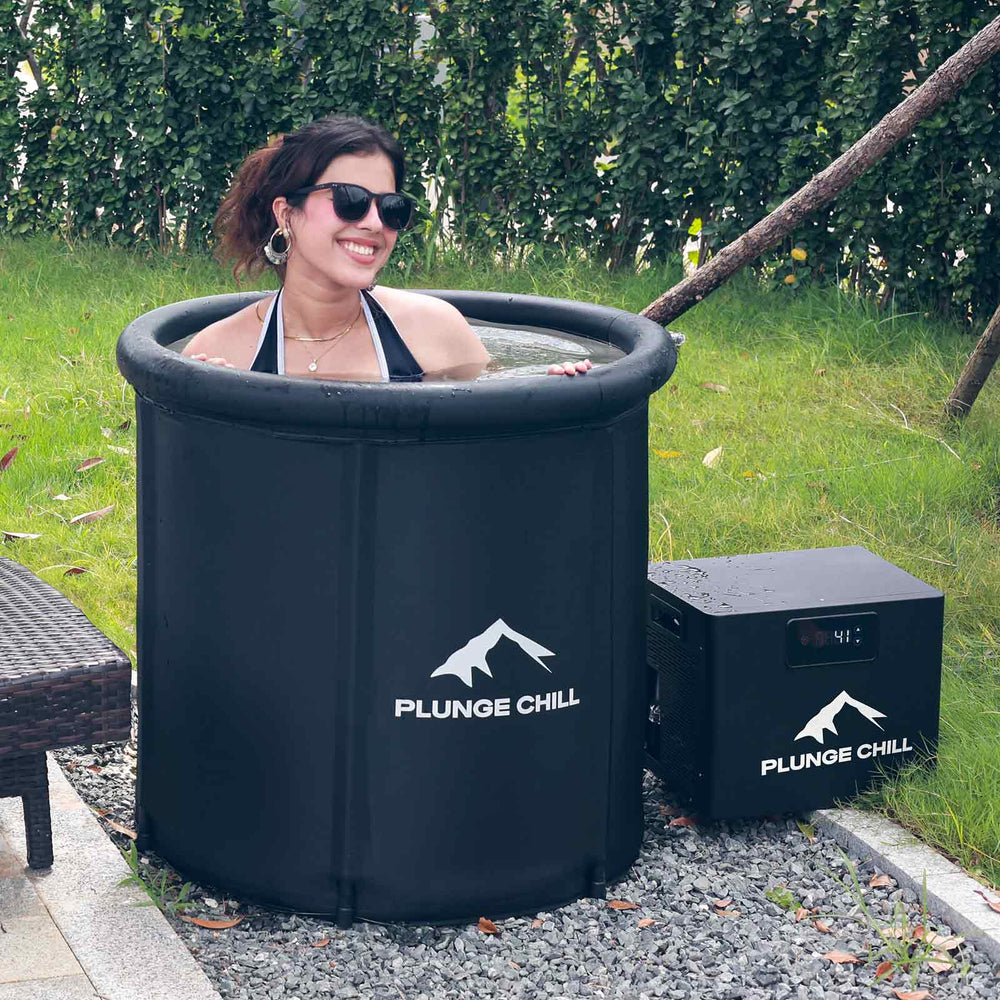
In contrast, a well-designed cold plunge at home or in a wellness center offers stable temperatures, controllable depth, no current, and easier rewarming. From a rehab and performance standpoint, that control is not a luxury; it is what makes dosing possible.
The following table summarizes key differences between settings, using temperature ranges and recommendations drawn from the research base.
Setting |
Typical water temperature range (from studies) |
Main upside |
Main risks |
Best suited for |
Natural glacial-style river or lake |
Near-freezing winter swimming studies around 32–36°F; can be higher in milder seasons |
Powerful mental challenge; very rapid cooling; strong sense of connection with environment |
Cold shock, currents, hypothermia, difficult exit and rewarming, water-quality concerns |
Advanced practitioners with strong supervision and safety planning |
Controlled cold plunge tub |
Common recovery protocols around 50–59°F, with some commercial systems capable of lower |
Precise temperature control, predictable dose, quick exit and rewarming |
Still carries cardiovascular and hypothermia risk if overused or used by high-risk individuals |
Athletes and active people seeking repeatable, evidence-aligned dosing |
Cold shower |
Cold-shower studies typically below about 60°F for 30–90 seconds |
Very accessible, low drowning risk, easy to add daily |
Less uniform cooling, limited deep-tissue effect |
General wellness, introductory cold exposure, travel-friendly option |
For most readers, chasing the physiology of “Mongolian glacial bathing” is better done in the bottom two rows of that table than in the top one.
Evidence-based exposure guidelines you can adapt
Different groups have proposed somewhat different cold-exposure “recipes,” but they cluster in a narrow range for healthy adults.
Ohio State University, GoodRx, SportsMed Rockies, and several wellness clinics commonly recommend water between about 50 and 59°F for 5–15 minutes when the goal is post‑exercise recovery. Bioniq, Networld Sports, and others echo that range and emphasize that beginners should start at the warmer end and with much shorter durations, sometimes only 1–2 minutes.
Cuan Ice Baths and similar programs translate this into a weekly dose: roughly 11 minutes of deliberate cold exposure per week, split into several sessions, is enough to trigger benefits without excessive risk. Cold showers studies discussed by Mayo Clinic Press and UCLA Health used 30–90 seconds of cold water at the end of a normal shower for 60–90 days and found about a 29 percent reduction in sick days and increased subjective energy.
On the other end of the spectrum, Stanford Lifestyle Medicine describes winter-swimming and cryotherapy protocols using near‑freezing water or air for very brief exposures — for example, 0–2°C (about 32–36°F) for around 20 seconds, three times per week. These interventions still altered cortisol responses over time and appeared to train stress resilience without long immersions.
Putting this together, a nomadic or glacial-bathing–inspired protocol for a healthy, well-screened athlete might look like this:
Several days per week at 50–55°F for 3–5 minutes in a tub, aiming for about 10–15 total cold minutes weekly.
Optional shorter, much more cautious exposures in colder natural water, limited to a few deep breaths and always with supervision and a clear rewarming plan.
For someone newer to cold, the entry ramp is even gentler. Ice Barrel, GoodRx, Optimawellness, and multiple safety briefs recommend starting with cold showers, or with one to two minutes in slightly cool water, and adding only small increments as the body adapts. The consistent message from both research and clinical practice is that cold therapy is not a competition. There is no evidence that pushing past your limits into numbness, dizziness, or extreme shivering yields extra benefit; it only adds risk.

Programming Glacial-Style Cold Into A Training Plan
When I design recovery blocks for athletes, I treat cold exposure like any other potent stressor: useful when it matches the goal, counterproductive when layered carelessly on top of heavy training.
Strength, hypertrophy, and endurance
Multiple sources, including Ohio State University, SportsMed Rockies, GoodRx, and Mayo Clinic Press, caution that routine cold immersion immediately after lifting can blunt some of the cellular signals that drive muscle growth and strength. A 2015 study in the Journal of Physiology and several reviews highlight reduced long-term hypertrophy when cold-water immersion is used regularly post‑strength training.
In contrast, the data are more reassuring for endurance performance. Cold plunges appear to help manage soreness and maintain power output in the following 24 hours during periods of intense or repeated endurance training. Case studies and systematic reviews reviewed by HJ Physical Therapy suggest that during multi-day blocks, athletes who used daily cold immersion sometimes maintained performance better than those using passive recovery.
For a nomadic endurance scenario — consecutive days of riding, herding, or trekking — the trade-off is often worth it. Short-term function and reduced pain take priority over maximal hypertrophy.
In practical terms, I usually follow these principles when weaving glacial-style cold into programming:
Keep the coldest immersions away from heavy strength sessions. If you perform maximal lifting on Monday, save an intense cold immersion for Tuesday or Wednesday, or use it after a lighter conditioning block instead.
Use cold more freely around endurance work, especially when heat and humidity are involved. Studies summarized by Rupa Health and several sports-medicine reviews show that cold-water immersion is highly effective for rapidly lowering dangerously high core temperature in cases of heat illness.
Avoid stacking multiple stressors in the same evening. For example, a heavy strength session, followed by exhaustive intervals, followed by a long glacial-style plunge is an unnecessary triple hit to recovery systems.
One simple weekly pattern for a field sport athlete might be: controlled cold plunge on the evening after the hardest conditioning day; optional short cold shower on other days; no cold immersion in the first 24 hours after the heaviest lifting session of the week.
Recovery stacks: where cold belongs in the hierarchy
Mayo Clinic Press offers a helpful metaphor: cold plunges are garnish, not the main course. Core recovery still rests on sleep, nutrition, progressive training loads, and active recovery. SportsMed Rockies and multiple clinical reviews reinforce this.
Evidence-supported methods that complement or sometimes rival cold immersion include low-intensity active recovery such as easy cycling or walking, foam rolling and other self-myofascial techniques, stretching, massage, and heat therapy like saunas for circulation and relaxation. Sleep — usually in the 7–9 hour range — has arguably the strongest and broadest impact on performance, hormone balance, and injury risk.
In a nomadic or expedition setting, this hierarchy remains. Cold immersion can be a powerful tool to manage soreness and stress, but it cannot fix chronic sleep deprivation, under-fueling, or poorly structured workloads.
One practical way I “stack” these tools for athletes training in tough environments is to anchor routines around sleep and nutrition, then treat cold exposure as a specific intervention on certain days. For instance, post‑competition evenings might combine a short, controlled cold plunge, a warm meal rich in protein and complex carbohydrates, light mobility work, and a deliberate wind-down period to facilitate early sleep. On lighter days, heat and stretching may take precedence, with only a brief cold shower as a mental reset.

Experiencing Mongolian-Style Glacial Bathing Without Leaving Home
As a cold-plunge product reviewer, I appreciate the appeal of “authentic” glacial water. But for the vast majority of athletes, professionals, and serious recreational trainees, the safest and smartest route is to capture the physiology of glacial bathing in a controlled environment.
Modern plunge systems and well-run facilities now offer precisely regulated water temperatures, continuous filtration, and easy entry and exit. The research base on cold exposure — from Stanford, Mayo Clinic, Ohio State, Harvard, and others — overwhelmingly comes from these kinds of controlled conditions, not from remote rivers. That means when you sit in a 52°F plunge for three minutes, you are operating in the same neighborhood of parameters that have actually been studied.
Practically, you can mimic much of what a nomadic glacial bath would do by:
Keeping water cold enough to feel intensely uncomfortable but still safe, typically in the 50–59°F range.
Entering slowly, focusing on controlled breathing to manage cold shock, and exiting well before numbness or confusion set in.
Progressing gradually over weeks toward a weekly cold budget of about 10–15 minutes, divided into several short sessions, rather than one extreme outing.
Using occasional outdoor cold — for example, brief immersions in natural lakes with strong safety measures in place — as a psychological accent, not as the backbone of your recovery plan.
This approach honors the toughness and environmental realism associated with Mongolian nomadic life without importing its risks directly into your training week.
FAQ: Glacial Bathing, Training, And Safety
Is glacial bathing better than a standard ice bath for recovery?
Based on current evidence, the answer is no for most people. Studies that show reduced soreness and improved short-term recovery overwhelmingly use water in the 50–59°F range for up to about 10–15 minutes. Near‑freezing water increases risk far more than benefit and has been used in research mainly as very short winter-swimming exposures of around 20 seconds. You can achieve the key physiological effects with a controlled cold plunge, with far greater safety and repeatability than a remote glacial river.
How cold is “cold enough” to mimic glacial benefits?
Multiple clinical and sports-medicine sources converge on the 50–59°F range as both effective and reasonably manageable for healthy adults. Evidence suggests that benefits can appear even at around 59–68°F, especially for mood and stress, so you do not need to chase extreme temperatures. If your goal is resilience and recovery rather than bragging rights, it is usually better to stay a little warmer and be consistent than to go much colder and sporadic.
Who should avoid glacial-style immersion altogether?
Safety guidance from cold-therapy experts, cardiologists, and sports-medicine teams is quite clear. People with heart disease, uncontrolled high blood pressure, serious arrhythmias, complicated diabetes or neuropathy, circulation disorders such as Raynaud’s, cold-sensitivity conditions like cold urticaria, a history of frostbite, significant respiratory disease, epilepsy, or open wounds, and those who are pregnant are generally advised to avoid intense cold-water immersion unless cleared and supervised by a medical professional. For these groups, the risks of cold shock, arrhythmias, and hypothermia are simply too high relative to the potential benefits.
Cold water — whether from a steel tub in your garage or a glacial stream on the steppe — is a powerful stimulus. If you respect the physiology, align your protocol with the evidence, and fit it intelligently into your training plan, you can borrow some of the resilience associated with Mongolian nomadic life without inheriting all of its risks. As a coach and rehab specialist, that balance between toughness and prudence is exactly what I look for in any recovery tool.
References
- https://www.health.harvard.edu/staying-healthy/research-highlights-health-benefits-from-cold-water-immersions
- https://pubmed.ncbi.nlm.nih.gov/39879231/
- https://lifestylemedicine.stanford.edu/jumping-into-the-ice-bath-trend-mental-health-benefits-of-cold-water-immersion/
- https://sncs-prod-external.mayo.edu/hometown-health/speaking-of-health/cold-plunge-after-workouts
- https://health.osu.edu/wellness/exercise-and-nutrition/do-ice-baths-help-workout-recovery
- https://mcpress.mayoclinic.org/healthy-aging/the-science-behind-ice-baths-for-recovery/
- https://www.uclahealth.org/news/article/6-cold-shower-benefits-consider
- https://www.hackensackmeridianhealth.org/en/healthu/2023/06/15/the-truth-about-ice-baths
- https://www.health.com/ice-baths-8404207
- https://cuanicebaths.com/pages/how-to-ice-bath-safely?srsltid=AfmBOoqt44350faaz7yhbqBXbQcgeUpeOSuhgqPQ_b5BBpTU5j2jIVrt