As a sports rehabilitation specialist and strength coach who also reviews cold plunge products, I have used cold exposure protocols with athletes, executives, and writing teams to sharpen focus and structure deep work blocks. The goal in a creative context is not to suffer through the cold, but to leverage a brief, controlled stressor that raises arousal and steadies attention without derailing cognition. The evidence base is growing but mixed. Some research shows short-term alertness and later stress reductions, while other work documents cognitive decrements during prolonged or very cold exposures. This article synthesizes what we know, what is still uncertain, and how to use cold therapy safely and effectively to support ideation, drafting, and revision.
What Cold Therapy Means for Writers
Deliberate cold exposure encompasses short, controlled bouts of cold stress delivered through cold showers, cold-water immersion, ice baths, or cold air. In research, cold-water immersion is often defined as chest-level immersion in water at 59°F or colder for at least 30 seconds. Protocols vary from one short bout to repeated exposures across days. The creative appeal is straightforward: the shock of cold evokes a rapid, measurable arousal response, while consistent practice appears to condition stress systems in a way that many people experience as improved composure and clarity. Importantly, the depth, duration, and temperature determine whether cold exposure helps or hinders the specific mental task you care about.
The Physiology That Matters for Creative Work
Cold triggers a catecholamine surge. Multiple sources describe sharp increases in norepinephrine and dopamine during and after cold exposure. A pragmatic framing used by coaches and scientists is to choose a temperature that feels uncomfortably cold yet safe, then keep exposures brief. Reports summarized by A Brilliant Mind note norepinephrine can rise about two to three times baseline within minutes and dopamine up to about two and a half times baseline, with effects that can linger. The Huberman Lab newsletter similarly emphasizes that cold elevates epinephrine and norepinephrine for hours, which people experience as heightened alertness and drive. This profile is compatible with the early phases of creative work that benefit from focus, initiation energy, and a sense of traction.
Mood and stress effects are more nuanced. A systematic review and meta-analysis in PLOS One found a pattern that is practically useful for creatives: stress was significantly reduced about 12 hours after cold-water immersion, despite no immediate effects. That is a strong hint about timing. If you want calmer editing or strategy sessions, schedule them for the next morning after an evening exposure, or the same evening after an early-morning exposure. Mayo Clinic Press and Mayo Clinic Health System both describe preliminary evidence for improved alertness and attentiveness in small studies and highlight that many claims remain modest or unproven in rigorous trials.
Cold can impair cognition when misapplied. A systematic review in the International Journal of Environmental Research and Public Health reported that prolonged or more severe cold often degrades attention, working memory, and processing speed. The cognitive decrements grow with deeper cooling and longer exposures. Protective factors include keeping the head out of water, limiting duration, and rewarming appropriately. In short, the same stimulus that boosts vigilance in the short run can hamper complex cognition if you stay too cold for too long.

What the Evidence Implies for Creatives
Short exposures appear best for pre-writing activation. A few minutes or less in water around 50–59°F, followed by calm breathing and light movement, can produce a reliable alertness window. That window is where idea capture, outlining, and the first pass of drafting often feel easier. The Huberman Lab newsletter suggests a weekly total around 11 minutes, split across two to four sessions. A Brilliant Mind provides compatible guidance and emphasizes nasal, steady breathing and the importance of avoiding breath-holding to reduce panic responses. Done in this way, cold becomes a drug-free, time-efficient on-ramp to deep work.
Longer or harsher exposures fit better away from demanding thought. The PLOS One analysis found a delayed stress reduction at about the 12-hour mark. If your work calls for more contemplative editing, high-stakes conversations, or narrative restructuring, plan those tasks for the period when the nervous system has settled. By matching the dose and timing to the task, you avoid the cognitive troughs reported with extended or very cold immersions.
The training caveat matters for writer-athletes. Regular post-exercise cold-water immersion can blunt strength and hypertrophy adaptations. Both PLOS One and Mayo Clinic Health System advise caution if muscle gain or power is a priority. A pragmatic compromise is to perform cold before training, separate it by 6–8 hours after lifting, or reserve it for competition blocks or unusually dense training periods.
Safety First: Who Should Avoid or Modify
Cold is a powerful stressor. Consistent safety advice from Mayo Clinic Press and A Brilliant Mind includes avoiding cold exposure if you have cardiovascular disease, uncontrolled hypertension, Raynaud’s phenomenon, significant neuropathy, or are pregnant, unless cleared by a clinician. Never train or plunge alone, avoid deep or moving open water, and start with home-based exposures. The cold shock response can provoke gasping and hyperventilation; if your head is underwater, the risk of drowning rises. Hypothermia and frostbite are real hazards in extreme conditions. Choose shallow, controlled setups with someone nearby if you are new.

A Creative Routine I Use With Writers and Athletes
In my own practice, I place creative ideation directly after a brief cold exposure when the goal is to overcome inertia and get words flowing. A typical sequence is a one to three minute immersion at about 54–57°F, focusing on calm, nasal breathing. I step out, towel the skin lightly while allowing some shivering to continue, layer up, and take two to five minutes of easy movement. I then sit down immediately to capture outlines, headlines, and the first paragraphs while attention is narrow and motivation is high. For deeper structural edits or story architecture, I will schedule a separate session about 12 hours after a longer but still controlled cold exposure, capitalizing on the stress-reduction window described in PLOS One. This two-window approach has been dependable for both athletes writing long-form pieces and editors facing heavy revision days.

Protocols That Respect Physiology
Most creatives do well starting with water at 50–59°F for 30–60 seconds and progressing to one to three minutes per bout as tolerance improves. Choosing an uncomfortably cold yet safe temperature is more important than chasing extremes, and you should progress gradually over one to two weeks as acclimation occurs. Keep breathing calm and through the nose if possible, and avoid deliberate hyperventilation. To prolong catecholamine effects, allow your body to rewarm naturally through movement and layers rather than jumping into a hot shower immediately. If you value the metabolic boost, finishing cold and permitting mild shivering can amplify the thermogenic response, a practice the Huberman Lab newsletter highlights. Prefer morning exposures if sleep is sensitive; doing cold too close to bedtime can disrupt sleep for some.
What To Expect and When
Expect rapid alertness during and after brief exposure, with a narrowed attentional field that many writers experience as a practical antidote to distraction. Expect inconsistent mood effects in the immediate aftermath based on the literature, noting that small studies do report elevated alertness and reduced distress. Expect clearer, calmer cognition about 12 hours later if your exposure was not excessive. If you notice fumbling, slower recall, or mental rigidity during long or very cold immersions, shorten the bout or warm up sooner. And if your resistance training progress stalls, move cold away from lifting days or reserve it for competition taper windows.
Pros and Cons for Creative Work
The advantages center on fast, reliable arousal, the perception of mental cleanliness, and the training effect on composure. For many, cold serves as a behavioral bridge into work that otherwise feels too heavy to start. It can also act as a resilience practice, teaching you to keep breathing and stay intentional amid discomfort, which translates to staying with a paragraph when the first draft looks clumsy. The drawbacks arise when protocols are too long, too cold, or poorly timed. Under those conditions, research shows cold can degrade memory, attention, and decision speed. Risks rise further in open water or among those with cardiovascular vulnerabilities. The evidence for long-term creativity per se remains preliminary; much of the strongest data concerns arousal, stress, and recovery, with creativity inferred through mood and attention proxies. This is reason to use cold as a targeted tool rather than a cure-all.
Product Selection and Basic Care
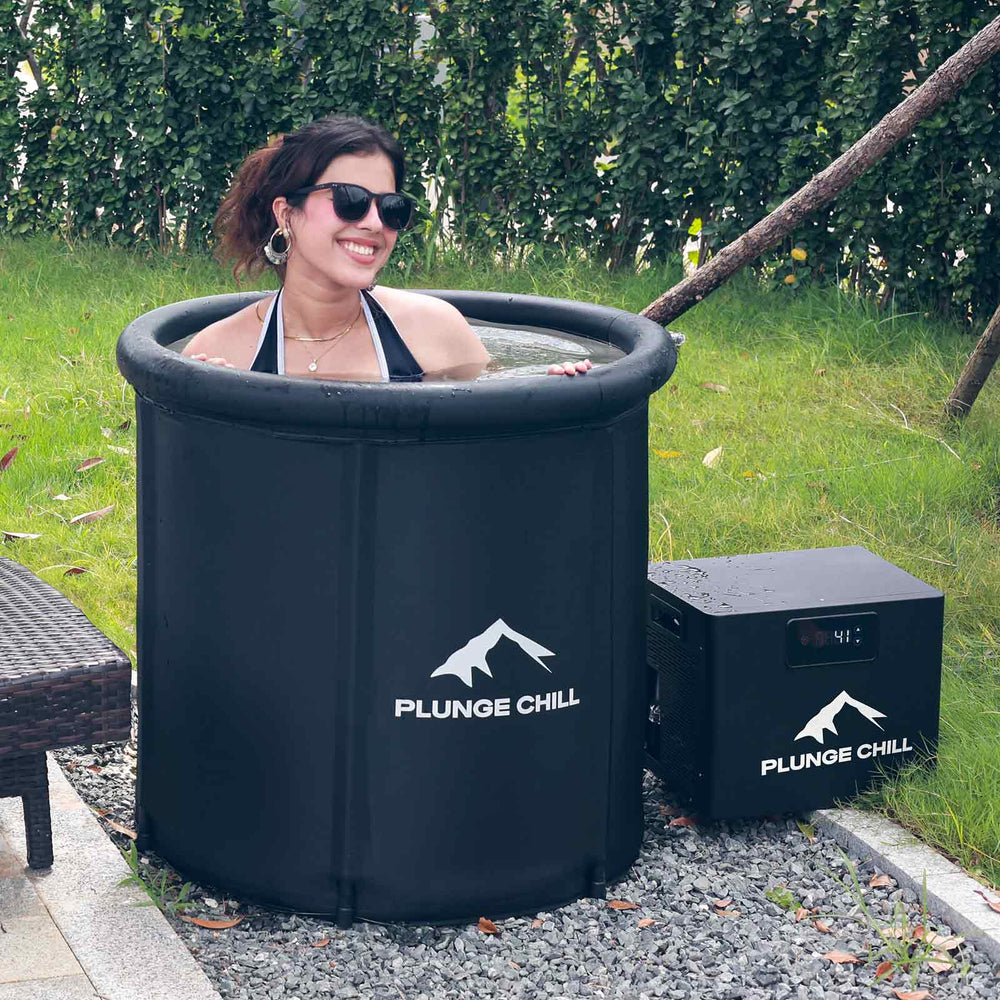
For home use, simple bathtubs with ice and insulated portable tubs are the lowest-friction options for brief creative cues. If you prefer a dedicated plunge, prioritize temperature stability, straightforward sanitation, and a footprint that fits your space. Reliable chillers that hold the 50–59°F range, quiet operation if you share a living space, and accessible filtration help keep usage consistent. A well-fitting lid and a stable step make daily practice safer. On care, keep the water clean by following the manufacturer’s sanitation guidance, change or clean filters as recommended, and rinse after use if you train before you plunge. These are practical preferences rather than research-driven mandates, but in my experience, reducing friction is the difference between an invigorating daily cue and an abandoned gadget.
Evidence and Protocol Snapshot
Goal |
Timing relative to work |
Temperature (°F) |
Exposure per bout |
Weekly total |
Notes and sources |
Jump-start drafting or brainstorming |
Immediately before writing |
50–59 |
30–180 seconds |
About 11 minutes split across sessions |
Arousal and focus from catecholamines; uncomfortably cold yet safe; guidance aligned with A Brilliant Mind and Huberman Lab newsletter |
Calm editing or high-judgment tasks |
About 12 hours after exposure |
50–59 |
1–5 minutes, not exhaustive |
Variable |
Stress reduction at 12 hours noted in PLOS One meta-analysis; avoid overcooling to protect cognition |
Recovery after dense training blocks |
After practice or event days |
50–59 |
Short bouts |
Short cycles only |
Mayo Clinic Press and Mayo Clinic Health System caution about chronic post-lift use blunting hypertrophy |
Sleep-sensitive users |
Early day only |
50–59 |
Very brief |
Minimal effective dose |
Huberman Lab newsletter notes post-cold temperature rise may disrupt sleep if done late |
The table is a synthesis of practical ranges commonly used in coaching and consistent with reported research boundaries. All temperatures are presented in Fahrenheit to reflect consumer practice and the guidance that most creative users do not need ice-cold extremes.
Breathing, Rewarming, and the After-Drop
The urge to gasp is part of the cold shock response. Control it by entering gradually, keeping your head out of the water, and breathing slowly through the nose. Breath-holding increases panic sensations and shortens tolerable exposure. When you get out, an after-drop—a continued decline in core temperature—can occur, especially after longer immersions. Manage it by dressing in layers and walking gently to generate heat, rather than sprinting straight to hot water if you hope to extend the alertness window. If you feel lightheaded, confused, or experience chest pain, stop and rewarm more assertively and consult a clinician.

Where the Science Is Strong and Where It Is Not
Stress, arousal, and immediate physiological responses are well documented. Heart rate, ventilation, blood pressure, and catecholamines rise acutely. The stress reduction signal at roughly 12 hours is supported by pooled data in healthy adults. Immune effects are modest and mixed in the near term, although a large pragmatic workplace trial reported 29 percent fewer sick days with brief cold shower finishes; mechanisms were not established. Direct creativity outcomes remain a frontier. Systematic reviews show that cognitive performance can worsen during deeper or prolonged cold, with occasional improvements in vigilance under select protocols. That discrepancy is precisely why creatives should prefer brief, controlled exposures and place the most complex tasks when warm.
Putting It Together: A Creative Block Blueprint
Plan cold when you need a starting gun, not when you need a full symphony. If you have been circling a blank page all morning, use a one to two minute cold immersion around 54–57°F, settle your breath, move lightly for a minute, and open the document immediately. Capture headlines, thesis sentences, and section scaffolds while your attention is narrow and motivation is high. If your calendar allows, schedule a longer, calmer session later in the day or evening and devote the following morning to revisions and structural decisions, which benefit from the delayed stress-dampening effect. If you lift for strength or hypertrophy, keep cold away from the four to eight hour window after heavy sessions. And if you find that cold consistently makes you scatterbrained, shorten the bouts, warm sooner, or reserve cold for recovery only.
Short FAQ
What temperature should I use if I am new to cold exposure for creative work? Most people start well in the 50–59°F range. The key is that it feels uncomfortably cold yet safe, and you can maintain calm breathing. Begin with 30–60 seconds and progress to one to three minutes as you adapt over a week or two.
Does cold exposure actually improve creativity, or just make me feel energized? The strongest evidence supports arousal and stress modulation rather than direct creativity metrics. Brief cold exposures can reliably boost alertness and perceived clarity, and stress may be lower about 12 hours later. Prolonged or very cold immersions can impair complex cognition. Use short bouts before drafting and schedule thoughtful edits when warm or during the delayed calm period.
Is a cold shower good enough, or do I need an ice bath? Cold showers are effective and accessible. Immersion increases heat loss and can feel stronger at the same temperature, but for creative activation a shower finish at an uncomfortable setting can work well. The principle is dose, not equipment.
How often should I use cold for writing? A practical target is about 11 total minutes per week divided into two to four sessions. Many writers find two or three short exposures weekly sufficient to anchor a consistent pre-writing ritual.
Are there people who should not use cold exposure? Yes. If you have cardiovascular disease, uncontrolled high blood pressure, Raynaud’s phenomenon, neuropathy, are pregnant, or have other medical conditions, consult a clinician first. Never plunge alone, avoid deep or moving open water, and stop if you feel dizzy, confused, or have chest pain.
Will cold after lifting hurt my gains? Chronic post-lift cold can blunt the signaling pathways that support strength and muscle growth. If hypertrophy is a goal, avoid cold in the several hours after lifting or shift it to non-lifting days.
Takeaway
Cold therapy can be a powerful but subtle tool for writers when it is short, strategic, and safe. Use brief, uncomfortably cold exposures to light the fuse on drafting, and time thoughtful editing or planning for the calmer window that tends to emerge many hours later. Respect the line where helpful arousal becomes cognitive drag, and keep safety primary. The science supports arousal and stress benefits with creative gains most plausibly emerging from better initiation, steadier attention, and improved emotional regulation—not from heroic doses of ice. Start modestly, stay consistent, and let the writing—not the ritual—be the star.
Brief source notes for further reading include PLOS One on health and wellbeing with cold-water immersion, Mayo Clinic Press and Mayo Clinic Health System on safety and training caveats, the International Journal of Environmental Research and Public Health on cognition under cold, the Huberman Lab newsletter for pragmatic dosing and timing advice, and A Brilliant Mind for concise guidance on deliberate cold exposure, breathing, and weekly targets. Promotional sources offer ideas but should be weighed against these more rigorous references.
References
- https://pmc.ncbi.nlm.nih.gov/articles/PMC11872954/
- https://www.lafra.org/benefits-of-ice-baths/
- https://journals.plos.org/plosone/article?id=10.1371/journal.pone.0317615
- https://mcpress.mayoclinic.org/healthy-aging/the-science-behind-ice-baths-for-recovery/
- https://www.mayoclinichealthsystem.org/hometown-health/speaking-of-health/cold-plunge-after-workouts
- https://psychiatryonline.org/doi/full/10.1176/appi.neuropsych.20240053
- https://www.frontiersin.org/journals/psychiatry/articles/10.3389/fpsyt.2025.1603700/full
- https://www.researchgate.net/publication/354619391_The_Effect_of_Cold_Exposure_on_Cognitive_Performance_in_Healthy_Adults_A_Systematic_Review
- https://abrilliantmind.blog/deliberate-cold-exposure-for-focus/
- https://www.hubermanlab.com/newsletter/the-science-and-use-of-cold-exposure-for-health-and-performance