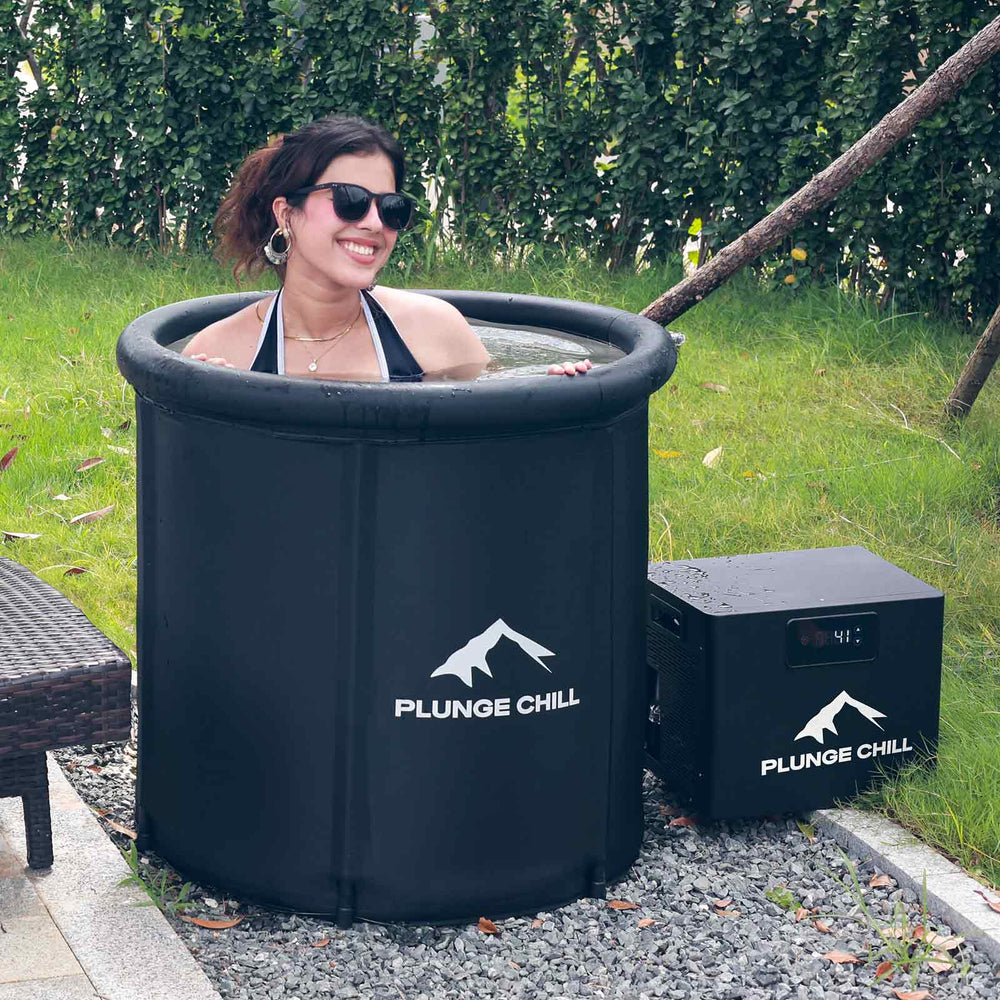
As a sports rehabilitation specialist and strength coach who reviews cold plunge products, I’m asked the same question every training cycle: does getting uncomfortably cold actually help me recover from runs? The short answer is that cold plunges can reduce soreness and make you feel ready to run again, but the details matter—your goals, timing, temperature, and even whether you’re also lifting for strength all influence whether a plunge helps or hinders. This article translates the best-available evidence into clear, practical guidance for everyday runners, and adds product advice if you are considering a home unit.
What Cold Plunge Actually Is—and Isn’t
Cold plunge refers to partial or full-body immersion in cold water, generally between about 50 and 59°F for several minutes. Very cold dips can go near 40°F, but that is not necessary for most outcomes people care about. Cold showers feel similar, but they cool the skin and superficial tissues more than the body’s core. True immersion pulls heat from the whole body and can change cardiovascular and metabolic responses more substantially. By contrast, whole-body cryotherapy uses very cold air, sometimes as low as −200°F, for brief exposures and affects the skin far more than deep tissue.
The first seconds after immersion are the riskiest because the cold shock response spikes breathing and heart rate and can provoke panic or hyperventilation. Focused, slow exhalations help stabilize breathing and reduce drowning risk in those initial moments. The cold also triggers peripheral vasoconstriction—blood is shunted from the limbs to the core—followed by shivering and a temporary rise in metabolic rate. Many runners also notice an immediate mood lift, likely related to adrenaline, noradrenaline, and dopamine surges. These physiological effects are well described by researchers at Case Western Reserve University and clinical teams at Mayo Clinic Health System.
The Physiology That Matters for Runners
After hard running, muscles have microtrauma, and soreness typically peaks 12 to 72 hours later. Immersion in cold water constricts blood vessels and reduces local metabolic activity, which can blunt swelling and pain. Upon rewarming, vessels dilate and circulation rebounds, which may help redistribute metabolites. There’s another element often overlooked in popular guides: hydrostatic pressure. Simply being immersed increases pressure with depth and shifts fluid centrally, which can elevate stroke volume and cardiac output without requiring additional energy expenditure. That fluid shift may contribute to soreness reduction independent of water temperature, as summarized in a PubMed Central review of immersion physiology.
An additional nuance is that very cold exposure can lower muscle temperature and blood flow so much that immediate explosive performance suffers. If you plan to sprint, jump, or lift soon after immersion, cold may not be your friend in the short window that follows.

What the Evidence Actually Shows
When you analyze the highest-quality syntheses, the pattern is consistent. A Cochrane review on cold-water immersion reported modest reductions in perceived soreness at 24 to 72 hours after exercise, with small to moderate effect sizes, but little change in objective markers like strength or functional performance in that same window. A meta-analysis hosted on PubMed Central found that cold-water immersion reduced immediate perceived fatigue and soreness and was associated with lower creatine kinase at 24 hours and lower blood lactate at 24 to 48 hours, while inflammatory markers such as C-reactive protein and interleukin-6 were not meaningfully different between cold and control groups. The same analysis identified substantial heterogeneity and minimal influence of immersion site (shoulder vs waist depth), with some suggestion that very cold water below 50°F might transiently help jump performance at 24 hours, though that signal came from a single study and should be treated cautiously.
A clinical commentary from Parker University reminds us that the most reliable benefit of “icing” modalities is analgesia, not accelerated healing. That aligns with cautious takes from Mayo Clinic Press and The Ohio State University, which conclude that benefits are modest and context dependent.
Here is a concise synthesis you can scan before the deep dive.
|
Outcome |
Most consistent short-term effect |
What it probably doesn’t do |
Notes and sources |
|
Soreness (DOMS) |
Small to moderate reductions by 24–72 hours |
Immediate relief is minimal right after immersion |
Cochrane review; PubMed Central meta-analysis |
|
Perceived fatigue (RPE) |
Lower immediately after immersion |
Little difference by 24–48 hours |
PubMed Central meta-analysis |
|
Biomarkers (CK, lactate) |
CK lower at 24 hours; lactate lower at 24–48 hours |
No clear changes in CRP or IL‑6 |
PubMed Central meta-analysis |
|
Performance (power, jump) |
May be reduced in the hour after immersion |
Little to no benefit beyond 24 hours |
PubMed Central review; Mayo Clinic Press |
|
Long-term adaptations |
Can blunt strength and hypertrophy if used right after lifting |
Does not appear to harm endurance adaptations to the same degree |
The Ohio State University; Mayo Clinic Health System |
Why Studies Disagree—and How Runners Should Interpret That
Conflicting findings often come from differences in exercise type, timing, and study design. Endurance running in heat is not the same as heavy eccentric strength work in a lab. Field studies after team sport may show larger soreness benefits than lab protocols that induce muscle damage with machines. Cross-over trials sometimes report bigger effects than parallel designs, suggesting possible placebo and measurement bias. Short-term relief does not automatically translate to long-term training gains. Finally, “recovery” means different things: feeling less sore, restoring neuromuscular function, and improving objective performance are not interchangeable.
The most plausible reconciliation is that cold immersion consistently alters perception—pain and effort—while objective changes are smaller and time-limited. For runners, that matters: if feeling less sore allows you to maintain training consistency during a heavy week, cold can have an indirect performance value even when lab biomarkers barely move.

Three Nuances Most Guides Skip—And Why They Matter
One overlooked insight is the role of hydrostatic pressure. Immersion itself, even in cool or thermoneutral water, can shift fluid, reduce edema, and increase cardiac output without the extreme cold stress. For easy recovery days when you want comfort and circulation, thermoneutral immersion around 93 to 95°F may offer some of these benefits while avoiding cold‑induced vasoconstriction that could counter hydrostatic effects, as discussed in Science for Sport and PubMed Central reviews.
A second nuance is that hot‑water immersion may outperform cold for very short‑term power recovery measured within an hour. A presentation summarized by the American Physiological Society reported better jump performance one hour after 104°F immersion than after 59°F or no immersion, with no next‑morning endurance difference.
A third nuance is pre‑cooling in heat. When the goal is to lower core temperature and extend time to fatigue in hot conditions, pre‑exercise cold-water exposure can improve performance, whereas post‑exercise cold might blunt strength adaptations. This was highlighted by clinicians summarizing findings in the European Journal of Sport Science.

When Cold Plunge Helps Runners Most
Cold immersion is best treated as a targeted tool. After a long run in heat or a demanding threshold session, a short plunge in the 50s can reduce next‑day soreness enough to preserve your training plan. During a marathon taper or a multi‑race weekend, the combination of mood elevation, lower perceived effort, and modest biochemical changes can support consistency without promising miracles. If your schedule alternates aerobic runs with strength or hill sprints, use cold plunge after the run days, not immediately after lower‑body lifting or explosive speed sessions.
There is also a mental angle many runners find valuable. A quick cold exposure can create a feeling of alert calm that bookends a long day and improves sleep. Reports of better sleep and reduced stress are common in community settings and are supported as plausible by clinical overviews from Temple Health and High Desert Sports & Spine. The evidence base for durable mental health changes remains early and mixed, so treat those outcomes as personalized rather than guaranteed.
When It Can Work Against You
If you are trying to build leg strength or muscle mass, especially during blocks that emphasize heavy squats, lunges, or steep hill sprints, avoid cold plunge in the first few hours after those sessions. Multiple summaries, including The Ohio State University and Mayo Clinic Press, note that routine post‑lift immersion can blunt the inflammatory signaling that drives hypertrophy and long‑term strength gains. Daily use right after training can also become a crutch for soreness management without addressing load management, sleep, and nutrition—factors that matter more than any tub.
Immediate neuromuscular performance can be reduced in the hour after a plunge due to cooler muscle temperatures and slowed nerve conduction. If you need same‑day pop—strides, jump drills, or a second high‑intensity session—save the cold for another time or combine it with a thorough rewarm before any explosive work.
Practical Protocols That Work
For most everyday runners, staying in the range of 50 to 59°F for 5 to 10 minutes, applied within an hour or two after a hard session, is a sensible starting point. If you’re new to cold, begin with short exposures of 30 to 60 seconds and steadily progress session by session until you reach a duration that feels tolerable without aggressive shivering. Frequency depends on your training cycle. In heavy weeks or during a multi‑day event, using cold after key runs two to four times per week can be helpful. Outside those windows, treat it as optional.
Breath control matters. Before you step in, decide to exhale slowly through the first 10 to 20 seconds, which dampens the cold shock response and stabilizes your breathing. On exit, rewarm gradually with light movement, dry clothing, and a warm beverage. Rushing into a scalding shower immediately after can be uncomfortable and may trigger lightheadedness.
If you are also lifting, separate cold plunge from resistance training by several hours. A practical approach is to lift in the morning and, if desired, cold plunge that evening after an easy spin or walk, or simply save cold for non‑lifting days. When the weather is hot, consider brief pre‑cooling strategies before long runs as a different use case than post‑run recovery.
Safety, Risks, and Who Should Get Cleared First
Cold immersion is not risk‑free. The initial gasp reflex, faster breathing, and blood pressure surge are real and can provoke dangerous responses in people with cardiovascular disease, uncontrolled hypertension, poor circulation, or a history of stroke. People taking beta‑blockers may adapt differently to the adrenergic surge. There are also risks of arrhythmia, panic, disorientation, and, in open water, drowning. The first seconds carry the highest risk due to unstable breathing. These cautions are emphasized by Case Western Reserve University and echoed by Mayo Clinic Health System.
Start in a controlled environment, not a river or ocean, and have someone nearby if you are new to the practice. Use a thermometer rather than guessing. If you have heart or vascular disease, diabetes with neuropathy, Raynaud’s, severe asthma, or you are pregnant, ask a clinician before you begin. If you feel chest pain, dizziness, numbness that persists after rewarming, or unusual shortness of breath, stop and seek medical guidance.

Cold Plunge vs. Cold Shower vs. Cryotherapy
Cold showers are accessible and can be a gentle on-ramp. Expect less deep cooling and more skin‑level stimulation; for many runners, ending a shower with 30 to 60 seconds of cold is enough to feel alert and reduce perceived tension. True immersion is more potent for post‑run soreness and heat stress because it impacts core temperature and hydrostatic forces. Cryotherapy chambers chill the skin rapidly but usually spare deep tissues; they are efficient and clean but often more expensive per use and come with similar cautions about cold shock.
For rebound power measured within an hour, hot-water immersion appears promising in early data. For multi‑day soreness and fatigue, cold immersion retains its role. It is acceptable to use a contrast bath—alternating warm and cold—if you prefer comfort and circulation; evidence is mixed on whether it outperforms cold alone, and the added complexity makes it less practical for many home users.
A Buyer’s Guide for Home Cold Plunges
As a product reviewer, I focus on four pillars: temperature control, filtration and sanitation, build and footprint, and operating experience. Reliable chillers that can hold water between the high 40s and mid 50s°F consistently under repeated use are more usable than units that fluctuate widely. Filtration systems that combine mechanical filters with UV or ozone reduce maintenance and odor, especially in high‑traffic households. Durable shells and liners matter if the tub will live outdoors; consider insulation and covers if you are in a cold climate. Finally, evaluate noise, power requirements, drainage, and portability. Full‑featured tanks can cost up to $20,000, which is consistent with what Mayo Clinic Health System reports. If you are on a budget, be realistic about tradeoffs in temperature stability and filtration, and compare operating costs over a year rather than only the sticker price.
A brand’s marketing often highlights professional use cases. Those endorsements can be informative, but for a runner’s home, maintenance and reliability usually matter more than headline temperature minimums. The practical sweet spot for most users remains in the 50s, which many midrange chillers can achieve.
Care and Hygiene
Water quality drives the user experience. Showering before use, skimming debris, and adhering to a filter‑cleaning schedule reduce the need for frequent water changes. If you share the tub with family or teammates, consider a sanitation method recommended by the manufacturer and monitor for skin irritation. Open cuts should be covered, and if you have a skin infection, skip the plunge until it resolves.
How to Fit Cold Plunge Into a Runner’s Week
Imagine a half‑marathon build where Tuesday is intervals, Thursday is tempo, Saturday is a long run, and you lift lower body once per week. A workable pattern is to place short cold immersions after Thursday tempo and Saturday long run when soreness risk is highest, and skip cold on the day you lift so you do not blunt strength adaptations. In summer, a brief pre‑cool before the Saturday long run can lower perceived heat strain. Taper weeks are good times to lean on cold for comfort; race week is not the time to introduce a new stimulus.
This approach protects the main training adaptations you want from lifting and speed while still using cold strategically to sustain running frequency when soreness might otherwise derail you.
Key Takeaway
Cold plunges are not a magic recovery button, but for everyday runners they can reduce soreness, lower perceived fatigue, and help you feel ready for the next run—especially in heat or heavy weeks. Treat cold as a tool rather than a habit. Keep the water in the 50s, the durations in minutes not tens of minutes, and place sessions away from lower‑body lifting if your goal includes strength. Screen for health risks, control your breathing through the first seconds, and rewarm gradually. If you are investing in a home unit, prioritize consistent temperature control, filtration, and build quality over headline minimums.
FAQ
How cold should the water be, and how long should I stay in?
Most runners do well between about 50 and 59°F for five to ten minutes. If you are new to cold, start with 30 to 60 seconds at the warmer end of that range and build gradually. Going much colder than the 40s is unnecessary for most goals and raises risk without clear added benefit. These ranges align with guidance from The Ohio State University, Kaiser Permanente, and Temple Health.
Will a cold plunge make me faster?
Cold does not directly increase running speed. It can reduce soreness and perceived fatigue so that you train more consistently, which indirectly supports performance. Objective performance metrics in the first one to two days after immersion show small or inconsistent changes, according to Cochrane and PubMed Central reviews.
Should I cold plunge after strength training?
If your priority includes strength or muscle gains, avoid cold in the first hours after lifting. Several reviews from academic and clinical groups indicate that frequent post‑lift immersion can blunt hypertrophy signaling. You can still use cold after run‑focused days or separate it from lifting by several hours.
Are cold showers good enough?
Cold showers are an accessible on‑ramp and can deliver some perceived recovery benefits and a strong alertness response. They cool superficial tissues more than core body temperature and do not add hydrostatic pressure, so the effect on deep muscle soreness may be smaller than a plunge. Showers are still useful for convenience and habit formation.
Is hot water ever better than cold?
For power measured within the first hour after exercise, hot‑water immersion may have an edge over cold, based on preliminary conference data summarized by the American Physiological Society. That finding needs peer‑reviewed confirmation. For soreness reduction over the next one to two days, cold has more supportive evidence.
Are there people who should not cold plunge?
Yes. If you have cardiovascular disease, uncontrolled high blood pressure, a history of arrhythmia or stroke, severe circulation disorders such as Raynaud’s, significant asthma, or you are pregnant, consult a clinician first. Start in a safe environment with another person present, measure water temperature, and avoid natural bodies of water with currents, as advised by Case Western Reserve University and Mayo Clinic Health System.

References and Further Reading
Cochrane review on cold-water immersion and muscle soreness reduction; PubMed Central meta-analyses on recovery markers; Case Western Reserve University overview of cold shock physiology and risks; The Ohio State University guidance on recovery and training tradeoffs; Mayo Clinic Press on modest benefits and prudent use; Mayo Clinic Health System practical safety and cost considerations; Kaiser Permanente on timing and heat illness; Science for Sport on hydrostatic pressure and duration; American Physiological Society summary of hot-water versus cold-water outcomes; clinical summaries from Temple Health and High Desert Sports & Spine on protocols and mental health context.
References
- https://case.edu/news/science-behind-ice-baths-and-polar-plunges-are-they-truly-beneficial
- https://www.health.harvard.edu/pain/cold-versus-heat-for-pain-relief-how-to-use-them-safely-and-effectively
- https://journal.parker.edu/article/120141-the-efficacy-of-icing-for-injuries-and-recovery-a-clinical-commentary
- https://ideaexchange.uakron.edu/cgi/viewcontent.cgi?article=3606&context=honors_research_projects
- https://sncs-prod-external.mayo.edu/hometown-health/speaking-of-health/cold-plunge-after-workouts
- https://pmc.ncbi.nlm.nih.gov/articles/PMC2938508/
- https://health.osu.edu/wellness/exercise-and-nutrition/do-ice-baths-help-workout-recovery
- https://prodigy.ucmerced.edu/browse/ZFkOo4/7OK143/ColdTherapyAndrewHuberman.pdf
- https://diposit.ub.edu/dspace/bitstream/2445/216205/1/836045.pdf
- https://today.wayne.edu/news/2021/03/22/is-cold-water-swimming-good-for-you-41963
Disclaimer
By reading this article, you acknowledge that you are responsible for your own health and safety.
The views and opinions expressed herein are based on the author's professional expertise (DPT, CSCS) and cited sources, but are not a guarantee of outcome. If you have a pre-existing health condition, are pregnant, or have any concerns about using cold water therapy, consult with your physician before starting any new regimen.
Reliance on any information provided in this article is solely at your own risk.
Always seek the advice of a qualified healthcare provider with any questions you may have regarding a medical condition, lifestyle changes, or the use of cold water immersion. Never disregard professional medical advice or delay in seeking it because of something you have read in this article.
The information provided in this blog post, "Runner’s Cold Plunge: Post-Run Recovery for Everyday Athletes," is for informational and educational purposes only. It is not intended to be a substitute for professional medical advice, diagnosis, or treatment.
General Health Information & No Medical Advice