Distance running builds durability one mile at a time, but it also produces predictable fatigue: sore calves after hills, heavy quads the day after long runs, and a general sense of “residual load” that can drag on training quality. As a sports rehabilitation specialist and strength coach who also evaluates cold‑plunge products for teams and home users, I use cold water immersion judiciously with runners to reduce next‑day soreness, maintain training frequency, and manage heat. The most important lesson from both the literature and the field is that cold is a tool, not a cure‑all. It works best when the dose, timing, and goal match your training phase and physiology.
The physiology runners care about
Cold water immersion produces two fast effects that distance runners can feel. First, vasoconstriction limits local blood flow, temporarily lowering tissue temperature and dulling nociceptor activity, which decreases soreness perception. Second, immersion’s hydrostatic pressure shifts fluid centrally, increasing stroke volume and helping clear waste products on re‑warming. Systematic reviews summarized by Science for Sport and meta‑analyses indexed on PubMed Central report reliable reductions in delayed onset muscle soreness at 24 to 72 hours, modest improvements in perceived fatigue, and lower creatine kinase at about 24 hours. In practical terms, those are the outcomes that help a runner feel able to jog the day after a hard session.
Notably, those same reviews do not show consistent changes in blood markers of systemic inflammation such as C‑reactive protein or interleukin‑6, and performance improvements are small or context dependent. By contrast, the subjective benefits are larger and more consistent. That gap explains why many runners “swear by” cold despite uneven biomarker data.
Where cold helps most for distance runners
When the goal is to keep a high‑frequency schedule without letting soreness snowball, cold immersion is a reasonable ally after long runs, hill sessions, and races. Mayo Clinic Health System describes reductions in exercise‑induced muscle damage and next‑day performance restoration; PubMed Central analyses add that soreness and perceived fatigue are reduced immediately and through 24 to 72 hours, with creatine kinase lower at 24 hours. Cleveland Clinic guidance aligns with the practice realities I see: short exposures at uncomfortably cold yet safe temperatures, with careful progression, are adequate for most runners and more sustainable than long soaks.
Cold remains indispensable in one emergency scenario: exertional heat illness. On hot race days or summer long runs, full‑body cold immersion is a field‑proven lifesaving intervention to rapidly lower core temperature, a point emphasized by Cleveland Clinic and many sports medicine texts. That is medicine, not routine recovery, but it underscores how powerful water is for heat transfer.
Where cold can work against you
The main risks for runners are not injuries from cold itself but the timing errors that blunt training effects or compromise mechanics. A within‑subject study from Western Kentucky University found that a 20‑minute cold‑water immersion before running reduced self‑selected speed by about 0.29 mph and lowered peak ankle power, with a flatter foot at heel strike. In plain English, getting cold right before you run can make you slower and alter ankle mechanics in ways a runner does not want. If you choose pre‑exercise cooling in heat, re‑warm thoroughly, rehearse your stride, and confirm you feel springy before you head out.
A second risk is neuromuscular adaptation cost when cold is used immediately after strength or power sessions, including hill sprints and plyometric drills often used by distance runners. Ohio State Health and multiple longitudinal studies summarized in the Journal of Physiology report that routine post‑lifting immersion can blunt hypertrophy and strength gains. For runners who lift to improve stiffness and economy, that matters. Separate cold from heavy lower‑body lifting by at least four to six hours or save the plunge for aerobic‑dominant days. When powerful output within an hour is essential—think a meet with a quick turnaround—evidence summarized by the American Physiological Society suggests hot water immersion around 104°F preserves jump power better than cold at 59°F.
Finally, a 2025 analysis summarized by Harvard Health reports limited evidence for broad health improvements and flags specific cardiac cautions. Cold shock raises heart rate and blood pressure; patients with rhythm disorders, coronary disease, peripheral artery disease, or Raynaud’s should seek a clinician’s clearance before cold exposure. This matches what I require in clinic.

Protocols that fit a runner’s week
The literature contains different dosing traditions. Cleveland Clinic emphasizes short exposures of roughly three to five minutes and advises beginners to start warmer, around 68°F, and never below 40°F. Ohio State Health describes a classic sports protocol of 10 to 20 minutes at about 50 to 59°F. A network meta‑analysis on PubMed Central ranking time–temperature combinations suggests that 10 to 15 minutes between 41 and 50°F ranks well for biochemical markers and jump outcomes, while 10 to 15 minutes between 52 and 59°F often ranks best for soreness. The common thread is that colder water allows shorter exposure for similar subjective effects, and warmer cold is more tolerable—important for forming a habit.
For distance runners specifically, short exposures are usually enough. After key aerobic sessions such as long runs, tempo runs, and threshold intervals, three to five minutes at 50 to 59°F with the torso submerged to the chest is a pragmatic starting point. Keep the head out. Use a thermometer; a bathtub that feels “bracing” can still be warmer than you think, and ice baths can undershoot into the 30s without monitoring. If you prefer longer soaks, build toward 10 minutes at 50 to 59°F; this aligns the middle ground across sources and remains tolerable for most athletes. On heavy lift days, delay cold at least four to six hours to protect adaptation.
Hydration, fueling, and re‑warming complete the dose. Dry off, dress warmly, and move around for a few minutes afterward. Some athletes like sauna re‑warming for 15 to 30 minutes after cold, as Cleveland Clinic notes; others prefer ambient re‑heat to preserve a mild metabolic stimulus. Pick what helps you feel normal again without grogginess.
A practical four‑week progression to make it stick
Habits are built with tolerable stressors and clear triggers. For the first week, pair cold with one key session you already do, such as the Sunday long run. Start around 60 to 68°F and stay for about two minutes, long enough to feel your breathing settle. In week two, add a midweek session such as a threshold workout, and bring the temperature into the low‑to‑mid 50s while keeping the duration around three minutes. Week three is where you find your routine: two to three plunges per week after your hardest aerobic sessions, three to five minutes at 50 to 59°F. If you strength train, keep cold on non‑lifting days or separate it by several hours. By week four, you should be able to decide whether cold meaningfully helps your soreness, sleep, and day‑after run quality; if it does, keep two to three weekly exposures around your highest load days. If it does not, retain other recovery anchors—sleep, nutrition, and gentle mobility—and treat cold as optional garnish rather than a requirement.
Protocol snapshots, compared
The table below aligns common runner goals with cold and hot water choices. Where evidence conflicts, I explain the likely reasons.
|
Goal in the next 24–48 hours |
Better choice |
Time and temperature benchmark |
Why this fit is likely |
Notes and cautions |
|
Reduce soreness after long runs or tempo sessions |
Cold water immersion |
Three to five minutes at 50–59°F, or up to 10 minutes if you tolerate it |
PubMed Central meta‑analyses show soreness reductions at 24–72 hours and lower creatine kinase at 24 hours |
Short exposures are adequate for most runners and easier to maintain as a habit |
|
Preserve short‑term power within an hour (double sessions, racing heats) |
Hot water immersion |
About 10–20 minutes near 104°F |
American Physiological Society summary found better jump power recovery after hot than cold one hour later |
Use cold later if soreness control is still desired |
|
Pre‑cool in extreme heat |
Cooling without full immersion or a brief, warm‑end cold dip |
Cool towels, ice slurries, or very short immersion with thorough re‑warm |
Pre‑cooling can help in heat, but a pre‑run 20‑minute cold bath slowed speed and reduced ankle power in one study from Western Kentucky University |
Re‑warm completely and re‑check mechanics before running |
|
Protect strength or hill‑sprint adaptations |
Avoid immediate cold; schedule later |
Separate cold by 4–6 hours, or use on non‑lifting days |
Ohio State Health and multiple longitudinal studies show post‑lifting cold can blunt hypertrophy and strength |
This matters for runners lifting for stiffness and economy |
The seemingly different “best practices” for cold—three to five minutes versus 10 to 15 minutes—often reflect different outcomes and contexts. Cleveland Clinic emphasizes practical safety and adherence, hence shorter bouts. Network meta‑analyses examine biochemical and jump metrics and analyze rank orders across trials, hence the longer windows. The participants also differ across studies, as do immersion depth, water temperature measurement, and indoor versus field settings. Recognizing those differences clarifies why guidelines can disagree without either being “wrong.”
Overlooked insights that matter on the roads
It is easy to treat cold as the active ingredient and ignore the water itself. Yet hydrostatic pressure is a powerful co‑therapist that does not require cold. Science for Sport notes that thermoneutral immersion can deliver the fluid shifts and buoyancy that help recovery without vasoconstriction’s potential downsides. For runners who dislike cold or are early in a build, soaking in warm or cool water may be the easier habit that still accomplishes a lot.
A second under‑discussed nuance is adherence. The lower the water temperature, the faster runners tend to hop out, particularly at home after a draining workout. A moderate zone around 50 to 59°F offers a sweet spot where subjective benefit is tangible, but tolerance is high enough to make the practice sustainable through a marathon cycle. That matters more than idealized numbers you abandon after two weeks.
A third point is nervous system timing. Stanford Lifestyle Medicine highlights consistent findings that cold exposure elevates alertness, lowers perceived stress later, and can improve sleep for some athletes. The timing appears important: one review summarized by Harvard Health reported stress reductions about 12 hours after exposure and no immediate mood gains in pooled data, while the fMRI study on PubMed Central found positive affect right after a five‑minute cold bath in novices. Those results are not mutually exclusive; they likely reflect different protocols, measures, and populations. If sleep quality is your target, try earlier‑day cold rather than just before bed.
One emerging claim is that very cold water below 50°F may slightly improve jump outcomes at 24 hours in some trials. A suggested verification step is to review subgroup analyses in recent network meta‑analyses for consistent effects across more than one study with similar dosing and to confirm that parallel‑group rather than cross‑over designs show the effect.

Safety, screening, and sensible re‑warming
Cold shock spikes heart rate and blood pressure. Cleveland Clinic and Harvard Health both caution that people with heart disease, rhythm problems such as atrial fibrillation, peripheral artery disease, Raynaud’s phenomenon, or poorly controlled hypertension should see a physician before starting cold exposure. Start warmer and shorter than you think; the point is to recover, not to prove bravery. Keep sessions under five minutes until you know how you respond. Use a thermometer; a bathtub’s “cold” may not be cold enough to have an effect, and a snow‑filled stock tank can be colder than is safe. Never plunge alone. Dry off, dress, and move around after cold; sauna or a warm shower will re‑establish comfort if you feel chilled and sluggish.
Product guide for runners: tubs, chillers, and care
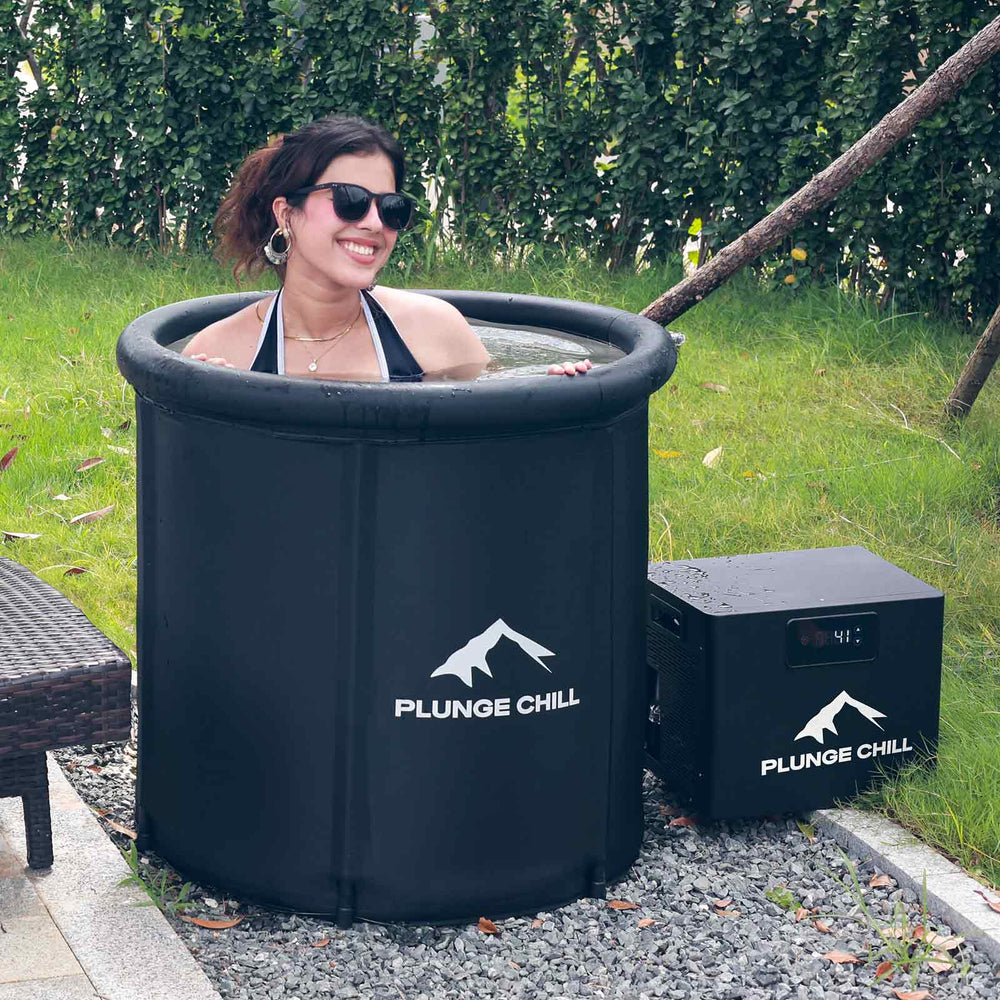
A runner’s cold‑plunge setup does not have to be complicated. Many athletes do well with a standard bathtub, a timer, and a $15 digital thermometer, adding ice when needed to reach the target temperature. When the routine becomes weekly and the water needs to be ready immediately after a run, a dedicated unit begins to make sense. Upright barrel‑style tubs are compact, easy to drain, and simple to step into when legs are heavy. Horizontal tubs are more comfortable for taller athletes and often pair with a chiller for precise temperatures without constantly buying ice. For consistent temperature control, a water chiller for cold plunge is essential.
The main features that matter are stable temperature control within the 50 to 59°F zone, reliable filtration and sanitation, adequate insulation, and a footprint you can live with. Filtration and sanitation are the difference between crystal‑clear water you are willing to use and a tub you avoid after a week. Cartridge filters are common; many home users add a small dose of oxidizer and scrub the shell weekly. A well‑fitted cover reduces debris and heat exchange. In shared training spaces, ozone or UV‑assisted sanitation with mechanical filtration lowers maintenance. Noise matters in apartments; the quietest chillers trade some speed for tolerable sound levels. Energy costs can be managed with insulation wraps and scheduled cooling.
A concise comparison of options follows.
|
Use case |
Setup that fits |
What you gain |
What to watch |
|
Occasional cold after key runs |
Standard bathtub, ice as needed, digital thermometer |
Lowest cost, zero footprint, easy to start today |
Ice cost and availability, variable water temperature, no filtration |
|
Twice‑weekly habit all season |
Portable barrel or stock‑tank style with drain; add ice as needed |
Faster setup post‑run, easier submersion to chest, simple to clean |
Still buying ice, manual temperature control |
|
Daily use or shared household |
Tub plus chiller with filtration and insulated cover |
Stable 50–59°F water on demand, clear water with weekly light maintenance |
Higher up‑front cost, footprint, chiller noise and electricity use |
Cleaning is a habit like training. Rinse after each use, replace or clean filters per manufacturer guidance, and perform a light scrub weekly. Change water on a schedule that matches use and sanitation method. In outdoor setups, cover the tub to limit debris and heat loss. In cold climates, drain lines that could freeze.

A runner’s week with cold that does not fight training
Imagine a half‑marathon plan in the loading phase. Sunday is a 14‑mile long run with the last three miles steady. After fueling and a brief cool‑down, you measure the tub at 55°F and sink to mid‑chest for four minutes. Monday is an easy jog and mobility, no cold. Tuesday brings a threshold workout; the same four‑minute cold dip after the session keeps your legs from feeling “cemented” on Wednesday’s recovery run. Wednesday evening is lower‑body strength; you skip cold to protect adaptations, then enjoy a short cold shower finish before bed for the ritual alone. Thursday and Friday are aerobic base days; no cold needed. Saturday includes short hill sprints; you delay any cold until evening and keep it to a quick three minutes at a moderate 58°F because your legs will thank you on Sunday.
By anchoring cold to your hardest aerobic loads, you get the upside where it counts and avoid blunting the strength work that supports your form.
Reconciling disagreements in the literature
Readers notice that some sources suggest three to five minutes and others 10 to 15 minutes, some warn off cold for strength, while others call it a staple. These are not contradictions so much as different definitions, designs, and goals. Reviews that prioritize soreness use validated pain scales in field athletes and often find bigger perceived benefits; studies that analyze enzymes and power output in tightly controlled lab settings find smaller and more transient effects. Duration and temperature interact with adherence; athletes can tolerate moderate cold longer than very cold. A network analysis that “ranks” protocols for biochemical markers may suggest longer exposures at colder temperatures than a clinician’s guideline optimized for safety and habit‑building. Population matters too: a novice adult in a wellness trial, a collegiate runner in season, and a power athlete in the weight room are not interchangeable. Noting those differences prevents over‑generalization.
Two additional points of nuance deserve attention. First, a 2025 PLOS One meta‑analysis on cold exposure and health reported a delayed reduction in stress at about 12 hours and an acute rise in inflammatory markers immediately and at one hour. That is not a reason to avoid cold after hard aerobic sessions; it is a reason to avoid over‑interpreting single biomarkers divorced from outcomes runners feel, such as soreness and session readiness. Second, there is preliminary fMRI evidence that a single five‑minute head‑out cold bath can increase positive affect and network integration in novices immediately after immersion. That does not automatically translate to better long‑run quality the next day, but it may help explain why many athletes report a mental “reset” after a short dip.

Takeaway
Cold immersion is a training tool for distance runners, not a badge of toughness. Used after hard aerobic sessions, three to five minutes at 50 to 59°F can make the next day’s run feel easier without requiring heroic tolerance. Avoid pre‑run cold unless you are pre‑cooling carefully for heat and can re‑warm and retest your stride. Keep immediate post‑lift cold off the calendar; give your neuromuscular system time to adapt. If you choose to buy a tub, prioritize temperature stability, filtration, and a footprint that fits your space. Remember that thermoneutral immersion can deliver hydrostatic benefits on days cold feels like a chore. Above all, anchor your recovery habit to the fundamentals—sleep, fueling, and smart workload—so cold complements the work rather than compensating for gaps.
Frequently asked questions
What temperature should a distance runner target for cold plunging? A practical range is 50 to 59°F for three to five minutes to start. That zone balances effect and adherence. Advanced users can tolerate longer exposures, but runners rarely need them. Cleveland Clinic and Ohio State Health both place effective protocols in that range, with details differing by goal.
Is it safe to cold plunge after every run? It is not necessary after every run, and overuse immediately after strength or sprint sessions can blunt adaptation. On easy or moderate days, stick to active recovery. On hard aerobic days, two to three plunges per week are sufficient for most runners. People with heart or circulation issues should obtain medical clearance first, as emphasized by Harvard Health and Mayo Clinic Health System.
Can I cold plunge before a race on a hot day? Pre‑cooling strategies can help in heat, but full cold‑water immersion right before running can impair mechanics and speed unless carefully managed. If you choose pre‑cooling, use brief cooling or slurries, then re‑warm and perform dynamic drills to confirm you feel snappy before starting. A Western Kentucky University study found slower speeds and lower ankle power after pre‑run cold immersion.
What should I buy if I want a home cold plunge? Start with a thermometer and your bathtub. If you commit to two to three weekly dips, a portable tub with a drain improves convenience. Daily use favors a tub with a chiller, filtration, and an insulated cover so water is ready immediately after a run. Prioritize temperature stability, ease of cleaning, and acceptable noise over marketing claims.
Is hot‑cold contrast better than cold alone? Contrast can feel great and has plausible circulatory benefits, though high‑quality trials are limited and mixed. When you need to preserve short‑term power within an hour, hot water alone appears more helpful than cold. When soreness control is the priority, short cold bouts do the job. Try both and track how you feel the next day.
How do I keep the water clean and safe? Use a fitted cover, rinse after use, and follow a weekly cleaning routine. Basic filtration with periodic cartridge changes and a small oxidizer dose keeps water clear for home use. Outdoor tubs need covers to limit debris and temperature swings. If in doubt, change the water more often rather than pushing a dirty tub another week.
Sources, in brief
Cleveland Clinic provides practical temperature and duration ranges and safety basics. Mayo Clinic Health System and Harvard Health summarize benefits, risks, and cardiac cautions. PubMed Central meta‑analyses detail soreness and biomarker outcomes and report limited effects on inflammatory markers. Science for Sport explains how hydrostatic pressure contributes independently of cold. The American Physiological Society reported hot‑water advantages for near‑term power. Western Kentucky University documented slower running and altered ankle mechanics after pre‑run cold. Stanford Lifestyle Medicine summarizes mental effects, highlighting timing and consistency.
Notes on uncertainty
One subgroup signal suggests that very cold water below 50°F may improve jump outcomes 24 hours later. A second common claim is that cold exposure meaningfully increases daily calorie burn via brown fat activation.
By making cold serve the plan—rather than the other way around—you give yourself a repeatable recovery habit that fits the realities of distance running.
References
- https://scholarsarchive.byu.edu/cgi/viewcontent.cgi?article=2847&context=etd
- https://case.edu/news/science-behind-ice-baths-and-polar-plunges-are-they-truly-beneficial
- https://digitalcommons.cedarville.edu/cgi/viewcontent.cgi?filename=1&article=1539&context=research_scholarship_symposium&type=additional
- https://lifestylemedicine.stanford.edu/jumping-into-the-ice-bath-trend-mental-health-benefits-of-cold-water-immersion/
- https://ideaexchange.uakron.edu/cgi/viewcontent.cgi?article=3606&context=honors_research_projects
- https://digitalcommons.wku.edu/cgi/viewcontent.cgi?filename=0&article=2444&context=ijes&type=additional
- https://www.marquette.edu/innovation/documents/arora_ice_bath_recovery.pdf
- https://sncs-prod-external.mayo.edu/hometown-health/speaking-of-health/cold-plunge-after-workouts
- https://pmc.ncbi.nlm.nih.gov/articles/PMC11897523/
- https://health.osu.edu/wellness/exercise-and-nutrition/do-ice-baths-help-workout-recovery
Disclaimer
By reading this article, you acknowledge that you are responsible for your own health and safety.
The views and opinions expressed herein are based on the author's professional expertise (DPT, CSCS) and cited sources, but are not a guarantee of outcome. If you have a pre-existing health condition, are pregnant, or have any concerns about using cold water therapy, consult with your physician before starting any new regimen.
Reliance on any information provided in this article is solely at your own risk.
Always seek the advice of a qualified healthcare provider with any questions you may have regarding a medical condition, lifestyle changes, or the use of cold water immersion. Never disregard professional medical advice or delay in seeking it because of something you have read in this article.
The information provided in this blog post, "Cold Plunge for Distance Runners: Building a Recovery Habit," is for informational and educational purposes only. It is not intended to be a substitute for professional medical advice, diagnosis, or treatment.
General Health Information & No Medical Advice