Cold-water immersion has moved from locker-room novelty to mainstream recovery, but the “best” ice pod alternative depends on how you train, where you’ll place it, and how tightly you want to control water temperature. As a sports rehabilitation specialist and strength coach who evaluates recovery tools in both clinic and gym settings, I look for temperature stability, ergonomics, maintenance burden, placement requirements, and long-term cost of ownership rather than brand hype. I also cross-check hands-on impressions with independent testing, and a recent, thorough product roundup by Business Insider that tested eight cold plunge tubs and interviewed four experts provides a useful benchmark for performance across price tiers.
What Is an Ice Pod Alternative?
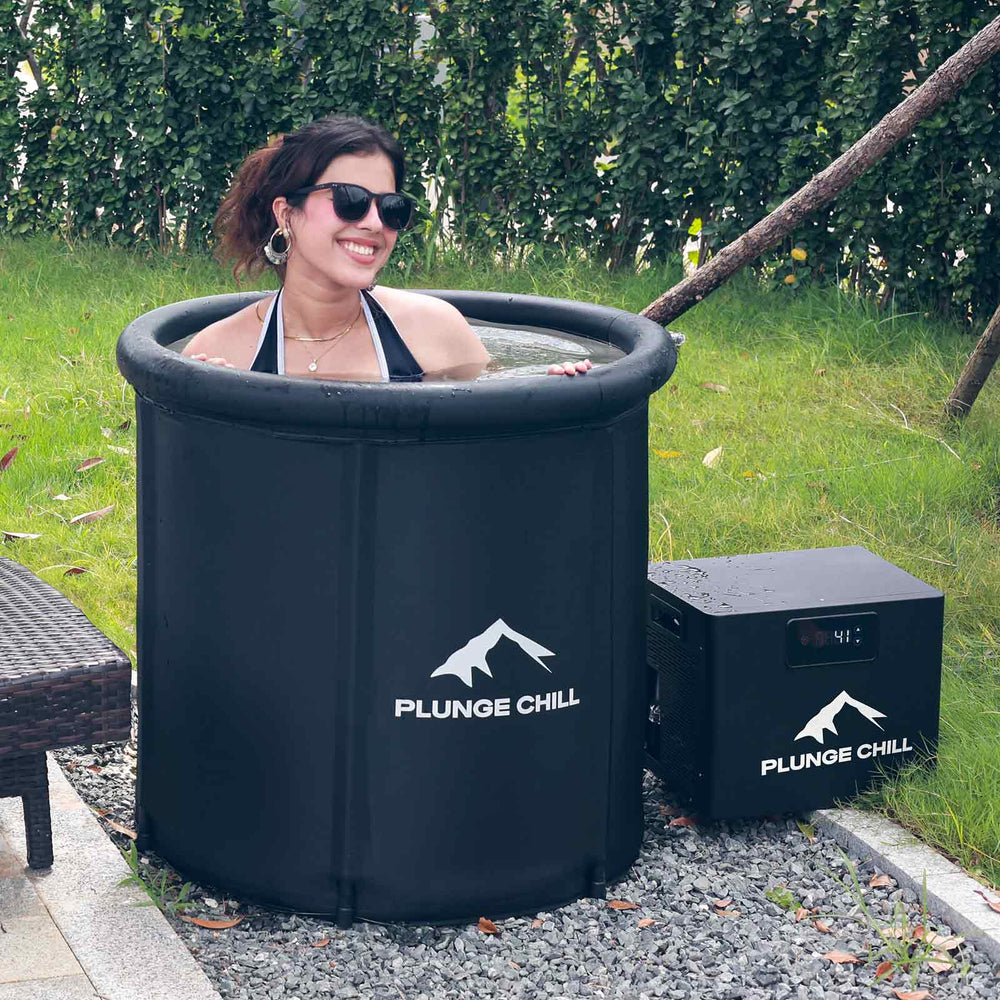
The term “ice pod” is often used loosely to describe compact cold-plunge setups that rely on bags of ice or an external chiller. In practice, many of these systems fall under the broader category of a cold plunge tub, which is designed specifically for regular cold-water immersion at home.
Today’s Ice Pod alternatives generally fall into five practical categories. Some people choose lightweight inflatable or drop-stitched cold plunge tubs paired with compact chillers. Others go with budget foldable barrels designed for ice-only use. There are also molded upright barrels made from insulated materials, mid-range to premium stainless or composite tubs connected to a separate chiller, and fully integrated “all-in-one” cold plunge systems with built-in refrigeration.
The main trade-off is straightforward but important. Ice-only setups usually cost less upfront, but they require constant ice and frequent temperature adjustments. A cold plunge tub with a chiller, on the other hand, costs more initially yet provides stable, repeatable temperatures with far less daily effort.
For people who want consistent temperatures and easier maintenance, a cold plunge tub with a chiller is often considered the most practical Ice Pod alternative.

How a Rehab Coach Evaluates the Best Ice Pod Alternatives
In athlete care, throughput and predictability matter more than marketing claims. I prioritize whether a setup can cool and hold a target temperature consistently; if it fits the athlete’s body in a way that allows a comfortable, safe posture during immersion; and whether the system can live comfortably in the intended space. Placement drives success more than people realize, because floors, ventilation, and ambient conditions limit what a chiller can do. Maintenance is the next gate: lids, covers, and insulation cut heat gain and debris, while straightforward drainage and filtration keep the water usable. Finally, I weigh mass and footprint for home environments where equipment must move around seasonally, and I look for simple, reliable controls that multiple users can understand without a walkthrough.
The Best Ice Pod Alternative for Most People
If you want a balanced, portable system that works indoors or outside with competent performance and reasonable setup complexity, the Sun Home Saunas Cold Plunge stands out. In testing summarized by Business Insider, it is an inflatable yet durable drop-stitched tub that pairs with a 1-horsepower chiller, heats to 104 °F when used hot, and chills at roughly 10 °F per hour, with app control for convenience. The tub itself weighs about 15 lb empty and the chiller around 88 lb, which makes placement far easier than heavier, fixed basins while still offering real temperature control. Business Insider tagged it “best overall,” and those notes align with what I value for athletes and busy households: adequate cooling power, fast setup, and enough flexibility to support both cold and contrast work without dedicated plumbing. Know that many chillers are not rated to operate when the surrounding air drops below about 40 °F, so winter placement and storage plans are part of owning this category, not a defect of a given brand.
When Another Alternative Is Better
The best alternative shifts when your constraints shift. If you are price-sensitive and want to try cold immersion without a big commitment, The Cold Pod Ice Bath Tub, at under $140 per Business Insider, is a foldable barrel with foam and PVC construction and quick setup. It is designed for ice use rather than an integrated chiller, and the insulation is modest. The testing report noted a rise from 58 °F to 74 °F over 24 hours with a cover, which is normal for unchilled tubs in warm rooms. If you are tall or want superior passive insulation in a molded format, the Ice Barrel 500 offers built-in steps and a seat, uses thick polyurethane foam, and is designed to keep heat gain low; Business Insider’s notes highlight only a 3 °F rise over 24 hours in full sun, which is unusually good for an ice-reliant product, and it fits users up to about 7 feet tall. It does not include a chiller, though compatible chillers are available at additional cost.
If you need both hot and cold in one footprint with strong ergonomics, Polar Monkeys Brainpod 2.0 pairs a sloped tub with a 1-horsepower chiller capable of about 37–102 °F and achieved 104 °F in testing. It changes temperature at roughly 15 °F per hour and supports app control, though at about 110 lb empty you should plan your route and landing spot. For a stainless aesthetic and roomier feel with the same chiller, the Polar Monkeys Cyber Plunge costs more but offers an all-stainless build. If you want an all-in-one premium system with fewer hoses and outdoor suitability, the Sun Home Saunas Cold Plunge Pro integrates a chiller that can reach 27 °F and even make ice; Business Insider’s testers observed a drop from 55 °F to 45 °F in under 30 minutes and to ice-making temperatures in under three hours. It omits app control, uses an onboard touchscreen, weighs about 345 lb empty, and sits at a higher price point, but it is a robust choice for a dedicated patio pad or garage.
A Note on Popular Brands with Mixed Reports
Business Insider flagged unresolved issues with a refurbished unit from The Plunge, citing hose, thermostat, and chilling problems and noting that their evaluation was incomplete. That is not a verdict on the brand so much as a reminder to vet stock status, return windows, and support responsiveness before buying. In my practice, I ask clients to factor shipping times and service availability into purchase decisions on large, temperature-controlled equipment; downtime reduces training value more than minor differences in features.

Ice Pod vs Cold Plunge: What Testing and Real-World Experience Show
Independent testing often reveals the difference between product descriptions and lived reality. The Sun Home Saunas Cold Plunge performed like a flexible daily driver in Business Insider’s testing, moving temperatures up or down quickly and managing both hot and cold modes under app control. The budget Cold Pod was easy to assemble and use but warmed significantly over the day, which lines up with how unchilled water behaves, especially if the room runs warm or the tub sits in sun. The Ice Barrel 500’s standout insulation proved its value outdoors, where wind and solar gain challenge unchilled tubs. Polar Monkeys’ Brainpod 2.0 handled a wide temperature span for contrast work, and the Cyber Plunge delivered a more spacious, premium-feeling basin in stainless steel. The Sun Home Saunas Pro’s ability to make ice opens up unique use cases, especially where outdoor placement is feasible and desirable.
If you care about portability, Business Insider’s notes confirm a practical truth: the chiller, not the tub, is usually the limiting factor. Even where the tub weighs in the teens, the chiller often sits north of 60 lb, and that mass discourages frequent moves up stairs or over long distances. Plan your space first, and then choose the body that fits it rather than treating the tub as a rolling accessory.

Quick Comparison of Leading Ice Pod Alternatives
|
Model |
Category |
Temperature Range or Rate |
Empty Weight |
Strengths |
Trade-offs |
Best For |
|
Sun Home Saunas Cold Plunge |
Inflatable + external chiller |
Heats to 104 °F; chills via 1 hp at about 10 °F/hour |
Tub ~15 lb; chiller ~88 lb |
Balanced performance; app control; portable tub |
Chiller mass; avoid operating below about 40 °F ambient |
Most buyers wanting a flexible daily driver |
|
The Cold Pod Ice Bath Tub |
Budget foldable, ice-only |
Not stated; ice managed |
Not stated |
Fast setup; very low cost |
Modest insulation; warms notably over 24 hours even covered |
First-time users testing the habit |
|
Polar Monkeys Brainpod 2.0 |
Sloped basin + external chiller |
About 37–102 °F; about 15 °F/hour change |
About 110 lb empty |
Ergonomics; hot/cold flexibility; app control |
Heavier basin; larger footprint |
Contrast training and comfort-focused plungers |
|
Polar Monkeys Cyber Plunge |
All-stainless basin + external chiller |
Same chiller as Brainpod 2.0 |
About 180 lb empty |
Stainless build; roomier feel |
Higher cost over Brainpod 2.0 |
Premium look and durable finish |
|
Ice Barrel 500 |
Molded upright barrel, ice-only or add-on chiller |
Not stated; excellent passive insulation |
About 115 lb empty |
Built-in steps/seat; USA-made recycled materials; minimal heat gain outdoors |
Requires ice or separate compatible chiller |
Very tall users and outdoor setups |
|
Sun Home Saunas Cold Plunge Pro |
All-in-one integrated chiller |
To about 27 °F; 55 to 45 °F in under 30 min; to ice-making in under 3 hours |
About 345 lb empty |
Robust outdoor choice; can make ice; interior lighting |
High price; no app control |
Dedicated home or facility installations |
All model details and performance notes in this table reflect Business Insider’s testing and reporting.
Buying Tips That Actually Matter
Place the system where the floor can carry the load of water, the equipment, and the user together, and do not underestimate the total mass. Business Insider’s guidance suggests that many indoor installs should target floors rated to roughly 1,000 lb or more when the tub is filled and occupied. In apartments and older homes, confirm placement with building management or a contractor before you roll in a chiller. Next, leave open space around the chiller’s intake and exhaust; Business Insider recommends about 1–2 feet of clearance. This airflow makes a noticeable difference in how quickly you reach a set temperature and whether the chiller cycles less often. Plan for weather, too. Many units are not designed to operate in freezing air, so winter use may mean moving the chiller inside or draining the system.
If you are on the fence about spending thousands, Business Insider’s testers advocate beginning with a basic ice-bath setup, learning your routine and tolerance, and then investing once the habit sticks. This staged approach gets you real data on how often you plunge, whether you value precise temperature control, and where you want to place the tub before you commit to a heavier machine.
Care, Hygiene, and Water Management
Daily care is more valuable than heroic deep cleans because cleaner water slows corrosion and keeps valves and seals happier. A fitted cover reduces heat gain and debris, particularly outdoors. Shade further lowers solar load and protects surfaces. Pre-chilling top-up water before adding it to an ice-only tub helps preserve whatever cooling you have achieved. Add circulation when you add ice; it distributes cooling quickly and reduces stagnant pockets that feel warm at the surface while feet remain cold. These practices are general rather than brand-specific, and manufacturer manuals should be the final word on cleaning agents and filter schedules.

Programming and Safety for Athletes
Cold-water immersion can boost alertness and energy via surges in dopamine and adrenaline, according to comments cited by Business Insider from Andrew Jagim, Ph.D., at Mayo Clinic Health System. In practice, I treat cold plunge as a nervous system tool and a recovery modality, not as a cure-all. New users learn their tolerance quickly, and a comfortable posture with a stable seat or floor footing makes that learning safer. When the tub doubles for hot and cold work, contrast sessions are easier to program—just remember that changing large volumes of water between temperature extremes takes time even with a 1-horsepower chiller. Where performance is the goal, I emphasize that cold immersion should not replace foundational recovery domains such as sleep, nutrition, and appropriate training loads. This is not a comment on a specific brand but on how athletes get value from the modality.
Three Overlooked Factors That Drive Real-World Results
Many guides discuss tub size and finish but underweight the physics that determine how your water actually behaves. The first factor is airflow. A chiller starved for intake or exhaust air runs hotter, cycles more, and reaches setpoints more slowly. Business Insider’s recommendation to leave 1–2 feet of clearance around chillers is not cosmetic; it preserves performance and longevity.
The second is thermal stratification during ice use. When you dump bags of ice into a still tub, the coldest water hugs the bottom while the top layer warms quickly from the room, sun, and your skin. The result is a deceptive reading if you only test at one depth. Reports from users in Facebook groups, coupled with training-room experience, suggest that adding circulation or stirring brings the whole volume to the same temperature much faster and makes the session feel more consistent.
The third involves trying to replace a chiller with a countertop ice maker for budget reasons. A Facebook user raised this question in a Lumi Pod context, and the idea is workable in some cases, but it hinges on whether the daily ice output realistically offsets your tub’s heat gains. Without exact numbers, the principle is simple: if ice arrives slowly and melts faster than you produce it, the water warms between sessions and the perceived benefits shrink.
Where to Put It and How to Live with It
Indoors, many successful installs live in a garage or ground-floor utility space where the floor is robust, drainage is nearby, and ambient temperatures are friendlier for the chiller. Outdoors, a level pad with shade and a cover preserves both equipment and water temperature, and the heaviest all-in-one units feel most at home in this scenario. Business Insider’s note on avoiding chiller operation in sub-40 °F air should shape winter plans; many owners drain, move, or insulate to bridge cold months. Remember that many chillers weigh 60 lb or more, and the larger basins weigh 100 lb or more empty, so plan moves as you would for exercise equipment rather than furniture.
A Practical Path to the Right Choice
If you know you want precise temperature control and session frequency is high, start with the Sun Home Saunas Cold Plunge and add a chiller where appropriate. If you want to test the waters on a minimal budget or you value ultra-fast setup and storage, The Cold Pod gives you the experience at very low cost, with the understanding that you manage ice and accept faster warming. If you prioritize insulation and upright ergonomics as a tall user, the Ice Barrel 500 sets itself apart. If contrast work and ergonomic recline matter, Polar Monkeys Brainpod 2.0 is purpose-built for that experience, while the Cyber Plunge adds stainless appeal. If you want a dedicated, premium installation that can even make its own ice, the Sun Home Saunas Cold Plunge Pro is a strong outdoor choice.

FAQ
Q: Do I need a chiller, or is ice enough? A: Ice works when you plunge infrequently, have easy access to ice, or simply want to test whether cold immersion fits your routine. A chiller becomes worthwhile when you want consistent daily temperatures, faster turnarounds between users, or outdoor placement where heat gain is constant. Business Insider advises starting with a basic ice setup before investing thousands so you learn your pattern first.
Q: Can I put a plunge in an upstairs room? A: It depends on the floor’s load capacity. Business Insider notes that indoor installs should target floors that can handle roughly 1,000 lb or more when the tub is filled and occupied. That guidance is a starting point, not a structural assessment. Confirm with building management or a contractor before committing.
Q: Is a countertop ice maker a viable substitute for a chiller? A: It can help, especially for smaller tubs, but the real question is whether the daily ice you produce matches or exceeds the heat your tub absorbs between sessions. This varies by room temperature, sun exposure, tub insulation, and your usage.
Q: Can I operate my chiller outdoors in winter? A: Many chillers are not rated to run in air below about 40 °F, which means you may need to relocate, drain, or otherwise winterize. Business Insider calls out the need to avoid using chillers below that ambient threshold. Review your manual for operating limits and winter storage instructions.
Q: Are app controls worth it? A: For multi-user homes and busy training rooms, app control on systems like the Sun Home Saunas Cold Plunge and Polar Monkeys Brainpod 2.0, as described by Business Insider, simplifies scheduling and remote adjustments. In single-user scenarios or with all-in-one systems that rely on a simple touchscreen, app control is nice to have rather than essential.
Takeaway
The market’s best ice pod alternative is not a single model for every buyer, but a clear match between your space, routine, and expectations. For most people who want predictable, repeatable performance without a permanent install, the Sun Home Saunas Cold Plunge earns its “best overall” tag from Business Insider by pairing an easy-to-handle tub with a capable chiller and intuitive controls. If budget is paramount, The Cold Pod gets you into the habit with virtually no setup cost, while the Ice Barrel 500 provides standout insulation and tall-user ergonomics. If you need both hot and cold in one footprint, the Polar Monkeys Brainpod 2.0 is an ergonomic workhorse, and if you want a premium outdoor machine that can even make ice, the Sun Home Saunas Cold Plunge Pro sits at the top of the pyramid.
Pick your category by how often you plunge, where the system will live, and how much day-to-day effort you want to spend on ice versus automation. Then confirm the boring but decisive details—floor load, chiller airflow, and weather plan—before you click buy. Those are the decisions that keep your water where you want it and your training on track.
References
- https://outdoorosity.podcasts.appstate.edu/page/2/
- https://4h.uada.edu/youth/opportunities/Consumer%20Decision%20Making%20and%20Study%20Guide25.pdf
- https://nicholasinstitute.duke.edu/project/heat-policy-innovation-hub/heat-safety/ways-to-keep-cool-without-air-conditioning
- https://www.csulb.edu/sites/default/files/2025/documents/CSULB%20HRL%202025-26%20Community%20Living%20Guide.pdf
- https://hr.jhu.edu/benefits-worklife/family-programs/new-expecting-parents/lactation-support/
- https://ojs.stanford.edu/ojs/index.php/intersect/article/download/2426/1551/9202
- https://prhe.ucsf.edu/sites/g/files/tkssra341/f/Redefining%20Protein%20Report_4-13-17.pdf
- https://champ.usuhs.edu/sites/default/files/media/documents/champ_whec_ehi_cpg_508_070224_acc.pdf
- https://alumni.washu.edu/app/uploads/2024/09/WashU-Antarctica-2025.pdf
- https://www.npr.org/sections/goats-and-soda/2024/07/27/g-s1-13357/heat-wave-cool-air-conditioning-fans-ice-pickles