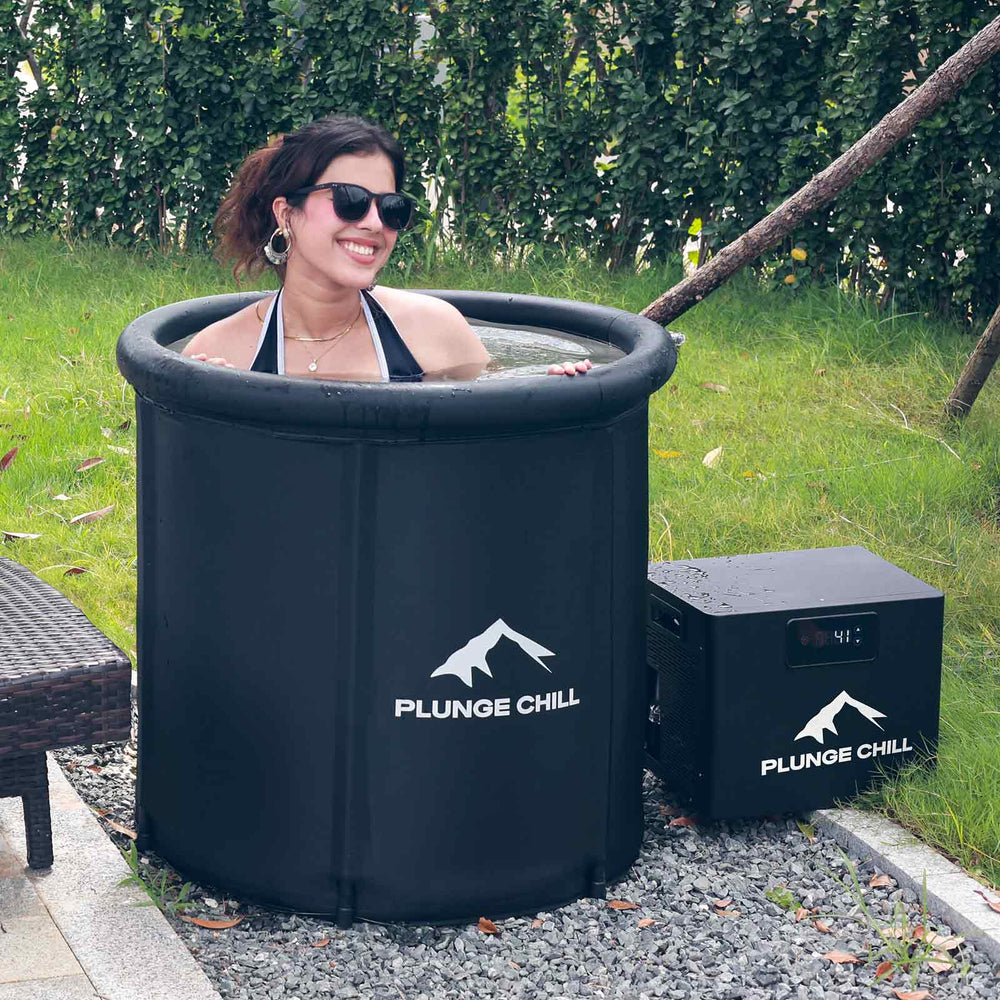
As a sports rehabilitation specialist and strength coach who reviews recovery products, I approach cold plunges with two filters: what the evidence says about performance and health, and what actually works in a busy CrossFit environment with back-to-back classes, repeated high-intensity bouts, and athletes who mix lifting, gymnastics, and conditioning in the same week. The short version is that cold-water immersion reliably helps athletes feel and perform better between close-together sessions, but it can work against long-term strength and hypertrophy if you deploy it at the wrong time. The “best” cold plunge for a CrossFit gym is the one that integrates cleanly into your schedule, suits your facility, and supports your training goals with a simple, safe protocol.
What a Cold Plunge Does and When It Helps
Cold-water immersion—often called a cold plunge or ice bath—is brief, intentional exposure to very cold water to reduce soreness and restore readiness after training. Clinically, cold triggers rapid vasoconstriction and shifts fluids centrally, then vasodilation on rewarming. This combination can temporarily reduce swelling and alter nociception, and the hydrostatic pressure of immersion appears to help move fluid back into circulation. Cleveland Clinic describes typical beginner temperatures near 50–59°F with short exposures that last only minutes, while purpose-built tubs allow precise control without hauling ice. In CrossFit terms, that means a practical tool to turn around athletes between same-day or back-to-back training demands when heat, soreness, and fatigue accumulate.
Across controlled studies summarized on PubMed Central, cold plunges reduce delayed-onset muscle soreness and perceived fatigue in the hours after exercise and can lower creatine kinase about a day later. The same meta-analyses show small or inconsistent changes in objective inflammation markers like C-reactive protein and interleukin-6, which suggests the perceived relief is driven more by analgesia and fluid shifts than by a robust anti-inflammatory effect. That is an important expectation-setter for coaches: the plunge helps athletes feel ready and sometimes preserves output on the next bout, but it is not a cure-all for tissue damage or a wholesale reset of inflammatory signaling.
For long-term gains in strength and size, the signal is different. A current systematic review in the European Journal of Sport Science reports that post-resistance cold exposure can blunt hypertrophy, aligning with guidance from Ohio State Wexner Medical Center to delay cold immersion 24–48 hours after heavy lifting if the priority is muscle growth. Case Western Reserve University also emphasizes that long-term benefit claims are often anecdotal and that exercise type matters. In practice, that means cold plunges are best positioned for endurance-heavy days, repeat-competition weekends, or heat stress—not immediately after your heaviest squat and pull sessions if building muscle is your goal.
There is some disagreement in the basic “how long” guidance. Cleveland Clinic recommends very short exposures for most people and cautions against exceeding five minutes, while Ohio State Wexner Medical Center notes protocols lasting 10–20 minutes at 50–59°F in athletic contexts. The likely reason for the discrepancy is that medical safety guidance defaults to conservative durations for the general population, whereas athletic protocols often assume close supervision, specific goals, and progressive acclimation. A practical CrossFit policy is to adopt the more conservative durations as a default for members and reserve longer, supervised exposures for targeted use in trained athletes who need it.

Safety, Contraindications, and Coaching Protocols
The first seconds in cold water are the most hazardous due to the cold-shock response: heart rate and blood pressure spike, and hyperventilation can make breath control difficult. Case Western Reserve University and Cleveland Clinic both emphasize gradual acclimation, starting warmer and shorter, and training athletes to focus on calm, rhythmic breathing before increasing exposure. For most members, a gym policy that begins around the low 50s °F with one to three minutes and builds cautiously over weeks is both effective and safe. Advanced users can progress colder within reason, but routine exposures below about 40°F are unnecessary for training outcomes and elevate risk.
Do not use cold plunges to mask pain that may indicate tissue injury, and screen athletes with medical conditions. People with heart disease, hypertension, diabetes, peripheral neuropathy, poor circulation, prior stroke, or on beta blockers have elevated risk and should seek medical clearance before participating. Supervise sessions, ensure a buddy or staff member is present, and plan rewarming with movement, warm clothing, and, optionally, brief sauna exposure as Cleveland Clinic suggests. If you plunge outdoors or in natural water, measure temperature, avoid currents, and minimize exposure time; however, for most gyms, purpose-built or tub-based setups indoors are safer and simpler.

Cold Plunge vs Ice Bath for a CrossFit Gym
Purpose-built cold plunges use an active chiller to set and hold a target temperature, often in the range that athletes actually tolerate and benefit from. Brands emphasize filtration and sanitation so you can keep clean, ready water on demand. Traditional ice baths rely on adding ice to a tub or barrel and will fluctuate in temperature as the ice melts, are cheaper to start, but incur ongoing ice costs and more frequent water changes. Iceology frames this trade-off clearly: cold plunges deliver precise, consistent temperature and convenience, while ice baths are lower cost upfront but higher effort to run and maintain. Master Spas’ Chilly GOAT highlights filtration and UV as convenience and hygiene features. KULA Recovery describes integrated chillers that can reach about 37°F and use particulate filtration plus ozone for water treatment, which is a practical combination for higher throughput.
Here is a concise comparison to ground your decision.
|
Factor |
Purpose-Built Cold Plunge |
Traditional Ice Bath |
|
Temperature control |
Set-and-hold, with even water temperature appropriate for progressive dosing and repeat users |
Variable; drops with added ice and rises as ice melts; uneven cold spots are common |
|
Operational effort |
Fill once; daily checks; filtration, UV or ozone reduce manual water changes |
Frequent ice runs; manual mixing; more frequent draining and refill cycles |
|
Consistency in classes |
Ready for each group; predictable dosing for coaches |
Unpredictable across classes and days; quality depends on staff effort and ice supply |
|
Comfort and user experience |
Ergonomic tubs and uniform cooling make breathwork coaching easier |
Greater “cold shock” variability; ice contact can create hotspots and distract from breathing |
|
Cost profile |
Higher upfront; no daily ice costs; electric use depends on room conditions |
Low upfront; recurring ice purchases and more staff time add up |
|
Hygiene |
Filtration and disinfection improve water clarity and odor management |
Water quality degrades quickly; more frequent full changes and surface cleaning required |
In many CrossFit gyms, the operational consistency and hygiene of a purpose-built unit pay for themselves in saved staff time and improved athlete experience. For smaller boxes, pop-up events, or tight budgets, an ice bath in a barrel or collapsible tub can still be useful when you control dosing and turnover.

Top Picks by Use Case
My recommendations are organized by scenario rather than a single “winner,” because facility constraints, class flow, and climate matter as much as features.
For busy class schedules and repeated-event weekends, a purpose-built unit with integrated filtration is the strongest choice. The ability to hold a target temperature through multiple groups in a morning removes the ice logistics that routinely break down in practice. Chilly GOAT by Master Spas is a representative example of a set-and-hold design that uses filtration and UV to keep water clean and ready. This aligns with what elite CrossFitters often prioritize: fast recovery between repeated efforts when performance tomorrow or later today matters. Chilly GOAT’s brand messaging reflects the key advantage here—no hauling ice, consistent dosing, and cleaner water.
For budget-conscious or portable setups, a barrel or collapsible tub filled with cold tap water and added ice works, provided you keep exposures short and temperatures in the effective range. Iceology’s explanation is clear: you will spend less upfront, but you buy ice repeatedly, manage temperature variability, and clean more often. Ice Barrel has popularized this form factor in the CrossFit community. In my experience, this option is well suited to gyms running occasional recovery clinics or seasonal plunges, provided you enforce measured temperatures, short durations, and a clean rewarming station.
For hot climates or high-throughput recovery rooms, select a chiller-first design that can reliably hold colder targets across many sessions. KULA Recovery describes systems that reach about 37°F and incorporate particulate filtration with ozone treatment, which is a pragmatic combination for busy facilities. That is especially relevant in summer heat or for endurance-heavy programming blocks when athletes are heat-loaded and need more aggressive pre-cooling or post-session turnaround.
Programming and Timing for CrossFit Goals
Cold exposure interacts with training adaptations. If your program is in a hypertrophy or maximal strength block, delay cold plunges by a day or two after heavy lifting. Ohio State Wexner Medical Center advises waiting 24–48 hours, and recent work in the European Journal of Sport Science concludes that post-exercise cold can modestly reduce muscle growth when paired directly with resistance training. Chilly GOAT’s own guidance mirrors this: shift cold sessions away from the immediate post-lift window when muscle growth is the priority. Use active recovery, nutrition, and sleep as your primary post-lift tools.
On conditioning-heavy days, during competition weekends, or when athletes are training again the same day, cold plunges are well supported. A PubMed Central meta-analysis shows reduced soreness and perceived exertion in the short term, with some evidence of lower lactate and creatine kinase in the day following immersion. This is exactly the context where readiness and perception of effort drive outcomes and where the cold plunge’s repeatability matters.
One overlooked nuance is that the optimal duration is not universally agreed upon. Cleveland Clinic recommends very short exposures that typically do not exceed five minutes, especially for newcomers and general populations, while Ohio State Wexner Medical Center notes that athletic protocols often last 10–20 minutes at 50–59°F. The likely explanation is the difference in audience and risk tolerance. In a CrossFit gym, adopt the conservative end by default: begin near the low 50s °F for one to three minutes, progress to three to five minutes after several supervised sessions, and stop sooner if shivering or breath control breaks down. Reserve longer exposures for experienced athletes with a clear performance rationale and direct staff oversight.
Another useful nuance is pre-cooling in heat. Reports highlighted by Peloton’s editorial team cite European Journal of Sport Science research showing that cold-water pre-cooling can outperform an ice slushie for lowering core temperature before exertion. For outdoor summer WODs or competitions, a brief pre-session immersion can help preserve capacity in the heat.
A third nuance involves hot water when the goal is near-term power output. The American Physiological Society reported findings presented in 2024 suggesting hot water immersion around 104°F preserved short-term jump performance better than cold immersion, with no advantage in next-day endurance capacity. The sample was small and male only.
Setup, Space, and Facility Logistics
Cold plunges work best when they are easy to use and hard to use wrong. Place the tub where you have non-slip flooring, clear egress, and short lines from the showers. Provide a thermometer in plain view, a timer athletes can set and see, and a rack for towels and warm layers. If you use ice baths, plan an efficient ice supply and melt management so coaches are not stuck on logistics during peak class times. If you use a purpose-built unit, plan an electrical circuit and drainage appropriate to the manufacturer’s requirements, and confirm the unit’s ventilation needs so it can hold temperature in your space. These considerations are facility-agnostic and ensure you can execute your protocol consistently.
Hygiene, Maintenance, and Water Care
Clean water is not optional. Purpose-built systems with filtration plus UV or ozone, as described by Chilly GOAT and KULA Recovery, reduce manual water changes and help maintain clarity and odor control across many users. You still need a schedule for filter service, surface cleaning, and periodic water replacement according to the manufacturer. Require a quick rinse before immersion, and discourage oils and lotions that foul filters. If you run an ice bath program, shorten the interval between full drains, clean the vessel after each session, and schedule sanitization just as you do for barbells and mats.

Cost of Ownership and Throughput
Mayo Clinic Health System notes that fully featured cold-plunge tanks can cost up to $20,000. Iceology reminds us that ice baths are cheaper upfront but carry ongoing ice purchases and more staff time, which become material costs over a season. Purpose-built units remove the daily ice bill and unlock consistent dosing, but they use electricity and require filter consumables. The breakeven point depends on your class volume and how often you deploy cold plunges. In high-throughput gyms that run recovery hours or service competitive teams, the chiller-first option usually wins on both consistency and total time saved. Smaller boxes that host occasional immersion sessions can get meaningful benefits with an ice tub and a tight sanitation routine.

Quick Comparison of Representative Options
The examples below illustrate categories rather than an exhaustive list. Evaluate the features against your space, throughput, and staffing.
|
Category |
Who it suits |
Representative examples |
Why it works |
Trade-offs and checks |
|
Purpose-built chiller with filtration |
Busy class schedules, teams, recovery rooms |
Chilly GOAT by Master Spas; Iceology Cold Plunge-style systems |
Set-and-hold temperatures, cleaner water, predictable dosing for coaches |
Higher upfront cost; confirm electrical, ventilation, and filter maintenance schedule |
|
Chiller with advanced disinfection |
Hot climates, high throughput use |
KULA Recovery chiller systems described with ozone and filtration, down to about 37°F |
Reliable low temperatures and water treatment for repeated sessions |
Confirm temperature stability under real gym load; verify ozone safety guidance with vendor |
|
Barrel or collapsible ice tub |
Small gyms, pop-ups, seasonal clinics |
Ice Barrel form factor; collapsible tubs with bagged ice |
Minimal upfront cost; easy to store; useful for short, conservative exposures |
Ongoing ice costs; variable temperature; more frequent drain-and-clean cycles |
Confidence: Low on specific operating costs and duty cycles in your building; verify by tracking water temperature, turnover, and cleaning time for one week before finalizing a purchase.
Practical Protocol the Whole Staff Can Coach
Start every member at a conservative, supervised exposure near the low 50s °F for about one to three minutes, focusing on calm breathing and easy exit. Progress to three to five minutes over several sessions if the athlete tolerates it well. Place the plunge away from high-traffic lanes, post a laminated safety card with contraindications, and require a buddy or staff member nearby. Athletes in strength or hypertrophy blocks should avoid plunging immediately after heavy lifting and use it the next day instead, while endurance-dominant or competition-phase athletes can use a short post-session immersion to accelerate turnaround. Cleveland Clinic emphasizes short exposures and medical caution, while Ohio State Wexner Medical Center notes longer, supervised protocols; your default should match your members and staff capacity.

Frequently Asked Questions
How cold should the water be for most CrossFit members? A practical range for most healthy adults begins around 50–59°F. Cleveland Clinic advises starting warmer and shorter and not exceeding five minutes in early sessions. As tolerance builds and if a specific athletic goal warrants it, some programs extend time under supervision. For day-to-day gym use, start conservative and adapt on an individual basis.
Will a cold plunge hurt my strength or muscle gains? If you plunge immediately after heavy lifting, you might blunt some of the anabolic signaling that drives hypertrophy. A recent systematic review in the European Journal of Sport Science supports this, and Ohio State Wexner Medical Center recommends waiting 24–48 hours after lifting if building muscle is the priority. Use cold strategically on endurance days or for competition recovery, and keep your post-lift routine focused on nutrition, active cooldown, and sleep.
Is a purpose-built cold plunge worth it compared with an ice tub? For high volume facilities, yes. Iceology’s comparison makes the operational trade-offs clear: purpose-built tubs give precise temperature control and cleaner, filtered water without daily ice. For smaller gyms that run occasional sessions, an ice tub is viable when you commit to measured temperatures, short exposures, and strict sanitation. Chilly GOAT emphasizes filtration and UV, while KULA Recovery highlights particulate filtration with ozone; both point toward easier hygiene and readiness.
How long should sessions last? Medical guidance from Cleveland Clinic favors very short exposures that typically do not exceed five minutes for most users. Athletic protocols at Ohio State Wexner Medical Center describe 10–20-minute exposures at about 50–59°F in supervised settings. In a CrossFit gym, begin with one to three minutes and progress to three to five minutes as tolerated, reserving longer exposures for experienced athletes with a clear performance goal and close oversight.
Can a sauna help after a cold plunge? Cleveland Clinic notes that a short sauna session can help rewarm and stabilize temperature after cold exposure. Keep rewarming gentle, prioritize hydration, and avoid extremes in either direction for members new to temperature stress. If you alternate heat and cold, keep sessions brief and supervised.
Is there any reason to use hot water instead of cold? Preliminary findings presented by the American Physiological Society in 2024 suggest that hot water immersion around 104°F may preserve short-term power output better than cold immersion in some contexts, with no difference in next-day endurance. Test this locally by comparing jump or lifting outputs after hot versus cold on similar training days before changing your standard.

Takeaway
For CrossFit gyms, the best cold plunge is the one that fits your program, space, and staffing while aligning with what the evidence supports. Purpose-built plunges with filtration deliver the most consistent athlete experience and the cleanest operations for high-throughput schedules; ice tubs are acceptable for occasional, conservative use when you control temperature and hygiene tightly. Deploy cold exposure to reduce soreness and perceived fatigue between close-together sessions, but avoid using it right after heavy lifting if strength and hypertrophy are your priority. Default to short, supervised exposures around the low 50s °F, progress conservatively, and screen for medical risk. Where the literature disagrees—on duration and exact dosing—favor the conservative side and validate any more aggressive approaches with simple, gym-level measurements of readiness and performance.
Sources referenced include Cleveland Clinic, Case Western Reserve University, Ohio State Wexner Medical Center, Mayo Clinic Health System, PubMed Central meta-analyses, the European Journal of Sport Science, Stanford Lifestyle Medicine, Science for Sport, Iceology, Chilly GOAT by Master Spas, KULA Recovery, and CrossFit community commentary. Links will be added in the References section.
References
- https://case.edu/news/science-behind-ice-baths-and-polar-plunges-are-they-truly-beneficial
- https://cupola.gettysburg.edu/cgi/viewcontent.cgi?article=2078&context=student_scholarship
- https://www.health.harvard.edu/heart-health/cold-plunges-healthy-or-harmful-for-your-heart
- https://www.mcphs.edu/news/physical-therapist-explains-why-you-should-chill-out-on-ice-baths
- https://lifestylemedicine.stanford.edu/jumping-into-the-ice-bath-trend-mental-health-benefits-of-cold-water-immersion/
- https://ideaexchange.uakron.edu/cgi/viewcontent.cgi?article=3606&context=honors_research_projects
- https://sncs-prod-external.mayo.edu/hometown-health/speaking-of-health/cold-plunge-after-workouts
- https://pmc.ncbi.nlm.nih.gov/articles/PMC2938508/
- https://health.osu.edu/wellness/exercise-and-nutrition/do-ice-baths-help-workout-recovery
- https://today.wayne.edu/news/2021/03/22/is-cold-water-swimming-good-for-you-41963
Disclaimer
By reading this article, you acknowledge that you are responsible for your own health and safety.
The views and opinions expressed herein are based on the author's professional expertise (DPT, CSCS) and cited sources, but are not a guarantee of outcome. If you have a pre-existing health condition, are pregnant, or have any concerns about using cold water therapy, consult with your physician before starting any new regimen.
Reliance on any information provided in this article is solely at your own risk.
Always seek the advice of a qualified healthcare provider with any questions you may have regarding a medical condition, lifestyle changes, or the use of cold water immersion. Never disregard professional medical advice or delay in seeking it because of something you have read in this article.
The information provided in this blog post, "Best Cold Plunge for CrossFit Gym: Top Picks and Setup Tips," is for informational and educational purposes only. It is not intended to be a substitute for professional medical advice, diagnosis, or treatment.
General Health Information & No Medical Advice