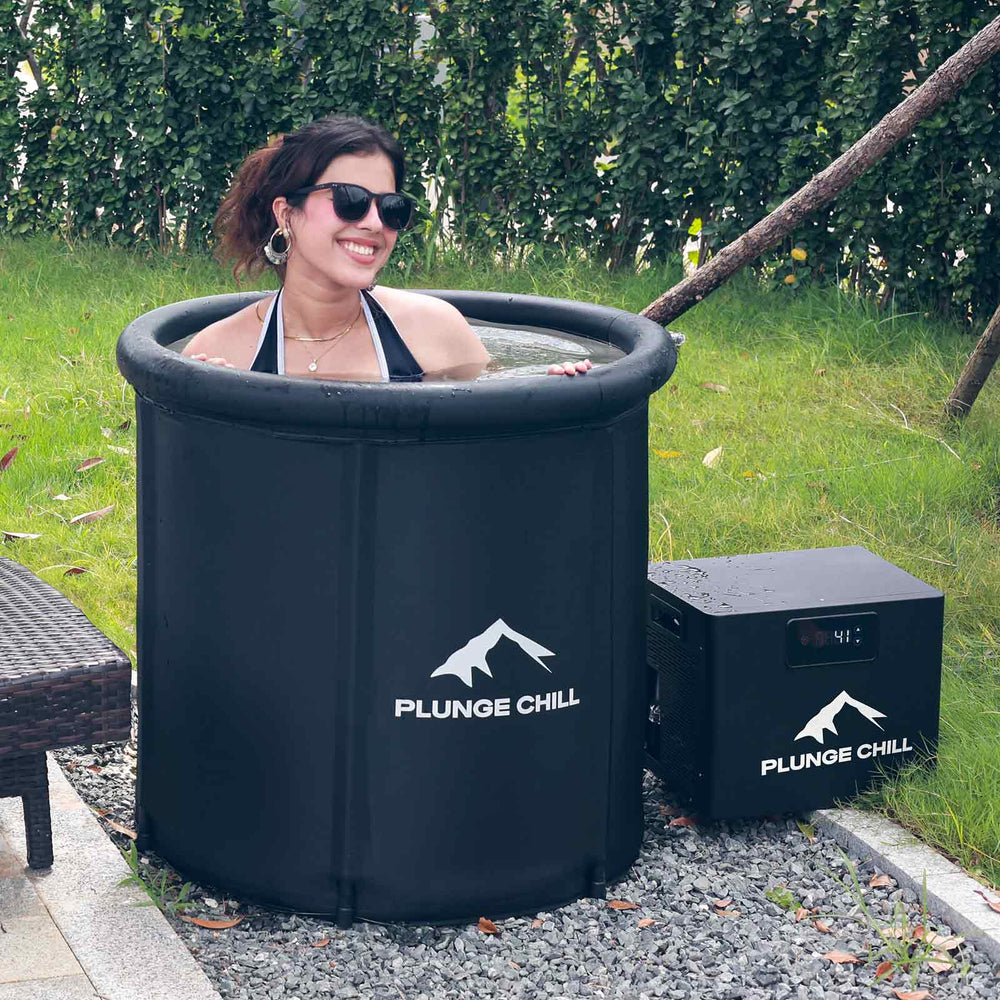
Cold plunges have gone from fringe recovery tool to mainstream ritual. In the last few years, a very specific guideline has taken over locker rooms, podcasts, and product marketing: accumulate roughly eleven minutes of deliberate cold exposure per week. Many of my athletes now arrive already convinced that this “11-minute rule” is the magic dose.
As a sports rehabilitation specialist, strength coach, and cold plunge product reviewer, I like simple rules of thumb. They get people started. But in 2026, we have enough evidence from stress, recovery, and performance research to ask a harder question: is any single number—whether eleven minutes, twenty minutes, or something else—really a gold standard?
The research notes available here do not include clinical trials on whole‑body cold water immersion or any study that validates an exact weekly cold exposure target. What we do have is a surprisingly robust body of evidence on short work breaks, micro-breaks, and stress cycles from sources such as PLOS One, Psychological Reports, Harvard Business Review, Business News Daily, and several occupational health studies. These studies were done in offices, call centers, classrooms, and service-sector jobs, not in cold tubs. Still, they describe how human brains and bodies respond to repeated, controllable bouts of stress and rest.
When I match that literature to what I see every week in the clinic and the gym, the conclusion is clear: eleven minutes can be a reasonable starting estimate, but it is not a universal gold standard. The gold standard in 2026 is a personalized stress‑recovery dose, built on principles rather than a viral number.
What People Actually Mean By The “11-Minute Rule”
When athletes and clients talk about the 11-minute rule, they are usually describing a weekly total of time spent in unpleasantly cold water. In practice, that tends to mean three or four short plunges across the week, each lasting a few minutes, rather than one marathon session. The premise is that this adds enough stress to push adaptation while staying on the safe side for most healthy adults.
The important point from an evidence standpoint is that none of the research summarized in the notes establishes eleven minutes per week as an experimentally validated threshold for health, fat loss, mood, or performance. The studies we do have focus on different kinds of short exposures: micro-breaks from computer work, five-minute rests between math tests, and ten-minute pauses in routine tasks. They consistently show that small, regular recovery windows boost energy, reduce fatigue, and often improve performance.
So the “11 minutes” you see on social media is best understood as a convenient, rounded target that happens to sit in the same neighborhood as the durations that help in those work-break studies. It is not a sacred number. If you treat it as a flexible guideline rather than a fixed law, it can still be very useful.

What The Research Really Says About Short Stress And Recovery Cycles
Micro-breaks And The Myth Of One Perfect Number
Micro-breaks are defined in several sources as very brief pauses from work, usually lasting from around 30 seconds up to 10 minutes. A systematic review and meta-analysis summarized on the National Library of Medicine site reported that micro-breaks of ten minutes or less reliably improved subjective well-being by boosting vigor and reducing fatigue. Task performance gains were weaker and depended on what people were doing; simpler, less cognitively demanding tasks showed clearer improvements than highly taxing ones.
A separate PLOS One meta-analysis, described in the Focused Solutions summary, pooled data from more than 2,300 participants. It found that short breaks significantly increased feelings of energy and reduced fatigue, again with modest and task-dependent performance effects. Importantly, these analyses covered a range of break durations. Some studies used breaks lasting mere minutes; others went closer to the ten-minute ceiling. No single value emerged as “the” best duration.
That pattern should immediately make us skeptical of any claim that a single fixed time—whether it is eleven minutes of work, eleven minutes of rest, or eleven minutes of cold exposure—is optimal for everyone. Human systems tolerate a band of effective doses, and the right point within that band shifts with task difficulty, baseline stress, and individual differences.
Why Eleven Minutes Became A Talking Point At All
Eleven minutes has another life in the literature: as the average time office workers can stay on a task before being interrupted. Reports summarized by CBS News and Management Issues describe data where typical workers are interrupted roughly every eleven minutes, and after an interruption they may need twenty‑plus minutes to regain full focus. Separate research quoted by these outlets notes that people now switch tasks roughly every three minutes, and even a few seconds of interruption can double task errors.
If you work an eight‑hour day and you are interrupted every eleven minutes, that means roughly forty interruptions. If each one costs twenty minutes of true refocusing, you quickly end up with several hours of lost productive time. That is why some researchers compare heavy multitasking to losing a full night of sleep in terms of its effect on cognitive capacity.
The takeaway is not that eleven minutes is a great break length. It is more or less the failure point of focus in an unstructured environment. When eleven minutes shows up in the data, it is often as a symptom of overstimulation, not a prescription for optimal performance. That is exactly the opposite of how the 11-minute rule is usually marketed for cold plunges.
Stress Systems Want Rhythm, Not Rigid Rules
The Zivanza Wellness overview on short breaks explains how chronic stress activates the hypothalamic‑pituitary‑adrenal axis and the sympathetic nervous system, leading to repeated surges of adrenaline and cortisol. When those stress responses stay elevated for too long, the risk of cardiovascular, immune, and digestive problems rises, and burnout becomes more likely.
Short, frequent breaks act as a deliberate interruption of that cycle. Across multiple sources, including Zivanza, We360, and Cuckooworkout’s piece on cognitive ergonomics, the pattern is strikingly consistent. Continuous, unbroken demands—long hours, high time pressure, screen overload, unstable schedules—drive mental and physical strain. Brief, well‑timed pauses that include some movement, psychological detachment from work, and ideally a change of scene reduce stress, restore attention, and support sustainable performance.
In other words, the nervous system responds best to a rhythm of challenge and relief, not to a single magic number. That principle translates directly to any deliberate stressor, including cold exposure.
Translating Break Science To Cold Plunges
We do not have cold plunge trials in these notes, so we have to be honest about the limits. What we can do is connect well-established principles from work-break research and occupational health to the way we structure cold exposure protocols.
Dose, Frequency, And Task Demands
The meta-analysis in Psychological Reports summarized on the National Library of Medicine site shows that micro-breaks improve well-being more consistently than they improve performance, and that recuperation from more demanding tasks often requires longer or higher-quality rest. Business News Daily’s review of a 2022 systematic review led by Patricia Albulescu highlights the same theme: micro-breaks of at least around ten minutes can enhance performance, but after especially depleting tasks, longer breaks—such as a thirty-minute walk—appear more effective.
From a training standpoint, cold immersion is not a break; it is another stressor layered onto whatever load an athlete is already carrying. Heavy lifting sessions, long tactical practices, chaotic travel schedules, and unstable work hours, which are associated with reduced sleep, lower happiness, and more psychological distress in Shift Project data, all raise the baseline stress level before anyone steps into a cold tub.
When baseline load is high, adding a rigid weekly cold target on top of everything else may push some athletes into the same territory as the overworked service-sector employees described in the scheduling instability research: poor sleep, escalating distress, and a sense that nothing ever truly turns off. In those cases, the duration and timing of cold exposure should arguably come down, even if that means falling short of eleven minutes.
Why Weekly Totals Are Only Rough Starting Points
Several of the work-break sources emphasize that not just the total time, but also the pattern, matters. North Carolina State University research described in Business News Daily found that five-minute microbreaks boosted energy and goal achievement, especially in workplaces that emphasized health and gave employees autonomy over when to pause. The PLOS One meta-analysis reported that even breaks of a few minutes during a forty‑five‑minute task improved concentration for students.
Now imagine an athlete trying to “get their eleven minutes in” by doing one brutal plunge at the end of a week of heavy training and late‑night travel. In workload terms, that is the equivalent of grinding through an entire week without breaks and then trying to catch up with one long pause. Work-break research suggests that approach is less efficient than distributing short breaks intelligently. There is no reason to think the body treats cold stress differently.
A better way to think about eleven minutes is as an approximate weekly stress budget for those who tolerate cold well, not as a one‑size‑fits‑all quota. Some weeks that budget might be too high. Other weeks—after a deload in the gym, during vacation, or in lower‑stress life phases—it might be safe to exceed it slightly in exchange for different benefits, as long as athletes remain responsive to how they feel.
Real‑World Examples From The Rehab Room
In practice, cold exposure protocols I see work best when they resemble the break structures that time‑management researchers advocate. The University of Sydney study described by GMG Insurance, for example, used twenty minutes of intense math followed by a five-minute rest or nature video. Students who took that short break had better directed attention and scored higher on a subsequent problem-solving test than those who kept grinding.
That twenty‑plus‑five structure parallels time‑management methods like the Pomodoro Technique from the University of Pennsylvania’s time management article: twenty‑five minutes of focused work followed by a five-minute break, with a longer pause every four cycles. When I help athletes structure recovery, we apply the same rhythm at a different time scale. On high‑intensity days, we keep cold exposures shorter and more frequent, spaced away from the hardest sessions to avoid piling stress on top of stress. On lighter days, we might extend a plunge slightly or add a second immersion to explore tolerance.
In both settings, it is the pattern—periods of demand followed by planned, appropriate relief—that matters much more than hitting a single total down to the minute.
Pros And Cons Of Chasing The 11-Minute Target
Where The 11-Minute Rule Helps
The strongest argument in favor of the 11-minute rule is behavioral. Simple rules increase adherence. We see this with time‑blocking and productivity methods described by Penn’s online programs and by Harvard Business Review. When people know they will work for a set interval, then break, they are more likely to start, and starting is often the hardest part. The same holds for cold exposure. Athletes who commit to “about eleven minutes spread over the week” are more consistent than those who simply aim to “do some cold when I can.”
The rule also nudges people toward micro-dosing stress. Eleven minutes across three or four plunges inevitably pushes sessions into the range where work-break research shows clear benefits: a few minutes at a time. The PLOS One and Psychological Reports syntheses both suggest that very brief, repeated exposures to controlled stress and recovery improve vigor without clearly harming performance. Cold plunges are a very different stressor, but the concept of small, regular doses is shared.
Finally, the 11-minute target is short enough that most healthy adults can fit it into busy lives. In the Tork survey summarized by Workplace Safety Screenings, only 38% of American workers took a full lunch break and nearly 60% ate lunch at their desks. Under that kind of constraint, asking for an hour of weekly cold immersion would be unrealistic. Eleven minutes is closer to what people can actually sustain.
Where It Breaks Down
The problems start when eleven minutes is treated not as a guideline, but as a minimum threshold for benefit or a badge of honor. Several sources, including Gallup’s global workplace stress report via Cutting Edge PR and the Shift Project’s analysis of schedule instability, make it clear that many people are already operating near their stress capacity. In those populations, adding more intense stress without adjusting elsewhere can aggravate sleep problems, anxiety, and emotional exhaustion.
Work-break research also warns about guilt and culture. In Staples surveys reported by Business News Daily, about twenty percent of employees avoided breaks because they felt guilty, and more than half believed they could not step away from their desks. If athletes bring that mentality into cold exposure—forcing themselves into the tub primarily because they “have to hit eleven minutes”—cold plunges risk becoming one more compulsory box to check, not a tool that genuinely supports recovery.
The occupational studies also show that more is not always better. Micro-break meta-analyses find diminishing returns on performance beyond certain durations, and Albulescu’s review notes that longer breaks should be reserved for particularly depleting tasks rather than sprinkled everywhere. In the same way, some athletes will do better with less than eleven minutes of cold exposure, especially during heavy training or life stress, while others may tolerate and benefit from slightly more during easier weeks. A rigid weekly quota misses that nuance.

How To Personalize Your Cold Plunge Dose In 2026
Start From Your Total Stress Budget, Not A Viral Number
The Shift Project study of nearly 28,000 hourly workers across eighty major firms shows how powerful schedule instability alone can be. Workers with multiple forms of unstable scheduling—on-call shifts, last‑minute changes, “clopening” shifts that end late and start early—reported much higher psychological distress, poorer sleep, and lower happiness than those with predictable schedules, even when wages were held constant.
For many of the athletes and clients I see, especially those in hospitality, retail, healthcare, and gig work, this kind of temporal precarity is a bigger stressor than their training. If someone is already sleeping poorly because their work hours change every week, if they are juggling childcare around unpredictable shifts, or if they feel constantly behind on bills, then cold exposure is an additional load, not a neutral add‑on.
In those situations, it is often wiser to start with a smaller target than eleven minutes, or to focus first on basic recovery behaviors that the work-break literature strongly supports: actually taking lunch away from screens, inserting five‑minute walks every hour or two, and protecting a regular wind‑down period before bed. Once those foundations are in place and baseline stress markers improve, it makes far more sense to explore cold exposure and decide whether aiming for eleven weekly minutes fits that person’s real life.
Use Micro-Cycles Instead Of Marathon Plunges
Time-management frameworks like the Pomodoro Technique and structured micro-break schedules work because they organize effort and rest into predictable cycles. The University of Sydney study described by GMG Insurance, which paired twenty minutes of intense math with a five-minute rest or nature video, increased attentional performance with minimal time cost. North Carolina State’s work shows that five-minute microbreaks can meaningfully boost energy and goal completion, especially when workers choose when to take them.
Cold exposure can be structured the same way. Instead of one long plunge that tries to “get everything done” for the week, it is usually better to organize several short immersions, each paired with an appropriate warm‑up period and placed intelligently around training. For a healthy, relatively resilient athlete, that might look like three sessions of about three to four minutes spread across the week, perhaps on days that are not the heaviest in the weight room. That pattern lands in the same total ballpark as the 11-minute rule while honoring the evidence that repeated, manageable bouts of stress and recovery tend to produce better sustainable performance than rare, extreme efforts.
For someone newer to cold exposure or coming off injury, the micro-break literature argues for even smaller steps. Just as micro-breaks as short as around half a minute can improve attention according to the Laura Nguyen summary, thirty to sixty seconds in cool water, repeated across multiple sessions, may be sufficient early on to drive adaptation without overwhelming the system.
Monitor Response Instead Of Obsessing Over Minutes
The occupational studies make one more point that carries straight over to cold plunges: subjective response matters. Workers in health‑focused organizations who had autonomy over their breaks reported not only better goal attainment but also lower perceived stress. Employees who consistently took lunch away from their desks had better mood and productivity than those who skipped breaks out of guilt, as shown in the Staples surveys and the Tork data.
In the athletic context, that means watching whether cold exposure is actually improving how you feel and perform. Simple markers like sleep quality, morning energy, training enthusiasm, and soreness patterns are often more informative than hitting a weekly total to the minute. If an athlete adds cold plunges and notices that they fall asleep more easily, wake up more refreshed, and feel more mentally resilient at work, that is a good sign. If they feel chronically chilled, more anxious, or less motivated to train, the dose is probably too high for their current stress budget, even if they are below eleven minutes.
As a coach, I am far more interested in those day‑to‑day signals than in whether a stopwatch reads 10:45 or 11:30 across the week.
Fixed Rules vs Individualized Protocols
A quick way to summarize this evidence‑plus‑experience view is to compare a rigid rule with a principle‑based approach.
Approach |
How It Works |
What The Research On Breaks Suggests |
Implication For Cold Plunges |
Fixed 11-minute rule |
Everyone aims for the same weekly total, regardless of training load, work stress, or tolerance. |
Micro-break meta-analyses find no single best duration; effective ranges vary by task and person. |
Useful as a starting estimate, but often too much for some and too little for others. |
Individualized dosing |
Weekly cold exposure adjusts to stress, goals, and subjective response. |
Studies from PLOS One, Psychological Reports, and Harvard Business Review emphasize task demands, autonomy, and culture. |
Likely safer and more effective, especially for athletes under heavy non‑training stress. |
This table reflects only what the available notes can support: that human performance with repeated stress and rest cycles is highly context‑dependent. Cold plunges are no exception.
So, Is The 11-Minute Rule Still The Gold Standard?
By 2026, the 11-minute rule has done its job as a marketing hook and behavior trigger. It has gotten more people into the cold tub and has encouraged short, distributed exposures rather than heroic, unsafe plunges. In that sense, it remains a useful heuristic.
But if we use “gold standard” in the way sports medicine and strength and conditioning professionals use it—a protocol grounded in strong evidence and clearly superior to alternatives—the answer has to be no. The research we have, even though it focuses on work breaks rather than cold water, points away from any single best duration and toward a pattern of appropriately sized stress pulses followed by well‑designed recovery.
From a practical coaching standpoint, that means treating eleven minutes as a loose bracket, not a finish line. Start lower if your overall life load is high. Distribute exposure across several short sessions. Watch your response closely, adjust as needed, and always prioritize safety and long‑term consistency over chasing a number.
Used that way, cold plunges can be a powerful tool in a broader recovery system grounded in the same principles that help knowledge workers, shift workers, and students perform at their best. The real standard in 2026 is not eleven minutes; it is intelligent, individualized dosing of stress and recovery that respects both the science and the athlete in front of you.
References
- https://lpsonline.sas.upenn.edu/features/mastering-your-schedule-effective-time-management-strategies-success
- https://www.hbs.edu/ris/Publication%20Files/17-058_86770246-8b53-4839-8ed9-abd485a56be9.pdf
- https://pmc.ncbi.nlm.nih.gov/articles/PMC7730535/
- https://today.uconn.edu/2020/12/uconn-management-professor-workplace-interruptions-jeopardize-productivity/
- https://www.zivanza.org/blog/the-significance-of-taking-short-frequent-breaks-at-work
- https://hbr.org/2023/05/how-to-take-better-breaks-at-work-according-to-research
- https://www.apa.org/monitor/2019/01/break
- https://www.businessnewsdaily.com/6387-employee-breaks.html
- https://cuckooworkout.com/impact-of-movement-and-short-breaks-in-enhancing-cognitive-ergonomics/
- https://www.insightful.io/blog/boost-team-productivity