


Cold therapy has blown up over the last few years. Athletes, fitness people, wellness folks—everyone seems to be getting into cold plunging at home. But once you're ready to actually try it, you run into the same question:
Should you just use ice? Or is it worth getting an ice bath chiller?
Both will get your water cold. No question. But when you start looking at cost, convenience, and how it plays out over time, they're totally different experiences.
This guide breaks down ice baths vs ice bath chillers so you can figure out which one actually makes sense for your home setup.

How Ice Baths Work
Cold plunging is basically sitting in cold water for a short stretch—usually somewhere between 39°F and 55°F (4°C to 13°C) —and letting your body do its thing. The cold triggers a bunch of reactions that actually help you feel better:
-
Reduces inflammation and muscle soreness
-
Gets your blood moving more efficiently
-
Speeds up recovery after workouts
-
Builds mental resilience and stress tolerance
-
Supports better sleep and mood
When you first get in, your blood vessels constrict to hold onto heat. That helps calm inflammation. Then, once you're out, your circulation opens back up and floods your muscles with oxygen and nutrients.
But here's the catch: to actually get those benefits, the water needs to stay cold the whole time. Not just at the start. Which is exactly why the ice vs ice bath chiller decision ends up mattering more than you'd think.
Using Ice for Cold Plunge
The old-school way to do a cold plunge is pretty simple: fill a tub with water, dump in some bags of ice, and get in.

Pros
Low upfront cost — All you need is a tub and some ice. It's the cheapest way to dip your toe in (literally) and see if cold therapy is even your thing.
Easy to start — No setup, no installation. Just water, ice, and you're good to go.
Flexible setup — Bathtub, stock tank, portable tub—doesn't matter. Whatever holds water works.
Cons
Ongoing expense — Ice adds up quick. It's cheap per bag, but over weeks and months? Not so much.
Inconsistent temperature — Ice melts. So your water starts freezing and ends up lukewarm, sometimes in the same session.
Preparation time — Every single plunge means a trip to the store, hauling bags, and waiting for things to get cold enough.
Not great for the planet — All that plastic and the energy to make ice adds up to more waste than you'd think.
If you're plunging once in a while? Ice works fine. But if you want to make this a regular thing—like a few times a week—the whole routine gets old fast. That's usually when people start looking at an ice bath chiller.
Using an Ice Bath Chiller
An ice bath chiller is basically a machine that does the work for you. It hooks up to your plunge tub, cools the water automatically, and keeps it at whatever temperature you set. No ice. No guesswork.

Pros
Consistent temperature control — Pick your number (usually between 36°F and 60°F), and the chiller holds it there. No watching ice melt and wondering if it's cold enough.
Convenient daily use — No ice runs. No stocking the freezer. Just turn it on and go.
Integrated filtration — Most chillers come with a filter and circulation system, so your water stays cleaner way longer.
Better long-term value — Yeah, you pay more upfront. But you stop spending money on ice week after week, so over time it actually saves you cash.
Cons
Higher upfront investment — Chillers usually run between $400 and $1,500+, depending on how much cooling power you need.
Requires setup space — You need room for the chiller unit itself plus hoses running to and from the tub. It's not huge, but it's not invisible.
Electricity usage — It runs on power, so your electric bill takes a small hit. Most units are pretty efficient though.
The upfront cost is real. But once you're plunging regularly—like a few times a week—the convenience of a chiller makes the ice routine feel like a hassle you don't want to deal with anymore. Most people who make the switch don't go back.
Ice vs Chiller: What's Cheaper in the Long Run?
When you're weighing ice bath vs ice bath chiller, the biggest difference isn't how cold the water gets—it's what it costs you over time.
Using Ice
Most cold plunges need anywhere from 20 to 40 pounds of ice. Here's how that adds up:
Per session: $5 – $12
Per week (5 plunges): $25 – $60
Per month: $100 – $240
Per year: $1,200 – $2,800
That's just ice. Doesn't include the time you spend driving to the store and hauling bags.
Using an Ice Bath Chiller
Upfront costs look bigger, but ongoing costs are pretty minimal:
Chiller unit: $400 – $1,000+ (one-time)
Electricity: $10 – $30 per month
So yeah, you pay more at the start. But once you've got it, the day-to-day cost is basically nothing.
If you're plunging a few times a week, a chiller usually pays for itself within 6 to 12 months. After that, you're just saving money—and not dealing with ice runs.
Recommended Affordable Cold Plume Chiller
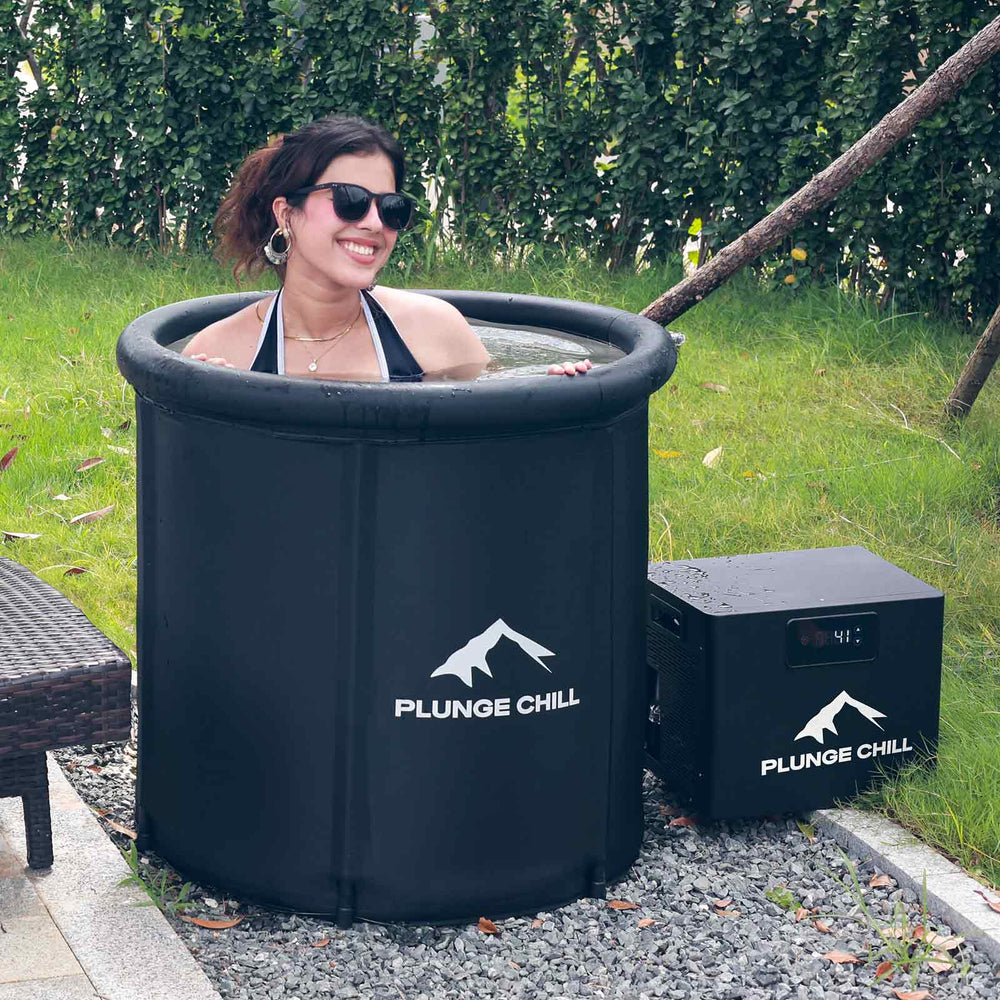
If you're planning to cold plunge regularly at home, relying on bags of ice gets old fast—and it adds up. A dedicated ice bath chiller for home is a way cleaner, more consistent solution for daily cold therapy.
This one runs on a 1/3 HP industrial-grade compressor (600W) , so it chills your water fast without a single bag of ice.
No more hauling ice from the store. No more waiting for bags to melt. The system just keeps your water at the ideal recovery temperature automatically.
It's built for:
Athletes who need reliable recovery.
Fitness enthusiasts who want to cut down on soreness.
Anyone who wants to make cold therapy part of their routine without the hassle.
Fill your tub. Connect the chiller. Let it do its thing. That's it.
All-in-One Filtration & Circulation.
Here's something you don't get with a basic ice bath—a built-in circulation pump and mesh filtration system that actually keeps your water clean.
What that means for you:
24/7 water circulation – no stagnant water sitting around.
Removes leaves, sand, debris – stuff that would normally turn your tub into a science experiment.
Water stays cleaner for way longer – fewer times you have to drain and scrub.
Way less maintenance – because who wants to spend their time cleaning a plunge tub?
Instead of emptying and refilling every few days, your cold plunge just stays fresh and ready to go. Hook it up to an ice bath chiller for home and it's basically maintenance-free.
This Cold Plunge Chiller Only need $499

COLD PLUNGE CHILLER
Which Option Is Best for Home Use
Honestly? It comes down to how often you're actually going to use it.
Ice makes sense if:
You're just testing the waters (no pun intended) and aren't sure if cold plunging is for you
You only do it once in a while, not on a regular schedule
You want to keep your upfront costs as low as possible
An ice bath chiller is the move if:
You're plunging 3 to 7 times a week—basically, it's part of your routine
You want the water temperature to be the same every single time
You're looking for something that requires minimal effort once it's set up
You want a long-term solution you don't have to think about
For anyone who's serious about sticking with cold therapy, a plunge tub with a chiller is just way easier. No ice runs. No temperature guesswork. Just set it and go.
FAQs
Do ice baths work without a chiller?
Yep, they work just fine. Ice alone will get the water cold. The catch is keeping it that way—temperature can be tough to control, especially if it's warm out or you're plunging for more than a few minutes.
How much ice do you need for a cold plunge?
Most tubs need about 20 to 40 pounds of ice to get below 50°F. It depends on your starting water temp and how cold you want it.
What temperature should a cold plunge be?
Most people aim for 39°F to 55°F (4°C to 13°C). If you're new, start closer to 55°F and work your way colder as you get used to it.
Is an ice bath chiller worth it?
If you're plunging regularly—like a few times a week—yeah, it's usually worth it. Saves you time, saves you money on ice in the long run, and takes the hassle out of the routine.
Can you convert a regular tub into a cold plunge?
Absolutely. People do it all the time with stock tanks, inflatable tubs, or portable plunge tubs. Just add an ice bath chiller, and you've got a full home setup.
If you're serious about building a home cold plunge routine, knowing the difference between ice vs ice bath chiller helps you pick the option that actually fits how you live—and saves you money down the road.




Leave a comment