


Cold plunging has blown up as one of the go-to recovery routines for athletes, gym-goers, and anyone trying to level up their wellness game at home. But if you're just starting out, picking the right setup can feel like a lot. Do you need a big 1 HP chiller? Will a smaller one even cut it? How much power does a backyard tub actually need?
For most beginners, a 1/3 HP water chiller is a solid place to start. It gives you reliable cooling without the sticker shock, complicated setup, or high energy bills that come with bigger commercial-grade units.
A good 1/3 HP chiller can keep your water right in that sweet spot—45°F to 59°F—which is plenty cold for building a consistent cold therapy habit.
In this guide, we'll break down why beginners lean toward 1/3 HP chillers, what features actually matter, and how to pick the best one for your setup in 2026.

Why Beginners Choose 1/3 HP Chillers
When you're just getting started with cold plunging, you probably don't need the most powerful system on the market. A 1/3 HP chiller hits a nice sweet spot—good performance, affordable price, and easy to live with.
Cheaper Upfront Cost
One of the biggest perks of a 1/3 HP water chiller is the price tag. Compared to larger 1 HP units or commercial-grade systems, these models cost way less—but they still give you enough cooling power for a personal plunge tub.
For beginners, going with a smaller chiller lets you test out cold therapy and build a routine without dropping thousands on a premium system.
A 1/3 HP chiller works especially well for:
l Personal cold plunge tubs
l Inflatable tubs
l Small stock tank setups
l Home recovery spaces
If you're just starting your cold plunge journey, a 1/3 HP unit is a solid, budget-friendly way to move beyond hauling bags of ice.
Quieter Operation
Cold plunging is supposed to be relaxing—or at least, not stressful. The last thing you want is some loud machine humming away right next to your home gym, bedroom, or patio.
Since 1/3 HP chillers use smaller compressors than their beefier counterparts, they generally don't make as much noise. That makes them a better fit for:
Indoor cold plunge setups
l Apartments
l Garages
l Home gyms
l Quiet recovery spaces
A quieter chiller means you can actually focus on your breathing and recovery, instead of listening to a compressor that sounds like it's trying to take off.

Easier Setup
For beginners, how easy something is to set up actually matters a lot.
A 1/3 HP cold plunge chiller usually just needs:
- Water connections
- A compatible pump
- Basic filtration
- A power outlet
Compared to bigger commercial chillers, these smaller systems have simpler plumbing and are way more beginner-friendly. Most people can have one hooked up in a few hours without calling a pro.
Lower Power Consumption
Energy efficiency is another reason beginners like 1/3 HP chillers. Since the compressor isn't working as hard as it would on a bigger unit, it uses less electricity.
That makes them a good fit if you want:
- Daily cold plunges
- Lower monthly energy bills
- Long-term use
- A more sustainable setup
For a single-person cold plunge routine, a properly sized 1/3 HP chiller can keep your water cold without wasting power.
What to Look for in a Beginner Cold Plunge Chiller
Not every 1/3 HP chiller is created equal. Before you pull the trigger, there are a few things worth paying attention to.
Cooling Temperature Range
The most important spec is how cold the chiller can actually keep your water.
Most beginners start somewhere between 45°F and 59°F (7°C–15°C). A solid beginner chiller should be able to:
Cool water consistently
Hold your target temperature
Recover quickly after each plunge
Some advanced users like to go colder—closer to 39°F–45°F—but if you're just starting out, stable temperature control is way more useful than chasing extreme cold.
Tub Size Compatibility
Your chiller's cooling power has to match your tub size—otherwise, it's either overworked or overkill.
A 1/3 HP chiller is generally best for:
- Small personal plunge tubs
- 50–100 gallon tanks
- One-person cold plunge systems
If your tub holds more water or sits outside in a hot climate, you might need something stronger.
Before you buy, always check:
- Maximum water capacity
- Recommended tub volume
- How fast it cools
- Ambient temperature limits
A chiller that's properly sized for your tub will cool faster and run more efficiently.

Filtration System
Water quality matters—a lot. If you want a clean, safe cold plunge experience, filtration isn't optional.
A beginner-friendly chiller should include or support:
Water filtration
Circulation pump compatibility
Easy filter replacement
Continuous water movement
Good filtration helps remove:
Hair and dirt
Body oils
Small particles
Without it, your water will get cloudy fast, and you'll be draining and refilling way more often than you'd like.
Noise Level
If your cold plunge is going indoors, noise is a real factor.
Look for:
Low-noise compressor tech
Vibration reduction
Quiet fan operation
A quiet chiller is especially important if your setup is near:
Bedrooms
Home offices
Living areas
Indoor vs Outdoor Use
Where you put your cold plunge actually changes which chiller you should go with.
Indoor Setup – prioritize:
Quiet operation
Compact size
Easy maintenance
Low heat output
Outdoor Setup – look for:
Weather-resistant build
Strong insulation
Wider operating temperature range
Outdoor setups usually need more cooling power because sunlight and warm air work against you.
Best 4 1/3 HP Chiller for Beginners
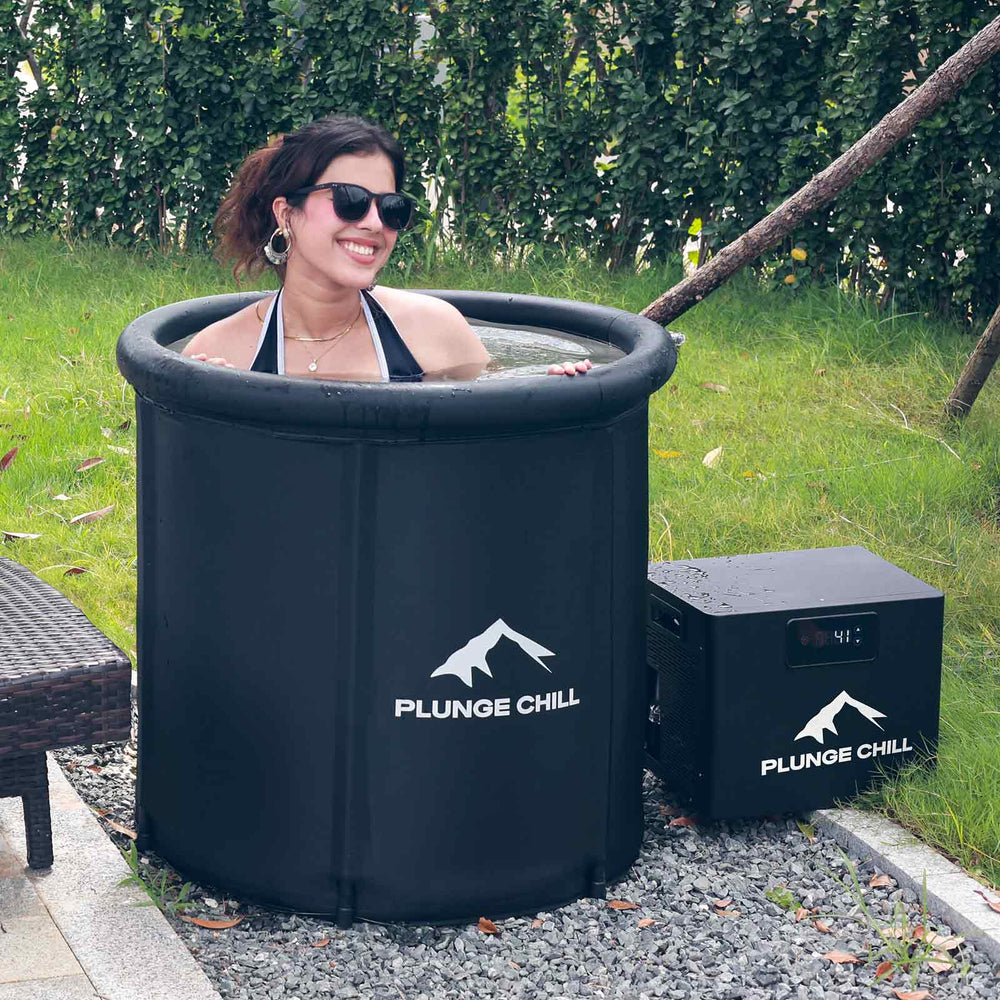
Best Overall: PlungeChill Cold Plunge Chiller
For beginners who want a solid mix of cooling power, reliability, and value, the PlungeChill Cold Plunge Chiller is definitely one of the better options out there.
It's built for home cold plunge setups and makes it easy to keep your water cold without the hassle of buying ice every few days. It works with different types of plunge tubs and is designed for people who just want a simple, icefree recovery routine.

Why It’s a Great Choice for Beginners
Ice-Free Cold Therapy
Instead of preparing bags of ice before every session, PlungeChill allows users to maintain their preferred cold plunge temperature automatically.
Simple Installation
Beginners can connect the chiller with their existing cold plunge tub without complicated plumbing or professional installation.
Excellent Value
Compared with premium cold plunge systems that can cost several thousand dollars, PlungeChill offers a more affordable entry point for users who want dedicated cooling performance.
Best For:
· First-time cold plunge users
· Home recovery setups
· Users upgrading from ice-only tubs
· People looking for the best price-to-performance ratio

COLD PLUNGE CHILLER
Best Budget: Nuvio Recovery Chiller
For beginners looking for the cheapest way to turn a regular tub into a cold plunge setup, the Nuvio Recovery Chiller is a solid budget pick.
It runs on a 1/3 HP compressor and works with existing tubs or compatible plunge pods. It'll get the water down to about 39°F and comes with builtin filtration, so maintenance isn't a headache.
Why Beginners Like It
✔ Affordable Entry Price
The Nuvio Recovery Chiller is designed for users who want cold therapy benefits without investing in a complete premium plunge system.
✔ Compact Design
With a smaller footprint, it works well for users with limited space, including garages, apartments, and home gyms.
✔ Universal Compatibility
It can connect with different tubs, allowing beginners to upgrade an existing setup instead of replacing the entire cold plunge.
Best For:
· Budget-conscious beginners
· Existing bathtub or plunge tub owners
· Small home spaces
· Users who want the lowest-cost entry option
Best Plug-and-Play: The Pod Company Universal Chiller
For beginners who want the easiest installation experience, The Pod Company Universal Chiller is designed as a simple plug-and-play solution.
The chiller is compatible with a wide range of cold plunge tubs and can be connected quickly with minimal setup. It includes filtration and is designed for both indoor and outdoor use.
Why It Stands Out
✔ Works With Almost Any Tub
Whether you already own a cold plunge tub, bathtub setup, or another plunge container, this universal design makes upgrading easier.
✔ Fast Setup
The system focuses on beginner-friendly installation, allowing users to start cooling their water quickly without complex equipment.
✔ Built-In Filtration
The included filtration system helps maintain cleaner water and reduces maintenance compared with traditional ice bath setups.
Best For:
· Beginners who dislike DIY installation
· Users upgrading existing tubs
· People who want a quick setup
· Indoor and outdoor cold plunge owners
Best Quiet Option: Polar Dive USA Water Chiller
For users planning an indoor cold plunge setup, noise level is an important factor. The Polar Dive USA Water Chiller is designed as a compact 1/3 HP solution with indoor and outdoor compatibility.
Why It Works Well Indoors
✔ Compact Footprint
Its small size makes it easier to place in garages, home gyms, or indoor recovery spaces.
✔ Efficient Cooling
The unit is designed to maintain cold plunge temperatures without requiring constant ice replacement.
✔ Filtration Included
A built-in filtration system helps keep water cleaner for regular cold plunge routines.
Best For:
· Indoor cold plunge setups
· Home gyms
· Garage installations
· Users who want a compact system
1/3 HP Cold Plunge Chiller Comparison
|
Product |
Best For |
Main Advantage |
|
PlungeChill Cold Plunge Chiller |
Best Overall |
Best balance of performance and value |
|
Nuvio Recovery Chiller |
Best Budget |
Affordable entry into cold therapy |
|
The Pod Company Universal Chiller |
Best Plug-and-Play |
Easy setup and broad compatibility |
|
Polar Dive Water Chiller |
Best Indoor Use |
Compact design and beginner-friendly operation |
1/3 HP vs 1/2 HP for Beginners
When choosing between a 1/3 HP and 1/2 HP cold plunge chiller, beginners should consider their tub size, climate, and usage frequency.
|
Feature |
1/3 HP Chiller |
1/2 HP Chiller |
|
Price |
Lower |
Higher |
|
Cooling Speed |
Moderate |
Faster |
|
Energy Consumption |
Lower |
Higher |
|
Noise |
Usually quieter |
Slightly louder |
|
Best For |
Beginners |
Advanced users |
|
Tub Size |
Small-medium tubs |
Larger tubs |
For most beginners, a 1/3 HP chiller is enough because:
· Most home cold plunges use less than 100 gallons of water
· Beginners usually start around 50°F–59°F
· Lower energy costs make daily use easier
· Installation is simpler
A 1/2 HP chiller becomes more useful when:
· The tub is larger than 100 gallons
· Multiple people use it daily
· The unit sits outdoors in very hot climates
· Faster temperature recovery is important
Final Thoughts: Is a 1/3 HP Chiller Enough for Beginners?
For most first-time cold plunge users, the answer is yes.
A 1/3 HP water chiller offers an affordable, quiet, and efficient way to maintain cold plunge temperatures without the hassle of constantly buying ice.
Before purchasing, focus on:
· Your tub size
· Desired temperature range
· Filtration system
· Noise level
· Installation location
Starting with the right-sized chiller helps you build a consistent cold therapy habit without unnecessary cost or complexity.
For beginners creating their first home cold plunge setup, a reliable 1/3 HP cold plunge chiller is often the smartest place to start.




Leave a comment