


You’ve probably seen the videos: an athlete finishes a workout, climbs into a tub filled with cold water, takes a deep breath, and sits there for several minutes. It looks uncomfortable, yet strangely refreshing.
The truth is that cold-water immersion can be useful—particularly when you’re using a cold plunge tub as part of an exercise recovery routine—but it isn’t something every woman needs, nor is it completely risk-free. Rather than simply telling you to take an ice bath or to avoid one altogether, this guide will help you decide whether it truly makes sense for your body and your routine.
Health note: This article is for general education and is not medical advice.
Are Ice Baths Good for Women?

They certainly can be. The clearest reason to consider a cold plunge tub is exercise recovery. After a hard workout—especially one involving a lot of running, jumping, or repeated high-intensity effort—your muscles may feel sore and heavy for the next day or two. Research on cold-water immersion suggests that it can reduce post-exercise muscle soreness and noticeably improve how recovered athletes feel.

PLUNGE CHILL MAX
That makes cold-water immersion potentially useful after:
- Long runs, cycling sessions, or swims
- High-intensity workouts
- Team sports and competitions
- Long hikes or physically demanding activities
- Several hard training days in a row
If you feel that you cannot safely get yourself out of the tub, end the session immediately and get help if necessary.

Never try to "push through" intense distress. That is particularly vital because prolonged cold water exposure can quickly impair your mobility, motor control, and decision-making. For your first few sessions, avoid turning a cold plunge into an isolated endurance test. Knowing the most common cold plunge mistakes to avoid makes the initial experience far smoother, and having someone nearby ensures peace of mind.
What Does an Ice Bath Actually Do to Your Body?
Cold-water immersion exposes your body to a sudden change in temperature, which triggers an immediate physiological cold response. Your breathing may speed up at first, blood vessels constrict to redirect circulation toward your core, and the sensory input is intense. In the context of athletic recovery, this mechanism helps restrict swelling, blunt inflammation, and soothe soreness so you feel prepared to train again sooner.
Is Cold Water Different for Women?
Women often experience cold exposure differently based on overall body composition, muscle-to-fat distribution, baseline fitness, menstrual phase, and personal tolerance. While this does not mean women require an entirely separate style of cold plunge, it does emphasize that individual biofeedback is crucial—especially when beginning cold exposure.
Are Ice Baths Safe for Women?
Cold-water immersion is not completely without risk. Sudden immersion can cause an involuntary gasp reflex and rapid respiration, while overextended exposure stiffens muscles and inhibits movement. Beginners should keep sessions strictly controlled, avoid treating the tub as a test of willpower, and ensure unobstructed access for getting in and out.
Start gradually
Begin with a manageable temperature and shorter exposure instead of starting with extreme cold.
Control your breathing
Give yourself time to regain steady breathing before doing anything else.
Make getting out easy
Set up the tub so you can exit safely without struggling.
Don't train through warning signs
If you feel unwell, dizzy, confused, or unable to control your breathing, get out.
Can You Take an Ice Bath During Your Period?
For most healthy individuals, menstruation alone does not automatically rule out taking an ice bath. There is no conclusive evidence indicating that women must avoid ice baths while menstruating. However, your cycle can certainly influence your daily energy, tolerance, and physical comfort.
On some days you may feel energized and ready for recovery; on other days, menstrual cramps, fatigue, headaches, or dizziness might dominate. If you are already accustomed to cold plunge therapy and feel comfortable, continuing your routine is generally fine.
If you're experiencing:
How you feel that day matters more than simply being on your period. If your usual energy or comfort level is noticeably different, there is no need to force a cold session.
Severe cramps
If cramps are already making you uncomfortable, adding a cold-stress session may not be worth it.
Dizziness
Feeling dizzy is a good reason to prioritize rest and stability instead of cold exposure.
Unusual weakness
If you feel weaker than usual, give your body a chance to recover before adding another physical stressor.
Very heavy bleeding
Heavy bleeding can leave you feeling depleted, so this may be a better day to skip the cold exposure.
Significant fatigue
When your energy is unusually low, rest may be more useful than trying to complete your normal routine.
Feeling generally unwell
If you simply don't feel like yourself, there is no benefit to forcing an ice bath that day.
You don't lose any health benefit by taking a day off. If you are experiencing pronounced fatigue or cramping, skipping the plunge and prioritizing warmth is the smarter approach. If you are entirely new to cold baths, starting during an uncomfortable period day is best avoided.
What About Pregnancy?
Pregnancy represents a distinctly different physiological state. Currently, there is insufficient clinical evidence to define a universally safe water temperature or duration for cold-water immersion during pregnancy. Because cold plunges cause sharp cardiovascular shifts and impact core temperature regulation, pregnant women should not experiment with ice baths without explicit medical clearance from their obstetrician or healthcare team.
Can You Take an Ice Bath While Breastfeeding?
Breastfeeding itself does not prevent you from using cold plunge therapy, but your overall recovery from childbirth is the primary consideration. If you recently gave birth and are managing bleeding, anemia, wound healing, or lingering fatigue, consult your healthcare provider first. Even seasoned athletes need to allow their postpartum bodies adequate time to stabilize before resuming rigorous physical stressors.
Postpartum Priority: There is no rush to jump back into cold therapy immediately after delivery. Give your core temperature regulation and tissue healing time to stabilize first, and always prioritize gentle recovery before reintroducing cold-water immersion.
How to Make Cold Therapy Easier at Home with Plunge Chill?

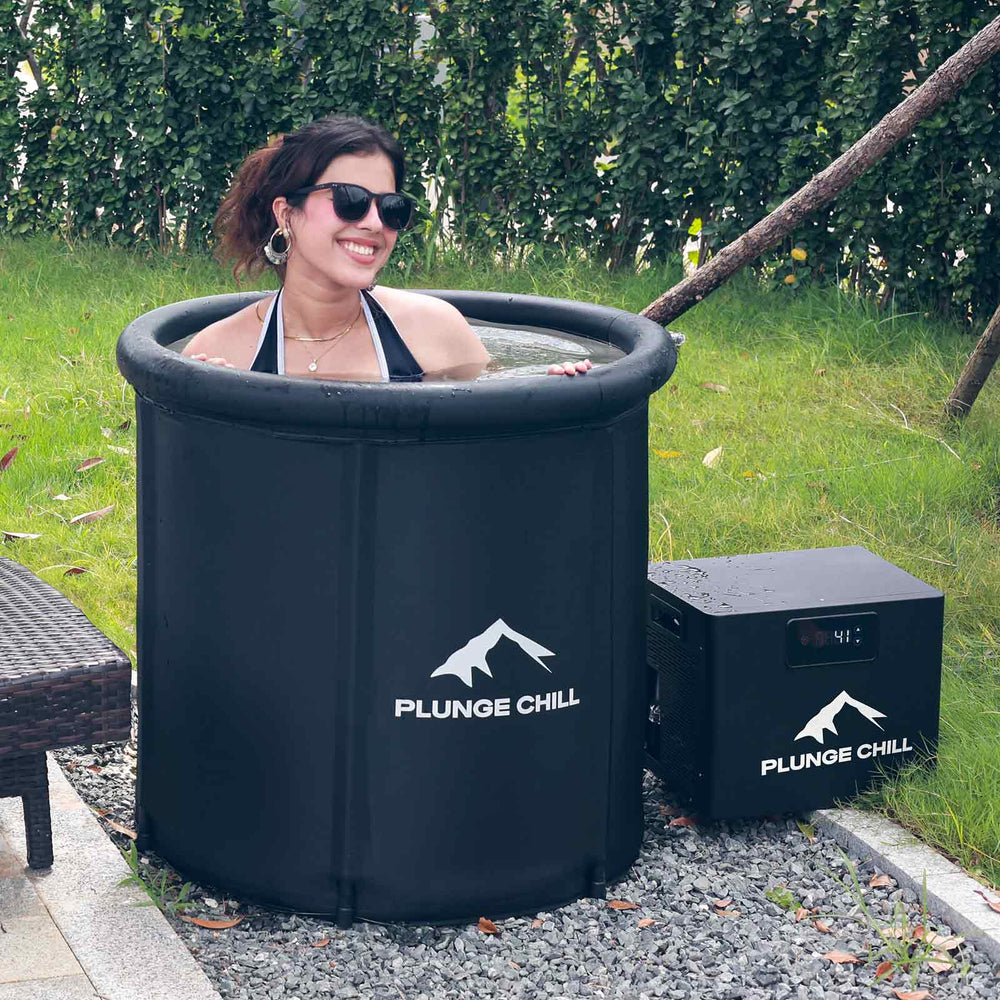
One of the biggest hurdles with at-home ice baths isn't tolerating the cold—it is the ongoing friction of setting them up. Hauling bags of ice, filling tubs, monitoring inconsistent temperatures, and draining water can quickly derail a good routine. That is where a dedicated cold plunge chiller system makes a transformative difference, turning cold immersion into an accessible, repeatable habit.
For women, that can mean having a more consistent way to:
- Cool down after demanding workouts
- Manage post-exercise soreness
- Build a simple recovery routine at home
- Adjust cold exposure according to your own tolerance
- Avoid constantly buying and adding bags of ice
The best ice bath is never about reaching freezing extremes; it is about finding a consistent, sustainable temperature that fits your physiology and lifestyle.
Tips for Women Starting an Ice Bath
If you've evaluated your goals and decided cold plunging is right for you, keep your early sessions manageable and straightforward.
1. Start with cool, not extreme, water
Near-freezing water is unnecessary on day one. Give your vascular system time to adapt to cold sensations, gradually dropping the temperature over several weeks as your comfort develops.
2. Focus on your breathing
The initial gasp reflex is entirely normal. Resist the urge to panic: focus on slow, measured exhales until your respiratory rate stabilizes before settling in. If you cannot regain steady breathing, exit the tub promptly.
3. Don't compete with other people
Cold plunging is an individual practice, not an endurance contest. A brief two-minute session that leaves you invigorated and clear-headed provides far better value than staying in until you shiver uncontrollably.
4. Think about your training goal
Cold exposure excels at suppressing inflammation and easing soreness between back-to-back training sessions. However, if your primary target is hypertrophy (muscle building), avoid plunging immediately after lifting weights to let natural anabolic signaling take place.
5. Warm up after your session
Dry off promptly, put on warm, dry layers, and sip a hot beverage if desired. Allowing your body to rewarm comfortably ensures you reap recovery benefits without prolonged systemic chill.
6. Keep a simple record
Sleep quality, stress, hormonal cycles, and training fatigue all shift your daily cold tolerance. Try tracking water temperature, duration, cycle day, and how you felt afterward to discover what protocol works best for your body.

COLD PLUNGE CHILLER
The Bottom Line
So, are ice baths good for women? For healthy individuals who use them thoughtfully, they serve as an effective, reliable recovery tool—especially after high-intensity training. Your specific goals, hormonal rhythm, and recovery status will naturally shape your experience, while pregnancy and postpartum phases require extra caution.
Ultimately, your personal biofeedback matters far more than arbitrary rules or trends. Start gradually, maintain reasonable temperatures, anchor your focus on calm breathing, and listen closely to your body. Consistency and comfort will always deliver better results than pushing through excessive distress.
You don't need to suffer more to recover better. A smart wellness habit should leave you feeling recharged, resilient, and ready for your next training session.

PLUNGE CHILL PLUS
A good cold-therapy routine is one tailored to your personal physical demands. When you're ready to design your dedicated setup, our best cold plunge tub for home recovery guide provides detailed model comparisons to match your space.
FAQ: Ice Baths For Women
What are the benefits of ice baths for women?
The best-supported benefit is post-exercise recovery. Cold-water immersion may reduce delayed-onset muscle soreness and improve how recovered you feel after demanding exercise.
There is also growing interest in cold exposure for alertness and mood, but evidence for long-term mental-health benefits is still limited.
Can women take ice baths every day?
They can, but they don't necessarily need to.
How often you use cold therapy should depend on your training schedule, recovery needs, and how your body responds. There is no good evidence that making an ice bath colder or longer every day automatically produces better results.
Do ice baths affect female hormones?
Female hormone levels naturally change throughout the menstrual cycle and can influence body temperature regulation.
At this point, there is not enough evidence to say that ice baths have a clear long-term positive or negative effect on female hormones. Ice baths should not be used as a method for “balancing” or “regulating” hormones.
What temperature should women use for an ice bath?
There is no single temperature that is right for every woman.
If you're new to cold exposure, start with a less extreme temperature and gradually acclimate. You don't need near-freezing water to have a useful cold-water session.
How long should women stay in an ice bath?
There is no universal time limit. Some research protocols use around 10–15 minutes, but beginners may want to start with less.
Your ability to stay in the water is not a measure of how effective the session is. If you feel unwell, get out.




Leave a comment