


As a sports rehabilitation specialist and strength coach who reviews cold plunge products and sets up recovery rooms, I’ve learned that clear, correctly balanced water is non-negotiable. Hygiene protects skin and eyes, reduces infection risk in shared spaces, preserves equipment, and, importantly, sustains the therapeutic feel of a plunge at 39–55°F.
This guide distills best practices from aquatic facility standards and credible industry sources, translating complex chemistry into practical, reliable steps you can implement at home or in your studio today.
Table of Contents ▲
- Why Clean Cold‑Plunge Water Matters
- The Fundamentals: Terms and Target Ranges
- Disinfection Options Compared
- Filtration and Circulation
- Chemistry Balancing Workflow
- Maintenance Cadence That Works
- Hygiene and Biofilm Control
- Special Considerations at 39–50°F
- Troubleshooting: Clarity, Odor, Itch
- Buying Tips for Cleaner Water
- Quick Workflow You Can Trust
- Frequently Asked Questions
Why Clean Cold‑Plunge Water Matters
Cold immersion is hard on organisms and easy on reactions. That paradox defines water care: low temperatures slow microbial growth, but they also slow the chemical kinetics that kill microbes. This is why you still need a persistent, measurable disinfectant in the water. Residual-free systems invite biofilm, opportunistic bacteria, and protozoa that remain indifferent to crisp temperatures.
Evidence briefings for health inspectors underscore that cold water reduces disinfectant reaction rates and efficacy while letting pathogens survive longer, even when growth rates are suppressed-National Collaborating Centre for Environmental Health. Professional operator training adds that algae can still thrive at 50°F, and combined organics will rapidly accumulate without consistent turnover, mechanical filtration, and residual sanitizer (Aquatic Facility Training and Consultants).
Bottom Line: Cold is never a substitute for sanitation. In clinical and athletic team settings, clean water improves visibility—reducing slips and near-misses during timed immersions—while preventing skin and follicle flare-ups (often Pseudomonas) before they disrupt training.
The Fundamentals: Terms and Target Ranges
Managing a plunge requires fluency in a few essential water metrics: pH expresses acidity; Total Alkalinity buffers pH; Calcium Hardness balances corrosive versus scale-forming tendencies; Free Chlorine or Bromine acts as your residual kill barrier; and Total Dissolved Solids (TDS) indicate water age. Combined chlorine signals chloramines that cause harsh chemical odor, while turnover and micron ratings govern particulate clearance.
These parameters are well-established across aquatic pool and spa standards and adapt directly to cold plunges. While most residential tubs hold 80–150 gallons and chilled water alters reaction speeds, the foundational chemistry targets remain constant.
| Parameter | Practical Definition | Typical Home Target | Notes / Sources |
|---|---|---|---|
| pH | Acidity affecting comfort & sanitizer kill rate | 7.2–7.8 | Broad consensus across operator codes; 7.2–7.6 preferred for maximum sanitizer efficacy (Master Spas). |
| Total Alkalinity (TA) | pH buffer & stability | 80–120 ppm | Adjust first in workflow to stabilize pH fluctuations (Icebound Essentials). |
| Calcium Hardness (CH) | Corrosion & scale balance | 150–250 ppm | Target 150–250 ppm for acrylic/plastic; maintain upper limits to protect metal heat exchangers. |
| Free Chlorine | Primary disinfectant residual | 1–3 ppm | Maintain steady residual; shock or refresh if combined chlorine exceeds 0.5 ppm. |
| Bromine | Alternative disinfectant residual | 3–5 ppm | Gentler odor profile; verify contact stability with routine ORP logs at 50°F. |
| Hydrogen Peroxide (H₂O₂) | Oxidizer in non-chlorine setups | 30–50 ppm | Requires continuous ozone/UV oxidation; not approved as primary sanitizer in public codes. |
| Cyanuric Acid (CYA) | Chlorine UV stabilizer | 10–50 ppm | Not needed indoors; avoid elevated CYA which slows cold-water chlorine action. |
| TDS | Water age indicator | <1,500 ppm | Drain and refill when high TDS weakens sanitizer performance. |
| Turnover / Circulation | Full-volume turnover cycle | ≤60 minutes | Ensure robust daily circulation to eliminate thermal dead zones and algae growth. |
| Filter Micron Rating | Particulate capture size | 5–20 microns | 20-micron captures visible debris; secondary disinfection required for protozoan cysts (NCCEHC). |
Target ranges vary slightly because municipal codes focus on public pools with plaster surfaces, whereas home plunge tubs typically feature drop-stitch PVC, acrylic, or stainless steel shells. The safest operational strategy is to follow commercial-grade chemistry baselines, cross-referenced with your tub manufacturer's surface care manual.

Disinfection Options Compared
Chlorine: The most dependable sanitizer residual because it is easily measurable, cost-effective, and fully compatible with secondary UV and ozone stages. For residential plunges, holding 1–3 ppm at pH 7.4–7.6 offers reliable protection. If combined chlorine creeps above 0.5 ppm, perform breakpoint chlorination or a partial water exchange per public health guidelines (Utah Administrative Code). In athletic and clinical recovery rooms, chlorine’s predictability simplifies logging and staff handoffs.
Bromine: Delivers a viable alternative with a milder odor profile that many indoor bathers prefer. While anecdotal home guides suggest bromine offers superior stability in cold water, rigorous empirical research comparing cold-water stability remains scarce. If you opt for bromine, log your sanitizer residual alongside oxidation-reduction potential (ORP) at 50°F to verify long-term consistency.
Hydrogen Peroxide (H₂O₂): Popular among wellness advocates as a chlorine-free option (typically targeted at 30–50 ppm when backed by ozone). However, peroxide alone struggles to hold a resilient residual under fluctuating bather loads and organic sweat. Major health agencies, including the CDC Model Aquatic Health Code, do not recognize H₂O₂ with UV as an approved standalone primary disinfectant in recirculating vessels. If used at home, pair it with continuous oxidation and strict testing schedules.
Ozone & UV Systems: These serve as high-efficiency secondary purifiers that break down organic waste, destroy chloramine byproducts, and inactivate pathogens. They do not replace a measurable chemical residual, but instead act as force multipliers that lower chlorine or bromine demand. Where UV is fitted, clean the quartz sleeves regularly and replace lamps on schedule to ensure full germicidal dosage (Aquatic Facility Training and Consultants).
Filtration and Circulation
Circulating water is inherently clean water. In compact tubs, localized contaminants and thermal layers build quickly without dynamic flow. Running your circulation pump for several hours daily ensures continuous turnover, prevents stagnant dead zones, and guarantees complete sanitizer dispersion throughout the shell (Aquatic Facility Training and Consultants; NCCEHC).
Filter efficacy depends on both maintenance discipline and pore size. Standard 20-micron pleated filters capture hair, skin flakes, and visible sediment, but cannot intercept protozoan cysts (such as Cryptosporidium, which measure 1–5 microns). Mechanical filtration must always work in tandem with an active disinfectant residual. Clean cartridges weekly under running water, soak monthly in a degreaser solution, and replace the element as soon as the pleats begin to deform.

Cold Plunge Water Filter Upgrade

Chemistry Balancing Workflow
Water balancing requires a sequential routine to avoid chemical chasing:
1. Total Alkalinity First: Lock in TA (80–120 ppm) so your pH baseline has sufficient buffering capacity against rapid swings.
2. Dial in pH: Adjust pH to 7.2–7.8 to optimize eye/skin comfort and maximize sanitizer killing potency.
3. Set Calcium Hardness: Balance CH (150–250 ppm) to prevent pitting corrosion on metal chiller heat exchangers while avoiding scaling.
4. Establish Sanitizer Residual: Introduce your free chlorine or bromine to complete the barrier.
Because chemical powders and granules dissolve slowly in chilled water, dose conservatively in half-teaspoon increments. Run the pump with the thermal lid off for 20–30 minutes before retesting (Master Spas; Icebound Essentials). If combined chlorine climbs over 0.5 ppm or water develops an eye-stinging bite, perform breakpoint shock or complete a partial water change.
Maintenance Cadence That Works
Pre- and Post-Plunge Protocol: A mandatory 30-second rinse shower and foot wash strip away body lotions, deodorants, and sweat, reducing chemical demand by half. Following your session, immediately skim surface debris and strap down the insulated lid to lock out airborne dust, leaves, and spores.
Weekly Routine: Test and adjust pH and sanitizer levels twice weekly. Rinse your filter pleats thoroughly, and wipe down the waterline with a soft microfiber cloth to prevent scum ring formation. Shock as needed to break down organic buildup.
Drain & Refill Interval: Most residential plunges require a fresh water fill every 2 to 4 weeks. High-efficiency 20-micron filtration and low bather loads can extend intervals toward 30 to 45 days, but persistent cloudiness, slick wall textures, or high TDS readings should always trigger an immediate water change.
Hygiene and Biofilm Control
Bather hygiene forms your frontline defense against contamination. Enforce clean swimwear and prompt showers, and exclude bathers with open skin breaks or recent gastrointestinal illness. For indoor setups, entry floor tiles or rubber gym mats keep outside grit from migrating into the water.
Biofilm thrives in low-velocity crevices, pipe manifolds, and shell seams. During scheduled deep cleans, scrub all tub corners with a non-abrasive cleaner. Inspect plumbing connections, O-rings, and gaskets regularly, as sustained cold temperatures harden elastomeric seals, increasing the risk of hairline leaks (Aquatic Facility Training and Consultants; NCCEHC).
Special Considerations at 39–50°F
The Cold Water Paradox: Cold extends the active life of a sanitizer residual, but it also slows the contact kill rate. Never overdose chemicals to compensate. Instead, pre-dissolve all powders, dose in small increments, and allow longer circulation contact time between tests. Always keep a fitted insulated cover strapped on to block airborne nitrates and stabilize water temperature.
Algae proliferation slows noticeably below 50°F, but it is not entirely arrested—especially if the tub is exposed to ambient daylight. Maintaining a tight-fitting insulated cover protects against light transmission, eases chiller power consumption, and keeps chemistry remarkably stable over weeks of heavy use.

Troubleshooting: Clarity, Odor, Itch
Cloudiness: Signals clogged filter media or insufficient daily pump run time. Verify strong circulation flow without dead zones, rinse or replace the filter cartridge, and verify pH is balanced between 7.2 and 7.8.
Odor & Eye Irritation: Indicates chloramines or unoxidized organic waste rather than too much chlorine. Shock the water or execute a 50% water exchange.
Skin Itch & Follicle Flare-ups: Caused by out-of-range pH, high chemical peaks, or bacterial growth in stagnant seams. Scrub the tub walls, re-establish a consistent 1–3 ppm residual, and rebalance alkalinity.
Rapid Residual Loss: Points to an overwhelming organic load. Enforce pre-entry showers and implement surface skimming after every single session.
Buying Tips for Cleaner Water
When selecting a cold plunge for your home or recovery facility, prioritize hardware engineering that simplifies daily water care:
• Accessible Filtration: Look for external or top-loading filter housings with standardized, published micron ratings (5–20 microns) for quick weekly rinses.
• Secondary Sanitization: Built-in integrated chillers with ozone or germicidal UV chambers significantly reduce the chemical burden.
• Proper Pump Sizing: Ensure the chiller circulation pump can complete a full tub turnover in 60 minutes or less to prevent thermal stagnation.
• Complete Drainage: Ensure bottom drain ports allow 100% emptying so deep cleans leave zero contaminated wastewater behind.

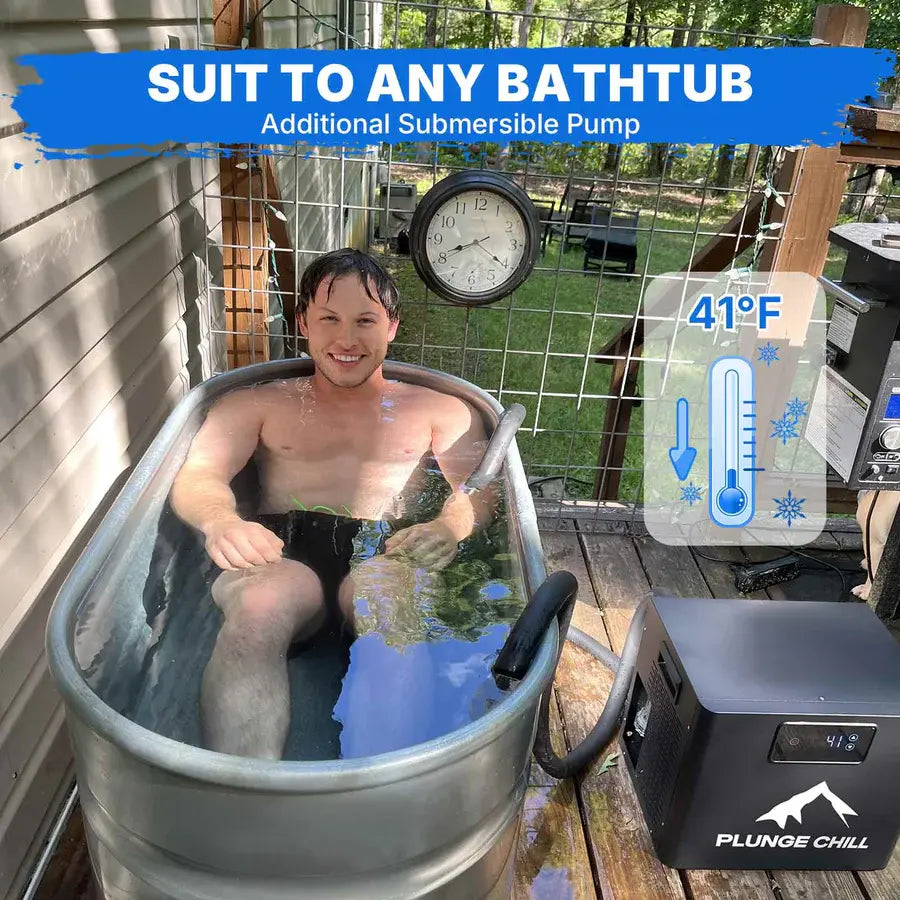
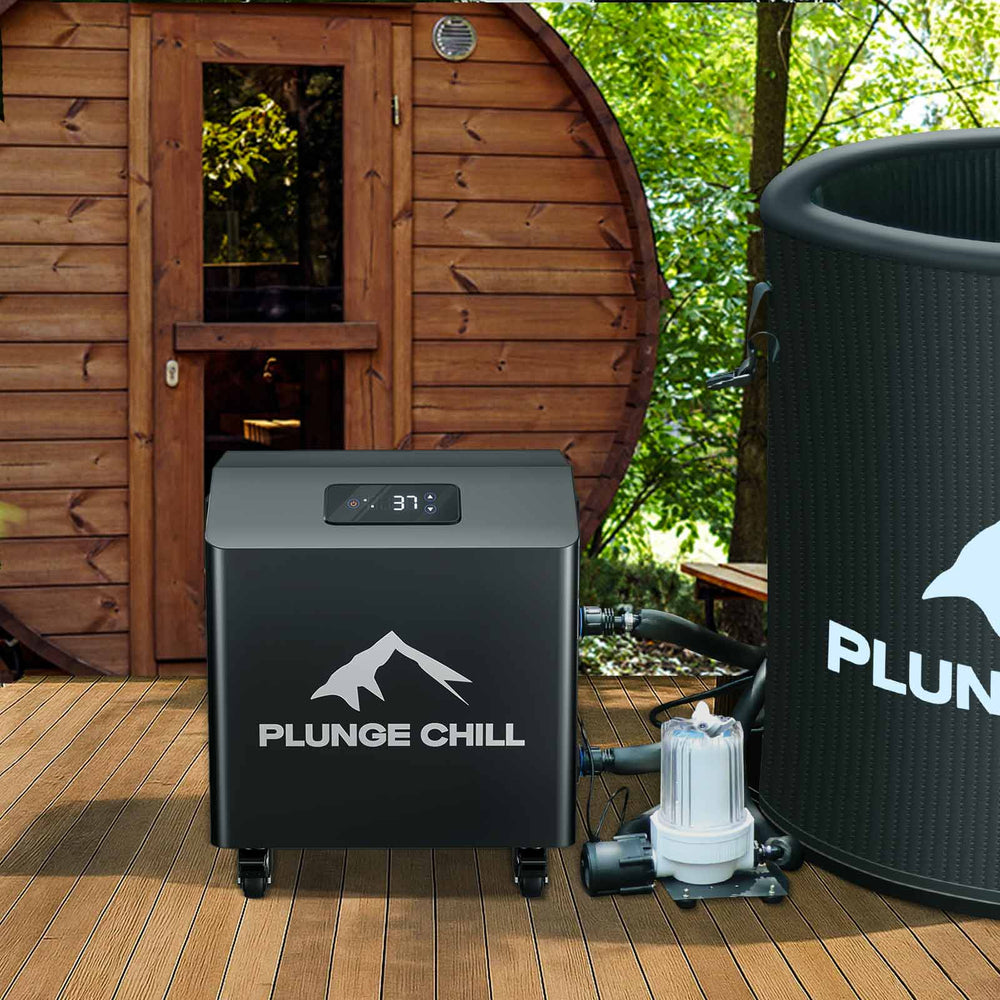
COLD PLUNGE CHILLER
Understanding operational boundaries is critical. While lifestyle blogs frequently promote vinegar, Epsom salts, or residual-free peroxide as all-natural cures, public health authorities mandate measurable chlorine or bromine residuals for recirculating multi-user systems. For shared training tubs, always align with commercial aquatic standards. Let objective test-strip metrics, TDS tracking, and water clarity dictate your drain schedule.

Quick Workflow You Can Trust
A reliable water management program avoids complexity by relying on steady, disciplined habits: plan high-turnover circulation, keep your mechanical filtration clean, and train bathers to shower before entry. Balance TA, pH, and Calcium before establishing sanitizer residuals, and inspect seals and hoses during monthly flushes.
Takeaway
Cold water does not clean itself—it only slows reaction kinetics down. Build a straightforward, repeatable maintenance routine focused on robust circulation, disciplined filtration, balanced chemistry, and strict user hygiene.
Anchor your target metrics to pool-operator standards, fine-tune for your specific tub shell and bather volume, and support your setup with a steady disinfectant residual. The reward is pristine, restorative cold water that feels incredible on the skin, protects your equipment investment, and allows you to focus 100% on recovery.

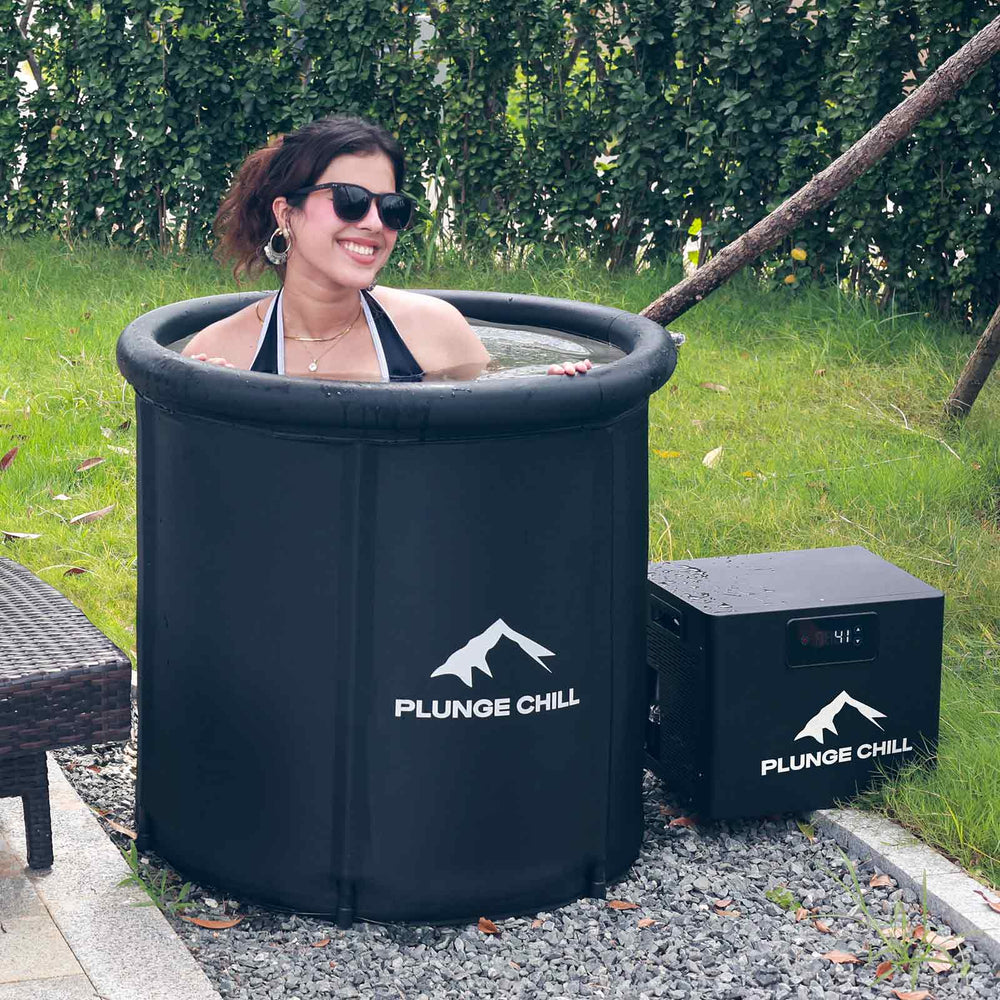
1HP Cold Plunge Chiller + Tub(Pro)
Frequently Asked Questions
How often should I change my cold‑plunge water?
In most home settings, changing water every two to four weeks balances effort and water quality. Refresh the water immediately if it becomes cloudy, develops an odor, or if tub walls feel slippery. High-efficiency 20-micron filters and low usage can extend intervals, but physical clarity and test logs should always guide your decision.
What should my pH and sanitizer be?
Keep pH balanced between 7.2 and 7.8, and maintain an active residual disinfectant: free chlorine at 1–3 ppm or bromine at 3–5 ppm. If using chlorine, ensure combined chlorine stays at or below 0.5 ppm by shocking or doing a partial water exchange.
Is bromine better than chlorine in cold water?
Bromine produces a milder, less irritating chemical odor in enclosed spaces, which many indoor bathers prefer. However, research confirming superior stability specifically in cold water is limited. Track sanitizer residuals and ORP at 50°F to see which chemical performs more consistently in your setup.
Can I run hydrogen peroxide only to avoid chlorine?
Hydrogen peroxide can work in strictly controlled home setups when paired with continuous ozone or UV, but public health frameworks require chlorine or bromine residuals for recirculating multi-user systems. Peroxide requires frequent monitoring (holding 30–50 ppm) and shorter water refresh cycles.
Do I need UV or ozone?
UV and ozone are exceptional secondary stages that oxidize organic compounds and destroy chloramines, reducing reliance on chemical sanitizer. However, they do not replace a residual sanitizer. Clean UV quartz sleeves routinely and size ozone outputs according to water volume.
What filtration should I look for?
Aim for 5–20-micron pleated mechanical filtration for reliable clarity and simple maintenance. Note that 20-micron cartridges do not remove protozoan cysts like Cryptosporidium, making a steady chemical residual and pre-plunge hygiene indispensable.
A Note on Sources
This guide synthesizes commercial aquatic facility standards with residential plunge operations. Core chemical parameters and operational targets are drawn from Aquatic Facility Training and Consultants and the Utah Administrative Code. Public health standards reference the National Collaborating Centre for Environmental Health and the CDC Model Aquatic Health Code. Practical dosing protocols reflect real-world testing from Master Spas, Icebound Essentials, SisuPlunges, and Coldture Wellness.
References
- https://www.academia.edu/10550648/Microbiological_and_Physicochemical_Characteristics_of_Swimming_Pool_Water_in_Owerri_Imo_State_Nigeria
- https://objects.lib.uidaho.edu/iwdl/iwdl-199902.pdf
- https://www.law.cornell.edu/regulations/nebraska/178-Neb-Admin-Code-ch-2-SS-005
- https://pmc.ncbi.nlm.nih.gov/articles/PMC10088029/
- https://www.k-state.edu/doddslab/epubs/journalarts/buck%20et%20al.pdf
- https://people.wou.edu/~taylors/g407/restoration/WA_Dept_Forestory_2004_Chap4_Restoration_Strategy.pdf
- https://www.canr.msu.edu/ipm/uploads/files/trainingmanuals_swimmingpool/swimmingpool_wholemanual.pdf
- https://www.noaa.gov/sites/default/files/legacy/document/2020/Oct/07354626732.pdf
- https://ctstormwatermanual-nemo.media.uconn.edu/wp-content/uploads/sites/2584/2018/10/SWQM_Design_GuidanceSmall.pdf
- https://cybercemetery.unt.edu/archive/oilspill/20130218180203/http://www.nwd-wc.usace.army.mil/tmt/wq/studies/wq_plan/wq200814.pdf






Leave a comment